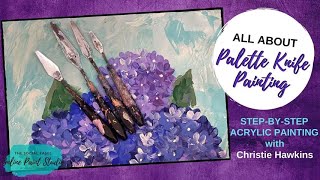
All About Palette Knife Painting
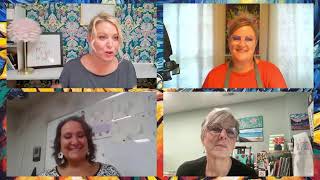
In this live tutorial, Christie Renee Hawkins of The Social Easel introduces viewers to palette‑knife painting with acrylics and mixed‑media pads. She begins by showing a finished piece that uses palette‑knife texture, then walks through the essential tools—a set of plastic and metal knives, a mixed‑media sketchbook, and inexpensive craft paints—explaining cost‑effective options for beginners and bulk purchases for teachers. Christie demonstrates a step‑by‑step workflow: preparing a sky background, adding ground, building elements, and foliage using different knife sizes and techniques such as scooping paint on the back of the knife, varying stroke direction, and layering for texture. Throughout she emphasizes the loose, experimental nature of the medium, encouraging viewers to overcome intimidation, play with color mixing, and enjoy the messiness. She also mentions her upcoming collaboration with Heidi Easley on a spring chapel painting, discusses using palette knives on wood versus canvas, and offers practical tips for teaching classes and sourcing supplies. The video concludes with a quick recap, a reminder of her affordable knife set, and a friendly sign‑off.
Chapters
Hey guys, it's Christie with The Social Easel, and I teach women how to paint with acrylic paints. And today we're gonna do something a little bit different, and we're gonna work with palette knives. So if you followed me for a while or you've looked at some of my artwork, you may notice that it has that different kind of look to some of the pieces, different kind of texture. I'll just show you this example really quick. So this is one of my originals, and notice the texture on that background. That is all done with a palette knife. So that's what we're going to talk about today, and I'm going to show you just a couple things that you can do with the palette knife and how once you get used to it, you'll fall in love with it. So I highly recommend people getting a set, and I'm going to show you what my set is, or you can run to the store and get a plastic one as well. So I'm going to show you all of them so you can decide what is best for you. My voice may be going in and out just a little bit. I have been sick the last 2 days. I couldn't talk at all yesterday, so pretty much laid in bed. The entire day and took 2 rounds of Theraflu. So getting slowly better, but getting my voice ready for tomorrow night. So I'm not going to be on here super long tonight because I don't want to totally lose my voice completely. Okay, so I'm gonna go ahead and move you guys over here. I'm going to lift you up and pull you over here, and then we're going to start working on our palette knife. So what I'm gonna show you guys today is in my mixed media pad. You're probably tired of hearing me talk about this if you've been with me, but this is the first thing I recommend getting if you're new to painting, and it's like a scrapbook for— or not a scrapbook, like a sketchbook for painting, because you can put acrylic paint in it. So I showed you that one painting at the beginning. That was my hydrangeas, and I'm working on this one right now. It's still really, really wet, which is why my hands are covered in paint. So I'm gonna show you this as an example, and then I'm going to show you how to get this. And this is what I want you to realize, is palette knife painting is really quick and easy and fun. It's just getting past that intimidation level that sometimes we have because it's new and it's foreign and we're just not sure what it's going to look like. And that's supposed to be the fun thing about painting, right? Everything's supposed to be an experiment. You're not supposed to get it perfect the first time. You're just supposed to play with it and have fun. That's what this is all about. So I hope you guys will take what you learned today and test it out for yourselves and get yourself some palette knives. So let's talk palette knives. First. If you are teaching classes, you can get just some plastic palette knives for your class. This is what I've used in my classes and they work perfectly fine. So if you don't want to spend the money on a set, you can get this. I will say that set in my Amazon store is only like $3 or $4 for 5, a variety of 5 palette knives. It's a really good price. Okay, so palette knives. You can get these cheap plastic ones. I am looking for a store that I can tell you guys to get these online because I've had some questions about if you want to buy them in bulk. I got mine from a warehouse, a wholesaler, but you have to spend $600 and I think the minimum order is like $700 to order from them. So obviously you don't need to order that much unless you're teaching as many paint parties as I used to. So for now, I'm going to show you this, and then later, if you do teach and you want a bulk order, I'll work on finding that link for you. So this is my palette knife set. This is what you can get in my store. You can comment supplies if you want the link to that. So you can tell the ones I use most often are these. I haven't done much with this one. I think I may research a little bit and maybe play around with it. This would probably be something really cool to do with modeling paste. Which I also haven't played a ton with, spackling, and I want to do some like 3D looking flowers. So that's what you could use this shape for, but let's save that for another day because I don't have the supplies to do that right now. But I think this could be really fun to use that. But these 4 palette knives, I use all 4 of them, and I use different ones depending on what I'm doing. So this is probably my absolute favorite one. It's a number 1 because you can get in small areas with it. I'm gonna run and grab one more painting just to show you guys really quick so I can talk about why I use the different ones. Okay, so I'm gonna move you back out for just a little bit while I talk about this one. This is a brand new painting that I just did this weekend. That I'm not gonna lie, I'm kind of in love with. I don't know how much of that you guys can see. I might need to move this out of the way a little. So this is my new Spring Chapel, and if you love it and you want to learn how to paint it, stay tuned. It's gonna be a collaboration that Heidi Easley from Texas Art and Soul and I do together. So I am going to teach you guys this painting and Heidi Easley is gonna teach you how to do a paint party. So we do these twice a year, and it's just a super fun collaboration. We're really good friends. We love working together, and we complement each other really well because she teaches the business side and I teach the art side. So if you like this and want to learn how to do it, I'm gonna show you how. I want— before we even talk about something like that, all of this was done with palette knife. Okay, some of the base is done with a brush, but to get this kind of look, that is done with a palette knife. So let me show you why I like this little guy so much. My favorite one is this little one because you can get just right in these little itty-bitty crevices just like that, and you can scrape down. And I'm going to kind of walk you through how I do that. My big ones I kind of switch back and forth depending on the area that I'm working in. If I'm doing a whole big sky like this, then I am using my biggest palette knife to do that because it just covers more of the area at the same time. And then, you know, just down in size from there depending on what you're working with. So I like to have all 4 of these handy when I'm working. So just wanted to kind of show you that as an example. Oh, and then these flowers, I did these with brush first, and then if you want the added texture, you can go back over them with palette knife. So if you like these messy abstract flowers, I did those with palette knife also. Let me show you how easy the sky is. Um, and this is what I like to do when I'm doing skies like this. We're just gonna make this first page just a sky background. Now you don't have to paint directly on there. I like painting flat also. I did actually paint that one on an easel because I was sitting at the table with the girls, but I actually prefer painting with palette knife flat just so I don't have to worry about drips or anything. Now I am using just craft paint. You can get this from anywhere. This is just an Apple Barrel one. This is Key West. Any craft paint, any brand is fine. What I like to do is just be messy. Squirt some of that on there. I'm gonna get myself a little bit of white. How many of you, while I'm talking, how many of you have done palette knife painting before, or is it completely new to you? Get you back closer again. Okay, so I'm gonna use my biggest one, and I usually like to have at least 2 colors when I'm doing a background like this, sometimes 3. 'Cause I'm crazy like that, right? Alright, so, see what I'm doing? I'm using— so first of all, let's talk about how you hold it. You don't use the top of it. You don't use it this way. You use the back of it. So, two ways you can do this. You can squirt it directly on like that, or if you have your palette sitting here next to you— I'm just gonna use this, this is all dry— but this is what I would do if I had a palette. I would scoop it up like this onto the back of my palette knife and then do my strokes with it. Okay, so I squirted it on there and we're just gonna start spreading it all over the surface. Now, like I said, I'm being super messy. I think I might actually tear this out while I'm painting on it because then I might be able to show you guys a little bit more. It's gonna be easier for me to do that. I won't stick all my pages together. This definitely, if you have a Type A personality, this will help break you of that, at least for the time being, at least while you're doing it. But I want you to notice what I'm doing and how quick I'm moving. All different brushstrokes. I say brushstrokes, palette knife strokes, all different directions. Okay, I don't want to over-blend too much. This is just a background. So this is how I did my background on the one that I showed you, and, and kind of like how I did it on the hydrangeas. Like, it's just super basic. And then, so that's my really big one. Then let's say we want to come down here. I've got a little bit smaller one, and I'm just gonna grab What kind of green do I want? What you don't want to do is to just keep going. You want there to be different colors throughout, so you don't want it to all blend into one piece. You want there to have some areas of white, some areas of dark, and kind of have it all over the place, all different directions. What you don't want to do is— I'm going to use this one— you don't want to do the same movement all over. It's going to look too static and too planned out. Palette knife painting is loose and free, okay? But so if I just did the same thing all the way down, it's just not that super exciting. Now I like the messiness of it though. So like, if I wanted a little bit more dark in there— now again, this is just what I do— I just drip some paint back on it, or you can put it on your palette knife. And this is such a forgiving background. Um, I have a time-lapse I'm going to show you guys of me working on the chapel. Originally I had a tree next to it, and it just didn't look right with the composition. So I had a big tree over here on one side, and I let it dry and did palette knife over top of it, and it's a super quick, easy cover-up for something. Okay, so now I want to add a little bit of ground cover here, and I'm just gonna Put a little bit of green on there. Now this time I'm going to move sideways back and forth, and now we've got our ground. Again, super simple. Okay, and then I could go back in if I wanted to with that and add some like shades of yellow or white or whatever I wanted to. But it's changing the direction, so we've got contrast in our painting. We've got craziness going on up here. We've got horizontal strokes going on on the bottom, so it gives variation. Variation is good. Okay, so let's just do— I'm gonna do like a kindergarten-style little barn right now. Something quick and easy just to kind of show you how I do this. I took all my paint in the kitchen, and yes, it's still there because I haven't cleaned it up when I was painting with the girls the other day. And I don't have a black in here. Let's see if I can get enough brown out of this. I usually like to do the base of my, my buildings like a black or a really dark brown. In this case, we will use dark brown. Okay, so I'll give you a little cheat here. You can do this and it will not matter. No one's gonna be able to tell you cheated and used a brush. All right, so let's just do again kindergarten-style house here. I'm just making a rectangle, and yes, my paint is all mixed together. I'm not worried about that. This is obviously a quicker version. If I was doing this for an actual painting, I'd probably dry that in between. So I've just got my base shape down there, and now I'm gonna go back with my dark brown. Make sure I don't have any questions here. Yes, Robbie said, don't you let the paint dry in between? Yes, that's what I was talking about. So I would put a base coat down and blow-dry it But I'm just going to show you, even without doing that, I'm gonna have to find a black because I want black for the door. But see, now I'm using this little one, so I'm scooping the paint onto the back of the palette knife and then just lightly going over top. So the harder you push down, the more you'll pick up from underneath if it is wet. So it's just a gentle kind of glide back and forth, and I'm still changing the direction of my brushstrokes here and there inside this house. Now this is a really small scale. Like I said, if you wanted to teach this to others in a class, you could still use just the plastic palette knife, and it's the same thing. So when I get to these smaller spots, I want to focus more on the end and just kind of lightly going in there. Just kind of fill that in. I am going to give it a quick blow-dry, really quick, and then, and then I'm going to show you how I put the white or cream over top of it, depending on what you want to use. I'll try to make this quick. Okay, that's some really thick paint, so it's not all the way dry, but I'm hoping I can show you with how dry it is. Okay, so like I said, I'd probably have this a little bit drier, but this will kind of show you again. I'm just kind of scooping up some of my paint to go over top of this, and I like the mixture of the colors a little bit. So everyone's got their own style of what they prefer. Not very often do you see me have anywhere in any of my paintings that's just one color. I like the mixture too much, and I love palette knife painting because the palette knife kind of decides what it's going to do for you. and you get these really cool strokes that you don't necessarily plan on, and they end up just perfect. So maybe you have some darker areas and some lighter areas, and I like it like that. So I'm gonna mix— I love color mixing too. If you guys haven't done any color mixing with your colors yet, you're missing out because it's Fun. Let's just put a little bit of dirt in the front of the house. Maybe we have a little walkway right here, just something subtle. Maybe this house is gonna have a little red door instead of a black one. Like I said, I am doing like the most elementary little house here. This was not to show you some masterpiece of a painting, but more to show you how I'm using the palette knife. And I'm gonna lift this up in just a second because I want you to see how thick it is too. I'm gonna use a little bit of this black right here. Tony, that's awesome! I can't believe it's been a year either. April is gonna be our 2-year anniversary as a membership, which is just also crazy to me. So we'll have to have some kind of celebration in April. So I'm just grabbing a little bit of black for my windows here, but what I want you to realize about palette knife painting is the messiness of it, and that's kind of the fun of it. So I'm gonna use this black, and see now how I'm holding my palette knife on the edge, so I'm getting plenty of paint there, and I can drag it around. And add some little black outlines if I want. All right, so I hope I'm still doing my live. Hopefully that shows you a little bit of what you can do. Some background, some more detail work, but when, again, when you're working with palette knife painting, it's super loose and it's super free. I thought I would show you just really, really quick because I always just want to keep going. You can do the same thing with trees. I'm just going to show you a really messy tree. I think I just got paint all over my face. And then I really do have to get off here because I need to get Sophie dinner before church, but we're gonna do it really fast. Darlene said, is palette knife work good on wood? It is awesome on wood. I actually prefer painting on wood more than I like painting on canvas. So you guys see what I'm doing here? I've just got two shades of green. Obviously, I don't have a trunk on here yet, but you can make these messy little fun trees over here. It's kind of cracking me up what this painting looks like right now, but hopefully you guys learned something from it. Did you learn something from it? And then we could use our brown. So I'm just using the tip and just kind of dragging it down. Maybe you want to add some little bushes over on one side. But again, this is what I love about it. It's messy and fun and freeing, and there's really no right or wrong. So I just want to hold this up just so you can see the texture. This is obviously super wet, and you could let this dry in between layers and then add more depth to it. Your colors wouldn't blend as much, but I just wanted to give you a quick lesson on how to use it, how to use palette knives in general, and why I like having a set. You can get just one, but I love having that set, and it's super cheap, like I said, $3 or $4. So I hope you had fun. Hope you had a good learning experience with the palette knife, and hopefully it made you not so scared of it and willing to try it out. So that's it. I will talk to you guys later. Bye!