Join me to see the newest Painting of the Month and Learn some new techniques!
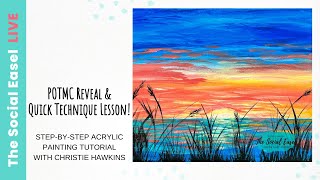
In this live YouTube session, Christie Renee Hawkins of The Social Easel reveals the May Painting of the Month Club artwork titled "Sunset Over Water" and uses the opportunity to give a concise tutorial on several core painting techniques. She explains the structure and benefits of her two membership tiers – the $20/month Painting of the Month Club (pre‑recorded tutorials, lifetime library access, no commitment) and the $47/month Tribe membership (community Facebook group, multiple monthly lessons). The lesson focuses on three problem areas many learners face: (1) blending complementary colors without creating muddy neutrals, (2) painting realistic water reflections, and (3) rendering grass and reed silhouettes with fine brushwork. Christie demonstrates the use of three brush types—a fine liner, a round brush, and a fan brush—and offers a shortcut using Posca paint pens. She stresses proper brush loading, pressure, speed, and brush care, and recommends a mixed‑media pad for low‑stakes practice. A giveaway of a 15‑piece custom brush set is announced for Painting of the Month Club members who comment with the appropriate tag. Throughout, she encourages viewers to start painting despite fear, highlights the flexibility of the membership schedule, and points to additional free lessons on her Facebook page and YouTube channel.
Chapters
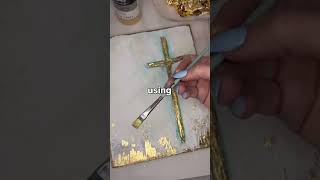
Hey everybody, it is Christie with The Social Easel, and we are here today a day early. Normally we release the new painting for Painting of the Month Club on the 15th of every month, but there are a few days, um, throughout the year that the 15th falls on a weekend and I am usually doing something with the kids on the weekend, so we are doing it a day early today. We are headed to, um, St. Louis this weekend for Sophie's last dance competition, so we're excited about that. So I'm coming to hang out with you a day early, um, for this reveal. So let me know, um, when you are here. Hey, Jolene! And, um, Let me know if you are a member, whether you are a Tribe Sister or Painting of the Month Club member. Let me know in the comments, or maybe you are just joining us for the first time. We are going to be doing our reveal for the next Painting of the Month Club, so it's opened a day early. The link is up above in the description. Hey Diane, hey Anne and Tina. Um, but I'm really excited about this one. Hey Stacy is Painting of the Month Club member. So we are doing, um, something new and fun each month. I'm gonna do a reveal of what the new painting is for Painting of the Month Club, and if you haven't heard of that before, this is my ongoing membership that I have. It's our monthly membership. It's only $20 a month, and you get a hand-picked tutorial by me that is delivered to your membership hub. So no live lessons, no Facebook group to join. You can just log in to our membership portal and access your tutorial. So we love it. I love getting to to hand select the paintings that I'm going to teach you each month, and I try to give you a variety of things. So last month we did the Whimsical Birdhouse. Um, I don't— oh yeah, it's at home. Um, and, um, we've done, we've done a variety of things. So, um, this month I have something new for you, and what I'm gonna do is go ahead and show you guys what, um, is coming up. And you sign up for Painting of the Month Club the month prior to it coming out. So right now we are getting ready to release the May Painting of the Month Club. And then on the first of every month, as a Painting of the Month Club member or a Tribe Sister, that tutorial is delivered to your membership hub on the first with all of its resources. Hey, Kay is a Tribe member. Lisa said very interested. Observer. Welcome, Lisa. Hey, Trudy and Cindy, Marlene. Tracy's first time here, so welcome, welcome. All right, are you guys ready to see what we're doing? After I do the reveal, then I'm also going to do, um, just a quick mini lesson with you, taking one small piece of this tutorial and showing you a technique. To give you kind of an idea, if you are new to me, how I teach, if you haven't been on a Facebook Live before, um, or one of my members. But I think you're going to be excited about what I'm going to teach you today because it is something that a lot of people tell me they struggle with. So, um, I'm going to give you a few different options. So without further ado, are you guys ready to see what we're doing for May Painting of the Month Club? Here it is. Um, this is Sunset Over Water. I'm gonna hold that nice and close for you guys to see. I love this painting for so many reasons. One, because I love the water. It is my favorite and most peaceful place to go, and whether that means a lake for you, or an ocean. It can be whatever you want it to be, and you can plan your colors accordingly. Um, I don't know about you guys, but I probably have over 1,000 pictures on my phone of different sunsets. Um, this one was actually taken from a lake here in Missouri, um, but I just love it, and I love the silhouette of the grass in the front. And that is going to be a little bit of what I teach you guys today. Um, so in this painting this month in the club, this is going to be broken down into 3 separate videos for you in the membership library. Um, so you can take it in small pieces if you need to. The thing I love about Painting of the Month Club is that this is your chance to just do one painting a month with me. So if you have a busy schedule, but you still want to learn how to paint, this is a great option for you because you do have lifetime access to it, so you never lose access to the tutorial. So if you have a crazy busy month and you can't get to it, that's okay, it'll be in the library waiting for you. But we— this month we're going to learn some blending. So how many of you, raise your hand if you have struggles with blending. That's another big one that a lot of people talk to me about. I personally love blending, and I find it super relaxing to paint and blend colors together, but it can get a little bit tricky, right? So especially when we are doing blues and oranges together, you could easily end up with a muddy, yucky-looking sky if you don't blend correctly. So So in this lesson, I'm going to show you how to avoid that. How do you get these really pretty colors layered on top of each other without making a muddy, yucky color in the process? Because here's a little tip for you in case you didn't know. Um, blue and orange are opposite of each other on the color wheel. They're complementary colors. And when you blend two complementary colors, you get a neutral. So that is any kind of version of a gray, a brown. Whatever those colors, depending on the ratio that you blend them at, that's what you're going to get. So a lot of people, that's what they will say, like, oh, I'm messing up with blending, I don't like it, I got like a muddy color. It's because you've mixed two colors together that are desaturating each other. And when they desaturate, when they take color away from each other, you end up with a neutral. Um, so we're gonna show you how to not do that in this painting this month. So that is the background. Um, thank you guys, I'm so glad that you love it. So many positive comments. Um, so that is the background, but then we've got all these extra little brushstrokes in there, the reflections in the water, the way that the sun slowly transitions in behind the water there, and how to make that nice and soft the way that it is instead of just a big semicircle floating in your sky, right? So you're going to learn how to do reflections in the water. You're going to learn how to not make it look like a pattern. Does that ever happen to you when you're trying to add accent marks and then you step back and you're like, all I see is dashes? It just looks like a bunch of dashes. So I'm going to teach you how to not do that and how to truly reflect what we're seeing in the sky. Down below into our water. And then, um, we have our foreground. Last but not least, um, we're going to add in our grass and the reeds in the front of this painting. So I'm going to do a little bit closer up so you guys can see that. And that is going to be what I'm going to do with you here today. So we're going to do a quick lesson on how to do these types of silhouettes. It doesn't have to be a silhouette, but I'm going to teach you how to paint grass and how to add these different reeds in and give you a couple different options to do it. So a lot of people tell me this is one of their— the things that they struggle with the most when painting is doing the fine details like that. So I thought this would be a good mini lesson for you guys today. So let me know what you think. You guys want to learn some techniques on how to make grass like this? Oh, and I forgot to mention— I'm glad I had my brushes out— one Painting of the Month Club member in the comments is going to get picked to win. I'm going to show you both things. So I just opened a new set for myself is going to win one of my signature paintbrush sets. This is a 15-piece brush set with a custom bag that I have designed, which is fantastic for traveling to put all your art supplies in. You can fit pens, um, obviously your brushes, palette knives, whatever you need for your creative process can all fit in this handy-dandy little bag. And then it's 15 brushes. It's a 15-piece brush set. Um, I selected these. They're in my favorite color, teal. And these are the brushes that I use whenever I teach. So to get entered to win this— this is— this part of it is only for Painting of the Month Club members. You just have to, in the comments, type out Painting of the Month Club member, or you can put POTMC, which is just the initials for that. And then over the weekend, we're just going to keep this running and give everyone a chance who couldn't join us live to enter that as well. And then we will pick a winner from the comments, and we will pick that on Monday, and I'll— it'll be announced in the comments. Okay, so be sure to share. And if you're not a painting— here's, here's a little secret for you. If you're not a Painting of the Month Club member yet and you're sad that you can't get entered into this You can join today. It's open today, and this will be the first painting that you get in your membership library if you're just joining us. Um, one question that I get too is, is there a commitment? And there is not. So Painting of the Month Club member, you can cancel at any time, so it's no long-term commitment. If you just love this painting and you want to have it, you can sign up and get it, and it's only $20. But I will tell you, because I picked them all out, the paintings that are coming for the rest of the year in Painting of the Month Club are fabulous, and you're going to love them, and you're not going to want to leave because you're having so much fun learning how to paint. And it just takes a few hours a month, so less than an hour a week. Can you commit to less than an hour a week to spend some time doing something that you love or that you want to learn how to do? That's what Painting of the Month Club is for. So giveaway for this, I'm grabbing my small liner out of here, and then we are going to switch the camera view so that you can see up close. So I'm gonna do, um, I'm a little bit of grass with this fine one. I'm actually going to show you a few things. Why don't I just show you a few techniques here? And then I'm going to get a bigger round because you don't always have to use a tiny itty-bitty brush. And then just for the sake of it, because you could totally do this in this painting, I'm going to show you what you can do with a fan brush for the grass as well. So I'm going to show you 3 different brushes, and then if you're like, that's great, grand, wonderful, Christie, but I really just can't with the small brushes and I don't think I can get those brush strokes like that, I'm going to show you a little bit of a cheat with, um, some paint pens that you can use to get this look too. So I am going to pull this camera over here and take myself off the screen so you guys can see the workspace. Why'd my light turn off? Okay, I'll fix that in just a minute. I wonder if I can Hold on, I want to try something here. That's not doing what I want it to do. Okay, we'll just do this. I'm gonna get you pretty close here. There we go, got some nice good lighting. Hey Jody, um, you can join Painting of the Month Club with the link up above. Um, it's in the description of this, and then Lynn has also put it in the comments, so you can click on that link in the comments, and it's only $20 to join. Hey, Deanna said, I really enjoy being a part of Painting of the Month Club, especially the holiday-themed paintings. Thank you. I do love holidays. Um, Stacy said, what lights you use? I have a bunch of different lights. I have ring lights, I have Lume Cubes. Um, the one that I'm using right now that's holding my phone, um, which is what I use to do Facebook Lives, um, is actually called Canvas. Um, I don't think I have a link for that handy, but anyways, I really love it, um, as far as like flexibility of how you can use it. So let me grab some black paint really quick and we are going to get started. And if you're having fun learning these techniques and you want to share with your friends who may also love to paint, I would love for you to share this video as well. Okay, so there are a couple things. Like I said, we're going to use some different brushes here when you are doing this. A lot of what people struggle with is not having the right amount of paint in their brush. So I'm going to show you how I load my brush up. And this is mixed media pad. Okay, so this is like a big sketchbook for painting. This is what I did with my tribe sisters yesterday, some fun brushstrokes I taught them. But this is for you to practice and just play. So I highly recommend getting one of these so that you don't feel like, I can't do it, I can't— like, I don't want to ruin a canvas because I'm scared I'm going to mess the painting up. This is why a mixed media pad to me is so important and one of the first things I recommend for anyone to have. When you start painting, because it doesn't matter what you do in here. It doesn't matter if you mess it up. It doesn't matter if you hate it. If you really don't want to look at it, you can rip it out and throw it away. But this is meant for you to practice. This is meant for you to learn and play with your brushstrokes until you do feel confident about it. And then once you build that confidence, then you're going to feel more comfortable taking that to a canvas or a finished painting. I have a lot of people, including myself, sometimes I will do a complete painting in here. So I could paint— it's the same size, so I could paint this whole painting inside my mixed media pad. It's an 11 by 14, and then if I don't like it, that's okay. I can just turn the page. But what I really want people to focus on is that you have to make mistakes to learn. That's part of learning. So not to be so hard on yourself and really just enjoy the process of learning a new skill and learning how to paint, and I fully believe everyone can do it. So the first thing is— see if I can get this to zoom in, focus— there we go— is the amount of paint on your brush. So this is my fine liner brush, and I have a lot of paint on there. So these bristles are tiny. You need a lot of paint so that it can make the brushstroke. If you just barely tap it into the paint and then try to make a brushstroke, it's not going to look the same. So the first thing I'm going to do— let's just say this is— I'll start at the top, then I don't drag my hand across it. Let's say this is our ground, this is the bottom, and we want to start. So I'm already reloading. You're going to keep reloading your brush to have plenty of paint in there. And you're going to make these quick curved flicks of your wrist. Okay, so first I want you— everyone just take some time, start doing this motion. This is like memory training for you when you're doing these brushstrokes, and you'll start at the bottom. And you're going to do these quick brushstrokes like this. Now, one thing that I see a lot of people do— you can see I started to do it here. Is they'll pick one spot and come out of that and make all their grass come out of one area, which is fine if that was just one little plant, but it's not going to look as good as if you had them come out all the way across. So I start several different points along that baseline. So see how I'm doing that, just building towards the base, and then I want some longer ones, obviously. And these are just wispy little brushstrokes, and you want them to overlap and go different directions. So this would be what you start practicing with, and This is just kind of how— I mean, I don't even know that there's really a right way to hold your brush. People ask me that a lot. This is just kind of how I hold mine, similar to how I hold a pencil. You can go straight up and down, or you can have a little bit of angle. Try it both ways, see what is more comfortable for you. Do you like the way it looks this way, or are you able to put less pressure on And by pressure, I mean the amount that you're pushing down on your brush. That's probably the biggest struggle that people have. So one would be not having enough paint in here, just doing— I'm going to scoot this over so you can see me dip it into the paint, just getting like a tiny dot of paint. And then we'll see. That was more than I thought, um, not having enough to do the brush stroke, but that actually was plenty. So we'll wear some of this out, but you can see when you start running out of it, the wispier they get. You can't get a solid line. Okay, so that's kind of your cue to add more paint on there. But when I talk about pressure, I'm barely touching my bristles to the paper. I'm not pushing down. Okay, so getting these fine lines that people struggle with is— most of it is about the speed of which you're doing these brushstrokes. If you try to do this really slow, look at how different that looks. It's like super heavy-handed. You're going to push down more. Like, even when I'm not pushing down hard, just doing that slow, that is a completely different look than this, right? Does that help you guys to see the difference? So speed, right? So we want fast. Wispy. And then if you're like, yeah, but I can't get the really long ones, the long ones are hard— here's my secret for that. I actually don't start down here, I start like midway where I've already got one started, and then I pull them out from there to get the longer ones. And you want to have a variety So you don't want— like, when you're looking at this, you want all different heights of grass. And then we've got the extra little, um, excuse me, allergies— the extra little reeds too, those really skinny lines. So let's scoot down here. So we talked about speed of your brushstrokes, right? We talked about pressure. Because even if I do it quickly, but I'm pushing down hard, you spread your brush out. Can you see how that's— the more you push down, the more your brush spreads out. So light grip, light touch. Those bristles are just barely going across the surface. Okay, the harder I push down, the thicker that line is going to get. Um, okay, so let's do— well, let me pause on the accent marks. What if you use a big one? Sometimes it's easier for people to use a little bit bigger round. Hey, Karen, I'm using the smallest brush out of my brush set, so that would be the number 1. This one, this is my previous set that doesn't have the numbers on it. I think if I don't have that other one over here right now, I don't know what number one this is in my set, but it's a round. Sometimes it's easier for people to actually use a bigger round to do this. So again, just practice, play with the different brushes and see what works for you. But you can do the same thing. Again, it's all about the pressure that you're putting down. I'm just using the point. Of my bristles. So I can get those same wispy, pretty lines with a bigger round or a super skinny liner brush. So play and see what works for you. This is exactly what your mixed media pad should look like when you're practicing. It should just have brushstrokes all over it, you testing things out and figuring out what you want. And then I talked about— I was going to show you what you could do with a fan brush if you wanted to just try this out. A lot of people are scared of fan brushes. It's really loud, sorry, there's a truck outside. So I try to hold this over here where you can see it better, spread my bristles out a little bit. So, oops. And you're just gonna kind of play. These obviously have a different look, but this is good for like filler. Like if you wanted to have— this is holding it, by the way, like this way, like the wide way. But if I turn it on its side and do it vertical, which is how I usually do when I'm doing grass, you can still get those wispy lines with a fan brush. So that's just another— I just wanted to show you, and then you can build on it. This is really pretty with different colors too. And some of my, like, other paintings from the ocean and stuff, I will do the grass in different shades of brown, and you really can see a lot more depth and layering with it. So that's using a fan brush. So different look, but you can still do that. On this painting. So let me know in the comments either if you've done this and you can tell me what your favorite brush is to use for doing grass, or if you're new to this, maybe you're practicing right now, what you find the easiest to do your brushstrokes with. Grab a drink of water really quick. Norma says, I'm a part of Painting of the Month Club. Is there a private Facebook group I can join to access it? So Norma, I have two different memberships, and I'll just kind of explain explain what those are. If you are wanting a community to be a part of and not just have access to one of my lessons each month, then Tribe would be more of what you're looking for. We don't open doors, or doors are not open right now. We open on, I believe it's May 21st, to new members. And being a part of Tribe includes a Facebook group, our community, multiple lessons with me each month. An entire library of paintings that you get access to, and that membership is $47 a month. In Painting of the Month Club, these are pre-recorded lessons taken from my tribe, my favorite ones that I've taught them, and then I release them to Painting of the Month Club members for $20 a month. And you just go into your membership library and you can take it at your own pace and do the lessons whenever it works on your schedule. And then, as far as sharing your work, we put posts here on this page on the Social Easel for you to come in and share your work under those posts, so everyone can see your beautiful art when you are finished. So there's, there's two different memberships and kind of two different levels depending on what you're looking for. Jana said, how do you keep the bristles of the round brushes from fanning out over time, washing over and over? That's a good question, Jana. I'm going to throw that up on the screen just for people when they watch on a replay. Brush care is super important. Lynn, if you can throw— I'm so sorry, I'm coughing again. You can hear the raspiness happening in my voice. If you'll throw up the link for the brush guide. I think that would be awesome, um, to help her answer this question. But if you take good care of your brushes, you should be able to keep them looking like this for a very long time. So part of that is proper care as far as what you do when you're done painting, which is not leaving them in the cup. Leaving them in your water cup will push down the bristles, and they'll end up flared out that way. And also just being kind to your brushes. So you wouldn't want to take this nice pointed brush and really be rough with it, because you're going to ruin the bristles doing that as well. And then you wash them properly and then lay them flat to dry. But we created a brush care guide because I had this question so often. And the brush care guide does not just tell you how to take care of your brushes, but it also is a guide to show you what brushes I use for what technique in my paintings. Cheryl said, I like a liner brush for the wispy grass. It takes longer, but it works for me. Or the fan brush, using it horizontally. Yeah, me too. It does take longer, but I just love the way that it looks. Okay, so let's do the top of one of those. So I'm just going to do a couple longer ones. And you can see sometimes I even go back and forth. I usually start at the bottom, but every once in a while I'll pull back down too. Again, you do what works for you. All right, we've got this nice long one here, so I still have paint in there, but I've kind of wiped it on the side to get it to the top of my brush a little bit more. Let me try to keep my hand out of the way. And for those little grass reeds, I'm going to go from the point of this and just come out at an angle like that. I wonder if I can get you even closer here. So see how I've just kind of come out at an angle here? I'm going to get a little bit more paint and do the opposite way. So think of it like a little V shape. You're making a bunch of these. So, and again, you're just going to keep practicing this, making these tiny Little lines and then angle some this way. See, that was a little heavy. That's okay. The other thing that you've got to learn with painting is it's not about perfection. Look, that— you may have thought, oh my gosh, that's a mistake, that's going to look terrible, but it's really not. You won't even notice that that was a little darker there, and maybe that's going to look good at the end of the painting. So when you do something like that and you're like, I wish I wouldn't have done that, don't be so hard on yourself. Just keep moving. The worst thing you can do is get fixated on what you think is a problem in your painting and it stops you from moving forward. What you'll realize the more that you paint is those little things that you think are mistakes, at the end of the painting you're not even going to remember that you did that. Not even going to matter. So give yourself grace when you are learning something new. Okay, so that is using the 3 different brushes that I've shown you. Now let's say you're like, I just really don't want to— I just, I would rather just draw my grass reeds on there. Um, get yourself a Posca pen. I love them. They come in different sizes. This is the medium. It says 1.8 to 2.5 millimeters. I think it's called a 5M, PC5M. Anyways, these are great. It's actual paint inside here, so it's a paint pen, and you can just do same motion. The motion is going to be the same whether you're doing paint and brush or whether you're doing pen. How easy is that? Now it's harder to get, you know, like with paintbrushes, you can press down harder, right, to get some more of this thickness. With paint pens, you cannot do that. You have to just keep layering. If you press down a paint pen on your work it will bleed paint everywhere. So you don't want to do that. But look, isn't this just fun? Just get yourself a little sketchbook and just start scribbling in there. You'll feel so much better. It's a great stress reliever. And then obviously doing the tips on the end, maybe you just want to use it just for the little bit of grass. This is why I love Posca pens because it is paint inside of there, you can use it with paint. So you can— you, you can do your whole painting in the craft acrylic paint, which is what I use. And then if you want to do some fine detailing, you can bring in a Posca pen and do some finishing touches with this. So let me know what you guys think. Was that a good lesson? Was that helpful? If you're just joining us, We are talking about Painting of the Month Club because we have opened doors today to new members, and this is what you will be signing up for. This is our May Painting of the Month, Sunset Over Water. You're going to learn blending, you're going to learn how to do reflections, and then you get more practice at this grass, this technique that I taught you today. So if you are new And this is your first time joining me for a lesson. I hope you had fun. I hope that gives you an idea of what you can expect when you are learning with me. And Painting of the Month Club, you can join each month. We open doors from the 15th through the end of that month, and then your painting is delivered to your membership portal on the 1st. So when you sign up for this and you go log in today, you will have the reference photo you can print off, and you will have your supply list. So you can go ahead and get your paints and everything and have all your stuff set up. So on the 1st, when your painting tutorial is delivered to your membership library, you are set and ready to go, and you have lifetime access to them. So you can come in and um, you can come in and do it whenever it works for you. I'm trying to get this out of my face. Um, what else was I going to tell you guys? It's only $20 a month, um, to sign up and become a member. So we released it a day early this month. Um, I have to get this straight, it's bothering me, um, because I'll be out of town tomorrow. So if you had fun And you want to keep learning painting techniques, join me here on either YouTube or my Facebook page. We do weekly quick lessons on Wednesdays at noon, unless I'm out of town traveling. So, and you can just go to the videos tab here on the Facebook group. And of course, on YouTube, you can scroll back through lots of videos. So be sure to follow us over on YouTube, but you can go to the videos tab right here on the Social Easel Facebook page and there's a plethora of techniques. And then if you want a full tutorial lesson with me, then Painting of the Month Club is a great place to start. Um, let me show you, if you haven't seen, just a few more things. Where did I put it? So this is what I taught on this Wednesday. So I actually did a full free lesson. How fun is this peacock feather? So, um, again, my style is very, um, versatile. There's lots of different techniques that I teach. But again, lesson in learning how to do these fine wispy lines. So you can go back and watch that video here on Facebook or YouTube. And then, um, obviously you can do Painting of the Month Club if you want to have, um, a painting tutorial from me delivered each month to your membership portal. So let me know if you guys have any other questions. I am going to be jumping off here. Sounds like perfect timing because we have some sawing going on downstairs. But, um, I think that's it. I will be live next week Right. What's today's date? Yes, I'll be live on Wednesday next week for another free lesson here on the page. You can sign up for text alerts if you want to know when I am going live. I send notifications about 5 minutes before I go live. Lynn, if you are— yeah, you're still here. If you'll throw that text number— perfect— up, you can text live alert to that phone number. And then the Painting of the Month Club link is up in the description up above. So I will see you guys Wednesday. Everyone have a fantastic weekend and happy painting. Get your, get your mixed media pad and start painting. The best, best piece of advice I can give you is just start, because the fear of you not doing a good job is stopping you from a gift and stopping you from a gift that God gave you of being creative. So don't let that fear creep in. Fear is a liar. Jump in, grab your stuff. Don't wait till you have all the perfect things. Just get some paint and brushes and start playing and learning, and I think you're gonna fall in love with it. All right, see you guys soon. Bye.