Join me to talk about the Masterclass with JoAnn
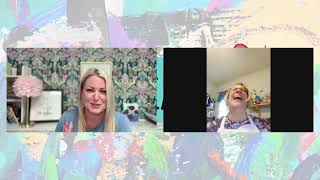
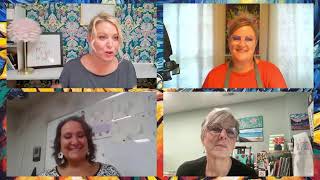
In this YouTube interview, host Christie Renee Hawkins welcomes former student Joanne Mullis, a 25‑year‑veteran of paint‑by‑numbers who completed the 2024 Florals Masterclass. Joanne shares her artistic background, why she joined the class after seeing an ad for a fear‑free workshop, and her experience with the six‑module curriculum. The first three modules focus on fundamentals—elements of art, color theory, and note‑card paint swatches—before students begin original paintings in Module 4. Joanne describes how these foundations helped her move from copying to creating original works, giving her confidence in color choices, depth, and contrast. She highlights practical lessons such as using paint swatches to understand warm vs. cool hues and embracing “happy accidents” and the “messy middle” of the creative process. The conversation also covers the supportive Tribe community, alumni repeat enrollment, and the desire to sell artwork, with Module 6 dedicated to monetization strategies. Joanne offers encouragement to prospective students, urging them to trust the process, overcome fear, and view mistakes as opportunities. The interview serves both as a testimonial for the masterclass and as motivational guidance for women considering the program.
Chapters
Okay, we are live. So I want to welcome Miss Joanne Mullis, right? Am I saying that name right? Okay, Joanne Mullis. She took the florals masterclass with me in 2024. And so I wanted to invite her on and have her share a little bit about her experience and her story kind of coming into the masterclass. So, Joanne, what was it? Kind of tell us a little bit about like your history with like creating. Had you painted before, and what made you kind of want to join the masterclass last year?
I started painting probably about 25 years ago, and I was doing adult paint-by-numbers just in the evenings to have something to do. I loved it. I watched a lot of Bob Ross growing up. And always thought it just very interesting to me.
Yeah.
Intrigued me. Painting by numbers is very tedious and very slow. You get one done a year.
Oh, gosh.
Extremely tedious, extremely slow. And I saw your ad for the 3-day workshop in the fall of '23. About the spirit of not fear, not being afraid. And I thought, oh, that sounds interesting. So I joined that, and I just loved it. I thought, wow, this is so much better than painting by numbers. So I signed up to be a tribe sister, and I just— it's been no holds barred. I just love it. And when you introduced the masterclass idea, I thought, wow. I could paint my own creations, not just somebody else's creations. Um, so I did like 3 or 4 different varieties of my one piece that I was doing. Um, I learned so much, and yet I know I've forgotten so much in the last year. I'm looking forward to the next one to remind myself because there was a lot of information It was very good. I love the fact that your videos were short and we could— because I took lots of notes that I could go back and look at and take it in little bitty small bites. I just, I just loved it. And I'm looking forward to the next one.
Good. I'm glad to have you back again. I was talking to some of the other ladies in our group this morning about taking it again. And me personally, whenever I take a course, Um, I always take the offer to do the alumni offer and, and do it again because you learn so much repeat, even though the core of it is the same, right? Doing it again helps it kind of stay in our brain better. Like you said, like there's so much to process and there is. Um, so for those of you watching, if you're not even, maybe you just popped on and you're like, I don't even know what the masterclass is. Um, the florals masterclass is something that I created, um, last year. And we did for the first time, and we did it with florals. Florals are one of my favorite things to paint, and I feel like it's a great place to start for people who are wanting to learn how to paint their own art. So inside this course, though, and Joanne, I'll let you kind of speak to this too. It's a lot more than just learning how to paint. So I'm kind of like taking you in to think of it like art college, except online with me. It's kind of how—
yes.
And we, so there are 6 modules and we break those down into multiple short videos within each module so that it is easy to consume, like Joanne was talking about, take notes. But I think one of the things that so many people were surprised by, like, we don't even start painting our, like, first original and start playing around with ideas for that until Module 4. So the first 3 modules are really about learning the elements of art, learning how to make choices in your color, like all of that extra. So what, what would you, or what did you think about those first 3 modules? Did you feel like that was beneficial in your journey to learn those fundamentals of art before just jumping straight into the painting?
Tremendously. It was wonderful. A lot of things I did not know because I never took art in college. It, it was fabulous. There was so much to go and do before. And if you do all the work before, then when you get to the actual painting, more of it made sense.
Yes.
Rather than just copying what somebody else was doing, or even just putting paint where there's a little number.
Right.
It, it— there was just a whole lot more. I really enjoyed it.
And then don't you think that that also, when it came time, because Joanne did finish the course, and do you have your painting with you?
I do, actually. I have 3 of them. This is, this is one I did.
So cute.
This is one I did. This is the one I showed.
Okay, I was gonna say that I recognized that one. Those flowers are beautiful.
At the end. And then I also did this one.
Oh, I haven't seen that one yet. That is so good.
This is my favorite.
Yeah, I think it might be my favorite. I love— it reminds me of the poppy, the big poppy that I just did. Yeah, that black background and that big bold flower. And then I love that.
Yeah, this is, this is my favorite out of all of them. And the rose is my favorite flower, which that's probably why I picked it. But I enjoyed, I enjoyed doing it, and there was so much more to do with it. I can't wait to do some more.
Yeah, I'm excited to see what you do this year inside the course. So when you— because I have, I've only had seen that one, her, her first one that she shared in the group. But when you were doing those, did you feel like Now that you had those kind of that, I want to call it like a foundation, like that base, like understanding of art, art elements, how it works, how to make those choices. Did you feel like that's starting to come more naturally to you when you were creating like your second and your third original pieces?
Oh, definitely, definitely. And I was starting to look more at how to get depth in my paintings. And how to make part of it more vibrant than the other part. And color choices— the, the color theory was fabulous. Like I said, I had just done painting by number before, so they were always picking my colors, and now I was getting to pick my colors, and I was understanding what went together. Probably the most valuable thing I did was when you had us make on the little note cards, the paint swatches of all our paints, so that we can stick them together and see, oh, well, this is a warm purple, and this is a cool purple, and now I see why they don't go together. Yeah, I never knew that before. So it was fabulous.
That's awesome. I love hearing that. And I do want to say you did— that was the first thing I noticed about that last painting that you held up was the bold contrast. You did such a great job creating that depth with the lights and the darks in that rose. So it's so exciting for me to see, um, you continue on and keep doing those originals. So what are you— what are your hopes for, um, this year, even with the course or outside of the course? Like, where, where do you feel like this has kind of helped you, or, um, kind of guided you along your, your creative journey?
I just want to get better at it and do bigger things. Of course, I have a lot of paintings and nowhere to put them, so I've been doing smaller canvases lately because you can put more on the wall that way.
Yeah.
I like— I want to do your Spring Funky Flowers. I just, I was looking through earlier to find something new to paint. Yeah. I thought, oh, that's pretty. I haven't I need to do that one next. And I'm doing a lot more looking at a picture and then painting on my own, which it— I'm still in the process of doing that, but I can see where to do things. I'm more comfortable with, oh, well, I need to make this darker so there's contrast and making my picture, my painting look more like the picture.
Yeah, yeah, I think that's exciting. And it's so cool to see, like, I was just noticing in, in all 3 examples that you gave me, but I can tell by looking at those, like, you're starting— you're, you're now seeing the shape of things, like, inside. Like, instead of just saying, oh, I'm painting a rose, like, you're like, you're breaking it down, and you're like, there's sections of the rose, right? And then when you start staggering those together and you play with the contrast, that's kind of what makes it all come together, and you build that, that depth in that painting. So that's really cool to see, and I would just encourage you to, you know, keep on, you know, getting inspired. And, um, inside the course, so one of, one of the ways that I, um, show the students how to create their own artwork is from a photograph, um, and then, and, you know, there's a couple different ways. You can also like look at several different photos or even ideas interest and then start sketching your own composition. So what I love to do too, which is I think similar to you, is like taking a flower. You could look at a photo of a bouquet of flowers and pick one rose out of it, and you could work on that, just that one rose, or you could create a whole bouquet around it, or look at several different photos or paintings and take elements from each one and start combining them. So those are the things you start learning inside the masterclass is um, how to take those several different ideas and kind of piece them together. And one of the other things, um, that I love for people to do and that I do myself is paint the same painting again, but like, figure— kind of play with it, you know what I mean? And like, how can you make it different? What elements could I— maybe I could be a little looser, maybe I could, you know, there's always— or different, even a different color scheme. So, um, it's really fun to see you get to play with that and continue. She's, she's also one of my Tribe sisters, so she can— continues to get to paint with me every month inside a Tribe and continuing to build those skills. So, and I was gonna say, when you were talking about there's running out of room, I'm thinking maybe you need to sell some of your work.
Well, I have sold a few of them. I, I had a booth for a while, but there wasn't a whole lot of call in our area for that.
Yeah.
So I've tried to figure out how to sell them. Online, but I, I need some more help with that.
Yeah. Yeah. Well, maybe that can be— maybe that can be our goal for, yeah, for 2025. Maybe we dive deep in module 6 when— in module 6 is where I talk about how, how you can make money with your artwork and the different ways that you can. So maybe we can dive deeper into that. And there's a couple extra lessons that I'm gonna throw into those modules, some things that I've learned and played with over the last year. Since the last class to hopefully, um, give you guys some more creative ideas of how you can make some moolah with your artwork.
So my husband is ready for me to make some moolah.
They always are, right?
Yeah, he's like, okay, when are you gonna start making money with this? I'm working on it.
But I do want to— I do want to bring— actually bring that up too, because I think sometimes people think like a class like this that you should only take it if you want to sell your artwork. And I don't think that's the case at all. Just like you were talking about, you just love this. Like, you've been painting for 25 years, it's a creative outlet for you. And now you've gone from relying on a paint-by-number and having to have, you know, something drawn out for you, colors, and now you have built the confidence to start doing that on your own. And I think for a lot of women, the more of you that I talk to, it's really not about making money or selling the art. Like, those are great things, but— and I know, like, it's great to make money and then you can keep doing more of it, right? But it's important for us to also just remember to kind of fall in love with the process of creating and look at what that does for us as a person and kind of filling up our cup, um, in our own way too. So I love that you're, that you're doing that and, and have just continued to push yourself, um, to the next, to the next level.
So yeah, any day I can paint is a good day.
Yes, same here. I'm always sad on the days where I have all the office work and none of the fun stuff. Some days I sit— I'm downstairs in my studio right now and I don't even get to go up there to paint, and I'm like Oh, so much better on the—
yes, so much better on the days I can paint. Definitely.
Well, thank you so much for jumping on with me and doing this interview. I love getting to share all of your guys' stories from the class last year, and it's exciting for me to today get to see some of your new artwork too. Last thing before we jump off, do you have anything that you would say to some of the women who are going to be watching this and wondering if it's right for them? Because I think a lot of times there's that desire, we have that desire, but fear will sometimes squash that. And I love that that was the first course you took with me, was that God gave us a spirit, not of fear, you know, trust him. But sometimes that, that fear can be a very real thing. And you know, there are people watching who are like, yeah, that's great, it worked for Joanne, but I don't know if it will work for me. What, what would you say to them in that circumstance?
I would say, like you always do, to trust the process. That is more than just cliché. And the fact that it's really only paint— I have a small group of ladies that I paint with. Once a week, and some of them are so scared to use the wrong color or paint in the wrong spot. And I keep saying, but it's okay. It's only paint. You can always paint over it if you don't like it. You can always change the color. But until you put some paint on the canvas and actually start to create, you have no idea what's locked up inside of you. Exactly. You just don't know. You have to try it. The biggest thing is just getting over that hurdle of putting paint down on the canvas, and then, and just realizing that the middle is gonna be messy, and it's not gonna look like anything, because that's, that's just the way it is.
Yeah, that's just part of it.
Right? And it's okay that that's just the way it is, because it's not finished. Um, but to trust yourself enough to just go ahead and jump in and try it. What's it going to hurt? It's only paint. If you don't like it, paint over it. Um, in fact, I have taken some projects that people have thrown out of the trash and took them home and painted over them because I could see value in what they had done where they couldn't see any value. Um, and then I gave them back to them and they're like, Really, it turned out like— and I said, it's really just paint. Keep going. Don't get stuck in the messy middle and give up.
Yeah, 100%. Like, that is— so we talk about the messy middle. If you haven't heard that term before, it literally means the middle of a painting process, because, like she said, it is a process, and you do have to trust it. And I want to say, like, that doesn't go away. I have been painting for over 35 years. Um, there are still messy middles in every single one of my paintings. There is still sometimes frustration. And the reason I talk about that is because those are common. That is part of the creative process, right? I think sometimes people think they're kind of like your paint-by-numbers, to kind of go back to that, like it's just supposed to all fall exactly together perfectly the way that it's supposed to, and that means you're a good artist. And that couldn't be further from the truth. I think some of the most valuable things we learn in art and in creating is through making mistakes and through not being afraid to just throw something on the canvas and seeing what happens and playing with it. And yeah, I mean, it sounds kind of silly when I say it, but once you get to that point, you'll know what I mean. When, like, let the art speak to you, like, let the paintbrush speak to you and the colors, like, you'll start, like, kind of— it's like a conversation with your painting, and you start figuring out, oh, I could do a little bit of this here, and then before you know it, it starts coming together in the middle, and you're like, okay, I can see, I can see it. I can see it coming together.
Yeah, you talk about happy accidents, and I never thought of it that way. I always thought, oh, I've made a mistake, I need to cover it up. And you're like, well, it's a happy little accident, let's just leave it. And we'll go on and we'll see. And sometimes you go over it, and sometimes you leave it, and it becomes a really neat part of the picture because it worked itself into the picture as you painted. And that's, that's a new mindset for me, that it is a happy accident, and you just leave it and keep going, and you can always change it later because it's only paint.
The important thing about that too is to not fit— like, I, I preach this all the time when I'm teaching you guys how to paint, but if something does go wrong in your art while you're creating it, don't fixate on it. And I think like that's such a problem of the perfectionist mindset, is like we fix it on that problem and we can't move forward until we fix that one thing. And that one thing is preventing you from like the beauty that was about to happen. It's like this big roadblock, right? Like there's a big rock in the middle of your walkway and you're just sitting there trying to figure out how to get over it, and instead you just need to take the other path, right?
Go around, just go around, keep going, go around.
Come back to it and it'll, like you said, it'll work itself out. So yeah, I love that. Well, thank you so much for sharing with me today, and I look forward to having you back in the 2025 class. And, uh, it's gonna be fun. I'm excited to see what you do. I want to say this semester, it's not really college, but it is, so it does feel like a semester. But I'm excited to see what you do in this year of the course.
Well, I used to teach college, so yeah, it does feel like a semester.
Well, thank you again, and I will see you in the masterclass. All right, sounds good.
All right.