Let's Talk with Linda - Masterclass Alum
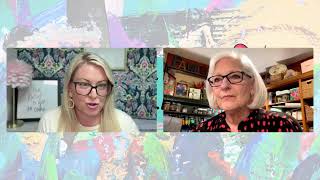
In this YouTube interview, Christie Renee Hawkins (host) chats with Linda, a 2024 Floral Masterclass alum, about her long‑standing painting career and how the masterclass helped her shift from decorative, pattern‑based work to creating original floral paintings. Linda recounts her early training in toll and decorative painting, her reliance on prescribed color palettes, and her frustration with copying others' designs. She explains how she began drawing inspiration from Pinterest, photographs, and personal memories, adapting them into unique compositions—such as a still‑life for her bathroom and a wedding‑bouquet portrait. Christie outlines the masterclass structure: foundational modules on finding inspiration, art and design fundamentals, and color theory, followed by guided practice. They discuss the importance of community support, the challenges of naysayers, and the need for consistent practice and time‑blocking. Linda shares how she keeps color swatches and sketchbooks from the course, and both emphasize that artistic growth is a gradual process, warning against comparison. The conversation serves both as a testimonial for the masterclass and as encouragement for aspiring artists to develop a systematic, supportive approach to creating original work.
Chapters
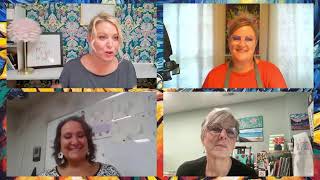
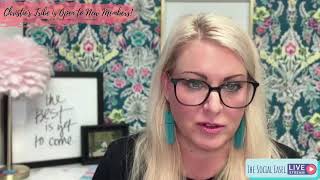
Hey everybody, Christy Hawkins with The Social Easel here, and I am here with one of my students, um, Miss Linda. She was in my florals masterclass in 2024, and she was kind enough to come and chat with me today and share her story about, um, her journey with painting up to this point and share a little bit about why she wanted to join the masterclass. And I'm going to give them just a quick, uh, background, and then I'll kind of let you take it from there, Linda. But Linda has been painting for several years. Um, she is a member of my tribe as well, so we paint together on a regular basis. But what I love about Linda is that she has her own style. And, um, even though we don't paint in a similar style, she takes like the designs that I teach them inside of Tribe, and they're always unique, and she makes them her own. Um, and so it, it was encouraging to me to see that she wanted to take this masterclass, um, last year because I already think she's such a fabulous artist anyway. So, um, Linda, I'll let you share a little bit of like your background, how long, um, you've been painting, and kind of what brought you to want to join the masterclass.
Thank you for that, Christy. Um, I have been painting for many, many years. I started painting in the early '80s, uh, when it was toll and decorative painting. Uh, I started painting in oils, then went to acrylics. I painted Rolls-Royce mauling and all of the things that you were supposed to paint back then. And it was a trained thing for me. I was trained to paint. I didn't think I had a natural ability to paint, to, you know, art was not my thing. I used to say I can't draw a straight line, and I still can't draw a straight line. Dare me to draw a straight line.
Hey, most people can't. That's what rulers are for.
Yeah, that's exactly right. But I knew nothing about formal art training. And I still did not know until the Master Florals class, the Floral Master's class. Um, and that's why I wanted to take the course. Uh, I had never had any formal training and, uh, I always took classes that the teacher had a picture and the teacher had, um, pattern that she gave out to everybody and she had a list of the colors that you were supposed to use. So I never had to think about it. I used the colors that I was told to use, and I painted it as beautifully as I knew how to paint. And I really never veered too far away from what I was told to do. So I was trained to paint. And then I quit taking those formal classes, and so I started, you know, I would get books and try and paint from books that— I mean, I've got a library of painting books from the artists that I love the most, you know. And I went to conventions. I was a member of the National Toll and Decorative Painters, you know, and I went to every one of their conventions for years. So that's kind of my background. But bringing us to this class that we're talking about, I needed I needed to learn what it took for me to make a painting of my own, to quit relying on other people's art. You know, basically that's what I was doing is relying on other people's creativity. Somebody else thought of that design, and I really was one of those people. I heard you talking about it in your class the other day, how it's a misconception that people think that, that a real artist just thinks it up in their mind and puts it on a canvas. That's not true, you know. It's just not true. Maybe Michelangelo was that way. I don't know. He— I know he had—
yeah, he was brilliant.
Yeah, I know he had some thumbnails somewhere, you know. But, uh, what I'm saying is that I knew that there was a way for me I had the ability. I just needed to put it all together, and I needed to learn what there was. I know color. I spent years painting murals that we, me and my partner, made up as we wanted. Somebody would say, well, I want this, I want a garden, and I want a house in the background, and I want some animals in the yard. And so we did that, and and, and we were pretty good at looking up patterns for things, you know, like for the animals and the horses and the, you know, so I had the ability to put it all together, but to actually sit down and make a painting, you know, and, and like really the only, the one that I, the two, the two that I consider my originals, more my originals than this one. This one came from Pinterest. It was inspired by Pinterest.
Yeah, this one's so pretty.
It's a still life and I absolutely love it. It hangs in my bathroom. I won't sell it ever, ever, ever because I love it.
It's gorgeous. So you got— so I just want to clarify for people, she didn't, um she didn't take that painting from Pinterest and copy it. She was inspired, and we talk about that inside the course. She drew her inspiration from Pinterest, looking at photos and artwork. And right, is that kind of what you were—
I changed up a lot of the colors in it, the flowers in it. You know, I used the, the colors, you know, I changed it up to match my bathroom, basically. I mean, this— there was a vase that had tall flowers in it, and I use that as my inspiration. Uh, and, and if somebody— I mean, if somebody looked at it, they'd say, oh, you copied that. But really, it's, it's not a copy. It looks— it's the same style as far as a design, you know, it's the same design as another still life, but it's not, um, because I made it my own.
Right. And I think, you know, when we talk about— and this is a great conversation. And I think something like, you know, I've been talking about it in our workshop that we're going through too, when I'm talking about kind of showing people how to find inspiration. And like you said, it doesn't just pop up out of, you know, your head. You're— we're inspired by every single thing around us. And I don't even think we realize that until we, you know, slow down enough to think about it. But We're inspired by what we see on Pinterest. We're inspired by what we see in the stores. We're inspired by nature. I mean, literally, like, I even think my mom got me these, like, these little, like, bookmark things, right?
Like, exactly.
Just something that simple is to be like, I love that style of flower. I could use that and turn it into a painting. And I think it's important, like, for us to realize, first of all, if you look up a vase of flowers on Pinterest, there are only so many different design compositions like you can do for a vase of flowers, right?
Like, exactly, they begin to all look alike after a while, right?
But they each become their own and they each have their unique voice to them, and you change it and you make it your own. And, um, so those are things that we discuss like inside the master class, like exactly the steps on how to do that and how to make it your own, but I love, I love that painting. It's so pretty.
This one has a good story to it.
That is gorgeous. I showed this yesterday, and I don't know if you saw the video yesterday, but I showed you off.
Um, and no, I didn't.
Yes, I pulled you up, um, from our master class from last year, and I showed— she had an original photograph of those tulips, and then she now obviously has this finished piece. So this is what it was from a photo.
It was a— it was a— the bride's bouquet. It's my, um, my son's sister, my stepson's sister got married and she had a bouquet with these flowers in it. Oh, I need to turn that off.
I was like, where is this magical music coming from that we're listening to?
I'm sorry, I can't turn it off.
Is it like a—
it's a clock.
Oh yeah, it's noon.
So yeah, anyway, she had, uh, and she put it on Facebook that, uh, she wished her flowers wouldn't die, you know, because they were pretty. And she set them next to her, um, she grows um, what is it, the flower that's so hard to grow? Anyway, um, not— oh, I feel like an idiot. Anyway, she set them next to those white flowers in her window, and so I condensed the picture and I painted a picture of it, and I gave it to her. I sent it to her. And told her this was her wedding present.
I love it.
And I said, now her flowers won't die. So she, she absolutely loved it. But I considered that a challenge because I didn't know if I was going to be able to pull that one off.
Do you mind if I— so I actually found the, um, photo in our Facebook group from last year. Do you mind if I share that with the— because I bet they would love to see the photo, and now that they've seen your finished work Oh, feel free to do whatever you want to pull this up. And okay, so hopefully you guys can, um, see this. But so Linda just held up, um, her original, but this is the photograph. So she had this photograph of these— this beautiful arrangement of the bouquet, and you saw it in person, but here's just another close-up of the finished painting. Yeah. So I love this. And I mean, it is surprise— like I told you, like, I just think you're fabulous. And so it really was surprising to me to hear you say that you weren't sure how to create your own paintings because, like, your ability to be able to do this, you know, like, I would have never attempted that.
Until I took this course. I would— I, I never attempted anything like that before. Yeah, like I said, we did it on walls, and I had the confidence of my partner, you know, we kind of held each other up, and we created some beautiful things. But, and, and the, the first one that I did was not a conventional painting. It's not something that makes much sense to anybody but me. Yeah, um, it's the one with the, um, amaryllis and the irises.
This is the— it's the yellow one, right?
No, it's the one with the irises, the purple irises.
And so this is— I'm just gonna kind of— but this is great for people to see. Um, one, to be able to have you here while I'm pulling your stuff up is so cool. But so this is, you know, what we talk about inside the master class is, um, you know, teaching these ladies how to take this inspiration. So she had these inspiration photos that you see here, and this is her mixed media pad, her sketchbook. And this is kind of what we were talking about, like you don't— um, oh, here, hold that up again. I'll make, I'll make us bigger. Oops, no, wrong thing. I love that.
And see, this brings tears to my eyes nearly every time I I will talk about it because this I took from my mother's irises that came up in my sister's garden, and these were her amaryllis that came up in her garden, in my sister's garden. And I didn't do it, you know, this to me is an abstract for me because I made them so big over here, and, and this is just how it turned out. I started painting my mother's irises And the amaryllis were a little bitty in the background, and I thought, that's not how I want it. I want to see that amaryllis, you know, big. So I painted it big.
Yeah, I love that. I love it. I love it. This just like makes— like, this just makes me so happy. And I, and I love like you, and I think it's so important, like you don't have to paint things exactly as your photo shows them, right? It's your design. It's your inspiration. You can make those amaryllis as big as you want them to be because it's your painting. It doesn't have to be like what it was in reality. And like, I love, like, you know, this is like your inspiration, and you guys can see how, you know, she started sketching and like thinking this through. She started working her colors over here. So, um, and then this was another one of her agonized over the rose.
I don't think that's my final picture for the rose.
I don't think it is either. I think that's like your work in progress.
Yeah, I had 3. I think I ended up with 3 different pictures before I finally finished that rose. And that's the, you know, the Rose of Texas. And I don't know that I'll do it again.
You know what, the roses have, um— I'm going to show this again because I found the final one.
You did find the final one. Good.
So this, this was your first— was this your first one out of All of them?
Uh, it was my, it was my second. It was my second one. Now the first one was the irises.
Okay, okay, okay.
Yeah. And then I started working on that rose.
I mean, but this is, to me, this is so amazing to see, like, honestly, what you did in a very short amount of time. Not only did Linda go from not knowing how to do an original on her own, but then she did not 1, not 2, not 3, but she's already done 4 originals and they're all completely different. Um, and so I, I just am so proud of you and I love getting to show off your work and, um, it's just so exciting for, uh, so much for me to be able to, to see everything that you've done, um, so far from the master class.
Thank you so much. Well, give me— I mean, I paint every day, so I had a lot more time to devote to it than a lot of people do. You know, there's a lot of these women who come home at night from work after working all day and go to their painting room and, and do, you know, try to keep it all together, raising children and And, and that's hard to do. And, and, and of course, painting is their release. I know that because I've been doing it forever now, and I don't know what I would do without my painting, without being able to come in here and just lose myself.
Exactly. I know, I think the same way. And I always say the days that I get to paint are the best days.
The best days.
The days that I don't get to, I'm like, a little piece of my soul is craving something that it's not getting.
That's right, that's right. I'm fulfilled whenever I've had a long day of painting.
But I think that's also important for women to hear, right? Because I think, again, we talk about misconceptions with our misconceptions that an artist just has this epiphany and then they just throw it on canvas and there's no planning involved, there's no thought process to it. And in fact, there is. And so You know, one thing in the master class, um, these are modules that are released on a weekly basis. So Module 1 through 3, those are all released, uh, those were released to them last year, and those are fundamentals. They start with finding inspiration. The second one is about understanding art and design, and there are elements of art that are why things make sense in art and why we do certain things. Then the third one is all about color, how to make your colors how to understand how to choose your colors. Like, all of this is the foundation. This is what art school is, right? Before you ever go to creating a piece of art, you have to understand art first. And so I really wanted to build that foundation into the master class, that it's so much about this, and then we get to the actual painting, right?
I have to tell you something about that. When I started the course last year My friends kind of— my friends, my sisters, they all kind of, "Yeah, that's a lot of money. You've been painting a long time. You know how to paint. You know about color. What can they teach you? And that kind of money, you know, you don't need to spend that kind of money to learn how to paint." I said, "I'm not spending it to learn how to paint." You know, you have to understand, and you don't understand. Just let me get through it and you'll understand. You know, so I went through those first few weeks of the fundamentals, like we were talking about. Not painting, not painting. And they would say at coffee that morning, they would say, well, so what are you doing now? Well, we're going through color mixing. You know how to color mix. You know, you know how to do colors. You know that. And I got it from them. I got it from my partner that we painted for 15 years together, you know. And she said, tell me you don't know how to mix colors. You, you don't need that course to know how to mix colors. And I said, just just let me do this, okay? Just let me do it. I'm enjoying it. I'm learning a lot. And they— I just can't believe you're learning a lot, but okay. And, and I went, I went through that the whole thing, and then I started finally painting, and they said, oh, okay, I get it, I get it, but I don't see why you needed the course to be able to do that. So I never did convince some people that I needed the course to be able to paint those paintings on the wall, but I understood it, and my husband understood it because he went through those days with me. You know, he was here as I was going through those days of mixing. Here's my Bible, you know.
That's— oh yeah, that's awesome.
I keep the colors.
Oh, that's so good.
I keep these and, and I keep— and I make my, you know, I have my color swatches and I have my color wheels and the things that I made during that course. I still keep them by my side. So, you know, I, I got a lot from it that I still, um, I still use them every day.
Yeah.
So it's not something that you're going to learn and just forget and not ever use again. It's something you're going to learn and you're going to keep learning, and you're going to, you're going to appreciate what you have learned.
Well, and I think, um, I mean, I kind of love that you shared that because there's, there's two things about that. One, um, sometimes the people closest to us can be the biggest naysayers, um, right? And so I— you, you know me, and you've known me for years, and you know I talk about this. It's very— and I'm not saying your friends are bad, that's not what I'm saying, but when it comes to something you love, you want to surround yourself with other people who love the same thing as you and who get— I mean, you know, like, I'll get like giddy and excited about a paint color that I mix, or like, you know, we just excited about those things, right? And we under— like you said, I understand why I needed that. My husband understood why I needed that. It's not our job to explain it to everyone around us. We know that we're learning those things, um, But it's also awesome to be in an environment and a community of other women who are— they're taking the same course the same time as you. People are sharing their progress and their aha moments. And so it's really like going to art school. Like when you go to art school, you're out going by yourself. You're not just taking an online class and isolated, right? You have your community of other artists that are there with you. And, and I think that's what I love about this is we're able to take— we're spread out all over the world, literally. We have people from the UK, Australia, Canada, US, all in this group. Um, but we are able to share this unique experience together, and through our Zoom calls that we do in the master class, through sharing in the Facebook group, and you have that community and, and you have those people that you can say, look at my progress so far, what do you think? You know, like, you can ask them questions that maybe we can't ask those people in our real life. Like, my husband fully supports me in what I do, right? But I can't really talk to him about my business or my art the same way that I can talk to my business girlfriends who are also creatives and they understand what I do. On a daily basis. I think it's the same thing with this. It's like you're finding other women who are doing the same thing as you, and it pulls it all together, and it makes it, um, like I said, much more of an experience in a community than just taking another course by yourself and learning on your own, right?
Yeah, it makes so much difference.
The other thing I wanted to bring up, and then Um, we'll wrap it up here, but, um, I also want to just encourage those of you that may be, um, hearing Linda's story and you're thinking, oh my gosh, how could I ever paint like what Linda's painted? One, it's not about you comparing yourself to Linda or comparing yourself. You're on your own journey and your own learning and your own pace. But I think it was important when Linda said I paint all the time. And again, that's— everyone's schedule is different. But what, what is true about painting and art, and honestly anything that you do, whether it be working out, cooking, anytime you're learning a new skill— you said this in the very beginning— I knew I had the skills to be able to create a painting, right? But you didn't know the steps to be able to get to that point to create an original. And that's what learning to paint is. These are skills that you— that build on each other and that take time. You can't expect too much of yourself too soon. You can't just sit down and think you're gonna figure it all out. It is a process, and it is a journey, and I say that all the time, and it sounds so cliché, but it's really not, because I, I think it's important to understand that anything that you love and you want to learn how to do better You have to set aside time for that. Um, and like, you're fortunate and you're able to do that every single day. And then, you know, someone maybe like my age or younger or even older, and you've got kids going all the different places, and you're— I have to literally block off time and say, this is when I'm painting, don't bug me.
That's right, that's right. That's the point I was trying to make, you know. Don't compare. What was it? What's the saying that you always use?
Comparison is the thief of joy.
Exactly. Don't compare yourselves to others because I haven't always been able to paint every day. I, you know, I relish the time that I have now to paint because I'm retired now. You know, I'm in my 70s, but I didn't always have this kind of time to paint. And whenever I was able, I thought, I can set up my studio and I can, I can start painting every day, you know. But it was a joy for me to be able to do that, you know, for me, for the day that I was able. I've been with Christy for 3 years in July. And, you know, for me to be able to do that and say, I've got a group I can paint with. And, you know, have new things and then a new group I can talk to about it, you know. And all of that was a big deal to me, and, and it is to a lot of us in here, you know. I see the comments that are made every day of the newcomers coming into the group and saying, I'm so happy to find a group like this. And, and I know how those people feel, and And I hope that they continue to feel like that and, and, and they're enriched every day by what we do here. And, and y'all may not hear from me for months because I go through days, you know, I'll go through times where I am painting, but I'm not necessarily posting. And, and, and it's just, you know, we go through times in our life where we're doing different things, but I still, I'm there. I'm there. And I'm, you know, I'm commenting as much as I can. I love my tribe sisters. And believe me, I will comment and I will give you my critique and I will give you my praise. And if you need anything from me, just holler, just shout. Yeah, because I'm here. I love it. And, and I feel that way. I have felt that way the whole time. Like I said, I may be quiet, but I'm here. So, you know, but don't compare yourselves to anybody. You know, I, I may, I may be good, but I've taken a long time to get there, you know.
And I think it's— I mean, but that just shows like what is possible when you commit to something.
And exactly.
And that's what I love is like Like, we live— I feel like we live in a world of instant gratification. Everyone just wants something right now. I just want to be there right now. That's not how it works.
It's not. I'd be rich if it were, right?
But what we've tried to do in this master class, at least, is instead of you having to go to art school for 4 to 6 years like I did I've condensed all of that down into 10 weeks and given you, you know, the, the nuggets and the knowledge that I was given from taking all those classes, and giving you that because I know that these are the tools that you need to be able to, to learn how to create your originals. And it may not make sense to some people on the outside, but I understand. It's like baking a cake. You got to put the ingredients in in the right order. There's a process you do things. Everything has a foundation. And, um, I just love, uh, and I mean, I'm telling you, the class of 2024, you guys have just blown me away. I mean, when I created this course, I had my hopes and dreams of what it would turn out like, and, um, you guys have just knocked it out of the park. And it is so exciting for me to see all the success from last year, and I'm even more excited to see round 2 of, um, of comes from this course.
Well, I wish I could be a part of that, but I will— I'll help all I can.
Yes, yes, definitely. Well, thank you so much for taking your time and, and sharing from the heart and sharing your artwork with us. I love it, and, um, I'm just thankful.
Thank— well, thank you for giving me the opportunity. I love all of you.
Thank you. All right, bye guys.