Let's talk with Marci - Masterclass Alum
Marcy, a 2024 Florals Masterclass alum, credits the course with boosting her confidence in digital art after discovering The Social Easel during the pandemic. She learned to consolidate knowledge on values, saturation, and Procreate, then created a memorial cat portrait and a composite South Dakota bison landscape. The TRIBE community and peer critiques helped her navigate creative blocks.
Chapters
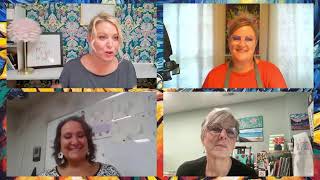
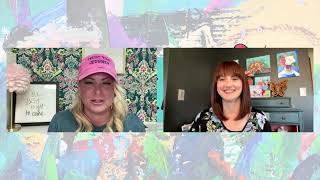
Alright. Hey, everyone! It's Kristi with The Social Easel, and I am here with Marcy. And Marcy has been painting with me for a couple years now, and she also is an alumni from our 2024 Florals Masterclass. And she is gonna join us today and kinda share her journey of art with us. So, Marcy, I'll let you share a little bit about yourself and kinda your journey with painting.
Yeah, so, um, definitely always had an interest in art. I have a lot of creatives in my family, um, but I never honed in on painting until college. Um, in art in high school, I did a lot of, uh, all 4 years I took art there. And then in college, um, my 2, um, got my associate's degree, and during that time I took art, um, as well. And so I did a lot of oil painting then. It wasn't until until the pandemic that I was feeling really low and just needed more lift me up that I saw, um, your, uh, painting in, uh, I think it was April '21, the Funky Spring Flowers. And I was just like, I need something happy to do. Yeah, I wanted to kind of paint, uh, a little bit more. I was always the one that would go shopping and like, well, I could paint that, I think, you know, or yeah, I can create that. I'm not going to purchase that. I could do that myself. But I never would, right? And, uh, so then, um, the rest is history. After that, I've joined your, uh, tribe instantly and, um, been painting your recent—
I always love seeing your artwork. Um, Marcy puts a creative spin on everything and it's always fun to see. So, uh, you also joined the master class last year. So what made you I think especially since you do have some formal art training, you know, that you— classes you took in college and stuff, um, how did you find the masterclass, how it helped you in your journey?
Yeah, I think it just boosted my confidence. I mean, I feel like a lot of the information I've known to some extent, you know, extent of like in my past or even just with you on with, uh, Inside Tribe, you know, little snippets here and there. But whenever you put it all together and you just work that system, it just refreshens you and just really brings you back to like, oh yeah, I, I've tossed that up to the side, or I really do need to really think about like values and, um, saturation, you know, those kind of little subtleties that can really just kind of push your art forward. And so it just really just kind of honed that in. I've always— I'm a hairstylist, I've been behind the chair for 25 years. I continually have education, and a lot of it is repeated information. You can only cut and color hair so much ways Yeah, so a lot of it is kind of on the repeat, but there's— it's always informational. Like, there's always something that you rethink about and it clicks better or deeper. And so that really helped me really get that courage of just continually pushing myself. And one of the biggest, like, aspects of it was the technology side of, like, creating your art so you can actually use it for, like, making templates. I had a cat that had passed away. I had him for 18 years. I've always wanted to do a memorial picture of him, but I was just like, man, to freehand that, like, yeah, janky little animal, right? I was like, I can't do it. But after the master's class, I was just like, I was like, oh, I have this tool. I can go into Procreate. I can get this photo uploaded. I can trace it. And then from there, I can probably create this this cat of mine, and, and I was able to. And, um, it's just really— after that, I just kind of steamrolled of just taking ideas. I had a trip after the master class in, um, what is that called, uh, South Dakota, and we were down in Custer State Park and all the bison were roaming around. I have some really cool pictures of that. There was a beautiful landscape of a plateau. Combine those together, make a really cool piece of art. You know, I just don't think I would have done that quite yet with my journey with you inside the Tribe if I didn't take the masterclass. I think it's just like having all of that information just start from finish, you know, you just really implement it along the way, really just set me up for success in that.
That's so exciting. Do you have any of those paintings around you by chance, or are they tucked away?
Sure, I'll go grab them in my closet real fast.
While Marcy is grabbing those, you can see some of her— I was just telling her before we jumped on here, I love her little dresser that she repainted, and she uses to display her artwork. And then that painting that you see in the top right corner is one of the originals that she created in the florals masterclass. And I believe, if I'm not wrong, I think I recognize that one. In the middle as well. And then the little llama with the flower. So she just always puts such a fun twist on her artwork. I'm gonna pull up the screen here and show you. This is another one of Marcy's creations from the master class, and I love this because you can kind of see. So we talk about getting inspiration in the master class, and like she said, the tools of like how to take inspiration from these ideas that you see, right? So, so from photos, from Pinterest, like she has like a clip of wallpaper and these still lives, and, and then she's starting to take those ideas and play around with them in her mixed media pad and creating her own original floral composition from those ideas that she pulled together. So, and like she said, she's getting ready to share some of her other originals with us, which I'm excited to see. But the, the tools that she's talking about learning in here is really like— I call this a florals masterclass because we're using that as the subject matter. But the tools that you are learning and how to take inspiration and put it to canvas can be applied to anything. It can be applied to animals, landscapes, etc. So if you're watching this and you're like, yeah, I don't really want to learn about painting flowers, that's just the subject matter we're using. I'm giving you the fundamentals of art that will help you along your journey, no matter what it is that you want to paint.
So for sure. Yeah. So this is my cat. Yeah, that's Draven.
Yeah, you did such a good job. That's so good.
So yeah, it turned out really good. I'm very, very pleased with it.
Yes, it's awesome.
Um, the trip that I took to South Dakota this is.
Um, oh my gosh, Marcy, that's so cool!
Sorry, it's cameras.
I know, it's— I always do it, I always turn the wrong way.
But yeah, you know, like, I don't know, like, um, I think it's always like whenever you think about painting objects, you know, one of the good rules to thinking about painting things, especially whenever it comes to faces or animals, um, it's just— you've said it before, and even with the florals, it's just a shape. You know, and to not get caught up of like, but it's an entire being with legs that it's— hell, uh, because I mean, the pictures that I have of those bison, they were— it was far away, right? And, um, just to kind of really paint that was just really fun, and it just was neat to see it come together.
Yeah. And for you to be able— I mean, I think that speaks volumes, like the confidence that you had to even want to tackle something like that, because you weren't painting from just one photograph, you were combining different photographs you took and and then making your own composition out of that. And that's so cool and such a cool way, I think, to almost like honor a trip too, you know? Like, yes, different moments of your trip and combine them into— like, I'm like, I'm going to Jamaica next week with my girls, and now my brain's like, maybe I should take multiple photos and then figure out how to combine all the different tropical flowers and palms and scenery into one one painting, you know. Yeah, for sure.
Yeah, definitely something that I want to kind of continue, right?
Yeah. And so, um, I was telling them while you were grabbing your stuff, I was like, peek over the shoulder there, and you can see that— wasn't it the, um, the one with the blue background? That was your first one?
Yeah. And then there's the one next to it is, uh, another one that I did.
Okay, that's what I thought. I was gonna, um, show— click the right button here.
Okay, so, um, because that was a still life, um, of a vase of flowers that I have.
Yeah, so pretty. So in this one, and, um, Marcy created her own still life, which I, I kind of walk you through that and, and walk you through like different combinations. And you want to have some variation in your florals, but the other thing is like where you're putting it. And so, um, for this still life, she put it in front of a window, and doing that gives you that really awesome contrast where you get those high and low values that, you know, make a composition more interesting. Um, and then you can obviously see— I'm going backwards. I need to start from idea, but you can kind of see the, the method. You know, you start in your mixed media pad, and I talk about this all the time, like I think having a mixed media pad is an essential thing to have in your art journey, because I think a lot of people assume that artists just always paint straight on canvas, and we just come up with our ideas and go straight to canvas. And there's actually a lot of steps and planning that usually go— not, I won't say all the time, but usually go behind paintings, especially when you're painting from life like this. So doing these different studies You can see her playing with like different color combinations here in this one, and then getting it sketched on to her canvas, and then, you know, starting with the background and building in. It's just fun to kind of see the process and the layers that come along with it. And I mean, I know Marcy and I have talked about this a bit too, you know, there's this thing called the messy middle in, in your artwork, and I think Um, maybe you can speak about that a little bit since you are doing so many originals now, that for people who might be watching and that part scares them, or they're like, yeah, but what if I get stuck? And what if you— like, can you speak to how you kind of can just move past that? Or like, what tools you use when you get stuck in the, in the, in the messy middle?
Yeah, it's funny because it's like, I remember back in the day, like whenever I was younger and doing art projects and stuff like that, my mom was always to come to the rescue on the messy middle.
And she would come and help me.
And so it was just like I would always get so frustrated and just like, oh, it's ugly. I hate this dragon. She's like, stroke, stroke, stroke. And it became magical. And it was literally like that all the time with me and her.
Yeah.
So it's also great. I lost her. This year will be 20 years without her. And so, you know, I don't have that in this journey, but I definitely have tribe with that in that journey. But it really is just like I get to the messy middle and it's really tragic and I'm like, yes, it's gonna be the best art ever. Yeah, on my shoulder a little bit. Yeah, like pushing me through. I was just like, you got this, you know what to do. It's gonna be really magical whenever it all comes together at the end.
I love that you just have that thought process knowing this is just part of it. It's part of the creative process is to almost like— and I, I feel like when I say it, people are like, that's really weird, like you talk to your art. And I'm like, no, but you really do. Yeah, you do talk to your art and you like work through it. And it's like with each brush stroke that you do, it'll slowly start forming itself and coming together. And then you kind of get in like the express lane and you're like, okay, thank God we got past that part, and now I'm just to the finish line, and you can just add in all those finishing touches and it comes together. So yeah, very fun. Um, anything you would share with anyone or advice you would give if they're thinking about doing the masterclass but they're on the fence and they're not sure if it's going to be right for them?
Yeah, I think it is. I mean, I think if there's ever that little tiny tug of like, well, I want to experience that, just follow through. There's no loss in that. Yeah, you know, like, just, just do it, you know. If you at all have that feeling of like, well, I wonder what that's like. Do it. You know, you're not going to be disappointed. And you— it's also nice that things are recorded. You can take it at your own pace. Last year, my life was definitely life-ing, um, uh, with my dad and, um, his decline of health. And so, you know, I didn't always have time to really stay up on things and do whatever, but it was also a great time of my outlet to de-stress to put my focus into something really creative and just, uh, feel-good moments. And so, you know, it definitely helped me with that. Um, but I think also too what I, I personally enjoyed was just being on a platform where everybody else was creating something different. Yeah, I find that just so fascinating. First of all, half of the stuff I didn't even know were flowers. I love flowers, but I honestly don't know— I'm not that enriched in my knowledge of—
right, right.
So I'm like, wow, what is that? I would never in my lifetime have painted that or gravitated to that flower, right? You know, so it just was really neat to watch everybody else. It was a really cool platform with the critiques that you had introduced with it. I think that was really great. Um, it really helped, I think, people really see with a better critical eye versus like, I don't like it eye, right?
Like suggestions instead of just like, no, I don't know, that's not, that's not right.
Yeah. And so I, uh, definitely felt like there was times that I was able to, you know, help or just encourage. And, um, it was great to even just take that part in, in that platform. Um, and, uh, but yeah, I think it's just, you know, I've— with this journey, um, with painting with you, it was just that gut instinct of just like, I I want to try that, and just allowing myself that gift, that freedom. Yeah, yeah. And it's just like, I feel like, um, we just kind of deny ourselves too much, and, uh, or we go the opposite way and just buy meaningless stuff. And, uh, I think really harnessing on something that could really spark some joy into you and just, uh, really let that creative side, uh, be, I think, is priceless.
Yeah, I agree. And I think, like, I know, like, there's so much more inside of each one of us that we haven't even tapped into yet. And, like, when you think about that and you think about, like, the possibilities that could come out of, like, you learning how to create your own artwork and the doors that that opens for you, whether it just be painting for peace of mind or for therapy. Um, I mean, it's my therapy for sure. I always say, like, the days I get to paint are the best days because that's when I get to disconnect from the world. But to be able to walk into that with confidence and having the tools that you need instead of walking into it feeling frustrated and confused and not knowing where to start and what to do. And I think having that masterclass kind of guide you along, giving you the steps that you need to be able to create that. But I agree with you, like the community part of it, and I don't think I really thought about that until you brought it up because we have community inside of TRIBE, which is my membership. Where our, our community hangs out and we paint every month, but we're all painting the same thing, right? And so the difference with the master class is, um, and I was talking about this with Brenda, you kind of like build your ideas and you get inspired by everyone else in the group because you see all these different things that people are working on, um, and their sketches. And it's just a really cool environment to be with other artists and be able to share your thoughts and ideas about their artwork and then get their ideas about your artwork. And it's just, um, yeah, it's a cool thing. It's a cool thing to get to have that group of like-minded women who are all going through the same thing at the same time together.
Yeah, yeah, it is just a really neat experience for sure. Yeah.
All right, well, thank you so much for jumping on with me. It was good chatting with you, and, um, I will see you soon.
All right, sounds good. Thank you.
Bye everyone. Bye.