Let's talk with talk with Laurie - Masterclass Alum
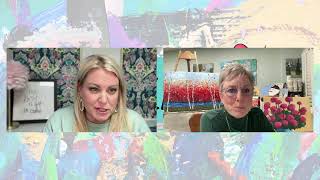
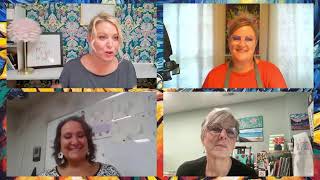
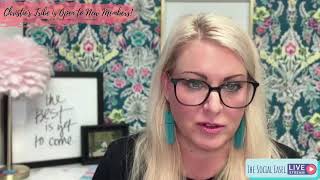
In this YouTube interview, host Christie Renee Hawkins (The Social Easel) chats with former student Lori Schellinger about her experience with Christie’s Florals Masterclass and Tribe membership. Lori recounts how she began painting in 2022 after a fun workshop, progressed from a complete beginner to creating original floral artworks, and gained confidence through the course’s focus on fundamentals such as color theory, composition, and value. She describes specific “aha” moments, like applying color theory at a Chicago orchid show, and how the masterclass’s structure—condensed video modules, live Zoom critiques, and community support—helped her internalize concepts. Christie explains the masterclass’s design as a college‑style, 10‑week program that goes beyond step‑by‑step workshops, emphasizing mastery of art fundamentals, real‑time feedback, and deeper implementation. Lori shares how she now creates gifts (tote bags, original paintings) and how the course helped her overcome perfectionism, embrace mistakes, and give herself grace. The conversation also highlights the 2025 course enhancements, the value of repeated study, and encouragement for prospective students who may feel nervous about joining.
Chapters
Okay, we are live. I'm Christy with The Social Easel, and I'm here with one of my students, Lori.
I'm not gonna—
I'm not gonna mess your last name up. I'm gonna let Lori introduce herself and say her last name so I don't butcher it. But Lori has been painting with me for a couple years now in my Tribe membership, and then Last year in 2024, I launched a new course, my first course ever, um, called Florals Masterclass, and Lori also took that with me. And so I'm gonna let her share a little bit more about her journey of how she came to painting and, um, what, um, sparked her interest in signing up for the masterclass, because we have a new round of it coming up, uh, this spring. So Lori, I will leave it to you.
Well, I'm Lori Schellinger, and, uh, I started, uh, in the summer of 2022, took one of, uh, Christy's workshops, uh, Funky Summer Flowers, which was a lot of fun. And, um, I, I mean, I just kind of got hooked because it was fun. So I, I spent maybe a month as a Painting of the Month Club member and then right away switched in October of 2022 to try Haven't looked back since. Um, all I have done is have a whole lot of fun. And, um, so the master class— well, let me back up. I, I came in with— I was the person who had never held a paintbrush.
I was just gonna say, what, what experience did you come in with? Because you hadn't painted before, right?
Well, I taught kindergarten, so that was the extent of my art, you know, big pieces of paper and kindergartners and, you you know, this, that was it. Um, I, it just was fun to me and it was a great creative outlet. And, um, I don't know, I, I just always come back to that. I, I just had fun. And so I found with Christy's teaching that I like, oh, maybe I can't do this, you know. So when it came time for the masterclass, I really hemmed and hawed because I thought, well, you know, I've only been painting for like a year and a half, what do I know? But in the end, it was kind of like, well, you know, just give it a try. You don't— everybody is not coming into this with 20 years of painting experience, or, you know, wanting to sell all their work, or, or whatever. I I just, I like to learn, and, and I, I probably just jump into things and try them that maybe I shouldn't, but I do. Um, so I took the master class, and it— there was a ton of information, and it really helped me look at painting in a new way. Um, really, by the time it was over with I, I was— I think the thing I was the most proud of is that I found myself applying the things that Christy had taught into my own painting, which she'll probably be the first person to tell you that I was a bit of a nervous Nellie about it, like, oh my God, oh my gosh. But by the end, I was like, oh, Like, wait, I, I kind of did that. And I just, I think I've approached things and seen things differently since then. A couple weeks ago, I went to the orchid show at the Chicago Botanic Garden, which was amazing. But as I was walking around, I was looking at it going, oh, well, there's the color theory that she taught us. Look how they've got the purples and the yellows together, the purples and the oranges together. You know, and all of a sudden it hit me, like, I, I think I've internalized some of this, and I'm noticing it when I do some of the paintings that we do in tribe. And so I'm actually looking forward to the masterclass again as a really good refresher. And actually, as I was going around the orchid show, I always say I'm not going to take pictures this year. Right.
I was just gonna say, don't you have a ton of pictures that you could definitely use in this upcoming masterclass?
Inspiration. But there were several I thought, oh, I, I think I might want to paint something like this, or, oh, I think I could paint this. So I'm, I'm kind of excited to jump in and try and, and get the refresher and then really try it, because I think this time going into an original, I'm gonna have a lot more confidence going into it than I did last time. So yeah, absolutely. Like, I, I'm like excited. Last time I was a little terrified going into masterclass, you know, because since I had such a—
well, I think sometimes, you know, um, that word masterclass can be intimidating in itself. Um, so that— I'm kind of glad you brought that up because I'm sure there's lots of women who are watching this right now, and they're probably feeling nervous. They're probably feeling scared. They're probably wondering if this is right for them— excuse me— or like maybe doubtful. And they're probably what you were thinking, like, I've only been— and some of them may not even have been painting as long as you. You've been painting a year and a half, but there can be brand new people who are brand new to painting And here's what I would say to you. The word masterclass basically just means— and the reason I named it that is because I wanted it to stand apart from all the workshops that I do. I do a lot of workshops where I'm going to teach you, um, you know, I always turn around the wrong way whenever I do this. Like, you know, I can teach any of my paintings. I can show you step by step how to do these, right? And so that's what a lot of my workshops are. But what makes the masterclass different is that you are learning to master a skill. You're learning the fundamentals of art. So, um, for those of you that may be watching this and curious about what the master class is, we'll put links in there. But I want to kind of explain it as, you know, it's kind of like going to art school with me except in my studio. And the first 3 modules are literally just me reteaching you what I learned in all the years that I went to college in a condensed precise, um, short session of videos that you can easily consume. You can take notes in, um, and continue to start building, first of all, the fundamentals of art and how color works and how composition works. Like, all those things that I learned in art school, um, I don't want to just teach step-by-step paintings. For me, I've always wanted to really open the doors up for people to start figuring out how they can make these choices themselves. And that's what that masterclass, this masterclass, is all about. So, um, if you're watching and you're feeling the way that Lori was feeling, and I think it's great to hear you say, but now, this is who I was then, but now I have this confidence. And for those of you that don't know that painting behind Lori with the yellow background— she's got several back there, but the one with the yellow background— this was Lori's first original piece of artwork. And keep in mind, she had only been painting with me, doing the step-by-step where I show how to do the paintings, for about a year and a half. And this was her very first one. And you were talking about, um, when you were sharing about how you started, like like remembering what you had learned in those first couple of sets, like, oh, how the lines work and the weight of lines, or like the color composition, or, oh, I could add shading here. All those things that we learn, those fundamentals of art. She asked me to critique this during the masterclass last year, and as I was critiquing it, she goes, I knew you were going to say that. Like, I knew before you answered my question what you were going to tell me to do. And I was like, that's awesome. Now it's just learning to trust yourself when those things— and you're like, oh, I wonder if I should do XYZ.
It is. So when I was working on this, I had, I had it, and I had, I had— I specifically picked geraniums because in our tribe there, there are no pictures of geraniums, and I was afraid if I chose an arrangement, my brain would just have me copying something that we have in our vault. I specifically chose something that, you know, nothing like this we had done. But I did it, and all the stems and everything were on there, and I kept looking at it thinking, I know something's wrong, I know something's wrong. And then I realized it was the depth was missing because all the stems were in the back and all the flowers were in the front. And so I I needed to pull stems forward so that we had some depth.
And I remember thinking, oh well, look at me, but I love it because it's those like aha moments where you're like, this is sinking in. Like, this is now— now when you go to paint florals, and you probably feel this since then, we've, we've done more of course, and I don't know what you've done on your own, but now you start thinking about those things. And like, when, when you get to— like, people always ask, like, how do I know when I'm done, right? Like, that's a— people ask that question all the time, and we talk about that in the master class. Because now you wouldn't know how to know when you're done— making sure I'm saying that right— if you don't fully understand the elements of art and what you should be looking for, right? Which, if you paint with me, like, I, I drop all this information throughout paintings. Like, I'm always teaching these art fundamentals while I'm teaching class, but in this master class, I'm allowed to go so much deeper, and I'm literally giving you like a college-level experience of going to art school where you're like, oh, now I understand why I have to learn the elements before I can learn the color, before I can learn the composition, before I can just look at a picture and be like, yeah, I can do that.
Right, right, right. It just— I mean, I took all— I've got a whole little book full of notes that I took. And I don't know, it, it was just a fabulous learning experience. So, and maybe that's just the teacher in me that I just want to keep learning.
But I'm the same way though. I'm always learning. I think it's— I told Corey that the other day. I was like, and so this is like a side note, but I'm taking, you know, Emma on college visits. And we just went to Auburn, um, the last couple of days, and I'm like, I want to go back to school now. Like, I have no need for a degree whatsoever, but I love learning and like pushing myself to try new things. But, um, it's, it's fun to see that in my students too. So like, if you're hung— like, if you're watching this and you're like, that sounds fun, I sound like Lori, like I love learning And then this is like the right type of, you know, environment for you because this is what it's all about, is really just taking in all this information. And then this year, obviously, you know, I show them different types of ways that they can get inspiration and they're learning all those art elements and how to apply them to create their own artwork. But in this session for 2025, I'm adding in 4 extra lessons where I'm literally going to take a still life that I used last year as an example, and I'm going to create 4 new paintings with it in this master class. So it's going to be that extra level of like, I'm telling you what to do, but now you're literally gonna be standing over my shoulder and watching me do this step by step with a, you know, still life as an example of that. Because once you learn these things, like Lori painted this from a photograph, and I believe Joanne, who was in my last interview, she painted hers from a photograph. So this is— I kind of briefly went over the different ways that you can do it, but now we're going to go even a step further with the still life and how you can start creating your own still lives with whatever you have, or maybe pictures you take in a garden, but you can start creating your own compositions and then figuring out how to turn those into your own original paintings as well. So that's going to be a bonus that we are adding into the 2025 session as well.
It— I don't know, I just— it was just a great— I'm looking at it like, wow, I did that. Um, usually I have it upstairs. Um, it— I don't know, it was just a really good learning experience. And I mean, it's in a reasonably short amount of time and it's a lot of information, but you know, you don't have to necessarily do it in that short amount of time. We were going on vacation, so I knew I wanted to finish when it was finished because then we were, we were leaving, but you know, if time is, is a thing, it's not a thing because you have access to it, right?
Yeah, absolutely.
So you can ask this.
You are a member of the masterclass. You have that version, whatever year you sign up for, forever. You can go back and review those lessons as many times as you want to. But, um, we've had— I opened the doors to the alumni who went through the course with me last year today, and we've had So many ladies literally just jump right back in again because they're like, I'm ready for a refresher. And here's the thing, the more you study the same subject and the more times you hear something, the more it sticks in your brain. And you're— when I look at your skill level now of where you were a year ago, it's grown so much. So your takeaway from the master class, and I can already tell you, I know the growth that I'm gonna see in you is going to be, you know, far past what it was last time because you've grown in a year from now. And that's the cool thing about art is you don't ever— and I mean, I've even had some of my students say that to me. They're like, Christy, your art is changing. Like, your art has become different. And it's because we never quit learning. I'm always pushing myself. I'm always learning more. I'm always playing and experimenting. And that is the beauty of art, is you it never ends. You just get to keep going back to it and learning more, and it's always fun. Yeah, it's always fun.
It does. And yeah, it has just done so much for me.
I love that. And, um, I'm not gonna get us all emotional here, but I think that is an important thing to mention right now. And, um, you know, Joanne and I talked about it too, because I I think for a lot of women, when they think about doing a course like this, they're like, yeah, but then what? Like, do I have to sell it? Do I have to teach? Do I have— you don't have to do anything with your artwork, but it will bring you so much joy. I think once, once you decide you want this to be a part of your life and you want it to be a hobby and you want it to be something that, that brings you joy, right, you start carving out time for it. Because you see the benefits of what it does in your life. And I know specifically with Lori that it's been very beneficial for her. And then also, will you tell them— I mean, I'll let you speak a little bit about that, but also how you use your artwork and what you have learned to make special gifts for people too, like you were showing me earlier.
I do. Hopefully none of them are gonna watch.
Oh yeah, if it's a secret, we don't have to show them.
I'm— I made, um, a set of 11 tote bags. My nephew is getting married, and, um, for his bride-to-be, for, uh, at the rehearsal dinner, for gifts for the bridal party and the moms. And so if my sister-in-law's watching this, you know, la la la la la la.
Hopefully we're not ruining surprises there.
They're not, they're not gonna, but you know, it, it really brought me great joy to make those as, as a gift. And you know, I kind of took a, a painting and, and from, from our tribe and sort of off-roaded a little bit with it.
And which, you know, a year, two years ago, you wouldn't have felt No, good enough to be able to do that. You would have wanted an exact thing and you wouldn't have had the confidence to make those choices and be like, okay, I can do this instead because that's gonna— you know what I mean? But all of that makes sense now, right?
A couple years ago, it— in my head, it had to look just like yours. And I, I would almost have heart failure if I didn't have the exact color of paint And now I'm like, oh yeah, we'll just whatever. No, that works.
But I love it when I'm talking to people because, I mean, I'm not saying anything Lori's not saying, but she knows she was a little bit of a perfectionist. And like she said, she would very— she would fixate on things. And I'm like, you don't need to worry about that. Like, let's just do the next step. Let's just like— and then you, then you start to loosen up a little. And, and I feel like the more um, and I won't say it goes away completely. I mean, even me, like, on certain projects, I may be harder on myself than others or want it to look a certain way. That doesn't go away, but you learn to get comfortable with making mistakes or testing things out. And instead of thinking, as soon as you take a paintbrush and put it to a canvas or paper, it must be exactly right, right, right.
And I mean, all that comes from the confidence that has developed because I've learned so much.
I love it.
I've practiced, right? Practiced, right? Just by painting. And, and I have made mistakes, and either I have corrected them or I've just said, yeah, well, it's just gonna have to be like that because, you know, so be it. But, um, I, I have the confidence now. In fact, I started something Yesterday, the day before, and I put down the background and I was, I was sure because, because you said, I really want you guys to try and maybe do this in your own color. But so I am on the background color and I was like, yeah, that's not going to work. I painted over it and then I put a different background color in and then I realized I've got it totally in the wrong spot. So I painted over it again. And I think I'm on the fourth start, but it's not bothering me because—
and that's, that's huge. That's huge. It's not bothering you.
I, I'm just, you know, I, I do have another one that's been sitting here for a year and a half halfway done because I got stuck and I couldn't figure out my way out of it. And I probably should just paint over it and start the whole thing over, but, um I, it was like, oh, wait, I think I know what— maybe this is what I should do instead. And, and I, I'm just trying it, and it's— I wouldn't have done that in the past. Yeah, it's all a confidence thing.
Yeah, I think it, I think it definitely is. And I think it just speaks to, you know, and what this masterclass is all about is about pushing people past the step-by-step. Now, I'm still going to— that's a great way to teach, right? To show by example. So I still give you those examples. I, I still am going to walk you through that, but then I'm going to challenge you, just like Lori said, to make it your own and to play and push it even further, right? So, um, but again, it's like learning those skill sets, um, to where you're able to make those choices. So I love hearing that. What would you say is your biggest takeaway, or maybe your favorite thing about the masterclass? If maybe that's too broad of a question, I don't know.
I think it's kind of where I started. Like, my biggest takeaway was realizing that you had presented all kinds of information and background and whatnot. And I mean, I really took a lot of notes and really thought about it. And then as I was creating this, I really was making a concerted effort to try and use those things. Do I have different forms? Do I have different lines? Do I, you know, do I have darks? Do I have lights? Do you know, like all those things that you taught us as the basis, I was trying to incorporate into this. But then I have noticed it since then. Yeah, um, it's carrying forward, but I'm ready for a refresher now too.
Yeah.
In fact, in your poppies, you, you were showing something, and I had like this aha moment of backgrounds and lights and darks, and I was like, oh, and already my head was going, oh, if I— the next original, I'm going to—
I love that, the next original. Did everyone hear that? The next original. That's, that is what I want to hear. So, you know, the master class, uh, last year was again the first time, and it was 8 weeks. To your first original painting. And Lori did that. And this week we're actually extending the master class even a little bit longer. One, because I have a vacation in the middle of it, but two, because I wanted that extra implementation time for the students. So we were able to take, um, all their recommendations of like, I wish we would have had more time here, or, you know, just those little suggestions And we tweaked it and made the 2025 version even better than 2024. So, um, it will now be 10 weeks. We'll have 10 weeks together, kind of like a semester in college, where we are just gonna jump in and dive deep. And not only are you going to get the modules— they're released on every Monday, um, but then we have a week later, we have a Zoom call where And these were, I think, one of my favorite things about the masterclass. Um, this is something I don't do in any other teaching situation. I only offer these in the masterclass, and it's a chance for everyone to come on screen together and for us to discuss the previous module and then answer questions live. Um, and then also, if like Lori brought that painting in too and was like, I don't know what to do here, here, and here, then you literally get me live as if I'm standing in a room with you saying, well, I would do X, Y, and Z to that. And here's what you could do here. And you get that real-time advice that can help you kind of push past maybe like some boundary that you, you know, or obstacle that you hit.
Yeah, the Zooms and the critiques were really, really helpful because you can listen to the module and you think you understand it, and then, you know, a day or two goes by and then you're like, well, is that what she meant? Or I, like, I just don't quite get it, you know. And but the chance to ask those questions, um, or, or to have you critique, I, I just think that that was invaluable, both of those. Those, those, I mean, for myself personally, gaining the, the confidence, but from a structure of the class kind of thing, the Zoom and the Zooms, plural, and, and the critiques were just super helpful.
Good. I'm glad. I think they really are. And it's still one of my, my favorite things to do. And what I shared with them is, you know, in the 6+ years of art school, um, that I was a part of, I mean, the critiques are one of the most important parts. Like you said, like, you can learn the fundamentals, you can, you can absorb all of that information, but it's, it's again putting it to action and actually taking what you're learning, making your own, and then having your teacher there to say, yes, you're on the right track, but you could do this here and this here and this here. And that's what really helps, um, you as the student start putting pieces together. And then it stays with you, like you said. Um, it— once you kind of start learning those concepts, then your next painting, you're like, oh yeah, I remember this. So that's fun. All right, well, any, um, last words you want to share for anyone who might be feeling the same way that you were feeling when you were debating on whether you wanted to do this masterclass.
So when I started the masterclass, I really made a concerted effort to just remind myself, like, you're learning. And I wrote this down, I put it on my little art table, and I've had it here ever since. And I just wrote, to have fun Whoops, turning it the wrong way. Give yourself grace because you're learning.
I love it.
So that's exactly it.
We all have to give ourselves more grace.
So, um, you know, this wasn't— it wasn't supposed to be torture. This was supposed to be fun, right? And like, don't beat yourself up about it because you're learning. You're not supposed to be perfect at it. Well, you're not— you're never going to be perfect at it, right? But You're— that's the whole point of learning. You're going to start.
I mean, I think it's like whatever we want to learn in life, whether it be cooking or working out. I mean, there is a learning curve there. There are periods of time where it might be a little hard. But what I love is it doesn't have to be hard alone. You don't have to go at it alone. And Lori is a great— she'll be in this masterclass. You'll get to know her personally in there as well because she's a great cheerleader. But that's what we do is we support each other. And not just me, but the other students in the class are, are a huge part of what makes all of this, uh, you know, work so well is because everyone is there to support you and encourage you and lift you up if you do have a day of struggle and you're like, guys, I don't know what to do here. Guess what? You're gonna have me and these ladies come in and we're gonna kind of help you push past that hurdle so you're not doing it alone. And I think That's a huge thing. And another one of my favorite parts is always the community of what we, what we build in there. So, well, thank you so much. Thank you.
Thank you for having me. Yes.
All right. Well, we will jump off here. For more information, we'll be dropping the link in the comments. And then of course, if you have any questions, you can always ask them there or you can email into our support team at christie@thesocialeasel.com and my team will be more than happy. To guide you and answer any questions that you have regarding the masterclass as well. So thank you again, Lori, for taking some time with me.
My pleasure.
I'll see you soon. All right.