Meet Pauline - Florals Masterclass graduate!
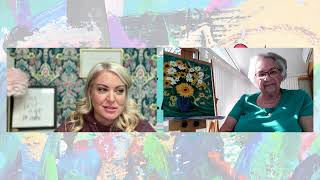
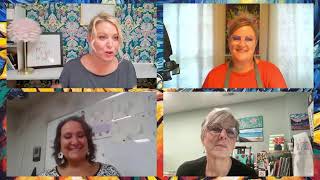
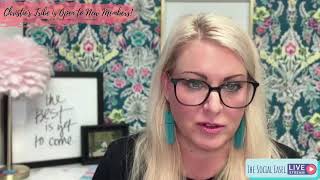
In this live YouTube interview, Christie Renee Hawkins (Christy of The Social Easel) chats with Pauline, an 81‑year‑old alum of Christy’s 2024 Florals Masterclass and longtime member of the Inner Tribe community. Pauline shares her artistic journey, including health setbacks (two hip replacements) and how the Masterclass reignited her confidence to complete a full‑length still‑life painting, using techniques such as sponge‑applied folds and acrylic layering. She describes the Masterclass’s 10‑week, self‑paced structure—pre‑recorded modules, step‑by‑step lessons, critiques, and Zoom Q&A—and how it differs from Christy’s regular workshops and membership content. Both hosts emphasize the importance of mindset, community support, and the forgiving nature of acrylics, noting how positive thinking and peer feedback accelerate learning. Pauline also discusses the perceived value versus cost of the Masterclass, arguing that the investment is minimal compared to traditional art school or local classes, and highlights the ripple effect of sharing art through gifts, charity, and “happy mail.” Christy expands on the broader philosophy that anyone can be creative, that art offers health benefits, and that the Masterclass equips students with foundational art fundamentals applicable beyond florals. The interview concludes with encouragement for prospective students to join, emphasizing confidence, skill building, and the joy of artistic expression.
Chapters
Hey everyone, Christy with The Social Easel, and we are live with another interview with one of my alumni from the masterclass that we did in 2024. Um, this is Miss Pauline, and, um, I'm gonna let Pauline introduce herself and, uh, share a little bit more of her story in joining the masterclass, like kind of her journey with painting and As you can see, she is actually sitting next to her first original that she created from the masterclass. So Pauline, I will pass it over to you, and if you just want to share a little bit of background about you and then what made you decide to jump in and be a part of the masterclass last year.
Okay, well, a little bit about myself. I'm going to be 81 next month. Just to inform everybody, it doesn't matter what age you are at that you can enjoy painting at any time in your life. I've been with Christy in her private Inner Tribe for about 5— well, actually 5 years this month. And I've learned so much just being in Inner Tribe. But when Christy offered the MasterClass last year, I was like, oh my gosh, you know, learning so much more in depth of what I've already learned. In the previous time I was with her, I thought, oh, why not? So I jumped in, loved every minute of it. I think initially I was like, wow, this is really in-depth. And I was like, does that mean, you know, once we're done, we graduate? And so that was kind of like a little humor there. But I will say Before I even get going, I did not finish my masterclass series last year. I got close to it. But with everything that I had learned in the first few modules was enough to give me the confidence, the knowledge to create this painting from beginning to the very end. And I was just actually stunned at myself. It allowed me to gain more confidence in myself to just accomplish this. And with every step that Kristi teaches in the master class, you learn the process from the very beginning to the very end of your own creation. And I do intend to take her second master class that's coming up. I've already signed up. I'm looking forward to definitely completing that master class, because I want to graduate. Let's face it, 10 weeks to get a degree sort of in painting. I mean, that's a big thing. You're gonna learn so much. And there's nothing to be afraid of. That's one thing I do want to clarify with anybody, whether you're a beginner or somebody who's in the middle of learning, who just you know, just getting the basics. Kristi's masterclass teaches you every little step from the brush brushes to how to use color first, how to even set up your ending journey with the masterclass. I ended up taking a vase that I had a bunch of artificial flowers stuck them in the vase, stuck them on a chair with a tablecloth, and I looked at it, looked at the photos. But with Kristi's guidance along the journey in every module, I was able to complete this painting. And it's beautiful. I don't know what you think, Kristi, because, you know, I was fortunate that Kristi did give me a critique. I had asked about in the module, in the masterclass group, which is wonderful because you have ladies there and maybe men, we don't know, that come into the masterclass and we get to share with one another and we get to critique each other as well for guidance and suggestions. And I mean, the masterclass is probably for me at my stage of painting, one of the best things that I've ever done for myself. So I appreciate that you offered that, Kristi.
I love that. And I think, thank you for sharing that. And I think it's important, you know, Pauline had some health issues that kind of took her away from painting for a little bit, and that's okay, right? And you were able to come back to it. And I love that you did, that you, that you did come back and and, you know, finish your painting. And like, I'm so proud of her. Like, when I look at this and I see those folds in the fabric— yeah, right.
I didn't know how I was gonna do that because initially in the painting my background was pretty much all the same. And then with your critique to try to get the folds in the tablecloth that I had in my image of my still life, I, you know, I'm like, oh, okay, yeah, all right, I think I can do that. I've never done anything like that. So yeah, yeah. And, and yes, with my health, I had 2 hip replacements within 5 months. The motivation to paint at all, really, it was difficult to sit for long periods of time until I had the surgery, blah, blah, blah, all of that. But once You know, you mentioned MasterClass. I'm like, oh my gosh, I want to sign up, but I didn't even finish my first one. It actually helped motivate me to do it. And yeah, I just did it. I just did it. And it feels good.
Yeah, I love— because you— here's, here's what people need to understand too, is just like Pauline said, it doesn't matter, you know, what experience you have coming into this. She has been in my membership for several years, so she has been painting with me a while. But this masterclass is so different than what I teach in any other platform. It's different than workshops that I do. It's different than what I teach inside of Tribe. I'm literally taking everything that I learned in my 6 years of going to art school, and I condense it down into— this year, a 10-week course. We expanded it by 2 weeks just to give everyone extra time to implement and work through the modules and you work through them at your own pace. So it's not— you're not having to keep up with live videos with me or anything. Every Monday that a module is released, it drops into your library and they're short pre-recorded videos. They're broken down into lessons and then sessions. So you, you can bite off a little bit at a time. But what I love is just like Pauline said, she was able to come back to this months later. You retain that information, especially when you can like slowly process it and take notes along the way. You start learning how color works, and in Pauline's case, learning how shadowing and shades and highlights work. That's how she was able to create those beautiful folds in the fabric. And once you start training your brain to just be like, that's just sections of dark and light, like, you know what I mean? And so you take— instead of saying I'm painting fabric, You're just like, here's a shadow, here's a highlight, and you just keep going back and forth with your color. But anyways, I love getting to see it.
Yeah. And it's amazing because really, I did— I've never been taught how to do folds or, you know, like from material. And it was, you know, like you mentioned, the lights and darks. And I remember that through, you know, the modules and things that you had taught in masterclass. And It's— and that's really what it is. I had somebody ask me when I posted the painting, how did I go about doing it? And initially I tried a brush because it's paint and a brush, and all of it was with a brush. I did not use palette knife on this. And the brush, yeah, it just wasn't doing what I wanted it to do. So I took a sponge. Oh, really? And just kind of made all the little swoops here and there. But had I not taken your masterclass to give me the confidence— Exactly. Yeah. And to know that I could do just about anything and, you know, just throw fear out the window because you don't need fear to help you along in learning. Um, and having the modules repeated, they're there all the time. For your use or for my use. And even though I'm taking the second one, so people don't think, well, I didn't get enough out of the first one, I'm taking it so I can better myself, so I can continue learning. And I know with each module, there's always some steps there that are good to go back to. So I'm looking forward to this new masterclass that you're sharing. For some people, it'll be their first time. Yeah, and I do encourage anybody that's out there that really, even if you're just doing a hobby, I mean, I'm not in business. Yes, I, you know, been fortunate to sell some of my paintings. I've been commissioned. But even if you're just doing it as a hobby for yourself to just whatever, relax, you gain so much from it. I mean, really, I, I learned a lot. And I, I'm looking forward to the new ones.
So yeah, and I love that. I mean, you know, I was talking about this with one of the other ladies, but you know, courses that I take, like with Stu, who is my mentor in business, I've retaken his course 4 different times because depending on where you're at, even if it's the same information, this is a year later. You've grown a lot as an artist in a year. Circumstances have changed. You know what I mean? Like what you were working on a year ago may be different than what you're working on this time. So you're able to take different, um, you know, things away from it depending on what it is that you're going through and, you know, in your art journey at that time too. But one thing I wanted to bring up that Pauline mentioned when she said, I decided to do a sponge, and the secret is that Pauline knows and that I know is that she now is not scared of doing that. She didn't have fear of putting something on canvas because we know we can just paint over it if we don't like it. So she was willing to, you know, she's like, you know what, I'm gonna think outside of the box, and I'm gonna try a sponge for this. Because in the back of her head, she's like, if it doesn't work, I'll just paint something else over top.
Right. And I had already finished the painting, so I thought, and I asked for your critique, and you mentioned, you know, the try to get the folds in there. And I'm like, oh, okay. But, but that critique was very helpful to me because it allowed me to go ahead and do that. And it was over the original paint. And like you say, you can just go back and— that's one thing I do love about acrylics. I did do oils years ago, and I find acrylics are awesome because the paint dries a lot quicker than oils. You don't have to worry, you know, about anything with acrylics, and you can do so much.
So it's very forgiving. It's, it's honestly, I think, one of the most forgiving mediums to work with in art. Because you— if you mess up, it really is okay. Like, people hear me say that and they're like, sure, you didn't see what a mess I made. I'm like, no, really, like, trust me.
I mean, yes, with a lot of layers of correction, and right, but the end, you don't notice it. It's, it's amazing.
Yeah, I don't know if you remember when I taught the Spring Chapel years ago, and I was almost done teaching the painting. This was in a workshop, I believe, or it may have been in Tribe. But anyways, I was almost done and I reached to grab a brush and I knocked my paint water all over my canvas. And I mean, the painting was almost done, but paint was still wet on there and I had to carefully, you know, sop up all the water with paper towels. And I was still able to finish that painting, and it's one of my most popular ones. And no one would ever know that I spilled my paint water all over it. It was completely messed up, you know. And I can remember the gasps of like in the comments, they were like But we pull, we pull it off like we, you come back together, and acrylic is just so kind.
Yes, it is, it is. And the thing is, there are various ways of using acrylics like, you know, you can use the craft paint, you can use heavy body paints, you can use some palette knife with your paints. I mean brushes, sponges. There's just so many variables that you can create with, and I love that about acrylics and having all the modules with your teachings with a step-by-step. You know, whether you've been painting a long time, or you're just a beginner, you're in the middle. I learned that even at this stage of my life there's always something new to learn, and you shouldn't be afraid of it. Just go for it. Absolutely. You know, life is too short. Have fun with it. Don't, don't get all, you know, uptight and stressed and, oh, I can't do this, I can't do that, because that, that's negativity. My word for this year, but I've always been a pretty positive person. For the most part in my life. And when I would jump into that negative pond, the husband would remind me, that's being negative. And I'm like, oh, you're right. And really, because it's not me, I'm basically not that type of individual. So be positive about, you know, yourself and your thoughts.
And, you know, mindset is really, really important. And I talk about that. We're actually in my workshop that I'm doing, we're going to talk about mindset today. And some people want to kind of gloss over that, like, oh, I don't need that, she's not going to teach me any painting today, I don't need to hear a pep talk. You would be surprised how much you actually do need to hear it, and how I don't think we even catch ourselves sometimes saying the negative things when we make a mistake. Oh, of course you did that, I knew you were going to screw up. You know, like little things like that, right? Instead of being like, it's okay, I'm learning something new. You're going to make mistakes as you're learning, and that's part of the process. But yes, a mindset is so important when it comes to creating.
Yes, and, and the wonderful thing about, you know, mindset is that the more you think in a positive light, whether it's dealing with anything in your personal life, but specifically because we're talking about painting and creating, if you view things in a negative light, all those negative those thoughts and feelings are just gonna stick with you. If you view your work as you're going along, like, oh, wow, I did that. Oh, okay. My daughter said something to me not long ago, like, in accomplishing something, like, oh, I have to, I have to do this. Oh, I don't know if I can do that. Again, that's pessimistic. It's negative. And she made just one statement that just clicked with me, that aren't you fortunate that you get to?
Exactly.
And that has clicked with me big time. The other thing that you had shared a while back that has stuck with me is that whatever artwork you're into, that it brings glory to God. And it doesn't have to be perfect. There's no such thing in the first place as perfection. So, you know, when we talk about creating something, and you think about natural life and nature, if you look at trees or flowers, there's no perfection there. You know, God accepts everything from us. And I think when you're painting, if we can accept ourselves and just go with it, have fun, relax. Enjoy what you're learning, and sometimes you just might surprise yourself.
Exactly. I think, you know, and I say that a lot too. I mean, I feel like God did not have to give us the gift of creativity. He did not have to give that to humans. He could have made us like the animals. We could have been more robot-like, but he gave us this freedom, and he gave it to all of us. I don't think he hand-selected a few people to be creative. We're, you know, mirrored in his image, and he's the original creator. So I believe that every one of you watching this has creativity inside of you. You may just not even know it yet. It's untapped. And so I think it's like a gift anytime we get to play with paint, play with being creative, using our minds in different ways. And it also literally— the health benefits of lowers your blood pressure, like lowers your heart, like, you know what I mean? It literally calms you because It allows your brain to think in a completely different way than it does every other moment of your day. And you get to lose yourself in the art, and you get to lose yourself in the process of creating if you let yourself, right? Like, if you don't get in that headspace of, is this going to turn out— don't even think about the end. It's not about the end.
Exactly.
It's about the journey.
Yes. And like you said, we all have something within ourselves to create. I'm sure there are many ladies out there that have other hobbies. You know, I use the word hobby because that's what it kind of started as for myself. You know, you, you learned how to either cook or crochet or knit, or in my case, when I was 50, I wanted to learn how to play the piano. Guess what? I learned how to play the piano. I even learned how to read music. Hot dog! But I mean, You know, it— I didn't stick with it there, you know, for quite a few years, but I'm one that kind of jumped from here to there. I took oil painting. That was another thing I wanted to learn. But there was something when I was brought to your Facebook ads that kept rolling by that caught my attention. And I have to say, this is probably the longest I've ever stuck with something. And I— and because I love it, and my husband knows. I mean, I, I love painting. You're right, it brings peace, calm, focus, excitement. And when you share your artwork with other people, they're impressed. And, you know, it's not that you're looking for the praise, but it is nice to hear compliments.
Everyone loves a pat on the back.
Yes, yes. And but you can Turn around and use your creativity for gifts, donations, for auctions. I mean, you know, there's just so many ways that your artwork can expand.
Yeah, I call it, you know, like the ripple effect. I feel like what we do, you know, when we're painting, me getting to paint with you guys, like, what if I said no to this whole idea of teaching online years ago because I was scared and I let stop me. I think about that all the time because now I teach thousands of women every single month how to paint, and then I'm watching these women, and now, you know, like, they're doing like what you said, they're teaching others, or they're doing auctions, or they're doing charity, and they're, they're— it's all joy spreading.
Yeah, right.
And so me spreading joy to you and you spreading joy to others, that's what this world needs a whole lot more of. Yes. Well, focused on joy and love, and I love that we get to do that through art. And art makes people happy. I mean, we have inside our tribe, we do happy mail where we send original— like, the girls— the girls— the women send their own little original paintings to each other as kind of like a card swap. And who doesn't like getting happy mail? Like, who doesn't like opening the mailbox and actually having a real piece of mail from someone instead of just another piece of junk mail? So, um, I just love seeing the, the lives that change. And I know that sounds kind of like silly to some people when you think about, oh, art can change your life, but it really can. And I've seen it happen. And, um, I mean, like, Pauline is a perfect example of that, and I love sharing her story because she is so passionate about it. Um, but it's also about the community that we create in the process of that. And I don't know about you guys who are watching, but Like myself, I don't have friends at home who like to paint like me. Do I have local artist friends? And so that's why I love my groups so much, is because it's a place where we can come and share. You, you're, you're with a group of women who have the same interest as you. You guys can geek out about the same fun things having to do with art. You can cheer each other on, and it's so much better than just trying to learn on your own. Like being in a community atmosphere. And for the masterclass specifically, you get even more of me. Like, this is the most intensive I am as a, as a coach, as an art teacher, because we do the, um, Zoom calls after the modules. And it's, you know, like chances to ask to have your art critiqued, or for us to ask questions about previous modules. And you have that ongoing connection with me as your teacher, but also the other ladies in the group who are sharing their work and asking, you know, questions, or what do you guys think about this, or color choices. Like, you get to have a place where you can have these art conversations that normally don't happen outside where you're creating your art and your home, right?
Right, right, exactly. I can't call my girlfriend or my cousin or whatever and say, what color do you think? You know, she doesn't even paint, so it's like, you know, she can, she's She's learned through you as well at the live. But yeah, I think, you know, if people just realize, if you're a beginner, you know, all you need is a brush, paper, and pen to start off with, and the masterclass. Watch the videos, take notes. I mean, Kristi, you're amazing in that regard, because you are so detail-oriented. You don't fluff over steps. And I think that's what's helped me a lot as well, because you're an excellent teacher. And I, I don't know that I would have even been able to accomplish this had I not done the master class. Maybe, you know, in the tribe, but that's a maybe too. One thing the master class has helped me with as well is that I can take, like, the still life, a photo, and not be afraid to just paint it on my own. Now, I love the lessons, but I've gone beyond copying, which is still fine for painting and everything. There's nothing wrong with that. But if you want to expand yourself, And, you know, Masterclass was really helpful for me in that regard. The modules are broken down in such a great way to go from step to step to step in accomplishing your own artwork. Yeah, yeah.
It's all about building like those foundations, right? And I think a lot of people, you know, we've talked about this before, but a lot of people assume artists who create their originals just sit down at a canvas and just pop an idea out of their head. And like, people don't realize how much work there is before you ever put paint to canvas.
Like, I didn't realize that either until you did the masterclass, the first one. And, um, I guess the biggest thing, um, you know, because a lot of times talking about that is like, well, how do artists get their inspiration? How do they just come up there and just slap paint on their canvas and voilà, they've got this gorgeous piece of artwork. And I'm like, really? And but I learned that through, through the master class that you can do almost anything just by guiding— you're guiding us with how to do it. And I think one of the big things that helped me as well is the board where you start with photos and all your inspiration, right? Yes, yes, yes. How, you know, the colors, what, you know, what is it you want to try and create, and sometimes you need a lot of different images to try and put together in your own creation. That was very helpful for me doing that.
Yeah.
And of course, color mixing. I love color mixing. And I have to be honest, I didn't complete that whole module.
But it's there for you.
I had it. Yes, it's always there for me, and I look forward to this next class, because I know it'll be part of it. But mixing is— oh my gosh. Yeah, I have so much paint in my house now that I don't need.
Because you know how to mix colors. I know I've even caught myself like, I feel like— and this is what will happen. And it's like what Pauline was saying, like, once you really do start understand— understanding color mixing and how to create your own beautiful colors, you realize you don't need that many different bottles of paints anymore. It's fun, right? As creatives. Yeah, who doesn't love going to the store and buying new craft supplies and art? We all do. I mean, it doesn't— I, I've been painting for 35 years. I still love going to Michaels and Hobby Lobby and what new thing can I buy that I don't have right now, you know? Like, I don't know why we're like that, but it's okay.
It is okay.
We're using it, we're learning, and we're experimenting with different things. But, right, but you will learn. You're like, wait a second, I don't need to go buy a purple. I know how to make the prettiest purple ever by mixing, you know, this light blue and hot pink together, like colors that most people probably wouldn't even think, you know. Um, so yeah, there's lots of, there's lots of good things to learn in there. Um, do you have any, um, last words you want to share with anyone who's maybe on the fence or wondering if it's going to be a good fit for them? Um, just any words of encouragement or advice?
Yes, I am going to share something that, um, I'm sure A lot of people are on the fence about the financial part of it. And I, I say that, uh, when I first met Christy, I didn't know how I was gonna be able to afford to even join her Inner Tribe. But there was something in me that I, I just fell in love with the idea of learning how to do acrylics, which is for me a wonderful journey. Um, and then when Master— I found the money is what I'm trying to say to start off with. In that process, um, when Kristi offered the Masterclass, I was like, ooh, okay. But you know what, in the big scheme of things, the cost to, to join Masterclass is so minimal in what you will experience in Masterclass and what that will bring you down the road to know every little step that will be helpful to you in growing with your knowledge regarding painting. And in between, while you're still learning, you'll be amazed at yourself if you allow all positivity in the journey and keep the fear out of the way. Um, the cost is so minimal. I don't know how else to say it. Even signing up again For me, it's every penny is worth it, because whether I sell my— I will not sell this. This is—
yeah, because it's near and dear to your heart.
Very first, really, on my own creation from a still life and whatever. So this will always be an important painting for me. But it's actually what I would say is the value of what I got with this painting is probably what I would charge for joining the masterclass. That's how I put it, because really you gain so much more. The money is not a big issue, ladies. If you really want to better yourself in painting and learning all the in-depth knowledge that Christi offers in masterclass, by gosh, just join. You'll do yourself such a huge favor, and it'll be a gift to yourself, because then you can turn around and share it with others, because you'll have all that extra knowledge. Like I said, you know, I'm gonna be 81. Some of you are so much younger than I am. You got a long life, God willing, in front of you that you could— you could do so much with your artwork. So yeah, don't get too caught up on the figures for a master class. Every penny is worth it. I will say that much. I don't know if that's something you want to tackle, but I thought I'd throw that out there.
No, I think it's good, because Listen, anytime we're making an investment in ourselves, in a course, in a class, whatever, I had these same feelings. And I can remember the very first big course that I paid for was $2,500, and mine is nowhere near that cost. And my husband looked at me and he's like, you're crazy. You're going to spend $2,500 on a course? And I said, watch me, I'll make it back in my first month. And guess what?
I did.
No, that is—
that's cheaper than going to 4-year college.
Yeah, yeah, yeah. I would, I would encourage everyone to look up how much it would be to take one class, one painting class at your local college, like college-level painting class, and then look at the cost of this course. And I have taken 6 years of art school, multiple classes from color theory to drawing to 3D, 2D design, painting, all of it. And condensed it down. You're learning the fundamentals in this masterclass that are the same as what I learned going to art school. And, um, it's not like— I call it a florals masterclass because we're using that as our subject matter, and I love painting flowers. They make me happy, and I never get tired of painting them. So the first masterclass I wanted to offer was a florals one, but the fundamentals you're literally learning in modules 1 through 4 are all about fundamentals in art and design, color theory, learning things that will apply to landscapes, painting animals. Once you learn how to come up with your idea and inspiration, once you learn how to translate that and put it on the canvas, it doesn't matter whether you're painting a floral, an animal, or landscape. It's the same fundamentals that are going to help you in all of those, those areas. So I think it's an investment in yourself and furthering your education. And for me, um, like, the, the last, like, few weeks have been so exciting for me because I've been reaching out to past MasterClass members. We're doing these interviews and getting to hear your guys' stories and what it's done for you and how much you've grown from it and the pride and confidence that you've gained. Like, it's all the things any teacher wants to hear. I'm like a proud mama over here, um, with all of my students. And, and I want the same thing for those of you who are watching. And, and I think Pauline can speak to this too. There's always going to be that little bit of doubt in your head, but it's stepping out in faith and trusting, you know, the next step and trusting that this is the right thing to do in your journey. And you put in the hard work, it's going to pay off.
It does. It really does. I think too that The, you know, the more knowledge we gain in our artwork benefits us, right? There's, again, it's just all positive. Everything is positive. And, and then there's nothing wrong with having pride in what you're doing or what you've accomplished. It's exciting. Yeah. You know, and you're amazed at yourself sometimes. And yeah, so I would definitely encourage anybody that's listening to this video today to definitely take the time to really, you know, look inside yourself and really realize that you can accomplish anything if you put your mind to it.
Absolutely.
Yeah.
And all this is, is anyone can be an artist, anyone can be a painter. This is not something you had to be born with this, you know, crazy artistic whatever. You didn't have to grow up like I did. I had— I was fortunate that I did grow up in an artistic family, so it was infused in me from the beginning. But not everyone gets that, and I just, I love to point out that you don't need that. You don't have to have this background in art or know anything about it at all other than to have the desire to learn. And if you have the desire to learn, and like I said, you're willing to put in the hours and the work, it's just building skills. It's no different than learning how to cook. Or learning how to weightlift or anything that we do, play the piano, anything we do in life, we don't know what we're doing when we get there. But with this, I'm guiding you each step of the way. There's no guessing. You're not like, okay, what do I do next? I got you for 10 weeks. I got you. And then, and then you're going to be off flying on your own. So I would invite everyone to jump in with us. I know it's going to be another Great year and great accomplishments from the students, and I can't wait for it.
Yes, I'm looking forward to it as well.
Yes, well, thank you so much, Pauline, and we will jump off here. Everybody have a good and blessed day.
Thank you. Bye.
Bye.