Meet Sonja - a Florals Masterclass Graduate
In this interview, Christie Renee Hawkins welcomes Sonja, a graduate of the 2024 Florals Masterclass, to discuss her artistic background, her decision to re‑engage with painting, and her experience in the masterclass. Sonja recounts early encouragement from her father, a long hiatus from serious art, and the pivotal role her husband’s support played in re‑starting her practice. She describes the masterclass curriculum—pre‑recorded weekly modules, implementation weeks, and live Zoom sessions—along with the techniques she explored, such as working on small canvases, using palette knives, and creating mixed‑media pieces. The conversation highlights the supportive community of the TRIBE/Nexus Masters group, peer feedback, and the confidence boost from seeing personal growth over time. Sonja reflects on mindset shifts, moving away from perfectionism toward joyful, exploratory painting, and shares how the class changed the way she perceives color, light, and everyday scenes. Finally, she offers heartfelt encouragement to prospective students, emphasizing faith, the value of lifelong learning, and the inclusive identity of being an artist regardless of skill level.
Chapters
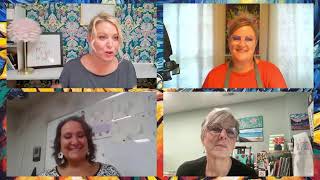
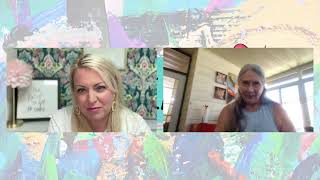
Hey everybody, Christy with The Social Easel here, and I am here with one of my fabulous students from the Florals Masterclass of 2024, Miss Sonia. And I am going to let her introduce herself and share a little bit more of her story and kind of how long she has been painting, what intrigued her to want to be a part of the masterclass. And then, of course, we're gonna talk about her success and have her show off what she did in the master class as well. So, Sonya, I will pass it over to you.
Hi, I'm Sonya, and I currently live in Port— hello, I can't remember where I live now— in Ormond Beach, Florida, and moved here actually 3 years ago, and it was a year and a half when I I spied your program. As far as my painting, I actually painted quite a bit until about 8th grade. Okay. My father saw talent in me. He wanted me to follow in his footsteps, which was he at that point was restoring antiques and fine arts. And he wanted me to go to school and go to art school and do all this stuff. And then he found out how much it cost. And then all of a sudden, I wasn't good enough and nothing looked good and all this stuff. So I stopped. I literally quit painting. I look over the years because I do have sketchbooks yet from back in the day, and I continued to sketch. I just never did anything serious. And so when I saw your program, I said, I've got to try this again. I'm just saying, nope. I, I know it's buried in there. And I started doing it. And I can't remember. It was during the springtime, I think, last year when you were doing the lilies and all that stuff.
Lilies. Yeah.
Yeah. That's when I started. And then when you offered up the masterclass, I'm going, oof, I don't know. And my husband said, you're going to do it. Oh, you've been wanting to do this all your life. And so he paid for it and says, you're doing it. And it was so much fun. Oh, my gosh. I learned so much. And it brought back a lot of stuff, too, of the things I learned from grade school and everything. And so it was all coming back. And I've gone totally insane in here with my little cute little studio. I've got bottles of paint and tubes of paint everywhere. I did notice during the class, not only learning everything, but I did everything in small canvases. Yeah, my original is small. And since then I've been graduating. Oh my gosh. The wildflower one we're doing, I did get 20 by 20. My, the spring, was it the Springtime Blossoms, the one with all the blues and purples and stuff? That baby's on a 24 by 30. So I've, I have some small canvases and I'm going, I don't know what to do with those now. So it's been, I've just been expanding. This summer, my granddaughter, she loves Highland cows. And so I'm going to use that cow one you have, but I'm going to turn it into a Highland.
Oh, I can't wait to see that. Yeah.
So that one's going to be an 18 by 20. So that was going to be fun. I just— and I've already signed up for this class here in Nexus Masters, and I'm so excited just to expand my horizons and just pushed myself more.
I love— like, you can hear it. Like, I'm trying not to tear up, and I'm like, why don't I have a Kleenex over here? But like, you can, you can hear like the spark in your voice. Like, do you know what I mean? Like, you— like, I feel like I can feel your energy, and like, you're just like, you are ready for it. And, um, I love that. It's— it sounds like it was really empowering for you.
It was, absolutely. And you know, at that, and you're, you know, you're adding prayer and everything else to it, which is the heart of everything, and I absolutely love it.
So, so, so, correct me if I'm wrong, so were you already in, were you in TRIBE with me before Water Lilies, or was Water Lilies your first introduction to doing anything with me?
Water Lilies was the first introduction.
Okay, that's very cool. So I didn't know that. And then, and then you have since then become a part of TRIBE after the masterclass?
Oh, I, I became a part of the tribe before the masterclass. Okay, I was already, but my very first painting was the water lilies.
Okay, okay, that's awesome.
Yes, I want to go back and I want to go back and do them again, see where my improvements are.
Yeah, it's always fun. I love doing, especially if it's been a while, like if that was a year ago, to like see how much you've grown in a year's time and doing the same painting again. Um, and if you're like me, whenever I go back— and it's so funny because like obviously I walk past my art on the walls in the hallway of my studio and stuff— every once in a while I look at one and I'm like, how would I paint that now? Like, you know, they're like 5 or 6 years old. I'm like, what would I do different to that now if I just had time to like sit and play? So it's kind of fun to go back and redo a painting and then compare your progress and kind of like what you've learned in that span of time too. Yeah.
There's a couple of the lake ones, like the first time I used palette knife was a year ago, and then we redid it this year and I did it all over again. And the difference, just using palette knife that you have no control over. Yeah. But how your eye changes things. I swore up and down I had a short circuit between what my brain, my eyes, and my hands were doing. Nothing ever looked the way I thought they should have. Yeah. And now it's— they're getting a little bit more coordinated.
Yeah. Well, do you want to show everyone? I know it's small compared to the other ones you're working on, but this was Sonya's first original from the masterclass. And now you took this one. So there's a couple of different ways that I teach how to create your originals or like where to find inspiration from. But this particular painting you took from a photograph, right?
No, this actually— well, it was a photograph I had taken. This was actually a bouquet that my husband had given me.
Oh, I love that.
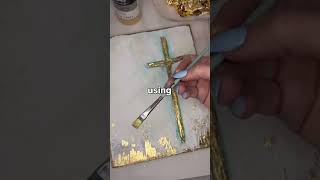
And I did switch it up. I kind of rearranged the flowers and all that stuff. But, and I think it had a different kind of base, so I created the base. But, and this is a mixed media. So I use the, you know, the print on the bottom, and I got a little— where is it? Oh, got a little coffee cup over here. So this one was a mixed media one. But I think the biggest thing I struggle with, and I still do, and we'll have to figure this one out, the certain colors that it's so different, difficult to make depth with, like whites, yellows. But it's a learning process, and I loved it.
I think more into that because I don't know if you saw the newest painting that I am getting ready to do in Tribe, but—
You talking about that really big one?
Yes.
Oh, I love that one.
Hey, so I'm going to show everybody.
Yeah, I love that.
Not too much, but So what you're speaking about with whites, with yellows, when it's already pale, right, like when it's already like a very light value, you have to create tones with it. So like with those, I did like a cool undertone, but you could have also done a warm undertone. So like there's choices in that, but we'll definitely go into that, um, and, and talk about that in the next master class. And I can even um, kind of use yours as an example, like doing yellows, um, and that type of thing, because, um, it's really fun to see. So for those of you that are maybe just hearing about the master class for the first time, um, what we do is, um, there's modules— they're pre-recorded modules that are released on the Mondays of each week during our 10-week span of time. There are 6 modules over 10 weeks. So we work in some implementation weeks so you have time to like work through the things. Then this year we are moving the Zoom calls to where they're a full week after the release of the module, so it gives people more time to kind of work through things. And then on those Zoom calls, it's the student's chance to— like Sonya was just saying, like if she wanted to bring that to the Zoom class and say, Christy, here's what I'm struggling with, like that's your chance to have me as like your art teacher, right? And like be there with you and work with you through, um, like those steps that you're doing in a painting. So I think we can definitely talk about that and talk about how to, like you said, add depth with very, um, high— uh, high— uh, not high is not the right word I'm looking for, but very light values. Yeah, because it is, it is more difficult than like a mid-tone or a dark value, um, to add that depth too.
So yeah, I know, I think that's why I started going towards cool colors because they're easier.
I do feel like they are, but I think I'm just drawn to them anyways. Like, everything I choose is always on the cool side of the color wheel.
Yeah, I love those colors anyway.
So yeah, so what was, um, we kind of talked about a little bit about what made you decide to join the master class, and I love that your husband was so supportive. And obviously it makes me super sad that the way things that happened in your childhood and that part of you was closed down. But I love that even now it's not too late for you to tap in. Yeah, right.
Absolutely. I'm pushing 70. So, yeah, it's never too late.
Right. And I love that. So what were After completing the masterclass, what were some of your favorite things about that experience?
I— oh my gosh, so many things. I love the interaction between all the ladies. Now, you know, as we encouraged each other, as we threw ideas at each other and, well, what do you guys think about a great background for this one? And I had one of them I started after the masterclass. Still haven't finished it, but I punched out to the ladies. I just gave them my sketch and a picture of what it was coming off of. And I said, what do you guys think for a background? Because I don't want to do that much busy. And so they gave me ideas and all that stuff. And, uh, so I haven't finished it. It's a cat sitting in a flower box. But anyway, I'm working on it.
Hey, there's no deadline. And sometimes Sometimes pieces like that, I have had pieces that sit off to the side for months or even a year until I come back to them, and that's just kind of part of being creative too. Yeah.
Yeah, because I've got a bunch of canvases right now that are sketched out, and they're just waiting for paint.
So, hey, that's good. You're laying down the prep work.
Yeah. So I just, just the encouragement between each other, being able to hold each other up and lift each other up. Absolutely. And I got to see things differently. Even, you know, we look at clouds every day. Well, after we had a class about, you know, working with all those different values and what a cloud looks like and how you work it, I actually started seeing things, looking at them differently and looking at flowers differently and just, you know, say, oh, there is more than one color in that. And yeah, look at the shape of that. And it's just amazing. And it just opened my eyes more to the possibilities.
Yeah, it's very cool once you start kind of tapping. And I mean, it's really just the difference between our right brain and our left brain, right? I feel like for most people, we function through our normal day-to-day life very left brain centered. Like everything is analytical and logistical and all that. And then when you tap into that right, right side of your brain, especially like you said, like in normal days, you're like, I catch myself looking at clouds and I'm like, what color would I paint the base of that if I was painting that cloud right now? What would be my base color that I start with? Right? Like, and you start looking at the shapes and like, you do, you just literally start seeing the world completely differently than it's like, 'Oh, there's a flower, there's a tree, there's a cloud,' and moving on.
Pretty much, yeah. It's just that, and I'm very analytical, and I get that from my dad. I don't know how he survived as an artist, but perfectionism was his key. And of course, I was right, you know, with Rembrandt and Michelangelo, and, you know, those were the artists I knew. Yeah, abstract and impressionist. Not so much. And so being able to see that I can't— I don't have to have every stinking little detail, and letting that go was so freeing. Yeah, it's actually more fun than having to worry about every little nitty thing. And it was like, oh my gosh, I'm actually having fun with this now.
And that's what it's all about, like I love it. Like, I was, um, I posted about that painting when, uh, the one that I just showed you guys, and it's called Queen's Bouquet. And I literally listened to Queen the entire, like, on repeat playlist until I was done with that painting and just let loose, had fun. It's a, it's a loose, messy painting, which is my way to paint. Um, so yeah, sometimes I think the they're not to say they're not beautiful paintings that are realistic looking, but you lean into more of that perfectionist side. And for me, I feel like the perfectionist starts stealing the joy away from my creativity. Um, so I kind of keep it in check. And if I catch myself, you know, you'll catch yourself getting really like over-analytical maybe about like something you've done in a painting. And I'm like, okay, step back. Like, you're getting You're making this too serious and not fun. Right.
Exactly. Exactly. So yeah, if it's not fun, then yeah, right. Just go out and ride a bicycle then.
And I think you're right about like the— I was talking about this with Linda in our chat together as well, just the community part of it and having most of us don't have creative friends that are like around us, right? Like, I mean, you know, you, you find that like special group of people who have the same interests in you, and then you can be dorks about talking about color and backgrounds and all these things that maybe people in your normal life would be like, why are we talking about this?
Yeah, the—
but the group gives you, um, that space and that ability, and, and I think without fear, to like openly share. And you know you're going to be surrounded by encouragement. And like you said, you know, women lifting you up, us lifting each other up and encouraging along the way. And I think that goes a long way because it's a whole lot harder to do something all by yourself without that support and that community to back you up along the way.
Absolutely. Absolutely.
Well, before we jump off here, is there anything that you would like to say to maybe some of the women watching and they're thinking about joining the masterclass, but maybe they're on the fence? What would, what would be your encouragement to them?
We don't live in fear. If that's what's holding you back, if it's the money, Just pray it in. The Lord will provide for it one way or another. And you're not going to— for a lifetime worth of lessons, because you can go back over and over and over. Oh my gosh, it is so worth it. It is completely worth it. You'll never regret it. And just the love that you're going to feel between every artist, because you pick up a brush, you're an artist. Okay? It doesn't matter whether you just stick people or if you do a Michelangelo. Okay? You're an artist, and it's totally worth it. And I completely encourage you to jump in with both feet to the deep end. Yeah, it's gonna be so much fun, and we're gonna do it again, right? Okay. Yes.
Whole nother—
absolutely—
whole nother session of it. So it'll be so fun. I love for those of you that are coming back for the second year, um, I, I can't wait to see the growth that happens in these next 10 weeks together. So, um, thank you so much for sharing with us today and for jumping on, and I look forward to seeing you back in the master class in a few weeks.
Absolutely, looking forward to it.
Thanks, bye.