Morning Mindset: Mistakes Are Stepping Stones not Setbacks!
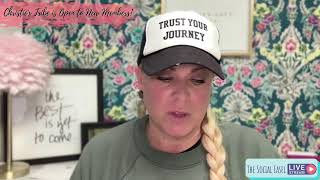
In this 2025 YouTube morning‑mindset session, Christie Renee Hawkins blends a brief devotional with a motivational talk about why making mistakes is essential for artistic and personal growth. She frames mistakes as opportunities for learning, problem‑solving, play, and resilience, presenting five concrete reasons they are beneficial. Throughout, she shares personal anecdotes (e.g., dropping paint, accidental color blends), biblical references (Isaiah 43:19, Ephesians 3:20), and a narrative of her own entrepreneurial journey from home‑based paint parties to the online community "Tribe." The session includes a series of journal prompts and reflective questions designed to help viewers re‑frame fear, perfectionism, and the need for external approval. Christie emphasizes the importance of community support, setting boundaries for creative time, and practical habits (standing up, walking away, using mixed‑media pads). The talk concludes with a call to action to join Tribe, highlighting membership benefits, a 14‑day money‑back guarantee, and upcoming live Q&A. The overall message is that embracing mistakes leads to creative freedom, joy, and spiritual growth.
Chapters
Good morning, everybody. How's everyone doing this morning? It's a nice dreary day in Springfield. I think it's gonna rain thunderstorm all day here, so I'll probably be spending the majority of the day here in the studio. Okay, so today we are talking about making mistakes. Um, anyone here have issues with that? Anyone struggle with allowing yourself to make mistakes? I think all of this ties into obviously fear because we're fearful of making mistakes. But I think it can also come in with trust, and whether that's trusting God and where he's leading you, whether that's trusting the process. I think it's our human tendency to want to control things. It makes us feel safe, right? But we can't really grow if we're always safe. You can only grow when you make yourself vulnerable. And making mistakes is part of that vulnerability. So today we're going to talk about, um, 5 different reasons that making mistakes are good for you and how to— this whole week we're talking about mindset, how to change your mindset and reframe your mind and how you think about mistakes. Um, I want us to stop dreading them to start, like, or stop thinking that they're bad, right? Like, that's our connotation, is mistakes equals bad, mistakes equals failure. And we really just have to change our mindset around that. So, um, we're gonna— that's what we're gonna talk about today. Um, so I am actually going to start with a devotional this morning. I'm doing it from the same one I've been doing it from all week, um, and it's called Let Him Lead. And I thought this was perfectly appropriate for this week because so many of you doing this paint with me are stepping out and you're trying something new, and you're, you're being brave, you're taking that step. And so kind of talking as to like what that is to step out in faith and like let him lead and see what is possible. What you experienced this week doesn't have to be the end of that. Struggles that you've had before in painting and creativity doesn't mean those are struggles that you're always going to have. And learning that we can change, we can grow, tomorrow can be different, and we need to change our mindset and focus on hope and focus on change. And that's what this is talking about. So it's called Let Him Lead. You can always tell where God's Spirit is moving. Transformation happens. We start seeing things in new ways. We loosen our grip on life as we want it to be and open our hands to life as he is creating it in this very moment. That takes some hardcore trust, especially for those of us who have a hard time being vulnerable. Is it really possible that tomorrow can bring something we can't possibly imagine today? Will we pull back on the reins and dread of the unknown, or will we take the leap and dance in the dark, trusting that his love will always light the path ahead? Our time on earth is short compared to the glory that's to come. So let the Spirit lead. In Christ, you have nothing to lose and everything today— to gain. Sorry, not today. Um, so Isaiah 43:19 says, see, I am doing a new thing. Now it springs up Do you not perceive it? I am making a way in the wilderness and the streams in the wasteland. Now all glory to God who is able, through his mighty power at work within us, to accomplish infinitely more than we might ask or think. Ephesians 3:20. I love that one because I also think sometimes we forget that if, if we are believers, if, if we have Christ in us, that anything that we try to do in life, we're not doing it alone. We're doing it with him and him in us. And I think we need to remember that even in, you know, God cares about all the details of your life. He does not think that this is frivolous. He does not think that creating art means nothing. It matters to him because it matters to you, right? And he wants his children to be joyful and happy. But a part of that is choosing to trust in him and trust that maybe he has a bigger plan for you than what you realize. And that has been more apparent to me in my business than anything else. The life that you see that I'm leading right now, I'm having the studio, teaching all of you all over the world. I was just a mom who did a paint party for her kids and then did a paint party for friends. Then it slowly turned into the Social Easel, and then I paint nights, and then I transitioned online. None of that was ever in my plan. I just kept trusting him every single step of the way, like, where is he leading me and what, what is my next step? So walking out on that water, all faith, all trust, knowing that he is with you each step of the way, that he will always be with you each step of the way. He will never leave you or forsake you. And Sometimes we just block that out, or it's like, yeah, I know that. But do we really know that? Like, in your heart, do you really know that? Do you really know that, like, he cares about the small things going on in your life as much as he cares about the big things? And, um, I think just, you know, choosing to trust him— and no different than how he teaches us when, when, when we make mistakes, right? There are repercussions, but we learn from them. and it's the same in art, right? So that's what we're going to talk about today is learning how to reframe our mindset around mistakes and learning to look at them as honestly as blessings because they help us grow. And I don't know about you, but I constantly want to keep growing. I don't want to stay where I am right now. I know there's more to learn. I know there's more to do. I know there's more to see. And if I'm not willing to change and do something different than what I've always done, I'm gonna get what I've always gotten, right? So we have to change that. We have to be willing to step out in faith and take risks and be willing to make mistakes and understand they don't mean the end. Mistakes are not the end-all be-all, right? So let's talk about that. Number 1, every mistake is is a moment for growth. So mistakes are not the end, they're, they're the beginning. They're the beginning of learning. Every oops in your art is an opportunity to explore something more. And I look at it this way too, like when you do make a mistake in your art— you guys literally see me do it all the time when I'm teaching live with you— flick of paint somewhere that it wasn't supposed to be, or I dropped the paint. Like yesterday I dropped— or one, one day this week It all blends together now. I dropped my pencil and my paint, and, you know, I've dropped that, a loaded paintbrush in the middle of my painting before. I've spilled a whole cup of water over a painting before. But here's what that allows. It says to explore something new. It allows our brain to like, oh, here's a problem, I need to solve it. Problem solving, super healthy for us, by the way, too, to constantly do things that challenge us and, and to use our brains in different ways. Like, how can I How can I fix this? Or how can I work this into my art? And then it becomes one of those things when you look at your finished piece, you may have either completely covered that up and you forgot about it, or you may see that little brush stroke or that little dot of pink or whatever where it wasn't supposed to be. And every time you look at it, you'll remember like that moment as you were creating that. And so then it brings back like a special memory of like when you created that piece of art. Sorry, my allergies are so bad. Um, and it also is a reminder if you leave that in your art, and when you look back and reflect on it, it's a reminder of exactly what we're talking about today. Did that one speck in your painting where it wasn't supposed to be, that little happy accident in there, did it ruin your entire painting? Did it make it so that you, you weren't proud of your finished product because you made one mistake? And the answer is no. Like, you're still happy with it, you still love it. Like, so learning to look like, I overcame, I made a mistake, I didn't let it shut me down, you right? Like, I figured out a way to work it into my painting. Um, so start reframing how you think about that. And growth does— I love this statement— growth doesn't happen in perfection. It happens in experimentation. Growth doesn't happen in perfection. What do you learn if you make the perfect brushstroke every single time? Not much, right? But what do you learn when you make mistakes? You learn how, just like what we talked about, you learn how to experiment. You learn how to pivot like we talked about earlier. How are you going to change something? You learn how to problem solve. These are all important things to learn, not only in art but in life too. Um, number 2, mistakes teach you more than success does. When everything goes right, you don't learn much, but when things go off track and you ask why, that's where the insight happens. And this is where I talk about the conversation with your art, deciding what you're going to do next, like looking at it, slowing down enough to figure things out. The mess is where the magic is waiting. I love that the mess is where the magic is waiting. So don't be afraid to be bold in your artwork. Don't be afraid to step out and try. Maybe you already have a style that you tend to paint, and maybe the way I teach is, you know, pushing you out of your comfort zone, and you're like, I don't know, I'm usually like pretty tight and concise, and, and I like things to be just the way they are, but Christie's like messy and loose and she's scribbling in her paint, and like, that makes me nervous. But I challenge you to just like go with it and see how that feels, because that's where the magic happens. And I say this all the time, like when you really let go in your art and you, you start looking at it like play, and you start allowing yourself to be messy and relax and not try to be perfect at everything, that's— that is where the magic happens. Regina said, first tube of paint I opened last night, I squirted it out, had it upside down, paint all down my apron. Now I'm broken in, I'm officially an artist. And wasn't like— just embrace all that paint. I love getting paint on my hands. I, and I love finger painting too. So like, don't be afraid to like get in there with your paint and, and experiment and play and try something new, like the palette knife. Knife last night. Tonight we're going to be doing like a watercolor version of acrylic. So it's just always learning to play and not worry about being perfect. See how all these topics all kind of tie together that we're talking about throughout the week? Number 3: some of the most beautiful art is born from mistakes. Um, hold on, let me pull this over really quick. The accidental, um, color blend that you didn't mean to make that color, and then you're like, oh, actually I really like that color. I did this yesterday. What was I painting? And I was like, oh, those colors together are actually really good. It was the dark blue that we've been using this week and that electric pink, that really pale pink from my set. It made the perfect, like, lavender color. And I was like, huh, I've never mixed those two together before. So little things like that, it was like they mixed together on my palette and I was like, oh, that's actually really pretty, I really like that. The unexpected shape, the unexpected— people see this like in some of my paintings, they're like, do you guys see— I did a nativity scene a couple years ago and we were kind of feathering out the sky in the background and I didn't see it while I was teaching it. And then when I got done, they were like, do you see that? It looks like angels above the nativity, and it's like an accidental brush stroke. I didn't plan that, but it happened. The paintbrush happened, right? And then it was like this, like, cool moment in the painting and totally perfect for what we were painting. And I'm like, see, not every— you can't plan everything. That's the takeaway. You can't plan everything. Some of the mistakes are the best things that happen in your art. Um, many iconic techniques were discovered by accident. Your mistake might be the next signature thing in art. Um, so that's a good one. Number 4: mistakes invite play and flexibility. If you're too focused on getting it right, then you stop having the freedom to play. So Again, going back to what we talked about earlier this week, avoiding this perfectionism, avoiding this mindset of I shouldn't make mistakes, getting into the mindset of I need to create like I did when I was a child, right? This, this little, this little girl back here, remembering her. I even told, uh, my tribe sisters this a few months ago, I think, when I was telling that story, and I was like, find it, find a picture of you when you were younger, when, when we were all still dreamers, right? Whatever age that was for you, when you were excited about what was to come instead of being fearful. And have that picture of yourself. I have another picture of myself, um, I don't remember where I put it now, but it's me standing at my little Sesame Street easel when I'm like 4 years old, and I love it. It's one of my favorite pictures of myself because I'm so happy, and I'm so happy that this is what I'm getting to do today. And I'm standing at my Big Bird easel, and I'm getting ready to play with colors. That was all I needed when I was a little girl. So inviting that play back in— and you can't have that freedom, you can't have that play if you're always worried about getting it right. Okay, so let's let go of that focus of I have to get it right. Let's get rid of that pressure and let's invite more play into our creative processes. Mistakes teach you to loosen your grip and trust the process, and art becomes less about control and more about curiosity. And I love that one because sometimes I think we don't allow ourselves to be curious enough. Like, let's see what happens. This was also like, I loved art and I loved like science when we got to do like chemistry stuff and like mix two things together to see what would happen, right? Those were like my two favorite things. So I'm, I'm like I'm totally that person who want— like, I'm like, let's experiment, let's play, let's do this, let's see what happened. I'm a thrill seeker. I've jumped out of a plane before. Like, I'm always like, what's— what can we do? What's gonna happen when we do it? That to me is exciting. I just— I don't want to live a boring life. I don't want you guys to live a boring life. Not because you don't have to do all the extreme things I do, but I mean that in saying don't stay in this— don't stay in the box. That's what I mean by don't live a boring life. Don't try to be perfect. Perfect is boring. Be willing to step out and try something new and be a different version of who you are today, that you remind yourself that you're capable of change, you're capable of trying new things and finding new things that you love that you don't even know you love yet. So, um, yeah, just get back to that curiosity and the excitement of trying something new. And the final one is reframing mistakes builds your creative resilience. And this is so true. I mean, so basically what I mean by that is the more you allow yourself to make mistakes in your art, the more you actually do trust the process. You no longer will, like, get to that point in your painting or make a mistake or mess up or get to a point where you don't like something. You're not gonna look at it anymore and be like, I should just give up. I don't know why I tried to do this. Instead, you're going to be like, it's fine, it's fine, it's just a mistake. I know how to fix this. I'm going to trust the process. And then you remind yourself, it's just paint. It's just acrylic paint. If I don't like it, I can step away for 5 minutes, I can let this dry, and I can paint over top of it again. Problem solved, right? Like, it's not the end of the world. We need to start remembering, like, go ahead, think worst-case scenario. What is— what is— you guys tell me in the comments, what is the worst-case scenario if you make a mistake in your art? Nothing. Like what? Like nothing. Like you can paint over it, you can turn the page, you can start over. No one— you know, I'm not going to come marching into your art studio and be like, that looks terrible, why did you do that? No one's going to yell at you, no one's going to tell you it's not good. It's you, it's you, your mind, you and your art. This is it. There's no one else there. What, what is the worst that's gonna happen? That you don't like something you did? Okay, that's whatever. I mean, I don't know any of us who have made it through life without making mistakes, right? So that's not going to change. So let's just go ahead and embrace them. Instead. Let's go ahead and decide to learn from them instead of acting like a bomb is going to go off if we make a mistake, because that's how we act. It's like, you know, I see people and they're like, and their eyes are big and they're scared. I'm like, take a breath. What's gonna happen? It's okay, it's okay. So just learning, learning to pause long enough if you start getting in that negative mindset and you start hearing yourself talk that way to you, be like, girl, chill out, it's gonna be okay, we got this, right? Everything gonna be fine. Each mistake you move through builds confidence in your next one. This is where the resilience comes in. You learn to trust the process. You start reminding yourself it's okay, and every time you do that, you're building confidence in your choices, in your work, in your brushstrokes. It's, it's not about never messing up. It's knowing that you're going to and you're just going to keep going through it. One of my favorite things to say is to fail forward. Failing means you're growing. Making mistakes means you're growing. If you're not making mistakes, if you're not stepping outside of your comfort zone, if you're not willing to fail forward, you are not growing. So it's really just about accepting that, reminding yourself of that. Fail forward. Make yourself a little sign, put it in, put it in your studio, put it where you're going to see it. Mistakes are how I grow. Every time I make a mistake, I'm learning something new. Like, we have to look at this as these are blessings. They're not setbacks. So let's change the way we think about it. Let's change the way we approach our art. And, um, I think that you guys are going to be so much happier when, when you can let go of that fear of failing. And then also just realizing, we just talked about it, what's the worst that can happen when, when you burst the fear bubble? You realize it has no control anymore. Right now, if you're still fearful of making mistakes, you're letting the enemy win, number one, because God can't work through you if you're not willing to step out, right? God is not of fear. Fear is not of God. So when you hear that fearful voice in your head, that's not him saying those things. So remembering what truth is, and he says to be brave, and he says to step out in faith, and he says to trust not in you, in him, right? Because he's with us in all of this. So, you know, remembering that, and that he— during the mistakes, and again, we're just talking about art right now, right? We're just talking about some paint. Let's take it off this like pedestal of like holding it up here like it has to be perfect and everything. We need, we need to break it down. We need to knock that pedestal down, and we need to remember that failing means growing, mistakes means growing, right? So changing, changing the way you think about it. Um, and then I just also have some like questions, some like journal prompts, um, that I thought would be helpful just to kind of ask you guys and have you think through. And maybe even if you are a note-taker, maybe even jot these down so that you can come back to them, you know, when, when you start maybe getting in that headspace and you need that reminder. Um, so the first one is What's a past mistake that actually led to something good in my art? What's a past mistake that actually led to something good in my art? So that can be something as simple as, like, what I was saying, like, you drop a paintbrush somewhere in your art and then you're like, oh, how am I going to fix that? And maybe it's not easy to cover up and then you just decide— like, I've done this so many times, especially because I love painting florals, and I'm like, well, I guess a flower is going to go there now, or I guess a leaf is going to go there now. And then as I'm doing that, it turns into something else, and I'm like, oh, and then I could add this. And then, then you start going down this road of creative freedom instead of letting it hinder you. So kind of like what I was talking about in the beginning, when you look at that piece of art on the wall that you may have hanging and you remember a mistake that you made in it But now you can look at it and say, yeah, but I did it, I finished it, I love it. So remind yourself of that. What's a past mistake that actually led to something good in your art? Number 2, how can I reframe today's struggle into something valuable? And this is something that I encourage in all of my workshops, and we talk about this because any, any group that I lead, if we open a Facebook group for it Obviously, Tribe is like this. I don't allow any negativity in there, and I'm very protective of my group, and it's just— I just don't allow it. It literally is good vibes, positive vibes only. And I don't mean that to like sugarcoat things. I mean like, we need to change the way we talk to each other, but mostly how we talk to ourselves. And so, how can I reframe today's struggle into something valuable? When I started seeing people post and talk badly about themselves and their art, that's when I started making these statements and saying, okay guys, because here's what happens. Negativity breeds negativity, right? You've seen this happen. Look at a comment on any thread on Facebook and you get one negative person in there saying something nasty because people love drama. Well, I don't love drama, not in my group. And I don't allow it. And I don't allow negative comments, whether they are about someone— certainly not about someone else, but most definitely not about yourself and what you've made. So when I started seeing people like post and say things like, I hate it and it's ugly, but here it is, and I'm like, really? Come on, let's reframe that. What did you learn? What did you learn? So how can you reframe today's struggle into something valuable? Instead of looking at the end result or saying you're not happy with something, let's think a little bit. Let's reframe this and think, okay, I'm not happy with how it turned out right now, right? Yet. There's always a yet. You're not done yet. You don't have to be done. You don't have to be happy with it right now. I'm not telling you to change the way you feel about it, but I'm telling you to change how you look at it. What did you do that you loved? What did you learn? So instead of like— this is my general rule of thumb— if you're going to post your work, whether it be in a thread, whether it be in a Facebook group, don't come in and say something negative about your work or about yourself or how you did. Tell me what you learned. Tell me what you want to work on if you're not happy with it. What are you going to work on? We're no longer going to stop at this point of where we're like, I'm not good, the end. Right? We're growing, we're changing. So how can you reframe today's struggle into something valuable? Number 3, what might happen if I welcomed mistakes as part of the process? That's a good one to just keep up in your studio. What might happen if I welcomed mistakes as part of the process? And by the way, I do have a PDF of like these little journal prompts. Um, if you guys want them. I'll— I think I can put them on the hub page. I'll put it on the hub page and you guys can print this off. Um, number 4: What fear do I carry around making mistakes and how can I gently release it? All right, so let me know in the comments. Let's answer this one Let's answer this one together. What fear do I carry around? What fear do you carry around making mistakes? What is that voice in your head saying if you make a mistake? Are you yelling at yourself? Are you telling yourself you're not good? What's, what's the fear that you carry around when it comes to making mistakes, and how can you gently start releasing that? Susan said, part of my frustration is I have so little time to paint that I want it to be perfect the first time. So Susan, that's a huge one, and, and, and definitely something that is going to hold you back in a lot of ways. So I would say, let, let's reframe this. You have little time. So let's change the way we think about it. Instead of saying, I have little time, so I want it to be perfect— one, unattainable. There's no such thing as perfect. So you're chasing something that you're never going to get, right? So let's go ahead and take that off the table. How about we say, I have so little time to paint, I want to enjoy it as much as I can. I have so little time to paint. I want to have as much fun painting as I can when I get to do it. What if we changed our mindset instead of wanting to be perfect to wanting to have fun? That sounds a whole lot better. Does anyone agree? Do we think we should kind of change our mindset around that? If you have a little bit of time, instead of expecting it to be perfect, how about we make it fun? How about we make it fulfilling and positive? Okay, so Jan said one of her, um, so what we're talking about right now is what fear do you carry around making mistakes and how can you gently release it? So Jan said that it won't be good enough for people to see it. Okay, so this goes back to— and Nancy said the same thing— what others think, or will they accept it? Lori said the same thing, my fear is that I would not be accepted. Okay, so we're hitting on something here, right? Lori said that it's not going to be good enough. Susan said disappointing other people. Wendy said not good enough, others are not going to like it. Carol said I worry about what others will think. Marcy said not good enough, I hear my parents in my head. Wow. Okay, so let's like sit on that for a little bit and realize, number one, this is the importance of community, that you are not alone in feeling that way, and that most of the women here in these comments are saying the exact same thing. And what is the focus on? The focus is on impressing others. The focus is on— I talked about this yesterday, how this is how I used to be. This is how I was in high school. This is how I was in college and how it devastated me when my teacher gave me a C and basically told me I wasn't good enough. I cared more about what other people thought of me than what I cared about what I was doing. And you're never going to truly find joy in the creative process if that's your end goal. Because I'm going to tell you this right now, I mean, coming from my background, coming from my field, and making myself vulnerable and posting art out there for the world, you are never— you are never going to get that affirmation from the world. So same thing we talked about with chasing after perfectionism. Chasing after approval is the same thing, okay? Approval— now you've set expectations. Now you've put expectations on yourself. Now you've put pressure on yourself that you're trying to impress someone, and that is not the point of creating, right? So let's change our mindset about that. This is the overwhelming— how can we start gently releasing that? Come back and remind yourself that you're not doing it for them, you're doing it for you. I'm not painting this for anyone but me. I'm not painting this for anyone but me. Write it down. If— okay, if you want— if you want to make someone proud, let's make him proud, right? Not the world. If you want to make someone proud, let's make him proud, okay? And he's gonna say, don't compare yourself to others, don't envy other people's gifts, don't envy what they're doing. I'm working on you. This is you, not them, not what they think of you. So you've got to change change how you think about that. Yes, Jan said changing self-talk is so important. And, you know, I feel like, um, a part of this has like shifted in, in my business and, and obviously teaching so many of you and hearing the same struggles, workshop after workshop, year after year. Those things are always going to be there for everyone, but we have to decide whether we're going to let those negative mindsets control us, whether we're going to let fear control us. So that is purposely— I could have done this paint week as I had done so many others over the last 7 or 8 years. I used to not do any, any of this. I used to not do mindset talks. I used to not do devotionals. I used to just— it was just about painting. But I realized I can teach you guys the steps, I can teach you the skills, and I know you can learn them if you follow my path, right? Like, follow what I'm saying to do, and I know that you can do it. But that isn't what really is holding people back. What is really holding you back is what you're saying to yourself and your mindset. And so I started realizing, like, this, this is what we need to address before we get to painting. We need to mind our mind first, right? Anyone agree that you're starting to, like, realize maybe painting is about a whole lot more than just painting? Like, and again, like, this, this is what's healthy. This is what's good about this is I'm not telling you you're wrong for feeling the way that you're feeling, but I'm telling you you can reframe things. You don't have to stay in the same mindset just because that's how you grew up, or just because that's what your parents said to you, or just because blah blah blah blah blah blah. You are capable of change. You are capable of more. Okay, I want you to hear that, and I want you to know that God never said he wants you to be perfect. Find it in the scripture. Tell me where, where Jesus said that. He didn't. He knows you're going to make mistakes, but he's there to walk with you through those mistakes so that you can learn from them. So, what is next here? Number 5, what would it look like to fail forward in my creative journey? Hey, Mr. Kalidas. Sorry, one of my friends popping in here. What would it look like to fail forward in my creative journey? So I want, I want you guys to answer that too. Tell me what you think that would look like. Imagine you sitting down to paint and you now changed your mindset. You're like, wait, I don't have to believe those lies anymore. That's not true. I can do this. And if you don't trust yourself enough right now, then trust me and trust that I have led thousands of other women just like you who now have proven to themselves that failing forward is how they found themselves in their art. Okay, so what would it look like to fail forward? Lori said yes, it would, it would be freedom and joy. Susan said freeing. Jan said pure joy. Tanya said to find joy in what I do is part of why I joined here. I love that, I love that. So imagine that version of yourself. Imagine that version of yourself that is no longer like, I'm not allowed to make mistakes, and instead comes into your art space and you're like, let's do it. I'm not worried if I make mistakes today because I'm going to learn something. And guess what? If I mess up really bad, I've got this awesome group of ladies I can go talk to and vent and say, guys, help me through this. Help but give me reminders. Remind me what I should be saying to myself right now instead of letting this negative energy consume me and consume what I'm trying to do. I love that, Robin. Um, she said, I signed my artwork as GOD, glorifying our designer, because I don't feel like I can take credit when all the ideas and skills come from him. Amen. I feel the same way. Elizabeth said, being in this group has helped me so much as far as not trying to be perfect anymore. I didn't realize how much it was controlling my thinking about everything. And that is so true. If we're feeling this way in our creative space, imagine how we're letting that mindset carry over into the real world and our real life choices too. When you live in a, in a space of fear, it's clouding and controlling everything around you, and you don't have freedom and you don't have joy. But when you trust him and you know he's got your back and you're not relying on you anymore, because it's not just you, right? We don't have to be self-reliant because we can rely on Jesus. Right? We have his power within us. So remembering, remembering those things. Okay, Susan said, can't help what you feel, it's about how to respond to those feelings is the key. Yes, that is Absolutely true, right? I've had to try to explain this to my husband. I can't— I have a lot of feelings. I can't control the way I feel about something. You can't control the way I feel about something, but we can change how we respond to those feelings. And again, sometimes that is just slowing down enough to allow ourselves to respond. Um, so going back to— I'm going to read some of these other ones. Like, number 5: What would happen if you fail forward in your creative journey? Nancy said it would create freedom. Loretta said it would feel like success. Carol said it would be relaxing and fun and invigorating. Like, this is, this is why we want to create, right? Carolyn said joy, fun, expansion. I keep failing forward into creative endeavors. I'm finally listening and just going to surrender and enjoy the ride. Yes, I'm throwing that one up. This is good, this is good. Keep failing forward into creative endeavors. She said I'm finally listening and just going to surrender and enjoy the ride. I have another hat and sticker that say enjoy the journey. Trust the journey. Enjoy the journey. What is the point in us doing any of this? What is the point in learning to paint if we're just going to be mean to ourselves about it? That's not fun. Remember, like, the whole idea of this is supposed to be fun and exciting and filled with joy, but we take that away from ourselves if we come in with the wrong mindset. I'm glad you guys needed this today. I think, I think we all see in the comments, I think everyone needed this today. And I mean, these are things— and I want to make this perfectly clear— I am not preaching this at you as if I haven't been in the exact same position as you. Still am sometimes. But now I know, just like some, um, she said up there, like, I now know how to step back and adjust how I react to those feelings. I now have solutions. If I'm feeling this way, I know I need to step away from that piece of art. I'm going to go over here and work on something else that's not stressing me out and makes me feel happy. Pivot. Number 6, where— this is going to be a good one for you guys— where in my art can I loosen up and let go of control? Every time you hold that brush and you start tensing up and your shoulders are up here and you're not breathing— anyone can relate to any of those things? Because this is what I see when I used to teach in-person classes. We'd have some ladies who are just like, just painting away, they're having fun. And I look over at the lady next to her and she's just like frozen, so serious, so tense. I better get this right, right? So when you notice that, when your shoulders are up here and you're tight, get up. I literally almost had to peel these women out of their seats at the last retreat. They did not want to listen. It was like talking to a room full of children. And, you know, I say that with love. Some of you are here in the comments and you know what I'm talking about. I made everyone get up from their seats because I started hearing— I started seeing the tenseness. I started seeing stress. And I was like, okay, we're getting up. And they're like, no, no, no, no, no, I got to, I got to, I got to, I got to do, I got to do this brushstroke. I got to just— and I'm like, no, get up. Get up, put your paintbrushes down and get up from your seats. We're going to walk around and we're going to go look at what all our friends are doing right now. And I did this at paint nights all the time because I can feel the vibes in a room when, when you're the teacher at the front of the room. And if I have any teachers in here, you know what I'm talking about. You feel the vibe in the room. You can feel energy shift. And it's either fun and music's playing and people are having a good time and laughing and painting. They're not stressed. Or it goes to like intense quietness and everyone's taking it way too serious. And not to say you can't be serious and slow down and like do things like that in your art, but there's a difference between being serious and being tense and stressed and like feeling like it has to be perfect, right? So the reason I have people get up from their seats and peel them away from their paintings is because I know what it will do for their head. I know that it will be a game changer for them to step back, even if it's for 2 minutes. Just stop staring at the same thing and judging every single thing that you do on there. Get up, let's walk around, let's look at other people's art. And then guess what happens? Then you start feeling inspired again. You're looking at everyone around you, and we're not doing the envy thing We're not going to walk around and be like, whoa, Holly's so much better than mine. Holly's in here, she was here at my last retreat. Uh, I wish I could paint like Holly. That's not what we're doing. We are walking around and the ladies are talking to each other and they're like, oh my gosh, I love yours. Oh, I like how you did this brushstroke here, and I like that color there. And we— now the vibe has changed again. We're loosened up, we're having fun, we're encouraging each other, we're supporting each other. We're telling each other what a good job we did. And here's the thing, we are our own worst critics. We are so mean to ourselves, unnecessarily so. And I even had this like reflected back on me. I had a piece of art upstairs, and, um, I did it like a year ago, and I was testing out, learning something new, like really thick impasto style with like icing tubes. I'm not going to go into the whole thing, but like several ladies came up to me and they're like, why haven't you taught this in Tribe? And I was like, I don't like it. And they're like, what? And I was like, I don't like it. And they're like, what do you mean you don't like it? I was like, I don't like it, so I didn't want to teach it. And they're like, but it's so pretty, please teach it. I'm like, why? Like, I did not think that was pretty, but they did, right? And so, I mean, again, it even happens to me. But what I'm saying is like, this is the importance of community. This is the importance of not being alone alone in our heads all by ourselves all the time, because we all know that can, you know, not be the best place to be. So you need your people. You need your people to lift you up. And if we can't do that— we can't all be together virtually— but I want you to remember this story. And when you start feeling that way, and when your shoulders get tight, and when you're gripping onto your, your paintbrush like you're gonna snap it in half, it's probably time for you to get up, maybe go get a cup of coffee, walk outside, walk around the block, do something, and allow yourself to step away. Um, Leanne said, my biggest problem is that I need to set undisturbed amount of time to paint. Whenever I try to paint, it's like our kids and grandkids need something at that very moment. Yes, so you do, and we have to set boundaries, right? So when I— for the first several years, 5, 6 years I taught online, I did it out of my home. I didn't have a studio, and I have this little like 9x9 office at our house, and it did not have doors on it. And I would go in there to work or to paint And it's because we're the moms or the grandmas, whatever it is, but we're the women. And so they have to come and ask us all the questions. And the second we're busy doing something, that's when they need us the most. And so I was like, finally, I was like, Corey, you gotta put doors on. And I made a new rule. And I was like, they're like the barn doors. I was like, if my doors are closed, you are not allowed to talk to me. Unless it's an emergency. And guess what? It's really not ever really an emergency. Thankfully, we never had any of those. Um, and even that didn't work. They're still like peeking in through the door and they're like, Mom, I know you said not to bother you. And I'm like, I'm not listening. Go find your dad or figure it out on your own. But, but yes, to that, just like, um, uh, I already forgot who, but said, you know, she doesn't have a lot of time, so she wants it to be perfect when she has it. We all are busy. We all don't have a lot of time, right? But we, we do have to carve that time out. And that's part of why I give you guys a planner inside of Tribe and start really trying to set those appointments for yourself. And then yes, tell your family, um, tell your family to let you have your time. I'm gonna be a much nicer mom or grandma if you just let me do this. So let me have 30 minutes, let me have an hour, however long that may be. Yes, Claudia said, I found that you get a whole new perspective if you look at the painting from a little distance. And I think it's important to remember, if again, we're not doing this for the approval of others, right? Are you happy with your painting? Do you love it? Does it make you happy when you see it on a wall? That's what's most important. But yes, sure, you want— when people come to your house, like, oh my gosh, did you paint that? But let me tell you what they're not going to do. They're not going to come up to it like this, and they're not going to see all those things that you see. They're not going to look at it and try to pick apart mistakes. That's what you do. That's what we do, because we're our own worst critics. So it's good to step back. This is where people are going to view it from. Right. Sure. I'm sorry, Cheryl. I just had to laugh at this because this reminds me of things that go on in my house. Cheryl said, it happened to me this morning. I sat down to listen to you and my husband starts grinding coffee beans. This is me at the end of the night. My middle daughter, Emma, is the healthiest eater, everything food prepper, and she uses our NutriBullet I don't know how many times a day. But I can tell you it's every single night that I sit down on the couch to finally relax and just watch some of my stupid shows for a little bit. And our living room, here's the couch. Here's the kitchen. Emma's right behind me, grinder going, and I'm like, okay. She's like, sorry. And I'm like, nope, it's fine, just waiting for you to be done. But ever— it's every night, and Corey now just looks at me on the couch and I'm like, oh, make it stop. If she could just do it like 30 minutes earlier, it'd be so much better. So sorry, total, total different story there. Okay, last one. And I'm gonna end this, but I think this has been really good. I think— hopefully I think you guys think it has been really good and really important for us to work through these things. Um, the last one, number 7: What is one creative risk— this is such a good one— what is one creative risk I've been scared to take, and what's the worst thing that could happen if I tried? So for all the things that we've learned this week, all the different styles that we've done, when you think about painting, when you think about maybe what we're working on this week, or maybe you're looking at what is coming in Tribe and you're excited but you're scared, and right now you're thinking, they can do it, but I don't know if I can do it. Anyone feeling that? So I want you to ask yourself, what is one creative risk that you've been scared to take this week, and what's the worst that could happen if you tried it? Maybe that creative risk is joining Tribe. Maybe you're watching this and you're still on the fence and you're like, I just don't know, and I'm just doubtful, and I just don't know if I'll make enough time for it, or, you know, all those things that run through our head. So What if that was your creative risk? What's the worst that could happen if you said yes to TRIBE? What's the worst that could happen? You're not locked in long term. We have a 14-day money-back guarantee. You can try for one month for $47. And if you don't love the community, if you don't love what we're doing, if you don't love everything you get in TRIBE, then you can leave. So what's the worst that could happen? You spend $47, you learn some things, you hopefully make some friends, and I would encourage you to continue to stay and continue to grow in that. But that, like, that's the wor— that's the worst. You tried it, you didn't like it, and you stopped. That's not so bad, right? Sandy said, I think the knife, but I was amazed at how it came out. Yes. Yes, and that is almost everyone's takeaway when they finally allow themselves to play with a palette knife, because the only reason it's scary to us is because it's something new and it's the unknown. But once you realize it's not that— like, you know how, like, this is what fear does. Fear makes everything way bigger in our heads than what it actually is. It's just a palette knife. It's still just paint. It's still just a piece of paper. It's still just canvas. You can still paint over it, whether you do it with a brush or a palette knife. If you don't like it, that's okay. You can fix it. Ooh, that's a good one, Nancy. So the question was, what is one creative risk I've been scared to take, and what's the worst that could happen? She said to find a place to sell my art. So I kind of want to follow up with you on this, Nancy, because I think you definitely should. And I think you would be surprised. I can remember even as a little girl, my mom was an artist and she did these little like, um, note cards and little drawings and stuff. And I can remember being a little girl and we walked in these boutiques and she was talking to the owner and she was telling her about it. And the lady was like, well, I'd love to see those. And so mom came back and brought her cards in and she started selling them in that store. Did she become, you know, a millionaire selling cards? No, but that wasn't what her goal was. She just wanted to sell her stuff in a store, and she wouldn't have done that if she wouldn't have started that conversation. But I think you would be amazed at the places that you can sell your art. Or also, just like looking around, like when you're in restaurants or offices or like wherever you go, maybe they don't have any art on their wall. And maybe you want to showcase yours, maybe you want to put yours up there, and maybe you want to sell it, or maybe you're just doing it to put some pretty art on their wall, whatever that may be. I think that's a good thing. And what's the worst that could happen? They say no. That's the worst. They say no, and then you go find a different place. And remember that sometimes nos are blessings, just like mistakes. Sometimes that no, that closed door, means God's got another one over here that's better for you. Adriana said the drawing without a template was like, uh, I don't know, but I did mess up and I let it dry and I fixed it. Yes, and the more you paint without a template, the more you will realize you like the freedom in that and you're not feeling so constricted by the lines on there. Carolyn said that's the best $47 a month I'll spend. I love that because you know you're getting so much out of it for $47 $99. You're getting the painting, you're getting the community, you're getting the mindset. There's so much value in there for you guys. Lori said, looking at what I'm going to be painting for my original in the master class— so Lori's in my master class, um, so that's what— that's her creative risk that she's been scared to take, is deciding what her original painting is going to be. Marcy said the palette knife, but I'm going to try it tomorrow. Awesome. Jan said to finish a commission piece that is watercolor because I'm afraid to mess up the skin tone and I'd have to start over. I just need to step over that line of fear. Yes, you got this. And if you're worried about messing up the skin tone, pull out your mixed media pad. Premix it on there. Know what color you're working with before you take it to your actual piece that you're working on. This is the— this is why I say mixed media pads are so important. This is how you practice. This is how you learn. Sandy said hopefully to make some friends. She's in England with no family here. Would love to sell her art, um, also. So Sandy, I don't know, um, if you're already in the, in the group or not, but you will definitely have friends, um, when you are a part of this group. But I will say this, it's about how much you put yourself out there. If you are a wallflower and you never post in the group and you never share, it's hard to build those friendships. But if you do, just know you're going to be blessed tenfold by the ladies in this group, and you are not going to feel alone, and you are going to have those friends. Sherry said, I now use way more paint because I learned that I really love the palette knife and thick paint. Same, Sherry, it's so fun. Elizabeth said, I have an antique booth and I finally put one of my paintings in there. Anita said, using the palette knife is a risk for me, but it let me see opportunity for the future. Thank you, Christy said. I love being a part of Tribe. The time I've spent painting with my friends and family is priceless. It's so fun. Um, Stephanie, a master class, I don't offer it right now. It's already closed. I've done it for the last 2 years, and it's a— this year it's a 10-week intensive course with me. It's kind of like going back to college except with me as your instructor. Um, and so the goal of the master class class is for ladies to learn how to create their own originals instead of just using my designs. So that is a separate, separate thing from Tribe, um, that I have done the last 2 years. Cindy said watercolor is hard, um, you've got this. Yeah, but again, I, I feel like watercolor is so relaxing, and that's going to be what we are kind of playing with tonight. Not real watercolor, but you can, um, if you have real watercolors, you can use them, but I'm just going to show people how to water down acrylic and treat it like watercolor in tonight's lesson. But, um, it is fun and it's different. And for me, I just don't feel like— I'm not like, it's just a piece of paper, like, so what if I do watercolor and I don't really like it? Then I'll just start over and do a different one. Because you can't— with watercolor, you can't cover it up the same way you can with acrylic. Acrylic to me is the most forgiving medium. But we're gonna, we're gonna work on the watercolor tonight. Yeah, Rosella just said basically what I said. I'm more comfortable with acrylic paint because you can cover up mistakes. I'm going to have to force myself to start painting with watercolor. And it is— and again, everything that we've talked about today, there are going to be mistakes because you're learning a new medium, and watercolor is completely different than acrylic. So there's a learning curve there, right? But the more you do it, the more you'll learn how to do the right things with it. So, well, I hope you guys enjoyed today's, um, Morning Mindset. I think this was a good one, and I think we— I think it was great to cover some of the things that we talked about today. I think it was great for you guys to realize you're not alone in this and that most of you have the same fears. But just like this whole week is called, we are better together. So you're not alone in doing this. We may be spread out all over the world, but we can still come together in these workshops and in these groups. So, um, I can't wait for the final night of painting. This is the last day I will be painting this week. So tomorrow I will be doing our final morning mindset, and then I will be doing a final live Q&A at 1, and I will be going completely behind the scenes of Tribe. For any of you who are still on the fence, you haven't joined, tomorrow is the last day to get that big bonus, um, and you don't want to miss that bonus. It's like all the best paintings from my previous workshops all bundled into one, so you get those when you join. So I'm going to be answering all your questions, all your concerns, show you inside our Facebook group, show you the library and the vault and everything that you get as a Tribe Sister, and show you a behind the scenes of our community, of the fabulous women that are going to soon become your friends, um, in this process. Um, yes, Patricia, I use mixed media paper all the time for watercolor. I typically don't paint on watercolor paper because it's more expensive and I'm not like the watercolor that I'm usually playing with, it really is just for play. And if I like it, I can take my mixed media paper and I can frame it. But I don't like spending the money on watercolor paper when I'm not trying to necessarily create something that I know I'm going to frame, if that makes sense. But I will say this, watercolor does— watercolor paper does act differently than mixed media paper, but you can do it on both. Um, Rosella, if you missed the paintings, we are extending the replays through Sunday, so through Mother's Day night, and then, um, and then we are taking the hub page down and the replays will go away unless you become a Tribe sister. So if you sign up for Tribe, they're being added to the vault, so you'll have continued access to them as a Tribe member. Um, and then otherwise they are going away, um, at the end of Sunday. Okay, that's it, guys. I will see you tonight at 6. Thanks for hanging out with me this morning, and I'll talk to you later.