Breaking Free from a Minister's Sexual Abuse | Sandy Phillips Kirkham's Story
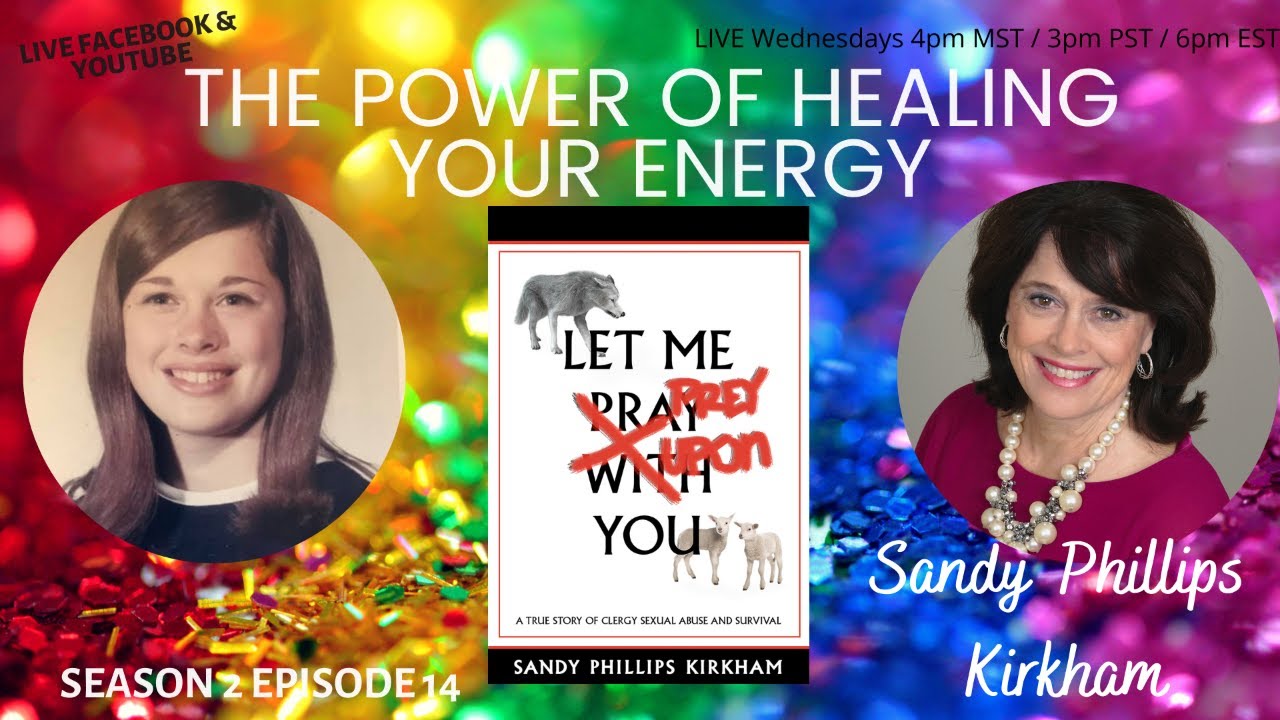
In this episode of The Power of Healing Your Energy Show, host Christine J. Gold interviews survivor, author, and advocate Sandy Phillips Kirkham. Sandy recounts her experience of sexual abuse by a youth pastor in a Protestant Church of Christ when she was 16, describing a five‑year period of grooming, manipulation, and gaslighting that continued until the pastor was discovered. She explains why she kept the abuse secret for 27 years—fear of disbelief, church retaliation, and shame—and how a trigger while driving past the pastor’s new town forced her to confront the past. Sandy details the abusive dynamics (isolation, false promises, spiritual exploitation), the devastating impact on her spiritual life, mental health, and relationships, and how the church’s mishandling compounded the trauma. She describes her healing journey: confiding in a trusted friend, gradually sharing with family, confronting the abuser, seeking support groups, and finding purpose through writing her book Let Me Pray Upon You and speaking for survivor networks. Sandy discusses advocacy for institutional accountability, the need for churches to acknowledge and repent, and practical advice for helping survivors, such as asking permission before praying. The conversation also touches on the emotional resonance of sharing stories, the role of prayer after abuse, and the ongoing challenges of navigating faith after betrayal. The interview ends with encouragement for listeners to seek healing and support.
Chapters
Welcome, empowered empaths, to The Power of Healing Your Energy Show. This show is all about your unconditional love, your light, your intuition, your soul's purpose. And depression and anxiety are a side effect of not living intuitively, not trusting your gut, the lost connections with your higher self and others. Your soul's purpose is here. Hello and welcome everyone. I'm Christine J Gold with 24 Karat Healing, and this is The Power of Healing Your Energy Show. And we did miss last week. I was moving. I've moved west. I'm kind of but here I am. And, uh, this is season 2, episode 14 already, and we're quickly gearing up for 2021 as well. And with me today, I have a beautiful, brave soul, a survivor, a warrior, a voice, a champion for others that have been abused. And I'm going to welcome her in. Just a little bit about her. I mean, look, look at this graphic. I mean, this is her at the age of 16. And, you know, in church, we— this is supposed to be a happy, welcoming, and safe place. But unfortunately for her, this became a place of great harm. And not only has she been doing this work for a very long time, she also has her wonderful husband and her two grown children, grandchildren, and her fairly well-behaved dogs to support her as well. But she serves on many boards. She has a documentary that was produced by the Hope of Survivors. She works with survivors conducting support conferences. She has participated in the Voice of Faithful panels moderated by SNAP, which is called— is known as Survivors Network of Those Abused by Priests, and sharing her perspective from a non-Catholic point of view abuse. So Sandy has been a presenter speaker at major events on clergy abuse, including the Hope and Healing Conference. So, um, she, she's just so many things, and I'm so honored to have her here. She also sent me a copy of her book in October, and I have read it. I have marked off many, many pages. I mean, the title alone, Let Me Pray Upon You, um, is something that people are going to be like, pardon, what is this about? So I'm welcoming Sandy to the show. Thank you so much for being here.
Well, thank you for having me. It's good to be here.
Um, and, and I guess just maybe tell us a little bit. I mean, I, I know a lot about you obviously from reading the book, but, um, maybe just tell us a little bit about yourself And maybe the second part of the question would be, why did you write the book?
Um, well, as you pretty much gave the introduction, um, I'm married with two grown children and have lived in Cincinnati all my life. Um, my abuse took place in the Protestant church, Church of Christ, at the age of 16 by my youth pastor who was 30 at the time and married with two children. The abuse lasted for 5 years until he was caught. So that's sort of the beginning of the story. I was very active in the church. It was a big part of my life. I taught Sunday school. I sang in the choir. So I was very, very active in the church, and I absolutely loved being at church. It was a place that I found real peace and joy in my life. So that abuse really tore a lot of that away from me and changed and altered my spiritual life in many ways. I wrote the book because I was, I was concerned at the confusion as what people understood clergy sexual abuse to be. And they didn't understand the dynamics of grooming, manipulation, and gaslighting. And so I was frustrated that people would say, "I just don't get this. Why do these women or these young girls just don't say no?" So that was one reason, because I wanted to help people understand what really does happen in an abusive situation, whether it's clergy or not.. But when it's with the clergy, that added dimension of being part of the spiritual world just totally changes everything. But I honestly wrote the book because so many times I wondered over the years, what would have changed in my life at the time the abuse was occurring if I'd heard someone else's story? Because I thought I was the only one. I truly believed that this didn't happen to anyone else, that, that this pastor who everyone loved I, I got the bad apple in the barrel. So if I had heard someone else's story, maybe it would have given me the courage to come forward at that time instead of waiting the 27 years that I did. It was 27 years that I hid this secret before I was able to tell anyone. So it's a book that's about abuse, but it's also a book about encouragement. It's a book about hope. It's a book about healing because you don't have to be stuck— in your abusive mind where you, where you don't think you can get out, that you think this is the only way I can live my life is to keep a secret and hide it from everyone. So it's, it's not just about abuse, it is about hope and healing.
Yes, absolutely. And, um, yeah, when you said that part about, uh, the abuse and, and, and talking about it, letting that secret go, that also feels very— I heard the word freedom.
It was, it, you know, first of all, I've kept that secret for 27 years. My husband didn't know, my close friends didn't know, and part of that was a fear of the consequences of ever telling anyone because our abusers most of the time will tell us, "No one's going to believe you, and if you do tell anyone, you'll be in trouble." And of course, when his actions were discovered in the church at the time, I was blamed. He was moved to the next church. He was given a going-away party. I was called in by the elders and told that because of my behavior, I was to leave the church. And I was devastated. It absolutely tore my world apart at that point. That church meant everything to me. So I knew what it meant if I told anyone. So for me, that fear of telling anyone remained with me for 27 years. Until the trigger factor forced me to deal with my past. And I talk about that trigger factor in Chapter 1 of the book, that it was a total eruption. And while there had been trigger factors throughout the years, I was able to control them. I was able to kind of make sure that they didn't take over. This one, I had no control over it. It hit me like a ton of bricks, and it said to me, I was going to have to deal with my past, that I could no longer let this fester inside of me, that I had to do something.
Yes, powerful. Um, and that— what—
I'm—
that trigger factor, was it seeing a sign?
Yes, it was. It was actually— I was driving to a golf tournament that my daughter was playing in, in college, and I, I at that time wasn't really paying attention, but it— the sign was the town in which he moved to after leaving our church. And so there I was, that close to him again, 27 years later. And I literally pulled to the side of the road and just sobbed. And I didn't know why. I, I felt this pain, I felt this uneasiness, but I couldn't explain it because I thought, why after 27 years is this happening now? And why is this man back in my life now? My— I was happily married, my life was in good order. But it was time to deal with my past because I couldn't heal and I couldn't be who I needed to be and who my— and the life I should have had as long as I was keeping this secret. It wasn't going to work for me anymore.
Yeah, it— you only have so many— I mean, for anyone that has trauma, you can only have so many compartments that you can hide and store things away, and then there's— it's just there's no room for anything else, I guess, is is what, is what you're saying. Um, now there's a, um, in the beginning, I mean, you did, you wrote a very nice message for me in the book, but at the beginning of the book it talks Matthew 7:15, beware of false prophets who come to you in sheep's clothing but inwardly are ravenous wolves. Was that part of the inspiration for the title?
Is that It was, it was, because this was someone who pretended to be a shepherd of the sheep.
Yes.
And he wasn't a shepherd of the sheep. He was, he was looking to devour one of the sheep, and he was looking for someone who was weak. He was looking for someone who was vulnerable, and I fit the bill on that. I remember over the years thinking, why did he choose me? Why me? I used to think, well, maybe he thought I was pretty, or maybe he liked my personality, or maybe because I was so active in the church. No, he chose me because he knew I had a vulnerability body that he could tap into and that he could use and eventually control me. And that's exactly what he did. And, and they do this methodically. They do it systematically. It's a very slow process. The first time he kissed me was in my hallway. It was after a youth group meeting. He came over to me. He waited for everyone to leave and told me how great the evening went, how proud he was of me. And of course, I'm on cloud nine. I'm 16 years old. This man who I adore, who I look up to, who's my pastor, is telling me all these wonderful things, and I'm feeling very special. And he bends down and he kissed me. And it wasn't quite right. I didn't think— this doesn't seem right to me. But in my 16-year-old mind, it was the only way I could rationalize that this was just his way of showing how much he appreciated me. It would take an entire year before he would eventually have sex with me. I mean, it was a very slow grooming process. And it was a trap he was setting. It was a— and predators are good at that. I mean, they're very patient. They need to wait until the prey is ready to be completely trapped. And that's where it ended, where he then eventually had sex with me. And then I didn't feel like there was any turning back because in my mind, I had participated. I didn't say no. I didn't know what to do. And so I let it happen. And that chapter in the book was probably the most difficult one to write, um, because I had to relive all that over again. But it was an important chapter to write because it helped me understand that I was powerless at that point over this man who had control over me. And he was filling a need in my life. And so that vulnerability and the fact that he was filling that need, it set me up to be used by him and controlled by him. And that lasted for 5 years.
Yeah, all, all during the while, you know, kind of— well, it's almost like he put you in this bubble.
And they need to do that. They— the isolation is a huge part because they can't let you get it close to anyone else because you're going to reveal the secret. And so he isolated me from my friends. He told me where I could go, who I could see. And of course, I have no one that I can tell. I don't have anyone that I feel like I can trust to tell. First of all, he reminds me that no one's going to believe me. But it was also, I didn't want anyone to know this about me. I was having sex with the pastor. I— that was something I didn't want anyone to know about me and what I was doing. And for 27 years, I carried that guilt and I carried that shame with me. And I feared my friends and my husband would find out. I mean, how bad —do you have to be to be kicked out of a church? Who would want that to be known? I was kicked out of a church for what I had done. And it wasn't until that trigger factor that it started to— the lies and all of the things that he had told me started to unravel, and that I was able to begin to see, no, this wasn't what I did. This was done to me by someone I should have trusted in a place that should have been the safest place on earth. And it wasn't. And so that began my journey of healing, which took a while, but it— and it's a constant, it's still a journey. You know, it's trauma and sexual abuse are not something you just can ever just let go of completely because it's a part of who you are, but it doesn't have to define you. And so for me, it has been freeing, as you said, to be able to let go of this secret because really, I, for a long time, I thought I'm keeping the secret, I'm controlling this secret so that no one knows. And in reality, that secret was controlling me, because as long as I was holding on to this secret, and as long as I was holding on to my past, he was still a part of my life. He really was never out of my life until I could let go and say, this is what you did to me, and you had no right to do it. I mean, I did confront him. Yeah, which was a huge part of my healing. Even from the very beginning, once I was beginning to understand what was done and that this was abuse, I felt the need to confront him. Now, I didn't know if he was still alive. I didn't, I didn't know, but I did hire a private investigator. I found him in a church, still a minister, and I confronted him. It was, it was like taking my voice back. It was like I was now taking my power back, that he no longer controlled me. And it was, it was good for me to have done that. It's not something every victim can do, Um, but for me, it was what I needed to do.
Absolutely. And, and yeah, I felt that. I, I really did. I honestly, um, feel that while I work with a lot of clients and, um, church or God or some type of religion, there's some type of trauma attached to it, whether it's— whatever it happens to be, there always seems to be some type of attachment to it. And I honestly think that, you know, I, I won't go into my story, but I know myself, and there's other women that have had some type of sexual trauma happen to them, some type of abuse. And I felt really, you know, strongly about sharing this show, um, and sharing, uh, what you've done and what you do for, for victims and for survivors, and to give women— and, well, all of us avoid.
Right. Right. It's, it's so important for victims to understand that you're not alone and that while our stories may vary, we still have a connection with the— with how our abuse damages us in many ways, changes us, makes us believe that we're not worthy. It takes years to unravel and to come back to ourselves of who we are because for 27 years I've lived as a person that he defined. He was verbally abusive. He was physically abusive. But the verbal abuse— I mean, I was never smart enough. I was too fat. All of those things stayed with me. He didn't like the way I laughed. And so even years later, I'd find myself, did I laugh too loudly on that? You know, he was always a part of my life for 27 years. And so— it does affect how we function in our lives later because the trauma doesn't end when the abuse ends. The trauma continues and the hurt and the pain continues. And when you add the dimension, as you said, of the church with that, it contaminates everything we know about the church. At least it did for me. You know, Bible reading, prayer, all those things that at one time in my life were important to me and brought me peace and joy were now nothing but bringing me anxiety attacks. And I had to pretend when I went to church with my husband and my kids that I was okay sitting in church, when in reality I couldn't wait to leave. I couldn't wait to get out of there. And that's how I lived for 27 years. And I can remember walking past the pastor's office. This is an entirely different denomination. This pastor, great, wonderful man. But every time I walked past his office, I got a knot in my stomach. And in the beginning it was, it was very difficult. And then after a while, I just knew that was going to be my norm. That yes, in a few minutes we're going to walk down the hall, I'm going to see the office and I'm going to get this knot in my stomach. And once I'm past the office, it will pass. And I did that every Sunday that I went to church. And that to me was functioning. But what I found out was that's not the way you function. It's not a healthy way to live. And I had to find a way to live my life as it was meant to be lived and not the way he was going to define it for me.
Wow. So powerful. And I think what— well, I was brought to tears quite a few times reading this book. I think at the end, when you're praying with your granddaughter, I believe, Yes. And you said, 12 years later, for the first time I felt safe enough to pray. And I thought, oh my goodness, isn't that something that everyone loves to do? I mean, that was, you know, a lot of people think that way, right? At least I know prayer has saved me so many times. But you felt safe enough to pray. As I sat at lunch with my 4-year-old granddaughter, I suggested she pray. What do I say, Grandma? Abby, just thank God for your family and the food we have. As she clasped her chubby hands and squeezed her little blue eyes shut, she prayed. Who— just reading this, I'm getting emotional. I too shut my eyes while she prayed. It was my first prayer in 27 years. No prayer ever meant more than the one she just said. So having your granddaughter bring everything back full circle for you—
wow. Yes, yes. And, um, prayer— I missed that for so long. And you're right, that is a connection to God that helps us through many trials and tribulations in our lives. And I didn't have that, and I missed it, but I didn't know how to get back to it because he had contaminated that with me. You know, he, he would stand up and pray on a Sunday morning after having sex with me the night before. I mean, I couldn't separate the the two, and it became a mesh of this evilness that I felt when I was with anything spiritual. And I never blamed God, but I could not separate how this happened in a church and how this man, who for 5 years would preach every Sunday morning— he preached on marriage and the sanctity of marriage while he was having sex with me. He twisted scripture so many times with me, telling me that God was complicit in our relationship, that he condoned this relationship, and it was because of me that his ministry was as wonderful as it was, and that he was like David in the Bible. And all of those things that I couldn't understand, but I didn't know else what to do but to listen to what he was telling me. And again, I had no one to go to and say, here's what he's doing, or here's what he's saying, this doesn't make sense. He was— he was my world. And so whatever he what he said became my reality. And that's gaslighting. That's what they do in gaslighting. They tell you what your reality is and that you slowly begin to accept that as your reality. So they use terms like, you know, "You're crazy. I didn't say that," or, "No, that's not the way it happened." Or the one that, you know, was interesting when I was writing the book, I wrote it as I remembered it. And so many times I found myself writing, he would say to me, "You know I love you." Then a couple chapters later, he'd say, "You know I love you." And I stopped and I thought for a minute and I said, "Did he ever say that he loved me?" He never said, "I love you." He said, "You know I love you." He was planting that gaslighting into my brain. I may have questioned whether he loved me because he was mistreating me, but I kept hearing in my mind, Well, he says he loves me, he must love me. He's telling me he loves me. So that gaslighting is a very psychological tool that I think is one of the worst things they can do to an individual because it distorts your reality and your perception of what is real so that you truly don't know how to respond. And it compromises your ability to think clearly. You start to question your own judgment. Maybe I am crazy. Okay, I am— I'm not very smart. I'm not very pretty. I should lose weight. All of those things. And then eventually, there is no more questioning. They— he had me. There was— after a while, I accepted everything he said. I knew that I'd never get married. I knew I'd never have children because this wasn't going to be over until he said it was over. I mean, the few times that I went to him —there were probably 2 times in particular that I went to him and said, "I can't do this anymore. I'm feeling guilty. This doesn't seem right." He would respond in 2 ways. One, he would beg me to say how much he needed me. He'd play the guilt trip that I was the love of his life and that because of my relationship with him, his ministry flourished. Or—and this was more common—he would berate me. He would say to me, "How do you think you're ever going to leave me? No one else is going to love you." He always threw it up in my face that I was no longer virgin and no other man would want me, which growing up in the church, that's kind of what we were taught. Not kind of, that's what we were taught, that you should be a virgin when you marry. Well, I wasn't anymore, and so I was used material. I was worthless, and he made sure that I knew that, and that's how I perceived myself. So once I got to that low level of such low self-esteem, there was no way out for me. And so I saw my life— this was going to be my life for the rest of my life.
Gosh, yeah, that, that trapped feeling. I, I understand. Um, I just want to say hello. There's a few people here. Thank you so much. Let us know where you're from. This is your first time, even if you're on the replay, please say hello, ask questions, reach out, connect. We're not going to leave you hanging if you have any questions for myself or for Sandy. Hi, hi, Sandy with an I from Toronto. So nice to see you. Thank you, thank you for being here. And, uh, Sandy's saying that they put the fear of God in us. I threw up at my communion from fear. Yeah, that, that's the other part that I hear a lot of. Um, I guess it's kind of the old outdated, you're all, you know, you're all sinned, you're, you know, that type of keeping you scared and in fear. It is that part as well, and I'm sure you heard that as well.
Oh yes, yes. And let me just say to your listeners, I'm very comfortable answering any question that they might have. I'm very open about my life and my story, and because I do believe if you— if they have that question, someone else is going to have that question as well. So I'm very comfortable. I don't want them to feel like they can't ask me. Yes, I know this is a difficult topic. I, I understand that. Yeah. And well, it—
because you said, because there's so many secrets and now everything is being unearthed. I mean, everything's coming out, even the past, everything. And there's mirrors and there's trauma, there's all that family stuff, the ancestral stuff. Yeah, it's all coming to the surface and there's nowhere to hide. Um, I just, um, talk about your, your husband and then your friends as well, how they came to support you. Like, you call Bill your rock.
Yes, I, you know, I had a— for 10, first 10 years of our marriage, I was fearful he'd find out about my past. I had no reason to feel that way, but that's what trauma does to you. It, it, it just, it, it changes how you think about things. And even though I knew he would love me and support me no matter what, I never wanted him to learn this about me. After the 10 years, I thought, I still don't want him to know but I think he could handle it, but I'm not gonna risk it. I don't still want him to find out about this. So when I first determined that I needed to do something about my abuse, I told my very best friend. And I re— I sat there for almost 20 minutes sobbing before I could get the words out, "I was sexually abused by my youth pastor." And telling her just after 27 years of holding that secret in and saying those words, was such a relief. I couldn't— I can't even begin to tell you how it felt. I felt like this huge weight had been taken off my shoulder. Finally, someone knew and someone I trusted. And from there, I told 3 or 4 more friends, and they became— I called our— the psychiatrist's office in the screened-in porch because we had many talks, and I just kept talking about my abuse and what he had done. And every time I told a little bit more of my story, I felt more comfortable. I never felt totally comfortable saying it all at once. I had to let it out piece by piece 'cause I needed to see, can I trust these people? Okay, now I'm gonna tell 'em about this part because this is even worse than what I just told 'em last week. So I needed that assurance that they weren't gonna judge me, and they didn't. They were very supportive. And I tell victims, you need to find someone that you can trust and someone that you can talk to because, again, keeping the secret's not healthy and it's not gonna help you in the long run. For your journey of healing. And then I finally got the courage to tell my husband, and he couldn't have been any more supportive and any more loving than he was. And I, again, I knew would be, but that relief of knowing he had my back was so important to me. And I have to say, there aren't many husbands who would be as comfortable as he has been with me telling my story in the detail that I have. You know, when I first started to write the book, I said to him, is there anything that you don't want me to talk about or you want me to leave out of the book? And he said, no, it's your story and you have a right to tell it. And so having that support and having that go ahead gave me the courage to write the book. But I was very lucky to have a large support system around me. My sisters were very supportive. I think the hard part was telling my kids. You know, I mean, it's not something you want to know about your mother. It's difficult to hear. So telling them was probably one of the hardest things I had to do. They again were supportive. You know, as you can imagine, my daughter's more engaging about the topic with me than my son would be. Typical. But again, he has, you know, when I said something to him about I'm doing some speaking engagements and I wanted you to know, and I kiddingly said, you know, I might end up on Oprah's show. He said, "Go for it, Mom." So I'm very thankful that I had these two children who were as supportive as well. So yes, I've been lucky and fortunate in that way that that's helped me.
Most definitely. And just, you know, sharing with us today and whoever you happen to share with, it just— it radiates, it resonates out for, you know, others to say, "I'm going to share my story." Um, I, I always think of, um, I mean, it's interesting that one of my favorite shows— now I know it's a television show, but Law Order: SVU is always one that I followed for right from the beginning. So, and I feel, you know, part of that kind of set us up to where we are today to kind of share more, if that makes sense.
Yes, it does. Okay. It does. I think, you know, when this happened to me in 1972, there was no internet. No one would have ever dreamed that you would accuse your pastor, your priest, or your rabbi of sexual abuse. That wouldn't even have been in the realm of anyone's thinking. And even when his actions were discovered, they still didn't want to accept that this was something he had done. I was blamed. It was easier to blame me, that, you know, I chased him. I don't— I am not even sure to this day what he told them. I was never questioned. I was never asked anything about my side of the story, or— I know, I was simply told, here's where you sit in church, here's how you behave. If someone asks you a question, you come to us and tell us what the question was and how to answer it. So I was being manipulated not only by him but the church as well. Now I have to say, not only did I confront him, I requested a meeting with the current elders of that church. None of them were at the church at the time, but they were very gracious in allowing me to come and talk to them and tell them my side of the story for the first time, because the narrative had always been written by him. And so it was— it was— I needed to confront the church as well as I did him. And again, they were gracious in allowing me to do that. It wasn't about blaming, it wasn't about shaming, but it was— it was about saying what you did to me was wrong. 'And I need an apology.' Absolutely.
To make amends. Yeah, to make amends. I get that because you weren't getting that. No. You fought— I mean, at the back of this book is all the letters that you sent. Yes.
And that was what, you know, I was so concerned that this man remained in ministry. He's still in good standing within that denomination. I was so frustrated. First, I went to a supervisor. Who, if you read that letter, probably is the most horrific letter of them all, telling me what a great guy he is and the church has grown and he's done some wonderful things and my story 27 years ago doesn't matter. And I'm— and I would— and I think the line that I remember most from that letter is the guilt that I would feel if I expose this man now and how I will hurt this current church and that it would be difficult for me to live with that guilt of hurting this church that had nothing to do with what happened to me. So then I went to his denominational leaders, which were in Indianapolis. Basically, I got the same answer. This is not something we can deal with now because it happened 27 years ago. Our churches are autonomous, so they all hire and fire their own pastors. We have no control. So then I wrote a letter to the president. So I finally, you know, after banging my head against the wall, understood that nothing was going to change, that this was something I had to accept. And that was part of my healing too. Because I was angry. You know, this man deserved to have consequences for what he had done, not only to me, but he had a history, on his own admission. So I was so frustrated and angry, and then I finally had to understand that I couldn't let that eat away at me. You know, for 27 years, guilt and shame was eating away at me, and now I had anger and frustration. And nothing was going to change. So I had to let go of a different outcome that I needed and wanted that I was never going to get. I had to let go of that. And it scares me that he's still in the ministry. Um, it probably scares me more that the people around him don't see this as a problem or an issue. That's even scarier to me. Absolutely. That the leadership doesn't recognize that this man lost his privilege of ministry from the moment he started to have sexual relationships with anyone in his congregation. That was a privilege he lost by his own actions. And I say this in the book, it's not about not forgiving this individual, but it is about consequences. And certainly if he's repentant, which I don't think he is, but that's for God to decide, but he hasn't shown. And you know, the Bible talks about demonstrating acts of repentance. It doesn't say you just have to say you're repentant. You have to demonstrate acts of repentance, which he's not done. He's made no effort to help any of his victims. He still continues to hide his past. He's still— so to me, you know, I felt like he was still a danger to the church. And yet I was dismissed that this— that they saw this as not an issue with this man. So it's not about not forgiving him. But he needs to be forgiven sitting in the third row of the church, not in the pulpit. And certainly, if there's ever a minor involved, if sexual abuse— regardless of the pastor, whoever it is— that's against the law. And that needs to be reported to the police. And I can tell you, churches today will still hide sexual abuse with minors. And that's got to stop. That has to stop. And I was a minor at the time, but at the time the law said age 16 was the age of consent. It's no longer. It's— I think they— that the law now is 18, but at the time the age of consent was 16. However, because he was my pastor, it wasn't against the law. But had he been my teacher, it would have been against the law. Wow. So go figure that out. Yeah. No, that—
and that is wrong on so many levels. It is. Wow.
And whether it's legally wrong or not, because some states I think the age of consent still is 16, whether it's legally wrong or not, as the church it's morally wrong. Absolutely. It goes against everything that we are supposed to be doing within the church. And you know, we talked about the wolves in sheep's clothing. The Bible mentions that 27 times. 27 times in one form or another we're warned about wolves in sheep's clothing. So we shouldn't be surprised when these men, sometimes women, show up in our congregations, in our synagogues, because we're warned. They, they're going to be there. It's what we do with them. It's how we respond. It's how we care for the victim. It's how we look at the victim and say to her, "This was not your fault. This man should have been trusted in your care and he should have been taking care of you and he didn't. This was not your fault and we're going to take care of you." But that doesn't happen. It doesn't. It sadly, it doesn't happen. It's getting better. It's getting better. It is. It is. I will, I will. But the tendency to want to look for blame on the victim still remains because it's easier. We're dispensable. It's much easier to say, well, let's, you know, move her along and not, not say too much, and maybe she won't say any more to anybody else. And keep this quiet because we don't want to have this stain upon the church. Well, it's— that's not the— ruining the reputation of the church is not the victims, it's the behavior of the leadership. That's what is the reputation.
Absolutely. And, and like they say, guilty by association. They didn't even protect you. They didn't— they didn't live up to what they speak. And, you know, I just— yeah, wow. Mind— and it was devastating.
I mean, I can't I've often said, while the abuse was horrific and that 5 years was a horrible time in my life, the response of that church and what they did to me probably had more effect on my life than the actual abuse did. Because how different my life could have been had they called me into that meeting and said, "We're here to help you, and this man should not have done what he did to you, and we're going to take care of you and give you what you need to move on from this terrible thing that was done to you under our care as well." 'cause we didn't see it. Now, I think if you remember in the book, this wasn't his first incident of sexual abuse. No. And my elders were aware of that when they hired him. They were aware that this was not the first time he'd done something like this. And of course, when they moved him to the next church, he did it again. She was in her 20s. But nonetheless, it's still a pastor taking advantage of someone under his care. He's a wolf in sheep's clothing. That's, that's what he is, and he needs to be treated as such.
Yeah, and it's interesting you said 27 wolf references and 27 years. You— yeah, finally, that's very synchronistic right there. Um, Lynn is just saying keeping the secrets eats away at a person, and once you start releasing, there are many layers that need to be peeled away. Absolutely.
And it takes time. It does. And I also found that you just don't tell the secret once. It needs to be told over and over for you to keep releasing each— like she says— layers of it. I mean, my friends came every day that I talked with them with a box of tissues, and they listened to me over and over and over again. And, and that, that's so important for, for someone who's wanting to help a victim of abuse, whether it's in the church or not, it's so important to just let them talk. Yes. They're not looking for answers. They're not looking— they certainly don't want to be judged, but they just need to have that validation that my story is important and I need to tell it to you.
And you matter. And you matter.
And I'm here. It wasn't your fault. That's right. It wasn't your fault. I think that's one of the hardest, or the biggest hurdle for me anyway, was learning to forgive myself because I blamed myself. And I needed to remind myself, look, he took advantage of me. He took a vulnerability that I had and he tapped into it and pretended like he was caring for me, pretended that he was helping me, only to draw me into his claws and his, his trap. And that the coping skills that I had at the time, I did the best I could for what I could do at that time. And I tell victims, it's always easy to look back and think, why didn't I do this? But you did what you could at the time with what you were able to do and where you were in that crisis in your life. Anytime we're in crisis, you're not thinking clearly, or a vulnerability makes you think one way than another way. So we need to, we need to be gentle with ourselves and forgive ourselves for being who we were at the time when this person took advantage of us. And that was the first step, forgiving ourselves.
Yes. Yes. That's huge. Marcia is just saying some women and men even today are told, "You are wrong. Say your prayers and go home." And they like to—
it's devastating to the victim. It is. And, and, and I think again, it's this, this idea that they want to protect the church, so let's keep this quiet. Yeah. And, and the problem with that is, you know, I'm sure my abuser thought he was scot-free from me. He probably didn't give me a second thought. 27 years later, I show up on his doorstep. At some point, you know, victims are going to find their voice. It may not be right away, but they're going to find their voices. And when they do, it's time for the church to stand up and say, "We were wrong. We were wrong." Yeah, I—
those 3 words, "We were wrong." And, you know, I—
in my confrontation with him, I had made a list of about 20 things that I wanted to say to him to say, "This is what you did to me." And originally I said, "I'm sorry for kissing you in your hallway that night. I'm sorry for touching you inappropriately. I'm sorry for hitting you that night." And I had a very good friend, Beth Swift, whose husband was an elder in the church, and he— they were helping me spiritually along this journey. And he said to me, "No, he doesn't say he's sorry. He needs to say he was wrong." And so That was so powerful for me to make that list to say, "I was wrong when I did. I was wrong when I did this." And I made him read the list. And to hear him say I was— now, whether he meant it or not, but it was empowering to me to be able to change those words for him to say, "I'm sorry." Yeah, I'm sorry. No, I don't know that you are, but you were wrong. And I know what you did to me, and you have no right to do what you did.
Yes, absolutely. And I'm just reading another quote from the book: it's easier to prevent evil than to recover from it.
That's from the pastor of my current church, which— yes, I shouldn't say my current church, I still have difficulty with going to church, so I'm, um, I'm an infrequent participant in the church, um, but he's a wonderful man. And I actually was sitting in church that day he gave the sermon And then when he said that line, I just thought, that's so true, because it's so much easier— because recovering from evil is a lifelong— it's lifelong. I mean, this will always be a part of my life. We're not robots. We don't just turn off a switch and say, well, I don't remember that ever happening to me. It's certainly— we remember, but it's how we heal from it and how we can move forward so that it doesn't encompass our entire life and it doesn't define our life. You know, I, I think there was a day when I woke up one day and I had a nightmare the night before and I spent the whole day crying, or I felt the day I was angry. And I, I got at the end of the day and I thought, I wasted an entire day and for what? Nothing changed. Didn't change my past. It's certainly not going to change his behavior or change his position in the church. He's still going to be where he is. And then I remember thinking, I spent the whole day thinking about this man and what he did to me. I don't think he gave me a second thought. In fact, I'm pretty sure he didn't. His day was probably pretty good. So when I realized it wasn't helping me and that this wasn't going to do anything or change anything in my life, I had to make that decision that day that this was not going to be a response I was going to have for the rest of my life, every day of my life. I needed to move from this man and I quit letting him control my life.
Yeah, that, that's powerful. You, you, you release the chains, you release that. It— like they say, you don't die from the snake bite, you die from the poison. So you extracted all of that and said it wasn't easy.
I don't want to give victims or those who've been, you know, having trauma in their life— it's not easy. Certainly I have moments when I go backwards and I have moments of anger, but it's It's not the same kind of anger. I mean, I'm angry that this man remains in ministry. Of course I'm angry. But it's not the same kind of anger I had before, what was a revenge or a hatred kind of anger. I'm probably more angry at the people in his leadership and his elders. I'm angry at them. He's who he is. He's not going to change. But that they continue to support him, yeah, I'm angry at them. Yeah, definitely.
I mean, you're supposed to be there to protect and lead and guide. And walk the walk and talk the talk. And, um, part 1 of, you know, the book and Victim, there's a quote, it's anonymous, but it says, the saddest thing about betrayal is that it never comes from your enemies. It's very true. Um, and then you went to part 2 to Survivor, and now you're Advocate.
And that's been healing for me as well. You know, when I confronted him, my thought was, okay, I mean, I was in angst for months before I confronted him, and I was just a mess, just truly a mess. So I thought, okay, once I confront him, this is going to be it, you know, it'll be over and I can move on and everything will be just fine. Well, that didn't happen. So then I thought, okay, well, I'm upset that he's still in this. So then I wrote my letters, and then I tried to get all of his church leaders to understand what this man was and why he shouldn't be in ministry. That didn't happen. And so I thought, what do I do with this? What's my purpose for this? This didn't just— I needed to find a reason why this happened. And I don't believe God caused this to happen, but what can I do? What can I change that's going to make a difference of what I went through and find a purpose? And so the first thing I did was I volunteered for the ministry The Hope of Survivors and found myself telling my story, helping other victims. And there was such a peace, and it was like, this is what I'm meant to do. Now, as you can probably tell, I'm not shy. I don't mind talking. And I thought, that's a gift God's given me. I mean, so many of my friends say, oh, I could never get up and give a speech like you do. I could never tell my story like you do. And they probably couldn't, but I can. I can. So I should. And because I can do that, I have found my purpose, and it's taking my pain and said, here's what you can do with this pain. You can help others. I mean, one of the interesting— I found when I first joined a support group was I would listen to other people's stories and find myself sobbing at their stories, thinking, oh, their pain is much greater than mine, or their abuse is much worse than what I went through, and finding myself moving out of my own story into theirs. And that was helpful as well, that, you know, we've all got our stories and we've all got pain. None of us go through life without much, you know, some trauma in our life, whether it's a death of a loved one, whatever it is. And so to connect with other people who have that same trauma in their life is, is life-altering. And it was, at least it was for me. Yes.
And yeah, and I know what you mean when you hear someone share their story You feel that bridge and the vulnerability, the connection, and then you feel in service. Yeah, which is beautiful. And, and thank you for all the work that you do. Um, you go to, you know, are, are you doing a lot of online conferences?
A lot of— that's exactly where I am. Um, it was interesting, I wrote the book, came out last— actually came out this today, a year ago, exactly a year today I launched the book. Wow. So my— yeah. So my anticipation was, you know, I was going to be going to these conferences and things. And so I had spent a lot of Zoom, which is fine, but I'm anxious. I'm a people person, so I'm anxious to get out there and get back to speaking and being able to connect with people. Because there is something, you know, when a survivor walks up to me and says, "Can I talk to you for a minute?" I know that connection is going to be important to them, and you lose that with Zoom, which is sad that we're where we are today, but hopefully we'll be out of this.
I, I agree. There is something about the in-person. I, I totally— I understand that. So, um, is there anything else you'd like to share with us? And I, I did leave your website if people want to reach out, if they want to get the book. How did they get the book? Is that on the website? It's on the website.
It's also available on Amazon as well. Amazon. Perfect, perfect. I will say One more thing before we close. So one of the questions I have asked sometimes is, "How can I help a victim of clergy abuse? What can I do?" And one of the things I want to remind them, and we touched on this earlier, is to keep in mind that things that you may find comforting, like prayer and Bible study, are trigger factors for victims of clergy abuse. So, so often, you know, someone will say to a victim of clergy abuse, "Let me pray for you," or "I want to pray with you." That isn't always helpful to a victim. So you might phrase the question, "Would it be all right if I pray with you?" Because that tells that victim two things. One, you understand that they have a trauma associated with prayer and that you're not going to judge them if they say, "No, I'd rather you not." The question leaves it open for them to say, "Yes, you may pray with me," or "No, I'm not comfortable right now doing that." So I, I always caution people of faith because faith-based and spiritual path— reality is a part of most people's lives one way or another, and they want to help. And just keep in mind that sometimes spiritual meanings and Bible reading and those kinds of things can be trigger factors for victims.
Yeah, no, that's a great reminder even for myself because I have some prayer groups, so I appreciate that. Thank you. Thank you so much. Thank you so much for writing the book. Thank you so much for sharing the story. Um, I know that there's going to be so many people— please, you know, read the book. If you want me, I can gift this book to someone as well if they'd love to read it. It's, you know, I've got so many pages marked off and we didn't have enough time to cover it all. But I'm just looking at the documentation and letters here, and it's interesting. I don't know if everyone can see this, but New Year's 1974. I thought— I was born in '74, actually, January 2nd, so right after New Year's. I'm like, okay, I need to read this. And I feel like I just want to share this, okay, because it is close to Christmas time and New Year's. Where Did Christmas Go? Gone is the rustle of the wings heard in the watch serene. The golden hour of God is past. The old world is in labor. The new year is being born. God has blessed his church here. In 1973, we've had over 100 new members, many joys, some tears. God has used it all as a fabric of faith to more fully establish his people. Now 1974, breeze upon us. Let's leap into the new year. The past is in smoldering ruins. What are your resolutions? What are you planning of eternal significance? What does the new year hold for us? Only what we let it. It's an empty vessel waiting to be filled. I, I really like that line. Uh, there's something refreshing about new beginnings. A new year comes bringing new lives, new faces, new horizons, new hope. Resolutions for the religious should include a new priority, a new ultimacy, a new commitment to the Lord and his church. Elton Trueblood says, a new man for our time, the Christian. Therefore, if any man be in Christ, he is a new creature. Old things are passed away. Behold, all things are become new. A happy New Year, a happy new you.
And that was written by him in 1974. Was it? That was his newsletter in 1974. Interesting. So the message, the message is good. It's the messenger who was lying You know, that was a lie for him. Yeah, that was 1973. That was the year he finally had sex with me that year. And that new year he wrote that in the newsletter. And so here again, I'm reading all these things that he's saying while this is what he's doing. And so, you know, even though that was in the book and I've read it many times, hearing it again, you know, brings back some very vivid memories for me as I remember sitting in church and listening to him and reading that newsletter that year. And I had kept all the newsletters, you know, that was just something I had done. I put them in a box. I never read them over the years, but I kept so many things from the church. But, um, so imagine him writing that and then who he was when he was writing it. Goodness.
Yeah, such a— what meant to be a beautiful message, right?
And again, the message he— and he was very good at that. He was an excellent speaker. His His sermons were dynamic, but they were being delivered by the wolf in sheep's clothing.
A classic narcissist, which is very prevalent. Yeah. I mean, we're— they're getting outed too, but because we're much more aware. Oh, absolutely.
And we can recognize those signs a little bit better.
Yes. Yes.
But to leave on a good note, I'm in a good place, and I tell victims, You know, you, you can move forward from this, and it's my hope that they will. And I do hope the book is a help to other people because it just, it just needs— our stories need to be shared and told. And I'm thankful that I was able to, able to do that with the support of my husband, and that God's given me the gift to be able to do that.
Yes, thank you so much, Sandy. You are truly a gift.
Well, I appreciate— I do appreciate being a part of your show tonight. I'm— you're a delight host, and I look forward to listening to more of your podcasts. I've enjoyed them.
Thank you very much, and, and thank you again for sharing your time. And again, guys, if you have any questions, please, or you want to share this out, or if you want to reach out privately to either one of us, please do so. We're both here for you, and I appreciate and love you all. And tune in to next Wednesday's show, and it's gonna be good. Have a lookout for that. And as well, if you know someone who is, you know, sharing their story just like Sandy is, please send them my way. I welcome all guests, all stories, because we're all here to share and bridge and connect. All right guys, have an amazing Wednesday and the rest of your week. And please remember, healing begins where the ego ends. Take care.
More from Christine










Your coping skills didn't fail you, menopause did #menopause #health #plantpowered
