Do you know the way?
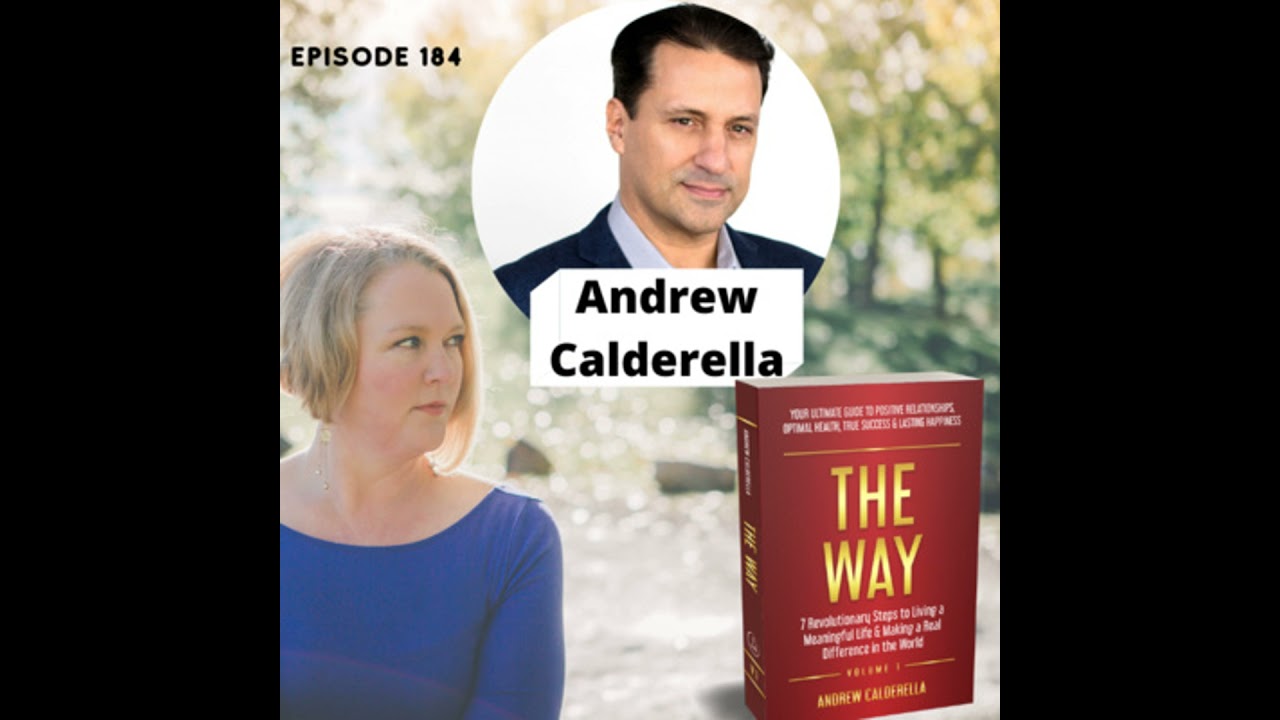
Andrew Calderwood Cerella discusses his book The Way, which presents a 7-step framework for true success built on intuition and healing. He addresses ego-driven versus authentic achievement, a moral code centered on equality and the Golden Rule, and practical approaches to mental health and self-mastery.
Chapters
Welcome to the Heart Led Soul Fed Podcast. This is Season 3. I'm Christine J Gold, and yes, formerly known as The Power of Healing Your Energy Show. Let's go! This is a live show and podcast all about love, light, intuition, and your soul's purpose. Do you wish to know why you're here and what the meaning of life is? Do you regret not finishing or doing things? Do you have desires for lasting positive relationships and families? Well, hey, we all have those questions, and Andrew did as well. And this is episode 184. We're welcoming Andrew Calderwood Cerella. He is an author, speaker, coach, and his book The Way is the way. Depression and anxiety are a side effect of not living your life intuitively, not trusting your gut, the lost connections with yourself and others. And I truly believe healing is the end of conflict within yourself, and that healing begins where the ego ends. My first book, Intuition Saved My Life, is a guide for empaths, lightworkers, and sensitives, and it's available on Amazon now. Replays can be found on Facebook, YouTube, and Anchor FM. Am. Please like, subscribe, and follow. We're live every Wednesday at 3:00 PM Eastern. And I want to give a shout out to my supporters, Catherine in France and Gitte in Denmark. Hello and welcome everyone, come on in. And yes, we are worldwide. We are international. We are definitely connected way more than you'd like to think we are. And, uh, today is no exception. Um, I moved a little bit, guys. I am now in Cusco. I'm getting closer to Machu Picchu, Sacred Valley, Rainbow Mountains. I mean, there, there's so much. I mean, I'd have to do a show on the pictures, the history and everything, you know, everywhere that I've been so far, even though it's only been 2 days. And altitude sickness is a real thing, okay? So I drank a ton of cocoa tea and muña tea. I, I've, I've been drinking it like water, and it has helped a tremendous amount. The only side effect, honestly, was like a slight headache. But I know people that have actually gone home because they were so sick. So anyways, uh, enough about me. Come on in, let us know where you're from. And I'm going to welcome in today's guest, Andrew Calderella. And this has been a year in the making. We actually connected back in February 2021, and through so many things happening, you know, my mother passing and other issues We, we have now— we're now connected a year later. I think it's amazing we found the way, and we are going to be talking about his book as well. And I just want to bring him in. Enough about me. Hello, Andrew.
Hi, Christine. Thank you for having me on your show. Thanks for joining us, everybody.
Yes, then I'm letting everybody know where I am. Where are you in the world?
I am in Southern California, just north of Los Angeles right now. Here taking care of my mom. My dad passed and it's been a little lonely during COVID I'll tell you.
I'm very sorry to hear that. When did your dad pass?
Oh, it was many years ago. I've been caring for her since, but since COVID it's been a little isolating. She has health issues and basically handicapped, so I didn't want to expose myself to getting COVID because I'd bring it home to her and that would not be good.
So yeah, I understand, and, and thank you for showing up. There's a lot of folks out there that are caretaking in so many ways, and we appreciate you. We, we definitely do. And, uh, maybe you want to tell a little bit about yourself. I mean, I was looking at your bio, and I mean, talk about your parents, um, because when, when I heard about them, I'm like, okay, this makes sense about your combo, uh, you know, Rocky story, Think and Grow Rich, and the Celestine Prophecy on steroids.
Yeah, people say that about my life. I was a PR group, I was— they learned about me and they say, hey, you're in, in Los Angeles, especially when you're talking with PR or TV people, they always try to relate you to something else. They're like, your life is like the Rocky story and Think and Grow Rich and the Celestine— they actually said The Secret originally, and I had a problem with The Secret because it was kind of stupid, it's only two things. And Celestine Prophecy, one of them said fit my life a little more. But, uh, yeah, when they— when we, um, when I go on shows, they always want me to start at the beginning of my life, like you said. So I was born in Detroit, Michigan in 1966 to parents who were fighting for the civil rights movement. I was born with dyslexia, uh, learning disabilities, um, other learning disabilities, as well as a lazy eye, which meant I was legally blind in one eye. So they put a patch over my good eye to make me look out of my bad eye. I don't know if you can imagine a kid like that, but I couldn't do much well. Certainly didn't do well in school. I was bullied relentlessly. I had teachers even get in on it. One elementary school teacher said I was too stupid to learn anything, I should just drop out. Kind of ridiculed me in front of the whole class. Needless to say, uh, this led me down negative thinking route, uh, to suicidal thoughts. You know, I was a really happy kid, and it kind of really takes it out of you when you go out there in the world and you're looking for having a great day and people are throwing you in trash cans and beating you up and calling you stupid and laughing at you and everything else. So it, uh, kind of created a lot of trauma in my life. I did end up graduating from elementary school with some help from my mom, obviously, and a special teacher. I went on to becoming a leader in my high school. I was elected vice president. I graduated from high school, went on to college, was elected programming commissioner. I was on the crew. I've always been quite an athlete, and I graduated with speech communications, theology, and philosophy degrees. Right after college, I went on, got a job in Japan. I traveled the world, and while all this was going on, I also did a lot of different types of jobs. I've started different companies. I've been running my own consulting business. Since 2020. I own a drug testing business. I kind of put all that aside so I could focus on getting this book done in 2015 after I had this major breakthrough where I found these 7 steps within all my notes. I kept finding my references to, "This is key to true success," and I put all these together. It showed me how all this knowledge and epiphanies and universal truths that I had discovered along this 30-year journey of trying to find these answers fit into these 7 steps, and I can explain it to everybody. And it was through these, uh, spiritual experiences, a lot of research and reading thousands of books and other materials that led me to find these things. And when I kept finding them and sharing with people, it was like, oh, you got to share that with the world, you got to share that. And after I put the 7 steps together and I started to share with people, I again got some tremendous feedback. Even the publishers got into it and One of them said, you know, this— most people when they write books, it's like a regurgitation of the past with a different take on it. Like they say that, you know, people write books and it's a regurgitation of Hill or Covey or Robbins or something like that. But they said that this was completely new. This takes everything they did to a higher level and simplifies everything for everybody. And I'm saying that because The Way isn't about me. This is the human way that we become the best people we can be. And it was through all these life experiences of traumas that I've been through, as well as all the, the good stuff, that allowed me to find this. And that's why I'm here. I'm, I'm really just trying to share what I've found. I feel like I'm a little late, but, uh, better show up sometime than, than never, um, to really help us all become our best people, but also to fix our world. And that's what The Way is about. So hopefully that all makes sense.
Absolutely. And I was just saying, but my mic was muted because Clearly you were meant to finish your sentence. I said you're never too late, just like you're never too old, you're never too young, you're never too fat, you're never too— you know, never, never, never. Now, you know, now, right now. And maybe you're listening to this, somebody's listening to this and going, yeah, now. Thank you for that. And I, I want to honor you for, you know, everything that you've been through. Um, the lazy eye, actually my youngest had that So we have that connection.
Yeah, that's not easy. I put the patch over my eye to start with. It was 20/200 vision. It was like seeing through cotton. I couldn't see hardly anything. Um, and that's how I started my, my life in school, was wearing a patch.
So same with him, same with him. Yeah, so you know, it, it's almost like, you know, you're set up to, to fail. But actually, you were set up to thrive because you're sharing your story, your hero's journey, with other people. And that alone is, is why you're here. That's it. And I honor you walking that, walking that path, because it's not easy.
No, you probably feel alone. Make it here. Yeah, it's been very lonely. I mean, I was— it's been so many years, uh, you know, as a kid when you're bullied you turn in and, uh, you know, your inner world becomes more of who you are than the external world. And especially, I couldn't see very well, I couldn't participate in sports and didn't have a lot of friends and whatnot. And, um, it has been a very lonely road, you know. And one, you don't know my whole history, but I've been hit by cars numerous times, attacked by dogs and fights and all these things. And one of the times when I was hit by a car 2020, it set me back for about 10 years. I couldn't stand up and walk, crawling to the bathroom in pain all the time. And, you know, it was beyond trying, you know what I mean? And to heal yourself, because doctors said I— they were going to do an operation. I ruptured a disc behind my— right behind my heart and messed up my hip and my lower back and everything. And The doctors were like, well, you have like a 70% chance of being paralyzed or, you know, never walking again if we do this operation. So I just went through a lot of physical therapy, but it's really the mental game that allowed me to heal myself and really, um, just envision myself as whole again. It took a long time, but thank God I'm still here and I'm, I'm able to stand and walk and I'm stronger than most people.
So you, you absolutely are, and you're a shining example of, you know, how you were broken and how you put yourself back together. But you, you said it was here. Um, so do you want to talk about the 7 steps?
Sure, we can talk about The Way. The Way, uh, is the first book in a 3-book series. I couldn't do it all in one book because it would be super huge, but the first book covers all the philosophy, the 7 steps. The second book is called The Life Manual, and it goes along with step 5 of The Way, which really covers the foundations of life and how you can master them, like your sleep, doing and all the other pieces that make up your life. And you really need to know the nitty-gritty details. So those are in the Life Manual. And then the third book is the Child and Family Guide, which covers how we can raise our kids to be the best they can be and help them integrate the ideas and the ways of doing that are outlined within the Way and the Life Manual. And that's really kind of the gist of the book is, is really how we can become our best and we can fix our world. And As you know, and everybody's told me, it's like if any one of the major foundations of your life falls apart, like your relationships, your health, your finances, or what— whatever it may be, it can ruin your life. So you really are as strong as your weakest link, and we need to shore up all of these different areas if we're really going to be the best people we can be. So with that understanding, that's where The Way comes in, is that, um, you know, I've done all the research and studied all the thousands of books and the wisest among us and everything else to find the solutions in all these different areas of life and all these different genres so that you don't have to go through that and be in your 30s or 40s or 50s and going, wow, I just learned something I wish I knew when I was a kid. You know, we're going to be our best to be like that. Yeah, exactly. We've all been there.
Who else has done that? Come on, guys. Yeah.
And it's frustrating because, you know, you want to be your best. And it's with this knowledge and right ways of doing things that we can literally become better people. You know, I mean, it's like if you know what to do and how to do it and you do that every day, then you become a better and better person. It's that easy. But it's like, what is it we need to do? What is it we need to know? Um, and let's, uh, let's get into the Way because you did ask about that. The Way actually starts out with, um, talking about the, like, what is the true goal of life? And we get into the difference between success and true success. And this is a topic obviously very, uh, impression for this moment in history and pretty much all throughout human history. Because do you want to go into that? Do you mind if I do that a little bit?
Yeah.
Okay, go. So success, usually when you ask people about it, what do they want, what does success mean, it's usually tied to wealth, power, and fame. Sometimes it's also included being super holy or, uh, intelligence or even beauty. Meaning the more wealth you have, the more power you have, the more successful you But if you actually study the lives of the most successful people in history, you find out that they don't automatically become perfect people. They don't know all of what to do. Their relationships aren't automatically fixed. They're not automatically healthy. If anything, it's really a challenge, a test of character, and if people are going to live up to the higher ideals that humanity holds. Um, you know, we get into this— like, you can just look at the world today and see the proof of this. I mean, even our, our funniest— I use Robin Williams as an example. He was always a hero of mine, but then he killed himself. So it's like, this guy had super wealth, access to anything, and he was super funny, and he still killed himself. So if that's not proof enough that being successful isn't true success, I don't know what is. We only need to look at our world today. There's literally 100 companies, about 100 companies and 100 people in the world that are destroying everything and messing it all up for all of us. And the rest of the billions of us, we want, right, we want to live a wonderful life. We want all the pieces that make up that life. And that's really what, what true success is. And I define true success in the book as what a loving parent or loving mother wants for their children. They want them to be healthy and happy, to be passionate about something worthwhile that they maybe can make a living from, have great relationships, you know, and all the other pieces that make up this wonderful life. And that's what we all want. Succes— it doesn't mean it's wrong to be successful in, in the terms of wealth or power or fame or beauty or intelligence or even being holy. It just means that those are challenges and roles that need to be filled and handled correctly if you are really going to go through it and still be a good person and be the best person you can be, but also to make a, a positive difference in the world. So does that make sense what the difference between success and true success is?
Absolutely. It's a difference between ego and soul. Yeah, really, truly. And I appreciate what you're doing. I love Robin Williams as well. I can think of a lot of other people, and I, you know, people always say, oh my God, they had it all, why did they do that? And I'm like, you really thought they had it all? Is that what you— you know, that's what the ego wants. That's what it's saying. That's what success is, to be so grandiose and to be so, you know, Instagrammable and have all these followers and be so inauthentic and so disconnected from ourselves. And I thank you because really you're, you're being the soft landing before someone hits rock bottom.
Yeah, and you know, it's— I talked to so many people in their life, and I think this, this disconnection between what is success and true success is one of the fundamental problems in our society because it, it leads to a lot of confusion. It leads to a lot of misaligned desires and focuses and everything else. Whereas if you ask people what they really want, it's happiness. You know, nobody wants to be poor and desperate and all the rest of it. Those are problems in society we need to fix. But if we don't have the right focus, we can't fix anything. Because what I found is— I think I'm going to jump way ahead here— Step 4 of The Way talks about— it's called Center, and it's about setting yourself in a complete core belief system that covers all of life. These core beliefs, these fundamental, you know, the moral code that we live by really determines everything in your life because it affects who you become, what you believe, what you think about everything around you. And the problem is humanity does not share a complete and good moral code that will allow us to navigate through all the different situations in life. And within Step 4 of The Way, we actually cover that moral code so that It will be a guide that when you come against these different situations as a leader, you know what to do. And just to talk about 3 of these, these 3 of these laws, I call them the laws to live by. They can change the whole world if we just embrace them. And the 3 laws are: 1, all people are equal; 2, to treat everyone as you would want to be treated, which is the Golden Rule; and 3, to respecting life. Now, if you think about it, the first law is equals, meaning we all share 99.9% of our DNA, right? So we're one human family. There's no separate races. It's one race, one human family. And religion and science really agree on this because for the faithful, we all know that God created everybody and everything, and science says we're all one human family. So, you know, there really is no difference there. We talk about equality, we're talking about treating each other with respect and common courtesy and dignity and all the rest of the good things. It doesn't mean you have to love everybody and have them over to your house, right? We certainly love certain people or like them more than others, and it doesn't mean everybody's equal in the abilities. Certainly some people are better at some things than others. It's really just about seeing each other as equals. This idea of the Golden Rule has shown up in every faith and pretty much every moral code throughout all of history. And it's really about treating people as you want to be treated, in the sense that when you're at your weakest or you're alone— because I've had this conversation with some men before, really powerful men, and it's like, well, great, then I just want to be left alone to do whatever I want, and that's great. I'm like, no, that's really not the way to think about it. It's like, if you were sick and broken and had no resources, how would you want to be treated in these different situations? Well, clearly everybody says we want to be treated well, right? We want to be respected, our dignity, you know, appreciated, and all the rest of what it makes up to be good to somebody. And if you look at these three laws, the third one being respect life is really about caring for our world. I mean, this is our womb that we live within. This is our home, our nesting ground, and we don't want to poison it or destroy it. We want to help it so it can thrive because it's going to supply all of our air and food and water and everything else we could possibly need. To bleed need. So if you take these three together and you look at the world and the 100 companies and 100 people that are destroying everything, most of it couldn't be done. There's no way George Floyd would have been murdered if people saw him— or the person who was doing this saw him as an equal and as— and they were going to treat him as they want to be treated. Most of the problems and destruction of our world wouldn't be happening if we respected life and treated our world like it was sacred and something to be respected. Does that all make sense?
Oh, amen. Absolutely. I mean, you're speaking the, the truth, which, you know, I think many are coming online about. Some don't want to hear it, and you're talking about, you know, the 1% don't want anyone to find out about it. So I, I've— I definitely align with that. I'm, I'm saying hello to Patty on YouTube. She's just saying hello, and she's talking about her niece um, she was complete wealth, best of everything, and committed suicide.
Yeah, and I, I was almost there. I actually have a video, just so people know, and it's also covered in The Way, is how to overcome negative thinking, depression, and suicidal thoughts. Um, when you're bullied, when you go through some trauma in your life, whether it's a PTSD— you could be a soldier, you've just gone through some horrible experiences It literally leads you down a negative path, but it doesn't have to end there. And if we just knew the actual steps to go through to help us get through this and overcome it, we can become stronger and better people for it. Um, and again, there's a video up on YouTube on the website, uh, on how to overcome negative thinking, depression, and suicidal thoughts, as well as addiction. And while my video skills— I did this a couple years ago, weren't the best at the time. I literally was trying to figure out how to do this. The information in there is good. I'm going to reshoot them eventually, but, you know, please take a look at those and share those with people because people have told me they can— they've saved their life. So yeah, the more people that know the actual method on how to do it, the better world we can create.
Absolutely. And, you know, what you do and what I do are very similar. And It's so needed. People need to hear it over and over again until they actually go, wow, I am. And that's it, they got it. The— all the lights come on, literally, you know, you know what I'm saying? Everything comes on board, as I say. Um, Patty just says she wants happiness, true love, good health, and just be, you know, and live in spirituality. And oh, and a bungalow at the beach. Okay, that's, that's a list.
Yeah, I don't know if you want to live at the beach going forward, just because the rising sea levels are going to make it a little challenging, I think, to live anywhere near the ocean. Maybe if we don't get this up— a little levity there. Um, I think this is, this is the whole point, and I, I truly say this to everybody, that most people on this planet, the billions and billions of us, all want the same thing. We want to be happy. We want functional government. We do not want destructive businesses. We don't want pollution. You know, we want to live in a thriving world, a healthy society, and all the rest. This, this has been happening for thousands and thousands of years to where the few— there's a few and a few twisted fighting against the good, um, the few lost that feel like they need to put their thumb over everybody. They need to take more and more and stuff their house with gold while they give less and less to everybody else. And This twisted idea of what success is has led us down this road. Everybody's heard, oh, greed is good. Greed is not good. You know what I mean? It's like, oh, it's just business. No, it's not just business. This is part of society. You are not just out to make money. Business is about solving problems. And two of the biggest problems of the world are desperation, poverty, and the destruction of our planet. And if you're participating in underpaying your employees and exploiting everybody and putting out crappy products that are destroying and destroying the world, you are the problem. You know what I mean? You need to figure out ways to do this better. And just on that vein, I just want to talk about poverty for a second. Poverty is one of the most challenging situations people are in because it, it can destroy your mind and your body and everything else that you want to really be because you don't have access to the right information, you don't have access to the right food, foods to make you healthy or even a, you know, a conducive society. So you end up being desperate and worried and out of shape and out and not very healthy. And this creates a lot of the problems that we see in the world. If you want to end all the crime, most of the crime in the world, we just need to end the desperation in the world. You know, people act out because they don't know, and nobody's just going to lay down and die. They're going to fight to be something. And if they have to steal or lie or cheat to get food or try to find some way of being something, they're going to do it. And if we just provided more opportunity and the ways of being that people could become their best, we would eliminate most of the problems in the world. Does that make sense?
It does. Yeah, I mean, that's why I became vegan 3 months ago. That was part of it. It really is for the planets, for the animals. I mean, I said our tour guide yesterday, Elvis— what a name— anyways, he's a good guy. But I said, really, I said, Mother Earth doesn't need us. I said, we're the virus, we're the virus. And he goes, wow, yeah, you're right.
You know, I've heard that before, and I, I'm not meaning to push back, but I want to say that I believe that we're put here. I believe in— I've had a lot of spiritual experiences in life. I've always been close to God, not the God of religion, but the God that the religions are talking about. And he shared a lot of higher-level spiritual ideas in my life with me. And this idea that, you know, that we can be the virus or we can be the hero, you know, this idea that we can fall to the dark side or we can walk in the light, is the whole point of why we're here. You know, we're born empty slates, you know, basically need to create ourselves from little babies who know nothing and totally dependent up into being some worthy being. And to do that, we need the right information and the right conducive environment if we're going to become the best people we can be. So, you know, this idea of why we're here is really the idea of the difference between are we going to choose to walk the right path or not, you know, the good good versus evil, right versus wrong, vice versus virtue is really at the center of all of life. And it comes down to this idea that we're created with this flaw. People call it the original sin. Why was it— why was it done that way? It was done that way because we are created in the image of God and we are the children of God, which means we need to make choices. Are we going to walk the right side or the dark side? Are we going to live up to what it means to have good character and all the rest. And I talk about this in the book and explain what the difference is between right and wrong, good and bad, because so many times people don't even know anymore. Like, I've literally talked to people that go, oh, it's all relative, you know, there's no real good or bad in the world. And I'm like, who's telling you these things? That is so not true. There is absolutely good and evil in the world, and it's up to us to understand it and navigate this. And that's what The Way is all about, is showing us how to do that. Does that make sense?
Yeah, and that it's a choice point. It's about responsibility and all of that. And we're, you know, we're here for a reason.
I absolutely believe that.
So, so we covered point 1 and point 4. Did we miss?
Yeah, we missed a bunch. Well, and again, just so everybody knows, I'm not going to do a complete job in the show on explaining the, the depth of the way. So yeah, the book is there, but I'm also doing training videos on this. I'm working on a training series right now that will go through the true goal of life, the meaning of life, how to achieve the true goal of life, as well as all the different steps. So while I may not get to it all here, you can definitely get to it and join us in all the different groups that we're starting to make these changes. Um, but yeah, let's talk about another principle which is this idea of how do we achieve the true goal of life. So we talked about the true goal of life being to become truly successful, right? Be the best version of yourself, live this wonderful life, create a better world and all that. But literally, how do we do it? Where do we start? And what I'm going to share right now are 4 principles that make up this solution. And when I share this, and I researched it, this is the answer humanity has been seeking throughout time. And you'll find this answer Throughout every self-help book, success book, pretty much every training, the whole purpose of society is, is caught up in these 4 principles that make up the solution. And I say the way is living rational positive action. It's living part of the solution because you literally need to live this answer, right? It can't be something you do once in a while. You can't have to go up to a mountain for 20 years to finally become somebody. It needs to be something that we can all live with in our life. It needs to be rational, meaning it's reasonable, it's logical, it's holistic, it covers all the different areas of life. And it's fun. It's customizable to fit everybody's life. Otherwise, it's not a solution, right? It's only going to work for some people, it's not going to work for everybody. So it's living rational, positive, because it's about integrating good into your life. And we talked about the ultimate good. We're talking about traits that we all want to have. And the traits that we admire the most, that we are trying to develop in ourselves and our kids, we call virtues. And don't walk away from this idea. Virtues are like things about being happy and healthy and independent and dedicated. And there's a whole bunch of them— determined, persistent, confident, uh, you know, all the rest of the, the traits that we look at in other people that we admire. As well as that we want for ourselves are these virtues. And once you understand this idea, understand that every self-help book that you'll ever look at is really going to focus down on a couple virtues. They may not even know it, but you can almost go through the chapter headings and see dedication. Or you get to the end of a story that some coach is telling you about what, what it made their people successful. It was listening and dedication and respect or whatever it may be. All of these traits are virtues. So just cut to the chase and get to the point where you understand that your whole goal in life, if you want to become the best person you can be, is about integrating virtues into your life. Now, the next piece of this is— so it's living rational positive action, because with every virtue, you need to take a bunch of different actions to make it real. And the highest level actions we call best practices. So with every virtue, virtue, there are a set of best practices that you can integrate into your life to realize this virtue. For example, the virtue of being punctual requires you to take actions like leaving on time and setting reminders. The virtue of being healthy requires you to have a lot of different actions to take— best practices on your sleep, on your eating, on how you exercise, and all the rest. And again, you can just go down the list. So the whole idea here is to integrate virtue and best practices in your life. Now, it takes about 90 days to build a habit. So your, your goal here is to integrate virtues over every 90-day cycle as you go forward. And this is how you become a better and better and better person. Now, if we integrate these virtues and best practices, the best ways of doing things, the best habits into our children, they don't ever have to relearn anything because now they're, they're waking up, they're doing all the best stuff that will keep them healthy throughout their life. And this is what they learn from the start, so they don't have to relearn things later, which makes it a lot easier. And this is how we create a better and better and better world over generations, because each generation then is starting so much further ahead than the past one, uh, because they've integrated these virtues. Now they're living them, and they're raising their kids that way, and it's creating better leaders and better ways of doing things in our society. So again, the way is living rational positive action, and it's about integrating virtues and best practices into our life. And then the rest of the 7 steps literally walk you down on how to do that. And by following the way, you will integrate naturally a lot of the key virtues that will integrate all the rest of them that you need. Does that make sense?
Oh yeah, no, and virtue, integrity, doing the right thing, you know, authenticity. Um, because I, you know, it's a slippery slope if you do not practice them every day. I know that for a fact because I was, you know, you were where I was, and vice versa. The depression, the anxiety, you know, the two attempts at suicide. I mean, it's, it's, it's your soul. Your soul is screaming at you saying, hi, you know, remember why you're here. You, you're here for a reason. You have a purpose. All of that. And, and Thank you so much for writing that first in one of 3 books, uh, which really are just— they're channeled. Would you not say they're channeled?
Absolutely. I feel like a lot of times I describe this to people where the way exists and I'm just trying to make it real. I've heard sculptors say when they take a block of stone or, or a tree and they, they, they're bringing the, um, the, the whatever that they're carving out of it, they're bringing it out. They're not imposing their will on it. They're seeing what the natural stone wants to, wants to be. And honestly, when I wrote The Way— people don't know this, but, you know, I have dyslexia, so it's, it's, it's not like I'm some writer guy, you know, just throwing out the prose and it's all flowing. No, it's, it's insanity. It's everything's mixed up, all the words are misspelled, everything's backwards. There's stuff at the very end that should be at the beginning and everything else. It was literally like I could see it clearly in my mind, but then getting it out to where it made sense was a huge challenge. And it was like I said, it was like, it was like every time I read it, I could feel that it was wrong. It needed to be something else. I'm not saying that it's the best yet, um, you know, as far as writing goes. People say it's wonderful, but I, I can still see improvements. But the ideas are there, you know what I mean? They make sense and people can grasp onto them. And I think one of the lessons I learned when I was young, it was always my dad kind of talked to me about this because I was— not only was I dyslexic and all this stuff, but I also had these gifts, you know. I was tested out and being a genius in abstract thinking and these other areas. So I was a little odd as a kid. I mean, I could do things and say things to people that they'd be like, how is this 5-year-old saying this, you know, or doing this? Because he can't see, he can't write, yet he's telling us this stuff. Um, and my dad always said You know, it's one thing to be smart, but if you can take something that's complex and make it simple, so people can, can easily follow it, that's true genius. And you need to spend your life on doing something worthwhile. We have enough people that are smart making money, we have enough people that are smart doing this, but we do not have enough leaders that are fixing the world. Right. So this idea kind of stuck with me as a kid. And I always looked around and I literally like there's 100 people in 100 businesses that are destroying the world and ruining everything for all of us. Yet there's billions of us, right? There's literally billions of people that want to live a nice life and have a great, you know, Sunday watching their kids play instead of worrying, worrying about bombs falling on their heads or some pollution that they're being given that they don't know about or whatever it may be. And it's like, so why is this happening? You know, why has it been happening for thousands and thousands and thousands of years over and over and over again? Why has it taken all this time in human history to come up with a country that finally broke the chain of, you know, dictatorships and created the United States. As flawed as it is, it still was the start of something amazing. And for me, it always comes down to this idea of when I study human history, it's like you can see this, the horror story, but then you see this, this hero story that always comes out. There's always these individuals that stand up and speak the words and unite people, overthrow that dictatorship or that government, and, you know, try to make something better. And to me, this is the whole kind of idea of humanity, is that we're all trying to create this true life, this true society, um, this true, you know, successful world where everybody can be the best people can be. And to me, it was always like, you know, how do we do that? I remember talking to my friends and was like, nobody has time. To find these answers. Nobody, you know, we're working too much, man. I love that you think about these things. I remember having this conversation with my friend Mike, and he was like, you know what, I, I love thinking about these things, but I just, I don't have time. I work, you know, 10, 12 hours a day. I come home, I got to get food on the table, I got to go shopping, I got to do this and that. It kind of stuck with me, and it was like, well, what if we did all know? What if we were able to simplify it and put it in formats that people could digest it? Would the world change? And I think, um, you know, everybody says they argue with God. I mean, one of the conversations I would have with God would be like, it's not really fair, um, if people don't know how, you know what I mean? It's like, here we're on this ultimate test and you just have to become a better person and be the best you can be. And I'm like, yeah, but there's not really a way for everybody to do that, Lord, you know? I mean, if we don't, if we don't all have this core belief system and this core understanding, the foundations of how to make our lives better. How do we do it? I spent 30, 40 years doing endless research, giving up relationships and weekends and nights and everything else to figure out these answers, to study all the different ologies and all the successful people in the world. And it took my entire life. I'm like, so that's where God's like, well, now you need to write a book. I'm like, why would you pick a dyslexic, half-blind person to write a book. I mean, it took me 10, 20, 50 times as long to, to do this as it would somebody else. I think it just came down to my ability to, to see some of these things and understand them and make them simple. And that's where really the only reason I'm doing this— it's not about me at all. It's not about money or fame or anything. It's— if it were, I would be doing something else. I literally have other businesses and things I could do all that with. But this is the most important thing to do in the world. And like what you're doing, we're all these good people in the world, trying to help other people become the best people they can be. This is the noble spirit of humanity. But even then, let me just— I know I'm going on a little bit, but I just want to say this because it's so important. All the good people in the world, we are not changing things. Right? I mean, it's still happening every day. The Amazon, the Congo Basin are being destroyed. It's the lungs of the world. Pollution has run rampant. Horror, destruction, you name it. It just doesn't seem to stop. Why? It's because the good people in the world are divided, right? We— there's how— just think about it like this. Think about how many environmental organizations there are fighting for, you know, environmental justice in the world. Think about how many people are fighting for equal rights and, and, uh, to fix all the problems in the world. There are so many groups. There are literally thousands and thousands of different groups that are working on the same thing, and it dilutes their power. It dilutes their ability. One of the groups I'm starting off of this is called the One Movement. I'm also doing the One Party. The One Movement is about joining all good people and all these good groups together so that we can focus and literally fix problems. Because if there are a billion of us, I mean, the, the greatest power on this planet is you, is the people united. And just think about a billion people giving a dollar a month and clicking on things. The amount of power that we would have to create change, to literally buy out industries, to place people on boards, uh, to destroy companies that will not change, or to change them from within, becomes easy. 'Cause no company can survive without customers. And if their board members and everybody else, the CEOs, are on this idea of caring for the world and caring for people, then everything can change. It's really not as hard as our leadership wants us to believe. They want to make it seem like it's this huge fight and this huge us against them because they gain more power and fame. It's really, we need to stop all this fighting, take a deep breath, join together, unite and make these changes, the positive changes happen in our world peacefully. And it can be done.
I know I just went on a little bit there, but oh, it can be. And I say namaste, you know, the light within me greets the light within you. And, and we're, we're all— and I think of the song We Are the World. I mean, that was from the '80s. But if you do bring the power of the people together, you know, that's where things happen. That's where movement happens. Like you said, there's just too many It's our, our energy is so dispersed. We need to bring it back to collective consciousness.
We do. We do.
That's it.
And I think we're— so many of us are awake right now, and then everybody's like doing their own movement, they have their own foundation, they have their own whatever. And it's like, like, well, what if all the people that are fighting for racial injustice all around the world group together? It would give everybody so much more power and a sense of belonging. And truly, there's, there's no separate human races. I know we just talked about there's only one human race. And if you're not treating everybody as equals and as you would want to be treated, that's the core of the issue, right? It's that some of us haven't learned the truth and understand how to actually implement this in society. And if we did know that, you know, how to, how to peacefully force positive change, I literally outline the steps. That's why it's called the Seven Revolutionary Steps. Steps on how we can actually do this. And, you know, it's like, uh, I don't know, to me it just makes me so sad when I look at what's happening in the world because, um, it doesn't have to be this way. You know, all this trauma and drama is inflicted upon us. It's not something we want. So, you know, why does it keep happening over and over? And like this thing with Putin, uh, you know, invading and whatnot. The problem is mainly with men, okay? We need to own up to this. It's our arrogance, it's our innate, uh, dark side tendencies to want to put everybody under our thumb, to compete with men where we must be the best. I know there's a lot of men out there that are just in circumstances to where they feel penned in. They don't know how to make the changes because if they don't do it, this other guy will, right? So these industries are just keep destroying and destroying the world because everybody's destroying and destroying the world. And if they don't do it, somebody else will do it. And I'm telling you, I know how to change this. And if you're hearing me and you want to know, contact me. I will help you do it. Um, but it doesn't have to be this way. You know, these people that are in charge of all of these different countries and industries and whatnot, um, again, mostly men, you have the power, literally together to change the entire world if you just knew what to do. And you would gain more of what you truly seek in life if you actually did these good things instead of the bad things. I mean, imagine being hailed as a hero for saving the rainforest as the company that's cutting it down, right, to stop it and buying up the huge plots of land and giving it to the world or whatever it may be. I mean, the amount of fame and accolades and everything else, Peace Prize won, you know, you name it, you will get more of that than you ever will by doing what you're doing. Does that make sense?
Oh, absolutely. And they know it's wrong, and it— but it's perpetual. They don't know we are the system we're trying to break out of.
Exactly.
And that's where we're at, that you're, you're leading men, you know, bringing— breaking that masculinity, that toxic masculinity. That's what it is. We need— yeah, we need more men like you to say, here, here's the way. I'll show you. So as we— thank you so much for, for everything. Um, very enlightening. I'm sure I'll listen to it again because I, I do that. Listening and watch, like doing the show, totally different. Um, so I can actually integrate and marinate in this. Um, that's where the changes come in. So I always ask my guests two questions before we end. How can we as a collective energy help make your dreams come true?
Gosh, I need people and I need resources. I'm one person alone starting out on this journey. I've been a little bit of a hermit because of my makeup as a human or whatnot and my injuries. And, uh, without resources and people, I can't do anything. So joining all the different social media, sharing what I'm doing with people— The One Tribe is on Facebook, I'm starting it on LinkedIn— as a way we can all group together, uh, get this information. And then joining all of our groups and people into the one movement and one party, donating to Patreon, uh, the other ways to, to help fund this so I can hire people to help us. You know, this— there's so many ways you can help. I mean, just from a click to donating some money, uh, sharing things with people, it all helps. Every little bit is what makes the difference. And it also helps me just know that um, that people aren't so jaded and lost that they're just going to walk away from this, you know what I mean? It's like, I know there's so many good people, you've heard so many good things, and people say these types of things or whatever, but this is different, okay? I'm not doing this because it's the same, you know what I mean? I wouldn't even be here, there would be no point to it. Everybody keeps telling me this is the way to fix the world, and this is different. So give it a chance, join with us. And we're just starting. You have the, the opportunity to really help make this into something, so don't just walk by.
Yeah, don't just be a passerby, or are those rubberneckers, uh, when there's a traffic accident? That's when people are paying attention. No, that's— no, no, no. Anyways, uh, and last question: what does magic mean to you?
Well, magic to me is, is tied into the spirit and the kind of the, the higher levels of humanity that we get into. I've had a lot of spiritual experiences in my life. I had, I've had so many close calls where I've almost died, um, that it really proved to me that the magic in life, uh, the spirituality, the, the afterlife, all of this exists. We are just limited You know, we're little, you know, children of God being born in this world to grow up and learn, and we can't have access to all the different powers we would have, let's say, in heaven, because this is a training ground preparing us for this greater reality. So, you know, magic is you finding that soul, that spirit that lies deep within you that is striving to be happy and healthy and wants all this who wants to be good to people and really letting that magic flow through you and into your works in life and into our society. Because if we become better people, our society will become better. If we just integrate these principles into our life, in our, in our world, we can have everything we want. And that's truly the magic is when we get together, all these good people sharing all this goodness with each other, it creates wonders. In the world. Does that make sense? Like, you know, the, uh, serendipity, synergy, providence, harmony, uh, coincidence, uh, synchronicity— all those words mean this: something that starts off, it's small, but is greater than the sum of its parts and, and goes way beyond what we could ever imagine. And that's the magic that we can create in this world if we good people bound together, join together in the right way and learn and make these changes happen. Does that make sense? I know I say that a lot, but it's hard to listen to yourself when you're talking.
No, it's fine. It's fine. So I'm just going to bring up— thank you for that. Let us know what your version of magic is, everyone, or what you're working on. You're going to join The One. You're going to put that in the comments for us later. But I want to promote the book as well. Where can people get the book?
Sure, the hub for everything is the website, and the book is available all over the world, obviously on Amazon, but it's in pretty much every other major bookstore, every country in the world. Uh, the hub for everything is the website 7wayme— that's the number 7, w-a-y dot m-e— and there you can find links to the book. Uh, you can join the One Movement Party and the One Tribe. There you can find links for everything. There's Societal Solution videos there. You can listen to me on all the different shows I've been on. It's really the hub for everything. So go to 7WayMe and join us and participate in the big change that's going to happen in this world.
Wonderful. Well, I thank you so much for sharing your time. And if you guys are on the replay, please let us know if you have any questions, send them our way. We won't leave you hanging. We— I respond to everything. I'll make sure if you need to connect to Andrew, we'll, we'll make sure you're connected. And thank you so much for your time. And please remember, everyone, healing begins where the ego ends. Take care.
More from Christine










Your coping skills didn't fail you, menopause did #menopause #health #plantpowered
