Healthy Boundaries
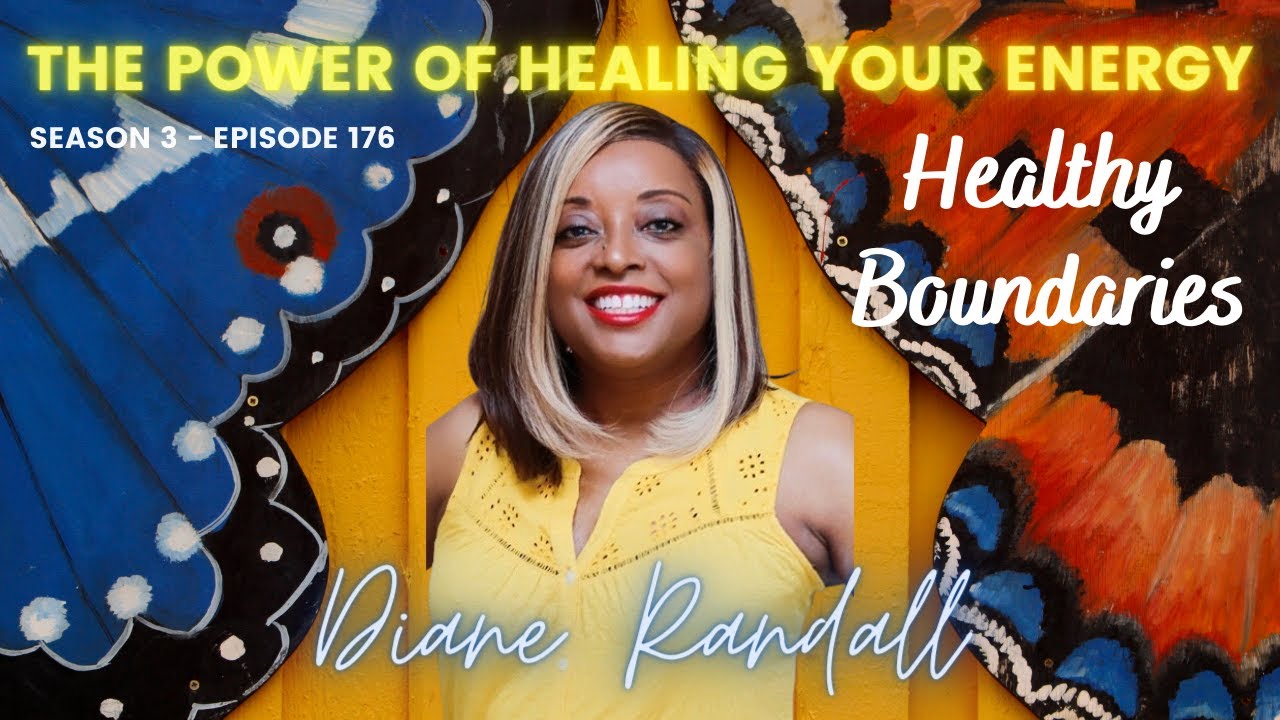
Diane Randall, a holistic coach, shares her 20-year health transformation from overweight and hypertensive to thriving on a plant-based diet. She and host Christine J Gold discuss setting boundaries "with a pencil, not a sledgehammer" and how dietary change, inner work, and self-care reshaped her physical and spiritual wellbeing.
Chapters
Welcome to the Power of Healing Your Energy Show. I'm Christine J Gold. Let's have some fun. This is a live show and podcast all about love. Light, intuition, and your soul's purpose. Anyone else having fun in the Veganuary? This is Season 3, Episode 176 with Diane Randall, and we're going to talk about healthy boundaries. What does that mean in your whole living journey? Now, Diane is a whole living consultant, speaker, college instructor, and author of Jump Start Your Life. Depression and anxiety are a side effect of not living your life intuitively, not trusting your gut, the lost connections with yourself and others, and I truly believe healing is the end of conflict within yourself. And that healing begins where the ego ends. We are live every Wednesday at 3 PM Eastern, 4 Central, 5 Mountain, and 6 Pacific. If you have a guest or a topic you'd like that hasn't been on the show yet, feel free to send them my way at 24khealing@gmail.com. Hello everyone and welcome to the show. Come on in if you're listening, you know, if this is on the replay. If you're catching us live, you know how this works. I mean, we're what, 176 episodes in? And, uh, let me know how your Veganuary is going, or maybe you haven't started, or maybe you're slightly curious, and really that's all that matters is that you are curious and you have a beginner's mind. Just because I have this show and just because I do what I do does not mean I am an expert per se. If anything, it is life, it is wisdom, something that I have gone through, a hero's journey. And speaking of heroes, today's show is a whole living, uh, plant-based hero. She does so many things. And I'm coming live to you from Peru today, and it's quite warm here. And I know North America, lots of you guys are cold, and so I'm sending warm tropical breezes to you. Okay, all right, I'm just going to bring Diane on. Hello and welcome to the show. Thank you so much for being here.
Love that you're sending warmth this way.
Yeah, of course, that's what we all need. Um, and, and where are you in the world?
Chicago, Illinois.
Oh, the Windy City.
The Windy City. A little chilly too right now.
It is, but we're going to warm ourselves up, uh, with your energetic and, and passionate. Uh, you know, you've got that. I mean, when I showed— I showed a few people in Wisdom House, you know, your graphic and picture, and they're like, wow, that Diane, she just radiates. I'm like, she does. So maybe just tell us a little bit about yourself and, and your journey, and especially, you know, you talk about your plant-based journey.
My journey to Being healthy started, oh gosh, maybe 2 and a half decades ago when I was struggling with being overweight, hypertension, all the chronic diseases you want to name at a very young age. Newly divorced mom with 2 children. Stress ruled my life. And at that time I had no tools, didn't know what to do to feel better. So that really set me on a journey because I knew having a career was just not going to sustain my health at the time. So I dug in deep, did some interwork— inner work to figure out, okay, what does it mean to be well? What does it mean to be happy? And then I started my journey by reading books, going to workshops, you know, they didn't have the, the internet wasn't a thing back then or social media, but really reading and going to healthy food, healthy healing lectures and meeting people as well as going to therapy to figure out what do I need in order to be healthy inside and out. So that journey led me to becoming a life coach, a nutrition coach, a holistic coach, as, as well as getting my master's in spiritual psychology. It just seemed like the journey started and one thing led to another. And here I am today. My intention wasn't initially, oh, I'm going to become a Whole Living consultant. You know, I'm happy in high tech, you know, doing my thing and, and with an awesome career. But I always felt I wanted to share with others. I would have so many questions about what I was doing, and I was so excited about everything I was learning. I'm feeling better, and people wanted to know. So I started sharing, created a business because I'm good at creating businesses, so that I could share and just support people right where they are. So they don't have to go through a big discovery period like I did many years ago.
So you're kind of shortening the, um, maybe you're removing roadblocks and, and the detours, I guess.
I'm, I'm in the barriers mainly.
Yes, the barriers.
Yes. Wonderful.
No, I, I love that. Um, and you talk about, I mean, there's so many things we could talk about, but what does healthy boundaries have to do with I guess your, your whole living, your plant-based living, your journey?
Boundaries are key to hope, to, to living in general. If you want to be able to support yourself or to even honor your journey, boundaries are key in teaching people how to, how to treat you, teaching you how to clarify and, and let them know what you need in order to be who you are, that healthy holistic person that you're trying to be. Boundaries are key in allowing you to just build some type of— sometimes I call it protection. It's not really a wall, but it's just really building that energy around you so that you can show up and do the things that you need to do in service of, of, of health and wellness. Mm-hmm.
Yeah, that's really important. I think there's a— I don't know who said it, but you basically teach people how to treat you.
You literally do, because people don't know us, right? You meet a stranger, they have to learn who you are and where your edges are. So if someone you're talking to You know, they, they may not know— they don't know you, and they may say something that you find inappropriate. So you make a decision, either you're going to make a comment about it or you're going to let it go. And then you hear it 4 or 5 more times, and now you're upset and mad because you didn't like it when you first heard it. So now you've heard it 5 times and you're about to choke this person. Right. So I always say it's best to set those boundaries whether you're afraid or not, whether it scares you. Just do it in love and kindness.
Yeah. With a pencil, not a sledgehammer.
With a pencil, not a sledgehammer. It's just letting people know who you are and what you need, where you start and where they begin. I think that's The more I talk about boundaries and teach them, I figure— I figured out it's so key. Where do I start and where do you begin? Because people, they are— that especially the ones that don't know you, they are treating you like they treat themselves. And maybe they don't treat themselves too well. Maybe they just don't, you know, know that you're a different person and what works for them doesn't work for you. So it's important to establish those boundaries. And we tend to learn these things when we become adults because as children, everybody's telling us what to do. That, that's where we learn this stuff. And we don't have boundaries because we have to do what we're told when we're little kids. So we don't— a lot of us don't have that next level about boundaries until we get in the workplace, or we get— college kind of teaches us, but really in the workplace is where I found you really learn that you don't have boundaries, or you do. And with relatives, people that you love.
Yeah, and being in community with which I'm, you know, and I've had the— and there's quite a few people that are coming together either with roommates or, you know, co-homing, and they're really learning, you know. Yeah, yeah, really learning sometimes, you know, the hard way, but it's, it's something that we need to. And, and there's a channel I follow and it's called The Great Unlearn. So we're unlearning all the stuff from childhood constantly, or things that don't work.
You know, we're unlearning so that we can learn what's going to be of service for us and for others.
And, uh, Patty is joining us. She's saying hello to you, but she's also talking about her caramel lattes. Oh my goodness. Okay, I guess I wouldn't be able to stop drinking them either. Oh my goodness. So if anybody has a question for Diane, you know, your journey— I mean, how long Have you been plant-based and vegan? I mean, there's got to be—
I'm into my 15th year, and I, based on that comment, I was a sugar-addicted person.
Okay.
But becoming plant-based, my cravings went away.
I would agree with you there. I, I love sugar too.
Yeah, they, they went away, and I don't crave sugar. Haven't craved it for almost 15 years, which is a good thing. And being plant-based and really trying, you know, I'm not saying I don't eat dessert, but it's always raw or vegan without, you know, but I choose it. It's not choosing me anymore.
That's a big, yeah, that's the big thing. It's always, I want to say quick hit. It's a quick hit. Does that, you know, with anything, it's a quick hit, a quick fix.
Yes, yes.
So how, how do you find balance in, in all of this? Because I know that you were, you know, you were a mom and you were career-driven, you had businesses. How did that— how did you find balance? I mean, what— because people always ask, what's your— do you have like a toolkit? What's in your kit? Like, what—
my, my toolkit has been growing over time.
Mm. Okay.
I've tried things. Some things work, some things didn't. But what I say, the thing about me is I tried something different and I'd keep going at it until something worked. There's lots of places in my life I did not have the answer. I just tried different things.
Very true. Curiosity like a child and beginner's mind.
Yes, and that, that, that has led me, wow, to so many paths in my life that I couldn't have, have drawn out or even imagined. You know, I'm— when I'm 20 years old, I'm not saying, oh, I'm going to be vegan or plant-based one day. I evolved over time, and it— and, and each, each massive change that I made, especially being plant-based and vegan, it really reshaped my life. It also has allowed me to make decisions based on what's good for me and not feel like I'm being selfish or different. Because what I've learned is this is a journey and you really can't bring people along with you. They either resignate to it or they, you know, they don't. Or what I love is it can spark a curiosity. Yeah. Plant-based, even when I heard it, I didn't think anything of it, but I'm always open. I'm always open and willing to hear and listen. And ask questions. I became plant-based because my health was being affected by the food that I ate. And like I said, stress was a big thing in my life, and I would go to the doctor— I had lots of gut issues and didn't know what was causing those issues. So I was very miserable for a period of time. Just pain here and there and not really knowing what's going on, running to different doctors. So a friend of mine shared a DVD at the time, or CD, I can't remember which was first now, on a movie with, uh, on a documentary called Eat. And what it did, it talked about the chronic diseases that we have in America— heart disease, diabetes. And what it did was it taught me, it gave me context as to how these things happen. So that really led to my plant-based journey. The veganism piece of this came later, a little bit later, because I clearly became plant-based so that I could be healthier. It was like I was just desperate to really try something because I didn't know what else to do.
And I, you know, I guess maybe some barriers for folks might be, oh, it costs too much, it— I don't know what to make, I— my family won't go along with me. What do you say about that?
Oh yeah, that's a big one. And you have— you as the person on your plant-based vegan journey have to be okay with that. You just do. Even if you have kids, even if you have a husband, wife, you have to say to yourself, this is, this is my journey. And the one thing you can do is Go on the journey and be a role model for your family. You'd be surprised. I have impacted more people by just modeling the behavior than trying to make somebody feel bad for their choices.
Yes, yes. No, that's great. Yeah, lead by example.
Lead by example. You don't have to say a word.
Family.
Yeah, Thanksgiving was rough initially. What I, what I learned was, man, food plays a big part of at least my family, especially those big Thanksgiving, Christmas dinners. And I would say initially I felt left out. It caused me to feel like I wasn't a part of the family gathering. And that, that went on for, for a while. But then I, I learned over time that that was okay. You know, either I was going to be on this journey or not. Now, some people say, well, when you go to your family's house or someone's house for dinner, whether it's Thanksgiving or Christmas, Do you eat the food that they cook? No, I don't. Because nobody asked me what, what I wanted to eat. But that's where the courage and the boundaries come in. The boundaries for yourself that, you know, I'm on this journey. I'm not going to let my guilt or my fear control this plant-based journey that I'm on, because becoming plant-based is huge. It's, it's really more than eating food. Your friends— it impacts your friends. It impacts how you shop at the grocery store. It impacts the conversations, because when people see you eating something different, they're automatically going to comment. So I always say you have to be courageous, you have to be strong and willing to share and educate in that moment, in that moment.
Yeah, no, lovely. Um, I— yeah, exactly, uh, be courageous, um, and, and it does spark curiosity and conversation, and you're doing it for yourself. I think that's the, the biggest piece. It's not for anybody else. With, with anything else. It's for, it's for you for a change, because you know your body is telling you something, whether it's mentally, emotionally, physically, spiritually.
Yes, your body's telling you something. And I can say, once I started eating plant-based, oh my goodness, I dropped. I hear you, I hear you guys. Like one month. Yeah. And it was so surprising that I was a little nervous because I never went down before. I was so used to going up, you know, up a size or two, right? Yeah. So, so, and in the 15 years, I've never changed sizes. Now, I'm not going to say I have— I haven't picked up weight here or two, but it's, it's a whole different way of picking up weight. And I'm not saying that, oh, like now I need to lose a few pounds, but it's nothing like before I became plant-based. I feel lighter, I have lots of energy, and guess what? I don't have the chronic diseases that come with life and age and all those things.
Mm-hmm. Amen to that.
I attribute my plant-based journey to just bringing an awareness and helping me develop a lifestyle, that not only supports me but supports the planet, supports the animals, supports, supports climate, supports me being able to make my footprint smaller and smaller on the planet.
Yeah, it comes back to the individual responsibility, the inner revolution as I call it. And, uh, Patty's asking, how do you find recipes?
Oh, they're all over, all over. You can do a Google on vegan recipes or plant-based recipes.
Plant-based.
Yeah. People get a little confused with vegan and plant-based. Vegan is really— veganism is about the animals and the planet. It's rejecting the, the violence of the animals, of the planet. Of the ocean, of the waterways. It's, it's, it's that kind of thing. So when, when we say vegan, that means you, you, you eat— you don't eat foods that are derived from animals. That's cheese, milk, eggs, that kind of thing. And plant-based is things that are food that's grown in the ground with no, no mother, no face.
Yeah, that's a great, a great way to describe it, that's for sure.
No mother, no face, and grown in the ground.
Nice. And, and because Patty was just saying the cost of meat is just horrible, and, and what they do— well, that's a whole nother topic about meat and all that. So, um, and, and I actually read something about, you know, having your hands in the soil, it creates, uh, serotonin. Just getting in the garden and planting yourself. Isn't that amazing?
Yeah, that is amazing. I, I, I love, uh, fresh vegetables. And I can say, before I became plant-based, I had my stock vegetables that I would eat. But what I've done over time is just try different vegetables that I've never eaten before, and I've just developed a palate. Oh, and one of the main things that happened initially when I became plant-based was I tasted my food for the first time. And I say that because there's no salt, pepper, seasonings. I literally felt like I tasted my food for the first time.
Yeah, no, I would agree with that. I mean, I, I quit smoking 4 years ago and I thought, wow, I can really taste things. But now I— now that everything is completely stripped away, whoa, it's amazing. Game changer.
Yeah, yeah, yeah. So that was a big, big thing for me.
No, and, and that's great. I mean, if anything, you might invoke someone going, yeah, I, I remember that, or I'd like to know what that is like. Like, I made my first vegan cake and it had black beans in it. It was completely vegan. It was amazing. Yeah, I mean, it took extra steps. Yes, but it was so worth it. So, yeah, so if people think they can't have desserts or indulge, that's not true.
Well, here's what happens when you become plant-based: you want to indulge less and less. Those indulgent behaviors, those crazy cravings they literally dissipate. They really do. Because you're not eating the refined sugar.
Yes.
And that's really what you have to make sure that it's not made with sugar, because people say a lot in the name of plant-based and vegan. So I know really understanding and reading and knowing the ingredients in your food.
Yes. And the last— and any— if it's not in a package, Perfect.
And if it is in the package, you don't want more than 5 ingredients, and you want ingredients that you can read, that you can understand, that doesn't have, you know, 5 syllables, you know.
You have to look it up in the online.
Exactly.
So, and then you find out it's a car wax ingredient.
You're right, right. So it's, it's just learning, educating yourself on what, what does it mean. What is healthy food? Because it could be very confusing because everybody, all the labels say natural, healthy. But what's key is reading the ingredients and knowing what the baseline of that food is. And for me, I eat mostly vegetables.
Yes.
And when I say vegetables, I'm not talking about a salad, even though I like salads. I'm talking about lasagna because now you can have lasagna and the lasagna noodle is made of lentils.
Yeah, that's right.
Mm-hmm. Even spaghetti. So it's really awesome today becoming plant-based and vegan because you don't have to miss a meal or miss your favorite dish. And I always tell people, because I teach a class called Getting Started with Plant-Based Diet, And we always tweak their favorite dish.
Oh, I love that.
Yeah, I think that's really their favorite dish.
I think that's really important is tweaking. Like, I'll find a recipe online, I'll go, ah, you know, something's in there, and I'm like, hold on. Yeah, before you go, uh, go, wow, I can switch this out.
Yes, yes, that, that's the key. Yeah, it's, it's not giving up things that— and then, and then you're purely— you say your love of food becomes just a functional— a function of eating. Not to say that I don't like delicious food. I still love delicious food, but I'm not eating all day long and having these thoughts about wanting something sweet that used to totally control my mind years ago. Yeah, it's It's eating when I'm hungry. And someone mentioned the grocery store or meat. You eat less when you're plant-based.
Absolutely.
Because you're full. You're more full from the—
You're satiated.
Yes, from the grains and the fiber and the vegetables, the seeds. You stay full longer. Mm-hmm.
I love that.
And one of the main— okay, people say, well, how do you get your protein?
Oh, here we go. I got graphics for that, just wait.
No, it's green leafy vegetables.
Yep.
And, and any kind of beans. But if you're eating kale, you're eating greens, you know, you're eating collards, you're eating green leafy vegetables. The vegetables have more of fiber and protein than, than the, uh, meat. And here's something I learned that, that sounds simple, but it kind of blew my mind at the same time. The animals have the protein because they eat the grass.
Ha! The animals have the protein because they eat the grass, the green grass.
I mean, it sounds simple, but it was like, whoa, yeah, hold on here. So I took the animal out of the picture.
Yes, exactly. And, and I think that— and that's part of disconnection in, in every way. And I think a lot of us are going, whoa, hold on here. There's like a huge movement for, for 2022. And, you know, our goal is to be vegan by 2026. What do you think about that?
To be vegan?
All of us, the world.
I think it's a process. I think we have to get started because guess what's in alignment with becoming vegan? If we don't become more vegan, we're just— we're going to destroy our planet.
That's right.
Because the biggest destroyer of the planet is agriculture. It's the eating the animals. The biggest destroyer of the environment is animals, eating the animals, of the air, of the water. So yeah, we'll either destroy the planet so it's not livable, or we will become— and being vegan is just not I mean, eating animals is not going to be sustainable long term. It's just not.
No, no. We use, what, 80% of the land for animals, for them to feed animals, and then we turn around to eat them.
We turn around to eat them. And not only that, the Amazon forest, which we need, is being cleared every day.
Yep, I'm very close to it. I'm very close to it. I hear about it a lot.
Yeah, yeah, yeah.
Whoa, so, so many things to process. And I, I, you know, really appreciate, you know, your— what you're doing, your energy, um, how, you know, you, you're talking about boundaries and, and your journey and jump-starting your life, your book, and stepping out of your, your comfort zone. And, um, you have a You have a free gift, I believe. It's a wellness assessment.
It's an assessment. It's 3 assessments. One is learning where you are with your stress, coping with your stress. Another one is how do I know me? I mean, who am I? It's kind of seeing where you are with who you are. So the assessments are free and you get results, automatic results. You get a report once you take the assessment. Nice. Those are on my— oh, and Achieving Life Balance.
Yes, Life Balance and Stress Coping and How Well Do I Know Me. And I posted that in the chat so everybody's got it.
Thank you. Thank you.
You're welcome. I'm going to take it just for fun and Patty likes her spaghetti. She said she had zucchini, tomatoes, and mushrooms in it, so she's yummy. She's trying her best. What, what is your favorite vegetable? Do you have a favorite vegetable?
Mushrooms.
Oh, me too.
Goodness, I can't, I cannot. Portobello.
Oh yes, yeah, you have me at portobello. Isn't that a movie?
Sorry. I love mushrooms. Love it.
And I'm asking everybody what your favorite veggie is. You can send it here in the replay, uh, on your favorite podcast. I'd love to hear that. And I've got a couple questions. I, I love books, so I'm reading right now Co-Creating at Its Best with Dr. Wayne Dyer and Esther Hicks. I love the conversation between these two.
I've seen them both live.
Have you? Wow.
Yeah, yeah. Yeah, that's been part of my journey, the spiritual workshops.
And yes, the spiritual psychology. That's right.
Because once you change one thing, your food, it just— other things start taking.
Yes.
So it's not just one thing that happens.
So do you, do you have a favorite book right now, or what are you reading right now?
Actually, I'm not reading right now.
Okay, hey, we all take a break, I guess.
I just wrote an ebook, okay, mentally and emotionally.
Oh nice.
Yeah, I turned that, an interview I had, into an ebook. Oh, so that's, uh, been taking up a lot of my time. But I, I do, do love to read. I do. So I usually buy a book and I also buy the audio because sometimes before COVID I would, you know, I would drive, and if my client was like an hour from the airport, I would, I would just listen in on the audio.
Yeah.
So I, I tend to get through a lot of books like that, but with COVID I haven't had to do that.
I agree with that. Audio, what, you know, however you like it, it just—
yeah, however you like it.
That's right. Uh, and I know I asked this in, in the beginning here, um, what does magic mean to you? I mean, I can just read what you wrote here. Okay.
Okay.
Um, magic means that I intentionally do things on a daily basis to create the life I want and what I am passionate about and how I want to serve others. The magic is when one day what I want manifests and shows up in my life as opportunities or gifts that seem to come out of nowhere. When I am intentional and my work is consistent, the magic happens.
That is so true. It feels like magic. Yeah, it feels like magic.
It is. It's like, you know, when you see the, the finger and then the connection with the blink, it's like that boom.
Because I've just, I've just been intentional in doing my whatever work I need to do to make it happen, and it seems like it's not going to happen, but I really try not to interject that type of energy into it. My job is to keep my head down and keep working at what I really want for myself. And then, like I said, one day it happens. It feels like it, but I know I put that work in to make it happen.
That's right. And every year I, I choose a word, and last year 2021 was intention, and boy, did that happen. Uh, 2022 is joy. Do you have like a thought or a feeling for, for 2022 for yourself?
Adventure. Yay, adventure! I've been in COVID, uh, lockdown, sort of, because I love to travel everywhere. And my intention is to go somewhere where I can hike in the mountains, exercise, you know, meet new people. And I said, I'm either going to look at the mountains hiking or I'm going to look at the ocean in the back of me or in the front of me. That's what I miss. You know, I haven't done that because, you know, with everything that's going on.
But we pray that will happen. Yeah, it's already happened.
You put it out in the field and I put it out in the field. Yes.
And you're welcome to come to Peru because they got jungle, they got mountains, and they got ocean, and they have desert too. Oh, they have everything here.
Oh, that sounds so awesome. It really does.
It does. So is there anything else you would like to share with us before we say goodbye?
I just want to thank you for having me and, you know, talking about plant-based living and veganism, because the more we talk about it, the more people hear it. And hopefully if we impact one person, that, that's really, really good for the planet. Yes.
Yeah, I, I love that. And it— do you have like a Moby Dick? Like a— what's your— how can we help make your dreams come true collectively? As I always say, Moby Dick, what's your big whale? I call it the big whale.
What's my big— always to send out a, a prayer, a thought, an affirmation, or anything for the highest good. Whatever I'm doing, just support me for the highest good or something better.
Yeah, Dear Universe, this or something better. Yeah, I'm open, show me the way.
Yes, yes, wonderful.
Well, thank you so much for, for your time. I have left all of Diane's, uh, information— websites, uh, LinkedIn Instagram. You can reach her, uh, by all those, uh, platforms. And, uh, you know, I, I just love Veganuary. It might even continue for the rest of the year. So thank you so much for being here. And, um, speaking of, um, you know, visions and intentions, I have a dream vision map workshop coming up. It is coming up this Saturday, in fact. I've got quite a few people registered for this, so if you're tired of the typical, you know, boards and goals and crushing things. This is a way to work with and partner with spirit, with the universe, because that's what we are. We are co-creating together. So I'm going to show you a different way on how to bring a dream, a vision together, um, so it manifests magically. There's no striving and there's no surviving. It's all about thriving and flourishing. That's what we're here for. We're not here to suffer. Um, and as well, I've— my new book is out, Intuition Saved My Life, and thank you so much for purchasing it, everyone. I appreciate all your support as well. Um, and of course, if you're looking for a safe space, I have Community Connection and Co-Creation through Unleash Your Soul's Purpose. It's an online Zoom group. The links are there. And January's energy update is out, so if you're curious about the energy of January and what to expect and feel and just maybe give a little heads up, I talk about Pluto's return and a whole bunch of other things, so you might want to tune into that. All right, well, thank you so much for being here again, and please remember, healing begins where the ego ends. Love you all.
More from Christine










Your coping skills didn't fail you, menopause did #menopause #health #plantpowered
