Quit The Bottle
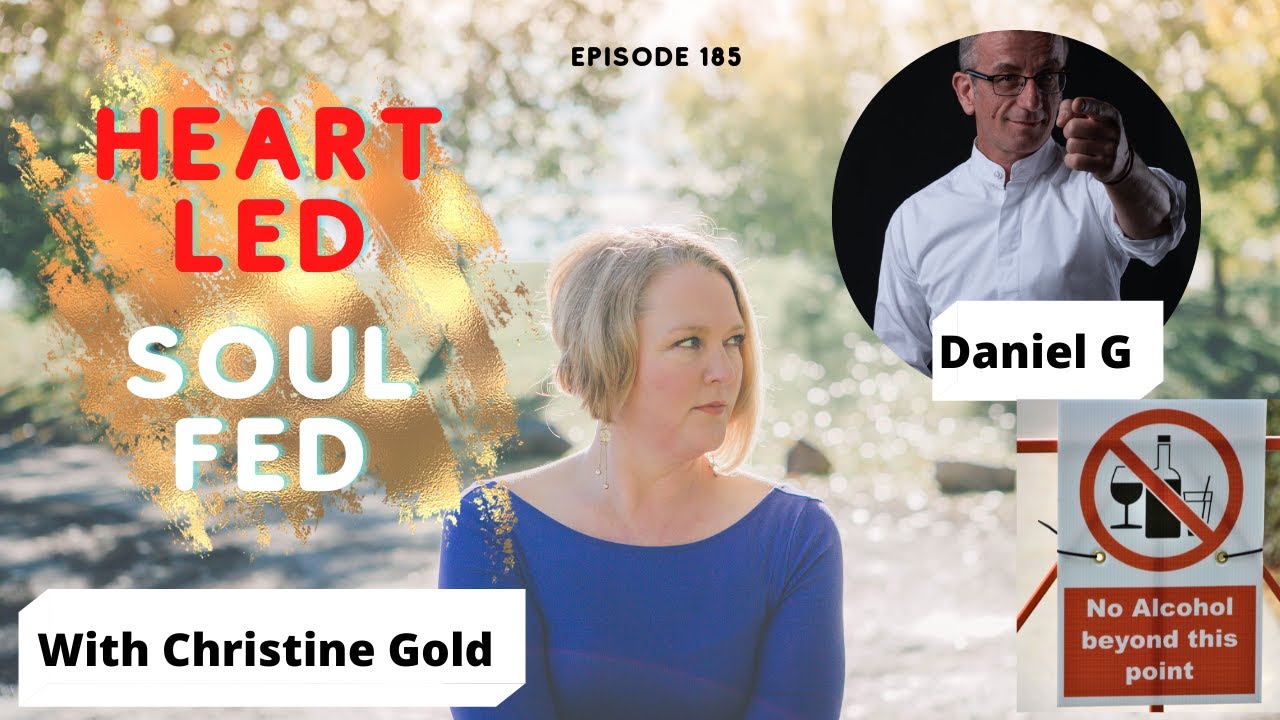
Daniel G, a Swiss men's mentor, discusses why alcohol consumption rose 47% over the past decade and why men avoid seeking help due to shame and stoic masculinity. His coaching program costs $19 and includes weekly calls and video courses to help men quit drinking.
Chapters
Hello everyone and welcome to the Heart Led Soul Fed podcast. I'm Christine J Gold, your soul purpose mentor, and this is season 3 Episode 185. I am coming to you live today in Cusco, Peru. Yes, I'm still here, and please don't ask me when I'm coming home anyways, because I have no idea. I'm here to experience whatever I'm here to experience. So, but I— if you want to come and join me, I— yeah, feel free. I'd love to have a travel partner. But, uh, anyways, this episode is called Quit the Bottle. And, you know, it kind of reminded me of a song from the '80s in the same reference, like Drop the Needle by Haywire. I don't know if you guys are familiar with that song, but maybe you want to go and check it out. So I feel it's the same way. Um, my guest Daniel G, uh, gosh, amazing, amazing guy. Um, he basically started drinking and smoking at the age of 13, so he is, you know, showing up to help men, specifically men, because a lot of men struggle with alcohol, their emotions, and their partners, their children. And Daniel's found methods to, you know, help, um, gain control over alcohol easily. And you know what, he's walked the walk and talked the talk. So he is very passionate about what he does. He is a mentor, he is an author, and he is a coach for men. And he has a new book Win the battle. And I believe there's a gift involved here too, so you might want to stick around for this. Enough about me. I'm welcoming Daniel G to our show. Thank you so much for being here.
Hi Christine, thanks a lot for having me. It's a pleasure.
Wonderful. And I always ask where my guests are in the world. Where are you?
I'm based in Switzerland, in the middle of Europe.
Beautiful. So we're, we're kind of both in, like, if you think about it, mountain sacred areas, because I see Switzerland as, as a sacred space. It's very beautiful.
It's very beautiful. It's, uh, yeah, it's quite a safe space too in these troubled times. We, we're privileged to be in a country like that, I have to say. We have problems like everybody else, but It's more or less peaceful.
Absolutely. So did you want to maybe tell people a little bit about you and what your mission is, your purpose, why you're here? Because really, this is what this podcast is all about.
Yeah, sure. It's funny that you mentioned that song, Drop the Needle, because one of my early advices was also to stick a needle into my arm at the age of 17. I was at the Needle Park in Zurich. And, uh, it was easier to quit that than to quit the bottle actually, which is, wow. Which brought me onto my mission because I asked the question, how can it be then in our society, in our world, it is easier to not be a heroin junkie than to not be a drinker anymore. So I, I did a lot of researches and it took me, well, 30 years of my life. To find methods and to understand why it is so difficult. And then I figured if I have problems, many, many other people, especially men, have problems too. Now, some people might ask why you don't help, help me, women. Well, first of all, I'm a man. And, uh, second of all, I think men create more problem when they drink. Than women. Women, they usually drink in silence and they turn into themselves. And men, they go out, they fight, they, uh, fight the police, they hit their families, and then they, they do a lot of problems. That's why I think it's time to help men, really.
Mhm. And, and thank you for that. I, you know, really appreciate that. And funny you say drop the needle, that I didn't even think of that reference. Actually, my reference to the song was it's like, you know, the record record player, the needle on the— anyways, wow. Okay, Spirit obviously had other ideas. Um, and some of the stats that you shared with, um, you know, the consumption of alcohol has increased by 47% over the last 10 years, and, and we're seeing because of COVID there, there's binge drinking. Did you want to talk about that a little bit?
Yeah. The, the, the issue is that, uh, let, let's start with the relationship in the families. Um, a lot of relationship, they just go along because people go out all day to work and then they go home, come home. But if they're home the whole day, um, let's say, uh, the lack of, of, uh, or fault of relationship that haven't been addressed, they show up. So a lot of people, they turn to alcohol to quiet their mind, to quiet the partner. And that's why I think it has increased also because of loneliness, because not everybody has a partner at home. So the only social life a lot of people have are at work, and if they cannot go to work, they're all alone. And they get lonely and, uh, then Netflix and alcohol and chips and more alcohol and more Netflix. And which, which leads to, to, uh, a dependency because I don't wanna be the doctor here, but let's face it, alcohol is a highly, highly addictive substance. And even if you're strong-minded, it, it just gets to it. It gets you. It's evil. It gets you.
So it does.
Yeah. That's why that's another huge problem of this difficult period we're going through. Let's call it like that.
Yeah. I mean, it's brought up a lot of things for sure since 2020. I mean, a lot of us are, or at least the clients that I'm working with are realizing they're here for more than what they were shown or what they were on that treadmill, as you call it. You're in the hamster wheel and you can't get off. And you know what, I'm— I'll just be full out. I, I had issues with alcohol. I'm sure there's got to be people here that have issues with alcohol. And if you have, please comment. Let me— you know, even if you're on the replay, if you have questions, if you're looking for support or help, please reach out to either myself or Daniel. We're, we're here for you. I mean, I think if anything, we're, we're healing together and we're learning, you know, all the things all the addictions, whatever they were, it's really just filling an empty vessel. And especially men. I would love men to step forward as well. I mean, you work with men, right? Specifically.
The thing is with us that we don't like to step forward to tell about our problems, because in my generation of men and a bit younger and a bit older, we have been brought up with the thinking that a man has to be stoic and calm and quiet and does not cry. A boy does not cry. I hear it in my childhood. And, uh, a man doesn't show his emotions. And also a man doesn't talk about his problems. Uh, there is this story I lived it and a lot of other men lived it that we We sit in the car drunk and we cry in silence before entering home and before telling our wives that everything is fine, which is not, and which she obviously senses that it's not, but we don't open up. And that's, I think that's the major, major, huge problem. That's the first hurdle men have to, to take because once they they step forward and they, they talk to me and we have our weekly calls. Usually it, it's very quick and it's very, very fast and easy results within weeks. Um, the longest, uh, the longest client I call it, uh, I had, it was like 6 weeks. Usually it's 4 weeks, 4 phone calls and a bunch of videos you can watch and, and then you're done. Because we, we go back, we, we watch what's, what the trigger is. We change mindset on what alcohol is and what it does in society and what it does to us, to our families. And then usually very quickly it makes bam and the thing is gone. So what I can say to you guys out there, just reach out. I'm very discreet. I don't talk about anything. And it's just a little step to make. It's just, hey Daniel, I'm here. Let's have a chat. That's all you have to do. And your life is gonna change. It's really, it's that easy, but as easy as it is, paradoxically with men, they don't do it. They just don't do it. I can't understand really why, But on the other hand, it took me 30 years to, to get out there and to say, hey, I know a way out, let's do it together. And I, I hired a very good coach who helped me for over a year to really own the thing and to say, okay, now I'm ready to help other men. Because even though I managed to, to get rid of it, I wasn't ready to, to go out and to speak about it. So I think that's just how we men are made. We don't talk about our things.
So how do you get someone to talk to you then? How do you, what do you think is the barrier? What's the biggest barrier and how do you get them to drop whatever they think is, you know, why they don't want to talk about it?
Usually if they see that I'm I'm a peer. I know exactly what they're going through. I mean, I, I ruined my life. I almost ruined my partnership. I ruined two businesses. I was really rock bottom. I, I woke up in the streets with my dinner over my shirt, and I've— I really know.
I know.
So once they, they see that, they see, oh, okay, he, he probably will understand me. And I'm really not the guy telling you, don't do this, it's bad for you. And, you know, no, because it's life, it's, it's just happening. And once men sense that my heart is open for them, and then really I'm here to help. It's not about money, it's not about being famous or whatnot. It's really, I see the life I have now And it's fantastic. It's just amazing. So once they feel it, okay, this Daniel guy, I think he has it really. They come and they open up. And then of course I have to go out and do podcasts and Facebook and LinkedIn and TikTok and all that stuff.
I'll have to talk to you about TikTok. People keep telling me you gotta get on TikTok and I'm like, what is my resistance to TikTok anyways? Oh, too funny. Although I could sit and watch the videos, I, you know, all the cute little animal videos. I, I could watch all day. It's, it's— whoa, I have to— boundaries, boundaries. Um, so yeah, and, and it's interesting you mentioned it's not about the fame and the money because I think that there's an issue with authenticity. People have to know, like, and trust you. I've been in sales for over 20 years. They want to know if you're attuned to their FM station, what's in it for me? That's the station, right? So, and I can tell you're very authentic, and I think in one of your videos you talked about money on YouTube, um, and I just found that very interesting, the— there's a connection with money. Did you want to talk about that a little bit?
Yeah, the thing is, you know, you're in sales, I'm in sales too, so the One of the biggest objections in sales we get, it's too expensive, I don't have the money now, can you reduce the price, etc., etc. So obviously I get that objection too, and sometimes it gets on my nerves, and that's when I do this bleep videos. And because if you, if you see that how much money people spend on alcohol. I used to drink only beer, but liters and liters of beer. And I did the numbers, I did the math, and I used to spend only for beer $1,200 to $1,600 a month.
Wow.
And then cigarettes, another $1,000. Okay. So I mean, that's $2,600 at least, not calculating the fines, not calculating the car in the ditch, not calculating ruined businesses, relationships, et cetera, et cetera, et cetera. So people telling me that $1,200 for a 30-day program, and after you're, you're done with it, that's too expensive. So, okay, how much you wanna give them? And then usually you see you're in sales too. I don't want to go into that. And that's why also I did this, uh, action. It will start like tomorrow or after tomorrow. You get the whole thing for $19, period. Any more excuses? No, because if you don't have $19 to save your life, to change your life for the better, I'm sorry. Go away, because then nobody will help you. Nobody can help you.
Mm-hmm. Oh, I like how you're— you've come to the point where you know your worth, because I know when you first start, like myself, I'm sure there's people out there, you give everything away. You give, you give free, free, free. You don't know your value. And then unfortunately, it translates into you attract people that don't know their value and they don't want to do the work. There's— you have to be ready. I mean, I quit smoking 20 times and I still have moments where I'm like, hmm, but then I know what would happen if I had a cigarette. So is that the same way with alcohol?
Absolutely. It's even worse with alcohol because now in society, in the Western society, smoking is is not regarded as something cool anymore. People that still smoke, they're like, what, you still smoking? All right. But drinking, it's still accepted. It's still part of society. So it's even worse. But actually it's the same methods. It's the same approach. You know, once you have a different point of view on something, automatically your actions and your behavior will be different. So if you know that basically it's not your fault that you drink too much or too often, of course you decided to have that drink and to have another one and tomorrow again and again. No, no doubt about that. But what happens is that, as I said before, alcohol is highly addictive and society doesn't really help. So everybody's drinking around you, it's the most normal thing in the world, so you're drinking too. It starts as a teenager, you don't want to be the pussy of the group, so you have a beer too, etc., etc. I have this one customer, an IT businessman. I mean, we're talking about functional drinkers, not the alcoholic lying in the street, not being sober at all anymore, because frankly, I cannot help these people. I, I would like to, but it's, it's very difficult. So this IT guy, he owns a business and he used to drink like, uh, half a bottle of gin every day, which is a lot, I think. And once we found out why he started as a teenager, It was gone instantly. It was like, what? But that's not even true anymore, this trigger. So he stopped it. Done. And that's how it works. So that it's an open— I try to open the mind to have a look on what alcohol really is, not chemically, not for the body. Um, what it is in society, but also what it is, how your body is fighting it and how your body wants you to survive at all costs. And that's why body gives you the signs like throwing up, like hangover, and like building up a resistance. That's all to protect you from dying, basically, because that's the task. The only task of our body is not die, survive, survive, survive.. So once you get all this information, you start thinking differently. And it happened to me and it happens to all my customers. They go out and they observe people drinking and they're like, what the hell are they doing? Even though they drink themselves, because I don't ask any of my customers to stop. It's not working. If someone tells you, a grown-up man, 'Stop it.' No, it's not working like that because nobody tells a grown-up man what to do. But if you start seeing it by yourself, what's happening actually, then your brain is starting to work differently. There is this very good example of, uh, the saying that, uh, drinking alcohol is sociable. You're being social once you drink alcohol and you're not social if you don't drink. So I often tell my clients, and it's in the videos also, that they should go to their bar or pub where they usually go and observe how many people are sitting there all alone, staring at their drink. It's not social at all. And people who are, because I get that as an objection too, people who are having a good time. While drinking. But guess what? Before they met for having a drink, they had a good time already. So it's not the alcohol making you having a good time, it's the good time. So you see, it's all about cleaning up. I call— I like to call it a positive brainwash. I clean up all the clichés, all the things that have been brought up over generations and generations and generations. Like the father comes home and you as the son, you ask him, uh, why you have a drink? Oh, you know, it helps me cope with stress. Boom. And as you love your father and you respect him, that's the truth. Not to blame the father, but because he has been brought up like that too. So you see all these erroneous things going on and then you think, okay, if I have stress, I need to drink. Which is obviously not true because it just covers the stress.
Yeah. Very, very true. I, you know, I recognize a lot of things, uh, that, that you're saying, or I think there's a, that, that social part, right? Because I, before we got on the podcast, I read something about, you know, you quit smoking. Hooray. Everybody's like, oh, celebrate. Oh, I quit drinking. And people are like, Why, why don't you wanna drink? What's wrong with that?
Yeah.
Why not? Oh, just have a little. Oh, just this one time. What do you think about that?
I think it's a, it's a very, uh, complex topic. Um, there is this whole wine culture going on, for example, for centuries. And even if it, some people like it and it tastes good, It's still alcohol, it's still a poison. But so that is this part, the culture, also the beer culture, very big in Germany, in Europe. They have many, many beers and it's, it's, it's ancient and all that stuff. But I think it does not good anymore. The time has come to, to change that. The time has come to see The truth about alcohol, it hasn't done any good, never in society. Never.
True. And true.
I think it's just, it's so old that it's still in our heads. I, I, I talked to a, a lady, she grew up on a vineyard, so for her drinking a glass of wine, it's culture. It's tasty, it's good, it's this, it's that, it's it. So I let her talk and then I asked her, do you drink more than 10 years before? Guess what the answer was? Yes.
Mm-hmm.
So I don't eat more bread than 10 years before, even though I love bread. You see what I mean? But it, it, it's gonna take some time to break up this old ways of thinking. And that's why— I mean, before, at World War II, they gave cigarettes to the GI telling them it makes you brave and courageous and it keeps you healthy. Now we know better. I mean, there's still people smoking, but it's not accepted anymore. And the same thing should be going on with alcohol. Now there is another thing I think that, um, the old Romans had that already. It's like bread and games, keep the people quiet. I don't know if I can say that in public. I say it because I think it's the truth. Because if you drink alcohol, you get narrow-minded, your heart closes. You're a spiritual person, me too, uh, the whole energy is gone. People often think if they are drunk, they're getting spiritual. Well, no, it's completely wrong. It closes you down, it narrows your energy field. It really does nothing good to you. So, but I think also it's, it's some people, it's good that we all drink alcohol so we're nice and quiet. We go, uh, in the treadmill, uh, we do our job and, uh, we don't ask too much questions, but it's time to change.
Mm-hmm. Agreed. So it is time. I mean, we're, we're doing a lot of the work and, um, and there was a joke my friends and I used to say, alcohol, the problem and the solution. And I'm like, if that, now that you think about it, it's like, oh my goodness. I just, um, and or the joking with your friends. It is weird, you know. Oh, you know, I spent my night with the porcelain, um, with the toilet or whatever, and hahaha, I won't do that again. But then we do it again. It's, it's so bizarre, um, why we put ourselves through that. And, um, I think I— well health problems especially. And I think there's a lot of liver issues coming out of this. And there's even— they're calling it a non-alcoholic fatty liver. So imagine you're drinking at the same time. Anyways, it's—
but there again, I have to say that our body is an amazing, amazing surviving machine. And once you even drink less You don't have to stop. Nobody tells you. I don't tell you to stop. No, it's up to you. But even if you skip just one drink per day or whatever rhythm you have, your body gets stronger and has more energy the next day. And you will see, you will feel a difference. So that motivates a lot of men to skip another drink and then to skip another one and to skip another one. It's not that Who am I to tell people what they should do? Stop drinking? No, that's not gonna work. But if you understand what's happening in your body, what's happening in your mind, and if you see the benefits of just skipping one drink, just the last drink, it's amazing. I had this young man, a boxer, really nice guy. I used to do a little sparring with him. He was so kind with an old guy to do a little bit of sparring, and he drank too much on weekends. Okay. And on Monday we had training and he was like, oh, I drank too much again. And I was like, dude, but what are you doing? You're young, you're healthy, you're handsome, all the women look at you. What is your issue? Why you drink? I don't know. I don't know.
I don't know.
So I came up with the idea of, okay, how about you just skip the last drink of the evening? And he was like, how that should help? Just do it. Okay. He did it. Then the week after he came, it's like, it's amazing. I didn't have a hangover because usually that last drink is the one that kills you, you know? So you skip that one and you feel better the next day. So guess what? Every time he went out, he just had one drink less and so on and so on and so on. And today he has maybe one or two beers and that's it, which is great. I mean, I'd say stop it completely, but it will get out with time. It will come there. So it's not the goal to, to really quit the bottle. I just Name the site like that because it's, it's good to listen, marketing technique. But, um, even if you drink less, it's so much better. Your body will, will be so grateful. Your life will be better. Your memory will be better. Your performance at the job will be better. Your performance in bed will be better. Everything will be better. So just keep one drink. Do it one for a week or for a month and reach out and tell me about, for example, that can be a stop.
Yeah. Just, just ha— just experiment, you know, have a beginner's mind, have a child's mind. Just see what would happen and, and what's the worst that could happen. You had one last drink and, and I think your sleep is, would definitely be, be improved. So that's really important.
Yeah.
That's true. Thank you for sharing that. Um, you all, there's some stats here about 14 or 15-year-olds, um, reporting having at least one drink per month.
Breaks my heart. It breaks my heart. It's still happening. It's still inflicted, inflicted on the, on the, on the youth that drinking is something so cool and, uh, Oh, it really, it breaks my heart. But that's also the, the fault of Hollywood and, and the media and TV because there you see successful, good-looking people having a drink. Now in real life, all the very successful people and entrepreneur I know, they rarely drink. So up to you, what's the truth, but I don't know what to say because the problem is, especially with very young men, they don't listen at all. You know, if a silverback like me coming along and say, hey, is that cool with you? They don't listen. So I watched them getting into the same game as I was and as thousands of other men are in that game. And I'm helpless. I cannot do anything because they're too young to listen. I mean, when I was 15, 16 years old, I didn't listen to anybody, not to my father, not mother, nobody. Nobody could tell me some reason or something. So yeah, I'm helpless there. I don't know what to do. I'm open to suggestion. How to help the youth, but it's a real issue. It's a real problem. Oh, now you're frozen.
Yeah. So, aha.
Oh, now you're back. Cool.
I'm back. Yeah. You were gonna take over. All right. Go for it.
No, now you're back. I'm glad.
Okay, thank you. Yeah, no, I was, I was just saying I knew everything, I'm invincible. It's, it's, you know, um, I just, I really want to get, get— I mean, the kids that are coming in now are definitely more upgraded, more, you know, their starseeds, their crystal children, their indigos are already preloaded with what we already know. So that gap is definitely, you know, there's not much of a gap left anymore, which I'm pretty excited about. So did you wanna talk about your book, Win the Battle?
Um, yeah. Uh, basically it's, it's the, the video course, the video training as a book. So the training has, uh, 30 videos, each 15 minutes or so. And I, I advise to watch one video a day. And then you, you can have a weekly call with me, 4 calls, and usually that's enough. Or you can just read the book, which I will gladly give away as a PDF, as an ebook for people who want it. And if you're through with that book, you should be done too. Now really, it's that easy. It's, it's, uh, You know, there are a lot of myths being told in society about, uh, cravings, about withdrawal issues and, and stuff like that. And I can tell you, as long as you're not the one drinking 24/7, you won't have any withdrawal issues. That's just the myth. It's just not true. I used to drink 5, 6, 7, 10 liters of beer a day. And I stopped like that and I didn't have any withdrawal issue. I was a bit nervous like for a week or so, but that's all. So that's feasible. That's doable, really. It's not— so there are a lot of myths going on and people are afraid they're not being able to cope with stress anymore. People are afraid that they're not funny anymore. They're not social anymore. They lose their friends, et cetera, et cetera. And it's all in here. You will have a lot of aha moments. It's, ah, okay. Didn't know that. Didn't know this. Didn't know that. And it cleans up your mind and all these clichés and all these myths will be gone by the end of the book. If not.
Yeah. And I, yeah. If not, call, call him. Yeah. And I definitely can't wait to, to start reading, uh, that as well. I'm sure there'll be some aha moments and epiphanies for me. Um, yeah, I really appreciate what you're doing. I always ask my guests 2 questions before we wrap up the show, but if anybody wants a copy of the book, please just comment, even if it's on the replay. We'll get you a copy. All right, uh, so how can we as a collective energy help make your dreams come true? Do you have like a Moby Dick, like a big whale dream? That's what I call it.
I will grow up to 120 years and I want to sit on a bench with 120 years and I have this picture that a young person, a young human being sits beside of me and asks me what I have done and I can say: you know what, I liberated the world from alcohol.
Wow, that's a first. I love that. I love that.
Aim for the stars. If you miss, you still land on the moon, right?
True enough. Wow, that's inspiring, guys. I, you know, I think of that as like an impact story. Um, I, I really love that. Um, and what does magic mean to you?
Life. There's nothing more magic than being born in a wonderful body, surviving machine, on a superb planet, and being able to make all these experiences, good ones and not so good ones, which makes us grow, which makes us becoming a better version, which makes us becoming human. This experience of being a human is so amazing. And, and, uh, it's even more amazing if, uh, we are not poisoning our ourselves. But that's also, it's part of the story. It's part of the thing. If I haven't gone through all that, I wouldn't be here now talking about it and I wouldn't be able to help other people.
So, oh, that's right, you, you've got all the, the credentials, as they say. You're not just talking the talk and, and you have nothing to back it up. Um, yeah, which leads to other things. So I, I really appreciate it. Uh, is there any, any last, uh, something you want to share with everyone before we say goodbye? And then I have all of your links, so if someone wants to get in touch with you and start working with you?
So I'd say, first of all, stop blaming yourself for everything you did. Stop it right away. If you want to cut down and you miss it, you fail, do not blame yourself. Be kind with yourself. Stay kind with yourself. That's the first, very first step. Do not blame yourself. It's not your fault. You have been trapped. It's a fucking trap. And there are ways out of that trap. And the first step is stop blaming yourself. The second step is reach out, have a chat with me. I'd love to hear, I'd love to listen. I'd love to talk to you.
Lovely. Well, thank you so much. Uh, for being here. Appreciate you guys. Like I said, if you want to get in touch with Daniel, the links are there. If you'd like a copy of the book, just comment below. You'd love the copy. We— and if you have any questions, you're struggling with anything, we will not leave you hanging, even if it's on the replay. And send us your comments and feedback. We would love to know. And especially, please rate and review us wherever you listen to your favorite podcast, because that helps other people. So we're here to help each other, so let's start now. Thank you so much, and, uh, please remember everyone, healing begins where the ego ends. Take care.
More from Christine










Your coping skills didn't fail you, menopause did #menopause #health #plantpowered
