Recovering You, Soul Care and Mindful Movement for Overcoming Addiction
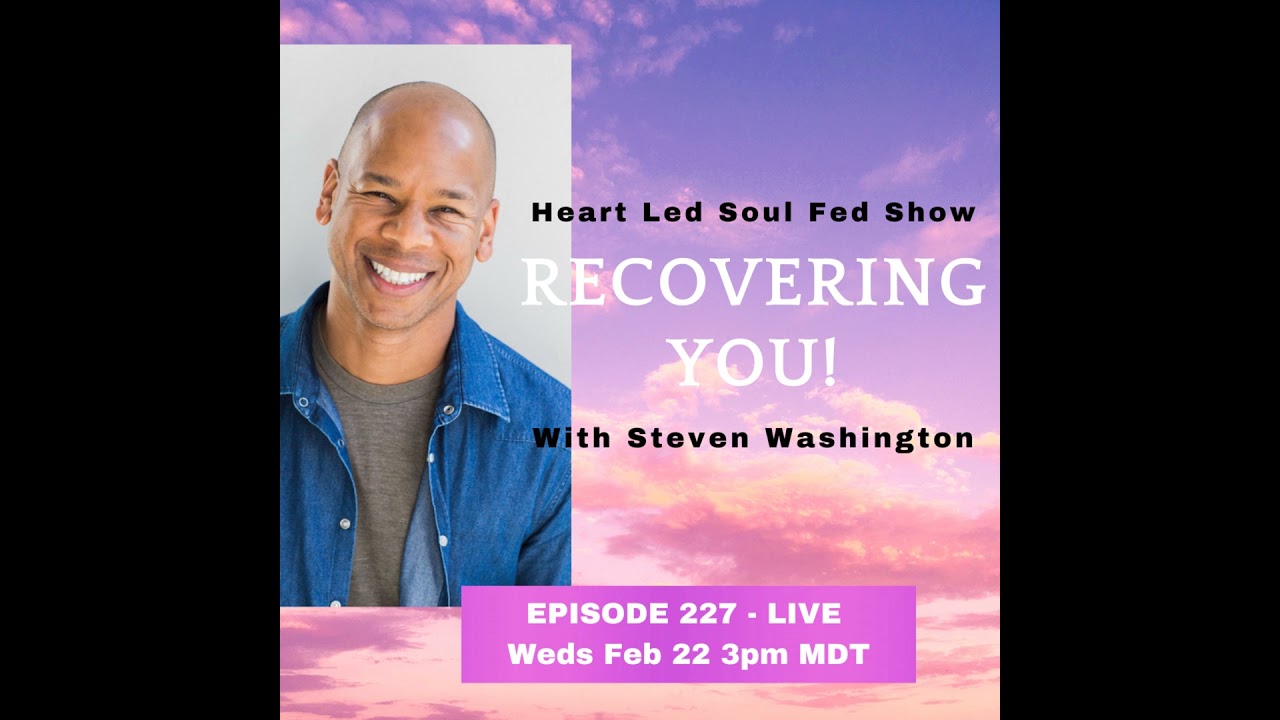
In this live Heart‑Led Soul‑Fed podcast (Season 4), host Christine J. Gold interviews Stephen Washington, former professional dancer, author of Recovering You: Soul Care & Mindful Movement for Overcoming Addiction, and creator of the SWE Studio. The conversation weaves personal recovery stories, the role of mindful movement (Qigong, Pilates, dance, laughter medicine) and breathwork, and the integration of 12‑step principles, trauma work, shame, and spirituality into daily practice. Stephen explains how he discovered Qigong while studying Chinese medicine, how breath and intentional movement regulate the nervous system, and why journaling, gratitude, and creative expression are essential tools. They discuss the ongoing nature of recovery, the importance of boundaries, community support, humor, music, and non‑alcoholic alternatives. The dialogue also highlights Stephen’s free SWE Studio access, upcoming mentorship programs, and the broader mission to help individuals reclaim agency, heal trauma, and live a consciously joyful life.
Chapters
Welcome, beautiful souls, to the Heart Led Soul Fed podcast and live show. I'm Christine J Gold, and this is season 4. Many of you know I went whole food plant-based almost a year and a half ago, and part of that is incorporating a strong, healthy mind, body, and soul. So upgrade your body with nutrient-dense supplements that are organic, non-GMO, and not tested on animals. Message me for your 25% $25 gift card. 360-degree wellness begins by building a self-care kit. You can begin that with a dream journal that I curated, a gratitude journal, and my book Intuition Saved My Life, plus lots of other beautiful heart-centered conscious products. Stephen Washington is a former professional dancer and the author of Recovering You: Soul Care Mindful Movement for Overcoming Addiction, and the beautiful creator of the Stephen Washington Studio. It's a beautiful, affordable online community offering movement, meditation, and more. And I love his fusion of qigong, meditation, movement, and breathwork. I guide empaths and old souls to overcome anxiety unworthiness, and overwhelm to unleash their gifts and find their purpose. The doors for Unleash Your Magic 6-month mentorship experience is now open. Isn't it time you followed your dreams? And if you're looking for the ultimate in transformation, unleash your purpose is one year of transformation, one-on-one, lots of fun. Step into your soul's purpose. Our Soul Healers Community doors are open for a limited time. Come on in. This is a safe space for empaths and old souls and for anyone who is on the spiritual awakening journey healing path. Replays can be found anywhere you watch your favorite videos or listen to your favorite podcast. Please like, subscribe, and follow, and join us live every Wednesday, 3 PM Mountain. Waiting for him to come on. Thank you so much for your patience. Uh, Stephen Washington is the author of Recovering You: Soul Care and Mindful Movement for Overcoming Addiction, the creator of the SWE Studio. Stephen Washington 10 experience, and it's an affordable online community offering movement meditation and more. And, you know, as a former professional dancer, um, you know, Stephen is really here to talk about his book Recovering You, and it's about mindful movements and overcoming addictions, which, you know, if you've followed me for the last year and a half, I've been doing the exact same thing. I know there are other people that are saying the same thing. I don't want to drink anymore. I don't want to be in addictions anymore. I don't want to be stuck. I don't want to suffer anymore. And I came across Stephen's videos a couple years ago, and his love of movement, his fusion of QiGong and Pilates, has really helped myself and thousands of other people of all ages and all fitness levels really move and strengthen their bodies in a safe and impactful way. And, um, You can tell he lives a joyful life in recovery and he's passionate about helping others. And there's no, you know, coincidences or mistakes in regards to his health and happiness. And I'm just going to be quiet and bring him on. Hi, Stephen.
Hey, Christine. Thank you so much for inviting me to be on your show and having this conversation with you.
Yeah, thank you. And thank you for being so patient. And, uh, I mean, we were talking about patience before the show, were we not? When things go not according to plan.
Yeah, yeah, you just have to— yeah, just be patient, breathe, and just let the moment pass.
Thank you, thank you. And, uh, your book, um, I've already read It's cover to cover. I read it in a couple days. I'm just going to bring it up here so everybody can see it. It is available out, you know, it's out on Amazon now. Um, I, I love the image. I can tell you are so in your element. Um, your smile, I guess, if anything, your smile, it just draws me in because that is your spirit, that's your heart.
Thank you.
So did you want to talk— why did you write this book?
I feel like I didn't have a choice in writing this book. This book was something in the teachings of this book, something that had to be expressed. And initially it was expressed through an online course that I created that was on my website. And then during the pandemic, I received a phone call from New World Library expressing interest in my writing because I posted my writing online, short stories, and they asked me if I wanted to write a book. And the first thing that came to mind was writing a book about recovery and how to use mindful movement and other self-care practices to enhance one's life in recovery, and also practices to just help anyone. This book is really for anyone and everyone. Yes, it's written in a way through the lens of addiction recovery. And I feel as though, like you said a moment ago, all of us are— we all have our addictions, our dependencies. Not everyone is addicted to alcohol or drugs or cigarettes like me. A lot of us have addictions to food, relationships, social media, our devices. So many things that we use to numb ourselves and to check out and help us to cope. And so I wanted to write something that could speak to everyone and give people practical, um, holistic tools that they could use to help themselves live a more joyous and conscious life.
Yeah, because that's really what it's about. I mean, I Um, I had my, as I tell so lovingly, my spirit, you know, my spiritual awakening, uh, via the 2x4 to the head, um, many years ago. And, um, and seeing that you're very shy and sensitive, would you, you know, would you say that that was part of the addiction?
Oh, interesting. Uh, What that makes me think of is, because I was a very shy and sensitive child, and, and, and I still am a very sensitive person, a little less shy. I'm a— I'm an introvert with extroverted tendencies. And one of the things that helped me to be out in the world, uh, was to drink and to do drugs and to smoke. Those things helped me to connect to other people. It helped me to manage anxiety. It helped me to self-soothe, because I didn't realize when I was spending all that time numbing myself and checking out, I was really attempting to self-regulate. Had no idea that that's what I was doing, but essentially that's what I was doing. And, um, and they really did— they worked for a long time until they didn't work anymore. And then I was forced to, much like you, a 2x4 hit me against the head, and so to speak, and invited me to, to live a different life, a life that had a little bit more, that had a lot more freedom and more possibility and potential for healing.
Mm-hmm. And how you describe being high, you know, like fitting in, I was nodding my head. I'm like, yeah, inhibitions, you could speak, you could be whoever you wanted. And and then be like who you never wanted to be, all in the same time. And we used to joke about it. Oh, you know, I only drink on the weekends, and I spent, you know, my, uh, my Saturday night, you know, by the porcelain god, you know, or goddess, you know, hahaha. That, you know, we used to think it was funny. I, I, I just— I'm not sure where it— do you feel that was maybe a coping mechanism as well, just, you know, be part of the club, be part of the group, trying to fit in when you're never meant to.
Yeah, I think what you're just— what you just mentioned is just this also this external pressure to, to act a certain way, to, to think a certain way. Um, and I think it's something that we're all affected by, but we respond to it in different ways. And I know for me, being like I said, the sensitive person that I was and still am, that was something that, that seemed like the right choice for me at the time. And also for me, I come from a family where people use substances to live life, to cope. There's a lot of trauma in my family, and, um, and I had many examples of, of, of people using substances to get by, to deal, to cope. And so by the time I had my first drink or drug, I was so ready for it because I've been watching it my whole life and I had been holding my breath for so long. And finally, after I had that first drink, the first of many that night, I was finally able to exhale, to breathe. And I think that that's just something that, like I said a moment ago, many of us are conditioned to do. I, in some ways, I wanted to be like the adults around me who, who seem to be having a good time doing, doing those things. And so I just latched right onto that. And I, and the feeling that you just described, the feeling that drinking can give us, these things outside of ourselves can give us a sense of confidence or joy or embodiment. That's something that I chased for years. What I felt that first night of drinking is what I chased for my entire using career. And, um, and I, and I did it with varying degrees of success, but I still held hope that I could still recapture the magic that I felt that first time. And, uh, and that was enough for me to just, um, spend a lot of years Devote it to that. I seem to have lost you, Christine J Gold. Hopefully I didn't lose you for long. What else can I say about that, about that last question that you asked me? Um, it's funny, one of the things that I received that very first time that I drank was not only confidence, but I felt like I was funny. I felt like I was funny, and as a 15-year-old just coming into my own, getting a sense of myself, especially as a sexual being. I, I felt sexy, I felt attractive, and that was very, very important to me because I'd always felt like an outsider looking in, and this suddenly made me feel like I was a part of instead of apart from. And, um, that was very valuable to me and worth running after and chasing.
Wow, I came back at the right moment, uh, when you said sexy and you felt like you didn't fit in. That, that was me. That was me too.
Um, I think there's many of us, right?
Yeah, absolutely. And I love how, you know, I've— I talk about past lives quite a bit, so I know that I was a Buddhist And I think, I feel that you were, you know, you talk about you were drawn to Chinese medicine and you talked about dabbling into acupuncture and then how, how did you get into qigong?
Well, I found qigong when I was a student in, in Chinese medicine school. I moved from New York to California, changed my life, uprooted myself, got rid of everything that I had in New York to move to California and teach at a Pilates studio and then also go back to school for Chinese medicine, which was quite a, um, a challenge because I had so much catching up to do because I wasn't a very good student, uh, in my younger years. And so I had to catch up in order to be able to qualify to be in the school. So once I finally did that and was accepted into a school in San Jose, uh, Qigong was part of the curriculum. And thank God it was because The experience of going back to school at the age of 42 was very difficult. It was very difficult, and it brought up a lot of old stuff. It brought up a lot of, uh, unhealed wounds for me, a lot of shame, a lot of anxiety. I would have a lot of anxiety, sense of overwhelm, panic attacks. You name it, I had it. And one of the things that brought relief for me during that time was the qigong. Literally, Christine, before I would walk into class, I would be in my car crying. I'd be in my car crying. If we had a test that day, my hands would be shaking, would be sweating. But something happened when I would sit down and I would listen to my teacher, Thomas was his name, begin the lecture. And then eventually we would start a physical practice and suddenly I was able to calm down. I was able to regulate. I was able to breathe. I was able to feel expansiveness in my body instead of this tight contraction that I was in before. And I was able to think more clearly. And that was, was remarkable to me. And I was able to shift a lot of that fear, that worry, the anxiety, to, to a sense of peace and calm and hope. And, and that told me that that was something that was going to be very useful for me in my recovery. And just in my life in general. And it was something that I wanted to be able to share with other people beyond that moment. And I ended up not staying in traditional Chinese medicine. I ended up moving on to a massage program because that just felt like the right thing for me to do. And it's not that I— it's not that I couldn't do the work. I think I would have made a really good traditional Chinese medicine doctor, but everything inside of me told me that this wasn't the right thing for me. So I had to listen to it. And it took a lot of courage to do that. Because I come from a, I come from a place where if you say you're going to do something and you decide to do something, that you have to do it. There's no change in your mind. Which remarkable for me to even say that out loud. And I said it so many times. And to hear myself say it, because I so don't believe that anymore.
Wow.
All have the ability to change our mind. If it feels like it's our truth, no matter what one says or thinks.
Yeah, beautifully said. And when you're— when I was reading that you were taking acupuncture, I'm like, it's too clinical, it's too, um, I don't know what the word— sterile, that, that environment. Yeah, it— I— when I was reading that, I'm like, I can naturally see why you said no. I'm gonna go this way. And I'm so glad you did. Thank you so much.
Oh, and also that the reason why I was there was to learn Qigong. That, that was my reason for being there. Once I got that, I was like, oh, I can go. I can go and I can carry on in this different direction. Because I'm going to take this tool with me and expand upon it.
Yeah, beautiful. Gitte is joining us from Denmark. And she's just saying alcohol can also have the opposite reaction, all the hidden anger and the fear. Can come forth. Yeah, yeah, yeah. I, you know, there was a joke in the family too. Anyone that drank whiskey, their, their, you know, Jekyll side would come out. I hear that quite a bit. So, wow. In your— in the dedication in the book, you know, there was a beautiful quote, you know, from yourself. But the key, and you've said it many times, freedom. Yes, uh, freedom is everything. I, I feel that's why, because I feel we're our own jailers. I mean, we always have the key. So, um, and you talk about recovery, but you've been sober for 20 years, is that right?
A little over 20 years.
Do you still feel like you're recovering yourself?
Absolutely.
Does it ever— it never ends, right?
The work never ends. I— and it's—
it's—
thank you for this question, because at 20 years sober, I am discovering and uncovering a whole new layer of healing. And I think, I think the process of writing this book and also putting it out there into the world and having conversations like this has ushered in this new level of healing and It's an interesting time. It's not exactly what I imagined at 20 years sober, because there is still a part of us that thinks that when we do all these things for so long, that we're going to get to a certain point or get past something. And there's just always different, um, there are so many different layers of the onion that we just continue to peel back to reveal what needs to be revealed and what needs to be brought to the surface to heal. And for me, it's trauma. So this has been a very fruitful time for me to recover from past traumas. And I think everything that's led up to this moment has prepared me for this deep work. So immense gratitude for this time. And so I feel as though all of us are recovering from something, and it's a journey that is It's about the process. We're always in the process of it.
Yeah, absolutely. And, you know, ego likes to come in and go, oh, you think you're done? Watch this. You think you're oh so ascended? I, you know, I always— I infuse humor into everything. Yeah, you know, um, I, I think there's all those spiritual memes. I mean, I— it's so fun, um, you know, like when your collective decides to download and you're not ready, and I'm like, well, humor does lighten the load. And a friend of mine said, actually, humor enlightens the load. I'm like, oh, that's even better.
Oh, so true, so true. I love it when the universe says, oh, silly you, oh, and there's more.
And I love what you said in the book, Life in Recovery: Perfectly Imperfect, because for some reason, I, I'm a former perfectionist. We, we tend to think that everything has to be nailed.
Yeah, I think quad. Yeah, absolutely. And I, I think that that's definitely part of my isms, um, as it relates to all the underlying things that, that exist, um, behind the addictions is this, this sense of perfectionism, trying to do, holding yourself up to such a high standard that you will never ever meet. Maybe occasionally you do, or you get close. But, you know, we're all perfectly imperfect. And learning— part of my recovery is just learning more and more how to embrace that. The more and more I can lean into that, let myself off the hook from this idea that I have to be perfect. And perfect is boring. Oh, it is boring.
And the center of the— did you go through the 12 Steps? Because you wrote about center of 12 Steps is self-care.
Yeah, I did, I did. I've done the 12 Steps many times, and I wrote the book with, um, carrying the 12 Steps— carrying the 12 Steps with me because I feel as though it, it informs everything that I do. But I didn't want this book to be about teaching people the 12 Steps because that's not, that's not my job, that's not my place, and that's not the purpose of this book.. But, um, I think the 12 steps are incredibly valuable and they open up a life for me beyond my wildest dreams. And then there's more.
Absolutely. Yeah. Uh, Kira's just joining us and she's just saying we all have trauma to heal. And, um, Gitte is, you know, confirming if we are not in need of an ongoing healing process layers by layers, I don't think we'd be here like now.
Agreed.
Doing the work.
Agreed.
And Gitte and I like to joke and say, I didn't read the fine print. I chose to come here. We all chose to come here. I chose my family. No, I didn't. Yes, you did. Yeah. Oh my gosh.
Um, Christine.
Uh, and life is in session. That is the gift of recovery. That I, I write down little— I, I, I could have wrote a book about reading your book, all the isms that came out of your book. Um, I really see this book as a fusion, just like your life and just like your work.
Thank you.
You're welcome. And, um, page 22, there were a lot of, a lot of questions that at the end of each chapter— we talked about that— there is homework. There is, um, you know, why did you want to do like reflection pieces? And then you have those beautiful illustrations done by a fellow artist, a friend of yours, and they're so cute because you want to follow along, you want to do the work. I feel like I was in kindergarten in a way.
That's a great question. Uh, what I wanted to do, how I structured the chapters, was I wanted to introduce each topic and I wanted to give my experience, strength, and hope around a particular topic. I wanted to invite other recovery friends of mine to share their experience, strength, and hope about it too and create a sense of community. So we can wrap our arms around every single reader, every single person who engages with the book. And then from there, providing a toolbox, a recovery toolbox for people so that they could have tools that they could call upon to help them deal with their fears or to deal with a sense of isolation or their shame or ways to cultivate more gratitude in their life or build a social support system. And then I wanted to also include some deep dive discovery questions because I think that something really remarkable happens when we put pen to paper or fingers to our laptops or whatever and we start to express ourselves, um, and just a, uh, stream of consciousness around a certain idea or a question that's posed, a certain prompt. And there's an incredible healing that takes place that's very deep and very personal. So I wanted people to have that experience. And then I wanted to take all of that and integrate it into the body because I feel as though I have so many remarkable insights when I, when I move my body, that there's some way that that just provides an opportunity to integrate. To get just to, to just for a second to get out of the head so much or get out of the turbulent emotions that might be stirring in the body, in my, in my heart, but to just move it through the body. And, um, and it's something that's always struck me about Qigong, just its power to do that. Even if you don't know Qigong well, even if you don't have a lot of experience with it, the medicine has an innate has an innate intelligence to it to help us to, um, connect to the body and to move energy and to integrate, um, teachings and learnings.
Yeah, I— this morning I started with Qigong, one of your videos. I think it was a new one. It was for the head and the neck. So I was— and I'm like, this And you were kind of cartoony in that video. It was hard to describe, but it was cute.
Oh, thank you.
And yeah, I did that, and I did some Pilates, and I, I always have some type of movement every day, like practice, and, and going outside, and the journaling, and the writing, and the breath. I mean, many— it's interesting that we always remind, you know, ourselves in the videos, oh yeah, we gotta breathe, but I am breathing. But are you in intentionally breathing.
I think that's—
did you want to speak about that?
Yeah, I mean, the thing is, thank goodness we don't have to think about breathing in order for it to happen. It's something that our bodies do for us automatically. But even though it's something that we do automatically, many of us, uh, don't do it well. Uh, we don't do— we don't breathe deeply. Uh, we can tell a lot about how we're feeling by how we're breathing or not breathing. Many of us move through many points in our days when we're holding our breath, depriving our bodies of, of the oxygen that it needs in order to function the way that it needs to function. Air is the most accessible form of chi that there is. We can go a while without eating or drinking, but you can't go very long without breathing. So, um, I wanted to show people, teach people, remind people of that in the book, because breath and, uh, breathing is something that's accessible to us, and that's something that we can pay attention to and work on any time of the day, anywhere that we are. And when we breathe deeply and when we're mindful as we breathe, it has the ability to transform how we feel. We can shift ourselves. Our sympathetic nervous system is active when we are, are in fight, flight, or freeze. And when we are holding our breath or breathing in a shallow way, that tends to lead more towards what's called a stress breath and leads more towards the activation of our sympathetic nervous system. But when we breathe deeply and we slow our breaths down and we, and we extend our exhales a little bit longer than our inhales, then we activate the parasympathetic nervous system, that part of our our nervous system that is responsible for rest and restoration and digesting. And, and that's when we're able to turn on the natural healing powers within the body, is when we're able to tap into that. So taking the time out each and every day to breathe with awareness is just filling our well of, um, health and well-being. Filling it so that it overflows and can flow through each and every part of our body and also flow into all aspects of our life. It changes the way that we show up for life.
Yeah, because we, we are energy, and, and things get stuck and stagnant. That's when we need to move and flow. And that's why I love, you know, qigong so much. Thank you so much for doing that. Uh, Kira's just talking about journaling. It's been a very important part of a personal healing journey. I have a gratitude journal. I use a dream journal as well. I, I lead clients through intuitive writing or channeling or whatever you want to call it, right? So it is very important. Um, I feel everybody has a story in them, right? It's, it's important.
It is. And I don't think we all give ourselves permission to express the story or even investigate ourselves in a deep way to discover what our story is. Because I think there's a, there's a surface layer of what the story is, and then there's everything that's underneath.
Yeah.
And can we give opportunity for that to, to have a voice? Yeah.
And the more that we're, we're heard, the more that, you know, we matter. I mean, when I was reading your book, what came to me— I A quote came to me for our way out is in. So we're all trying to get out of that proverbial cage, box, prison, um, and, and we're not meant to suffer. That, that's, that's an illusion. Um, Gitte is asking, how do you use Divine God Source in your recovery?
Well, I— for me, my connection to my higher power is the center of my recovery. I remember a good friend of mine who took me to my first recovery meeting always encouraged me to, to really investigate and spend time developing my relationship with this power greater than myself, whatever it is, um, a power greater than my— a power greater than myself of my own understanding, which gives me the permission for it to be whatever it needs to be in order to resonate with me. And I remember him saying that it's important to connect with people, um, build a support network so that when you need help, you can always call upon someone, but sometimes you're not going to be able to reach another person. So the only thing standing between yourself and a drink or a drug or a slice of cake or, um, or anything that we're depending upon to, to, to regulate ourselves, um, sometimes it's just a higher power, our connection to Source. And so I It's been my experience that my connection to Source has deepened over time more and more as I've moved along on this recovery journey. Uh, I, I moved into recovery— I began my recovery journey already with some sort of a, some sort of a belief in something greater than myself. I knew that there was something out there that was causing the sun to rise and to set, and for the waves in the ocean to, to, to move the way that they do, and something behind just the beating of my heart. And so it wasn't a big stretch for me to, to begin to tap into that. But I'm amazed at how deep my relationship with my higher power has become over the years. And it's, it's It's a part of me, uh, as much as breathing is a part of me and necessary for me to, to live.
Yeah, that, that's powerful. God is in everything. I, I mean, I— we didn't have religion or go to church or anything like that, but I always knew, you know, I could see auras, and, and my grandma would come visit me and all these weird things would happen, and I totally shut it down. But I came back to God a few times, and I was even baptized until I met somebody a couple years ago who really made the connection for me. And I realized it's not this dude in the sky, right, who wants to punish you and, and shame you and all that stuff. That's old.
So old. I grew up with that too. I grew up with that too. And, and for me, being a young person being a person who, who sensed that I was different from other boys, being gay, walking into a Southern Baptist church, um, it wasn't a place where I felt comfortable. It wasn't a place where I felt accepted. And I didn't even have language for it all. It was very intuitive that I did not feel comfortable here, uh, and so for many years of my life, I just rebelled against that. And then it wasn't until again recovery that I started to build a relationship with a higher power. And then eventually I started going to spiritual centers and going to churches that resonated with me. Nothing like what I grew up with, but I suddenly had the need to worship with other people. And one of the things that touched me deeply during that time was the music. I would get something out of what the pastor or the reverend or whoever was leading, but there was something about the music that would touch me on levels beyond anything I'd ever experienced before. And it was incredibly healing. I'll never forget it.
I feel the same way about music. Music is like breath. It's everything. I mean, I started my day with me— I always start my day with music, whatever the playlist is. Let's just keep it going.
Oh, I love it, I love it. I have a, I have a, um, an impulse to invite your, your viewers and listeners to, uh, do a Google search of my dear friend Charles Holt. Okay, um, on YouTube, Charles Holt is a friend of mine. We did Lion King together. He's an incredible singer.. And there is a song that he sings called the Rolling River God. And when he sang that church one day, when he sang that song one day in the church I was going to, it transformed me. It brought me to tears, and it brought me to tears every time I heard it for 6 months. And when I say tears, I mean ugly cry. Um, and it was around the time that I lost my father. My father was, um, was slowly dying. And, uh, that music was just the exact healing that I needed, and, uh, and it would change my life.
So, and that's something else we have in common. My father's name was James, and he passed away a couple months ago.
Oh, bless you.
So when I read that, I was like, oh, we, we have so many connections. Yeah, it's, uh, I love it, like when a soul meets a soul. You know, it's words. There are no words. And when you said ugly cry, that was me last night. I was watching, um, a gentleman, his name's Dongi from Hawaii, and he sang the song Monsters by James Blunt. And I've never heard that song before, but when he sang it, I needed a whole box of tissue. The tears were just— that's it.
Um, yeah, it helps us to cry. Tears help us to release energy. It helps detoxify us. It helps to move energy. And, uh, I love, I love when something inspires me to cry.
And you had mentioned in the book too, we're only as sick as our secrets, so we heal by telling the truth. And I was like, oh, that hit me too. Yeah, because we're all hiding, we're all hiding things. Like, even my family, we don't talk about that, we don't go there. That, that's too much.
Yeah, there's a lot of secrets in my family, and I had great examples of, of, um, how to keep secrets. And I also was able to witness how secrets just made you sick. I watched that with my father. My father had many secrets, and, uh, and I think those secrets fueled his drinking. And, uh, and I watched him be destroyed by that. And by the time that really came to a head and when he passed away, I had already begun my recovery journey. But that was a really powerful lesson for me, was to, to, to see, um, fully that secrets don't help us. They don't help us. They need— we need to be able to release them and tell the truth, um, first with ourselves and then, uh, with someone that we, that we trust with our secrets.
Because then it— in your chapter, Moving Past Shame, Brené Brown— love her, um, she was part of my journey as well— she said if we can share our story with someone who responds with empathy and understanding shame cannot survive, and neither can the secret, because it's all— is it not all intertwined?
It is. It really is. And one of the things that I've experienced whenever I share something that I'm feeling shame about with another person, that person always responds to me with a level of compassion and kindness. And I know there's some people out there who may have shared their secrets or their shame with someone and have had the opposite happen. And I think we definitely have to practice discernment when we decide who has earned the right to hear our shame or hear those deep, tender parts of ourselves. Um, but every time I've done that, the person's reaction to me has inspired me to respond to myself in a much more loving, kinder, gentler way. And that's, that's the true healing. That's the true healing.
And it's moving. And that's part of the fear trap as well, because you had a friend say 90% of the time what we worry about never happens.
Yeah.
And worry takes away today's peace.
It does.
It does. So why, why do we, why do we always— like, I— Mr. B's case scenario, now that was a game, and now it seems like it's every day for some people, um, which is kind of sad.
I'm sorry, could you repeat what you just said a moment ago? You said I, I— you cut out for a moment.
That's okay. We're talking about worst case scenario. I used to play that game, and— but some people live that every day.
Yes, yes, this is true, this is true. I, I'll never forget when my friend told me, uh, when we were going through the steps and, and, and we got to the part where you write a fear inventory, and he just told me to write it down. Each and every fear that I had that could come to mind that I've been carrying with me, and to think about each one of those fears after they're put on paper and really play out the worst-case scenario if that fear were to be realized. And what I eventually realized was that at the heart of all those fears was a was a fear that if these things happen, that I won't be able to survive it, that I won't be okay, that I won't have what I need in order to move on, that it's going to destroy me and destroy my life. And if I look back at my entire life, there are so many things that have happened that I may have been afraid of, and it happens anyway. And look, I'm still here. I'm still here, and I'm still breathing, and I have a life that I think is worth living. So I think it's important that when fears come up, to be able to hold whatever is happening in the moment that you're afraid of and compare it to those, to your history, your story, and just compare. And I think, well, all that we need in order to move through that moment, um, with grace is just that truth.
Yeah, no, that, that's beautifully said. Thank you for sharing that. Um, Kira is saying the energy you bring is soothing and grounding, like a balm for your soul. That this is Stephen, that's why I was drawn to him. I'm glad I saw this in time to come and watch this live. I'm gonna get your audiobook for her. Yeah, she's gonna get her audiobook for her son because he's not a reader. Amazing. Wonderful, wonderful. Uh, Gitte is saying, for me, it's such an honor when another shares their heart and secrets what they need to tell. So she feels honored, and, uh, and to be a safe space is so important.
Yeah, it is. It is to be a safe space for someone else, and, and I think that creates a safe space for us too. It's, it's sacred. It really is sacred.
It is. I have a Soul Healers community, and there's people in there that just— yeah, they're going to be doing— they're doing amazing things just showing up. Yeah, I think that's the biggest part is a lot of us don't show up.
Showing up is half the battle, it's half the, it's half the experience.
Yeah, absolutely. And you also talk on page 87 that shame leads to illness, and you list off all of these illnesses, and some of them I've had. Social phobias, OCD, I know someone that has that, addictions, clearly depression I used to have, anxiety. I used to have eating disorders. Yes. Compulsive behaviors? No. Perfectionism? Absolutely. Chronic pain? No. Digestive issues? Absolutely. I, I feel that's a big one, that digestion part, because the gut and the mind, the brain.
Absolutely. Yeah, that's why it's so important for each of us to do this work, um, whether you are in recovery or are not in recovery. I think it's just, as a human being, it's important for us to do this work because it has, um, great implications for our physical, emotional, and mental health and spiritual health as well.
Yeah, I, I talk about healing at all levels. Like, you can— you can't do all 6 or 8 or whatever level that is that you need to do physically, emotionally, financially, whatever it is, but you got to start somewhere. And, and yeah, uh, what do they say? You eat an elephant by one, one bite. Yeah, one bite at a time. Yeah, not that I want to eat an elephant, but my goodness, who, who said that anyways? I have no idea.
I don't know, I know, but I heard it tastes just like chicken.
Sorry. Oh my gosh, no, humor enlightens the load, right, Kara? And she was the one that said that, actually. And I, I had mentioned that, but everything in, in our lives is, is set up. It's a divine setup. And I'm going to refer to a show that everyone watched and I resisted watching for years, wasn't interested. I'm now at the part of This Is Us where they're talking about his dad and his alcoholism, and then And then, you know, Jack, and then the kids and their addictions. And I was just like, this is blowing my mind because I'm reading your book, I'm watching that. I'm like, my— and my dad had alcohol issues, my mom had alcohol issues. It's— and I'm like, okay, it is, it is a disease, um, but it's so socially acceptable. Um, I think that's part of it too, where, you know, you go to party, well, why aren't you drinking? You'd hear that. Or, come on, have another drink. Or, what do you mean you're not drinking? There's something wrong with you. And I'm like, is there something wrong with you asking that question? I don't think that's acceptable anymore in 2023.
Yeah.
So, and I found some amazing non-alcoholic beer because I do love beer. I like the taste.
Yeah.
And there's no alcohol and it's 20 calories and I feel good.
So there you go. And I love mocktails. I, I'm on the— I'm always interested whenever we go out to eat just to see what kind of mocktails that they serve. And I realize that not every, not every establishment is up on the whole mocktail thing, so they, they just kind of leave it to the bartender to just figure something out. So I've decided that I'm going to come up with my own recipe for something, and I'm just going to give them instructions and say, can I get a glass of this, this, that, and that, and that?
Thank you.
That takes all the guesswork out, because you never know. You never know what you're going to get back.
Yeah, no, I, I love that. And I'm the same way with, with drinks now, and then with anything. I, I feel like I have the mind of a child again, which, you know, makes sense. I completely shut that down. And once you recover yourself and really tap into your spiritual, soulful self, I tell people that you age backwards. You become that child that you weren't allowed to be, that you were told, 'There's something wrong with you. We don't like you.' You, even though they didn't say it, like you said, you could feel it because you're an empath. That, that's your— that's a beautiful gift, actually. Or an introvert, or however you want to identify yourself. You, you feel, and that's why we're here. And we've been bypassing that for so long, it's caught up with us in, in huge ways. I mean, 2020 is probably the biggest catalyst for growth and change, right?
And this, this, this path of self-discovery. Yeah, and healing. Absolutely. I love this idea of growing in reverse, or aging in reverse, like you just said.
Yeah, I'm gonna be a centurion. I'm gonna— you know, I tell my kids, you better get that basement ready. No, no. Uh, Kira is just saying, um, Uh, this is so powerful. My mother recovered from her substance abuse and still asked me to hold her secrets, and she struggles with what is mine to share and what should still be held on her behalf. Oh, that's kind of a question. How do you feel about that?
Yeah, you know, I think it's— what it reminds me of is we can all begin a healing journey and, and, and devote ourselves to our own program of healing and recovery, but that doesn't mean everybody else is going to do the same. And so, uh, it's, it's really about, um, taking really good care of yourself and also giving people the opportunity to do that for themselves in their own way. And so that you don't carry what— you don't carry what doesn't belong to you, because that's just going to make you sick as well. So it's, it's, it's about I found in my own journey about becoming more and more clear about that and establishing loving boundaries.
Yeah.
And the bound— and boundaries are something that everybody benefits from. It might not be evident to everyone at the time, but it's something that we all benefit from because we are all individuals and we all have our own individual bodies and our own feelings and our own thoughts and, and things that are important to us. And so it's important that we do whatever we can to preserve that, those really, um, important and tender parts of ourselves.
So yeah, absolutely. And you may not understand, but it's really— you're just there to support and, and to love.
Yeah.
And, and, and, and being that safe container, and but with boundaries. Yeah, I had no idea what boundaries were, like pre-2017. I, yeah, I was a people pleaser to the capital P. It was, yeah.
I also feel like those are things that we're not always taught culturally, and if you don't know how to navigate tricky relationships like that or create boundaries for yourself in certain relationships, and you seek out the help that you need in order to do that because if you— you don't know until you know. And, and, and I think we all learn by example. And so if there's anyone in your life that is modeling that really well, talk to them. I know how they, how they are doing it, how they're managing that, and then take what you need from that and leave the rest. It's a, it's a, it's a, a potential good way to start.
Very, very true. Very true. My goodness. Um, I wanted to share with everybody, um, you have a free gift for everyone. I did put it in the comments, but also if you can't seem to find it or you're on the replay or you're listening, and just comment gift and we'll make sure you get it. But did you want to talk about the free gift you're offering everyone?
Ah, um, I believe the free gift is access to my, um, SWE Studio. Yes, and, and content from my SWE Studio. And SWE Studio is a wellness platform that I created, and that the center of it is my Pilates and Qigong fusion class, because I think those two modalities go so well together because they all focus on connecting to the center of our body, because the center of our body is where we hold our power. And, um, and along with those 2 modalities in, in my flagship class. I also teach dance and laughter medicine, as well as meditations and so many other healing modalities that I'm adding to this collection of over 300 videos all the time. And my goal in life is to help people help themselves, um, build more conscious and joyous and healthier lives through movement.
I love it. Um, thank you so much for writing this book. Um, I— you guys have got to go out and get it. I'm just going to show, you know, another, uh, picture, a copy of the book here. There it is. It's available on Amazon. You guys go pick it up. Um, I read it in 2 days. Um, I'm a bit of a speed reader, and I'm gonna actually go back and, and do, you know, little tags and notes and It's— and I'm going to incorporate it into, uh, my wellness journey as well as anyone else I come across. So thank you so much for, for writing and, and stepping forward and sharing your story and having other people go, me too.
Thank you.
That's— that, you know, your, your heart, um, I— that's why I do this show. Everybody has a story. And if you can reach one person, mission accomplished.
Clearly, that was my prayer before we had this conversation today. Wow. Okay, that's always my prayer, if I can just reach one person.
That's amazing. That's amazing. Um, I always ask one question, or is it maybe two? And I know that it was answered already, uh, in the forums, but I think this is the bigger one. I mean, we talk about what does magic mean to you. And but the bigger question is, how can we as a collective energy help make your dreams come true? What are your dreams, Stephen? What's your big, huge pie in the sky?
Wow. Oh wow. Oh, well, what comes to mind right now is to is to continue my journey to become more and more me. Yes, more myself. And by becoming more and more myself, I can invite you to become more and more of yourself. And then we can all show up as our true selves and step by step change the world.
Wow, that's amazing.
Wouldn't that feel good?
Oh yeah, it— I, I'm— I receive it, I claim it, it's already happening, right? And we're gonna co-create that together for you. So thank you, thank you, my beautiful new friend. My pleasure.
Thank you.
Yeah, I— and thank you all for, for being part of this through all the fun, uh, tech stuff You know, that's just the way it is and we roll with it.
That's right, the show must go on.
That's right, that's right. I mean, you're, you're, you were, um, part of that Lion King production as well, so, um, I couldn't imagine what that was like touring.
And, um, lots of, lots of technical glitches and the show always just continued.
Any last parting words for everyone?
Uh, no, I just, I, well, I just hope that, I hope that each and every person who, um, heard this interview today and will hopefully read the book and check out, um, SWE Studio just knows that they're not alone in whatever it is that you're experiencing, that you're going through, and that, that there's a belief within you that you are worthy of change and transformation recovery, and that there are a multitude of tools that are available to you to help you live a more conscious, joyous, and healthier life.
Absolutely. There's so much. And that's how I found you on YouTube. Actually, I think the video was presented to me, so, through, through your husband's work. So I, I want to thank— I want to thank him as well. So, and, you know, everyone that was involved with your book book and the artists. And thank you so much for sharing your time and your energy with us. Thanks everyone for joining our Heart Led Soul Fed show. If you really love this, please share this, like, subscribe, follow, and rate and review so others can find this. And, uh, I'm sending you all lots of love. Take care, and please remember, healing begins where the ego ends. Bye-bye.
More from Christine










Your coping skills didn't fail you, menopause did #menopause #health #plantpowered
