The Power of Finding Your Voice!
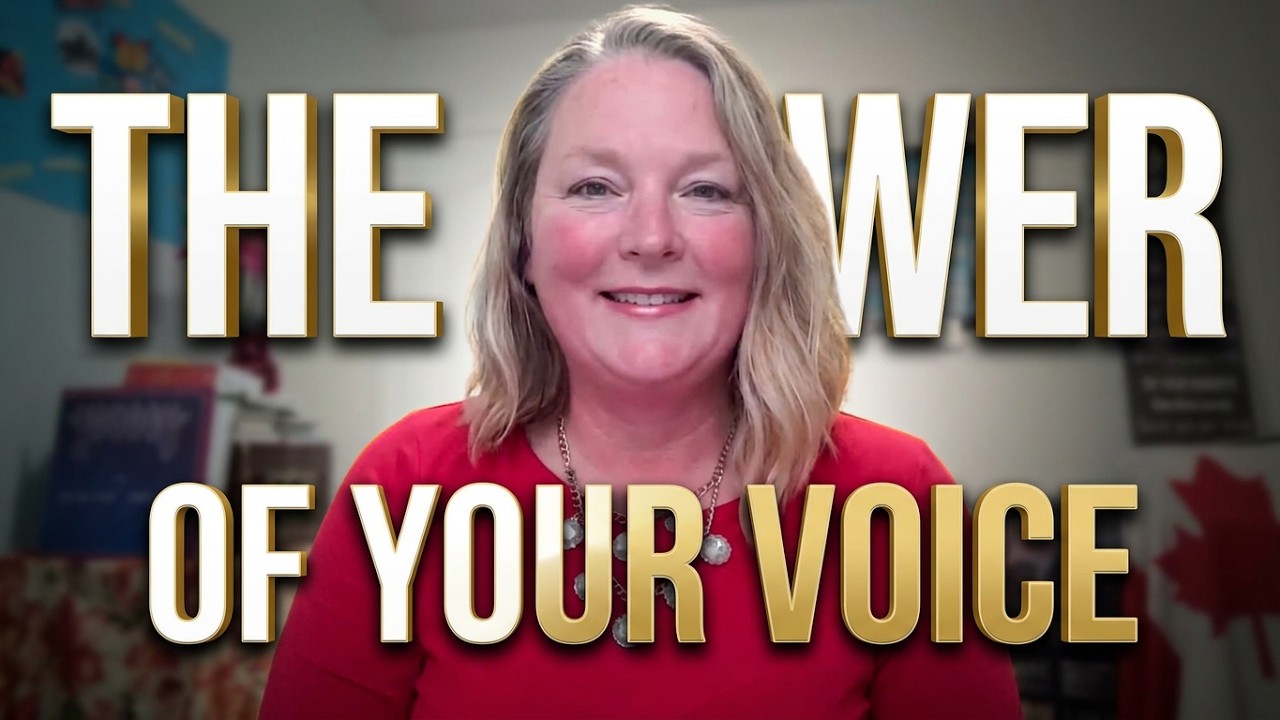
In this episode of the Power of Healing Your Energy show, host Christine J. Gold interviews retired Royal Canadian Mounted Police officer and author Sherri Benson Pottlechuck. Sherri recounts her 20‑year career in the RCMP, detailing a pattern of workplace bullying, sexual harassment, and escalating violence—including derogatory name‑calling, a sabotaged bathroom door, and a dead prairie chicken placed in her locker. She describes the profound mental and physical toll: chronic stress, PTSD, concussion, whiplash, celiac disease, five miscarriages, and strained relationships with her daughter. Sherri explains how she survived by developing a personal self‑care “toolkit” (e.g., painting her nails, watching cartoons, grounding exercises) and by rigorously documenting every incident, which served both therapeutic and legal purposes. The conversation expands to the broader context of systemic change, noting the impact of the MeToo movement, the appointment of a female RCMP commissioner, and the importance of bystander intervention. Sherri now works as a speaker, consultant, and trainer, helping others find their voice, practice compassionate curiosity, and build resilience. She shares advice for newcomers to policing and emphasizes that speaking up, even when it makes one a target, is essential for personal empowerment and cultural shift.
Chapters
Welcome empowered empaths to the Power of Healing Your Energy show. This show is all about your unconditional love, your light, your intuition, your soul's purpose. And depression and anxiety are a side effect of not living intuitively, not trusting your gut, the lost connections with your higher self and others. Your soul's purpose is here. Hello and welcome everyone to Season 2, Episode 7, and this is all about finding your voice. And my guest is Sherri Benson Pottlechuck. She is a retired police officer with the Royal Canadian Mounted Police. And she's written 3 books. Her first book was Women Not Wanted, and it was about her 20-year career and how she dealt with workplace conflict, bullying, sexual harassment. And since retiring, she works as a professional speaker, educator, consultant focusing on workplace conflict and helping others. And yeah, look at that picture, hey? She's frequently called upon, you know, as an Subject matter analyst by media government, part of two federal government reports focusing on sexual harassment, bullying, and workplace, providing testimony and recommendations for changes in the RCMP. She is also part of Assholes: A Theory. It's a documentary by John Walker, a Canadian international film director that focuses on bullying behaviours, and that premiered at the Toronto International Film Festival, also known as TIFF, in May of 2019, and I just finished rewatching her TEDx talk. Very powerful. It was all about surviving workplace bullying. And welcome, guys. Come on in. I'm so happy you're here. Please share. Please comment. If you're on the replay, say hello. Let us know where you're from. And I'm going to welcome in Sheri right now. Hello, Sheri.
Hello Christine, thank you so much for having me. It's a pleasure to be here.
I'm so excited to have you here. Um, you know, with the Mercury retrograde, I'm just going to say it guys, watch your electronics, watch your communications because there were some issues. And but we're here. Thank you for being so patient. But you know what, it probably kept coming up saying, hey, 10 minutes. Oh, 10 more minutes, 10 more minutes. Come on everybody, 10 more minutes. No, thank you so much for being here. Um, I remember watching, it was on CBC, Canadian obviously, guys. I mean, I have a lot of guests all over the world, but when I saw the documentary Assholes: A Theory and you guys kept talking, you know, the narcissist thing. I mean, obviously being sensitive, empath and all that and the bullying that went on, it so resonated with me and I'm like, I got to reach out to Sherry. And I did. And here we are. And here we are. It just so resonated with me because it happened to me. I'm sure you've heard it happen to many others, including yourself. So just tell us a little bit about yourself.
Certainly.
And that's—
I'll give you the Reader's Digest version because 20 years would take too long. I was a single mom on welfare when I joined the RCMP and I was really excited about being part of the— our national police force. Force, and I had— her father was a police officer, so I knew a little bit of what the, what the training was like. I knew a bit about what the work life was like. What I didn't know was what the workplace culture was like. That's something I never really thought about. So after, uh, I really enjoyed— I was probably one of the few, uh, recruits in Regina RCMP Training Academy that actually had fun. I enjoyed it. I met a lot of really fantastic people. I learned a lot. But one thing I didn't learn was what happens when you're out in the field. They taught us to never lie, which was, you know, the law was sacrosanct, never to lie. And we were not above the law. And two, that— so the law was sacrosanct, then to never lie. So those two things I never forgot. What they didn't tell us and what would have been nice to have learned was what happens when you're sexually harassed, you're bullied by your co-workers, when your partner comes to work drunk and expects you to lie. If you're sexually harassed and the leadership fails, they didn't teach us that. Thankfully, the world has changed and most organizations including the RCMP, have embraced those policies. And one thing I will add is that policies are only as effective as the people who are willing to enforce them. So, you can have all these great policies in place, but if nobody's willing to enforce them, then the victims are pretty much on their own. So, at my very first detachment, as a single mom, I experienced derogatory names by a couple of officers, and one of the officers was my supervisor, so you can imagine how that might been a little bit tricky. And I just, at first you do what you normally do, you try to ignore those comments, you know, what your parents told you, just ignore it and they'll go away. But it didn't. And soon the teasing became more sexually degrading. And then I noticed other people in the community were referring to me with these names as Officer, and then use the derogatory sexual comment. And I realized that my ability to enforce the law and be a police officer was being challenged because they didn't respect me. So, I went to each one of the officers and I asked them to please stop calling me these names. They laughed and of course, it continued. I waited a little bit longer and I went— it's continued. So, I went to our detachment commander expecting him to be the leader and take control and get them to stop. And his comment was, I'll never forget, he just laughed and said, "Maybe you enjoy the attention." And the message to me and the message in most organizations when someone does speak up and the leadership fails them is this is a bullying workplace and victims are on their own. And it just pretty much went downhill from there. And as a single mom, it was really challenging having to work in that kind of environment. And anytime you're dealing with bullying, if it does, if you don't stop it, it escalates. Yes, it's very similar to domestic violence, and it's a spiral down. And in that spiral comes all sorts of damage to your physical and mental health, you know, depending how long you're in it, right? And of course, that damages your relationships in the workplace. So there was one night where I came to work and someone had rigged the bathroom door. You know, the wooden stall doors. I don't think they have them anymore, but it was a wooden stall door. And it fell off the hinges when I had opened it, and it hit me in the head. It gave me a concussion, whiplash, knocked me out. And when I was home for several days, and when I returned, the maintenance man said, you know, Sherry, I don't know what happened. I'm so sorry, but it looks like somebody undid the— like, loosened the screws so that when you opened the door, it would— was— it was meant to fall. And he said that the women who were working there in the— during the day were in and out, in and out, and it was fine. So obviously it was— I was— it was a target against me. And later that same night, when I went to get my gun belt— we had private lockers, and that's where we would secure our weapons so we didn't have to take them home— and my locker was opened, and someone had gone into my locker. And I had a blue gym bag where I had my personal things that I would use during the day. And inside the gym bag was a dead prairie chicken with blood dripping all over my personal things. Now, looking back, I can realize, I can see that that is an escalation in violence. At the time, it was, it had become so normalized. And I really thought everybody else was experiencing the same kind of thing. When in fact, no. It was targeted towards me, but there are very few places that were that bad. Some of them were a lot worse, but nobody talked about it. Nobody— there was no sharing of information about bullying or conflict issues, nothing like that. So, you really— I really felt like other people might be having it, but no one's talking about it. So, it really makes you feel even more isolated. And sorry, no, no.
And I, you know, I'm a single mom. Shout out to, you know, all the single moms or, you know, the parents out there that are, you know, trying their best. I mean, you're basically doing it all and still trying to— I guess what would be, what would be the word— power through, because that's how I felt, like you just had to push through this, it'll get better. Yeah, I mean, but yeah, right.
It didn't. It didn't. And it's— and what happens is you don't really realize how that slowly is, you know, eating you away. It does. It really does. And I think as a single parent, it was really challenging trying to maintain a good work ethic, maintain to be a good mommy, and then try to, you know, maintain my own mental health. I never really thought of it as mental health. I just thought of it, okay, I gotta make sure I can stay focused on my job. But look at it this way. If when people are in that kind of workplace, they're going to work every day and all their energy is focused on just surviving. Now, how safe is that? How healthy is that? How productive is that for the individual, for the workplace, for the organization and for the people we're serving. So, I look back now and I realize that's so dangerous to have somebody who is just focusing on trying to stay ahead of the bullying, ahead of the name-calling, and yet I'm carrying a gun. I'm supposed to respond to serious offenses, domestic violence cases, phone calls, traffic accidents. And yet, your mind is OTS, out there somewhere, thinking about, okay, well, did I remember to lock the detachment door? Did I remember to sign my name on the file? Did I remember to hand it in? Did I remember to staple it together the way the boss likes it? All those little things that just spin around in your head 24 hours a day, even when you're away on holiday. Or you're away on a day off.
Yeah, because it's trauma.
It is, it is, it is trauma.
Everyday trauma.
Yeah, that's correct.
I just— and I, I heard you talking about trying to ride the bullying wave. Like, that couldn't have been fun.
No, and it was like riding a bullying wave with a bunch of sharks in a feeding frenzy underneath waiting for you to fall. And it's just such an isolating place. And if you think about it, none of us is invincible. We all have a breaking point. You just never know what that would look like. And if I think back now and if someone would have said, you know, Sheri, this is what your 20 years are going to be like, I might not have— I might have said, hmm, I'm not sure. But, you know, as a single parent, you just keep going day after day. And I, I had— I thought, I'm not going to quit my job that I really love because there's good people too. I worked with some awesome people, really good people, and I loved working with the general public. I just love that, the serving and protecting. I love that. Why should I give up my job because of bullies? And I think just my stubbornness that I'm not giving up this job that I enjoy, the financial safety of having a regular income because of bullies. I just didn't know it was going to take that long to get to the end, and I didn't know the damage it would do to me along the way. I had no idea.
Yeah, wow. And this is definitely resonating. Connor, hi. He's excited to hear what we have to talk about. Thanks for joining. Hi, Thea. Thank you. And Brandy, she's been through this kind of trauma and she has PTSD and it's affected her child as well.
I can speak to that. I can speak to that. I was looking at some, a few years ago, I was looking at some pictures in my photo albums when my daughter comes to visit. She'll like to go look at the old photo albums of me, what I looked like, and pretty much the same except really wild hair and big teeth. And she's got really dark brown hair and big teeth too. And there's pictures of her when she's a little girl, and I'm sitting there with her. And it's a birthday, it's Christmas, and I don't remember that event. I don't remember that event. I can't remember it. I don't remember the smells. I don't remember anything about it. But there I am in the picture. And it's because my mind— and this is what happens to to other victims. They're so focused on just surviving that they are unable to be with their families. And this is what— how— what I— when I speak to organizations and leadership, how important it is to address these conflicts early before they become ingrained and part of the workplace culture, which is what has happened within the RCMP. And so You can relive those. You can't go back. So when I saw some of those pictures and I just felt sad and I cried and I asked my daughter, what do you remember? And she said as a child she doesn't remember too much. But as she became a little bit older, she remembers me being very distracted, quick to temper, snappy. Oh, man. Not as nurturing. And of course you feel like, oh my gosh, I've damaged her. And then, of course, if you have one or more than one child and a partner, people don't realize, and leadership organizations don't realize that that kind of trauma does not stop at the parking lot. It didn't stop when I hung up my gun belt and went home. It didn't stop when I was at home or on holidays or in Cuba or in Paris. It was still there. It ripples slowly into all aspects of the victim's life, slowly infiltrating everything that you do, you think, you say, how you sleep. I mean, a good night's sleep was very elusive for years, not waking up thinking, "Oh my gosh, did I remember to do this? Did I remember to do that?" And that's trauma, and it affects your entire body. Your mind, your body, and your soul.
Absolutely. Gosh, everything you're saying, I'm like, wow, okay, so many epiphanies. And I'm sure there's lots of, um, you know, people out there, ladies as well. Um, hi, baby. Yeah, she's saying, don't let someone push you out of your job. That's what I've been told recently.
And, and, and what I do, what I do now is because I, because I survived, you know, standing on that precipice of wanting to kill myself and deciding not to do it, I thought, I'm never going to allow anyone to come across my path who says they've been bullied and not try to help. And so, I decided that till my last breath, that is what I will do. It will be my job and then will eventually will be my re-post-retirement job where I just focus on helping people survive workplace bullying because I learned that you can stay in a workplace like that, but you have to develop really good skills to be able to detach from that kind of behavior so that it can, it can throw at you, but it's not going to stick. It might sting, but it's not going to stick. And like I said, why should we— and this is men and women, because basically anybody here can be a target. And as a matter of fact, Christine, if you probably ask people, you'd find more people who have been experiencing bullying, some shape or form, or racism, homophobia, anything like that, that have not— then, then who, who can say, I've never, I've had, I've never experienced it? So there's more people who are victims out there who are struggling, who are trying to process what's happened to them and try to move forward, and they're just really struggling.
Yes. And, um, I remember you saying, if I go to work one more day, oh my God, I'm gonna die.. And then as you reached for your sleeping pills, you just wanted to fall asleep and not feel anymore. But you saw your daughter's picture. That was like a divine intervention.
Oh, absolutely. Someone was watching over me. Definitely. I mean, if you see my mirror now, I still have that picture. She was in grade 1. She's just this little toothless little girl with a little fluffy hair. And I just just a sober second split thought. And not everybody gets that, you know, that split second of sober thought to, "I'm not gonna do this." And I never actually thought of the words suicide. Of course, that's what it was, right? I was thinking, "I just want to sleep and feel nothing, no pain, nothing." But I didn't realize what I'd be missing, all those all the years of love and happiness and fun meeting you, being here.
I wouldn't be here, and we wouldn't be able to read and hear what you have to say and what you've been through. And you're like a champion for others that don't have their voice but are like, I know it's there somewhere.
You know, fine. And I, when I, I have to say that finding my voice, it took a long time. So I think if we can help people find it earlier in life, really they will have a much better time. But it's never too late. I have some people who are in their 70s learning to find their voice. So it's never too late. And it's great to watch them learn how to speak up and find their voice and not have people walk all over them.
Yes. And Thea is just saying, "It gets stuck in your body cells." Yeah. So you manifest. Yeah. Absolutely. It manifests as disease. And it's interesting, I just— I'm posting a cord-cutting meditation tomorrow. Oh, because it's been coming up a lot that people get— their energies are hooked in with others.
Oh, this, you know, for me, I, I developed celiac disease, which is an autoimmune disease.
Yes.
And then I had 5 miscarriages. Why is that? I have a— I have— there's— I have 3 sisters, they've all had multiple children. I was young and healthy and I could not carry. I had one, but for some reason I could never carry past 10 weeks. So that stress, if you think it doesn't affect you, it does.
Absolutely, it does. Thea's just talking about you get sick and you can't sleep, or just wanting to sleep, feel nothing. Perfect analogy. Yeah. Just make it go away. I don't want to feel all of this because you feel like you're in this world, this cyclone, and you can't get out. It's just, um, and it's a circle. Um, so you, I, you also talk about bullies, and I would put this with narcissists as well, and any type, um, to wound. They want power, they want to humiliate you, and it's a target. And they tend to have a group mentality as well.
Oh yeah, and that's where, that's where it's really hard. It's, uh, bystanders have tremendous power because a bully is only as powerful as the people who remain silent.
Exactly.
And so I don't— speaking up made me more of a target, but I never regretted it because I knew, I knew it was the right thing to do. And did I want to be part of the problem by remaining silent? I was even told by my boss that if you just shut up, Sheri, they'll get over this and it'll be fine. And for a few months I thought about that. I really thought about that. And I know I thought, I can't do that. I can't see something, experience something, have it affect me so much and then just shut up about it and let it keep happening and just pretend everything's fine. I couldn't do that. And even though it made me more of a target, I still continue to speak up. And I knew, I knew Christine, that one day somebody else would. And with these whispers across Canada over the years, you could hear them, they started to ripple across Canada. I knew I wasn't alone. It just took a few other women, Christine J Goldiford, Krista Karli, Janet, and other women to start speaking up, and then the dam broke.. And there they could no longer pretend everything's fine, which was so powerful because as a result, hundreds and hundreds of women who have historical trauma from the organization were able to say, hey, this is what happened to me. This is who I was. This is what you did to me. And this is who I am now. I'm damaged goods. And it's just by saying that And having a voice, even if it's just in a lawsuit or brief, brief saying, this is me, it's really empowering and it's the beginning of that healing.
Yes, and it's powerful. And it also lets, you know, others say, she can do it, I can too. And it just starts a wave, a collective wave. Yeah, and I think that's what we're really seeing in 2020 right now. So what are you, what are you seeing right now in regards to workplace? I mean It must have been a big build-up before COVID Oh, yes.
As a matter of fact, I saw— I started to see a shift in— with the MeToo movement. The MeToo movement, I saw a little pivot, a shift, and then it just started to— it's like turning the Titanic really slow. But eventually, eventually they did. And as a result, more people are more women in the workplace are speaking up. They're finding their voice. And we're talking about women who've been sexually assaulted in the workplace 50, 60, 70 years ago. They're being able to say to their grandkids, me too, this is what happened to me. It's not a new thing. It's just that now we're allowed to speak about it, talk about it. And I— and even with the RCMP, I see very positive changes. We got a new female commissioner, we got the civilian oversight committee. There is changes. It just takes a while for that to ripple down into everybody. And it's interesting, I was in a store the other day and I happened to hear someone commenting about the way this staff person was organizing the, the, you know, COVID lines. Yes, express checkout, who wasn't. And, and he made a comment that she'd be good for the, for the police force. And she said, yeah, I always wanted to join the the RCMP. And I thought, this is a teaching moment. So I turned around, I said, are you really interested in joining the RCMP? Because right now is a perfect time. They need to have new people come in with new ideas who are— have the right stuff, who are willing to speak up, who have good listening skills, communication skills, and who are compassionate, curiosity, and have a lot of common sense. They need people like that. And then I said, the reason why I'm saying that is because this is who I am and my experience will be different than yours, but I think this is really important for you to, if you really want to do it, don't let anything hold you back. So my experience was this, was this, but there is a lot of people who had very positive experiences. So if this is what you really wanted to do, don't miss out because you're afraid. We— they need, they need, yes, they need the— they need a new group of people to come in.
Definitely don't let the fear— don't, don't, don't fall into the fear of all of it. And you were talking about you actually had a toolkit in your TEDx talk.
I didn't—
you're bringing stuff up or stuff out. So what was in your toolkit? I wrote, I wrote them all down, but I thought it was very interesting, very similar to my toolkit.
Toolkit. Oh yeah, I, I, yeah, that's true. And actually, you know, that's only a few things I have in my toolkit. It's really so over, uh, it's so overflowing right now. But one of the very first things I did, and I, I didn't know it was a self-care tool until looking back 20 years later, right?
Yes.
So the one of the first things I did was I want on Thursday, and I still do it, I would paint my nails. Wild and crazy colors, usually orange or green depending on what my daughter wanted. And it was like bonding time with her and a few minutes of just sort of out of that anger and angst and tension, a little bit of happiness, a little bit of joy, just enough to refill that tank inside of me so that I could go back and face another day. Another week, another month, another year, and then another decade of abuse. And it was those little things, cheap, took 5-10 minutes, and it was just enough. It's the little things we can do that you probably have a lot of little things that you do that make you feel good when life sucks or people are not appreciative, they're being abusive to you or cruel, or you're just having a down day. You reach into your toolkit and you pull out those little things that you can do for yourself. And I read in a book, I was reading a book about FBI agents and this one FBI agent who's a human officer, so he does intelligence gathering. He was saying that when he's stressed, and I can't imagine his job, he was saying that when he's stressed, he would come home and watch Bugs Bunny cartoons. And I'm thinking if this guy can say that's what is in his toolkit, like, anything goes.
Absolutely.
That was just one thing, one item in my toolkit, but I have so many more.
Yeah, and I love that you had little notes and I'm like, oh, affirmations, mantras, decrees, right? It's whatever that was important. Exercise, of course, grounding, shaking off all that stuff that isn't yours. But documenting every incident.
Oh my gosh, I have 4 banker boxes full of stuff. And it's, uh, it, it— yeah, you really, you document, document, document. That's like 3, 3 documents. It's so important because you'll forget things. You might, and you will, because when you're being traumatized, you lose your memory, your ability to concentrate. Gone. So that's why, that's why victims who are being bullied or they're being sexually harassed in the workplace, their production level goes down. Yes, because they can't concentrate. So documenting is important because you, you, it's almost like journaling. Yeah, and you're writing dates and times, who said what, when, and where, witnesses who might have seen that, because some people may be willing to lie, but not everybody. There's more good— I like to believe that there's more good people. And when push comes to shove and their credibility is on the line, most people will tell the truth.
Yes.
But documenting is, is good for the, the victim. It's almost— it's, it's a cathartic— it's cathartic, really.
Yes.
And it's good evidence if you ever needed to go to court, you ever needed to file a complaint, you never ever needed to go to your human resources, and they said, "Oh, he's never done it before," you can open up, or she's never done it before, you open up your book and there you go, you have all your documentation.
Exactly, and then knowing the rules and regulations, so I'm like, you know, you're being your own lawyer in a way.
I was.
Yeah.
Oh my gosh, I remember having an interview with an inspector, and it was about workplace accommodation, and I went through everything.. And I had little yellow stickies and I wrote down everything. And so when I went in and presented my argument, it was great. It was like being a lawyer, even though nothing happened. I was just, you know, ignored. It was empowering for me. It's empowering for you when you, when you are your own advocate. Yeah. Things may not change, but it's your voice. You can say, I tried, I am trying. I'm not going to allow them to beat me down into nothing. I'm going to keep speaking up. It can be, it can be the quiet voice, not the yelling and screaming. It can be the quiet voice.
Yeah, that's right. We don't have to shout and yell and, um, and cause chaos. And journaling is the power of our voice. I love that because I do gratitude journaling. I'm always talking about my clients' dream journal, and you know, they're all like, oh, okay. Sure, but you know what, it's beautiful to get it out. And, uh, I'm just saying quickly hello to Lynn, a fellow Manitoban.
Okay.
Yeah, yeah, yes, you were based in Winnipeg.
I, I, my last attachment was in Winnipeg, that's correct.
Okay. Yeah. Oh yeah, or don't they call it Winterpeg?
Oh yeah, but I— yeah, you just sort of get used to it. You just wear more clothes.
Well, it's no different than Edmonton. It gets pretty cold here.
Yeah, you, you get, you get the cold weather too. Yeah.
Yes, we do. Yes, we do. Uh, so what else are you working on? I mean, you, you do work with the children in bowling. Do you not have something going on with that as well?
Well, no, I have, I have presented to children, um, but I, I focus on more of individual clients and then keynote speaking, which of course is not happening much now. Yes, but there, you know, the technology is only as limited as your imagination, right? Well, here we are. So I have individual clients, and when hopefully when COVID is over, I'll get back on to, you know, doing more, more audience-based speeches. I like that because there's always somebody in the audience who comes up to me and says, I've been at my, I've been at my I was on that precipice of wanting to kill myself and I didn't. And then there's a conversation there. And then there's so many people come up and say, "I was sexually assaulted at work, but I don't know what to do." And so there's a conversation there too. There's always somebody in the audience. And it's different when they're looking at you and you're looking at them because there's an instant connection.
Yes.
You don't have to explain that— you don't have to explain your trauma because the person looking at you gets it.
Yeah.
And I think that's really important is having people who have been there do speaking to people about bullying, having people who have been in the trenches. Those are the ones who can give you that authentic experience. And for victims, you don't have to— I can understand exactly when they say one thing, I can understand where they're coming from. And some people will— they could read my book and say, ah, it's nothing, you know, that happened to me and I'm fine. Well, that's— everybody's different. Everybody is different. A trauma for one may not be as powerful and devastating to somebody else.
Yes.
But we have no right to judge anyone.
That's right.
In their pain. And from— I found that was the case. A lot of people were saying, well, they just called you names. They didn't just call me names. It was an escalation. That was the beginning. And had anybody spoken up at the very beginning, I think my first few years at that detachment would have been much different.
Absolutely. And Connor's asking, have you gotten the chance to confront any of these prior co-workers who harassed you after this wave of support and change, or seen them turn a new leaf and apologize?
No, I haven't seen any of them. I don't expect change. People, people can change, but that's not my job. That's their job. If they wish to reach out and apologize, that would be fine, but I don't expect it. I don't need it. And that's— but that's a very good question. Yeah, but I— you don't— if they did, I wouldn't— would it have any meaning without— I see it without some personal change in them, because an apology is only as authentic as the person who has gone through growth. And for me, I like to give people an opportunity to grow from their behaviors. But from what I've experienced with the people I was dealing with, none of them changed.
Because they— I didn't do anything wrong. It's, it's her. It's not me.
Yeah, that's—
yeah, yeah.
And don't— it's an apology or an acknowledgement or settlement is just that. It's an acknowledgement.. It does not take away the pain. It does not give you back your memories. It does not replace me back in those pictures that I have no memory of. You cannot put a price tag on that. And I've heard a lot of people really be quite disrespectful saying, "Oh, they're just after the money." And I look at them and I say, "You ask your wife if she was raped how much money it would take for her to say, "I'm fine. It never happened." There's not enough zeros on this planet, and that shuts them up pretty quick.
Absolutely. Yeah, again, judgment. That's why we're here. Less judgment, more empathy.
Yes. Yeah, just be. And that's where, you know, 3 things I always tell people: speak up because your voice counts, Be curious because that builds bridges of understanding. What's happening for you, Christine, might be what's happening for me. We might be in an argument, but I don't know, you've had a really bad day or you just got a very bad diagnosis. So be curious. That's how you build bridges of understanding. And then the third one is having your own self-care toolkit. When we are curious, we are using a compassionate lens. And it's so true. Depending on our day, if you start your day feeling frustrated, if something ticks you off, that's where you're gonna go. But if you start your day like you do, with compassion and empathy and love, when something bugs you, somebody bugs you, or you're not having a good day at work, those are the places you will go. You will go to, "I wonder what's happening for her. I'm wondering what's happening for the guy who just cut me off in traffic." And instead of being angry, you're being compassionate.
Yeah, and be the observer. Do not react. Observe. Channel your inner Buddha, guys. How may I serve?
Well, I look, it's like we have a choice. We have a choice of how we respond, how we react, and what we retain. And that took me so long to figure out, you know, so long. And once I did, I realized 'Oh my gosh, I can't change them but I can change how I react.' And that was a pivotal moment in my 20-year career and how I made it to the end. It really was. And I use that compassionate curiosity lens to this day.
Love it. Love it. Compassionate curiosity lens. I like that. Just look. Lynn's just— she's talking about the apology that it's their cross to bear. And if they can't say it and mean it, then it's worthless.
Absolutely. You know, that's so true. And that's, uh, if people, people can change, they can. I've seen it. I have seen it. But I'm not expecting it. It's not, it's not, it's not going to make me, my life any happier. That's my choice.
Yep, absolutely. Wow. You know what, I could talk with you for hours and hours. I find you so fascinating. If you guys are looking for her TED Talk on YouTube, Go check it out. I'll leave the link there. You know, pick up— you've got other books as well that you've written, not just the one that I had mentioned. What else are you working on? I've got your links to get a hold of you. And is there anything else you'd like to share with us?
Oh sure, I'm going to be having some training probably in— I was hoping for December, but you never know with COVID right? But it'll be probably online, and if not, it'll be in in December, and that'll be on my website. But I'm also writing a book on post-traumatic stress disorder because I thought, you know, even though I retired, it took me a few years to actually start to relax. And I thought, I figured as soon as I retired I'd be fine, and that wasn't the case. And I thought, it's been a journey, and it continues to be a journey because along this path of empowerment there's been triggers and little bouts of depression. And I keep— you keep moving forward, but it's a winding road, and every once in a while someone throws in a pothole and you trip and you fumble and you keep climbing up. But so it's, it's really important for people to realize that, uh, um, PTSD is not a life sentence. Depression is not a life sentence. It is you. I have PTSD, it does not have me. Yes, it's so much in your attitude and the tools and the strategies you have for self-care, as well as hanging out with the happy people like you.
That's right, shiny, shiny happy people.
Hang out with the happy people. Your life is better when you hang out with the— not the moan-grown society.
No, the happy people. That's right, not the negative Neds and Nancys. No, no, no. Yeah, and really your circle is determined by who you hang out with, like where, where you are level-wise. Like, you know, it really is, you know, dependent on who is around you. So, ah, hi Marsha! She's just saying thank you so much for your candid conversation. You're a powerful soul with many miles to go, I hope. And Lynn is saying you need to come speak at VAC. I don't know what that is. That must be, uh, somewhere in Manitoba.
Veterans Association of Canada.
Ah, there we go, there we go. Okay, so Well, it was lovely having you, and I will share all your links. Guys, if you're on the replay, say hello. But, uh, thank you so much. I look forward to seeing— you know, I know that there's more coming. Um, definitely going to be following along in the journey, and I know that, uh, we're probably— I know we're going to work together again.
So, and you know, Christine, keep doing what you're doing because it's just a ripple effect of kindness. And you just never know who is going to listen to what you're saying and think, "Oh, I love that message. I'm going to keep hanging out with the positive people." Yes, the double Ps.
Here we go. All right, guys, love you all. And please remember, healing begins where the ego ends. Take care. Love you all.
More from Christine










Your coping skills didn't fail you, menopause did #menopause #health #plantpowered
