The Power of Matt Pearcey! Healing our Financial Fears!
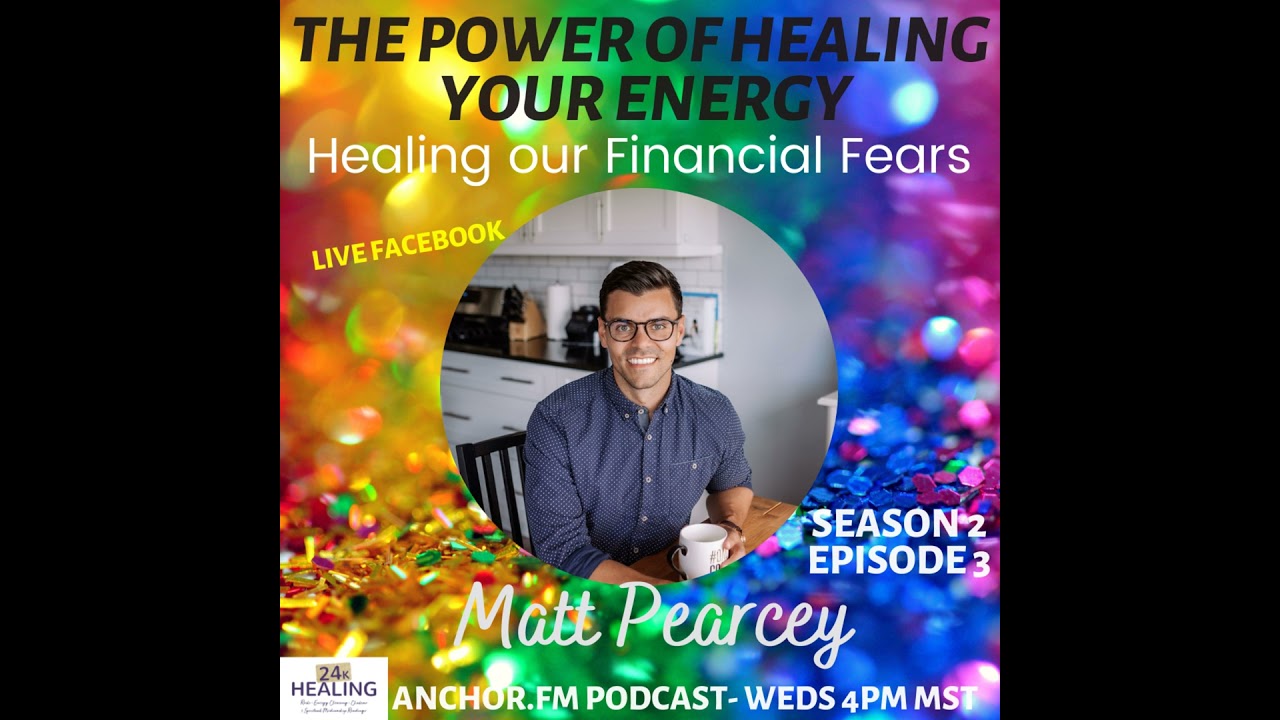
This content was created by Christine J Gold. This content was uploaded by Christine J Gold. This is a YouTube episode titled "The Power of Matt Pearcey! Healing our Financial Fears!" (season 2, episode 3) published Oct 28, 2023. It’s a live/interview-style conversation hosted by Christine J Gold (24 Karat Healing) with guest Matt Pearcy, an insurance and financial services specialist based in Edmonton, Alberta. The discussion blends spiritual/energy-healing perspectives with practical personal finance guidance: money mindset, pivoting during 2020, cash-flow and spending plans, debt management, emergency funds, insurance, credit card pitfalls, ambition vs. greed, and actionable steps to build financial stability. The format is interactive (viewer Q&A toward the end).
Chapters
Hello and welcome to The Power of Healing Your Energy show. This show is all about your unconditional love, your light, your intuition, and your soul's purpose. And depression and anxiety are a side effect of not trusting your gut, not living intuitively, the lost connections with your higher self and others. Guess what? Your soul's purpose is here. And hello, empowered empaths. I'm Christine J Gold with 24 Karat Healing. I am a spiritual medium, intuitive energy and old soul healer, also known as empath. And this is season 2, episode 3. And welcome, come on in, share, please comment, ask questions, be interactive, don't be shy. If this is your first time here, let us know. And if you're on the replay as well, we won't leave you hanging if you have any questions. And my guest, gosh, I think I'm trying to remember when I met him. I'm sure it's over a year, if not a year and a half. It just feels like everything has flown by, just like 2020. Matt Pearcy, he is your insurance and financial services specialist. And, you know, we're just talking about pivoting and, you know, finances. And do you have old beliefs, patterns, lack mentality? You know, what's going on in the money world. And you know what, I'm gonna be totally honest here and transparent. Nobody taught me about money. I had to figure it out for myself and many times learn the lesson over and over and over again. So that's why I wanted to bring Matt in, because he not only connects, um, you know, your finances, your fears, and your healing. He's here to show you how to give you hope and inspiration to start your journey to financial healing. And money is currency, it's vibration, it's law of attraction, and so are you. And we're all financial gurus. Uh, Matt is a financial professional based out of Alberta. Yes, we're coming to you from Edmonton today, and he specializes in simplicity when it comes to what has been sold to us as complicated. We all seem to think money is, but sometimes the amount of information that's out there is overwhelming So simplicity releases the pressure and allows us to live in an abundant and grateful state every day. And speaking of abundance and grateful, I am so abundantly grateful that you're here. Welcome, Matt.
Thank you so much for having me, Christine. It's great. This is, this is as much for me as it is for anyone who's going to be watching this because, you know, money is one of those things that kind of flows in and out of our lives and in and through and it's something that can be challenging at many different times. And especially if someone is starting to heal and they're starting to get better and better and better, sometimes that comes with different levels. You know, some people when they're making lots of money can be just as, as sad as if they weren't making anything. So there's a lot more internal work that has to happen, I think. And hopefully we can get into some of that stuff today.
Oh, absolutely. And, you know, when I started the year 2020, it was all about rebirth. That was my word. And now it's like, you know, as we're, we're closing in on 2021. I mean, really, we only have 3 months left. Like, this is just wild how fast the timelines have sped up. But the word that keeps popping up is pivot. So what, what do you— what's your take on pivoting when it comes to money?
Well, I'll say 2 things. There's, there's one thing that we've seen happen a lot this year, and it's a different P word. It's a P word of panic. You know, when it comes to money, people panic. They don't know how their bills are going to be paid. And unfortunately, most people's reaction to uncertainty is just a little bit too much panic, a little. And really, it just comes from never really understanding it. It's a lack of, lack of understanding. You know, if it's something that we understand at a deep level, that's kind of the second piece of this whole idea of pivoting is if we're ignorant on a topic, it's really hard to walk into it with confidence. Absolutely. And money, like you said, you had to learn it all on your own. I had to learn it all on my own. Like, I love my parents, but they didn't sit me down and, and talk to me about this kind of stuff. Like, I just came up with things through observation. And, you know, I'm, I'm in my early 30s, and, you know, growing up, you know, you say you look at a music video from the year 2000, for example, you get a very different view of money. And so you expect that those things while I'm growing up are real, and it's just not. It's just not true. And you're like, why isn't my life like a music video? And all this kind of stuff. And you realize No, no, like this is all like internal stuff. And when you get internally, you start to really raise your level of awareness and vibration on these types of things. You can then pivot and you don't have to freak out. You don't have to panic. And it's such a relief. So I say taking that simple, simple approach, uh, is something that releases the pressure and allows you to just step into it with, with some grace at least.
Absolutely. So don't panic.
Don't panic. Pivot. Different keywords, very different energy.
Yeah, and breathe and breathe. Don't forget to breathe. And yeah, definitely with that, it's very emotional. And, you know, let's talk about your background. Have you always been a financial advisor?
No, no. So I'm going on 7 years now. So prior to working in finance, I was a clinical exercise physiologist, which obviously it's a very, very different world. But as you know, with people, there's people everywhere. And what I learned really well in that clinical role is I learned a lot about human nature. And so when I had the opportunity of being in the finance world presented to me, I was number one, super curious because it was something where I could totally see myself like fulfilling my potential and being more entrepreneurial, that kind of stuff. But what I saw was it wasn't a big leap for me to think about, okay, well, if I'm able to help somebody fix their body, but not just fixing their body, like fixing their approach to rehabbing themselves or whatever it is, like these men— these mental blocks we have. So, you know, Christine, before the show we were talking about things like old injuries. For example, um, if somebody came to my clinic and they had an old back injury that was nagging on and on and on and on and on, and they came in, they'd see me, they'd do an assessment, and they would tell me about this thing, you could tell immediately that they already didn't believe it was possible. And so it wasn't just the fact that we were dealing with a back strain, we'd be dealing with someone's belief that they can't heal, right? That they can't get through these things. And when I started there, I started to really approach it from like a logical standpoint, which I'm sure you know how well does that go, right? When someone's like, I'm not going to make it, and you go, well, X, Y, and Z, textbook, textbook, and it just doesn't work, right? Like the textbook approach just doesn't work when it's having somebody talking about a belief that they're trying to fix. So we got better and better as young therapists over time, helping people understand that the body can heal, helping them realize that it's more so their thought pattern that's holding them back. And, and then we can work on the actual body. It's amazing what happens when you change the thought. So it wasn't a big jump for me to think, okay, if I learned all that there, I could do the exact same thing with people's money. I could— if they had a limiting belief on that, maybe I could help them over with that. And then I just saw long term, if I'm going to work in one industry versus the other, which one's going to be better for my family from flexibility and income potential and all that, and just made the transition. So like I said, 7 years in the industry now, and every time I look back, I'm grateful on the experience I had in rehab. But the only thing I miss about the people, like, I don't miss— I don't miss going to the clinic every day. I really enjoy you know, working at our Southside branch here and working from home and meeting new people all day, working in finance. But the only thing I miss in my old job is the people. It's kind of the way it is, but I, I do not look back. Uh, love it completely, completely love it.
Yeah, I can tell. I mean, obviously you're, you're a people person and you like to help others. So yeah, I mean, really, if you think about it, you're, you're a lightworker as well, and you're a healer. You're just in a, in a different form and, and doing something totally different, which money is, is a currency. And a lot of folks don't— like you said, it's tied to their belief system. So, um, I guess what, you know, right now, what is some one thing, something simple that someone can do to become more financially— I guess, what's the word— open?
Um, believe it's possible that they want— that they can get what they need. Like, if someone's having a hard time paying their bills, like, believing that that's actually not meant to be your ultimate destination. You've got to believe that first off, right? You absolutely have to believe that first off. If you don't believe something's possible, you wouldn't do it. Like, we talked about the word faith. Like, if you have enough faith, you can step off a cliff and you can levitate. If you had enough faith. I think that challenges people's faith. So, you know, when I look at my scenario, after I got my degree in kinesiology, I went and I got a job and I got a paycheck and I went to the bank and I started immediately filling up my paycheck with payments, right? So, you know, you make X amount per year where you can get a mortgage, a car loan, paying off your student loans, that kind of stuff. And then I was tapped and I started to see at the end of the month, because I didn't— like, I literally knew nothing about money when I started in this industry. Like, I was— when I got my job, they told me how much my salary was, and I just assumed if I take that number and I divide it by 12, that's what I'd make per month. I didn't think about the benefits that I have to pay. I didn't think about taxes, anything like that. When I got my first paycheck, I was like, oh my gosh, because I had already got— we signed our mortgage, we'd done all these things, and immediately I was tapped out. And so immediately what I thought was a good job, my belief was like oh my gosh, now I'm struggling. Like, immediately out of university, I felt like I was struggling financially. And a lot of things had to happen for me to start believing that it was just possible to get out of that scenario. And part of it, you know, the traditional way of thinking, well, what can we do to bring more money into our household? So my wife was— she was working as an educational assistant at the time. She's like, well, I can go back to school, which is what everyone says. I'm sure you've heard people say that. Well, what can you do? I can go back to school so I can get a better education. And that works, but there's still no guarantees there. And my wife is a teacher today, but that was a, that was a hard thing for us to do at the time, was actually to decrease our income while she went to school, which doesn't help the belief there. Um, but then to now have that, you know, have that additional income on top, that, that helps the belief, obviously, right? But me, and for some other people, they just have to be open to the idea that they need to be creative on how they earn money. And Christine, I love the way that you've kind of created the life that you have and kind of letting go of a lot of the things that you were doing and the things you were trying to do and the struggle that sometimes you had around money and just completely let that go and created exactly what you want to do. And it's funny how you bring money into your world that way.
Yeah, I used to look at bills and go, ugh. And now I look at them and go, thank you, I get to pay this. And then I get it because it cycles out and then it comes back. So the bill that I pay actually helps somebody else. That's how I see it. That's how— and it took a long time because, you know, when you grow up learning there isn't enough money, or I'm going to marry a rich man on a white horse, or my white knight's going to take me away and take care of me. Oh, I mean, that's basically a fairy tale. It really is. How about you be your own hero and your own guru and, and take care of thyself first, right? Filling one's cup, um, then you're able to turn around and help others. So it took a long time.
It did. Well, they say on the, uh, on the airplanes, right, you got to put the oxygen mask on yourself first because you're no good to anyone dead, right? Fill yourself up.
Yes, definitely. And yeah, you know what? And they say money is the root of all evil. And I talked about this a couple days ago. No, it's the love of money. That's an attachment and that's an obsession. That's where we get things wrong. And then what we see on the media, and like you said, those music videos with all the money and cars. I mean, it's just, it's an illusion. It really is.
You know, I had actually a really great conversation not too long ago with somebody on that exact topic. So I was raised similar to you to believe that money is the root of all evil. Um, then someone told me, yeah, the love of money. And I'm like, okay, that helps. There's a distinction there. But then, then I really got caught up because, you know, in the financial world, everyone's, everyone's talking about, you know, sales all the time. They're talking about sales and making money and all this. And I, I had this weird, this weird thing in my mind that just kind of held me back for quite a while. And I was like, in my mind, I couldn't distinct, have a distinction between ambition and greed. And so I had a conversation with somebody a little while ago that really helped, a great friend of mine, Lauren, who's a pastor. And I said, I said, Lauren, like, I was like, what's the difference? Right? Like, what's, what's the difference? And I'll be honest, like even to today, I've reviewed that conversation a couple of times. I took notes on it. I couldn't tell you exactly what he said. I just know how I felt afterwards. And he essentially, the conversation went like this. He released me to be like, Matt, ambition's good. And here's why. So here's my main takeaway from understanding the difference between ambition and greed in anything is that we are all a part of nature. We are all meant to be like nature. And if you plant something in the ground, it will grow and it will never stop. And you're meant to do that too. And it's funny how sometimes financially is the one place that we like plan something and we grow and we hit the limits of our job and we never go past that. And we wonder why we're frustrated financially. But you're part of nature. You're meant to grow. You're meant to be in abundance. If you look at a jungle, it doesn't stop at an exit. You know, you can only grow 4 feet high. Like, it doesn't do that. And it's funny how sometimes this is the one place in our lives when it comes to money that will limit ourselves so harshly based on something outside of us. And then so we have to get greedy because then we have to try and screw someone else over to make a little bit extra money. Whereas ambition comes into it and you're like, hey, I will never walk over somebody else to make a dime. In fact, I will provide so much service that I make money. But if I need to make more, I'm just going to help more people instead of, you know, have to try to squeeze, squeeze water over a rock for one person or make a, make a bad sale or something like that in business just to make money. Like, there's a very, very good distinction between those two things. Like what would you do for money and where will you draw the line just on a moral level.
Yeah, absolutely. Um, and yeah, it's almost like a, in a way, a fight-or-flight mentality too, like a survival thing and just have to hoard everything. And we saw that at the beginning of, um, this pandemic in March where toilet paper was gold. Oh, anyways, the meat, right?
Also, what you saw was you saw people who weren't ambitious, the ones that were greedy. And, you know, here in Alberta, we actually had, um, there was some governmental bodies that stepped into different, um, different, uh, you know, stores and stuff like that. They were selling toilet paper for $100 or $200 just because people, they knew they would buy it. That's greed. Right, that's not ambition. Ambition would be something, okay, how can we provide this better? How can we keep our prices the same? And how can we just make sure that we have better supply? How can we do this? How can we increase our volume? That's ambition. And we saw lots of greed in the beginning on that. Same thing with hand sanitizer, same thing with all that stuff. So I'm glad that the government stepped in and, you know, regulated prices on a bunch of that, but I got out of control pretty quickly.
It did. And welcome. I know there's a few people watching. Say hello, don't be shy. If you have any questions about money, um, you know, what, what are you worried about right now? Are you worried about the future? Are you constantly living in anxiety? Or do you feel like maybe you're stuck in, in the past a little bit and have— you're depressed and you're, you're stuck, you're— you have old beliefs and you have a lack mentality? Are you stuck? So we're, we're all here to face this. That, that's why we're here. We're facing and we're trying to heal even our financial fears, um, because I talk about past lives and stuff that you see growing up and even intergenerational trauma. It's all connected, um, to money, um, to our beliefs, to money, to how we think that we're not perfect. You know, like, we were born perfect, right? So somewhere along the way, as you mentioned Yeah, we, we lose that, that magic. We're all magical. I, I truly believe that, although if you talked to me 4 years ago, I certainly didn't believe that.
So, well, Christine, if I could, what I'll do is I'll share some of like the tactical things that I take people through, some of the educational pieces and that stuff. Now obviously it's different depending on where you are, so I'm not going to get into specifics on products and all that, but, um, and stop me if there's any questions, uh, but One thing that I do that really helps conceptualize for a lot of people just the belief that they can make it through is by, like I said earlier, just creating a structure. And when you have a structure around your financial plan and you have, you have a plan of attack— see, the funny thing is what we typically do is we look at how much money's in the bank account at the end of the month and we say, okay, how are we going to spend this now? What we need to do is think at the end of the month, this is what's going to be there based on my job or past experience or whatever, and how am I going to do it? So it's not a budget, it's a spending plan. You're choosing, you're taking control back over everything. So change, change the language a little bit around that. I think I got that from Tony Robbins. He just says have a spending plan, right? Don't have a budget, that's restrictive. We want expansive, we want something that makes you feel like you're in control. So, um, the first thing that I found most people struggle the most with is managing their cash flow. It's almost like what comes in every month, even if it's consistent, what comes in, what goes out is different every single month. And there's a lot of emotion attached to that. There's, I've had a hard day, I need a bottle of wine. There's, you know, there's all these things attached to that. And I get it, I get it. But again, if we have a plan for that stuff, just plan the fact that life isn't going to be perfect and, and plan preemptively that you're going to spend a little bit of money on those things, or you're going to do something that feels good for you. You're going to have a self-care day, you're going to take a day off work, you're going to Plan for those things. It again completely shifts you into a different position where you're now in control of the conversation. So cash flow is two things: what's coming in, what's going out, is that positive, is that negative, where are we at on that. So that's a really important piece of it. The second thing is, for goodness sake, know who you owe money to— banks, parents, all that kind of stuff. Take a take stock of any sort of debts that you have. Take stock of them and realize that there are more efficient ways, likely, than you're doing to pay them off. I'd say, like, there's, there's a goal— I'll call it an extrinsic goal, something that I try and tell my clients is important to them, that should be important to them— is to get out of debt for sure within 5 years of the day that they met me. Like, let's do what we can. Again, and it might be hard because because I've been in this scenario, I have lots of money owing to different people. But when you start to make significant payments against that, again, it shifts the entire conversation. I am now in control of this thing. It is not in control of me. You know what it was to say the borrower is always a slave to the lender. And that's so true. Right? That is so true. And but we've got to take that back. So first to cash flow, managing it, knowing where it's at, being super aware of it. Second thing is debt management, know where that's at. Third thing would be building an emergency fund. Like, this is something that people really started talking a lot about after 2008, and then guess what? Everything was okay for a couple years and people stopped talking about it. And then now everyone's talking about it, and the people that built it right now— imagine at the beginning of the pandemic, imagine if you had $40,000 sitting in an account that was your emergency fund. You'd probably feel a lot different. Today, right? But that only happens— it only happens if you've, you've taken control of that years ago and you built that. So at the very least, that needs to be, you know, you need to have a couple months of expenses, 3 to 6 months of expenses saved on, on either cash— if you don't have cash yet, have access to credit in the worst case scenario for that— and then making sure that there's proper protection in place. So I talk about the word nobody likes talking about— insurance. Like, nobody likes talking about insurance until they make a claim on it and pays out. And if there's any negative, right, if there's any negativity about insurance out there, it's, it's because something didn't pay out. So make sure you have the right kinds. Like, if you have a dangerous job and you could be, you could be hurt, do you have the right coverage for that? If you have a family, do you have life insurance? Do you have a will? Do you have a will done up? Right, all those types of things. Those are things that we have conversations about to make sure that people— and you know what that does, Christine, is that when you have those things in place, you no longer have to think about them. And now that leaves space for you to just like start really expanding, right? When those things are weighing you down constantly, you're like, I know I need to do this I know the debt, but I would— this, this purchase came up and you just never made a plan for it. And like these things start to— and they just weigh on you and weigh on you and weigh on you. And I know exactly what that's like. I see it every day. I've been in that scenario myself. Like, I take that conversation back. Absolutely. And so doing all those things, so those first 4 are the most important piece, that there's kind of like the foundation, right? So those things should happen within the first couple months of talking to someone. And then from there, it's all the stuff that the media talks about, right? It's the sexy stuff, the investments, the Bitcoin, the this, the that, all this. And people are like, oh, get these rates of return, blah, blah, blah. Meanwhile, you had to pull money off your credit card to pay your rent. So who cares?
So it would be more important to pay the debt off before you start investing. What's your opinion on that?
Yes and no. Okay, this— there's a nuance to that. So when I'm talking to my clients, I always say this. I say, do you want my personal or professional opinion? So my professional opinion is the one that's right by the textbooks, okay? This is the one that, uh, makes the most sense financially. The dollars and cents, what they add up to, what's most efficient, how do you pay off debt most efficiently, do you snowball it, do you do blah blah blah, all that kind of stuff, right? That's important, and for a small percentage of people, they will stick to that, right? Some people will read a rehab textbook and do the exact things they need to and rehab their own injuries. That's not the majority of people. The personal opinion is you do the thing that is going to be the best for you. And what I've found is I've found that people that only pay off debt and never save a dime, it's really hard for them because like, I, I've, I've got friends that have paid off their mortgages and they're late 20s. They buy a big house and they pay it off, and I'm just like, that's impressive. And I talked to them years ago, say, hey, listen, like, when you're done that, you know, well, really my conversation was, you should probably be saving a bit of money right now, and then when you're done that, you can accelerate the habit of savings. They're like, no, I just want to pay off the debt, pay off the debt, pay off the debt. So they do that, they're living debt-free, they have a house paid off, all that. And then it goes about 6 or 7 years after they have their house paid off where the additional money that they were putting on their house They spend it, they spend it, they spend it, they spend it. So that tells us that the lowest common denominator of human nature is the most important piece. So my— the thing that works in the real world that I tell people is you should really accelerate your debt payments, and that should be a focus. But there has to be— I don't care if it's $25 a month, save something. It's kind of like dripping water on a rock. Eventually it creates a bit of a ridge in there, and then it gets deeper and deeper and deeper. And then when you're ready to really turn on the savings after a while, now you're just gonna— it's easy because you've already got the guide. You already know what it feels like to save and invest and see fluctuations in your valuations and all that stuff. And so it's so much easier to accelerate a habit instead of start one.
Yeah, very true that you can actually see something growing. Yeah, like you said, planting a seed and watching it grow. And I see it as an investment in yourself. Why are you investing in other people's dreams? And, you know, invest in your own dreams.
Yeah. And the best, the best investment, especially when it comes to money, the best investment is learning about money.
I'm starting to realize that more and more. Yeah. Um, what about credit cards? Like the book that I was reading and— oh man. It's like, it's like you've got this, you're chained to the credit card companies and that's why they keep extending you credit, right?
Yep.
Yep.
So put it really simply, you're stuck in a sales pipeline. If you're, if you've got money on a credit card, you're stuck in a sales pipeline. You are the exact person that they want and they're going to do everything they can to keep you. And they do that in the form, and this is just like tear away the curtains, let's talk about it for real. They do that in the form of rewards stuff, you know, Air Miles, all that kind of stuff. It's funny money. In the world of sales, there's a term called funny money where you add in something that has no real value, but there's a perceived value. So if they were to show you in the contract, let's say somebody has a rewards card and they get travel points, and they were to, they were to show me, okay, well, because here's the business model. The business model is most people don't pay their credit cards. Well, not most people. I think it's like 70% of people or so are pretty good with their credit cards. But the 30% that aren't, the amount of interest that they earn far outweighs— and I mean not even a little bit, but far outweighs— the free trips they give to the rest of them. And that's a business model, right? And so if you are the kind of person that can be responsible enough to use something like that for your good make sure that you're not, because when you're giving interest payments to somebody and then you, let's say you, you pay $1,000 that year in interest and then you got a, a weekend trip to Vancouver and it was a $1,000 flight, did you really get a free trip? You didn't, because you have probably had to pay fees and taxes on top, right? So again, be objective. But it's hard, like, it's hard to take somebody from a subjective, this is what I'm doing for myself, This feels good. I earned this. Like you were mentioning earlier, like, like, to this objective— let's live in objective reality. What's actually happening here? These are the dollars that went out, and this is the benefit that you got. Does the value match up? Did you win or did you lose?
Absolutely. And, and delaying gratification in a world of instant gratification, Instagram and all this other stuff, TikTok— I mean, it's just It's too much. And, um, they're really focusing, like, right now, like, they're really pushing the products out. Like, they almost shame you or guilt you into thinking you need to have this because you won't be like this or look like that. Or, you know, it always starts with, are you depressed? Or, do you need to lose some weight? Or— it's ridiculous. It really is.
Um, they're trying to— they're trying to speak your story.
Yeah, yeah. So maybe it works. Change your story, rewrite it, throw away the book, and just start, you know, coming from a place of abundance and know that you're, you're worth it. You're definitely worth it. So yeah, no, this has been very eye-opening. I don't know if anybody has any questions. Do you guys have any questions? Because I asked about credit cards. Oh, that reminds me, on the statement I remember they shame you and guilt you by saying, at the rate of your minimum payment, it will take you 10 years or 30 years to pay this off. Hahaha. It's like, you know, wow, thank you very much. No.
Yeah.
So I think that's another, that's another tactic as well, to make you feel— because then you're stuck in this loop of, oh, shame and blame and guilt, and then it just keeps It just keeps—
well, for most of us, shame is home, so you almost feel home seeing that. Mm-hmm.
Yeah, like, oh, you know, I screwed up again, or I'm a failure.
There, there it is again. That's me. Yeah, right. And that they play into it, and they know, like, there's billions of dollars spent in research on this stuff so that they can keep us in bondage, and that, that's just the way that it is, right? That's— but, but again, when you increase your awareness you can rise above it. Like, the thing that— like, I, when I got started in finance, I looked at, okay, what's the worst case scenario? The worst case scenario is I'm going to learn the industry from the inside, and every time I go to buy a car or go to the bank or something like that, I'm going to look at that man or that woman right in their eyes, and they're going to know I'm playing on their level. And that was my worst case scenario. Like, all right, let's go, right? I can learn this stuff. I can absolutely, absolutely do it. And so that, that was like a really, really great side effect of getting into the industry is that that's a pretty good worst-case scenario.
Yeah. And well, I mean, just the awareness and the gift you gave yourself and taking your power back and having freedom, power and freedom. I feel they're very, very much connected. And that starts with awareness. And then you can actually have belief And then you have faith. Yeah. And trusting and surrendering through the whole process because, you know, we're not perfect. We're all here to learn something or many things, depending on who you are. And each journey is different and unique. So I don't know, is there something else you'd like to share with us?
Um, before we close out, well, maybe I'll just leave, I'll, I'll leave a final thought, like, cuz a lot of people, they are in the mentality of, well, this is what I earn and I just can't make it. Um, again, let's step into objective reality here. If you just can't make it on what you earn, you have to be open to doing something else for work. Yes, you have to be, because what's, what's the alternative? You know, like, you can look at it from whatever perspective you want to look at it from, and very often we just all decide to, you know, reason our way into why we're stuck the way that we're stuck. Um, but you have absolute ability to create whatever kind of financial freedom that you want. You absolutely do. Every single person who's watching this, every single person who's hearing this, you can. The thing is, there's one thing that I absolutely love from a guy named Bob Proctor, very well-known in the personal development world. Teaches on money a lot. He always talks about the laws of compensation. If you want to change what you earn, you just have to align yourself with a couple laws, kind of like the laws of gravity. Like, if you drop something, it will fall. If you line yourself up with these laws, you will make more money. So the laws are: what is the need for what you do? That's the first one. Like, do you do something that is actually needed, or is the job that you do something that anybody could do? Doesn't, doesn't mean that you're not important. It just means that at that point there was a very low barrier to entry in whatever work that you're doing, or it's just so, so easy that they could get anyone to do it. So why pay you more? So what's the need for what you do? Is there a need in the marketplace? Because they'll pay for it. There's a need for brain surgeons. So they pay a lot of money for brain surgeons.
Yes, they do.
And people go through lots of education to get to the point where they can then say, I offer this service. Compensate me that, you know, equally. So that's the first thing, the need for what you do. Then it's your ability to do it, because you could be a brain surgeon, but you could be a terrible brain surgeon and never ever ever get a referral. Like, the clinic I worked at, we used to get all these different surgeon reports from the different people that would get referred to us. And I always remember there was like 2 or 3 doctors that I was like, oh, he performed the surgery, and they immediately I know, but immediately our expectation of that person's, like their actual body, like there was some really, there were some botched surgeries that we saw unfortunately, and it sucks, but it's a liability, right? So it doesn't matter how really, you know, on paper, you know, you can't take the first piece of the law without the second one. Like it doesn't matter how great you are on paper, if you can't actually perform the job very well, you're not gonna be paid much. And then the last one is the third thing is your ability Sorry, uh, if you're replaceable. So again, you could be really good, you could do your job really well, and there's a big need for what you do, but if someone else can do the exact same thing— here's what I love about this, this is where your personality comes in. Like, I look in our business, I look in financial services, and I'm like, okay, same products, same businesses, same companies, same models, whatever it is, different people. Why do people get paid very, very differently? For the most part, it's like the culture that they create, the things they do with their clients, like the feeling it is to be associated with that person. It's those types of things and attractive energy. And that's the cool part about it. You know, if we're all, if we're all ice cream, that person's like a really unique chocolate flavor. And the one, someone else might be vanilla and maybe they're not that desirable, right? But it, that's the coolest thing is you can put a stamp on something that is so uniquely you. And I think Christine, that's what you're doing with this. And I think that's what a lot of people are just like you are trying to do. Like, you're not trying to copycat anyone.
No.
But you've got your systems and how you do things. And I really appreciate that about you. I appreciate that about anyone who's entrepreneurial that way, for sure. But even in their job, if there's something about their job that their boss is like, I could not do this thing without you, that person's going places. Maybe not tomorrow, but there'll be an opportunity eventually because things and availability of additional income, it comes in the form of opportunities. You're not going to get a random check dropped off at your house necessarily, you know, if you're trying to manifest some money. But you might get an opportunity for something that's a little scary. Yeah, you gotta jump.
Yeah, you gotta jump and just arms wide open and surrender and have faith. And really, yeah, find out, you know, you're— we're all good at something. Even go back to your childhood or Yeah, what problem can you solve for somebody? Because that's where they'll start, you know, they're like, oh, take my money please, because you're going to help me so much. We do have a question. Yeah, Kelly, Miss Kelly, she's asking, what are your thoughts about stocks?
Oh, I'd love to have a live conversation with this. So Kelly, I'm going to ask you this question. What are your thoughts about stocks? Okay, so because she asked, I'll give, I'll give I'll give this to you. All right, I'm going to give you an example because I could dive into so much stuff, but I'm going to give you a simple example because that's what I, that's what I do. Now imagine for a second you needed to choose somewhere to live for the rest of your life. Okay, there's two places, and on paper you look at, you look at, you know, place, place number one, and it's, it's 20 degrees every single day. Oh, so they will say the average, the average is 20 degrees, and you're like, I need to pick somewhere the rest of my life, 20 degrees. And then there's another place with an average of 25. Okay, so by the way, these are real places. Okay, and a lot of people would say, ah, 20, 25 degrees is like pretty, it's comfortable, like, you know, that kind of thing. So they might pick that. Now the interesting part about that is those are two real places. It's San Diego, I think they're just under 20 degrees average throughout the year, and then the other one's Death Valley. So yeah, the average might be higher. And when you look at some of these things like stocks, you might get a higher return in something, but the fluctuations throughout the year— Death Valley, the fluctuations are like down to almost freezing and then up to like 50. And so if you're the kind of person that you're like, I can, I can go, I can do that, like these ups and downs, I have no problem with that, I can do that, you should probably learn about stocks. You should, you should probably learn about that. You should learn about some stocks. You should For sure, right? But you can, and just like how you can put on a coat when it's cold and you can do different things when it's hot, you can mitigate the risk by learning and having good understandings and that kind of stuff. The other spot, you know, it might be, it might be a little bit of a lower income over time, a bit of a less, well, you know, we always say less risk, less reward typically. So maybe that's what somebody else profiles as, but they might not have nearly the fluctuations. It might only go from 15 degrees up to 25 or something. And that's, that's a lot more palatable for people. So what I find is with stocks versus bonds and investment funds and whatever it might be, is what's palatable. Like, what are you actually going to tolerate? And so there's nothing wrong with stocks. Stocks are phenomenal. And even when you look at something like a mutual fund or something like that, it's all made up of stocks and bonds. It's just somebody else is the one who's doing the picking and choosing of them. And it's a really important thing to understand. If you want stocks, you go for stocks, but you've just gotta realize there's inherent risk in everything that you do. There's inherent risk in getting in your vehicle tomorrow, right? There's inherent risk in everything. So there's for sure inherent risk in there. Your level of awareness and financial competence should match. I'll tell you, here's my one tip on stocks. Don't buy the thing that they put on the front of the newspaper that says this thing's blowing up. It's too late. All right, final thought on that, because there's so many things that come to mind, because I, I get asked this often. Kelly, uh, if you had, um, let's say you go to Superstore tomorrow and they've doubled the prices on everything, are you leaving, or are you going to be like, yeah, everything's expensive, I'm gonna buy it all? No, you're gonna be like, this is ridiculous, why'd you double the prices? But if you went the next day and they went down to 50% on everything. Like, you're like, hey, 50% cost everything. You're like, I'm stocking up now. It actually makes sense to buy tons of toilet paper, right? So this is what happens. Yeah, marketing about stocks, they, they pump these things sometimes and they say things like, hey, this is the next big thing and whatever, and the price goes up and up and up and people keep buying and buying and buying as prices go up and up and up, right? That's where we have to understand what's going on and then realize now is not the time to buy because that's the same thing You know, that's the exact same thing about, about going, going in. Sorry, I see Kelly just changed her question a bit. Yeah, yeah, that's the same thing as going to a superstore and buying something for twice the price. So we've got to understand that. But I see investing in a company I want to be a part owner of. Good, good insight there. Okay, really quickly, because I know we're going a little long here.
Oh no, go ahead, go, go.
If you're investing in a company that you want to be a part owner in, I love the fact that you'll be so— if you're a part owner of something and you got stock in it, you are so, so, so invested in its success, right? So not only are you an owner, but if you own stock in it, you're essentially taking most of the financial risk in your life and you're putting it in that one place, which is great, right? But it's— that's a very, very entrepreneurial thing to do, and I applaud, I applaud the guts that it takes to do that. But just remember, if, if, uh, if an elevator has one cord, if something happens to that cord, there's a, there's a bit of a problem, right? And in the financial world, that's, that's financial ruin. And most people that would, you know, say they would call it, consider themselves wealthy, they do so through diversification. They might have something that makes them lots of money, but as they make money, they are diversifying assets to make sure that not every egg is in one basket. Warren Buffett says it the best. It's, it's all about his diversification, his strategies. You know, some of the other guys, Ray Dalio, Warren Buffett, some of the best and best investors of all time would tell you that diversification is an absolute requirement. Um, it's a little bit different though when you're an owner, right? When you're an owner of something, fully invested in it. I love that because I would do the same thing, right? But I, again, as money comes in from those things, I'd be diversifying for sure. Hopefully that makes sense, Kelly.
Yeah, no, this is great. Um, looks like we froze up.
Well, just in case you've only froze on your side, um, like, oh, we're back, we're back.
Like I said, being out in the country, like I said. So no, and, and thank you so much. But Kelly, I'm just, yeah, so excited for you. And she is a risk taker. She's, she definitely is. She's a go-getter.
So awesome.
Hopefully Kelly got all of that. And she's saying absolutely makes sense. Thanks for asking all the questions, Kelly. We appreciate you. Thank you so much. So best way to get a hold of you and if people want to, you know, Facebook, Instagram, anything like that, just ask questions for sure.
Definitely ask questions. Just want to provide as much value as I possibly can. And if I can make that introduction to someone in someone's local area to get them actually helped out, I'd for sure be willing to do that. Wonderful.
Well, I learned so much today in our short time, 42 minutes here. And again, if you're on the replay, Feel free to ask questions, share this with people you know. And I'm just throwing it out there, I'm hosting a 21-day Unleash Your Magic. It's all about, you know, uncovering who you are at a soul's purpose, uh, live every day at 11:11. But there's also a mentorship that I'm starting on the 21st, and I only have 4 spots left. So comment magic to claim your spot. And let's, you know, let's face, uh, you know, 2021 in a new, in a new perspective, in a new light, and watch yourself become financially abundant, uh, because you found your soul's purpose. That's where the connection is, honestly. That's where I found it. So now I'm turning around, I'm going to share it with other people. And just like you are, um, learning about money is so important. And I thank you for being here. And, uh, Kelly, of course, is saying abundantly welcome. Thanks, Miss Kelly. Love you. Hope you're doing well. And, uh, yeah, reach out to Matt on Facebook. I left the website and the links as well. He's on Instagram. And thank you again for being here, Matt.
Absolutely. Thanks so much for having me. It was a ton of fun.
All right, guys, have an amazing evening, and please remember, healing begins where the ego ends. Take
More from Christine










Your coping skills didn't fail you, menopause did #menopause #health #plantpowered
