The Power of Mental Wealth!
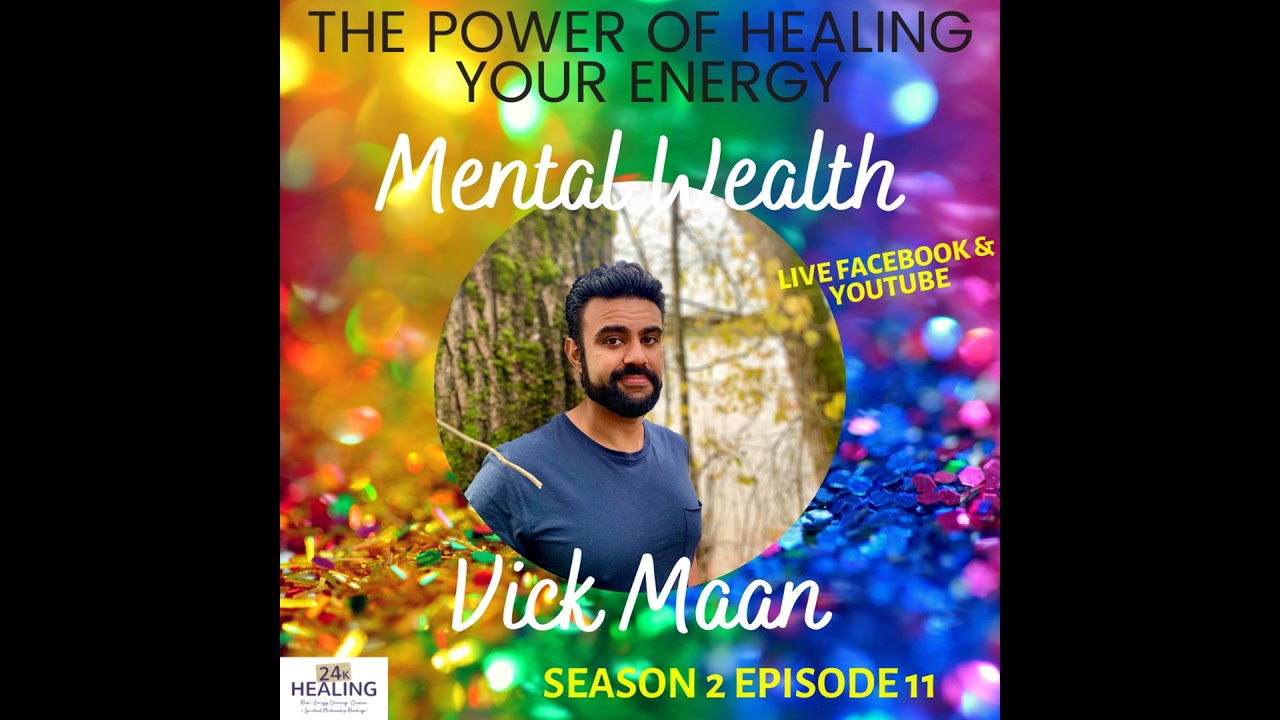
In this episode of The Power of Healing Your Energy show, host Christine J. Gold welcomes guest Vic Mann to discuss his personal journey through mental health challenges and his vision for "mental wealth." Vic recounts his early experiences of depression beginning in his mid‑teens, heavy cannabis use, and the impact of a violent loss of a close friend. He describes a series of medical interventions—including escalating antidepressant doses, multiple psych‑ward admissions, and a manic episode that led to antipsychotic injections and a suicide crisis. Vic explains how he turned to yoga, meditation, journaling, therapy, and a disciplined daily routine he calls "mental hygiene" to regain stability. He shares how he built community‑based mental‑health initiatives in Okotoks and Abbotsford—hosting yoga talks, men’s groups, workshops, and the "Mental Wealth" gatherings that bring together professionals and laypeople. The conversation moves to his current plans: launching a GoFundMe to fund physical spaces for mental‑wealth programming, offering sales coaching as a reward, and expanding the movement to normalize mental health as a cultural priority. Throughout, both hosts emphasize acceptance, truth‑telling, and the importance of routine, while encouraging listeners to seek help and join the growing community.
Chapters
Welcome empowered empaths to the Power of Healing Your Energy show. This show is all about your unconditional love, your light, your intuition, your soul's purpose. And depression and anxiety are a side effect of not living intuitively, not trusting your gut, the lost connections with your higher self and others. Your soul's purpose is here. Hi everyone, how are you today? It is Wednesday, November 11th, 2020, and it is also Remembrance Day And I just want to take the time— I already did this morning, you know, did my 2 minutes. I watched a few shows and honoring our veterans today that have served. We honor you. Thank you so much for your service, your sacrifice. And I even wrote a poem about Remembrance Day, and I might share it. And this is episode 11 of Did I plan this? November 11th, 11:11, episode 11. Whoa, mind blown! You know how I love numbers. Anyways, uh, this is The Power of Healing Your Energy show, and today is all about the power of mental wealth. Yes, mental wealth, it really is everything, especially right now. I'm sure you're nodding and going, absolutely, if I could just get control of my my feelings, you know, everything is coming full circle in 2020. And I have a very special guest, Vic Mann, and he's gonna talk to us about his mental wealth journey. And he's coming— well, he, he actually— backstory, we met, oh my goodness, probably last year through my sister in Okahtoks. Yes, Okahtoks, Alberta. We're making big connections here, but right now he is in BC, so I'm going to welcome him in now. And say hello, everybody, please share this out and let's get this conversation going. Hello, how are you?
Doing really good, thank you. I love your— I love your intro and I'm excited to hear your poem. I'm a big fan of poetry.
Oh, wonderful, wonderful. Yeah, actually, I used to write poetry when I was a kid. Isn't that funny how things kind of fall away?
And they come back.
Yes, and then I've been introduced to a group. They're called Edenshire, but they have a poetry group on Facebook called Forest of Song, and it's just amazing. They've got 2 books out already, and they're all contributors to this book. It's not just one person. So it's a beautiful collaboration. So they just inspired me to write poetry. So I, you know, if you love doing that, go for it, guys. That's— I really appreciate that. So yeah, let you know, Vic, I— if you haven't watched the video on Vic's story and, you know, his why and why he does what he does, I left the link in the comments. Go, go watch it. It is powerful. I I was in tears because hearing someone else's story such as yours and then making connections and really you bared your soul. So I guess just tell us a little bit about, you know, your earliest memories of depression.
All right. Just quickly, am I looking at you or am I looking at myself? This is my first kind of like live interview I've ever done.
You know what, it's best if you just— yeah, just look at me and— all right, it's all good, it's all good, because this goes out on video and podcast.
So yes, looking at me is just a little awkward, but, uh, yeah, so you get used to it, believe me.
It's like talking to the wall, right? It's all good.
Yeah, so, um, yeah, sorry, could you, um, ask that question again?
Yeah, what was your earliest memories of depression? Like, when did it really start for you?
Earliest memories of depression was when I was around 15, 16. And it more or less felt like just a block. So I didn't really feel sad or happy. It was just a very much like blocked out feelings.
Blocked out feelings. Yeah. So, but, you know, just reading a little bit, you before that you were You were extroverted and you were a straight-A student, but then—
Yeah, you also—
Go for it.
So growing up, I had the opportunity to kind of go to many different elementary schools. I think about 5, if I'm counting. So I just picked up the ability to make friends everywhere I went. Very class clownish, very, you know, always just wanting to make friends with everybody. And then when I was about 15, uh, 16, um, started to smoke a considerable amount of weed. Um, and, uh, the weed isn't, you know, back then in BC, because we were the bud capital of the world, the weed that we were growing back then was ridiculously strong. So it was laced with so many different chemicals just to increase, um, not only the potency but the yield. So that smoking that, you know, at that young of an age kind of took me from being very extroverted to introverted. And then that coupled with kind of the gang culture that was sweeping the Fraser Valley was a bit of a double whammy for me. So going from like a straight and narrow lifestyle to 15, 16, smoking lots of weed and then being introduced to that kind of a culture was a tremendous shock to my emotional and mental state of being. And those earliest memories, I would say, were filled with fear, anxiety, immaturity, however you want to chalk that up, you know, thinking I knew what was best for me at the time. And when it came to the depression, I got to a point just after high school where I didn't know what was going on. So I went to Dr. Wallace, who's our family doctor ever since I was little. And I went to Dr. Wallace and I remember just very brief encounters with him, not really opening up about what was going on. But, you know, really, I went in there with the kind of, uh, it was a premeditated approach. I just knew all I wanted to do was go in there and get some pills. I wanted something to just make me feel like me again. So I went there, um, he prescribed me, um, antidepressants, and then I went on that, um, and then I kept going back to him and telling him it wasn't working, and then he would double the dose and then got to the point where it was like a triple dose antidepressants, which is ridiculously, well, ridiculously expensive, by the way, if you don't want anybody to know about it and you kind of just keep it on the hush-hush. So yeah, I did that and not only drained my bank account, but it was just a very— an endless loop for me. And then, yeah, it is.
And it's also you reach plateaus? Because I've read quite a few books on that where you— they keep increasing it, but as you increase, you reach the top, you reach the ceiling.
Yeah.
So then they just keep trying to— and, and then did you have any side effects?
Uh, yeah, a few side effects. Um, uh, um, so, uh, so I had a bit of a, uh, let's say my first life crisis came when a really good friend of mine who I considered a brother, whom I was living with at the time, was murdered. So when Harry was murdered, I retreated inward and was very angry. Thank you. I've— that would have been about 15 years ago now. And at that time, it was a time where I just retreated inward and was very kind of— I had this cocktail of emotions kind of like swelling up inside of me from anxiety to fear to just frustration. And then, so, you know, Harry's death, also what the hell am I doing with my life? I went from, you know, this straight, narrow path, uh, and when I say straight, narrow, it felt like I had trajectory of where I was going to go, and I was going to, you know, have a family, get a career, you know, the whole nine, uh, white picket fence and all that, to this like, okay, Harry's dead, I'm, I'm, I'm on these antidepressants, still smoking weed. Now I'm afraid, I'm angry. I don't know if I'm more afraid of I could have died because I was with him an hour before it happened, or am I more angry, like I want vengeance? So I didn't— I was like caught in like a bit of a crossroads there. So my mom, who is, uh, like, I just, you know, I can make this whole podcast about my mom, but I won't.
Her name is Pinky.
Pinky.
Yeah, yeah.
So Pinky Um, uh, like she, like she does, she takes action and she moved me, uh, to India, uh, to live at our house out there for about a year.
Wow.
So, so I lived out there, um, which, uh, was, was a really great time. It's kind of, it's kind of like this. I'm not new to isolation. I was, all I did was sit inside the house, you know, play cards here and there with people in the village, and that was it. And I read a book on yoga, which kind of helped me fall in love with yoga, which I'm also a yoga teacher, by the way.
Wonderful. Love yoga.
Love it. Happy student again as well. So, um, that, uh, was something that then kind of, when I came back from that kind of hiatus, Go on a lot of hiatuses, by the way. When I came back from that hiatus, I went back into old habits and kind of got away from it, you know, got away from that underground lifestyle a bit. But I was still, you know, still had those habits of, you know, smoking weed like ridiculously. I was just, you know, I was chronic. Like I'd wake up just to get high. And at that time I finally, I found a legitimate job. I was working getting myself back together, um, you know, mentally, emotionally, financially. Um, and then I had a manic episode. So more of like a— so to, you know, really answer your question as to what the side effects were, when I, I kind of chuckled, I was like, yeah, it was a, it was a huge, um, side effect, which I know the antidepressants were a contributing factor but not the overall reason why I broke mentally. It was like I explained before, there were a variety of different reasons.
So it's like you're being hit from all sides, hit from all sides.
I'm just like standing in the freeway, uh, I'm like 5 o'clock, I'm just like gonna hit non-stop. And so that, um, kind of put me into this manic state which I had never felt before. So, so many people, you know, you have so much different terminology for what it is. Um, some people say, you know, spiritually elated, they say, you know, it's a shamanic ritual. In the spiritual realm. They say in the more of the— in, you know, Western culture, in the traditional sense, it's a manic episode. It's a chemical imbalance. So for me, it was like I didn't know what the hell was going on. So I— for me, and neither did my family, my support system, they're all new to this. Nobody had training prior to me going into this. So it was something that was devastating because nobody knew what to do. So my mom was just I was at the mercy of whatever available treatment there was at the time. So the manic episode was kind of like the Hulk. I was like the emotional Hulk. And just like, you know, for like weeks, you just don't know what you're saying, what you're doing, how you're behaving. My anger would be up here. My love would be up here, my joy would be up here, and it's just all over the place. And I just instantly kind of absorb any of those emotions depending on what I'm being influenced by at that given moment. So it could be from anything from media, social media, to thoughts of my past and my environment, what's around me. So yeah, that stint in the psych ward kind of, uh, um, put things into perspective. Like, yeah, maybe I sh— there's, there's something definitely going on in here that I need to address.
And what, you know, I, I was talking to my partner about that last night, that, you know, when they say put you in the psych ward, or people joke about put you in— I'm gonna go, you know, the rubber room— and, and make a big joke about it, but Yeah. What are these places like?
Okay, so I've been in the psych ward 4 times.
Okay.
I've been enough so that I can write a TripAdvisor review on it.
Okay.
On many. Okay, so in Abbotsford, very cold. I don't know if they're overwhelmed, and I can tell I'm empathic, so I understand. I can feel people's vibes. As soon as I meet them, I pick up their vibe. So I'm like, I'm in there, even in my manic state, I'm picking up this vibe of just like, they just don't care. They're just overwhelmed. And, you know, it's not necessarily all their fault. But this is, you know, us looking at mental health is still relatively new. This is only like, we've only begun to properly look at it for the past, in the past, you know, I would say, 20 years, honestly, if we're being truthful.
Absolutely.
Maybe even 10. So like, So I'm in the psych ward, you know, I'm being given medication. I have these brief visits with the psychiatrist and my team that, you know, is working with me. But, you know, I can just tell that they're overrun. However, I did spend some time at the South Health Campus in Alberta. I absolutely love every single person in that ward. Yeah, I would, I would have called it like a Holiday Inn. Uh, you know, the nurses were just so friendly. They were, they were, um, um, you know, I can tell, like, I could tell, like, just the amount of care that they put into, um, the people that were there, um, was, was— I, I felt it. So, you know, going back to the empath, uh, um, side of me, I just, I could feel their vibes, and it really helped me get out of there, like, Lickety-split, I got out of there and I just felt, you know, wonderful. Like I was able to just get back on track.
Hmm. So it was basically your soul giving you a kick and saying, this is not where you need to be.
Yeah, that's like mania in a way.
I mean, that was not the right place. Keep looking.
Keep looking. Yeah, that's what it is. That's how I look at, um, Mania specifically is like, uh, it's like an energetic exorcism. It's like I'm like, I'm like pushing everything out of my system, all the interactions and thoughts that I had, whether good or bad, pushing out of my system. Because I got to this point, uh, where it was like self-destruct mode. So pushing it all out of my system. And if we're looking at depression, it is It is like standstill, like I'm frozen. I'm like, it's like literally my body's like, no man, you're not making good moves right now, so we're not going to let you make any moves. You know, you don't get to decide what to do right now because you're not going to do anything because right now is reflection time. Yeah, so, okay, yeah, so the labeling I think is pretty big when you, if you really talk about mania or depression, you know, it does have a lot of power in how you —how you term this.
I think we just like to put labels on things. Yeah. I just want to say a few shoutouts to a few people watching. Mary, hi Mary, she's saying hello to both of us. Lynn is joining us from Manitoba. Hi Lynn. And Mary is coming back to watch on the replay because she's got to get her meditation on with Transcendental Meditation. Go meditate.
If you have to, like, this is recorded. If you have to go meditate, go meditate. Because I did that before we started. I'll do it after too for 10 minutes.
Wonderful. So meditation, obviously a really big component into your healing journey. Um, a component.
I used to, I used to, I used to say big. I used to say this is, you know, bigger, this is small, but it's just kind of like a lifestyle. It's, uh, it's like brushing my teeth. Like I'm just mentally— it's mental hygiene, right? So it's like I'm going to brush my teeth, I'm going to meditate with my mind. Mental hygiene, I like that.
That's a great way of describing it. And it's interesting, when, um, when I created the, the topic of the show and it was mental wealth, I actually created like a little infographic. This is like a couple years ago, how to heal depression and anxiety. And at the top it says Oh, Mind, Love, or Mind? Mind, Health, Body, Stealth, Spirit, Wealth. I'm like, so I pulled it out because that obviously was a sign. Yeah. To look, look at the components that I created and maybe, you know, share that with people. But thank you for, you know, bringing that out. But so when you say depression, I get that part, and then you say manic, but as you were talking, I almost see it's like a big a purge.
It is a big purge. This is like a— it's a, it's a, it's an energetic purge. It's a mental purge. It's a— it's like literally you physically— like my physical— my eyes are different when I'm depressed and when I'm manic. Like people can instantly— like people that know me, like my family, they know. They're like, man, you're just, you know, you're not you based on your eyes. So like you have physical reactions. So it's, it's very much takes over— not takes over, but it affects your mind, your body, and your spirit.
And they're saying in order to have it, well, apparently to have a manic episode, you need to be diagnosed 3 or more of the following symptoms. So you're having that inflated self-esteem or being very grandiose. Yes. Less sleep, like feeling totally rested after 3 hours. Yes. Being more talkative. Yeah, nonstop. Tons of ideas, just tons of ideas, tons, tons, all over the place. Very goal-directed activities, like just right into their work or their school, and that's all that matters. Or they're engaging in a lot of— well, they're saying, take my credit cards away because I'll just go crazy shopping, drinking, financial.
Just like you spend all your— you spend all your money. You, you know, you— I don't wear shoes. I, you know, leave my clothes everywhere. I go out in nature when I'm manic, like nonstop. I'm, you know, I'm religious and I'm not, and I believe I'm embodying, you know, this deity or this, you know, revered individual from a lifetime long, long ago. So it is like, mental labyrinth that I'm in. And it's not really a maze because a maze is like, okay, maze is like there's one level to a maze. But to a labyrinth, it's like there's riddles and there's like a maze on top of a maze on top of a maze.
And it's just like multidimensional with lots of signs and symbolism along the way.
Yeah, we'll go with multidimensional.
I, I see, I'm very, you know, I, I see things when people are talking. I can see the labyrinth and I'm like, ooh. And yeah, okay, so that's what came to my mind. Is, is it also, um, called bipolar?
It's called bi— it's bipolar, but I just, for me, I never, I, I can— I never felt right telling people I'm bipolar because people wouldn't know that this is something that, you know, I work on for myself if I never told them that. So it does change the way people look at you. And for me, it's like, not because then people would say, oh, it's a mental illness. I just look at it like it's a mental misunderstanding. So for me, it's like, okay, I'm learning how to deal with myself because people's take on what bipolar is, is like, oh, this person's up, this person's down, this person's angry, or this person's, you know, if this person says anything, not to take him seriously or her seriously because, um, they're just bipolar. Where it's like, no, for me, I, uh, specifically it's— I have— if I go through a depressive, uh, period, and if I'm going over the past 15 years of my life, the depressive, uh, side, uh, usually lingers, uh, for a little, you know, like, uh, 6 months to a year. And, uh, and then for the mania, it's 2 weeks to a month. Okay, so, so you figured out your pattern. There's that pattern. And in between that is just me. It's like I'm not up or down, and that's like 3— I got 3 or 4 years. So, um, I— yeah, that's why I'm doing this chit chat with you right now, because I got 3 or 4 years before this could potentially happen again.
So at least you have full awareness. Right? You're not dismissing it, you're not avoiding it, you're not— what's the word? Um, oh gosh, like bypassing, which is accepting it.
I like acceptance, full acceptance.
And you know what? The greatest musicians and actors and whatever were bipolar, were depressed, had anxiety. Yeah.
So beautiful, wonderful, you know, splendid beings. So, um, can I share something with you about, uh, when I was in my most depressed state to what I had accomplished after? Um, so, um, the second time I went to the psych ward, uh, very quickly I went on social media. And yeah, like, not only take away— like you said, take away credit cards— take away my social media whenever I go mad. So, um, the second time it happened, I went on social media and I was making some threats to like just drug dealers in general, just people that were, you know, people I considered evil from my, you know, perspective at that manic time. Then I was taken to the psych ward by, um, I was— I had a police escort there. So, uh, they gave me the, uh, the psychiatrist at the time gave me an option of going to jail or potentially going to jail or taking this psychotic in— or antipsychotic injection. So, um, I took the antipsychotic injection, and very quickly I was about 300 pounds. Um, and then, um, I was 300 pounds, very— not just depressed, just like, there's no— there's no— if you haven't if you haven't been through it, describing it really doesn't begin to paint the picture because it's something that you've gone through and you understand and you get. So for the people that have been there, you understand what I say when I say that it is nothing. You're just like swirling not even, you're not even moving. It's just like zero point. There's zero, there's no pulse. Yeah, you have no, like, you have no spiritual, emotional, any kind of a pulse whatsoever. You're just— so I, I was at that stage, um, was going to commit suicide, um, wrote the, wrote the letter, bought the rope.. And then I didn't. And quickly, um, from that moment— because I know we have 45 minutes and I really want to talk about mental health too, so we can go at an hour, it don't matter.
You just keep talking. And thank God you're here because, okay, you're here for a reason.
Thank you. So, so then when, uh, I started to take care of myself It was kind of— there's no other way to— I can describe it as like I humbled myself. I just humbled myself and I just took the opportunity to kind of start from scratch. So we didn't have any other— didn't have jobs.
We lost you for a minute.
Oh, sorry. Where did you last hear me?
I don't know, you must have— did you— are you on a phone or computer?
Just, just from the computer. I can bring it closer.
Well, something just— it's almost like you put a piece of paper over your microphone or something. It was weird.
Here, is that better?
I just moved it. We got him back. It's like he drifted away and then he came back. It's all good, it's all good.
So, um, from that point of, um, um, kind of turning my life around. I started to put up, uh, you know, I was, I was blessed to kind of live in my mom's, at my mom's blueberry farm in a trailer. So I, I started to put up inspirational quotes everywhere, started to journal, started to meditate, start, because, uh, started to really experiment with everything. And this was like almost 10 years ago, uh, like, you know, aromatherapy, uh, chakra tune-ups. Um, that's— I just go on Google and I was like, sure, I'll try it. And I very quickly lost the weight. Um, uh, got my, got my zest back. And then, um, started to make money again. Got a job at a fertilizer plant. Um, and then a friend of mine said he had an opportunity to work at a stucco company in Okotoks, Alberta.. And so this is for people who have been at the lowest points of their life and have come back. I went there on a Greyhound bus with a medicine ball. My friend Vanessa, well, she says that she remembers it, the story, all the time where she's like, I remember seeing you just come to my doorstep with a medicine ball and a blue suitcase. I'm like, yeah, that's all I had, like $3,000 in my bank account. And then stories start that way. Yeah, and I very quickly started to— I left stucco because honestly I'm not a stucco guy. I just, I didn't know what, you know, I didn't know what it all entailed. So kudos to the people that do stucco. We need you and you guys are vastly underpaid.
Shout out to the stucco guys.
Shout out to the stucco peeps. And so I was given— I left that, got a job at selling cars at Ford, did phenomenally well. I sold the most cars there after about 4 or 5 months, which they said that doesn't happen for somebody that's new, which I credit that to like my new zest. I was just excited. I got to wear nice clothes. Like I just dressed up and I just— the community embraced me and I just fell in love with the community. So it was you know, Okotoks is a small community, so a lot of referrals. And then I got an opportunity to be a general sales manager for a company in Calgary, developed a very strong skill set there, left, got my yoga certification, started to put on festivals for the community, started to do that every year called Yoga Talks. Yoga Talks, I remember that. Yeah. So we did that. This would have been our 5th year. And then did that, started coaching, sales coaching entrepreneurs, then went into life coaching. You know, when I started teaching more yoga, started putting on community classes, started to emcee open mics for adults and youth, put on business networking events, all in the short span of like when I really got into the thick of it, like 2.5, 3 years. So from— and that didn't start till I was like after 30 for me. So I went from— I went from like, I went, I went from here to like not having, you know, anything to put on my resume to now like hundreds of events and, um, so many beautiful connections that I've made and, um, experiences that I've had. And then, um, you know, coming to this point with mental wealth of now completely having no other purpose in my life but to build mental wealth and to continue where I left off. Because before the— before March, before we went into lockdown mode, I had started mental wealth. You know, it all started with that video that you watched. And then we started to, with the help of this phenomenal community and friends in Okotoks, we were able to start 35 events a month that either raised awareness for mental health, supported one's mental well-being. And my, you know, the alpha omega of all the events is something that I never would have imagined would have such an impact, not only on the people that came, but myself, were the mental wealth gatherings that we had. So we would have traditional and non-traditional mental health professionals hold space for people within the community, anybody from a young kid to somebody who was 60, and just coming together just to kind of express and share. And I consolidated all the local resources within the community to share with everybody, and we would just hold space and we started to build community. Then COVID happened. Happened. I had a manic episode, um, had to move back to BC to be with my family. Um, I wouldn't trade that experience for anything in the world, but financially I took a very big hit, uh, because it was— I was still in like the nonprofit phase and I started to move away from my coaching practice and got very heavily enveloped within mental wealth and was just on the cusp of starting to generate income and then got hit with the double whammy of a lockdown and a manic episode. And we were actually supposed to have this interview in April, I believe.
Yes, I believe so. But you know what, everything is in divine timing. And I just want to say hi to a few people. Sure. As well.
Uh, Flory is saying— Hi Flory!
I love you, Flory! There you go. She was waiting. She was waiting to say thank you for sharing your journey. Yeah. And thanks for joining us. Please share this out as well. Uh, Marsha, thank you so much for being vulnerable. Your spirit shows. Thanks, Marsha. It does. It does. They have, you know, uh, everyone has an aura, and, and, and yours, you know, I, I see a lot of, uh, blue in you. A lot of blue.
Thank you. It's actually my favorite color.
There we go. All right. So yeah, you got hit. You got hit double damage.
Got hit with it. Yeah. Again. But, you know, yeah, you know, okay, so I'm in the negative financially. Came back. I'm at my mom's house. I'm 35 years old. I'm, you know, not married. I don't have any kids. But, you know, I got— and I'm just saying these things, but these things, you know, were in my mind when I was, you know, after the manic episode. But I'm right now, I'm back into this. I'm back into me mode. I'm back into the mode where I'm like, okay, so yes, I can pick up dust off my shoulders and get back to work, pick up where I left off and get back to this point where I can I can, alongside my friends who believe in mental health, grow it and get to the point where we can have offerings in not only Okotoks, but Abbotsford. Yes. Where I was born. So right now I'm in the process, I'll be launching a GoFundMe soon. So I'll be raising about $100K to start a, to to be prepared for when these restrictions are lifted to start up a physical space in Okotoks and in Abbotsford and continue where I left off with those classes and the offerings and to kind of really push home the message that this goal with mental health or mental wealth, sorry, I get those two mixed up.
Yeah, hey, I think they're all the same really.
Hey, they're all the same really. Potato, potato. Yeah. So to really empower others to take action on bettering their mental health. So that's the name of the game for Mental Wealth. And I am looking at it. I started this before this lockdown. I knew this was needed way before this ever happened because, you know, the rate and, you know, like I said, earlier, we are still so very much new with our understanding of mental health in general. And I would say we're on the cusp and we're almost there to making it culturally acceptable. I believe that. I'm not— I don't believe there is a stigma because if I believe there's a stigma, then it'll just— it'll influence my direction and the way I want to take it. I'm not going to fight. I'm not angry about the antipsychotic injections. I'm not angry at the medical system. I'm not angry, you know, at anything that's ever happened to me in my life. The people that murdered Harry, the money that I lost, the friendships that were broken when I go manic, the people that I don't see when I'm depressed, like the hurt, the pain, the feel. It absolutely— I've come to this point where I'm neutral. I am neutral. With this because I understand that through this collective effort for all the people that work in the field of mental health, we are on the cusp of making this culturally acceptable so that we can importance it just like we do our spiritual and our physical health. In the '60s, we had a big movement spiritually and people thought it was woo-woo and they're like, what the hell is all this hippie-dippie shit? I don't understand what's going on. And then all of a sudden we have yoga studios on every corner. Same with physicality. Back before it was popularized, there were— nobody was working out. Everyone was smoking cigarettes and not really paying attention to their health and drinking like it was going out of style. And now you can still do that, but now at least you work on your body. So now it's like physically acceptable. Men, women, you know, people that are non-binary, everyone is now taking a more of a deeper look at their physical and, uh, their spiritual health. You know, and mental health is on the cusp of that. It, it is— it's not something that, uh, that is going, um— it's not something that's going to disappoint anymore. As I say, there's been a lot of disappointment.
No, it's not ego-based. Yes, that's the— that's what the disappointment has been, and that's why we're here. We finally realized that, that will not sustain us. It's not gonna work. No, not— absolutely not. Wow, you got some big, big goals. So, um, how— I guess, how can we support you in what you're doing?
So what I'm going to do is I will release the GoFundMe. It's been private. I've been sharing it with a few friends, and, uh, just because I just didn't feel ready, I wasn't at that point, uh, to push it forward, but I'm going to release it soon. So it'll be a— it'll not only will it be an opportunity for people to donate if they feel that this cause is something that they believe in, but also it's rewards-based. So I am a coach, so I am a sales coach for entrepreneurs. Donate to the cause and then receive sales coaching. And I have been teaching yoga classes here and there to my friends out in Abbotsford, so I'll be teaching dropping yoga classes, coaching, as well as grace— gratefully accepting any donations. Oh, that's, that's wonderful.
And we'll definitely share the links. And you know, when you're ready, of course, when it's ready to launch. And Marsha, thank you again. Marsha, so excited. Your spirits are guiding you as you have so much to share and teach to others. Many are waiting to hear your message.
Marsha, did we just become best friends? That's two comments now.
Marsha, she is our cheerleader.
Um, I love you, Marsha.
I actually had the pleasure of— uh, she was part of my mentorship for 4 weeks. So yeah, she, she's an amazing lady out of California. So we love you, Marsha. Thank you so much. And, uh, if anybody is ever, you know, struggling with depression, anxiety, bipolar manic episodes, please share with us, please reach out, please get help. Let's all connect. We're here to support each other. You're not alone.
Wholeheartedly.
Definitely. So where, um, I guess, where do you see— like, why do I keep— I keep feeling like there— is there maybe a men's group or a men's component to your work?
Yeah, so, oh, so I'll describe the 35 different classes we have. We had yoga classes, we had meditation classes, we had a men's group that just started. And my friend Corey in Okotoks, just, he took over it when I just kind of disappeared after my manic episode. And he's been doing such phenomenal things. It's so inspiring that they've been meeting, they've been They've been online, very active online in the group. And yeah, we, you know, I was— because I was emceeing so many events, I had the opportunity to speak about it at these events as well, and really get the message out on mental health. And it was, you know, I looked at it as, yes, there was a men's group, but I realized if I wanted to have as large of an impact as I felt that I could have, I needed to place myself in all these different realms, if you speak. So in the spiritual community, the arts, music community, the small business community, you know, I was doing free sales coaching. Like there were sales meetings and entrepreneurs would come and I was you know, just giving, um, free guidance. But it all had to do with the mind. It's the, it's the mindset, you know. I— that's what I, that's what I mean when I say we're on the cusp of it being normalized. Because Olympic athletes have mind performance coaches. You look at kings and queens of the old age, and they would have counselors guide them to make decisions. Even mobsters have consiglieri, you know, like they have people to confer with to make decisions. So that's, that's this muscle right here, that's your mind. So I knew that it did pertain to every kind of event that I was doing because, um, people, you know, if you talk on in terms of success, um, they will tell you it's when they got their mind right. And when you get your mind right, then you can, then you can go accomplish whatever it is that your heart desires.
Yes, I, I truly believe that. And it's not about controlling your thoughts And, you know, waking up on the— I used to say this— I'm waking up on the right side of your head. Yeah, when they— yeah, your head. Yeah, like, how are we starting our day with intention, with gratitude? Yeah, feeling blessed, having joy, and in the small things, um, as well. So what, what, what do you have, like, a, uh, a mental wealth routine?
Yes, I do. So, um, I wake up and my meditation is an extensive— like, it's— I don't think it's, you know, I'm just saying it's not extensive because I hear, you know, people, you know, spend quite some time on their meditation. For me, it's like a 10-minute, maybe 20-minute a day. Um, I wake up, I sit there, I drink a liter of water, and then I will kind of sit there, I'll put on an om chant for 10 minutes and I'll just close my eyes and I'll just steady my breathing. I take out my journal and I journal. I'm pretty good with my journal. I'm about like 70% average for the week sometimes. Yay! I love that. So yeah, got a good B+ there. And then I'll just kind of journal out what did I do yesterday just to kind of work on my memory, but also bring me into the present. So like, Vic, this is what you did yesterday, this is what you got going on today. So kind of play personal assistant with myself. And then go to the gym, which is my— it's another form of meditation for me to kind of get into that zone. And that, I would say, is what I do that is more structured and routine. But the other thing I do is I see a therapist every week now that I'm committed to, that I wasn't necessarily— like, I used to go to therapy before, and, you know, I got to this point where I was just doing so much and helping so much all the time that I, you know, it is true, you know, those that, you know, if you're helping others and not yourself, you're kind kind of— I don't know, there's got to be a saying in there somewhere, but it's not good. And, uh, so now I am seeing a therapist once a week.
Um, yeah, there is no stigma. There is no stigma.
It's like I'm doing like a tune-up, a mental tune-up. Absolutely.
You tune up your car. Do you let it go to, to, you know, to crap before you do something about it? Or do you keep the maintenance? It's the maintenance.
It's just maintenance. Yeah, it's maintenance. It keeps my mind so sharp, and it's just like I love it. And I, um, maintenance, maintenance. So I'm doing all my maintenance, um, and I, um, what else do I do? I, um, I write a lot of like inspirational quotes.
Yeah, I do as well.
I think something I hold on to, my little routine there.
Yeah, it's like your daily manifesto.
Yeah, at first it didn't feel like anything when I was depressed. I just like, all right, this is what you did before. You kind of just wrote down quotes, you put them up on the wall, and then, you know, then you felt really good. And like, I swear to you, for months it didn't feel like anything. But now I just, I feel them. I just let them like permeate in the room, and this room is just buzzing with good vibes now.
That's who you are at soul level.
Yeah, yeah. So that it. And, and, um, uh, the other thing I do, I know there's a lot I probably mentioned, but if I can say one thing to people that are listening, it's just be truthful. Just tell the truth. Just tell, you know, not yes to others, but more importantly to yourself. So when I journal, I'm literally just trying to tell myself the truth as to how I feel, what I'm planning on doing. And then there's like this acceptance and this wave of calm washes over me and then I just, Go on with my day. So let's just be, just be truthful. It'll set you free, as they say.
Yeah, don't pretend to be anyone else because there's only one of you. Yeah, right. I love that. And I bet your diet is good though too, right?
It's, it's, it's like, uh, it's 80%. Yeah, diet is a big thing too. It's, uh, it's, uh, 80%, I would say. I'm, I'm a good, good, you know, good most of the time. Yeah, we have cake, you know.
No, it's all good.
I, I just found if we're gonna get like, if we're gonna get into it, I found for myself specifically if I eat, you know, 4 to 5 small meals a day, I've run like, I've run so well, like mentally, physically. Like I just break them up and I'm just like, I feel tip-top.
Yeah, that's part of the, the body maintenance as well, just keeping it going.
Maintenance, maintenance.
Yeah. Uh, Marsha's just saying thank you so much, and Flory's saying best coach ever. Help me find way and stand in my truth.
I love you, Flori.
I love that. I love that. All right, well, we're gonna wrap this up, but is there anything else you'd like to say or to share? Um, of course I'm going to leave links so people can get a hold of you and follow your mental wealth campaign on Facebook and Instagram. Yeah, uh, follow it.
Um, within the next week I'll release the GoFundMe. Um, I am a coach, so, uh, sales coach for entrepreneurs, but also, um, when it comes to, uh, the life side of things, um, I'm a really good listener and I, I guide from my own experience. So, um, that's something you can reach out, uh, to me for, um, which will go towards the GoFundMe, of course. And then, um, other than that, I just wanted to say Thank you, Christine, for letting me come on this platform and giving me the opportunity to kind of explain where I'm at, because I made a post, uh, to people on social media not too long ago. But I, I'm, I'm much better with my talky talk than I am with my, with my writing. So I, I, I feel very grateful to the people that have been with me, uh, whether I've been manic, depressed, or just regular old me. Um, my day one people, my family, and I am hopeful that not only are we going to get through this lockdown and build collectively a society that is going to help and nurture all of us, but I am hopeful in myself.
So yeah, thanks. And that's all that matters. And we have complete faith in you. It's already done. Act like it's already done for you.
I'm acting like it right now. I'm just like, boom.
That's right, boom. And I'm going to put you on the spot. What are you reading right now? Because I love books.
These are the two that I'm reading right now.
Oh, The Four Agreements and Think and Grow Rich. Nice, nice books. I love that, I love that. I mean, anyone that knows me, I'm— well, I'm reading A Course in Miracles, the Bible, stuff like that right now. So yeah, but no, you know, normally I'm reading some type of self-help book. So yeah, all right, well, it was amazing having you on the show. Thank you so much, Christine. Yes. Thank you for showing up and showing us and exposing and being vulnerable, and that gives other people the freedom to speak their truth and vulnerability as well. And that's how we bridge connections with each other. And thank you for that. Thank you for all the work you've done. Thank you. Thank you so much, guys. I love you. You have an amazing week. If you have any comments, questions, leave them below. Even on the replay, we're not going to leave you hanging. And please remember, healing begins where the ego ends. Take care.
More from Christine










Your coping skills didn't fail you, menopause did #menopause #health #plantpowered
