The Power of....Rajan Shankara! A former monk shares his story!
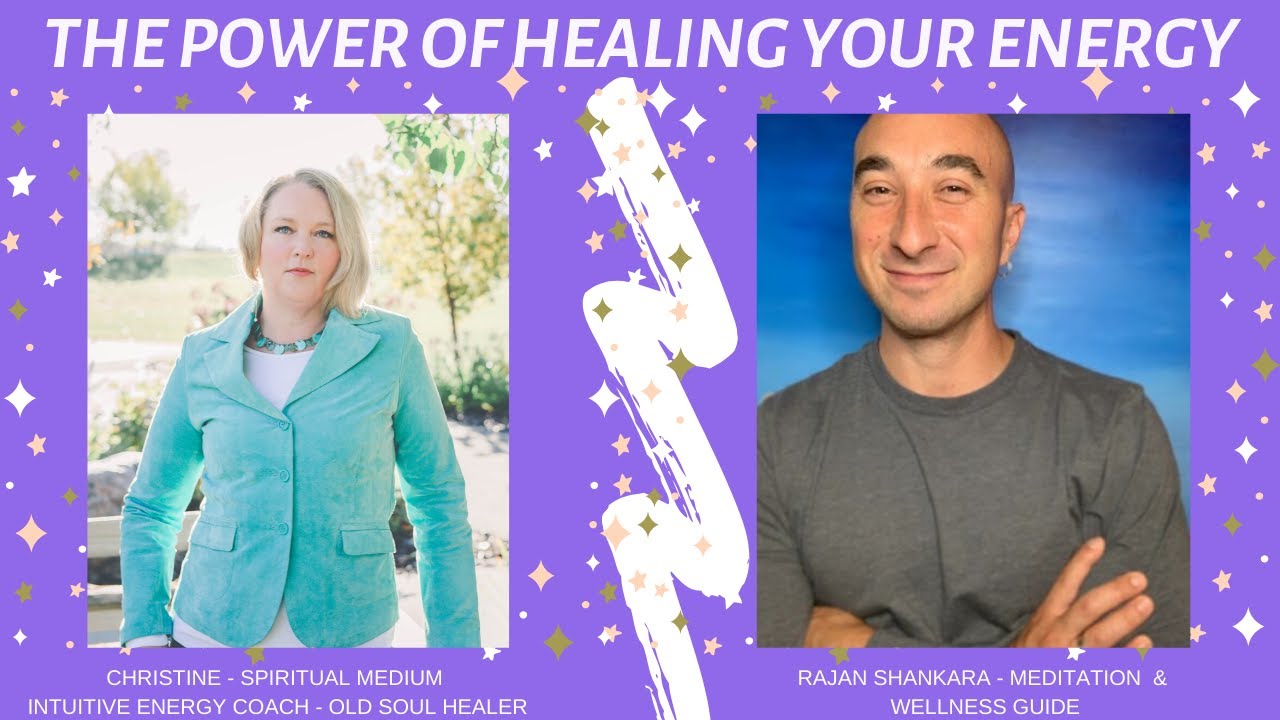
In episode 28 of The Power of Healing Your Energy Show, host Christine J. Gold interviews Rajan Shankara, a former monk who left a successful asphalt business at 19 to pursue spiritual awakening. After reading Autobiography of a Yogi, he traveled to Kauai, Hawaii, where he endured a series of tests—including manual labor and a six‑month trial—before being accepted into a 12‑year monastic program. Rajan describes the regimented daily schedule (early wake‑ups, yoga, meditation, work, gym, and lights‑out), the teachings on Kundalini, chakras, and the importance of releasing desire in meditation. He discusses the concept of the “dark night of the soul” as ego dissolution, and how he now translates those insights into modern roles: author of four books (the upcoming Everything Is Your Fault), online coach, fitness/health expert, and co‑owner of a coconut‑water business. Rajan shares practical meditation tips (upright posture, avoiding lying down, focusing on breath), his current offerings (30‑day meditation workshop, online courses), and his vision to bring monastic wisdom to people who have never encountered it. The conversation also touches on his experiences writing for outlets like Good Men Project and Elephant Journal, his future relocation to California, and the overarching theme that healing begins where ego ends.
Chapters
Here we go. Hello and welcome to The Power of Healing Your Energy Show. It's all about your light, your energy, your healing. And did you know depression and anxiety are a side effect of not living your life intuitively, not trusting your gut, the lost connections with self and others? Hello, fellow empaths. I'm Christine with 24 Karat Healing. I'm a spiritual medium, intuitive energy coach, and old soul healer. And this is episode 28, The Power of Meditation. And I have a former monk sharing his story, all about Rajan Shikha. He left the world at 19 years old to go to a monastery to become a monk and study his mind, find out what meaning and purpose was, and if meditation could take him to higher states of consciousness. And having lived as a monk for 12 years, he is now back out in society as a world yogi to teach others how to control their mind, body, and emotions. Rajan was trained for 7 years in monastery landscaping, construction, electrical, woodwork, office work, and vehicle maintenance. And then he spent another 5 years in a monastery office learning clerical skills, travel management and coordination, team leadership, editing, writing, publishing, and being part of Hinduism Today International magazine team of senior monks and Manage 16 Pages. And he's also currently a meditation guide, award-winning writer, author of 4 books, self-development mentor, online coach, fitness and health expert, and business owner. Hello, Rajon. Hello. Thank you for joining me. Very much. Yes, yes. Now, I just, you know, when I read your bio, 19 years old, I mean, the first thing that comes to my mind is you're so young. Where were you when you were 19 and how did you make that decision? Like, what transpired for you to say, okay, you know what, I'm going to go and become a monk?
I was in Indiana specifically, um, since I was born in Chicago and I eventually migrated over to the next state. And I had an asphalt company and was very successful, but I was also extremely unhappy and realized at the age of 19 that money doesn't make you happy as a foundation. Um, if, if all you're depending on is money to draw forth, um, motivation and inspiration in your life, it will eventually fade away, and you will be left wondering, um, what's going on, what's going on in the world, because it's essentially selfish. I was living a selfish life, and my unhappiness, uh, with you know, my life and kind of brought out these deep questions, I guess. You know, why do I exist? Why am I here? What am I doing? What's the point? And so my business partner and friend gave me Autobiography of a Yogi by Paramahansa Yogananda, very famous book. I'm sure you've heard it. And Maybe you've read it. A lot of people, uh, yeah, a lot of people have read it and it hasn't really, um, you know, they close the book and then start the next one. But when I finished that book, I decided that I was to go off into the jungle and, um, see if meditation was real. And so I gave my business away to a friend who needed it, and I did. I left the mainland and went to the jungle. Of Hawaii.
Hawaii, okay. Were you, um, now I know that there's different islands in Hawaii.
Um, I was on the smallest island of Kauai.
Oh, Kauai, okay. All right. And were you— did you just let— find a place, or how did— how did that work?
Well, my sister said she would go with me, um, because she had lived on Kauai before. She lived in the jungle, and when she was my age, she went on a— you know, my sisters did what I did, um, they went on a soul-searching journey and traveled the world and things like that. So she said, I'll go with you and I'll stay for a month and I'll show you how to survive on the island. And, uh, she, she did in fact come with me and show me how to get coconuts from trees and where bananas were and things like that, and We stayed in remote spots around the perimeter of the island, uh, 3 days at a time, and we were just meditating and talking philosophy and talking about life and things like that. It was, it was an amazing period of my life. Um, and it's funny, one of my biggest fears as a child was to, uh, was homelessness. I never wanted to be homeless. And in fact, diving into homelessness was one of the best things I'd ever done. And I knew the monastery was there, but it was in the back of my mind. And towards the end of the month, my sister—
self-development. Go ahead.
My sister recommended that Um, I go check it out because she didn't— she probably didn't trust my survival skills, so she would feel better if I could go and, and get training inside of a monastery. So, uh, I ended up going on a tour and asking about training and this and that and was denied. So I went back to our campsite and told her that I was denied. She recommended that I call home, and so I did. I called my mom, um, and my mom is a very spiritual person. She's a Wiccan high priestess, so she trained me in meditation and understanding nature and, um, kind of the laws of the universe, that, uh, the universe was a part of my consciousness. And so thanks to Mom for that. So I said, Mom, they, they denied me. Uh, it doesn't look like I'm gonna be in the monastery, but that's fine, I'll be in the jungle. And, uh, unfortunately never talk to anyone again, and I'll see you later. And so she said to go back and that they were testing me.
Yeah.
And so sure enough, I went back and, and, uh, every day, and I was invited to have tea with, uh, one of the senior monks. And after about 4 or 5 days of having tea, I called my mom and, you know, caught her up to speed and everything. And she said to ask them if I could do work and to make their mission my mission. She said to not go about it selfishly and just say what I wanted, but to actually, uh, if I made their mission my mission, then they might reconsider their decision. So I went back the next day and I asked if I could, uh, I asked the senior monk if I could work and stay after tea, and he had me, uh, go out into the forest near his office and pick up sticks on one end and put them on the other, the other end. And then when I finished making a pile of all the sticks on the floor of the forest, I had to take that pile and move it back to the other side of the forest. So I did that every day, uh, for about an hour a day, and someone would come out and, and tell me to go. And then one day, um, they— after I was, uh, finished picking up sticks, after about 4 or 5 days of that, uh, they said I could stay for a 6-month training, and that turned into 12 years.
Wow. Wow. So that was a big test of the ego.
Yes.
To say, you know what, why am I picking up— I, I could actually, when you're describing, I could see you doing it. And I'm like, that took a lot. Many— most people would say, what the heck, right? And walk away, right? Wow, wow, amazing. What a story. Um, they obviously saw something. So, and yeah, it was a test, just like life. It's, it's a series of tests.
I asked my guru, um, like maybe 8 years later, why they let me in. Because you're not supposed to come in that way. That I was the last person that they actually invited in that way. And now it's, it's quite a challenge to get in. You have to do about 6 months of, um, testing and things like that. Uh, and he said, well, you know, I was expecting him to say some grand mystical answer and, and He said you already had a shaved head, so it worked out.
Oh geez, he fit the curve. Oh, that's too funny. Uh, yeah, we've— people just gonna say hello. Uh, Lynn is joining us. She's saying hello, and thanks Lynn for joining. And remember to share this out, guys. And Liz as well, she's saying that's tenacity. Yeah, very persistent. Amazing, amazing. So did you, did you stay there for 12 years? Didn't go anywhere else?
Uh, the monks traveled around the world, but, uh, our headquarters, the headquarters is in, uh, Kauai, Hawaii.
Kauai, Hawaii.
So I did travel.
Actually have a— okay, okay. Where, I guess, um, and you seem to have ties to, um, is it India? Is that—
we did spend time in India. I, I went there in 2009 and, um, we stayed in South India. And every, every monk ends up in India for a little while.
And, and why is that, I guess, for— to someone that has no idea what that means? Sure.
Our, our lineage of monks is, uh, goes back over 2,000 years to India and Sri Lanka.
Okay. And so would you say that's like the hub, um, I guess, say, you know, if someone is looking for, um, spiritual knowledge, spiritual awakening, spiritual learning, would you recommend that, uh, in India?
Yes, that's a good question. Um, I don't think so. I don't think most people can navigate India appropriately and understand what's going on. I, I think it, it could be a little dangerous too. Um, I was lucky because I got to go with another monk who spoke several different languages and who could navigate, uh, but if, if I was— if I didn't go there as a monk, um, I think it would have been a much different experience. And I think if someone were to want to pilgrimage to a holy place and find themselves, uh, I'd recommend going somewhere where they could, uh be alone.
Yeah, no, that anywhere, that makes sense. Yeah. Um, well, because I guess folks get the idea in their head that, you know, this is the spiritual hotbed or of awakening and enlightenment. And I, I used to think that way before I, you know, started my journey in 2018, so But now I know it's within, it's right here.
Did you go anywhere as a pilgrimage?
Mainly to the mountains, that tends to be my spot, or the ocean, anywhere that there's a big body of water. And that could be my bathtub as well. So yeah, yeah. Or walking barefoot outside. I You know, connecting to nature as well. That's, that's a huge one. You mentioned that your, your mom had trained you in regards to the meditation and the nature piece. What was that experience like?
Okay, so ever since I was a child, my mom has had a covenant, and she's always had students, and in the Wiccan religion, uh, well, the Wiccan faith. And she's always held events and circles and worship ceremonies in our home. And I guess having a temple inside your home since a young age has an impact on you. And, you know, she— I think early on I would you know, show interest. And so she, uh, would, you know, train me to sit and meditate while they did their work and, um, you know, did the— their corner— cornering and things like that. And, um, to this day, I don't— I don't know the Wiccan faith that well because of its extreme complexity.
Yes.
But, um, she would share the most important pieces that, uh, she thought she needed to in order for me to, uh, have a well-rounded education in, in both spiritualism and, um, I guess just normal, uh, intellect. An understanding of the laws of life. And so she, um, I think she did a really good job at that.
Yeah, thanks, Mom, right? Uh, Patty is saying hello, so hello to Patty. Thank you for joining and thank you for sharing as well. Much appreciated. And, uh, let us, let us know if you have any questions for us, but I mean mainly for my guest. If you want to learn about meditation, I guess, what is the biggest— I guess, what did you learn the most about meditation? I guess what would be— because, you know, I have people that come to me and say, I don't know how to meditate, I don't know where to start. What would be your— I guess you have a few tips?
Hmm. Well, what is the biggest thing I learned about meditation? Um, that's a really good question. I think I learned that our own desire to be liberated is our— possibly our biggest barrier to actually succeeding in meditation. And as the yogi sits there and tries to meditate if they have a desire towards something, if they, if they think that they want something from meditation, uh, that in and of itself will cause an issue. Because it's usually, um, when we let go of everything, even, even desires to be successful in meditation, that we have the upper hand and start to have the ability to control our minds much better and our emotions. Because meditation is not about getting anything, it's actually about losing everything and then seeing what's underneath everything, seeing what's already there. Um, if I were to have a A few tips, I would say, of course, you don't have to meditate on the floor, um, but I don't recommend laying down. Um, I think that that's excellent for relaxation, but in terms of, um, actually moving, uh, Kundalini, I recommend sitting upright so that the spine a chance to have a certain orientation.
And I mean, I, I'm somewhat familiar with Kundalini. What is Kundalini? Because you hear the terms and then it's attached to yoga as well. What to you, what does Kundalini mean?
Kundalini is the life force, um, flowing through your body and It is your own energy.
Makes sense. Yeah, go ahead.
Essentially, essentially what we have to do in meditation is, um, you know, awakening, uh, Kundalini simply means linking back up with what you really are. And we, we were out here. Our awareness is outward.
Yeah.
So we, we shut everything off out here and turn inward for the first time in our life. And once we can get past the pains and aches of the body, and when we can get past our own mind and the traumas and unresolved experiences in our history, then what happens is we link back up with spirit, and, and that takes a certain amount of energy, that takes a certain amount of will, and our awareness is usually caught somewhere— our awareness is usually caught somewhere in the belly. In the Manipura chakra. And so the more we raise consciousness, it's basically the more the Kundalini is, is raising in, in awareness.
Yeah. And I, I mean, I, I work with chakras as well, so I, I exactly know what you mean. And that it's the light, however you see that light, it's already there and you can work with it, um, You know, I see the upper three. I see things a little differently, but Kundalini, I get it. It's, it's all within. We're all light, we're all energy. And that's why I do this show, is once we get that energy piece, we get, we get us, we get our lights. It's like, um, it's like a light switch, just boom. Uh, and, and you can't, you cannot turn it off once it's lit up. I think that's why why a lot of folks have that are starting a spiritual journey or opening, awakening, whatever you want to call it, have a lot of symptoms at the beginning. And then they're— then there's fear. They don't want to continue because it's scary. I get it. But just—
yes, it is.
And it's a routine. I also see it as a routine because I'm, you know, very important for mental health to have a daily practice. And I'm going to guess you have a daily practice.
Oh, yes, yes. Monks, the monks trained us in— so it was a militaristic organization. It was very regimented and disciplined. And we had— we started roll call at 5:30 in the temple. Uh, but most of us were up by 4, uh, doing yoga and, uh, meditation from 6 to 7, um, work from 8 to 12, cleaning till lunch, which was at 1:08, um, and then, uh, training in the gym until 3 o'clock and back to work at 6, and training from 6 to 7, and then lights out at 9. So, uh, if you don't have a routine, um, in the beginning at least, uh, you won't be able to withstand the tyranny of your own ego.
Yeah, that's, that's important because ego, it totally does. Ego likes to control everything and, um, and wants you scattered, I guess, and, and, um, distracted. That's the word I was looking for, distracted. So if you have a— I call it a, yeah, self-love, self-care routine. And it takes practice, and you have to do it every day, and you have to show up every day. Um, and I notice if it's, you know how they say, did you get out of the bed, out of bed on the wrong, you know, on the wrong side of the bed? It's the same idea. It really starts my day. I don't want to say perfectly because there is no such thing, but it's with intention. I guess that's what I'm looking for. So you also— that's a good word, intention. And I honestly, I feel that is why we're here. It's not about goals. It's not about making money. It's the intention for connection. Oh, I just, just came to me. Intention for connection. Okay, that's going to be a post somewhere.
Write that down.
Yes, write that down. And it looks like you have, you publish articles through the Elephant Journal as well. Took a quick look, and I think one that I was quite drawn to was The Dark Night of the Soul. I've heard that, that I actually follow Michael Murdad. I don't know if you know who he is, but he wrote a book about The Dark Night of the Soul, and, and that's all about spiritual awakening, is it not? I mean, how do you see The Dark Night of the Soul?
The Dark Night of the Soul, also known as the death of the ego, is a painful spiritual process where our ego realizes when it's losing, um, control over your awareness. And when the host, I guess the, the soul, um begins to, um, take control over, over its own life, the ego, um, fights back. And that's a very painful experience. And I believe the transitioning of our higher nature with, uh, over ego is um, can be explained as the dark night.
Yeah.
And it can take months or years to get over.
Definitely. Um, and I think there— people see ego as the enemy. I— maybe at first, but until you learn to work with it, just like anything else, like, that's why, you know, a lot of us are blocked intuitively because it sits here. In the, in the third eye. That's how I see it. Now it's here because it's— we have dark and light. That's who we are. And many times, at least from my life, and maybe you, you might resonate with this, it led my life, the dark. And now it's the other way around.
Yes, we don't, we don't completely get rid of ego, right?
We—
everything is ego. We need ego. Um, but once we understand that, that it is everything, and we have some sense of who we really are and that we're not it, and we regain our identity back, um, as this new, uh, spiritual person, as this soul, then everything becomes quite easily to— easy to manage. And, and, uh, ego becomes an effective tool that, that eventually just helps you, um, stay alive and live, live an effective life on Earth.
Well, exactly. Um, I, I also see it in relation to the solar plexus as well. That's like your I Am. You step into who you are. It's your power center. Um, instead of it sitting here, it's, it's kind of the bridge between, you know, the, the bottom 3 chakras, the heart, and the top 3. That's how I, that's how I associate it.
Um, that's interesting.
Yeah. Um, and then, you know, they say as well there's, um, blocks. You have blocks. I see it more as gaps in your energy, especially if you're not aware of your energy. And empaths or sensitive folks, um, leak that So once they figure it out, which I did, I didn't realize I was doing that. I was feeding narcissists, I guess would be the word. Yeah, so that, that's an important correlation. But, um, Good Men Project, what's that about?
I wrote for Good Men Project for almost maybe 6 months. I had a weekly column. Maybe not quite 6 months. So I, I was writing for 5 online journals recently, and before I kind of, uh, withdrew and started to put more focus on my own blog. Um, and yeah, Good Men Project, Medium, uh, Shivana East, and Elephant Journal. Are all online journals that will take a writer in and publish their work. So that was one of the outlets that I used to write for.
Yeah, writing. I love writing, but I know what you mean. Is that why you pulled back? Because after a while it feels like you're being pulled in too many different directions? Yeah, yeah, yeah. I get it. And if you love to write like I do, like you do, It's important. You don't want to feel like you're— like it's mundane, I guess would be the word, right?
Yeah, I had to produce something every week, and, um, I just— I realized I was, um— it's probably better to start there and get your name out, but then after you get rolling a bit, to focus more on your own individual outlets. Yes, for you.
Yeah. So, um, you're— what are you doing right now? Are you mainly— are you working with clients? Are you doing groups, seminars? What, what are you doing right now?
Right now I'm working with individual clients in their home.
Okay.
I also do, uh, online training with people around the world, and I, I tend to lecture on Facebook to people's private groups.
Um, okay.
And right now, for some reason, there's a big pull in the UK, so I, uh, have a big following out there, more than the, the US. And in the US, it's mostly in California. Okay. So, uh, I've actually been, uh, recently been offered a career opportunity in California, so I'm I think I'm going to relocate from Colorado to, uh, San Jose.
Oh wow, that's a big, big transition.
Yes.
Yeah, but exciting.
Yeah, it is exciting. When I first got out, uh, September 2018, of the monastery, I went to Denver, but most of my students were in California, and a friend of mine helped me kind of get started and get my name out there and He's in California and it just, it makes sense. Everyone's kind of wondering why I'm still in Colorado. So it was kind of scary, I think, to think about the jump to go to California. But my friend just kind of said, you know, it's, I'd like you to come out here and work together with me.
Oh, and that's beautiful. You have support. That's, that's amazing.
Yes, exactly. And I hope to start writing another book once I get this last one out there.
Nice. And where can we find your books?
I am going to self-publish this, this last one, number 4, and it's in the hands of a book my friend Abuza Book Designer. And then once she is finished, I am going to just put it on Amazon.
Yeah, I know quite a few people that, that do that, and they're finding great success. I mean, just to have it out there and people are reading it, really, at the end of the day, that's, you know, most important, right? Well, congratulations on that. Uh, what's your, what's your fourth book about?
Uh, it's called Everything Is Your Fault, and it is nice.
I'm sorry. No, don't be sorry. I hear responsibility in this, but go ahead.
Yes, it's, it's about, um, how— it's, it's the main things that I learned as I went from this 19-year-old boy in the monastery to a man. And learning how to work with other people and taking responsibility and ownership and using that philosophy to basically help me work with other people much better and become effective and powerful in making a group mission work. As efficiently as possible. And so yeah, it's about, it's about taking leadership of your life by using ownership and responsibility and trying to make things your fault as much as you can so that you actually have the power to change something. Now, it's a bit nuanced because it's not that, you know, the things, um, for example, a lot of people have issues with their parents and their parents hurt them in some way because parents are not perfect. They're just having kids and trying to do their best.
A lot of—
yeah, a lot of people get damaged along the way. It's not necessarily your fault, but if you, if you live, um, inside, um, your past traumas and live inside, uh, grudges and, and, um, uh, resentment or wishing that something is different.
Yeah.
And it is your fault that you haven't, uh, moved on and been able to change things. So you don't have to let anyone else hurt you years after the fact, like having a poison run through your, your vein.
That's right. You don't die from the snakebite, you die from the poison.
Exactly, exactly. So the book is hoping to help some people who are giving their attackers the power instead of taking it back for their own selves.
Exactly. I love that. I love that. And no more victim mentality and no more finger-pointing and get out of that blame and shame game, I guess. Yeah, because it's like you're chasing your tail like a dog, just around and around you go. Um, and I guess, what was your— um, I'm gonna have to put the links in for your books. If you can maybe leave it in the comments if people would like to read them.
Uh, the, the previous books, yes, are actually— those were written for, um, groups. Okay, so those weren't actually published for the public. People have asked that I publish them, and so I'm thinking about it.
Okay, well, we'll wait for when your fourth book comes out there and it's ready to go, and I will make sure we share that out because I'd be interested in reading it. I mean, it's kind of cheeky, tongue-in-cheek in a way. I like that. It doesn't make people— it doesn't make you feel defensive. You're like curious, like, what do you mean? But kind of laughing at the same time because you know what he means. Yes. So at the beginning of the show, before we started, I asked you to think about what the dream— we had the dream talk. So I'm not sure if you're ready, if you had a chance to think about it. But I'm going to be asking you, what is your dream? And how can we collectively make it happen?
So my dream is to continue being a philosopher. Except instead of for people that already understand what I'm talking about, It's— I want my, my work to go to people who have never heard it before. And the, the look on a client's face when they find out they don't have to be stressed out anymore, or they don't even have to entertain the idea of being hurt anymore, and then they can move on. It's one of the best things that I'm sure you've, you've seen before in your own work. Yeah, um, it's the— to see someone liberated from their own shackles is what wakes me up in the morning. And especially young minds. Um, in the monastery, I excelled at working with, with, uh, young people on their purpose and mission in life and what their meaning is supposed to be. That, that's really where, uh, some of my specialties are. I've mentored over 500 people now, and I, I would like to keep doing that on some sort of, uh, you know, small and intimate scale. The way that everyone can help with that is basically to— I think everyone as an individual can help the group, um, by living the best they can, you know, and, and being a light in the world instead of someone who blames, um, someone who complains about things. But if you yourself are an effective, powerful, um, you know, machine, if you're walking around producing smiles instead of frowning and just listening to people, uh, then the world would be a much different place.
Yeah, come from, uh, compassion. Yeah, empathy, compassion, uh, grace, gratitude, curiosity, like finding out about someone before making a judgment.
Yes, absolutely.
Yeah, 100%. And I wake up the same way. That's why I, I get up in the morning, how may I serve? That is pretty much the first thing I, I start with. Beautiful. So we're gonna, we're gonna make sure, you know, we're gonna follow along on your journey and see see, you know, how we can support you and support each other. And it looks like you've also done, you know, obviously online coach, fitness, health expert, and then you say a business owner. Do you have multiple businesses, or was this something that was when you were 19, or are you considering what you're doing right now your business? I'm just, I'm curious because some people have multiple businesses right now?
I help my, uh, girlfriend with her coconut water company, so we both kind of team up. And, um, we're in 6 states right now, and we're hoping to go nationwide sometime this year.
Oh wow, congratulations! Love coconut water, it's very good for you. I love coconuts, period. I just— yeah, well, and then good luck with that as well. Um, now is there anything, anything else you'd like to share with us. I'd like to wrap this up. I also want to let people know, if you're on the replay, please let us know. Please comment, ask questions. Both Rajean and I will interact and get back to you. And if this resonated, please share this with your friends and family. All right, so I'm just— is there anything else you'd like to know? Do you have any up coming courses or events, or I'm gonna leave your links below as well. What's the best way to get a hold of you?
Um, if you Google my name, uh, I'm the only thing that comes up. And so my website has a contact form which goes to my— directly to my email. In February, which is in a few days, I'm doing a 30-day meditation workshop shop.
Okay.
And people can sign up, uh, for that at my— they can find the sign up at my website. And I, uh, I, I make online courses and lectures. So if anyone's— if you want— if anyone is interested in the, uh, Eastern philosophy, um, in a university-style lecture course, those are available at courses.rajachankara.com. Also can be found on my main website, rajanshankara.com. Um, and those are, uh, some things that I've spent a long time developing and I'm really proud of.
Very nice. I, I know what you— I'm actually working on a few courses myself. I've got one coming up February 20th, so this is a big deal. And it's wonderful. Yeah. Yeah. So yeah, great. I will make sure I leave all the links. I did leave it in the original post, but I'll put them in the comments. And hey guys, definitely reach out if you have any questions about meditation, you know, higher states of consciousness. If you're having any issues, if you're struggling in your life with ego, even mental health, please reach out as well. We're always here. And, uh, thank you again, Rajan. It was a pleasure.
Thank you.
And I want to wish everyone love, light, and blessings. And please remember, healing begins where the ego ends. Take care.
More from Christine










Your coping skills didn't fail you, menopause did #menopause #health #plantpowered
