The Power of Stephanie Schaffner! Is there such a thing as POSITIVE stress?
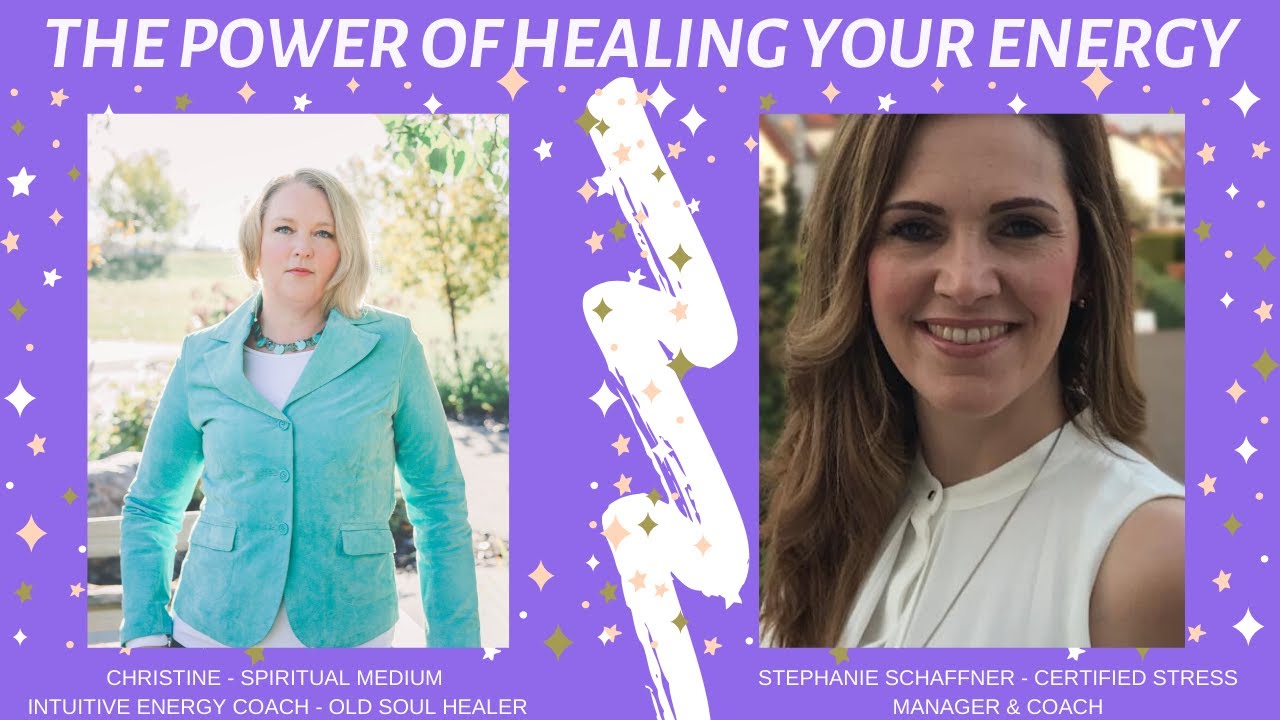
In this episode of "The Power of Healing Your Energy Show," host Christine J. Gold interviews Stephanie Schaffner, a certified stress‑management trainer and burnout‑prevention coach. Stephanie shares her personal transformation from a high‑pressure corporate sales role and single‑parent life to becoming a specialist in stress management after a wake‑up moment at a conference in 2017. She explains the magnitude of burnout in Germany (13 million affected) and differentiates between negative stress (chronic cortisol‑driven) and positive stress (short‑term, energizing, akin to an athlete’s performance boost). Stephanie outlines her multimodal stress‑management approach, which addresses five domains: workplace, personality, cognition, relaxation, and social factors, and describes how she implements workshops, follow‑up sessions, and individual coaching to shift cultures over the long term. The conversation covers the pivotal role of leadership and company culture, common workplace stressors such as multitasking and understaffing, and practical daily habits for prevention (sleep hygiene, nutrition, breathing cycles, thought‑stop technique, nature breaks, digital boundaries). She also touches on the use of Neuro‑Linguistic Programming (NLP) to re‑program negative thought patterns, her contributions to Thrive Global, and her international speaking engagements (Dubai, Cologne, Madrid). The interview concludes with Stephanie’s broader vision of fostering kinder, healthier workplaces and a more balanced life, emphasizing that helping one person can ripple outward.
Chapters
Welcome to The Power of Healing Your Energy Show. It's all about your light, your intuition, and your soul's purpose. Depression and anxiety are a side effect of you not living your life intuitively, not listening and trusting your gut, your spidey senses, and your connection to your higher self and soul's purpose. Welcome everyone, my name is Christine J Gold. I am your spiritual medium, intuitive energy coach, and old soul healer, and this is episode 30. 3-0. And it's all about the power of Stephanie Scheffner. And we are asking, is there such a thing as positive stress? Because I was like, I really had to think. I thought about that for a long time. Anyways, I'm sure she's going to fill us in on this. But here is Stephanie. And Stephanie has worked for many years in business, international companies such as Lufthansa. In the past few years, she worked as a sales manager head of new business and internationally operating software companies before becoming a certified trainer for stress management and a coach for burnout prevention. I love that. And Stephanie's focus to work on site with the client or team to manage stress in a healthy way and to transform negative stress into positive stress to reach high performance. And then I, you know, I did a little snooping around too on your LinkedIn page. I did I didn't know this, but you are a contributing author to Thrive Global. So that's a brilliant platform by Arianna Huffington. That's amazing. Welcome. Welcome to the show.
Hi, Christine. Thank you for that warm welcome. Great that you are having me here.
Yes. Yes. And where are you? I'm in, I'm in Edmonton and you are?
In Germany, near Frankfurt.
Near Frankfurt. Okay. Beautiful. And yes, you grow— were you born and raised in Germany?
Yes, I'm born and raised in Germany.
Born and raised, families there?
Yeah.
Amazing, beautiful. Have you lived anywhere else other than Germany?
Um, I traveled a lot in, in the last years to the UK and, um, switched a lot, uh, monthly, uh, to Peterborough.
Oh, Peterborough. Now, are you talking Peterborough— where in Peterborough?
Uh, near London.
Oh, London. Okay, just because I asked, because there's a Peterborough, Ontario, Canada. Oh, and I thought, no, that's not the right Peterborough. So, and I actually have a friend in Peterborough too, so that was interesting. Well, welcome. How now can you maybe tell us a little bit about yourself and how you became a certified trainer for stress management?
Yes, of course.
Sure.
I worked for many years, as you said, in the, in the business and worked in the, in the sales and head of, worked as a head of new business. And I had to travel a lot around and meet conferences and go to appointments on the customer. And I have to raise up my two children as a single mom. And I was stressed up all the way. I was overwhelmed and I felt that I in this job you have this great job and you have to hustle around and travel a lot and you feel not, you be yourself, you have your role and you have to do your duty but it's not what fulfills you and I woke up in 2017.
Okay.
And it was on a conference in a different city. And I had no clue on this time in which city I am. And I called my mom and said, "Mom, I don't know where I am today. What kind of city?" And this was the day I had decided I have to change my life. There was something I thought, what? This is not, this is not living. This is not healthy. This is not what life should be. And it took me a long way to that point. And it took 1 year and a half to change my mindset, to work with coaches, to work with NLP. And I thought I have to change my job. I bring no value to people. And I had the feeling I can work in a different job and bring more value to people and to the human beings around me. And I had a lot of colleagues in the past, struggle under burnout and, and they left the corporate world and got 3 years on sick leave in Germany.
Wow.
Yeah. And I saw all those people leave the companies and then never come back with the same power and strength. And it was, what was amazing. And This was the time in 2018, I changed my mind and figured out what can I do, what is a meaningful job and how can I make a better, a little thing better in the world. Yeah, that was the system.
How could you make a spark? You're going to make it your impact, your impact. Yeah, yeah, yeah, definitely.
It's a little impact, but each little impact is helpful, I think.
Definitely. Like we were talking before the show started, if you help one person, that one person's whole world changes. Then they turn around and help somebody else. Yeah, yeah.
That's amazing. You get so, so positive feedback. As I started to work as this certified trainer, I made my education in the last year. In Germany, we have a thorough education based on psychological and then stress management trainer certification. And the coach for burnout prevention is extra education, two educations. And people came to me and reached out for me and write me emails and, and gave me a call and said, "Hey Stephanie, it's great what you are doing. I needed you a year ago. I was in burnout. I ended up in hospital." Oh my goodness. Yeah, that's, it was, oh God. Oh my goodness. It was amazing.
It's almost like you can feel the weight of those words. I mean, even when you said, when you woke up in the hotel room and you didn't know where you were, That must have been scary.
It was.
Did you feel panic, anxiety? You just like, how did that, how did that look like? I guess just for people that are wondering, I guess, if maybe what they're doing is not what they should be doing.
I think it was, I have a very healthy lifestyle and I don't drink alcohol or any drugs or something like that. I think it must be something like that, that you are totally— it was my brain. My brain was totally stressed up and it was all from cortisol. And I felt lost. I felt, I don't know, I'm a very straight person and I'm a tough single mom and I get my shit done.
And I love it.
And I was helpless. I didn't know what to do. I can't focus myself in this situation, in this few minutes I woke up and I can't focus myself. And I just pick up the phone and called my mom because she sitted my kids and bring them to school and so on. And I said, "Mom, do you know on which conference I am today?" And she said, oh yeah, you're in Düsseldorf and it's the CIO conference, the main conference. And I said, there must be a change in my life.
Yes. Yeah. That's, yeah. It's funny how, you know, the universe, God, Buddha, whatever, you know, whatever you believe in, the divinity basically came in and, and and said hi. It's a wake-up call, I get it. So we were also talking about how many people there are in Germany and what, what are the stats, I guess, just for Germany alone when it comes to stress and burnout?
In Germany, we've got the statistics that 13 million struggle with burnout, and that's numbers from our health insurance. And these are really big numbers. And we are not on the high. We got a peak in the 20 years about the digitalization stresses many people up and the availability and the digitalization. You are always online, you're always available, and the people feel stressed up. And it's a big issue in Germany. I think it's a big issue in European countries and in the US also. But I think we are not on the high point.
You don't think it's reached the tipping point yet? Or people are just becoming aware? Yeah. Is okay. And companies are now, the companies that come to you, are they saying, okay, we have an epidemic or are they trying to be preventative? I guess is what I'm asking.
Yeah.
Yeah. Yeah.
They're trying to be preventative because the therapy after burnout takes a long time and the people are never be the same again. It's a biochemical process on stage 12. Not everybody knows that. If you go on a stage 12 burnout, your body changes and the biochemical in your brain changes.
Okay.
You end up in hospital and it's life-threatening and it's not just like a mindset problem or something like that, or, or you are not so resilient like the other colleague. And it's, if it's, it's A real burnout syndrome with stage 12, it's life-threatening, and not everybody knows that. And the companies have a, have a change, and they want to prevent it and, and, um, uh, make, uh, sorry, make healthier workplaces for their employees.
Yeah, I feel that so much. I mean, I resonate with this so much. I've had many jobs, many, many, many, many, many. So many that what you're talking about is because a lot of these companies, they have a great facade. But on the inside, it's not good. The culture is toxic. I mean, they say they have all these great programs and they take care of their own employees. But I'll tell you, 9 times out of 10, these companies do not. And it really, do you feel it starts with the owner or the CEO?
It starts with the owner and the department leaders and it's a leadership thing. And if you have a leadership change and then the culture of the company change and this branding thing, it's a great thing. Thing, how the company wants to be known as. And we've got to change. It's called— I don't know if it's in Canada a great thing— it's employee branding.
Okay. Yeah. Well, we call it like employee recognition or employee benefits. Yeah.
Yeah.
Yeah. Okay.
And in Germany, the companies are changing like that and they want that the employees are, oh, company XY is, is a great place to work and they all do all for us and they got yoga classes.
Oh, that's nice.
Yeah, yeah, but it's not about just about yoga classes. We know that.
True enough. Um, so I guess what, you know, stress management, what's I guess, how do you address that for a person? What does that look like? Is it dependent on the company or how do you approach that?
We have 5 areas on which we have to work in the stress management. It's called multimodal stress management. And it's about the workplace. It's about the personality. It's about the cognition. It's about the relaxation and the social.
Social. Yeah.
And if you work in the whole, you work very effective. And I think you have to work in the whole. You just, you can't just focus on the workplace in the company. Because you have to train the whole team and teach them methods and you have to see it in the whole, in the holistic way. And so we have this multimodal stress management and it's effective.
Okay. And I guess, are you guys looking at nutrition, fitness? Like, are you, are they, do they take this with them at home as well to practice and So they have to take it with home, and they have also the possibility to get single settings after the workshop. Okay.
We have after 30 days another workshop to implement the changings and to go deeper and to ask back and what runs good for them and what was not, have they got any questions, what changes in the workplace, for example, they leave the door closed for 2 hours a day and leave their boss outside the office and Something like that. And, um, after the workshops, they have the possibility to go on single settings with me to deep dive.
Okay. And, um, and do you go in for like a month at a time, or like how long is the process? And is there a lot of follow-up?
It's, uh, it's, um, possible for longer. It's an ongoing process, just as the company wants that. If the company wants a culture shift, a shift to a healthier workplace, it's a long-term process. It's ongoing, monthly. And the company just wants to make 3-day workshops, it's a, it's a short-term thing. And it's more effective if you're, if you're ongoing process, ongoing, once for example for a year, that's more effective. Then you can shift the culture and the, and the, and the whole thing.
Yeah. And I bet you the changes are pretty dramatic. It's probably nice to see the shift. I guess what, what do you see are the biggest like when you first come in, what are the most common issues in a workplace?
In the workplace, there are so different issues.
Is there maybe a common theme?
I, I have the feeling that in Germany there are too much work for one employee.
Okay, we have the same, same issue here as well in North America. Too much multitasking, too much.
Yeah, yeah, too much multitasking, too much to do for one person, and no budget for, for, for new employees, and too long. It took too long to change something.
Okay.
And even in the corporate world, it took very long processes. You know that. And the employees are suffering under that situations.
And then what do you see, I guess, at the end? Like what gives you the greatest joy, I guess, in the work you do? What's— when you're done?
The greatest joy, if you— for example, I have in the future, in March, a leadership workshop on a university, and all professors and deans and leaders from departments, and For example, they are really critical.
Okay.
If you leave them after one day and they say, and they see, oh, it's not just a mindset thing. And it's not just a, I work with NLP and so on. And I'm open for those, but you're the, Professors and the company world, they are not open-minded for such topics. And if you see, oh, the strategies are working and it changes and I feel better, and I know that is a really huge topic. That's a cool, that's a really nice situation when you look into faces and you see something changes.
Yes.
Something is working on them. And that's really nice.
Like a light bulb or an aha or an epiphany. Yeah. Or you can see the cogs actually turning. It's all connecting. Wow. And did you say NLP?
Yeah.
Okay. So what, what is NLP for, say, folks that don't know what that is?
Uh, Neuro Linguistic Programming.
Yes.
And I really love it.
Is that, are you talking about, we're talking about the neuroscience? Are we talking about the subconscious?
What are we, um, it's a, it's a cognitive, uh, train program.
So, okay.
Never heard it. And, um, you change negative thoughts into positive thoughts.
Okay.
As a computer, you can train your brain and you can overprogram, um, uh, old, uh, things. And you have to train it a lot, but it works well.
Yeah, it's, it's a practice. Yeah. Because you had old programs running, so now you got to put in a new tape, I guess they'd call it.
But I really like it. And I, everybody knows Tony Robbins and, oh yeah.
Yeah.
And he works with that and it's amazing.
He is, his energy is pretty spectacular too.
I have to say.
So now what, what do you mean by positive stress? Yeah.
Positive stress is this thing what gives us energy and what gives us the power to get into the flow. And we feel— the high performer or the athlete runs the Olympic stadium and you are pushed and you are willing to succeed. And that's a positive stress. Because it's a short-term stress.
Okay, yeah.
It puts you to your limits and it pulls you through and it makes you happy. And after that, you have the relaxation and it goes down and you relax. And the negative stress is this stress where your relaxation doesn't go under and you have not these deep relaxed zones and That's the negative stress and the positive stress is great.
And yeah, no, it makes sense. It reminds me of endorphins, like endorphins that, yeah, it's kind of like a, it's a natural high.
Yeah.
I get that. And then the negative part is more of the cortisol. It kind of drags you in and you just never feel like you've got enough air to breathe in a way. Yeah, that's how I, that's how I see it. Um, yeah, I don't— so far I don't have any questions. And, you know, if anybody is struggling at work with maybe co-workers or boss or the culture, if you have any questions for Stephanie, if, you know, you please put them in even on the replay because we will interact and we'll get those questions answered for you, and I'll at least tag you, Stephanie, in the, in the comments, because I'm sure a lot of them are going to be for you and not, not for me. And that, and that's, you know, I'm not the expert here, so, um, and I did leave some links there for you. It's best to reach out to you through your website and through LinkedIn. You spend a lot of time on LinkedIn and the website.
It's my main platform for socializing. I'm also on Instagram and on Facebook. Facebook, but LinkedIn is still my main platform. And, um, yeah, it grows, uh, it grows.
It does. Now, how many— are you planning on just staying in Germany, or are you traveling to other countries? Like, have you had other people, other companies reach out to you?
Yeah, I work international, and that's no problem. And, uh, for example, Dubai reached out.
Oh wow.
Yes. Um, it was amazing.
No doubt. When, when were you in Dubai?
Uh, I think in March.
In March. Okay. Wow. Everything's happening in March.
Yeah. Things are coming.
Yes, definitely. Definitely. I mean, you've been, working really hard at it. I see that. Now, what do you have any tips, I guess, for burnout prevention?
Yes, we have to focus on our health and we have to look at each other. If you see a colleague is struggling or something, I made a post today. It's the International Day of Hug.
Oh, nice.
And so many are struggling outside there. And if you see a colleague or a friend of you and just take a tea or a coffee and ask him, how do you feel? Are you okay? Can I help you? Or something like that. And if the people feel that you are open and that you're you have a few minutes for them, um, maybe there is something, and, um, then you can help somebody. And especially to prevent from burnout, yes, you have to sleep regular because you have to lower your cortisol at night. 7 to 9 hours are perfect. And eat healthy. Yes, clean eating, no junk food. And alcohol is the devil. It's a chemical in your body, and it's negative. A glass of wine is okay, but not those regular and these hard stuffs.
The hard stuff, yeah.
And you have to give your private appointments the same, the same, sorry, the same attention as your, yeah, as your business appointments. Start regular to lower the cortisol 3 times a week. Perfect if you can schedule your sport routine. And there's so much you can do to prevent and so much SOS hacks for the workplace. For example, if you have a really stressed day and you feel overwhelmed and your thoughts are circling, you can use the thought stop technique. Okay, and stop your thoughts, your negative thoughts, and think on a positive emotion, maybe a birthday party of your son or something like that. Yeah, and you feel that positive thing and you focus on this thing and take a deep breath and drink a glass of water, go outside, or maybe just have a look outside the window or in the nature, and then sit down and focus again. And something like that.
You—
there are many, many, many strategies and methods for, for this things.
Yes. Yeah. Just, yeah, breaks, you know, just, uh, I don't Yeah, nature and just being outside and sunshine. It does wonders, especially if you have issues with seasonal affective disorder. Like, I struggle with that, so I have to be very, very aware that I'm getting vitamin D and I'm outside, and that's important.
And take a walk outside in the nature as a meditation. You know Thich Nhat Hanh?
Yes.
Of course you know them. You know him. And he— this walk meditation and great. That's a great thing. And you walk, you can focus on your breath and you think nothing.
That's great.
Take care of your breath and the nature and your walk.
One step, one step at a time.
Yeah, and that's a great, great thing.
It is. And I honestly, I think the breath, the breathing part is, is huge. We do not breathe properly, especially when we're stressed out. Yeah, a lot of short breaths. Um, and you know, it's that cycle of 10, which I, I teach a lot to my clients. Do 10 cycles of 4 2, and 4 out. By the, by the halfway through, you won't even notice what you're doing. You'll know that you're totally relaxed. So yeah, it's, it's, it's, you can do it anytime. Anytime. Yeah.
Remind ourselves to that, and we have to, to, to remind ourselves by hooks or something like that.
You can, yes.
Can have a, for example, a hook band or a sticker on your PC or laptop. And that reminds you on this. That's perfect.
That is. Or, you know, there's, there, yeah, there's lots of ways you can manage. There's even for your phone per se. Mine shuts off at 9 o'clock, like it goes to grayscale and It just completely— because yeah, sometimes you, you have to put those, those barriers up so you're like, oh yeah, I need to read, or I need to do, you know, something mindful instead of work, work, work.
Yeah, yeah, yeah.
Wonderful. Um, so you've— you're a contributing author to Thrive Global. Is that something you do on a regular basis, or is it So every month?
Um, yeah, every month. It's, um, it's a great thing and it's, it's the platform for burnout and, and stress management. And, um, it's Arianna Huffington is really amazing and, um, yes, she does a great job with this. And, um, Thrive Global is a great community and Yeah, it is. I was very honored that she published me. Not everybody is published by Thrive Global and Huffington Post or something like that. And a German little girl, and it was a special moment for me.
Oh, come on. You're a kick-ass single mom, like you said. Jeez. See, that's why we women, we tend to do that. Is we'll play small. Like, no, say it loud and proud.
Who cares?
Oh boy. Um, so I— you know what, I, I'm so happy, uh, you know, to meet you and to have you on the show. And I love what you're doing. I love what you're contributing. I love the whole message. And like people say to you, where were you a year ago or 5 years ago or whatever it is? And I, I feel this is so needed. We definitely need this in Canada as well. Um, it's— it is an epidemic. I don't know what the numbers are here, but they're very high. I know that, um, you know, when it comes to suicide, uh, in— for men, um, they're saying the young men are at the biggest— are the highest— at the highest levels in regards to that, which says a lot about how we're living. We're, you know, we have everything, but do we really? Um, it's, uh, anyways, that's a whole nother discussion, um, about that. But, um, I did ask you a question at the beginning, so I'm going to ask you now. What is your dream and how can we collectively make it happen?
Oh, I've got the big dream that we live all together in peace, but I think that's, it's a too big dream. I think we have so many, many issues out there and I just want to do my best to help people and create better workplaces and create a better work-life balance and create a healthier way to live and a healthier way to work. And, um, um, I just want to help, uh, or open eyes and, and that there is a, there is a life outside the corporate world, and there is a possibility to work healthy, and there is a way out there. And you don't have to be, to be, you don't have to be You don't have to fear about that and just go your way and in the, like you want to live. And we have one life and it's soon over. And I'm 41 years old and that's not a great number, of course, but I see my parents and they are on the last years of their lives and many people left this planet. And I think we can all live happier and healthier if we keep— we have a look at each other and give love and attention to the people around us and be friendly and be kind. And that's how I live my life. And I hope if, as we said in the beginning, and if we just help one person, it can change his whole life and it can change his world. And that's That's how I think and how I live. And I hope— I met many, many people in the last 2 years. They are like-minded, and I'm very happy about all those connections. And I think there are very kind people out outside and in the world. And if we are to do all something like that for others and then we can create a better world.
Yes, well said. And I really— what I grabbed out of there was helping, you know, connection, kindness. I think kindness is probably the biggest one out of all of it. So just— it doesn't cost anything to be kind.
Yeah, yeah.
All right, well, I left your links, um, I'm going to leave them below again to on how to get a hold of you. Um, anything that you wanted to share, anything that you're working on, any courses, traveling, events?
Um, there are a lot of upcoming events. Um, tomorrow I will be on a digital club, as a Global Digital Woman. Okay. And all over the world, and there's 30,000 women in the digital Wow. And it's in Cologne, and, um, it's tomorrow, um, a congress. And, um, there are international congresses upcoming in this year, and I will publish this— them on Facebook, LinkedIn, and on my website. Um, you can meet me on— in Madrid on the Digital Enterprise Show. It's the largest digitalization conference in the world.
Nice.
So they call them. And yeah, I will publish some, some articles on Thrive Global and we will see what will happen.
Yeah, that's right. I'm looking forward to it. I, yeah, I'll be, I'll be keeping an eye on you. I'll keep in touch. Of course. Yeah. Of course. I want to thank you again for coming on the show. And if you are struggling with, you know, workplace, with yourself, with your energy, please comment, please reach out to us. We'd love to, love to help you. And I want you guys to have an amazing week and enjoy your conference tomorrow. Stephanie, thank you. And please remember, everyone, healing begins where the ego ends. Take care. Bye-bye!
More from Christine










Your coping skills didn't fail you, menopause did #menopause #health #plantpowered
