They keys to creating a profit first MSP with our CRO, Michelle Terpstra
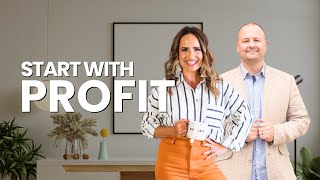
Chris Wiser and Michelle Terpstra, the company's CRO, talk about scaling MSPs past the owner-operator stage. They cover hiring salespeople on base plus commission, documenting your sales process, and picking one or two marketing channels instead of spreading thin. Michelle's final advice: track your daily activities for seven days to see where your time actually goes.
We have hundreds of MSPs in our program and it's just stuff that we see. The average MSP is usually a single person owner operator doing sales. Single owner operator, kind of responsible for the lead gen, but also kind of responsible for the closing of the deals. And most of the time they're growing by accident, which is usually by referral. Not a whole lot of purpose behind it. So what Michelle and I are going to talk about today is some of the things that we've done inside of seven figure MSP to grow. Everything I do is with scale in mind and then also some things that you can take to put into your MSP foreign. What's up, everybody? Welcome to another episode of the Building A Profitable MSP Podcast. My name is Chris Weiser. I am your host for today. Actually, I'm your host every time. I don't figure that out yet, but that's the real deal. I am here with a very, very special internal guest. My head of Revenue CRO, Michelle Terpstra. How are you doing, ma'? Am?
I am doing fabulous. I'm so excited for our chat today and to share some golden nuggets with the audience.
Yeah, it's pretty cool. So we're going to talk sales today, and if you guys that are listeners or regular listeners to the show, you know that that's kind of a passion of mine and things that I really work on. And so it's really cool because I'm gonna. We're gonna kind of walk through the journey that Michelle and I have gone on over the last 12 months here. I want to give you guys a quick apology. If you're watching on video, I'm in a hotel room. It's what it is. I'm in Los Angeles right now. Wanted to do this at the studio, but just ran out of time. And as opposed to canceling it, one of the things that Chris does is he just gets done. So we're here. It's not perfect, but it is what it is. In fact, I'm like, trying to move stuff around and make sure the lighting is okay because I have no lighting in this room. But it is what it is and the content will be good regardless. So put up with me and deal with that.
You're leading by example. You know, done is sometimes better than perfect.
Yeah, I think done is always better than perfect. As far as I'm concerned. You know, nothing with me is perfect. So. Okay, so a couple quick things. First of all, I want to talk about. I'm going to open this with Kind of setting the stage as to where I believe most MSPs sit out there. And for those of you that are MSP vendors, because I know we got a lot of vendors that listen to this. Very relevant to your stuff too, whether you're a vendor, salesperson or even a leader. Good things to think about because I, I built this very quickly and, and with scale in my. Everything I do is with scale in mind. The average msp, I just told Michelle this is usually a single person owner operator with under, with 5 to, I'm gonna say 5 to 8 employees, 750, 000 to 2 million in annual revenue. And that's kind of where the average MSP sits. And I'm gonna say that's like 90% of the industry. So with that in mind, you think about who's actually doing the sales work. Usually especially as you are coming out of that half a million dollar to, you know, on your way to that million dollar year annual revenue number, usually you're growing your business almost by accident. It's usually not very purposeful and I know I'm throwing some blanket statements out there with the usually and all that, but it's pretty accurate. We have hundreds of MSPs in our program and it's just stuff that we see so moving. Most of the time it's single owner operator. Single owner operator doing sales. Single owner operator kind of responsible for the lead gen but also kind of responsible for the closing of the deals. And most of the time they're growing by accident, which is usually by referral. Not a whole lot of purpose behind it. So what Michelle and I are going to kind of talk about today is some of the things that we've done inside of 7 figure MSP to grow internally and then also some things that you can take to put into your msp. This is totally unscripted and unstructured. So we have no idea what either. We got bullet points and that's it today.
Oh, I, I can't wait to see what we're going to talk about.
Some of the best content comes this way. And so with that all being said, Michelle, can you maybe give a little background of you and maybe we'll talk a little bit about how we ended up here together.
Yes, I love that. Hello everyone. So I'm Michelle Terpstrai and I think it's important that you know a little bit of my background so that as we speak for the next 30ish minutes, it all makes sense for you. So first of all I have my BA in communications and why this is really important is that for years I studied influence, persuasion, organizational communication, and the art of negotiation. And I remember when I told my dad that that was going to be my. That was my degree. He. And when I told him it was a BA in communications, he's like, that sounds fake. And I say, dad, you know what? I'm it every single day for the rest of my life. You see, right? And lo and behold, yes, I did. So after I graduated from college, I went to work for several Fortune 500s in sales. And if anybody listening here comes from a big corporate background, there are so many lessons to be learned in terms of structure and process in big business. There's also a bunch of stuff that you don't want to do when you're scaling a small business, right? But I'm really grateful for the time that I had in big corporate because it allowed me some of the structure and the systems and the techniques for me to learn them before I started my own business. So for the last handful of years, I've been running my own consulting and sales training company. And Chris and I met each other as we were both speakers on a cruise. We had run into each other several different times at different events, but never spent a bunch of time together. But if you ever want to spend a lot of time together with somebody and get to know them, you should go on a cruise, because that's what go to cruise, right? So we spent several days together, and the result of that was an opportunity for me to come in to seven figure for a VIP day, which is basically a day rate. Someone pays for me to come in and analyze, assess, and strategize something in their sales sales organization. So Chris brought me in to do that. And I mean, it was a really awesome and powerful day. And he got to work really, really quickly after that day. And then he bought another VIP day and we just started talking a lot more. And eventually I positioned and said, hey, you know, you're buying VIP days. I. I think it would be really valuable if I came in as a fractional, a fractional CRO. And Chris said, yes, I absolutely agree. And then a little bit more time went along and I said, hey, Chris, I love what you're doing at seven figure msp. And I want a bigger role here because I see the difference that you're making for your clients. And I was also, I was very.
Honored by that, by the way, because I was. That's. That was pretty cool for me.
Yes. I mean, it should be because I've helped a Lot of businesses and that's the first time I've pitched myself in that role. Oh, you're getting glistening. And if you are one of our clients right now, you may have seen me on stage in Nashville this past year and that was a really fun conversation Chris and I had. And so here I am now enrolling into 2024. I will be the full time CRO here at 7 figure MSP. So that is our journey and it's been incredible and gradual in the best way possible. And so I'm really honored to be here and talk about all the amazing things we did.
This is not going to be the last time you'll be on for sure. And just with us moving forward throughout the year here because I think there's so many lessons and the thing that I really like, I struggle with a lot of this stuff. And one thing I want to tell you guys, it's okay to ask for help. It's okay to say, I don't know everything about everything. I didn't go to college. I have no formal training at all, which has its strengths. Don't get me wrong. Like Michelle sees how fast I go, how much I don't care about. Like, I'm not over analyzing things a lot, but I also do a lot of stuff wrong because I just figure, you know, as, as entrepreneurs we kind of just figure stuff out and I've always done that. So there's a lot of things that I'm just watching in the first, first of all, going all the way back to VIP day, okay, I should have done this. I should. And it's like you picked this stuff out in like. And I'm like, crap. Like, really? I think my first tip for you guys on this today is you have to be very coachable. You have to be open to being. I don't care. Like I'm a pretty damn solid eight figure company. Many people aspire and I'm not just tooting my own horn here, but many business owners would like dream of what we have built. I'm fully bootstrapped, no outside money. Built a really good company with a lot of ability to scale and grow. But there's still so much to learn and I have goals which we sit down and talk about. And if I'm not coachable on those things, none of it goes anywhere. Because this advice is great. But if I'm not like willing to empower my people and say, okay, I'm going to step back a second, I don't have all the answers. It doesn't matter. So I think that's really, really important. And Michelle, I think you've seen I work great, very hard on being coachable.
Yes.
And it's pretty much you come in and I'm like, okay, it's your show.
Like, yes. I mean, 100%. And then also. But you're. It's incredible to see how much action happens in this company. Like, every single person that you have hired is an action taker. So nothing sits on someone's to do list for too long. Everyone is moving the ship. Everyone is focused on the.
But that's by design and not always. Do you get that? But I am pretty good about hiring and personality profiling ahead of time. I learned that from a couple of business coaches. I learned that from, from Alex Rogers, actually. He's the CEO of chartech, which is another industry firm. And I learned personality profiling at the Chartech Academy year, like, literally 2005, 2006. And it's really, really helped me to grow and evolve that way and making sure we have the right personalities and because we can teach pretty much anything, but it's the right personalities, specifically, action taker being one of those.
So, yeah, I can't, I can't wait to hear about how you profiled me. Now. I'm curious.
I can't tell you.
Oh, my gosh. We'll jam that one out in teams later.
Yeah, that's funny. So a couple, A couple of the things that I, that I want to say, and then I want to get into a couple questions that I have for Michelle, and I'm going to let her go on this. I saw, you know, I, I, I'm a vision board guy. So I write down, you know, my goals for the next year, my personal goals, my business goals, and some of that stuff is like, pipe dream crap. Like, one of my ones that I just wrote down, I didn't tell you this yet, but one of my ones I just wrote down, I'm kind of coming to the end of my Tesla journey. I have a Tesla Model S plaid right now. It's kind of nice, but I'm kind of done with it. And I really don't want the cybertruck. So I'm like, okay, I'm gonna put a Lamborghini Urus on my thing. That's the Lamborghini suv. So it's like, stuff my vision. Vision board, like, that's my personal car that I want to drive around and whatever. Like, so stuff like that. I also added I want to go on a Scotland golfing trip. So I had like little things like that. But then we also had our goals for 2024 that were corporate goals that I added into there. So I go all the way back to like early 2023 and I had goals that I had put down for the company and for myself. And we were kind of, we're always growing here, we're always doing pretty well. But I wasn't super happy because we weren't jumping up the levels that I was wanting. And we went on that cruise together and it was kind of cool. Also, super props to, like you said, going on a cruise, but more importantly, putting yourself out there and just doing some stuff out of your comfort zone. I had never been on a cruise before. Wasn't super comfortable with it, get motion sickness. Wasn't like, wasn't real thrilled about it. People call them prison ships. I thought it was a three day to the Bahamas last January. I'm like, ah, what the hell, I'll do it. Who cares? We'll see how it goes. And I was forced to sit there and listen to your story.
And a lot of times you were totally forced.
I go to. Well, I really was that way because we're like stuck in. I know, right?
Yeah.
I go to these conferences a lot. And I'll give you a good example. We went to Funnel Hacking Live, which is the Clickfunnels annual convention. I went to one session in the room and then I, what I do is I go there to network and meet people and then I read the notes that all these people put together and I basically absorb all the same stuff without sitting there in a, in the same chair for three freaking days. But on the cruise, same thing, right? So I was kind of forced to watch your stuff and I really got to know your story. And one of the things that I saw out of it was I didn't know about the VIP days, I didn't know about all this stuff. But I was not super content with where we were with goals. So I immediately saw that. I called you. Like I actually, I think I told you on the ship we're going to work together. I'll ping you next week. If I remember right. Yeah, that was it, getting ready to leave. And I was like, okay, here's you're gonna do this. And then I took all of that content and I executed on it and I, you know, so we, we met you on the ship, blah, blah, blah, or met you earlier. But you know, kind of really got to know you on the ship. Got did the VIP day. So some coachable sessions. And then I took, like, four or five things, and I went to town. So lesson two for me on this, besides being very coachable, is, take that, coachable content, and you have to execute on it. You could have the best advisors in the world. You could have the best mentors in the world. But what are you holding yourself accountable to? And acting on? Actioning on is probably the better term because I went and we didn't see each other. We were talking about this in the green room a little bit. We didn't see each other. We had VIP day, and I'm like, okay, I'm gonna go to work. And you were like, okay, have fun. Like, I think you kind of like, I don't. I don't know how you thought about that, but when I look at it, I think you were like, okay, we'll see you for another VIP day, and we'll have to start all over again. It's kind of the impression I got. And I called you like. And I'm like, okay, I think I'm ready for another VIP day. But I want this to be with my VP of sales, Vianney. And you're like, okay, so you got a vp. I'm like, yeah, I, like, literally ripped it all down to zero, built it up, and now I have, like, a team of seven. And you're like, okay, I guess you went to work like, yes, that was.
That was incredible.
Not just being coachable, but then what are you doing that's actioning on that advice or that mentorship that you got? And I see a lot of MSPs that are just very content, business owners in general, too, that are, like, very content with the status quo. So that's, like, kind of my two things on today's episode that I wanted to get out there. And then, Michelle, I'm going to kind of let you talk a little bit, and we'll go back and forth on a couple things here. But that's kind of my two things that I wanted to tell you guys, because those things are very, very critical to being a leader. You can. You know, you're gonna. You're gonna get zero places if you got all the answers. If you're. Your cup's too full. Right. That's my thought.
And I think that one thing is, is that you took the advice and the strategies I provided and you focused on that. Now, I'm sure you're still running the rest of your business, but a vast energy, I know, was spent rebuilding that sales team in that period of time, and I Think the conversation around focus and you know, what you do with your time is so valuable because it is incredibly easy as a busy business owner to inadvertently focus on the wrong things or go through the whole day and be like, oh my gosh, what did I just achieve? Like what was today? Did I move the needle? And I actually had a client give me a coffee mug that says on and I should wish I had it right now. It says what did you do today to move the needle? Because I say it so much and it's, and it's really, really critical because a lot of things don't matter. And focusing on the wrong things, it can really get you stuck in business. So if somebody gives you the keys to the kingdom, to the selling kingdom or whatever it is, like go and take action and focus and make it your major priority.
Yeah, yeah. I think that's really key stuff. I. And a couple things I'll say to this you just mentioned. Actually I'm going to add a third secret on here. That's, that's we talked about this. We had our sales leadership team meeting or just our team leadership meeting today. And one of the things that you brought up that you heard me say was not to confuse activity for achievement. And I said, I've said that a while, literally like over 10 years I've been saying that. And I had a specific employee situation that I told you about this morning, where it came from and I think that's what based on what you just said there, it's very relevant to discussion. And where MSPs get lost in activity is. First thing you do coming out of the day is you're looking at. Because you're kind of at the mercy of your clients, especially early. And I understand that to a point. But you can't allow that. Another thing I say is what you allow will continue for the record, I say that too. So those two things I think are really key and MSP land, you get very stuck working on tickets and being very ultra responsive to your clients. Because if I'm not ultra responsive to them, I'm not giving good service, which all controllable by the way. That's most of that stuff's head trash that's here on you guys. So my next thing on that and then I'll continue to let you talk because all I'm doing is talking is don't confuse activity for achievement. Actually move the needle like Michelle just said.
Yes. And I think it's. And the only way to move the needle and to make sure that you are focusing on the right thing is to know what you're going to do in your day and build your day around your goals, not your, you know, a to do list that may not be moving the needle. And mind you, I love to do list. Okay, Everybody in seven figure MSP knows I love to do list.
Michelle figured out the the to DOS option in teams for the record guys.
So yes. So I am all about speed and high performance. Like I created a 250 page workbook for a 90 day journey on high performance. Like I'm obsessed with it. So the reason why I like to do lists, if you create them with intention is that it allows you to show up every single day and focus on the things that will make your business money. It allows you to lower your cognitive load, lower your stress, roll up your sleeves and get to work. If you block the first couple of hours of every single day for revenue sal sales marketing, you will see a massive difference in your revenue numbers and your recurring revenue, your contract values. It will be massively different. Everyone I know who waits till the end of the day when everything else possibly could already be done, they have a slower growth. And that is an observation I've seen helping nearly a thousand business owners.
You know one thing you just brought up there that is so apparent in MSP land is there's this misnomer that if I make money in my business, if I focus on revenue in my business, if I focus on cash flow, I'm giving bad service to my clients or I'm not focusing on tech. And, and guys, what we do in our coaching program, which I, you know, I don't care about that right now, but I want you to take this and really, really understand it. Cash flow solves all problems in business. Like I don't care what problem you have. If we have enough money we can fix it, period. And I don't care. Like Michelle does not come from MSP world, she comes from corporate America. Outside of this. You know, I think your first you were like, oh, Minneapolis St. Paul, like you don't know what MSP is when you first met, right? It's not something that people understand, especially coming in from the outside. So what I'm telling you guys that are here, you have to focus on revenue and it'll actually allows you to give better service to your clients, not the flip opposite. Because I don't care how good you are as a tech, you're going to get to a point where you're a top. Like you're at your limit.
Yes.
And then it literally just becomes what I call the MSP wheel of death, which is you're trading hours for dollars, not able to afford text. So you're dealing with this mess of just, you know, you're like a hamster on a wheel, going round, round, round, round, and you're pretty miserable. And for probably a one to three year period, if you don't actively work on it, you're just lying to yourself about that. And then they come to this impasse, you're like, oh, shoot. And then they have to decide like, what am I going to do? Because where we're at now, the market is shifting, so you're kind of being forced into doing. You're watching that happen right now, Michelle, in our world. So it's very interesting. So that was a really good point that you just brought up there.
Yeah. And I also, there's a lot of theories around high performance, production achievement. And one of them that I really love and I have seen very consistently perform on lots of different personality types and business types is that whatever is the hardest thing that's on your list that you need to do and maybe you feel like that sales or marketing needs to be first thing you do in the morning and you have to have focus time for it. So it's just really natural for our brains to want to do what we don't like, push whatever we don't like to do to the end of the day. Right. And some of that's okay, like you made the dishes or something. But when it comes to growing your business, like make it first, especially if it's your least favorite thing or the most challenging thing for you.
So I think that's a really good first tip coming out of you today is, you know, take those things that you're not comfortable with, take those things that you don't like doing most of that for msps because your personality type is technical engineer type focused. So you're going to lean away from that and going to go want to like sit in a server closet and tinker on servers all day.
Right.
That's what we all did and we all like doing. I was pretty fortunate because my personality types pretty outgoing. I was in forensics and all this other stuff in middle school, so I was always outgoing on stage doing all that kind of stuff. So I think that's a great first tip. Now, one question I want to kind of pivot off of that onto.
Yes.
How do you take the one person owner, operator like we were talking about earlier and how do we adopt A sales mentality with minimal funds, with no money or, or at least not a lot to where we can go hire a really good salesperson. How do we adopt that? You know, some of the things that we talk about in seven figure MSP is have a sales process, learn how to master this yourself and scale. What's your take? We've actually never talked about this, so I want to get your take on that. Coming from a little bit more corporate America as a high performance coach.
That's a really good question. So I think that when you're in the position you just described, where you're running, lean funds are limited and you're trying to get to the tipping point where you have enough revenue to hire someone, right? So that's the, that you're in. I personally feel like the death sentence to the business is a scattered intention, right? So if you go and say, I'm going to do this for marketing, this for marketing, this for marketing, this for marketing, and you have like 10 different things you're doing for marketing efforts. They're all getting 10% of your effort. And when you scatter effort like that, the impact is limited. So pick one or two primary channels that you're going to have your marketing effort focused on, go super deep and get really, really good at and fine tune that marketing machine so that you can get the output that you want. So that's from the marketing standpoint, when it comes from sales, is that the worst thing that could happen is you're great at marketing and then you can't sell because, wow, is that deflating, Right? Because they work together and you need both. So focusing on your ability to sell, to convert the people that you drive to your business that want to work with you is incredibly important for you. And you might be, you might be thinking, yeah, Michelle, but like I feel salesy or pushy or uncomfortable with that, you know, And I always say go back to your own relationship with money. And Chris, I don't know if you know this or not, but that is one of my very major theories is that when someone struggles with sales, asking for money, raising prices, I every single time I can pinpoint it back to a, to a time that you had an experience with money that has impacted the way that you treat people. Sales. Right. And it's really, really profound.
One thing I want you guys to be very, very aware of too is there's this misnomer out there that closing 100% of deals is a good thing. And I just had a, a social media Post. It's December 6, 2023 right now. So it's like a week ago in my IT and MSP business owners group, I had a social media post about close rates and a bunch of guys were commenting like, I get 100 close rates. I'm, I'm great at closing. I'm great at. And you're not charging enough guys. So it's one thing to be like, I know I'm not. I gotta word this the right way. And what tripped this idea from your conversation or your topic that you just stated there was you could be great at marketing, but if you're not good at sales or if you don't, if you're not comfortable with sales, part of the problem I see is some of these guys think they're great at sales just because they close all these deals, when in reality they're giving it away. So there's a big difference between, because what's happened in this industry for years and years and years, and this is where this shift timeshift stuff is kind of coming here.
Yeah, it sounds like commoditization.
Yep, it was 100% commoditized. And the problem that we have is forever, the client dictated the path of everything that this industry was doing, and the MSP allowed it because it was like, okay, I don't have a real good smoking gun to make you do this stuff, so I'll just take what I can get. And now we're in this world where if you don't put the right things in place, you're going to get ran right by, because cyber security is here and it's really, really critical, you know.
And I think that's a really great thing that you just brought up. And I want to talk about that for a second. If you're one of those people that's closing left and right, then I want you to think about what's going to happen to your sanity and your business and your capability to scale if you keep selling at that price. Because there, there will be a risk at the end of it, it is either going to damage your own sanity or you're not going to have high enough profit margins to hire someone to help you. So you need to think about the impact of, you know, overselling is what I would call it, and take a step back and think, wow, if I raised my prices, reduced maybe the amount of closes I get or my client roster, but wow, look at my profitability. This is incredible. And oh my gosh, I can actually turn off and walk out of my office and like, you know, have dinner with my family, like, whatever your goals are. Right. It's really, really powerful. So I'm really glad that you brought that up because it's an important conversation.
Yeah. Yeah. Okay, so next thing. Yeah, I want to see. And I know we only got a few minutes left here because I'm talking a lot again, as per, as per usual. But what's in. What's one. Maybe one more thing that the smaller MSP owner and I think what we're going to do is also we're going to bring you back and maybe we'll do a second episode on this and kind of get a little bit deeper as we get some response. But what's another thing a smaller MSP owner can do to potentially, how do we hire that first salesperson or how do we, you know, because one of the things that I see is the mindset of, okay, I, I'm. Most MSPs haven't been charged enough and I'm going to bring somebody in and they're going to open up their book of business or they're going to go door to door and they're going to bring you all this money and all these deals, when in reality you have no structure for them, no plan for them other than them to be a prospector and you think you're going to basically piggyback on them to become rich. And sales just does not work that way. Correct structure. And I really, really recommend you guys have a system that you give a potential person that comes in a sales process. Here's how we run this business. And you also need to know that, and Michelle said this earlier, you need to master that first. And I think that's a really important step. What's your take on that?
Yeah, so the, the most critical thing that you can do right now as you are building your business and fine tuning your sales process, is to document what you do. It sounds like the most simple thing in the world, but it's always overlooked. People always regret not doing this. So what does this look like in real life? It means documenting your wins. Like if you're able to, if you're able to document your wins, what this looks like. Okay, so let's say you go and you win a client. Why did you win it? Document that. Talk about what the client profile was, why you were able to win, and anything that you said significantly in that meeting to get that client. You know, I do a lot of virtual sales calls. I know a lot of the MSPs are, you know, in person. There's a mix of that. But if you're able to record anything, I highly recommend that as well because you can use that as a training tool for your future person. The other thing is that when you don't win, document why you don't win and debrief yourself after every sales conversation and start to create a sales library for yourself. And then I want you to think about like when you structure your day, your marketing and your sales activity. Document what you're doing. Because if you bring somebody in, they want to know what are the steps, what works, how can I plug myself in immediately? And it's actually the number one thing that is that I see holding people back stepping out of that sales role is not knowing how to communicate what they do almost intuitively to that first hire. So if you can start to document your process and make sure it works really well before you try to hand it off, it's going to make a really, really big difference in that handoff process. And the other thing is what you were describing earlier, what their expectations are, kind of reminds me of the solar industry. So the solar, the solar industry hires a lot of commission only agents to come in and sell solar, but they represent a bunch of solar companies. Okay, so this is the problem. So if you want somebody to come in that is dedicated to your business, that's going to roll up their sleeves and work really hard to grow your business, please make sure that you have everything set up for them to be successful internally and they will absolutely take off with the right guidance.
I also would advise, and I want to get your take on this. I also would advise not making them commission only. Give them a livable wage and expect them like a base. Give them a solid base, like 50k and give them KPIs and measure them and hold them accountable and expect them to be a full time employee. And a lot of people have these grandiose visions of, oh, I'm just going to hire this commission only sales. These people, you got to have money to live. And if they don't have money to live, it's never gonna. You and I've never talked about this, so I really want to get your take on it. Like it's literally going to take them two weeks. They're going to get to their first paycheck and realize, oh crap, because it's going to take months, months for this to work. So give them a livable weight, give them a structure, give them a plan, hold them accountable most of the time. This isn't in your wheelhouse either, guys just like it was. It's not. It like Michelle, you know, this is not in Chris Weiser's wheelhouse. So I have to bring someone in to really do it. Now I can find my way for the first, you know, 5 to 10 million, which I'm fortunate with what I have, but maybe even 1 to 2 million in your place. You can maybe find your way. But if you really want to hit that next level stuff, that's where you really got to go and you really got to hit that. What's your take on that?
So I would agree with you. I think that commission only works in a few situations, a few industries, a few roles, especially in, you know, like the high ticket coaching space, you know, that I've had, that I've had a lot of experience in. It can work there but for, but for an msp. And I think it is absolutely critical to have that base plus commission, but holding them accountable to KPIs. And it is absolutely critical, critical to have those metrics so that they know what to focus on, so they know if they're performing to the level that you want them to perform on. And it's a great conversation piece. Without metrics, without KPIs, it's really difficult to come together in a leadership environment and guide someone to the results that you want. So I think that's critical. One other thing, Chris, that made me smile bigger than really I've ever smiled ever on a VIP day is the very first, first thing that you said to me is, can we look at comp. I want to make sure that I am paying my team a well, a well deserved amount of money so that they have a great life and they can live well. And that was a first time experience for me in a VIP day where the CEO actually led with that. And I think that that is a really big testament to you as a leader and a CEO and teaching everyone right now how critical that is because for a salesperson, it will take, you know, 90 days for you to start to be like, oh yeah, we're crushing it. Like, here we go.
So just make sure you're prepared from, from our side. I kind of, you know, and this is pretty transparent to our listeners. I basically ripped our sales down to zero when I didn't see the numbers. I was wanting to in 2023 early Michelle, you know, that is what we talked about during our VIP day. Yeah. And then I started closing again for the whole month of April, I think it was in 2023 as I built up the sales team, built up A bunch of other stuff. And in a three month period, I had hired another sales guy. He's still here. He's crushing it. Had his biggest month ever in November, which is awesome. But I think a lot of it came down to breaking it back to basics, knowing where I want to go, not being afraid to count my people properly and then having a very specific plan that they followed coming in. And you know, you and I are now tweaking that and scaling it and really growing it. And then now we're also focusing on driving as many inbound and outbound. When I say inbound and outbound, inbounds, marketing, outbound, this bdrs calling all that kind of stuff lead gen on the sales team. Now our focus is like, how fast can we get them going? And we're built for scale. But it still took me having to go rip it down to zero as much as I could and then have that structure and make sure it was working.
Yep. And. And you know why you thrived from that? Because you focus on cash flow so you have the availability to do that and then benefit on the back side. So I wanted to bring that up from a point you made earlier.
Yeah. Okay, so we're at like 30 plus minutes here and I want to, I'm definitely going to bring you back and do another episode as we get a little more content. Maybe a little advanced stuff too. But any parting words or any thoughts from your standpoint on where, you know, where you sit or an MSP owner should do thinking about this and I really want you guys using this episode to think about where you sit and don't, you know, be coachable. All those things that I was talking about, but then also taking some of this to take it to the next level. So any, any final words from you, Michelle?
Yeah, there's one of my favorite exercises I assigned often that anyone listening right now can go do immediately. And what that is is document what you do all day every day for seven days. And then I want you to grab a cup of tea, a beer, a glass of wine, whatever your choice is, sit down and decide, wow, am I really focusing on building my business or am I getting caught in the weeds tinkering with. What did you say? The server. Tinkering with the server or if I'm moving the needle. It is a massively eye opening experience that everyone should do.
Yeah, I think that that moving the needle gauge is such a big one. I really love that and appreciate every second of it. So. Okay, great, great episode, Michelle. Very, very excited about this excited to bring you back. Super pumped about where we're going with seven figure MSP in 2024 as well, because we got the month of December in front of us here. And then we're gonna be pedal all gas, no brakes for all of them.
Yeah, I just took the brakes off. Like we don't even need it.
I love it. In fact, we just took the pedal out pedals out of the car. So that's just going. I love it. I love it. Thanks, Michelle Terpsa, for coming on with me today. And for the rest of you guys, you on our next episode, we do release once a week here on the Building a profitable MSP podcast. So we'll see you guys next week and we'll go from there. Have a good day. Bye.
Bye, everyone.
More from Chris

The future of MSPs will be about who can lead through automation. DM us to learn more! 🔥



What the right outreach can do for your funnel. Learn more with Leads Mastery! 🔥



CONFIDENCE is a learnable skill. Master it at the Stage Mastery Challenge, 10/7 to 10/9 🔥

Take it from the MSPs who’ve actually done it. Stage Mastery Sales & Speaking Intensive, 10/7-10/9


Build the talk that fills your calendar on Stage Mastery Sales & Speaking Intensive 🔥
