What Is The BEST MSP Hiring Strategy?
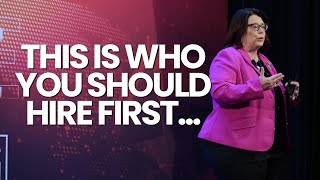
Cindy Phillips outlines the hiring sequence for MSPs scaling up: start with a level-2 technician at $10k–$25k/month revenue, add a second tech past $25k/month, then a dialer as your third hire. Aim for $300k revenue per person and close roughly one deal a week before bringing on a dedicated sales rep.
Questions this video answers
$10,000–$25,000 per month
Once monthly sales exceed about $25,000 (roughly $25k–$50k/month range)"
Do not hire a third technician until you exceed ~600 endpoints
Approximately $300,000 in revenue per person (guideline)
About $100,000–$120,000 per month
All right.
Wondering what team members to hire as your MSP grows. I'm here with Cindy Phillips, and we're going to talk about how to put all of the puzzle pieces together in order to grow your msp. Hey, Cindy.
Well, hello, Michelle. Thanks for having. Thanks for inviting me.
Yeah, you bet. I can't wait to hear from you. And I think everybody listening is going to feel the same way. I want you to introduce yourself real quickly.
Okay? So my name is Cindy Phillips, and for those of you who don't know.
Me.
I'm the sales coach at seven Figure msp. So if you want to grow your.
Business, come on over and we'll help you get started.
Yeah, and you know when you say you're the sales coach, for me, it's like sales coach. And because the. And part of it is how you so eloquently guide our clients into scaling and making the right decisions from a cash flow perspective. A P and L, your deep dives, like all the extra work that you do. So I think it's really critical that everybody listening right now who's part of our community or new to our community knows that level of expertise. So let's go ahead and jump in. And so you have a solopreneur, an MSP that comes. Comes to us. Like, what should be their first step? Who should be their first hire?
Okay, so here's the thing. Not all solo entrepreneurs are created equal.
Okay?
Not everybody who starts an MSP starts in exactly the same way. Even though we're tempted to say that we all start in the same place. So when people come into seven Figure msp, they're usually not completely alone. They usually already have at least one technician and maybe other people. Sometimes we have people come into the program, and they may have as many as six to 10 employees. But at some point, they're always going to ask the question, who should my next hire be? So the easiest way to figure out who your next hire should be is first to look at your total sales number. So if you're listening to this video, write down what your total sales number is right now. Just write down, what are my total sales per month? I don't really care if it's MRR or if it's break fix, because what your totaling monthly sales do is it shows us how big your business is. If your business is between 10,000amonth and 25,000amonth, your first hire is going to be a good, solid level two technician or a level two plus technician. Now, it can be tempting to say, I Can't afford one. Or it can be tempting to say, you know what, I'm just going to go get a level one. I'm going to find somebody who can just do the basics. Here's the problem with that. When you hire someone who can only do a little bit of the work, you're going to get drugged back into things you should not be drugged back into. So let's say you're more than 25k a month. You're somewhere between 25 and 50k a month. Well, you've already got a good level 2, 2 plus technician. Now you're saying, who should my second hire be? Right. So here's the other thing. I wouldn't necessarily recommend it. I'm just going to tell you what's common. What's common is a lot of people hire the second tech. And so you might ask me, well, Cindy, why do they hire a second tech if they've already got one tech? Don't they have other jobs they should be doing? Well, here's the thing. Everybody seems to live in fear that their tech is going to quit. I don't know why they do, they just do. But when you have two techs now, somebody can go on vacation and you still don't get pulled back into tickets. You have two techs, they have someone to collaborate with, they have someone to talk to, and they have someone to somewhat compete with. So after you have two techs, you do not hire the third tech until you are over 600 endpoints. Just don't do it. So you're saying, okay, well, who should my third hire be? Now we have to start looking at how you do your work. And I bet you really do not.
Like to make cold calls, do you?
I would say most business owners I talk to would agree with that.
Exactly. Now here's the thing. You're going to have to make a.
Certain number of them yourself anyway, just.
So you can say, I have walked the path.
Yes, I understand the pain.
But probably your third hire is going to be a dialer. Now, we give them all different kinds of titles. I don't care what you call them. But you're probably going to hire a dialer. And you're going to say to me, cindy, why should I hire a dialer when I can go hire an outside service to do my dialing?
Now, this can be a religious question.
You know, sort of like Windows or Mac. Right? It can be that kind of thing.
But here's the deal. When you make a commitment to yourself that you're going to build a really big company, you're going to actually in this business, to win it, you're going to want to have control over the quality of everything that represents your company. And your dialer is going to be the first impression and that most people have about your business. And so when you outsource that, that dialer doesn't share your core values, that dialer doesn't know what makes your company different and your company special. And that dialer is never going to grow up from that entry level sales position to additional sales positions that you're going to have and need to fill in your company. So I say your third hire is a dialer and it's someone that you.
Think you can grow with.
It's someone that you want to invest in and someone that you think is going to be a long term player for your company. So don't look at your dialer as.
Somebody that's just a dialer.
And if you ever find yourself saying those words, they're just a dialer, please.
Go wash your mouth out with soap.
That is like the most difficult job anybody can do.
So hard.
It's so hard. And you need to honor the fact that people are willing to do that hard work for you and there may be a role for them in other places.
So first, hire a tech, second, hire.
A tech, third, hire a dialer. And now you're like, okay, what's my next hire?
And I think that with those first three, what I loved about it, and I think all hiring does, this was the first three free uptime for the business owner. And I think that's a key piece of this. I've had so many conversations here in Denver with, you know, some of our guests here who were saying, I don't know where I'm going to find the time because I'm still doing all the work. And it's a really interesting conversation. It's like you have to be hiring those techs and then you have to be hiring the dialers because that is like a vast majority of the time.
And if you're a business owner and you're wondering who you should hire and why you should hire someone, you know, this is going to sound counterintuitive, but the easiest thing to do is track your time 30 minute increments on what you're doing, what kind of tasks you're doing as a business owner for two weeks. If you religiously track your time for two weeks, you will find out how.
Much or how little you're really doing.
And you'll get clarity on what you're doing that you could, you could give to someone else to do.
Yes.
Right.
I love that exercise. I've done that multiple times in my life and it's eye opening. Sometimes you don't even realize when your time's going because you're just moving at the fast as you can and just trying to keep the wheels moving. So I love that.
Let's be honest, sometimes your time is going in places that are completely non.
Productive for you, 100%.
And so that little bit of discipline can really make a big difference.
Yes. Oh my gosh, I absolutely love that. Okay, so we've got our first three hires. What's number four?
Okay, so number four, this is another like crazy idea. But your number four hire going to be what you could either call your sales or your sales and marketing coordinator. So let's talk about what a coordinator does for you. A coordinator is a person. If you're using the disc scale on personalities and hiring profiles, your coordinator is a person who's a high C. They're a person who likes detail. You can ask them how they organize projects, how they organize their desk. You can ask them what kind of organizational tools do you use? These are the questions you ask in the interview because you want to find out if organizing things is their jam. And if it is, then you want to find out, well, what kind of experience do you have in supporting, Fill in the blank. Supporting sales, supporting marketing. And you want to find out where their interests lie. But if you can find someone early on that's willing to support both sales and marketing, what that means is, is you can get someone to help you with your proposals. You can get someone to help you with your, with your hardware orders, you can get someone to help you with your software orders. You can have that same person do some of your social media, do some of your, maybe even your blog writing or whatever. It's a person who will do a lot, a variety of different tasks but will keep track of them on the calendar so that they always get done on time.
A friend of mine, she trains those types of people and she calls them her unicorns. So that's, that's her word for the sales and marketing coordinators or unicorns. And the way you just described it is exactly that. I think that's just a really, a great description for it.
So the easiest way to find a sales and marketing coordinator and, and I disagree. I don't think they're unicorns.
Really.
I think.
No, no, I think they're out there. You have to know where to look for them. Right. So the easiest place to find a sales and marketing coordinator is to find someone coming out of an English department. Find someone who's got a liberal arts education, maybe who majored in in English.
Or maybe someone who majored in history.
I don't know, you know, but they.
Decided they didn't want to go to law school.
Right.
Find someone who had a really good undergraduate education and writing was a component.
Of what they studied. And they're organized. Right.
But they have a genuine interest in.
All facets and components of business.
And so it's that curiosity along with that organization skills that will allow you.
To find these folks. And you can typically find a good coordinator. You can typically find a good coordinator.
Even if you're looking at interns. You can find good coordinators.
Yes.
Because the coordinators haven't decided whether or.
Not they're going to grow up to.
Be project managers and stay in that coordinating type of role as a career, or whether they're just there early in their career before they figure out what they really want to do.
Yes.
Okay. I love that. So that was number four, correct?
Right.
All right, do we have a five and beyond or do we feel really good about our four?
Okay, so now let's talk about where we are in terms of how much revenue we're making. Okay, so when we have four people, when we have four people, we ought to be doing somewhere around 100 to.
$120,000 a month in revenue.
What our guideline here is we always want to try to be making 300k in revenue per person.
If we're not doing that, then we're.
Financially strapped and then that's when people get cranky.
Right.
So when we go to start now filling things out, the first place we're going to do is we're going to look to see where we're tight. So you as the business owner, is your dialer setting up five first time appointments a week and if they're not, well, maybe you don't have the right dialer, but if they are setting up five first time appointments a week, do you have time to go on them all? What happens when you go from 5, 5 first time appointments to 10? Do you have time to do them?
All?
Right, so if your dialer is super productive, then the next place you're going to want to go is you're going to go to someone who can do the first time appointments. And the discovery calls for you. We call that person a closer. Okay, now this is always Kind of funny that we call them a closer. So let's get into definitions of terms between hunters and closers, because I'm sure, Michelle, with your expertise, you've got some serious opinions about what these words mean.
Yes, I do.
Okay, so here's the thing. When we don't have a sales organization, the first salesperson we hire, we tend to call that person a hunter. Could you explain to people, Michelle, why that first salesperson. It's so important to make sure that person is a hunter and not a farmer, and tell us what the difference is between a hunter and a farmer.
All right, awesome. Great question. So, first of all, a hunter is someone who goes out to acquire the lead and close the lead. And my. I mean, my entire sales career, no one ever gave me a lead. Can you believe that, Cindy? I was never given one. So I'm, like, a little tough on this topic, because we'll get into it in a second of what a closer gets to do. But I was hired and paid very generously to do all of the work to be the entire sales department. Exactly like to, for lack of better definition here, go find them, qualify them, book them, and close them. And that was all of my sales experience. So when I got into the industry of where now we're calling people closers, the closer would be taking something inbound that your dialer has already found for you or your marketing has found for you, and the call is booked on your calendar, and you get to take it, close it. And if it doesn't close the first time, you manage it until it closes. And I'll tell you, if my first gig out of college was a closing job, I would have been like, wow, this is so easy and fun. Like, I had to do the job of four people. So now that I'm in this industry, I'm like, the closers are like, they're. They're so blessed. They are so lucky that they get to take qualified calls off their calendar, manage it, and close it. And that's my perspective on hunting and closing.
Okay, so this is a great topic to go back and forth on because I have a different perspective.
Oh, I can't wait to hear it.
All right, so in our industry, when we say somebody's a closer. Okay. When we say somebody's a closer, it is true that we hand them a contact.
Yes.
But when we hand them that contact, we don't actually know whether or not that contact is qualified or interested at all in what we do. All we know is that somehow they got through the filter. And here they are. So we have this great thing called a first time appointment.
Yes.
Closers do. The first time appointment for the business owner doesn't mean they're closing anything.
Right.
It means they're taking that first 15 minute appointment and they're qualifying whether or not this is the right kind of company we want to work with. If it moves forward in the sales process, the closer takes that deal again, takes that contact again, and goes through the 40 to 45 minute discovery call.
Yes.
And this is the first opportunity that the closer gets to actually make money because they're going to ask the prospect, hey, would you be interested in cybersecurity risk assessment? Prospect may say yes, they may say no. But wherever they are at that point, they are now a relationship that's managed by that person we call the closer.
Okay, great.
Now, it's not until we actually really sign someone up for service that we have somebody we call a farmer come into the equation.
Right.
And a farmer could actually be called an account manager.
I forgot to actually answer your part of the farmer part.
So now we can talk about that. So the farmer is an account manager.
Yes.
And the difference here is the farmer is supposed to be the person who takes the relationship and makes it so much more deep and starts looking for hundreds of other ways we can help this company be so much more productive. Right. So the closers like the hunt. Yes, Sometimes we call closers hunters. They like to hunt.
Oh, that's so interesting. So for me, I always had a delineation because hunter goes out and gets it. Closer has inbound. They're both closer closed sales. So this is a great conversation.
Yeah. So. So I tend to think of it a little bit differently. I may have the definitions completely wrong, but hunters and closers to me are like one in the same. And account managers and farmers are one in the same.
I would agree on the account manager and the farmer piece.
They have different personalities. So when we go to that fifth hire, we're gonna hire a sales rep. So the question is this, what kind of sales rep do we want to hire to go into our organization? So question number one is, what kind of business owner are you?
Yep. And as a business owner. Yes.
Are you a hunter? Are you a farmer?
Yeah.
That's a great reflective question. So how do we find out when we're talking to a business owner, how do we know whether the business owner is a hunter or a farmer?
Armor.
I mean, I have my leg way. I would probably figure it out. But how would you figure it out? So for me, it's the general personality of somebody. So if for me, and which could be totally different than what your perspective is. So this is really interesting. For me, it's pretty easy for me to figure it out because it'll be somebody who wants to be maybe leaning in our industry more into the tech, likes talking to the clients, maybe doesn't want to do upsells during QBRs. They feel like a little bit uneasy about going for the sales process. Right.
You would call that person. Which one?
The farmer.
Okay, great.
The farmer. And then someone who's the hunter is usually the person who's walking around at our conferences looking for somebody to take over their operations so they could just go sell. So it's like I just want to get out there. I want to talk to people, I want to close them. I want to like, sell, sell, sell. This is so fun. And it's just a different type of personality and they talk about different things, so I can sense it. And so I don't think that's probably the most scientific answer, but based on their behavior, that's how I feel.
So I'll give you a different answer. I'm going to take a contrarian view of this.
Okay, awesome.
So one of the things we do in trailblazers is we look at how business actually operate. So if you want to know whether a business owner is a hunter or.
A farmer, you can ask one question and find it out.
Okay. What is it?
What percentage your revenue was new in the last 12 months? New clients, new logos.
What percentage of your revenue came from new logos in the last year?
That's a very profound question, and I really like that. And I think that would give you your answer without me having to leave the room.
All you have to do is just ask that one question. Now, here's why. Right. If I'm comfortable and who doesn't like to be comfortable?
I like to be comfortable. Yeah.
If I'm comfortable, I'm working with people I know and I'm expanding my business within those companies. And maybe I've got a really healthy business. Maybe it's growing really well. But if I'm not adding new companies to my book of business.
Yeah.
If I'm not growing at least 20% out of new logos, then what's going on is I've adopted a farming attitude to my full book of business.
Yes.
So if I'm a farmer and I'm going to hire number five, do I hire somebody just like me or do I hire somebody who loves the thrill of the Chase and loves the hunt and will go out there and find new clients.
The hunt. The hunt, 100%.
What do we see in real life, though?
I think in real life, and I'd be curious to hear what you have to say about this with our clients. That people. People want to hire people like themselves is like a natural. It's a natural feeling. It's comfort, you know, and it's like you feel like you have your second person with you, your ally. But that's probably.
And if you're gonna do that, if you're gonna hire another farmer, then you have to become the hunter.
Yes.
And we've seen. We've seen business owners do that, where they will make that transition. They will thoughtfully say, okay, look, I'm gonna go out of my comfort zone and I'm gonna go over here and I'm gonna start hunting.
Right.
And that's okay, too. So you're going to hire a sales rep. You're going to hire either a hunter or a farmer. It's going to depend on what kind of business you have. It's going to depend on who you are as an individual and what you want to do. But what's the number one most important thing when you hire a new sales rep? What do you think is the number one most important thing, Michelle?
Oh, I mean, I think this could go a lot of different directions. But for me, when I hire ours, like, it is so critical to have them in training right away. Like, you have to have the training structure set up and the infrastructure set up. So if the infrastructure is not there and you can't clearly communicate what your sales process looks like and hand that off to that person, I mean, that is going to be a very difficult uphill battle. And instead of getting time back, you're going to be spending more time on those things. So for me, based on that question you just asked, that's the first thing that I would think of.
Oh, I agree with you.
Yeah.
There's one thing that I recommend to everybody, especially our trailblazers, when they go to hire a sales rep, I ask them all to pull back one deal. Pull back one deal that you, you know, you can close.
Yes.
By yourself, but don't close it. And co team, sell as a team and make sure that your new salesperson gets a close within 10 business days.
I love that. I think that's really profound because it builds the relationship quickly. It shows them they can win in the business, and it shows the support of the business owner to the salesperson. I can list like, probably 10 other reasons why that's amazing. But I love that shadowing model and I think it's really, really profound and it should absolutely be part of the onboarding and training that you do for your people.
And you know you're ready to hire that fifth person, that fifth salesperson when you have your training system set up, as you mentioned, but you also have a deal that you know you can help this person close within the first 10 days of them coming on board.
Love it.
Because when you hire a salesperson, you're going to have a commission plan for them and nothing motivates and builds success like success.
Yep.
So if they close a deal within two business weeks, they're on fire.
Yep.
If they don't close a deal within the first 30 days, yeah, they start.
To get discouraged really quickly. Like the new sales, you lose momentum. The new salesperson we just hired inside seven figure MSP in the first two weeks, he closed his first deal like, and that's really important and to your point, that strategically landed on his kids calendar. So I'm really proud of him. But I mean, yes, there was some strategy behind that because it really helps them get excited and committed and motivated. So I absolutely love that. So timing, that could be a little difficult, but I think that it's worth timing it correctly in your recommendation so that you can see that person have success.
And if you have enough deals working or if you have enough leads coming in, you can develop something up. You should. At the point in time where you hire a salesperson, you should be closing a deal a week.
That sounds lovely.
If you're not.
Right.
If you're not, then there's a. There's a hiccup in the system somewhere.
Right?
Right?
Yes. Oh, my gosh, I love that so much. I think that that top five hires inside your MSP to support and grow. Is there anything else that you would like to add to that?
No, that's about it.
Okay. That's amazing. All right, well, thank you. Thank you so much, Cindy. I love this conversation. And if you want to learn more about how 7 figure MSP can support you in your MSP growth journey, I encourage you to join our school community where we have dozens of recorded trainings that you can start to binge watch just like Netflix right now and get your first step forward to doubling your MRR in six months or less. The link below is available for you and hope to see you in there. Thanks, everybody. Don't forget to subscribe, like and comment below.
More from Chris

The future of MSPs will be about who can lead through automation. DM us to learn more! 🔥



What the right outreach can do for your funnel. Learn more with Leads Mastery! 🔥



CONFIDENCE is a learnable skill. Master it at the Stage Mastery Challenge, 10/7 to 10/9 🔥

Take it from the MSPs who’ve actually done it. Stage Mastery Sales & Speaking Intensive, 10/7-10/9


Build the talk that fills your calendar on Stage Mastery Sales & Speaking Intensive 🔥
