A Lesson from the Life of Moses
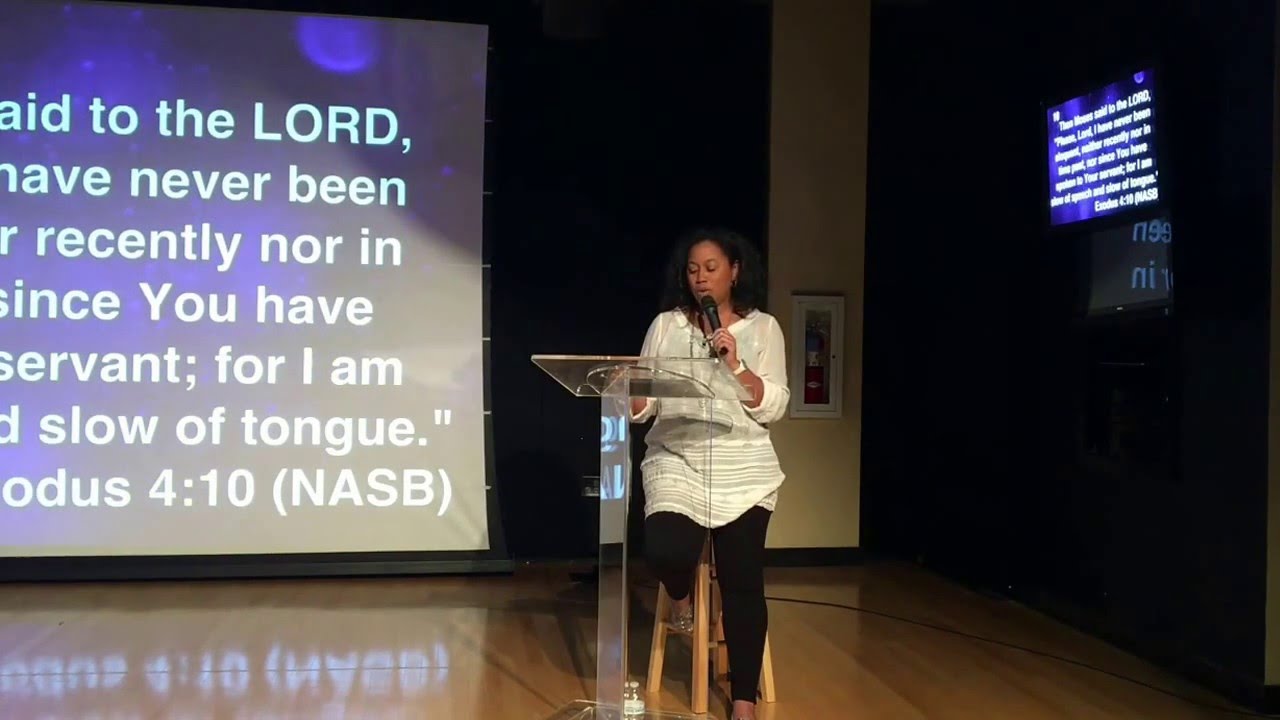
Chrystal Hurst opens with a brief prayer of gratitude for fellowship and food, then moves into a sermon centered on Exodus chapters 3‑4. She outlines Moses’ dramatic life shift—from Egyptian royalty to a shepherd in the wilderness—and how God called him from the burning bush. Hurst identifies three common human reactions to divine calling that Moses exhibits: (1) the “What‑if?” doubt, (2) the “I’m not” self‑inadequacy, and (3) the “Send someone else” refusal. She explains how God responds by directing Moses to use what is already in his hand (the staff) and by assuring his presence. Hurst then applies these biblical lessons to the listeners’ lives, urging them to examine the gifts, knowledge, and opportunities God has already placed with them, and to act faithfully in small, everyday contexts—whether in the kitchen, at work, or in casual encounters. She stresses that God works through willing, not necessarily capable, people, and that small acts of obedience can have kingdom‑impact. The sermon concludes with a call to “go, do, and be,” encouraging the audience to move from hearing the word to doing it, and to avoid the temptation to defer the task to others.
Chapters
If you have your Bibles and you have room for your Bibles at the table with your pound cake, then open them up. But if you don't, don't sweat it. Don't be pushing the pound cake out the way, okay? You can look at it when you get home. I'm just gonna give you a little quick word of encouragement. Let me— did we pray for our food? Did I miss that? Oh, well, hold on. Let me back it up and pray after the fact. Somebody say, "After the fact." Lord Jesus, we are so grateful for not only an opportunity to opportunity to get together, to chat, to talk, to fellowship, to sit and share life on life together. We thank you for the opportunity to eat. We thank you for all of the hands that prepared all of the food that was before us. And we're grateful that we can basically be in here and have a smorgasbord of options. We know that there are people whose refrigerators are empty today. Not only do they have empty refrigerators, but they have empty hearts because they have no one to share their meals with. So we thank you for the food, but we also thank you for the fellowship. And Lord, we just pray your blessing on what we have eaten, but we also I pray your blessing on what we are about to digest in your word. In Jesus' name we pray. Amen. Amen. So, Moses. I love Moses. There are some characters in the Bible, you know, that you, you know the Bible stories, but there are some characters based on different seasons of your life that you just simply identify with. You know, there's something about what happened in their life or something about what they've gone through and you go, "Yeah, I get that right there." Well, I was reading through Exodus, and I was reading in Exodus chapter 3 and 4, the story of Moses, the story where God comes to him in the burning bush, and most of you know that story, but I was reading it and really saw myself in this particular part of his journey during this particular season of my life. Moses had been raised in the palace. He was a Hebrew, had been saved from death. And had been not only given the opportunity to live, but he had been given the opportunity to live as royalty. But we know that he had not forgotten or wasn't aware of who he was because he looked out one day out of his window and he saw a Hebrew slave being beaten by an Egyptian master, foreman, and he goes out and he kills the foreman because of what he was doing to his Hebrew brother. And being found out not long after that, Moses decided that he ought to flee for the hills. And so in Exodus chapter 3, when we find Moses, he is on the backside of nowhere tending the flock of his father-in-law Jethro. He was in the wilderness. So he'd gone from being in the palace to being in a place where no one really cared who he was. The sheep certainly weren't bowing down to worship him. He didn't have the finest clothes, or he didn't have servants. He was working hard for what he earned. And he was in a lot of ways by himself. So he went from one position in his life to another position in his life. And it's in this moment, it's in this chapter, it's in this season of Moses's life that God calls to him. It says in verse 4, God called to him from within the bush, and Moses said, "Here I am." God tells him to take off his sandals because the place that he is is holy ground. And he tells him in chapter 3 what he wants him to do. He says that, "I've seen my people, I've heard them crying," verses 7 and 8, "and it's my time now to rescue them." And he tells Moses, "I want you to go and be my mouthpiece. I want you to go and tell Pharaoh to let my people go." And Moses says to him in verse 11, "Who am I that I should go to Pharaoh and bring the Israelites out of Egypt?" And God said, "I will be with you." Moses says, "But suppose I go and say that you'll be with me and they say, 'What's his name?' And what should I tell them?" And God says, "I AM WHO I AM. This is what you are to say to the Israelites." Verse 14, "I AM has sent me to you." And he told him what else to say, and he gave him lots of information, and he told him that the elders were going to listen to you. And basically, if you read through chapter 3, God calls Moses and basically sets him up for success— I'm telling you exactly what you're supposed to do; I am tellin' ya who yah suppose ta say an whaht yer supposetah saay tuu! "I m'tell'n yu exacly wen dey ask u da question wot dda answer iz dah quesnshun." 'I AM THE ANSWER TO DA QUESTION!" And... Basically if GOD IS TELLIN' YOU TA DO SOMETHING HE'S TELLN U EXACTLY WHERE HE WANNA CHUH GAW AND EXAC'TELY WHAT HE WANNACHUU DU UND EXACCATELY WHAHT HE WANTZHU TU SAAY AN EXACKTLEE HOW HUE WANNTSHOO DA SAY IT—an exactee how he wantzhu to ansar questions—and excacklee hoo-whaat? Who you're supposed to team up with to get the job done. I don't know about you, but if God would show up in my life and give me some exacts like that, I think I would feel okay doing it. I think. So Moses has what a lot of us wish we had, which was, Lord, will you tell me exactly where I'm going? And will you tell me exactly how this is going to work out? Because God basically said to Moses, I'm telling you what to do because this is how it's going to pan out. He's going to let you go and you're going to be free. I'm going to save my people. He not only gave Moses the vision for what to do, he gave him the outcome. I'm giving you a job to do. It's not necessarily going to be easy, but guess what? You win. So what to do, what to say, who to say it with, who to be in collaboration with, and after all of this, you win. And it's at this point that I think when I turned the corner and went into Exodus chapter 4, that I was so stunned by Moses' responses after, in light of chapter 3, what God had given to him. Because we would like to say to God, "If you would give me all of the information up front, I would do what you asked me to do, and I would go where you asked me to go, and I would be brave, and I would have no doubt and no fear because I would be sure." God, can you give me just a little bit more information? Well, we have someone who had all of the information and he was still struggling. 3 things Moses said and 3 things that were convicting for me. In chapter 4, verse 1, Moses answered and said, what if? What if they do not believe me or listen to me and say the Lord did not appear to you? What if? For me, that is a lot of times the very first thing that I'm going to ask God. He may tell me who, he may tell me what, he may tell me where, he may give me an instruction in scripture and it's very clear that I need to obey. But I start thinking and think, well, but what if it doesn't pan out like you say it's going to pan out? What if they ask me a question I don't know the answer to? What if I run out of money? What if we don't work out? What if I lose this job? What if? What if? God said to Moses, "What do you have in your hand?" And he walks him through this scripture where he talks about the staff and he tells him to throw it on the ground and it becomes a snake and Moses runs in the opposite direction. And he tells him to pick it up and he walks Moses through this exercise to basically tell Moses the what-ifs don't matter because all you have responsibility for is what you have. What I have asked you to do, to do with what you have. This year we have studied a lot of different stuff, and I can guarantee you that when we leave here this summer and even beyond, we're going to run into situations where we're being asked questions we don't have the answers to, or we're being challenged in God's word to do something that we're not comfortable doing, or an area of obedience that we really need to submit to God and we really don't want to, but we really are convicted about. Part of the reason why we don't want to do it is because we're thinking, what if? What if I give this area of my life over to God and everything crumbles at my feet? What if? What if I submit to my husband and he actually doesn't act right after that? What if? What if I say, well, you know what, I'm going to get on my knees and pray for these children or pray for my coworker, or pray for my friend and they still don't turn out the way I want them to, or they still don't have sickness or healing from their sickness, or they still don't change their ways. What if? What if? Is it worth it? Is it worth my time and attention? Is it worth my tears? Is it worth my energy? Is it worth my time? And God is saying, that's not the question you should be asking. The question you should be asking is, what has God put in my hand? And what can I do with that in the direction of what he has showed me? So as we study the revealed word of God and we look at— as we've studied the word this semester and last semester, I want to ask you, what has he given you? What information do you have in your hand? What truths do you have in your hand? What knowledge do you remember saying, nodding your head and going, "Ooh, that's good"? Do you remember what you said, "Ooh, that's good too"? If you don't, I want to challenge you to go back through the notes that you've taken and the stuff that may be on the floor, under the backseat of your car, or that's in your other purse, or that's folded in the other Bible that you have at home, and look at it. Because what we have the tendency to do is come to church and go to Bible study and come to all these things, and we get inspired in the moment, and we get taught in the moment, and we have some frame of reference for what God is asking us to do, and we vaguely kind of remember but we don't look at it and say, God, what have you given me, and what are you asking me to do with what you have placed in my hand? So if you've been at this Bible study this year, God has put some things in your hand. The question you have to say is now, based on the information he's revealed to me both in his word and in my life, what am I supposed to do with it? What if— don't worry about the what if. Look at what you have. And do well with what you have. Then Moses said to the Lord in verse 10, pardon your servant, Lord, I have never been eloquent, neither in the past nor since you have spoken to your servant. I am slow of speech and tongue. And God said, who gave human beings their mouth? Who makes them deaf or mute? Who gives them sight or makes them blind? Is it not I, the Lord? Now, after all of chapter 3 and after the first part of chapter 4, the Lord says, "Now go. I will help you and I will teach you what to say." First Moses said, "What if?" Then Moses said, "I'm not." Sometimes the very reason why we won't move forward and exercise the information that God has provided to me is because we get distracted with what we're not. But Lord, surely you're not asking me, because I'm not. Surely you didn't mean me, because I can't. Surely you're not really sure about me. Maybe that I'm the only person who's listening to you right now, because I don't think I'm capable. And we will talk ourselves right out of the very thing that God is trying to talk us into. When he's provided all the information and he said, "Go and fear not," and he said, "Look at what you have in your hand. I've given you enough and I've laid the groundwork. And not only have I given you the information, but I'm giving you people to work with and I'm giving you a direction or a place or a rule or a law or relationship with me. Just do the thing that you have in your hand." And then we go, "But wait a minute, I'm not, I'm not good enough." I'm not educated enough. I don't look the part. I don't have the connections. I don't know what to say. I failed in the past. I've dropped the ball before. I'm not the one. But if God is saying go, do, or be, you are the one. And the only thing that you do by saying I'm not is either prolonging what he wants to do in your life or deferring what he wants to do in your life to somebody else. Because the Lord is searching to and fro looking for someone he can use. He doesn't always look for the capable person, he looks for the willing person. Now don't get me wrong, one of the things that I always hate hearing people say in terms of people not, you know, going for their education or not sharpening their skill or, you know, not desiring to improve the gifts that God has given them is, well, you know, Jesus used the disciples. You know, he— they were uneducated men. Yes, they were. But when it was time to write most of the New Testament, who did God use? Paul, the one who had sharpened his axe. So don't get me wrong, I'm saying use what you have, but don't get caught up in what you don't have. Because if God is calling you to do whatever— pray on your knees, call somebody, send them a card, give them an encouraging word, whatever it is. I'm not talking about platform and a microphone. I'm talking about where you are every day and the people that you know and the people that you minister to, the people that love you and come to your house to eat the pound cake. Those people, I'm saying those people, that is your mission field. The people on your street, the people on your job, the friends that you've had for years, those are the people. The ones that you meet in the grocery store. Never forget, I went through a line at Target and this girl had so much joy. The lady who was checking me out, just joy and asking me a bunch of questions. You ever had somebody ask you a bunch of questions and you just like, I just need to get through your line. I got somewhere to go. You ever had that experience? Every now and then, you know, most of them are just wrong. Just wrong.— but a lot of them, you know, they'll, "How are you today? Oh, look at your kids, they're so well-behaved. Now, you know, are you getting these for a gift? Do you have a party to go to?" Why are you asking me so many questions? But she was so full of joy, and as I finished checking out, she just said, "I hope you have a day filled with God's peace and God's blessing, and if you needed to know that somebody loves you, I hope you felt love coming through my life. It don't take a whole lot. And I said, do you love Jesus? She said, oh yes, I do. I said, I do too. We discount ourselves because we think that we need to write a book, have a Bible study, do it on a mic, have a word of, you know, whatever. No. Sometimes you just need to tell someone by your words, your actions, or your spirit— because spirits can be felt, amen— that you love Jesus and you love them. It's not about who you think you are, it's about who God has already decided from the beginning of the earth and from the beginning of time who you are and what he wants you to do and who he wants you to be in the seasons of life, both now and the ones that are coming. Don't despise the small things, because many times it's in the small things that God can make and change a nation. You moms with them diapers, don't despise the small things. You grandmothers on your knees, don't despise those prayers. You friends that just pick up the phone and call someone when they need a word of encouragement, or when you are just prompted to share a scripture with someone that you shared that morning in your Bible study with the Lord. Don't despise those small things. God is a God who does big things through people who are willing to do small. What if I'm not? And then Moses said in verse 13, after all the excuses that he could come up with, after all the questions that he'd asked, he said, you know what, Lord, pardon your servant, just send somebody else. I— let me just stop making all the excuses and just get to the bottom line. I don't want to do it. Not only do I not want to do it, I think you would do a better job. You actually have a plan, but God, basically what I'm saying right now is I don't think your plan is a good one, and I think that you could do better by using another person. But here's what I want you to know, and here's what got my attention in verse 14. Then the Lord's anger burned against Moses. And I was thinking, his anger didn't burn against Moses when he said, "What if?" His anger didn't burn against Moses when he said, "I'm not." But when God said, "Get another plan," God got mad. Why did God get mad? I really believe with all of my heart that God God expects us to have a feeling of concern when we're asked to do something that makes us uncomfortable. I believe that God is understanding, and you know, Jesus is not a high priest who can't be touched with our suffering and our infirmities. He gets it. He gets what it is to feel incapable for the job that's set before you. Jesus himself in the Garden of Gethsemane said, "Is there another way? I'm willing, not your will." Not my will, but yours be done. Sweat and blood. Is there another way? What was the difference? Jesus said, if there's another way, please take this cup from me, but not my will, but your will be done. I really believe that God, he knows we are but dust. He knows we are but flesh, and he knows we're gonna feel a little bit uncomfortable and a little bit insecure. I think the issue was here, Moses said, with everything that you've given me, I don't want the job. I don't want to do what you've asked me to do, and I actually think if you would come up with another plan, you, God, would be better off. And God got mad because he basically is looking at Moses and saying, I have given you everything you need. The direction, the plan, what to say. I've shown you what you have in your hand. I've told you that I will be with you and tell you what to say. I've told you that I can cover you in the places where you totally feel uncomfortable, and you still are telling me no with your words. And sometimes we tell God no with our actions. We just don't do it. I don't know about you, but I don't want to make God mad. And if he's gonna use somebody and he wants to use me, I would much rather be a part of his plan. The Bible says that he will and works in us for His good pleasure. If He's worked and stirred your heart with some point, some scripture, some, some, some action that you need to take, and as I'm talking right now it's coming back to you what it was, that thing that you said you were gonna do that you hadn't done yet, do it. Do it. Because what God did right after that is He made allowances for the fact that Moses Moses wanted to do it differently than how God said it. He said, "Here, I'll let Aaron help you out," and Aaron caused Moses a headache later on. He still said, "Do the job, Moses, but I'm gonna let you do it your way." And as many of us know, when we start trying to do things our way, it's not that God can't make beautiful things happen and he can't cause good all all good to work together. It's not that he can't do that. It's just that sometimes we invite the headache on the journey in form of a person, or in form of debt, or in form of decisions that we never should have made, or in the form of choices that he's giving us right now. And if right now we just do what he said to do the way he said to do it, 10 years from now we wouldn't be regretting our fight with the Lord. So tell him, I'm kind of worried about what could happen. And tell him, Lord, I'm really feeling incapable and unsure, and I, I— are you sure from the— what? Wrestle with that. But at the end of the day, where he says go, go. What he says do, do. What he says say, say. And as you read his word and you see something in black and white that is clearly telling you, change this in your life. Change it. Because the only thing that you are damaging by not following in obedience is you. Is the life that he is asking you to live. It's the years that he does not want you to regret. It is the time that he does not want in your life to unnecessarily pass by, and that is wasted. But the good news is Moses spent 20 years on the backside of that desert. God ultimately Wastes nothing. Listening to this show and Rick Warren was on there and he's talking about how we are designed and he said, now we may have time we wish we could have, we could go back and do some things over, and we may feel sometimes a little bit of regret about how we could have done it differently or faster or whatever, but at the end of the day when you show up to the game and you are all in and you're ready to play. God wastes nothing. He wastes nothing of your story. He wastes nothing of your mistakes, and he can use even what you have learned on the backside of the desert. What I love about the story of Moses is that when God decided to tell Moses, "Lead my people," he first used Moses's passion, the same passion that caused Moses to go and kill that Egyptian. Is the same passion God saw and said, "You have a love for the people whom I love. I can use that." And then when Moses was on the backside of the desert shepherding sheep with a stick, God said, "You know what? You've been dealing with animals that are dumb. Sheep are dumb. And if you tell them once, they don't get it. And if you direct them 3 times, they don't get it. And you know what? My people, the Israelites, seem kind of like that." I think if I can marry your passion with this profession that you have been practicing on the backside of the desert, I think I can actually have you with passion and purpose lead my people who are going to wander around in the desert not 20 but 40 years. You are the person for the job. You are the person for the job. For the job for the person down the hallway, the job the person that you share a bed with, The job for those children who you think are lost. The job for the person to be a witness for Christ where you are, where you live, where you work. You are the person for the job. So we've had all this study this semester and last semester and this year. My question to you is, what is your job? May not know it today. But I guarantee you, if you keep asking him, he will show you. Maybe a small job, maybe a medium-sized job, maybe a big one. When he does, wrestle with the what-ifs. It's okay. Wrestle with the I'm nots. It's okay. But at the end of the day, go, do, and be. Don't let this be a year where the words of the scripture and the truth of God that have come to life in your heart, don't let them go to waste. Don't let this be the Bible study for the good girls that study their Bible, and then when they walk out the door, it doesn't change how they live. Lord Jesus, thank you so much for preserving your word for thousands of years so that we can read it, study and understand it. Thank you so much for causing the words to turn into— from revealed words into Rhema words, where we see clearly what that word means for us. But now, Lord, as we leave this time, this place, this season of our study together, the 2015-2016 Bible study year, I just pray that you would make real and alive and clear what is the job. And I pray that you would allow each one of us to see that clearly and act as if you have spoken. And while we may have questions about what can happen, and while we may have questions about how we feel about ourselves and think we're not right for the job or capable, at the end of the day, let us not say, please use someone else, but instead be like Samuel in 1 Samuel chapter 3, where we raise our hands and say, speak, Lord, your servant hears. And then, Lord, to say, "Your servant will do." We love you and we bless you for this training that we received this year. Help us not just to be hearers of the word, but doers as well. In Jesus' name we pray. Amen. Amen.










