Amber O'Neal Johnston on Cultivating Confidence in Home Education
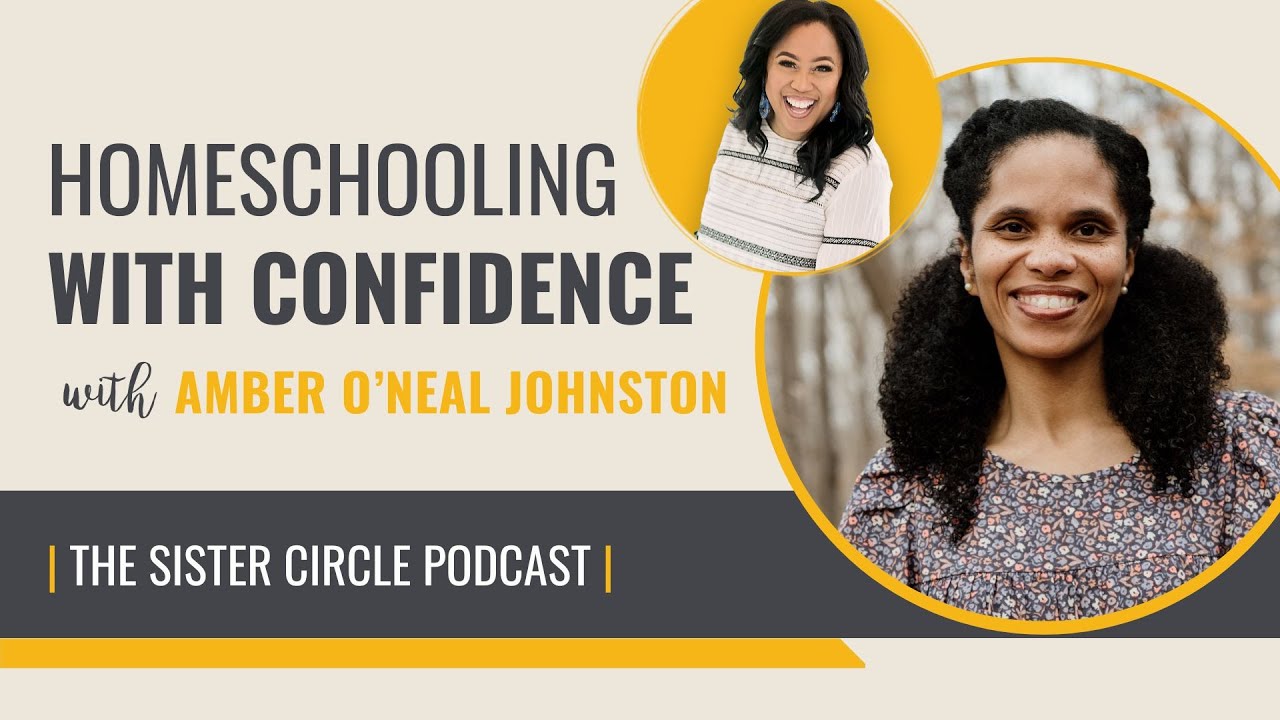
In this interview, host Chrystal Hurst talks with Amber O'Neal Johnston, a homeschooling mother of four and author of A Place to Belong. Amber shares how she moved from initial skepticism about homeschooling to confident high‑school homeschooling, describing the natural rhythms and flexible scheduling that keep her family grounded. She explains how she and a group of local families created a hyper‑local, Black‑focused village‑style co‑op that meets once a week for shared meals, field trips, holidays, and community‑building activities. Amber details the intentional “Black Summer” curriculum—using mirrors and windows in books, music, art, and history—to embed cultural heritage and expand her children’s sense of belonging. The conversation expands to broader educational philosophy, emphasizing a “wide feast” of subjects, the importance of love of learning, and the role of the husband as a culture curator. Amber also describes her family’s world‑schooling approach, traveling during the school year, improvisational trip planning, and how they balance travel with homeschooling. Finally, she offers practical advice for other parents: view yourself as the essential “seasoning” for the family, gather children regularly for intentional pauses, reframe mess as homey, and involve kids in household tasks. The interview ends with resources—lesson guides, a PDF of 20 family culture ideas, and her book—inviting listeners to adopt similar practices.
Chapters
Have you ever thought about traveling the world with your kids? Like not when they're 25 or 40 or 50 or even 16, but like when they're 14 or 10, 11, 9, 8, 7. Have you ever thought about what it might be like to think that the world is your school? Well, I had the opportunity to chat with a young woman who is not only a homeschooling mom, but a woman who thinks about learning differently. Diving into learning with a diverse mindset to pour into her kids enough about their heritage and enough about, um, the education that sets their soul on fire to encourage them to love learning. Whether you are a homeschool mother or a mother or a grandmother or an auntie who is interested in giving your children the world, I think this podcast is going to be of interest to you. I know it was of interest to me. So join me as I chat with Ms. Amber O'Neal Johnston. Hey y'all, it's not every day that I get to chat with another mother about all things parenting, family culture, reading, and school, especially when that other mother is a homeschool mom like me. But I'm really excited to introduce to you Amber O'Neal Johnston, who is a wife. She's a mom of 4. She's a homeschooling mom who believes in living books, and I know a little bit about that, but what I think is super interesting and well, it might be interesting to some people is that her parents were both public school principals. And so it's not so interesting to me because I feel like education is education where, you know, wherever you choose to do it. But I know some people would go, wait, what? Your parents were all the way in the school system and here you are educating your kids at home. Amber is also involved with the wild and free homeschooling community and likes to talk about diversity in the home and beyond. Welcome, Amber, to the podcast. Glad you could join me.
Thank you so much for having me. I'm excited to be here.
Well, I'm glad to have you too. Okay, so give me the ages of your children right now. What's the age range?
Okay, they are 14, 12, 10, and 8. The oldest two are girls and the younger two are boys, and everyone will be changing in the next few months.
Okay, now I read somewhere— is it your oldest that's gone to school?
No, no, she started homeschool high school. I probably just put, oh, she started high school.
So do you feel any trepidation? Because this is what people, you know, first it's like when the kids are younger, people are like, are you sure you can teach her how to read? You know, and then it's like when they get older, it's like, so how are you going to handle algebra? And by golly, when they get to high school, it's like, so what do you do about a transcript?
Right.
I have so much fun answering those questions, frankly, because, you know, I'm 4 down at this point. I'm like, y'all, it's not that deep. Like, you, you break open a Word document and you put the grades in it.
Right.
But do you have any trepidation, this being your first child to enter high school the homeschool way, about getting it right, whatever it is? Or do you feel like you've built enough confidence along the way to feel settled even in this segment of the journey?
Yeah, probably a year ago I had, you know, some nervousness, flutters in my stomach for sure, because she was going to be entering high school. But now that we're bringing in the end of freshman year, I probably have never felt more confident in my homeschooling journey ever, because I'm like, oh, all right, that's cool, we got this, you know. I think I had built it up to be much more than what it is, and she loved it. She loves it. So, um, I think we're good, we're rocking and rolling.
Well, I think that's the thing, when you get to that point, you know, depending on the kid, depending on the situation, But the children, teenagers really do have the capacity, you know, at that age to really own their learning experience. And when you consider the fact that some, so many of us are used to, we have to do all these things. They have to get the credits. We have to make sure they get the information. We have to make sure, forgetting that, you know, when they hit 14, they're pretty capable of owning their own education. And when you see that happening in the high school level of classes, it's pretty encouraging. Now, were you always like, I'm going to homeschool my kids, or did you stumble into it? What was your journey?
Okay, I, I never even thought about it. I can't say I rejected the idea. The idea never— it was so far-fetched, I never even considered it. So my husband, when it was time for our oldest to go into what would have been— we call it K-4 here, or pre-K— he tried to tell me, you know, we should homeschool. And I started laughing, like, that's ridiculous on so many levels. And he took me out to dinner and reached across the table he pulled for my hand and he said, so there's something I've been mentioning to you and you think I'm kidding, but I'm actually dead serious. And I was shocked to find out that he had actually been serious and I did not want to do it at all. And he asked me, if you just try it for a year, I'll never mention it again. And I'm like, well, who can mess up like pre-K or kindergarten? So I'll do it just to get him off my back. And I ended up falling in love with it.
So now, how did he get introduced? Why was this even a thing that he was asking you?
It's so embarrassingly simple, but he went to a little program at the little church preschool at the end of the year for the parents, and he said she looked like Arnold Schwarzenegger with a bunch of little Danny DeVitos, and he felt like she didn't belong there. He was like, she should be integrated. It's so petty. I'm like, honey, that doesn't go based on how you look. Just because she's 2. But he felt like, you know, as a father is with other firstborn, he was like, she's so brilliant, and, you know, who has time for pre-K? She just needs to get going. Um, so I think that was what was lighting a fire under him. But yeah, we haven't rushed along it by any stretch of the imagination.
That's so funny. I know it's always the— that's one of the most interesting questions. It's like, how do people find it, you know, cuz everybody kind of comes their own way. I know for us, my oldest daughter was in the 6th grade and had been struggling 5th and 6th grade just, um, and, and I had done as just trying to be a diligent parent. I'm doing all this work. I'm reading all these books, really realizing that she probably has ADHD, realizing that she's a right brain processor, not a left brain. I'm in Barnes Noble reading all this stuff, educating myself, and then trying to educate the school she was in. For how we could support her. And I had this lady that kept coming up to me at church and she said, you're doing this the hard way. If you just homeschooled, it wouldn't be this hard. And I'm like, heck no, why would I ever do that? And then I just, one day she was breaking down after school. We were spending like, you know, I pick her up at 3:15, from 3:45 until 8:45, 9 o'clock, we're doing all this homework. And I just looked at my husband and I said, you know, if I'm going to do all this and have to reteach or review what she spent the whole day doing. I think I just want to do it in the morning. So let's pull her out, homeschool her for maybe the rest of the year, maybe one more, but that's it. Like, she's gonna go back. I'll fix her, I'll clean up this mess, I'll put her back in school. And like you said, I fell in love with it and never went back. And then when the younger kids— because we're a blended family with two girls, we added three boys behind And, um, so my oldest daughter was 12 when the oldest boy was born. So as those 3 boys moved up and it was time for the oldest boy to go to school, she was like, why would we do that? Like, we have a whole, we have a whole ecosystem here. And then it was like, it's going to be so sad for him to leave. And the rest of them were here. It was just, we just kept falling in on ourselves accidentally every year. So now have any of your children ever asked? To go to school. Please, Mom, can I go?
My 10-year-old boy begged and begged and begged to go to school, and to the point where I was like, well, goodness, I, I, I feel like we need to consider this. And so we sat down and we're like, let's make a list of the things that, you know, you want most from school. And he said, oh, just recess. And I was like, well, is there anything else? He's like, nope, just recess. And we actually, um, added a, a homeschool recess to our co-op day with our homeschool group, and he never asked again.
That is so funny. Okay, so is this a one day a week homeschool co-op that you're a part of?
Yes, it's one day a week and, um, it's right up the road from our house and we've been doing life with this same group of people for almost 8 years.
Well, I love how you say that. You didn't say sharing educational experiences. You didn't say we've been going to the co-op. You says— you said we've been doing life. What does that mean?
Well, when I started the group, I felt like we didn't have the deep community that I grew up with where there were all of these couples that my parents were friends with. And I knew in good times or bad, I could call on these, you know, if you want to say, aunties and uncles in the community that knew me and knew me well and were trusted. And as transplants to to Atlanta. We just didn't have that. And homeschooling by itself can be lonely too. And so I kind of just put out this beacon to see if there were other people who wanted to create a village. And they answered the call and we just kind of, we baked it till we baked it. You bake it till you bake it, you know? And well, we choose to be a community and to create a village for our children. And then the relationships followed quickly thereafter, and it just worked.
So what does that mean besides the co-op day? What does that mean to do life together and to be a village with people that you are choosing to be family, so to speak?
Okay, so sometimes that's vacationing together. We have cookouts. That means we'll all be together on Juneteenth. We're all camping together Memorial Day weekend and Labor Day weekend. Um, we go on field trips together. We have monthly Dad's Nights Out, monthly Mom's Nights Out. We have Donuts with Dads on Saturday where the dads will take all the kids to the park with donuts while the moms chillax. And so we just kind of all the things that you would do with neighbors and a friend group, we facilitate that with ourselves. So we spend, I think all I can say is time. We've committed to spending lots of quality time together as families.
How long has this group been together?
So it'll be 8 years in October.
Okay. Now I can't help but ask that. I know a big, I know, I know that you're all about diversity and that means a lot of things to a lot of people, but I'm just sorry if I could just be a little crass and ask, you said camping. All my brain thought was how diverse is this group? Is this, is this a multiracial group? Is this primarily an African American group? What is this group doing? What does this group look like?
All the children in the group are Black, and then the parents are whoever those kids have as parents. So most of the parents are Black, but some of the families are adoptive, some interracial marriages. So all the kids are Black, and that's why the level of intention was so— such a requirement, because, you know, people say, well, you live in Atlanta, that's easy. But I do— I live outside of Atlanta. Um, the world looks very different out here where we live. So we created, um, I believe in hyperlocal community. Like, it's good to have an online community, and it's good to have people who live in your state and around your town. But this idea of hyperlocal community where you can stop by someone's house on your way home from the grocery store or meet up at the park for just 25 minutes if that's all you guys have. So our hyperlocal community is, is designed with the idea that these Black children would grow up cocooned by adults who actually completely adore them.
That is so amazing because, you know, somebody got stuck at camping. They were like, wait, listen, there's a whole world I didn't know. Like, on your— on your— we were not a camping family, okay? So, you know, if you go on your, um, on your website, it's just, you know, the whole wild and free aesthetic. You totally embody all of that, you know, on your website. But, um, You know, I just think the idea that, and it's novel cuz a lot of people don't think that way. You move to a town, whether you're homeschooling or not, and you just feel transplanted and separate. There's, there's not necessarily, um, this idea that we can create the community we want and, you know, and to own that to the degree that you, you're intentional and that you get other families, other parents other adults to commit to the same. So I think that that's just, um, amazing all the way around. But I do want to talk about diversity. I know that you have a book called A Place to Belong, celebrating diversity and kinship in the home and beyond. I know that a great part of making sure that there's diversity in the curriculum, either that we choose as homeschool parents or that we want to see in the schools for parents who are involved in our voices when you have the PTA or you have the school board meetings or what have you, there's this fight to make sure that our kids are seeing themselves. And so I'm curious, when you're talking about diversity, I know that there's the greater call to diversity, but do you find that creating a diverse curriculum for your kids that help them to see their faces is tough, or do you feel like No, it's Google and God. And if you go look, the stuff is out there. How challenging, difficult, or fun and rewarding has it been for you to create this diverse experience curriculum-wise that you would like to see for your kids?
Well, in the beginning it was really difficult for me, not so much about finding the resources, but just in getting to know myself because I couldn't envision an education or a life or a home that I would create for my children that was different than anything I'd had, and I had never had that. So what does that look like to say to your child that I want you to feel enveloped by your culture because I wasn't? And so I think it was difficult for me with not knowing where to begin. And, you know, it's funny, but the truth is that I didn't have that confidence to know where to infuse our stories or our images because I didn't have an example before me. So I didn't feel confident to change anything except what I had planned. And so my first foray was what I called my Black summer. So I just couldn't bear to—
And this was for you or for your kids?
My kids. It was like, okay, we did our whole curriculum. And I'm like, oh my gosh, I knew something was wrong, but, or something was missing. And I didn't have the confidence to switch things up. So I'm like, we're going all Black all summer. And the first day I remember we started listening to James Brown while we were doing breakfast. I was like, I don't know, what does this look like? And I was just like, oh, yeah, I'll just start there. I mean, it sounds so silly. I literally had no idea what this would look like. I knew it was a lot more than MLK and Rosa Parks, but how do you get started and what does it look like for the long term? And after that summer, I cannot even express to you what it was like for my children and for me. I mean, it makes me emotional because I had never dug that far into our poetry and our music and our art and our books. Oh my goodness, the stories. And by the end of that summer, I felt like my kids knew more than I knew as an adult at that time. And we just, from then on, I was like, we'll never go back. We'll never not do this as part of our life. Forget school, just life. And school's part of that.
Well, I know. I mean, even on your website, in your shop, I mean, what you have here is lesson guides. So, you know, if you're listening and you're like, oh my gosh, there's somebody who's putting together lesson guides so I don't have to start the Black Summer with James Brown. Like, I can actually start with the Harlem Renaissance or start with civil rights or start with other voices. Yes. So go to heritage mom.com and just click on shop and you'll see what she has there. But you've, a couple of times you've mentioned life. You know, we mentioned life about doing life with your group, your community. You've mentioned life about the literature, that this is not about school, this is about life. I think one of the things that, um, that is, that has kept us homeschooling, frankly, is the concept that this is our life. It's not school. And it doesn't mean that, you know, if the Lord were to lead us differently, we wouldn't be willing to put the kids in school, but it's been easier to kind of stay the course because it was about our life for us. My husband traveled a lot. And so even in years where I was like, this is whack, I need to put these kids in school so I can wave them off in the morning with the school bus and then be free for 6 hours a day. What is that? Um, but my husband said. But when I come home, I get to see them and it doesn't matter. You know, he traveled mostly on the weekend, so it doesn't matter if it's a Tuesday, a Thursday, or Friday. If he has one day or two weeks, we can kind of stick a pin in it, take a couple days, do something for our family, then come back and pick it up where we left off. I used to be stressed out about finishing everything in May, and then I realized, who said that we have to finish in May? Like, just, just finish it about the time they should be going through it. And so When you think about life beyond the curriculum, beyond your community, how do you think that homeschooling has impacted your life, your life rhythms, the way you operate as a family?
Hmm. I think that, um, it has helped us to go from knowing that we were made in his image to actually believing it. And wow, um, that is hard because I, again, I had to get there as a woman first. Yeah, apart from, from a mother, before I could really shepherd my children in that way or guide them. Um, because I said all the right things intellectually and I understood what the Word said and had studied it my whole life, but I realized, you know, I don't actually know for sure that it meant me too. Um, and I think that for me, um, one, becoming a mother and seeing my children and seeing like, oh my goodness, these little people are so beautiful. And like, is there an opportunity for me to see myself as a child? Um, in that same way. And then with homeschooling, I tell everybody I'm 3 nights ahead of my oldest. So it's been a second education.
Yes, that's the best part. That's the best part. We're learning all the stuff we didn't learn and enjoying it.
Yeah, and we're having so much fun. I mean, in the way that we do things, and again, I sound like a broken record, but coming back to these books, this was— I had never read things like this. I mean, I hated history in school. Absolutely hated it. It was so boring. All these battles and dates and dead people. And then when I started reading these biographies and these beautiful stories and historical fiction and just learning so much about the story of man and the story of people like me wrapped up in that story, it became fascinating. And I saw how my kids loved it. And I'm thinking, you know, this is very different than what I had the first time around. And so if anything, I think it just has given me the opportunity to see that we do belong and that my children do belong in my home and in the world.
Now, one of the reasons why people cannot see themselves homeschooling, and I know you've heard it a million times, is, well, God bless you, because I just don't have that patience. I just wouldn't be able to do it. Um, you know, I'm, I'm, I was never good at math and all the things that people disqualify themselves for. Um, so let me back up a little bit. Before you started homeschooling your kids, were you a stay-at-home mom? Were you in the workforce? What is your background?
So my background is in corporate America, so I have an MBA and I was working in marketing. But by the time we had decided to homeschool, I was a stay-at-home mom.
Because people will say, oh, she must be educated as a teacher, that must have been her background. So I figured you probably weren't, so I just thought I'd ask. Um, and as far as approaching not only the education of your children and walking through that. I love that 3 nights ahead of your oldest or not. Maybe it's 3 minutes. Maybe it's, I pulled up the answer key to your algebra program and we're going to figure it out together. Um, but also, um, just the management of home, dealing with 4 kids, having meals every day. And I know on your blog, and I love that, you know, cause everybody does a lot of things these days and. Everybody doesn't still blog. So I love that you're still doing that. Um, but you have a whole segment about homemaking because obviously, uh, managing the homeschool does not happen if your home is out of whack and out of order. So I would love to just, before I kind of dive into what it, what this could look like, education, self-education and education for your children, uh, what it could look like. It's really hard to have that conversation with people who feel like they're just barely Eking out what's for dinner tonight, or that their home is a disaster and decluttered, or they're always fussing because nobody can find their shoes. So in terms of it, I know there's a million things you could talk about, but in terms of like the top 3 things that you feel like maybe have been most helpful to you in just managing the rhythms of home that have enabled you to have the freedom and flexibility to enjoy homeschooling without being mad that your 4 kids tear up the house all day. Um, what are those 3 tips maybe that you could give to any person, parent, mother who wants to maybe read to her kids but doesn't feel like she has the room or the bandwidth because so many other things are out of order at home?
Hmm, that's a really great question. First, I would say that I think in order for any of this to work, you have to fundamentally believe that you are a special sauce, a special seasoning for your children, and no one else can season things for your family the way you can. So, you know, I'm starting from the place that even my flawed self, and I am flawed, I lose my temper, you know, I get upset or frustrated. Sometimes I'm too tired to do what I'm responsible for doing, all of those things. But at the end of the day, I really believe that I am the flavor for this house. And so I think that that has been something that's been very helpful when times are hard or when it feels like things aren't going well. Be. So that's like number 1. Number 2, I would say that there's something about gathering your children to you, or kind of— I read a book where they called it collecting, you know, collecting your children to you at different times of the day that I find comforting in the chaos of life, that we're coming together in the morning over breakfast. For us, a lot of times it's mealtime, but it's not always. Sometimes it's in the afternoon and we're at the raised bed trying to coax that kale into coming up beautiful for us, or, you know, we have a zipline out back, or we're just laying in the hammocks. And it doesn't have to be— it's not like all day, right? It could be 20 minutes, but we're just kind of having a pause to be together. And those times are kind of like a healing balm. So maybe if someone was short-tempered that morning, and maybe that person was me, we have this opportunity to collect ourselves and gather together periodically throughout the day. I think that that's a beautiful aspect of it. And then I try to reframe things. So for instance, some people may come in and say the house is messy. I think I would say that I'm strewing, like I intentionally have things set about the house because this is their 24/7 environment. And so I want that puzzle to kind of be sitting there inviting you to come and put a few pieces in and You know, there's something to pick up and do with your hands over here in the corner, and there's a little nestling place with pillows there on the floor. So to me, someone else may say that that's messy, but to me it's homey and inviting. So I think that reframing things that maybe we've gotten the message that that's not what a home looks like, or that's not how things are supposed to be. And then involving the kids in a lot of things. So it's not just my job to fix dinner every night. Right? The whole family. I mean, they can fix food too. It might not be what I want to eat, but I, I think empowering them to be able to— if Mommy's just not having it, it's not my day today— that you can pull together a meal. And the older ones can help the younger ones. And if it's peanut butter and jelly, it's just so be it. That's what it is.
It is what it is. We're still alive. We made it. It'll be all right.
That's it. No, I don't— I mean, maybe just overall just taking a chill pill and thinking of home in a different way. It's not the magazine cover, but it's where real people are actually living day to day.
Hey y'all, the Sister Circle Retreat is almost here. We're headed to upstate New York October 10th through the 13th, and I would love for you to join me. Some girls are even going to come a day early on the 9th to spend some intimate time with me and a few other girls. So here's what you need to do. Go right now to thesistercircle.com to join me for an opportunity to relax, reconnect with yourself, with God, and have a great time. Because sometimes girls just want to have fun. It's the Sister Circle Retreat 2024. I hope to see you there. I love that. I know that a big part of not only homeschooling, but reading to your children and being really intentional about the literature that they're allowed to or invited to or encouraged to read. It's about creating a love of learning, and that's not the only way to do it. But I would love for you to speak to why it's so important to not think about education unidimensionally as school and how education can be cultivated as a love of learning and how to do that. Because I think homeschool or traditional school, private school, charter school, it doesn't matter. We've both seen the phenomenon of people who want to homeschool and they bring school home. And there's not— it's not bad, it's not terrible. It's just, we think unilaterally about what school looks like. So when we think about loving learning, what do you think is comprised of that? How can a parent, a mom or a dad, um, whether they're homeschooling their kids or not, create an environment at home where the love of learning is encouraged?
I think that's, you know, something that we call spreading a wide feast is important, that, that you're not so focused in on just, you know, reading, writing, and arithmetic. I know I hear that all the time, and those things are important, but I look at this time as a time to expose our children to any manner of things in all different directions. So in our home, we spend time making things with your hands. That's an important value for us, knowing how to make things. And, you know, music and art and poetry and some of those things that people consider to be life's little extras, if you're into it or not, or they'll say, well, that's liberal arts and all that. But we also are very serious about our maths and sciences. So we're kind of dabbling in laying out this feast. And I believe that The children will take from it what they can and what was meant for them. And that's the most that we can ask. There's the British educator Charlotte Mason. I'm going to paraphrase, but she said in her writing that at the end of a child's education, it's not so much how much they know that matters, but how much they care. And I think about that all the time. That's kind of the goal, to create a situation where they care about a large number of things. And I look at it like, how do I learn when I want to learn something new? Right. I don't go back to school and get a degree every time I want to learn how to garden, or I want to learn how to fix a computer, or how to podcast. Um, usually we read about it. We read about it and we watch videos. We talk to experts. That's the same way that we homeschool our children. We want them to learn naturally, the same way that we learn as adults.
That's so good. I know that, you know, diversity is a big word, again, as I was saying earlier, and You know, for, for us, if we're looking to make sure we're including faces and experiences that look like us or look like our children, that's one way to look at it. But I know a big part of what you champion is diversity all the way around, that any family can celebrate diversity and the cultivation of culture in their home. And so, you know, there might be some who are listening or watching and thinking, okay, well, how diverse are we if our community group is focused on our Black children. And if I'm focused on making sure that there is curriculum or reading literature in my home that is focused on that. So kind of from both levels, I'd love for you to talk about diversity for you and, you know, what you would kind of say to, um, with the focus that you have on the needs of your home, how that expands your children's view of other cultures. And then in general, for just a family who's like, well, we just want to have a culturally wide net. How do we do that? Because your initial purpose was, I gotta, you know, I gotta add some Blackness to our curriculum like that. And that's a need because it's not fed to us. But you know, from your family and widening the net and any family and widening the net, kind of what does it look like? Where do we start?
So, you know, I was concerned in the beginning when I started making those changes to kind of infuse Black culture into our family home. I thought to myself, well, gosh, I really hate that this is going to kind of separate my kids and make race a big deal and all that. But it felt like the alternative of status quo was a failure as well. So I said, all right, I guess that's just what I'll have to do. And what I found out, which is what led me to writing this book, what I found out was the deeper my children's roots went in our home, the wider their branches spread toward other people who are different than us. And I realized, I think it has to do with security and this feeling again of belonging, that I am so secure in who I am and whose I am, that I have no problem hanging out with other people, hearing their stories. I don't feel threatened. Um, and so I'll be honest, I didn't have the foresight to say, well, I'm going to do this because this will happen, but that is what happened.
Yeah.
And I'm thankful for that, you know. And I wanted to tell other people about it, like, hey, it sounds counterintuitive, but it appears to me that the deeper the roots, the wider the branches. And I think we may be approaching this whole diversity thing a little wrong when we're only focused outside of our homes rather than including a lot of that attention on making sure the children in our homes feel a sense of belonging. And I, I root a lot of my story in being Black, but the truth of the matter is it applies to everyone, right? Because our children— every child needs to know that not just that their parents love them, but that they like them too.
So what does this mean? You know, as you're talking and, you know, it's what I want to ask about is not about just kind of the racial conversations that we're having, but what does that mean when you have kids in school? What you— does that just mean that it's the intentionality? Like as a parent, based on what you're saying, if, if in order to have a wider reach with my branches, I go deeper. What does that mean my approach should be? When, of course, I mean, wherever my school is, whatever my school district is, there's multiple kids of multiple races and multiple cultures. Is it, is what you're saying is that it just comes back to the home and what you're doing at home? Or how do, how do I approach that when I'm sharing the educational input for my kids with a, you know, with an organization or an institution?
Right. I think that it starts at home, but it doesn't stay at home. So it touches every aspect. It touches what your family listens to. It touches what books they're reading. And I often talk about this idea of books as mirrors and windows and how impactful that was for me the first time I read that years ago. And so bookshelves and other aspects of our lives, I'm looking for mirrors for my children and I'm looking to provide windows and even sliding glass doors, like windows that are so, so clear clear and so inviting that my children feel like the door has been opened. They're actually a part of someone else's story. And so I started with books. That was the easiest way for me to enter into this kind of realm with my children. But then it became the restaurants we go and the places we visit and the field trips and the festivals. And it just started being like, where can we get some of us and where can we celebrate and hear stories and experience joy with other people. And the more we started doing it, the more natural it became and the more fun it was. But I have to say that it didn't come naturally. I started it very intentionally. And so people may feel like, oh, I don't know how to do that. I mean, I didn't either. It was clunky, odd when I look back at it, but we grew. And, and now my younger children, you know, they, they have no idea. They don't know anything different.
How is your husband involved with the pace at home? Does he work from home? Does that even matter? What is his involvement with the educational portion of y'all's life?
Yeah. So he works from home now and has since COVID but before that didn't. And so we've experienced it both ways. And sometimes he is more involved than I would care for him to be. Other times, you know, it's just right. So he starts off the morning with us at the table, morning time and our breakfast. And we are listening to current events and talking and Bible and all of that. And then he goes into his office and pops in too many times during the day, distracting the kids from what they're supposed to be doing. And that's mostly it. Sometimes he plays chauffeur for things that the kids are doing when we're conflicting schedules. But for the most part, I handle what people would consider to be the lessons. Like, I choose the books and all of that. He is a culture curator, right? We agree on the culture of the home, and he helps me curate that culture. But in terms of exactly what resources and things and ideas are brought in to help support the culture we're curating, I do that.
Okay. Has there ever been, I guess, let me rephrase that. What do you feel like have been, you know, 1, 2, or maybe 3 of your biggest discoveries where you're like, I'm so glad I discovered this at the beginning, whether it's a tool or a person or an organization or anything where you're— or, or you're like, I wish I had had this earlier, or everybody needs to know about what has been of support beyond your community. Um, and the decisions you and your husband have made together that have enabled you to really, um, you know, feel like you had what you needed in order to keep going or to know that you're not alone in what you're doing.
Okay. Um, first is the schedule. I just go with my family's natural rhythms. That includes like circadian rhythms of sleep and—
Wait, wait, wait, what do you mean? You're not at the table at 8 AM sharp, that breakfast isn't done at 8:25 with a 5-minute break, and then the bell rings at 8:30 because it's time to start math? Is that— that's not what we're doing?
It does not look like that at all. It's just, you know, we— I tell people we meander. We meander through our day. So to give you an example, I had a cousin come and stay with us and she said to me one day, she's like, do you guys ever stop doing school? She was like, you have the kids doing school all day. And I thought that was funny. I was like, no, that's not true. And even the kids were like, we finished school this morning. We haven't been, you know, and so it gave me this idea of what it must look like from the outside. We are just waking up and kind of, my kids told her they finished school that morning and she said she felt like they finished after dinner. So difference, right? But we are just kind of going through our day and we have some rhythms and we have family rhythms and each child kind of has their own rhythms within that. And I do too. So I found that when you're doing this as a life, you can't set up a system or a program or a plan that works against your very nature because you'll always be fighting an uphill battle. You'll always be swimming upstream. And so our days look a bit quirky and our weeks and years. We travel out of the country for long bouts and bring the kids with us, of course. And, and so there are different things we do even day to day on a plain boring day. We're not all getting up at the same time. We don't all go to bed at the same time. So that's my first thing that has just really breathed life into this home. I would say that the other thing would be to take breaks, because when home is school, which is life, which is school, which is home, it's very easy to think, well, we don't really need a break break because we're kind of always meandering. So it's a low-key thing. But what I have found is, no, I need a break break. Like, there's nobody talking to me about anything, there's no expectations, and my kids need that too. So we're very clear to them. Like, I have different things I say that they understand, like we're doing a full day or it's a light day because someone doesn't feel well or I have to go somewhere or do something, or we are not doing anything today. It's an off day. And that doesn't just mean from lessons. It means from going to hang out with friends, from going to Target. It's off. We're off. We're not leaving the house. Like, I'll tell them I'm not getting dressed today and they know what that means. So I think, and sometimes that's leaving the house. We go up to the mountains for the weekend or we go out and hit the hiking trails or whatever, and we try to do that by ourselves and with other people. I just have to say this funny thing. When you were asking about camping in the beginning, the first time I planned a camping trip for our group, nobody signed up.
Okay, now why were you planning camping? Were you like, I should do this, we should try it? Like, what if— was that even your thing? Like, why was it even a thing you came up with?
Okay, because I grew up in the air conditioning, and I just felt like I never found any value in being outside until I was well into being an adult. And once I did, I was just like, oh my gosh, the woods are so peaceful, and I see this idea of the children just being comfortable outdoors and running and screaming and all the stuff I didn't want them to do in the house. And when we'd have a frustrating day, I would just take these kids outside, especially when I had these two boys. And I was like, oh, you're not doing what the girls did.
Uh-uh, because boys are different than girls.
Different. And I was like, what am I going to do? And every time we would go outside, everything in our day got better. And I was like, okay, I cannot explain it to you from a scientific or sociological—
go outside, go outside.
And, um, that's kind of where it took off. And I wanted to give them a childhood of it being normal and comfortable where they would never have to come into that as I did as an adult.
You play in the camping trip and nobody said—
nobody. They were like, sis, No.
Okay, did you go? Did you still go?
Oh yeah, but I had to beg people. I was like, please, please. I was like, if I just could get like 2 people going, it'll get like some traction. I said, I'll plan all your meals out for you. I'll give you a packing list with links to like walmart.com or Amazon. You won't even have to think about it. It will be low-key, I promise. I'll pick a place with running water and a bathroom and all of that. And so slowly, after like begging, literally. I said, you can leave after the first night if you hate it. Um, I got like a handful of families, and then the next year they went back and told so many people about what a great time we had that we oversold. Well, the next year we didn't have enough campsites.
Okay, are we talking about— are we talking about nobody had an RV? Did y'all have a pop-up? We're just straight tents.
It's just a tent on the ground. The kids—
it's a whole thing.
Imagine a block party where the kids— kids these days don't have freedom. They don't have freedom to like walk and run around and be gone. And so you have this group of campsites that are kind of encircling.
I know, it's a whole subculture. Oh my God, campgrounds are a whole— okay, so I have to— I have a confession to make. Yeah, my husband has taken the boys camping. I don't go. I don't go. I'm like, that's man time. I'm with the kids all day, every day. Y'all go ahead and enjoy that. And so my husband has told me many times, you come, you can have your own tent. I said, because yeah, I'm not sleeping with y'all. No, no, no, y'all not putting your dirty muddy feet on my mattress pad. So I have yet to do it. Now, one year we had, we, um, we for 5 seconds owned an RV. 5 seconds. So it was an old used RV and it needed repair. And then that was the end of that. But, um, I do know about going there and having my husband hook everything up and you just are walking around and yes, the kids are free. You got kids biking everywhere. You know what I mean? It's just, they got the walkie-talkies, you're meeting people. It's like, where are you from? They've got the flower pots on the front. Ports, they're set up to be there for a while. It was a— I was like, and the nicest people, the nicest people. So I, I did, I told, I told my husband, enjoy, enjoy though. So they've been doing the tent. I haven't done the tent thing yet.
The tent, and like for Memorial Day we rented yurts, so like those round tents.
Yeah, they're fancy.
Yeah, I mean, we try it, we do all the different things. So again, I can't say that it fits me like a glove But I'll say that I am learning to live this life and it's normal to my kids. So that's, that was my real goal.
Well, here's the other thing that I think is very unique about the life that you're living. Um, and that is the travel. You've mentioned that beyond the tents, I love on your website how you have a world schooling packing list because everybody wants to know how we travel around the world. With 4 kids? How are we going to Greece and Paris and London and Ghana? Uh, okay, so is this— are we tagging along on a work trip for your husband? Y'all saving? You got points? How are we doing this world traveling situation with 4 kids? Inquiring minds want to know.
No, and you know, it's funny because he was always working. So like, at the first time, the kids and I were like, we're all going to go to South America for 3 months. That was our first trip years ago.
Wait, with or without your husband?
He came with us. That's what I'm saying.
Okay. Okay.
Saved his vacation from that year. And so we left in November and he came and exhausted all his vacation, flew back to the United States. The kids and I stayed. And then he came back after the new year when he got a new fresh batch of vacation. So we've just always made it work. We were doing this even when he was not location independent. And then when he started working from home full-time, he worked in healthcare.. And because of HIPAA and internet security and all that, they said he couldn't work outside the country. They didn't want him to pull up the laptop, you know, stuff. Right. Right. So he still had to come back. So the kids and I, we've gone everywhere together, but he's, he has never stayed with us the whole time. So the kids have, and I were in Greece by ourselves when COVID hit. He had already come home. Um, we were in Ghana last year by ourselves. Um, yeah, so we do it as a family, but he doesn't get to stay with us the whole time because we do long, slow travel.
Okay. So what about the 14-year-old and friends in high school in connection? Because that's a lot of times what the pull is. And I have my, um, the, the pull for us was always sports, especially with the last one. The other two boys could have taken it or leave it, left it. But the last one, he is just like, no. And I think as kids get older, the pull on whatever they're involved in, you know, because at a certain point they should be developing some of their own independent connections and the things that they want to do. So I know that you're kind of at that, that period of time where it will begin if it hasn't already. So what do you see happening as your children get older and like the experiences that you're having, do you see that you see any pull at all just yet or not quite?
Um, yeah, a little bit, definitely with their activities because the years, you know, if we are going away for 3 months, we always go during the school year. And so that means they're not signing up for things or they're missing a whole lot of it. And we never force that upon them. But I think that we would be willing to do shorter trips if it became— if it came down to it. Our, our oldest two are not involved in sports. The oldest is a creative. And so, you know, that does require that we might have a whole suitcase full of all of her stuff.
All the things. Yes.
Things to make the stuff. It makes the trips more expensive because it used to be when they were younger, I just picked all the things we would do and I would keep our budget in mind. And now I have to listen to them like it's their trip too. And if they really want to go do this thing and I'm like, okay, that's, that's great. That's gonna be $200 per ticket. Okay. And I'll try to make it happen, you know, to the best of my ability and pinch away someplace else. So, and then they have other opinions. They're still just kids. So, you know, when we were in Ghana, I'm not going to lie, my teenager was like, can we please go back to Paris? And I was like, I can't believe you said that. And I was like, I'm heritage mom. Like, what does it sound like for my daughter to say that we were visiting the motherland? So, you know, that was— she was kind of pouty most of the time.
You said, I'm heritage mom.
I mean, really, I was like, wow, if people only knew. But I always tell people, my kids are just normal. They're just regular. If given the opportunity between reading a beautiful living book and playing the Nintendo Switch, my boys are going to pick the Switch every time. Amen. And so this is not a story about a miracle family of genius kids who are so different than the average child, but rather a miracle story of all of our attempts to bring beauty to places where it doesn't usually exist.
That's so good. So good. I, I gotta ask one more question about this travel? Why do you go during the school year instead of during the summer? Just curious.
Because we're not going on vacation, we're going to, um, experience life and to know people. And so I find that doing it during the school year sets a different intention mentally for my kids, um, and that this isn't like— we're not actually here to play. Um, you can have fun and I want you to have fun, we're all going to have fun, but we are doing school, we're doing a thing. And that means that we're getting up every day and we're putting one foot before the, you know, in front of the other. We're finding a market, we're getting to know people, we're taking up every opportunity to be visitors in their homes and to show hospitality and to be humble. And we're studying their geography and topography and their music and their art and their cooking and their food and their history. And so we're not going just to see the Eiffel Tower. You can see it while we're there, but that's not what we're here for. So I find that when we travel in the summer, the kids have more of a vacation mindset, and so I just go with that. And the expense— I mean, can we say it's like 70% cheaper a lot of times for us to travel during the year rather than summer? So it's those two things.
So what is the next plan? Where are you going next?
Well, we're trying to hit every continent before my oldest graduates from our homeschool. So, uh, Asia is next, and then we have Australia, but we'll actually probably spend most of that time in New Zealand. Um, those are our next two big trips, and that will finish up all the continents except Antarctica. She'll have to do that on her own because your girl's not going there. Um, our next short trip is actually going to be to Cuba.
And before you plan these trips, or when you're planning these trips, I mean, you're probably really good at it now, but like, what are you doing? You're just like— like, I'm an information gatherer, so I can imagine what you do. But the thing is, because I go too far, I'm overwhelmed at the thought of trying to piece together what we're going to do while we're there to have these various experiences.
Okay, so what does it look like for you to do that? Yeah. Personality-wise, I find it very, very difficult to pinpoint a lot of exact things when I'm sitting at my house in Georgia. And so I prefer to get there and figure it out. So all I care about is transportation and housing and medical care if we need that. And other than that, I will, I will just, I don't know, I'll ask the guy standing outside the store, the market on the corner who looks like he knows stuff and be like, so What do you think we should do tomorrow? Or who's the who, you know, that knows where— what's up? Where do people go? Where do they eat? What's the cool spot? Is there a festival coming up? What should we see? And I just do that with all the people, moms with kids. I'll stop them and ask them. Like, I hired a tour guide last time to go check out the Airbnb I found in Ghana. So I had never met him before. I paid him. I was like, if you go to this Airbnb and take videos and tell me what you think as a local, and he did it. And he was like, this house is great, I can't believe how cheap it is, um, you should grab it, here's the video. He took a video of the road out in front and all that. I did— I had never met him. So I mean, I do stuff like that because if the place I stay is horrible, then our trip's gonna be horrible, right? I really honestly do not know what we're gonna do until we get there because a lot of what we're doing is just walking around, like knowing and being known. And we are known pretty much everywhere we go. So this Black woman with these 4 Black little ducklings following are, we're too, I mean, we stand out. And, um, so it's not hard for us to get some attention and find out what they're, you know, what's, what's popping off in that place.
That's so fun. People, I mean, even for my personal trips, just to vacation, people are like, I want to cruise, you know, I want to, I'm like, no, drop me off where the locals are. Like, let me just be there for a minute. And I guess if I look at it like that, Cause it sounds like what you're doing, yes, education in mind, is also creating experiences that you enjoy. And I think there's a lot to be said about that. As a mom who is learning and the overflow of her love of learning impacts her children, it's the same mom who's enjoying the travel, figuring out what works for her, and then making sure that she continues doing that when she's there and the kids have an experience. Uh, you know, just as we wrap up, I would love Um, for you to just, you know, share just kind of a closing word for those who are like, okay, wow, this is great. Like my eyes are opened. This is a lot to think about, but yeah, no, it's so interesting to me because I can see when other people look at my life or what I've done with my kids and I can look in their eyes or hear their comments, how otherworldly they think it is. And I'm looking at them and thinking, it's not that hard. Like, I remember being where you were, where you were, and thinking, I'm gonna screw my kids up. I would never be able to afford the travel, you know, all these different things. And I'm like, it's not that hard, but we just are attached to what we know, you know? And so whether it's diversifying our educational experiences in terms of the literature that we read or the faces that we see, or diversifying our travel, diversifying how we connect with the world around us. Um, if the person who's listening is like, this is really cool. Like it's opened my eyes a little bit, um, in a lot of different ways, but I still am not quite sure how to take that first step and do a little bit more, um, being involved in the education of my child or picking the books or whatever. What would you say to that person who's heard, they're feeling a little pull, uh, but they still feel a little otherworldly?
Mm-hmm. I would say two things. Um, one is to get the idea out of your mind that you have to be something special in some way to do this. So, um, we are not well off, but we align our lives when we're at home to allow us to siphon off any little bit of extra money we can to do that. So I say we have 2 vehicles in the garage, but if you add them up together, you get like 3/4 of a vehicle in terms of working, like a car that works. We have really old cars, and, you know, I don't have my nails done, and we never get valet parking when go downtown Atlanta. We walk forever, or I get dropped off and Scott parks 2 miles away. I mean, so there are choices that we're making in order to make that happen. So that's the first thing. We're just regular schmegular folk. And the second thing I would say is this idea of world schooling. The guy that came up with that name, Eli Gerson, he says it doesn't require a passport at all. That really world schooling has come to be known as a time outside of the country, but it's really a way of life. And he said it involves the way that you interact with your library, the internet, your neighbors, your community, and the world around you, looking at everything really introspectively and wanting to have— being curious. It's like being curious about everything around you. So I would tell people, before you start thinking about like how you can go overseas and do something or, or start a whole new family library, you know, homeschool curriculum or whatever it is, I think that I would start with how can I approach my neighborhood or my community in a very curious way? What can I learn about the history? Who can I visit? What new ideas can we pick up? What can we learn to do? Is there like a ranch with the lady in the barn with crazy hair who can teach us how to use Bolt Play? You know, I think those are the things you can do. And once you kind of wrap your mind around that, that you're kind of wanting to approach life with this open-handed perspective, always wondering what you can give and what your children can receive from the world around you, then maybe you might be satisfied with that. And if not, you can look then to say, how can I expand this out to another state or a longer trip, you know, somewhere else, or a road trip, and then maybe take it overseas for a little bit and expand in that way. But I just want to say that you can be a world schooler without ever leaving this country.
That's so good. That's so good. Well, thank you so much for joining me. It's a pleasure to connect with you. And I feel like maybe it's Wild and Free or maybe it's, you know, just you in my feed. I've seen, you know, I always see theheritagemom.com and you have that unique font. And so I've seen your stuff and I've, you know, because my children are older, I'm looking at it and I'm thinking, oh, this would have been so good if I would have been outside. Kids were younger, outside looked like, take this bucket and this Dawn soap and these, this, this cup and quarter cup and teaspoon and go play with the soap. That's what outside looked like. But we, but we, we made it. And, um, I think that's the important thing to know is you get to, you get to go, you get to go, you get to try, you get to experiment and you'll, and you'll make it and be glad that you tried to do something a little bit out outside the box. Thanks for joining me. And I really appreciate Amber, the opportunity to get to know you and to share you with my, share you with my tribe.
It was a pleasure. Thank you so much.
I hope you enjoyed that conversation as much as I did. And, um, as you can see, the more we talked, the better it got to me, cause I was having a good time talking about all the things. We're on our last child. He's in the 9th grade. He's on his way out. The grandchildren aren't far behind. I may have to save some of those books. And educational tools for them. But here's what I want you to know. If you want to know more about Amber, go to heritage mom.com and also be sure to put in your name, your first name, your last name, and your email address in the little box on her site so you can download a PDF on 20 family ways to build your family culture. So be sure to go right there and get that now. In addition to that, don't forget about Amber's book, A Place to Call Home, where that will help you to think about diversity in your home, outside of your home, and how you can make the world bigger and better for your kids. So here's to learning. And don't forget, you only have to be 3 steps ahead. If you need learning, if you need culture, if you need diversity, if you need to grow and expand your mind, what are you waiting on? It's never too late to learn. All right, y'all. Hope you enjoyed it. And I'll see you next week.










