Elizabeth Moore & Audrey Elledge on The Power of Liturgy
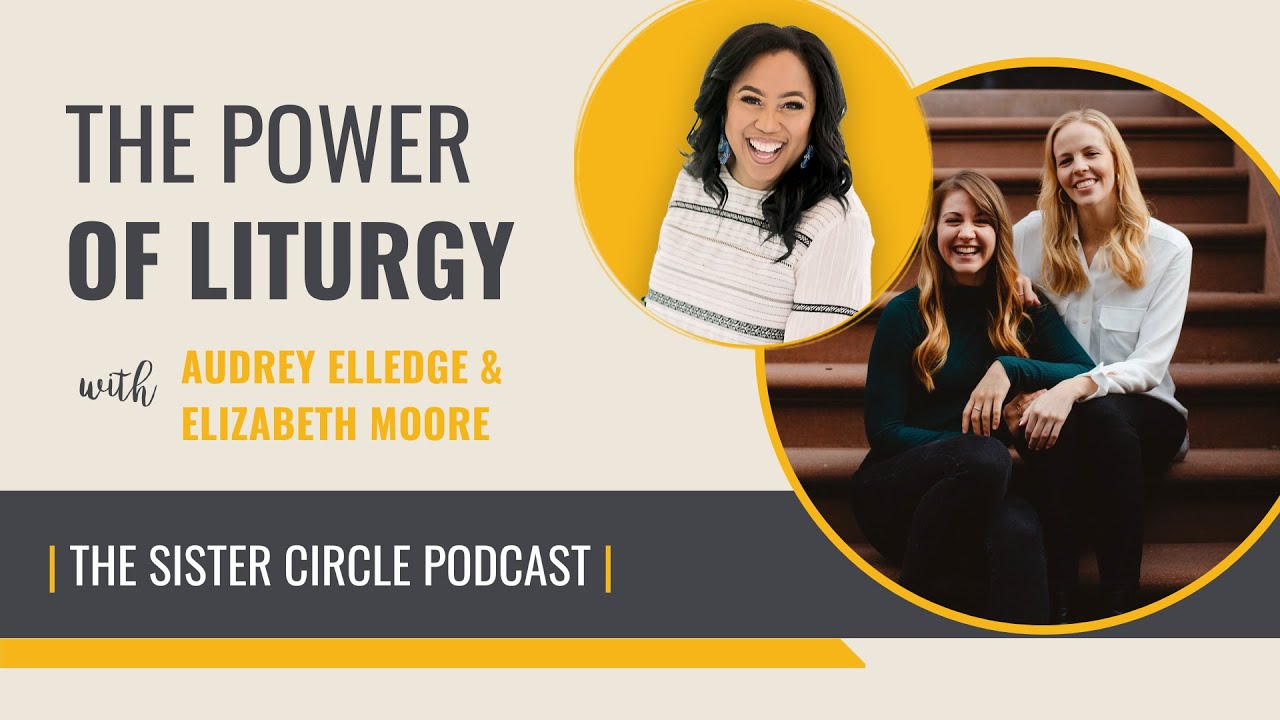
In this episode of Chrystal Hurst’s podcast, host Chrystal introduces the theme of finding words for prayer and invites listeners to a forthcoming Sister Circle Retreat. She then interviews authors Elizabeth Moore and Audrey Elledge about their collaborative book Liturgies for Hope. The conversation covers their Southern roots and adjustment to life in New York City, the evolution of their love for the city, and the personal lessons they’ve learned about humility, community, and the diversity of urban life. They recount how the pandemic sparked the creation of liturgical prayers to address anxiety, grief, and uncertainty, initially for their own use and then for their church newsletter, eventually expanding into a published collection. The hosts discuss the book’s structure—topical, not chronological—highlighting categories such as faith, vocation, health, relationships, mystery, wonder, and confession, and note favorite liturgies like “Liturgy for Loving Someone Who Doesn’t Love You Back” and “A Liturgy for Those Battling Fear.” The interview delves into their co‑authoring process, mutual trust, complementary writing styles, and how they divide stress and joy. They share strategies for balancing full‑time jobs, writing, and promotion, emphasizing taking one day at a time, planning ahead, and relying on prayer. Finally, they reveal plans for a second liturgy book and potential future projects beyond liturgies, while affirming their hope to remain in New York for the next decade.
Chapters
Have you ever found yourself wanting to talk to God, but you simply didn't have the words? Maybe your mind was, um, just stretched and maybe your heart was full and maybe your life was painful, or simply you were just dealing with unexpected things and all of the emotions came crashing in, but you couldn't get them out. If that's you, you are in good company. Sometimes, y'all, life be just lifin', okay? And when that happens, how we ingest, how we interpret, how we react, how we respond to life, and how we express those responses, the words may evade us. Today's podcast is going to be great because we're going to be talking about what it looks like to borrow someone else's words when you don't have your own, and how borrowing those words can help you verbalize, help you express what you need to say to God or even say to yourself. About the life that you're currently living. Often you just need to make the room to do so. I wanna give you 3 things that will help you to make room for all of the things that are happening in your mind and your heart. One is make it a priority to spend time alone. Whether you're an introvert or an extrovert, it doesn't matter. You can go to your closet, you can sit in your car, you can hide in the bathroom from your people. But every now and then, whether it be 5 minutes or 5 days, you just need to make some time so you can hear. Number 2, pick up a pen. Something happens when you express yourself on paper. You don't have to be a writer. You don't have to be affluent with words. You don't have to be a professional, a journaler. Just every now and then, the things that are bubbling up, write them down. Give yourself permission to not be eloquent, or to be an excellent provider of pictures of life. Sometimes we think we have to be an excellent writer to say anything. It's simply not true. But what you will do is give yourself permission to put something down on paper and to take your time identifying your feelings. The third thing I want you to do is to make room and make time for you. Apart from just being by yourself at home, I want to invite you to join me in October this year for a retreat. It's the Sister Circle Retreat. I'll be there along with friends and a host of other women who value faith, who understand that time alone can be an investment, but also understand that having some alone time in the context of community is honestly a, it is a magical combination. So it's 2023. I wanna invite you to come to Cali with me. It's October the 19th through the 21st, again in California, Northern California. And it'll be small enough where we know you and large enough where you're bound to find somebody like you. It's a great time to connect with yourself, connect with God, and connect with others. Now I realize everybody can't do it. And so I know that some of you are going to be home and continue to watch the podcast, listen to the podcast, read the blog posts, read the books, and join us even in our Inner Circle membership. But for those of you who want an in-person experience, and this is your year, go to thesistercircle.com/retreat and sign up today. We'd love to see you there. All right. Now, without further ado, I want to introduce you to my friends Elizabeth Moore and Audrey Illich, who have put together a work that will help you to understand that when you don't have words, others do, and to boldly use whatever words you do have. All right, y'all, here we go. So, um, thanks again for joining me. I'm really excited to talk to y'all about this because I'll, I'll ask it officially as we go with my first— first of all, the book is beautiful. But I, when I look at it, well, not even when I looked at it, when I, um, Elizabeth, when you first told me what y'all were working on, uh, my first thought is, okay, so what are some young women, why are they writing about liturgy? So, you know, it's just a whole like, you know, so we'll, we'll talk about that. But I wanted you to finish what you were saying, Elizabeth, about New York, and then I want to hear from you you, uh, Audrey, because y'all are both not northern birds. Like, you, you know, you're from the South, and so you go to New York and it's great, it's New York and it's a big city and dreams come true and job opportunities that don't exist in Texas and in Louisiana. And the culture is so different, I'm sure, extremely enamoring, very interesting and exciting because it's all different. Um, I know, Elizabeth, you have now been there for 4 years. Audrey, how long have you been there?
I've been here 5 years.
Okay, so you're both within that same window. So talk to me about being the Southern girl in New York.
Yeah, Audrey, I was just telling Chrystal Hurst that there's honking outside my window. I was asking her if she could hear the honking and she said, I can. And I said, well, all right, sorry, this is New York being New York, but there's construction happening across the street and so I think they're probably blocking the lane of traffic and they're being mad. So I would say at least once or twice a week there's some kind of traffic congestion outside of my window and there's people honk for just like minutes straight until something happens. So yeah, it is so annoying.
It's like a melody, a melody of city noises at all times, like screaming neighbors, um, ambulances, sirens, honking. Sometimes random pigeons will just be making ruckus outside the window. It's just Yeah, people's air conditioning units just love that blaring. Yeah, the city has its own melody for sure.
Absolutely. So on a scale of 1 to 10, where were you when you first moved there in terms of your love for the city, and where are you now?
Hmm, that's such a good question. Um, when I first moved here, I was A 10. It was a dream come true to live in New York City. I had dreamed about it for literal years, and I didn't know a soul. So I came here with no community, no, no friendships, no one really to even get dinner with when I first moved here. And so somehow I had this like fearlessness that I would not say I have now years later, but I, I moved here just believing that good things would happen. And I was just such a dreamer. And I would just walk around the city and just be like, I can't believe this is my life. Like, I would spend, you know, full Saturdays walking up and down the length of Manhattan just for fun. And yeah, I was just so enamored. And then within the year, real life really hit. And so once, once you hit that year mark, you have a place where you pick up your prescriptions, you grocery shop, you know, the grind of work is just like it is anywhere. And so I would say now, 5 years later, my love for New York is still at a 10, but it's for different reasons. It's for the people that live in New York City and not the actual city itself. So, so the friendships in the city and our church community at Church of the City New York are what keep my love at a 10, but it's not the glamour, it's not the hustle, it's not the, the sparkly buildings anymore. It's, it's truly people.
Yeah.
And when you say people, it's, it's primarily like your community of people that you have found.
Yes, that's right. Yes. Like best friends, lifetime sort of friends I've met in New York, Elizabeth included, obviously. Um, and then our church is just a really strong, lovely community of people who I would say most people in our church community did not grow up in New York. So it's a lot of people who've moved here with a dream. Or just a belief that God has called them here, and we've all just kind of wound up in the same time and place, which is really neat.
What about you, Elizabeth?
Yeah, I, I want to say my love for New York is still a 10. It's still high, but I don't know if I can say it's a 10. I think when I moved here, it was definitely at a 10. Um, it was— yeah, it was just the place where dreams could come true and then were coming true. And so that was really exciting and surprising. I'd say now it's I would say it's an 8. That's what my gut is telling me. Um, but similar to Audrey, it's not because of all the glamorous things that drew me to it in the first place. It is like, I love it because of what God's doing here, and I love it for the community that we've built here. Um, for me specifically, like in publishing, in the arts, at Church of the City. And then another like way and reason why I love it, which is also one of the reasons that one of the ways it's hard to live in New York is that you're exposed to like a sampling of the whole world. So even last night I was riding the subway home from a Friendsgiving and just like it was like 10:30 at night and I was just like looking around the car and I'm like, so much is represented here. Like there was like a man literally smoking something. I don't know what it was. I like the far end of the car. There was like a couple that was like glamorously like coming home from a night out or maybe even going out. There was like a businessman like still in his like shoes and suit, and then there was me, and then like it was just like everyone. And I was like, wow, like this makes it really hard to live here because it's like this like meshing of cultures and like no one really understands, so it's really uncomfortable. But it's also this like beautiful melting pot of like humanity. And so I do love that about living in New York, but that's one of the hardest things about living in New York, um, is just like the discomfort you experience every day in, in like rubbing up against people's lives that are different from you. So I feel like I have to— it's a discipline and a practice to remind myself like, this is beautiful, like this is a part of being a human. Like I get a front seat to like more humanity than I am experiencing myself or within my like Um, close-knit community. So I do. Yeah. That's, that's one of the things I still do love about New York, even though it's like, I won't say it's fun all the time.
Yeah.
Yeah.
Yeah.
I'm realizing, hold on one second. Okay. Um, what do you think is your biggest lesson learned since you've been there? Um, and I don't know if Elizabeth, what you're talking about is the lesson or what the lesson is for you. You know, out of that, like, what have you learned about life, the world, or yourself? What would you say is the biggest thing that at this point in your life, having been there 4 and 5 years respectively, that has changed in the way you think or has been cemented further in the way that you think?
Yeah. I think the first thing that comes to mind is that like my way of seeing and doing is not the only way and is not the best way. Um, and one of the things that I'm constantly practicing in New York is like setting my preferences aside, setting even my, my cultural norms aside to like embrace and observe and show appreciation for and learn from a different culture because there's so many. So just like walking through a neighborhood that's not mine, I have to kind of like assume that I don't— like, just know that, like, I don't set the cultural tone here. I need to, like, sit back and observe and, like, see, like, what the culture is that I'm entering into and respect that. And, um, like, know that I'm— and, like, not, uh, like, a part of this community necessarily. Like, speaking in terms of, like, different neighborhoods and stuff. Yeah, it's just taught me to like, not assume that I know things and to learn.
Yeah. So it sounds like a lesson in humility almost.
Yeah.
Um, just, you know, knowing that God has created you and that you are, um, special, unique, and all those things, but he did that for other people too. Exactly. Like, you know it, you know it, but then living in that, you know.
Exactly.
Um, what about you, Audrey? Audrey, your biggest, uh, takeaway or lesson?
Yes, I was going to say something really similar actually. So New York is a city of strangers. You can leave your, your front door of your apartment building just to go to the grocery store and encounter hundreds of strangers on that walk, and then hundreds of more strangers on your walk back to your apartment. And so it's really been interesting realizing that everyone is the main character in their own story. So in the same way that I moved here that first year and I was walking around in this dream come true feeling like a movie star, even though my life was not glamorous at all, but feeling like it was. I very much felt like that was my main character year, when in reality I was passing people on the sidewalk and in the subway and in stores and at the office who were on the center stage of their own life. And so that's what New York is, is you're just encountering a bunch of humans, a bunch of imago dei, people made in the image of God who have their own stories and pasts, and they have their own reasons why they've come to this city. And so it really is humbling when you pause to look someone in the face and realize like, wow, like I have this fleeting moment where I'm rubbing elbows with them on Second Avenue and then they're gone and they're off to whatever their life has in store for them. So I think it's just expanded my view because in the past cities or towns I've lived in, I've lived in a house with a yard and tons of distance from my neighbors. And then I would get into a car and you know, you're isolated in your car, so you don't touch people on your commute. And so now I feel like it's just so fleshy. I just realized how fleshy the world can be when humans are just brushing up against each other. And just the reality that all of these people were made by God, and they're pursued by God, whether or not they know him, he's still pursuing them, and loves them and designed them, which is just in your face in New York City. Wow.
Well, let me just wrap up with this one last question and you can give me a short yes or no. In 10 years, based on the fact that of what you know now about your life, um, do you hope or think that you'll still be there?
Yes.
Yes.
Deeply hope so. Elizabeth, I hope you're here in 10 years too.
I said, yeah, I said yes.
And to that answer, I know your parents are utterly and totally thrilled.
Sorry, Mom and Dad.
They have to live with the pain every day. Oh yes, yes. I do just want to say I would live in whatever city Elizabeth lives in. I'd follow her to the ends of the earth. So Elizabeth, if you move to, you know, wherever you move, back to Louisiana, I'm coming.
You're coming too. I love it, I love it. Covenant friendship.
Well, how— y'all, y'all met at church? Is that how you met, at Church of the City?
Well, we met through mutual friends, actually, Chrystal. So a girl who I did Baby Ruths with back in the day at Pine Cove when that was a thing. One of my Baby Ruth sisters went to college with Audrey. And so when I moved to New York a year after Audrey did, this friend Claire connected us and was like, you two would be friends. And so Audrey was my first friend in New York. We went to dinner like the summer before I moved. Um, just so that I could have a point of connection and we became besties.
That's amazing.
Yeah.
Well, let me just start with this. I know that, um, you know, we're, we're chatting and I know what we're here to chat about, but, um, one of the big reasons why the two of you are here is because obviously I have a relationship with Elizabeth Moore. Um, so just to give a little bit of background on both of y'all. So Elizabeth Moore. Was my first intern. So was this in 2016, 2015 or 2016? 2016.
What came out in 2016? Is that right?
It came out in 2017. So you started the year before it came out. I know that much. So, um, so Elizabeth was my first intern. And so, you know, 6 years later, we're still doing that. And, um, she helped me birth my first solo book. So as we were learning what it meant to launch a book into the world, so was Elizabeth. And at that time, you knew you loved writing, you knew you you loved the English language. You knew that you wanted to write a book one day. You knew that you wanted to possibly work in the publishing industry. But I say possibly because it was kind of like, I don't even know. I mean, it was just this kind of like, I don't even know, maybe. And so I was delighted to put you in touch with people I knew, which ended up putting you on this track to go to Oxford for this whole— who knew that there was a publishing program? At Oxford, like, you know, how do we even know these things in the world? And so it's been just such a joy to watch your purpose and your gifting unfold into the world and know that in some small way, I, you know, I helped with that, or at least was a part of that. I wouldn't even say help, just a part of that process of your development. But you have always been excellent in everything that you do. So I should just say I'm not surprised. I'm not surprised that you're working in publishing in New York City. I'm not surprised that you now have authored a book And I'm not surprised that you're still kind of on fire about all the things that you want to do to live your life, um, you know, in the capacity, in the full capacity that, um, that you can because of the giftings that, that you have. And so Audrey, it's my pleasure to get to know you. Um, I wrote or had written down that you are a SparkNotes editor. And so let me just say, first of all, before we even get to liturgies, I am just so excited about that. I'm like, how? First of all, it saved my life a million times as a student. It also saves my life a million times as as a homeschool mom. It's like, you read the book, I don't have time to read the book, but I will be able to discuss it with you thanks to SparkNotes.
Yeah.
Um, how do you even end up doing something like that? You don't go to college thinking, I'm going to be a SparkNotes editor, you know what I mean? So how did that path work for you to even get into the writing and editing and publishing world?
Yeah, great question. Um, so in college I studied to be an English teacher, and it was an amazing program. I went to Baylor in Texas. Loved it, but also did not love teaching. When I was student teaching, I loved the students and I loved my mentor teacher Liz Higgins so much. It was an amazing environment, and yet teaching was not the vocation I felt I was made for. Um, let's just say that. And so the next year I was like, I don't know what I'm doing. So I still had this passion for education, but I wanted to explore education in non-school contexts. And I wanted to explore more of my love for writing in English language. And so I went to grad school and studied basically English education in non-traditional context. So I had a— I had an internship at the Country Music Hall of Fame working with their Taylor Swift Education Center. It was brand new at the time and developing some like English curriculum to help students analyze country music lyrics and like annotate them like they would a Robert Frost poem, which was hilarious, but not quite what I felt called to do either. I was like, I don't know what I'm doing with my life. I have no idea where this, like, intersection of writing and books and education and students could come in. And so I moved back in with my parents, the most humbling summer of my life, just jobless, no prospects. Really desiring to move to the Northeast, either Boston or New York City. And I was just sending job applications out into the wild, just like, just with a, with a shot and a prayer. I was like, I hope something comes from this. I eventually reached the point where I just brainstormed companies I thought it would be cool to work for, and I just would go to their about page and see if they had any openings. And so one night I was just in the pit of despair. I was so jobless with no, no one biting, and And I Googled Barnes Noble jobs. Barnes Noble owns SparkNotes and they had this position that I have now open. So I just sent it out there, just applied on a whim. And then long story short, it's the job I have now. So it was really God, cause I had no connection. Yeah.
You were just putting shots out into the dark. But I think that's where, that's the beautiful thing about moving forward, particularly in this season of your life or both of you is that so much of what you do is kind of a shot in the dark. And you have the ability, and even as you mentioned when we talked about you being in New York and, um, coming there with just eyes wide open and, you know, now being a little older, a little wiser, but it's just like everything great is going to happen here. That hope-filled orientation in this season of your life allows you the privilege of just shooting arrows into the dark and hoping one of them land, hoping one of them land. And then when they land, you kind of go I think that sounds cool. And you try it and you have no idea where those steps will take you exactly, but you just go because it seems like a cool thing and a fun thing to do. And it leads to other things. You know, it's part of why we're sitting here now. You know, you just shot in the dark and went to New York for this job and then you and Elizabeth meet. So that's the beauty of hope, right? The beauty of hope says, I'm just going to try it because I believe something good can come out of it, even if I'm not quite sure what. You are the recipient of the Academy of American Poets Prize and the Virginia Beall Prize. So that's Beth says you actually are a good writer. Other people—
she is a good writer.
Someone else said it.
Other people co— other people co-sign. Um, you're both from the South, you're living in New York, living this dream writer's, publisher's, author's life, meeting each other, doing these wonderful things. At least that's what it sounds like to me. But you are both young, you're both in your 20s, is that correct? Am I saying that right? And you are both in a season of life where you know, doing things and having a good time and trying things out is typically, um, characteristic of the season of life. And then you also, in your 20s, have written a book called Liturgies for Hope. So first of all, I just need to say liturgy and 20 don't seem to go together. At least, you know, liturgy sounds like tradition, it sounds like church, it sounds like, um, order, it sounds like rhythm, it sounds like Don't Touch My Cheese. It sounds like these are the things that people in, um, you know, in churches that are steeped in tradition, this is what they do. These are the books that people recite things out of, and that, you know, my grandmother, or that people who are, um, you know, starked high in culture and lack of change. Liturgy for me invokes all of these things. It doesn't mean it's bad or good, it just invokes not 20. So the first thing that I would love to ask you is just, you know, how did we stumble upon— of all the things that y'all could write, I mean, Elizabeth, I know that you, um, you know, you love all kinds of different genres of writing and that you love reading. I've been privy to watching you on Instagram and see the books that you love and that you dive into. So liturgy doesn't for me go, I majored in English, I was teaching kids, you know, I'm, I want to publish books. Liturgy does, is not the first thing that comes to mind. So how did y'all end up with that being, yeah, the thing that you wanted to do first and do together? How did you land there?
Yeah, well, I'll just say that I feel like there has been kind of a resurgence in interest in liturgical practices amongst young people, um, people of our generation. And I think that is because Audrey and I both are raised in very contemporary church traditions, which was amazing. Um, but then as we grow older and we have this like intimate and growing relationship with God, we're finding ourselves like desiring a little bit more of those liturgical practices to center us and to bring us together as a community. And so I don't think it's just me. I think Audrey and I both sensed like in our church community and even in like the broader kind of younger Christian community, this like wanting to reach back to these like old time-tested practices of liturgy, um, to be like a grounding and a centering practice. And so we had both had our interests piqued in liturgy before the pandemic, but then when the pandemic hit, that was really when we sensed like more of an acute need for liturgy and for guided prayer. Specifically for these really new, unprecedented anxieties that we were facing. So the idea to write liturgies was actually Audrey's idea. So Audrey, I'd love for you to share how that idea came to you.
Um, yeah, but we—
when we first started writing liturgies, it was not for a book. It was just to give like an offering to our church. And so it was the weekend where New York was labeled the global epicenter of the pandemic., people were leaving the city to go quarantine with families, office buildings were emptying out, we were working remotely, um, and then Audrey texted me and was like, hey, do you want to spend our weekend writing these like poetic liturgies about fearing for your physical health, about falling asleep, about like mourning a loss, um, and these other things that we like were feeling every single day, but like didn't really know how to pray about yet, or, um, didn't quite know how to process. So we needed them ourselves. We needed those liturgies. Um, and we just thought, why not share them with our church in case other people need them as well? So that was how they started, not as a book, but just as a little thing to put in the newsletter.
Yes. Yes. And yeah, I think So when the idea was birthed, it was really birthed in that chaos that Elizabeth just mentioned. But I knew that liturgies were words of worship or prayer or rituals that a group of people usually would repeat, usually in a church service. And they were meant to be repeated, like repetition is the idea to form you into a person whose affections are on Jesus. And so during that time, there was so much, like, there were so many scary headlines coming out during, during that time when New York was labeled the global epicenter of the pandemic, and not just in New York, but the entire world. And there was lots of think pieces coming out that were scary, lots of just, just blaring noise. And so, um, this was also when Tiger King came out, which I, I binged, and I just was like, I'm filling my mind with a lot of different things right now. And so this idea of repeating things that could nourish us was really coming to my mind. Like, what is something that would be nourishing and helpful and steady to offer people that they could repeat themselves? Obviously, the corporate communal aspect was removed from, from that time because people were told not to gather together. Most people were isolated in their homes.. And so it kind of turned liturgy on its head because liturgy, um, is usually thought of in a group setting. And so it was kind of ironic that during the pandemic, group settings were outlawed, um, metaphorically. And so it was like bringing liturgy to the individual.
Yeah.
So liturgy, just for those who don't know, you've defined it well, um, in so many different ways, but it's just, it's guided prayer. I don't have to come up with what to say. Someone else has already been where I've been encapsulated through their gift of penning words on paper, words that can serve me to, to meet a need. So I can open up a book, read it, have those prefabricated— for less, uh, less of a better way to say it right now— prefabricated words serve me. So I don't have to come up with the words, but I can resonate with an experience that I'm having with words that I want to offer. To God or to make space for him to minister to me. Um, I love the fact that you all did it for yourselves. And so, and I love this idea that this idea that you had to do this was birthed in chaos. I think some of the best ideas in life are often birthed in chaos. Um, was this more so, I mean, when you say you were writing them for yourself, Um, sometimes when I write, I am writing for myself in response to what's happening around me. Sometimes I'm writing for myself in response to what's happening in me. In other words, as an empathetic person, I sense what's happening and I can put something into the world that resonates, but it's a, it's a communal resonance. Residence versus an independent or an individual residence. And, you know, this worked for me. I hope it works for you. I'm curious for you all, when y'all gathered that first weekend, was it primarily individual or was it, um, communal? Um, you know, a residence that you were echoing personally, but also in response to like, people are hurting. And so what do we think? You know what I'm saying? Was it more of one than the other?
I would say it was both for me. Um, a couple years prior to the pandemic, I was diagnosed with an anxiety disorder. And so of course the pandemic wasn't helping. It was just triggering all this stuff. And, you know, internally I felt like a swirly, spiraling mess. But it was really interesting because for the first time— I mean, I could have noticed this prior if I had paid attention— but it felt like for the first time I was seeing a bunch of people out in the world experience what I experienced daily, this like chaotic inward tumbling. And so it was like seeing the entire world almost have an anxiety disorder during this time. And so I think that weekend, that writing I was doing was, was a love letter for these people I both knew and didn't know, who were just struggling in the same way that I was struggling. It was like I felt intimately connected to the world because my anxiety was It's all of a sudden outward and not just inward, um, in my individual person. So I would say it was really both. I was writing for me, but I was also writing just for, for everyone who— I, I don't think anyone was thriving during that time. Like, no one was flourishing. So yeah. Yeah. What about you, Elizabeth?
Yeah.
Yeah. I was also gonna say both. I think there were some that felt more internal, like a liturgy for those afraid for their physical health. That felt very like, uh, I need this. Like, I just remember every day being like, Am I, can I breathe? Like, no. Um, and so very much felt like that was a fear and an anxiety of mine that I was writing from. But then there was another one, like, that was a liturgy for healthcare workers. And so for that, that was written because I had some really good friends who were working in the ER or were working in just like pediatric clinics that had to be converted into COVID units, like just on all hands on deck, like really scary time for healthcare. Healthcare workers. And so just hearing their experiences and their needs and their stories was what helped write that liturgy in particular. So I guess it, it depended on the topic, but I do feel like it was both. It was like us feeling what we felt, hearing what was, what people were experiencing around us, and then just like really asking God for some words of comfort and some words of truth to get us through. And I feel like this was particularly a time where people, we just didn't have words yet. Like, and that's, I think, what you said earlier about liturgy. Like, it's guided prayer. It's like words to— for— yeah, it's giving you the words to pray. And I think in— there's some times where that's maybe not beneficial because it, it, it can be like just words on a page and devoid of relationship with God. But I think when it's like, it's words that are given to you when you're already longing for God and you're already like like desiring intimacy with him. Some of those words can be quite helpful, especially like, like in the pandemic when, when we were experiencing these brand new things and didn't have words yet. So, um, yeah, that's so good.
And, you know, even that, what you're saying, um, I think also many of the best things in life were born out of our desire to serve other people, and then that service turns into something we didn't anticipate, you know, it started out as we're just doing this, but we want to be helpful. Yes. Helpful to ourselves. But also, can we put some words on paper that'll help other people? And, you know, then things happen like it turns into, turns into a book. But you could have written other things like instead of liturgies, instead of prayers, you could have written, you know, in a different form. You could have written in prose. You could have written about your own experience. You could have told a story. About how you ended up— what you just described, Audrey, about, you know, struggling with anxiety beforehand and writing in the first person to say, you know, so now here's where I am and this is what's calming me. The format could have been totally different. So when you decided to express your journey, your experience, and even your desire to serve other people in that format, why do you think it was that format instead of others? Because writing of all kinds can be cathartic. And can be helpful to ourselves or other people. Um, why do you think that one rose, what that option, that direction, that format rose to the top?
That is a good question. I haven't actually thought about that before, but as I think about it now, I wonder if it's because liturgy and prayer have an immediate use. Like people know, like when they read it, like I'm using it for this purpose. Whereas like when I'm reading a book of essays or a book of poetry or a blog or something like that, like sometimes it takes an extra step for me to figure out how am I going to apply this? Like, what does this mean for me? How can I like, how can this help me if at all? But for a liturgy, you look at it and like the whole purpose of it is for you to just simply recite in prayer. And so I think it maybe eliminated an extra step for people and just were like, here's the tool, here's how you use it, here's the words. People were like, thank you, and we'll take it. So. Um, it might've been just like the easiest way, um, to give people some, some language to help.
It's almost like how I serve my kids food. Like I can put out all the leftovers. I'm not saying that your words are leftovers, but I can put out all the leftovers and say, serve yourselves, plenty of food. They can nuke it, do whatever they want to put it in, whatever, you know, combination they want. But, and they might do it. My husband, on the other hand, I still need to make decisions, heat it up and put it on the plate for him to go, oh, I can eat this now. You know what I mean? It's the same food, but the presentation is what makes it in his mind something that he can sit down, enjoy and eat. Otherwise it's just food that are options. It's not, it's not presented in a way that gives it specific purpose. Um, that's, that's really great. When you read this book, and I don't know if this is true, if the answer that I'm about to ask you, if the answer is true for your book or if it's true of liturgies in general, but because I have to be honest, I don't think I own a liturgy. I think maybe I own one, and I think maybe it's still in the little wrap that it came in because somebody told me it was a book that I should get. Uh, um, and yours is beautiful, so it makes me want to pick it up, and it's yellow. So all things Sister Circle, y'all, right?
We love, we love yellow.
It makes me happy. It doesn't seem sad and dark and churchy and old. It's like bright and fun and young. Do you read them from start to finish? Do you read it in chronological order? Do you start with the emotion that you're feeling or the circumstances that you're in and topically you're driven? How should you use your Book of Liturgies, your Liturgies of Hope? And is that the same for all liturgies that you know of, generally speaking?
Yeah, good question. So for our book, Liturgies for Hope, we would say you should not read it chronologically because the odds that the chronological order we've laid out these liturgies makes sense for your life, the odds are slim. Um, and so our recommendation is to go to the table of contents or just flip open the book and, you know, thumb through it yourself. And if you're feeling something or experiencing something or going through a season, our hope is that we have a liturgy or a prayer addressing that exact thing. So we have our liturgies broken up into different topics. So we have faith, vocation, health, relationships, mystery, wonder, and confession. Did I miss one, Elizabeth? I think there's some— So those are the categories. And then underneath those broad categories, we have, you know, very specific liturgies. So some of those are like a liturgy for falling asleep. So someone who is having difficulty sleeping at night could turn to that one, and that won't be every single person, but it'll be someone. And then we have a liturgy for those contemplating a breakup, and that's a very niche, but evergreen need that we assume someone will have, and that person, you know, may need that liturgy in one season, and then the next season maybe they'll be in a better place in their romantic life and turn to a liturgy for those feeling butterflies around someone. So we really hope a reader just goes to the prayer that they need in the moment and that it meets them right there.
What is your favorite one? The one that you feel like if you picked up your own book, you would probably enjoy reading, get the most from reading. You'd read it multiple times because you need it in your life. Which one comes to the front of your lobe?
I feel like it changes. It does. Right now.
Yeah. What is it today then?
Yeah. Right now my favorite one that Elizabeth wrote. Is Liturgy for Loving Someone Who Doesn't Love You Back. Even though I have a wonderful boyfriend right now, I just think the writing of that one is so beautiful. And so it just takes me back to different seasons of my own life when that prayer would have really blessed me. So thank you, Elizabeth. Um, and then my favorite one that— maybe not favorite, but the one I need the most that I wrote is called A Liturgy for Those Battling Fear. That was written— that was one of the first ones I wrote during the pandemic. And it still just, it still just hits. Like, I just need to battle fear and I need help doing that. So, yeah.
Wow. That's good.
Yeah.
I was also going to say A Liturgy for Loving Someone Who Doesn't Love You Back, which is so sad to say that, but for some reason it is one of our favorite ones.
It's tender to us. Yeah.
It just like captures that experience that we all have had or will have of just like letting go of someone who's really important to you and it's okay, it's healthy, it's a part of life. And the very— not all the liturgies have this, but some of them do. At the very end of that liturgy, there's a blessing for that person. Um, so it's a little bit longer, but it, it is like just a, a blessing to, to allow that person in your heart to just let go, like to let them move on, to wish them well, to like acknowledge your own grief, but to, to not expect anything else of them, just to kind of let them go. Without needing the final word. Um, anyway, so I do love that one. And then another one of my favorites is, um, A Liturgy for Letting Go of Your Younger Self. I think that I needed that, and in 2020 is kind of like, um, I don't know, I was in my like rounding— like I just noticed myself like getting older, which Chrystal, I know you're gonna laugh at that because you're like, you're in your 20s.
No, I, I get that, and I I think every person alive feels that at different seasons in your life because you always are turning an age that was someone else's age. You're always walking into a season that, you know, 5 years before or 10 years before was a season that felt so far away. And you're like, oh wait, am I here? Is that how— am I doing this?
Yeah.
And so I think that that resonates with everybody at different seasons.
Okay.
That's good.
Yeah. I love that one. I think that one's going to continually be one I come back to as I like hit these yearly milestones or, and, and both experience the excitement of being at an age that I never thought I would get to, but now I'm here. And so like, what are we going to do with this age? And then also the grief of like, oh, but I'll never be that age again. Like I'll never get to be that younger person again. Um, so there's just a lot of complex emotions and feelings that that come with getting older. So I like that liturgy is helpful for me.
Let's talk about complex. You're both wordsmiths. You both love reading. You both love writing. And what I have found, um, as a person who loves the same, it is very easy for me. Um, words come easy for me, even when I don't quite know what I'm feeling. Some, I can kind of work my way. To it, spoken or written. Written at times is easier because sometimes the writing leads me, you know, I'm— my heart doesn't have to pass through my frontal lobe necessarily before it can be guttural. I can't remember the name of the, the author, Julia something or other, but it's The Artist's Way. I don't know if you all have ever heard of Julia Cameron, read that. And when I— and I haven't finished it, but even as I read it, what she's talking about, I'm like, I know what you're talking about. I know what it is to take out my journal and just start writing. And then I'm almost surprised at how honest I'm being with my own self. But the words are telling the story that my brain wouldn't necessarily allow me to say. Yes. What I do realize is that everybody's not wired that way. I think it has come to me as a surprise that people often really need leading questions, hence therapists and counselors. People really do need you to listen and then say, so what I hear you saying is, and you give them words that say what they're saying maybe a different way, or that add more color, that, you know, anger isn't just anger, but maybe it's grief, or, you know, laughter isn't just laughter, maybe it's, you know, hope that finally has found a way out. Like, it's all of these different things and words Words help people. I'm curious, as you're talking about your younger self, Elizabeth, and as you both think back— you're young, but think back a few years— um, are there words that you have now that you needed before, that you have given to yourself because your wisdom, your, your season of life has shifted? The words that you have now allowed yourself to say, you knew these things maybe deeply as a teenager, as an early 20-something, but you didn't have words.
Yeah.
What, what do you think you didn't have words for then that you do have words for now? Wow.
I—
the first thing that comes to my mind is there's a liturgy for embracing the mystery of faith, and I think, um, the— that one is basically about wrestling with doubt, and it's basically about like not knowing what you believe and, um, and being okay with that and recognizing that as something that is potentially helpful for growth and like helpful for, for developing deeper intimacy with God rather than something that is necessarily gonna be bad or harmful or mean it's the end of your faith. It could be the beginning of a more dynamic faith. But when I was younger, when I was first experiencing those doubts, I had no words. I was just like, this is terrifying. I'm a bad person. God can't love me because I doubt him and I have questions and everyone's gonna disown me. Those are my words. Those are the words I had. Um, so So yeah, so going through that for a few years was difficult, but on the other side of it, I was able to write this liturgy for embracing the mystery of faith and like making peace with the fact that like this experience of doubt, of wrestling with God, of not having the answers, of like, yeah, it's, it's, it's okay. And, um, it can be a beautiful catalyst into a greater depth. So I think that that is, um, those words have been a gift to me. And, um, I can, I will only continue to grow in the mystery of faith, I hope. But, um, but yeah, those words have been a gift for sure.
That's great. What about you, Audrey?
Yeah. Yeah. So we have a liturgy called A Liturgy for Those Wrestling with God. And it's really about being honest with God and not being afraid to engage with him in the same way Jacob did, where he got all fleshy and was fighting God. Um, and it basically is giving— when I wrote it, it was giving myself permission to fight with God, which could sound sacrilegious. Like, my younger self, I think, would have been like, oh my gosh, like, we can't fight with God, you know? Like, that would have sounded so wrong. But now I realize that God is constantly offering himself to us to engage with. Like, when we're frustrated or we're depressed or whatever it He's like, I'm right here. Just, just, you know, just come toward me. And so, yeah, so oftentimes I feel like I've wrestled him when I have not gotten the thing that I want and I feel like he's the one keeping it from me. And I feel like he's like, okay, you're frustrated. Let's wrestle it out. Let's duke it out on the mat. And then at the end of that fight, I realized that it's not even the thing that I need to get. It's It's God himself, like meeting him at the end of the fight. It's what's worth it and what, what gives us hope, you know? And so that's one that my younger self, I think, really could have used. And then another one is a liturgy for those in need of a good cry, which sounds kind of sad and emo. But in reality, I think like sometimes if we're sad and we're like asking God, like, cure this thing, move this thing, heal this thing, and we're not receiving an answer, I feel like we can say, okay, well then help me just cry. Help me just grieve. Help me just sit in this and trust that you see. And so I really enjoyed writing that one because it felt very cathartic just to trust God with tears, um, and not always try to like look on the bright side of things, uh, on the sunny side up, but be like, okay, I just need to cry. I just need to cry it out today. So that's another one my younger self could have used.
Yeah.
Crying is cleansing. We spend a lot of energy and time fighting back tears though, don't we? Where do you all go from here? I mean, you started pretty niche and specific. Um, what do you, do you have thoughts about what's next separately or together?
We do.
We do. We're writing a second book of liturgies as we speak.
So, um, is it harder this time?
I would say it's easier. Um, now we've written a book. Liturgies for Hope was our very first book. Yeah. And this is how, this is how we describe it, Chrystal. We describe it as running a marathon when you've only trained for sprints. So now that we've run that marathon, we're like, okay, marathon round 2. Let's go! We have some muscles now. And so, yeah, the delight and joy of it is we know that that's part of the writing process too, um, especially together, our collaboration.
So yeah, yeah, the second book we're excited about. And then we also want to— after the second liturgies book, I think we want to explore beyond liturgies, um, and, and collaboratively work on a book of essays or just a book of like combined formats—essay, poetry, vignette, whatever—about various topics. So friendship is one topic that we would love to explore and write a collection about, um, together as co-authors. And then we both want to do our own things as well, so we'll see what the future holds there for us as individual writers. Um, but, um, we've loved doing Liturgies. We're excited to do our second book of Liturgies, but also excited to see what else we will write beyond that.
Let's talk about writing together. Um, you know, there's so many questions I have, and I'll, I'll kind of pepper, and then you take the ones that you feel like you can speak to. One is, it's kind of like going into business with someone else. I mean, you're yoked up, and you hope that you stay connected in the way that you envisioned you were when you started. Um, and so how has it been just the pacing of staying together or whatever the commitment was to the number of liturgies you're going to write or the number of words, the timing, just being yoked in that way. Another question I have is the vulnerability that, that you have to have as you're writing these, you know, it's like one weekend pouring out your thoughts and your prayers is one thing, but then continuing to do that because we made a decision to keep writing these, like I have to keep showing up. And, um, in this particular prayer, this particular liturgy, liturgy, like, and your friends. So there's that one aspect of it too, but it's like, I just kind of poured my heart out right here. Do I like, do I want to share this today? You know what I mean? Like, is that there at all? Um, you know, I've heard people love writing books with other people. I've heard people hating it or enjoying it, but only for certain kinds of things. And so, um, the last question I had was kind of was what has been the difference in your roles? Like, you're both writers, but was one person like the structure setter and the other person was like coloring within the lines? Um, was one person the, uh, more of the editor in terms of, you know, not so much the grammatical aspect, but the content of it? So yeah, I would love to just— any of that, just the dynamic of you all working together, um, and anything that you'd like to share that it just might be fun to see an inside look into how you all did that.
Yeah, yeah, it's been a total delight. It's just— yeah, I think Audrey and I both are a little bit surprised in the best way of how well we work together. And no, like, we know for sure, like, this is not the experience of all co-authors, um, but I mean, we each— so we each write our own liturgies, um, so I would say in terms of like roles that we each take on. And Audrey, I'd love to hear your thoughts on this too, but I feel like we, we have equal stake in all the things. So I will say, like, we both trust each other, or I trust Audrey immensely as an artist, as a writer, as a worker. Like, I know that any piece that she writes is going to be beautiful, it's going to be excellent, it's going to be honest. And I think we have that mutual trust in each other. So we each write our own liturgies our writing styles are just— just happen to be so similar that, um, not like naturally they're so similar that even our editor can't really tell who wrote which one. So there's not a lot of work that goes into like making them sound the same. They just— they sound— we just write similarly. Yeah. So I do think it's just been an anointed partnership. I think that like Audrey and I just kind of were built very similarly. I think God kind of made our, our minds and hearts and artistic, um, ambitions like just so aligned that it works well for us to be artistic partners. Um, and then we just feel like also like our friendship and our partnership has been so protected. Like working together has only been a delight up until this point. And, and our working together has only gotten more intense. Like we worked together on this like little collection of liturgies in 2020, but then that turned into like like pursuing an agent together, writing a book proposal together, getting a book deal together, writing a book together, publishing a book, you know, promoting it. Like every step of the way it's gotten more intense, and also every step of the way it's gotten sweeter and sweeter. And like every time I'm like, I'm so glad I'm here with Audrey. Like it's just, it's never gotten not great. Um, and yeah, it's just the best. So, um, yeah, our experience has been maybe like uncharacteristically positive. Like, miraculous.
Yes, yes. Every time we talk about it, we sound like we're swooning about our lover, like, like our soulmate. But truly, I mean, Chrystal, you know, like, writing a book is just one part of the puzzle, and then there's all the promotional pieces that come after writing the actual manuscript. Um, and so navigating those roads with Elizabeth has made it so much easier. And Elizabeth is already the easiest person to not only love but to work with, just because I agree, I can— I trust her completely. And so as we're learning, like, okay, how do you write a book? Okay, how do you promote a book? We've been in it together. And so the stresses of that process, which, you know, like, as fun as it is and as much of a dream as it is, there's still stressful parts. I feel like we've just gotten to split that between us, and so the stress has been divided and the joy has been multiplied, which is kind of the best case scenario because, you know, we, we both achieved this dream of publishing a book, and because it was together, we got to this metaphorical mountaintop and got to like high-five each other. Like, we didn't climb it alone and then look around and be like, okay, Who's going to celebrate with me in an equal way? So sharing the joy has been such a beautiful part because it's like God gave us this team that, that we just got to celebrate with, with each other. Yeah.
Well, I know that, I mean, everything you listed, first of all, is like, I think these are like bullet points you should make a note of for friendship. You trusted the person, you delighted in the person. There are some similarities. You feel like your relationship is God-ordained, you're aligned, um, and then you realize that you're in partnership. Yours happens to be artistic, but in some way you're partnering with that person. I mean, I think if every person that said to me, hey Chrystal Hurst, I struggle to develop friendships, or you always talk about, you know, having a sister circle, a, you know, group of 2 or 3 or 6 or 7 or whatever that you connect with, how do I find my people? Well, I would say Hey, you need to realize where you're— there's alignment, where there are similarities, where you have delight, where you find joy. I mean, I just think you listed so many things that go for relationships overall. Um, the last thing I want to ask you is, y'all still have your full-time jobs? Like, you are writing and you are, you know, you're like— you're not like career authors now where you like, you get up in the morning, you have your cup of coffee, you know, you, you know, sit there, listen to the honk honks and the cars in the background, enjoying the sounds of New York. Put on your fuzzy socks, have your cat crawl across your lap and dive in. You know what I mean? Like whatever we think the author life looks like, where you just sit there at your computer just pouring out words all day. You've been doing this in the cracks and crevices of your life. You've been creating in the cracks, as my friend Meredith Andrews would say. And so has this added a stress point to your life? So many people right now, even if we're not talking about writing, Um, because of the pandemic and the option, the opportunity that they had to try other things, you know, they've got side hustles where they're trying out their dream at the same time they're holding down their day job. And so what does it look like for you to balance, um, your regular responsibilities? And I know you're both single, but still, you know, work is important. Um, with this other thing, that's a big thing. You know, it's a big thing to birth a baby into the world. Um, how do you feel like you were able to balance that, your, your side hustle and developing this work of your dreams?
Yeah, I mean, it has for sure led to very full days. Let's just call it that. Full days and full nights. Um, and maybe some nights with less sleep than a doctor would recommend. Um, but Elizabeth actually had this really good advice that she shared when I was just in the middle of feeling like I was drowning. She basically just told me like, hey, just take it one day at a time. So whatever is on your plate this day, whether it be for your day job, for the book, also for church, for your relationships, your friendships, just being a human being who feeds themself, like, just take it one day at a time. And so I think that outlook helped me a lot to get to the finish line because when I started imagining like, oh my gosh, we have this thing due in a week and we need to write this thing tomorrow and like all of these things. It felt like I was drowning underwater, but when you just look at what's in front of you, you, you kind of just ride the current and you can just kind of gracefully float on the water to the next thing. And so that's why working in partnership has been so good because on days when I was struggling, I feel like Elizabeth was floating and she was totally fine. And maybe vice versa on days when I was totally fine. Hopefully I had something helpful to say to Elizabeth, or just, you know, we would pray for each other too. Um, and so I feel like prayer and just giving it over to God constantly and being like, this is your book, God, so you're going to be the one who needs to multiply our time and help us. Um, that helped the most. And yeah, and just, I think the joy of of writing a book together superseded any stress. And so I feel like if you're enjoying what you're doing and you feel like you're doing the thing you were made to do, you can, you can just get through it.
It just happens. So good. So good. What about you, Lizzy?
Yeah, totally agree with all of that. I think the one day at a time has been really helpful to be fully present with the task at hand.. And even if there's 8 more that are coming right after it, like to not think about those 8, just to do one at a time. Um, and I will say, I mean, like, it's been a lot. Like it was, I don't want to like also, Leah, I just want to not minimize that. Like in at least right now, it's been a lot. Like, and there were like early days when we were, you know, had some meetings here and there and like writing the manuscript was like a lot, but it was manageable. We had like several months. To do it, but the like book launch process while having a full-time job, that's a whole nother thing.
Marketing is a whole nother thing. So much.
So that's been like, you know, we were already doing one thing at a time, but even more so, I'm like, I have to be very focused on one thing at a time. And, and just to know like a lot of things are not going to be happening in this season of life in order for this thing to be happening. So I think it's, there's, there's some sacrifices that happen. Decision that I'm happy to make because this is what I would like to be doing. So there's just knowing that, like, having to let some things go. Um, and then one thing that's been super helpful is our second book is actually due in a couple of months, um, which is nuts. So going ahead and like planning ahead, like, I've already blocked off days on my calendar to write that book. So that helps me as well to know, like, okay, I'm not working on the book today, but that's okay because I have like all these other days already already blocked off. Um, so planning ahead, like, when am I actually gonna prioritize this has brought a lot of peace of mind. Um, but yeah, it's a lot and it won't be this way forever. I think we also noticed like it's gonna ebb and flow. Like it's not always gonna be this intense. Yeah. We're not always gonna feel like we're working two full-time jobs. Um, but we do right now and it's just one day at a time together is how we're doing it. Yeah.
I love that you said this is not gonna last always. And I was saying to somebody yesterday, as they were expressing the frustration in the current season that they're in, I would say something that my mother would say to me often, which is, "This too shall pass." I think the beauty of the book that you've written, Liturgies of Hope, helps people in the middle when you know that you're in between the space of where you were and where you're going. But in that space, it's difficult, it's emotional, it's stressful. Uh, there's anxiety, there are questions, there is doubt. And what you do in the book that you've written is say, while you're in the middle, here are words that you can use so you don't have to come up with your own. But also there's hope for where you're going because where you are now, it won't last forever. This too shall pass. And what I love about what you've done is you've given people a tool. While they might be believing that it will pass, you still have to pass through. And the liturgies of hope that you've provided are giving people a tool, something to hold onto, words that they don't have to create, and a communal experience knowing that someone else has been where they are while they wait for things to shift and change. So thank you for offering out of your chaos this idea to other people, to yourselves first, to your church next, and to everyone else. And then also thank you for having a heart to serve, because I really do believe that what you have done will be a gift to those whose words Uh, the words that you've written that they actually need and feed off of during their season of change. And thanks for joining me today. Thank you.
Oh, thank you so much, Chrystal Hurst.
This was a joy.










