Her Pain Built the Platform (Auntie Anne’s Real Story)
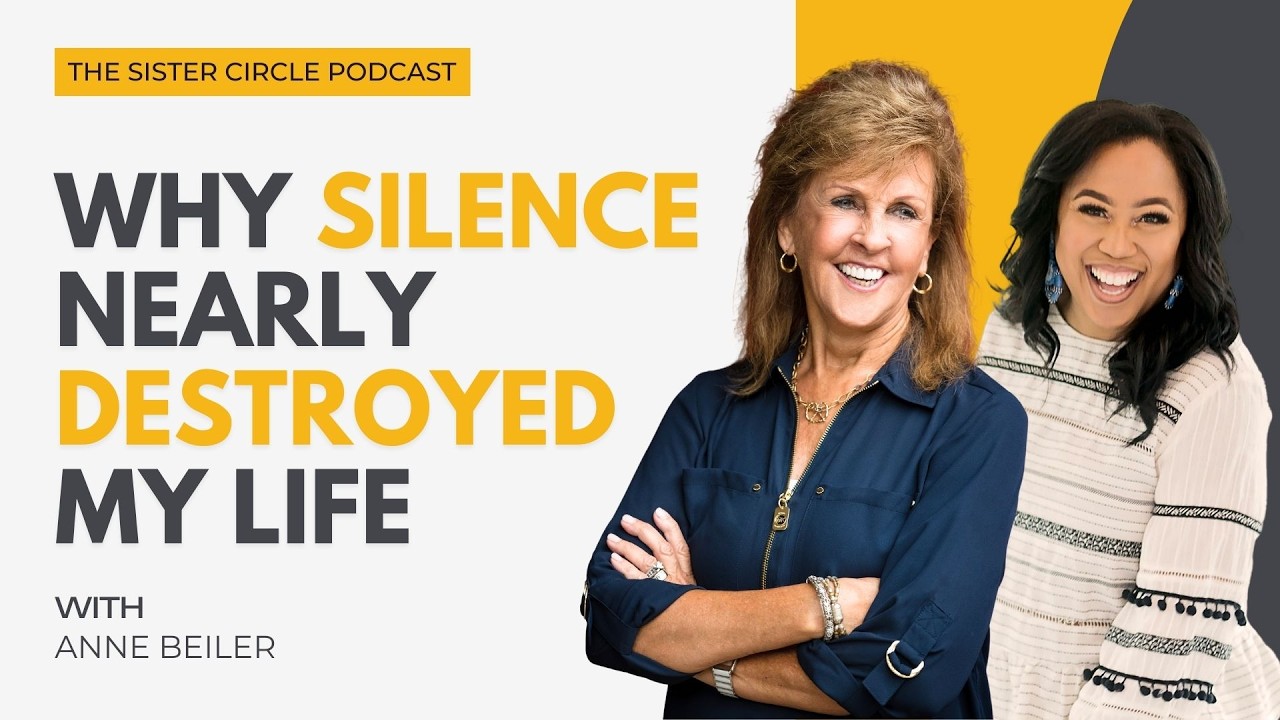
In this long‑form interview, host Chrystal Hurst talks with Anne Beiler, the founder of Auntie Anne’s Pretzels, about the full arc of her life—from her Amish upbringing and early confidence‑building, through the devastating loss of her infant daughter and a period of sexual abuse that she kept secret for seven years, to the pivotal act of confession that opened a path to healing. Anne describes how her faith, the Holy Spirit, and a deep intuition guided her decisions, leading to the creation and growth of Auntie Anne’s pretzel business, the development of leadership principles such as hiring people smarter than yourself, and the ongoing struggle with shame and self‑forgiveness. She shares how God’s redemptive purpose turned her pain into a platform, resulting in a forthcoming movie about her story, a new podcast partnership, and continued family involvement. Practical advice is offered for listeners dealing with trauma, including journaling, community confession, and spiritual practices. The conversation weaves personal testimony, spiritual reflection, and business insight, illustrating how adversity can be transformed into purpose.
Chapters
Y'all, every time I go to Terminal C at DFW Airport, okay, I am stopping by the little food court that has Miss Auntie Anne's Pretzels right there. If I'm not asking, my kids are asking because we all have bumped into these amazing pretzels of these amazing flavors with this warm bread coming out of the oven. But many of us don't know the woman behind that business, or more importantly, the story of the woman behind the business. Anne Beiler is a woman who is very wise, who has experienced a lot of life. And with that living of life and with the success of the life that she's lived, people have become over the years more open and interested in hearing not just about the success of the business, but the story of her life and the faith that has brought her here. So it's my pleasure to welcome Anne, or as of course many of us would affectionately want to call her, Auntie Anne, to the podcast today. Welcome so much and thanks for joining me.
Well, thank you so much for having me on your podcast, and I've been looking forward to this for a very long time.
Well, there are so many questions. I know that I'm probably just going to be able to kind of skirt the mountaintop with certain things. And, and the good news is, and I'll say this up front, you've already put together so many ways where we can learn from you. There's a book called The Secret Lies Within, just overcoming trauma and finding purpose in your life. Overcome and Lead, so leadership and that development space there, cookbook, Come to the Table, recipes and stories from, from you and, and from the background that you have of coming around the table with your family and all the lessons that you learned there. So when I, when I look at your life from this angle, just with the little that I know personally, I'm thinking I have questions for her as a, as a business owner. I have questions for her as a person who has lived life and overcome trauma and had hard things to to push past. I have questions for you about family and upbringing and what really matters. And so what I'd love to do is just kind of skirt through a few of those things today because there's those ways that people can go deeper. But here's my main thing, because you have had and still do have your hand in so many different things, when you think about what you are looking forward to, in the next 3 to 5 years of either building and creating or transferring, what would that be?
3 to 5 years is doable for me because at my age, I know I don't have 20 more years. So 3 to 5 years sounds doable. And so right now, it's really what I'm, what I'm looking forward to is doing the movie. We've been approached to do a movie of our, of our story. And the angle of the story, there's so many pieces to it that, um, we're not exactly sure what, what the message will be. But I, I want it to be raw, real, and redemptive. I want people to see the goodness of God. I also want people to see how we can be tricked into things that are harmful and deceptive in our lives, which happened to us early in our marriage, and how we can overcome all of that. So at the end of it all, I'm looking forward to this movie because I really believe the timing of it is probably perfect for the world in which we live now. Although I believed many years ago that we would do a movie, I didn't realize it would happen at this point in my life. And then the other thing that I'm looking forward to is we're gonna— I'm gonna be co-hosting a podcast with a lady by the the name of Ishiq Abalah, and, uh, we are launching that, I believe, the 1st of April. And so that's— I've done my own podcast for about a year, and I've done lots of interviews with other podcasters, um, so this will be a whole new, uh, venue for me as well, and I'm looking forward to that. And then the other part of my life is my family, and we have two daughters that are living and have children, and the grandkids are, now marriageable age. We have our first grandson who got married about a month or so ago. And, uh, just, just, um, the value of family and, and the miracle, uh, that God kept us together as a family all of these years. Now we all live in a— basically within about 10 miles of each other in the same town. And, um, I'm looking forward to spending more time with, uh, our, our family and the grandkids and hopefully great grads here in the near future.
If you're like me, your to-do list is a million miles long. There's just always more to do than there is day. So I love checking things off, but let me tell you something, that's a problem. If you check off things on your to-do list without checking on you, you are not living your life well. Listen, you've gotta pay attention to your life. So I have created a tool that's a planner and a personal coach in one place. To help you do just that. Let me introduce you to the Full Circle Planner. I meet you in these pages every week, the beginning and the end of every month and every quarter, at the beginning and the end of the year to help you make sure that you're checking on you while you're checking things off your list. Because what good is your life if you do all the things, but you're not good? I want you to live a life you love. I want you to own your life, and I want you to pay attention to the life you've been given to live. How can you do that? Checking in on you., and these pages will help. Get your Full Circle Planner today. You said something earlier, and we were talking a little bit even before we got officially started about just kind of your, what I like to call the knower. You said just a moment ago, I knew or thought years ago that we'd do a movie. I just didn't know it would be this time in my life. But you kind of had this knowing. And I know that, you know, when you're doing a movie and you're working on a script and you're, you know what you're looking for and you had a thought about maybe who would be the right writer and you feel like that knower was correct. We are women and we're human beings and we have the ability to sense and know things deeply. And then we're women and God gave us that extra of our sixth sense. And then when we were believers, we have the Holy Spirit who can double down on all of that and make sure we're really clear about the right steps to take in the right timing with the right season, with the right people. Do you feel like you've always had a strong awareness of your own knower? Because some people kind of are, they start out early. I can see, you know, people as kids, it's like they feel something and they believe what they think, you know? And then some people, it takes them a minute to go, oh, I should trust that because I was right the last time. What has that looked like for you to be kind of a starter, a confident starter, or a developmentally confident person, if that makes any sense?
Well, when it comes to confident, confidence, I think that I, As a kid, there are 8 of us kids. I grew up in the Amish culture on an Amish farm. My parents were Old Order Amish until I was 3. Then we went to the Blackcar Amish. So we were moving on up, you know, I don't even know how it happened, but I just know that my dad built confidence in me. My mom did too, in the kitchen. She taught me how to bake and cook. And at the age of 12, I, I was able to bake 50, 60, 70 pies and cakes without my mother. My mom always said, do it with will, do it with might. Things done by halves are never done right. So it means like, learn it well, do it do it well and don't redo all the time. Like, just make sure that you do it right, you know. Although my mom was gentle with her in her approach to that, my dad was a little bit more, uh, um, I want to say aggressive. Assertive would be a more kind word, I suppose. So I think all of that, Chrystal, built confidence in me, like the natural kind of confidence I think that parents can develop. But then I think the other part of this would be, I think you might be referring to the Holy Spirit, intuition, and knowing when Holy Spirit is prompting you. I feel like that has always been strong inside of me because I, I was taught to please God and please my parents. And I remember as a kid, oh wow, I wanted to please God. I wanted my parents to be happy with me. I didn't want to hurt my parents or make them, you know, feel like I didn't ever want to disappoint them. And so even though that wasn't a heavy burden for me, it was just what we did. And my theology at that time was, uh, life is good and God is harsh. Bad theology. But what I mean by that was I knew if I was a good girl, please God and please my parents, that God would bless me. I also believe that if I did something, you know, wrong or displeasing, then God would be upset with me, or angry at me, or displeased would be a better word. And what I've learned now over 7 decades of real life experiences is that life is hard, God is good, No matter what happens to me, I know God is good and I'm not confused about that. And now that is the foundation that my life stands on. So the intuition part, I think, was really sharpened during my really difficult years that where I lived in a very dark place. And when I came out of that, uh, and began to walk in the light again, I accepted Christ at the age of 12. I had big plans for my life. I wanted to get married and have kids and just be a faithful church member and work in the community. That was our goal. And my husband grew up in the Amish culture as well. And so we were off to a really good start. And I was really, I was a good girl. I mean, my dad never gave me a whipping. My husband loved me and I was a pretty good mom. And we were youth pastors at a church and then life happened. And, um, wow, you know, we're never prepared for that, like when bad things happen to good people. And why does God allow these things to happen? I have a better hold on that now. I know what I believe about that now. Life is hard, God is good. I'm not confused about that. But, um, but as we went into the death of our 19-month-old daughter— we had two daughters at the time— and Angela Joy, she was a little blonde-haired little girl and full of life. I was, uh, 18, 19 months old when my sister accidentally drove over her on our farm, and she was killed instantly. Well, my theology just shattered, you know, like, wow, okay, why God? I mean, right, we all ask that question, and it's okay to ask that question. But, um, my husband and I had had a great marriage, and we were youth pastors, a very exciting youth group at that time. And, uh, when Angela was killed, she made her ascent into heaven. I knew where she went, but man, the grief and the loss and the confusion. I was confused about why, why did God allow this to happen to us? And so Jonas and I were not able to really talk about how we felt. And this just created this great big wall, the Wall of China, like the invisible Wall of China between us, where we actually just went into our silent marriage, continued to go to church, continued to be youth pastors. And it was a few months after Angela was killed that, um, I was invited by my pastor to our church, at our church, to come and talk. And I was so relieved, like, oh, somebody notices that I'm not okay, because I didn't want to talk about it. I pretended everything was okay. And so I went to his office, and before I left his office, he took advantage of me physically. Now, I'm a 26-year-old woman, 27-year-old woman at that. I know nothing about abuse of spiritual power. I know nothing about sexual abuse. That's a whole other world. I didn't know anything about it. So I was like taken by surprise. And he said that if I would tell anybody, then they wouldn't believe me because everybody loved him. So, and sure enough, I made a choice that day. And you know, the choice that we make today is the life we will live tomorrow. And that was not my fault that Angela was killed, not my fault that I found myself abused that day, but, but I made a choice to never tell. I would never tell that secret. And that one secret enslaved me and shackled me, and it kept me in this world of abuse with my master for almost 7 Long Dark Years. And I always describe that as walking into the dark world. I didn't, I didn't do that intentionally, but it was, it's just where you go when you keep secrets. You try to live in the light, you try to be all that God wants you to be, and you try and you still can, you can still function. But wow, the weight of it just got heavier and heavier and heavier to the point where I wanted to kill myself. I was a mother of two girls now. We had a baby after our other daughter was killed, but, uh, man, I was gone emotionally. Abandoned my kids, uh, not physically but emotionally. And, uh, I was stuck in this really dark world. And, you know, the tragedy is not in dying, but it's what dies inside of us while we live. And I was dying a little bit more every day, and nobody knew because I never told anyone. So my perpetrator became— he was my only lifeline. And I would talk to Jesus every day by my bedside and ask, and I wept my way through those 7 years. I'd always ask him, how did I get here? What? How did I get here? And how do I get out? And that was my life for many, many, many years, 7 years. And There's a beautiful story about that. The end of the story is redemptive. It's beautiful. It's what God does. He redeems us. And listen, when he redeems us, it is not half-heartedly. It's— it can be completely redemptive, but it starts with being open and honest, bringing all of my deeds into the light, which is the scariest thing I've ever done in my life, was to go— I was on my knees one day, Holy Spirit inside of me still never left me, and he compelled me to go tell Jonas, my husband, my secret.
Wow.
Um, so intuition— long answer to this question you gave. Is something that I learned out of my hardships, my dark years, and how hard it is to live in that dark place with lies. You don't mean to stay there. It's not like, oh, I'm planning to stay here. It's just like you just find yourself there and you don't know that there is a way out. And I wanna tell you, Chrystal Hurst, the only way out of that dark place for any one of us is to do what James 5:16 says: confess your faults one to another and pray, and then you'll be healed. And I prayed for 7 years. Nothing changed. In the church, we do that well. Not— I'm, I'm not against praying, but we forget the first part of that verse: confess to one another. We are not meant to carry our burdens alone. How do you know if I have a burden that I'm carrying? Only way you know, unless you're so full of Holy Spirit that you can just tell in everybody that you meet. But particularly, I mean, really, I think it's our responsibility— I know that now— to be open and honest about our lives and, and allow somebody into my heart, into my life, and just begin to tell them what is wrong, what's happened to me. And that's what I did to my husband that day, and he became Jesus to me. I didn't tell him everything. I told only two sentences. That's all I said. That's all I had left. I was 90 pounds. There was nothing left inside of me. I was a shell. But I had the courage because Holy Spirit inside of me convinced me, "Go tell." It was a two-sentence confession. I didn't hug my husband. I didn't ask him to forgive me. I just confessed to him My secret. From that point on, it was a very, very long journey. And then God began his redemptive work. I was saved before that, but we find ourselves doing life. Life is hard and we don't know how to overcome. And I call it the lifestyle of confession. Now, I don't have to confess adultery anymore. I don't have to confess abuse, the biggies, you know, the big ones, you know, drug addiction, or, you know, the big stuff. No, I don't have to do that anymore. But you know what? I still live the lifestyle of confession because Holy Spirit within me lets me know every time I hurt somebody or somebody hurts me. I know it's intuition, and that's what we need to learn, how to pay attention to that. And we practice that, and over time I learned how to pay attention to this voice. This Holy Spirit lives in our innermost being. And the good news is he never left me, which shocking to me. And then all of the pain, the blame and the shame, all of the things that came along with the 7 years of, it was a horrible life. It was a dark world, no hope, that all of that, the shame of it. You know, it was— I was cloaked. My cloak, it was like I put a cloak on every day. I was— even after I made that confession, Satan still wants you to feel ashamed, and he will do everything he can to keep you there.
And, uh, yeah, that's a whole other story as well, how God helped me, how Jesus spoke to me about my shame, and, um, Well, that's actually my next question because I was thinking, you know, I, I started with the intuition question because I think that responding to the Holy Spirit, responding to something you know you're supposed to do, like, for most of us, you know, we, we may feel it in our body, it may feel like nerves in our stomach, it may feel like the pounding of our chest, it may feel like a thought that won't stop, but it's just something that if you'll just pay attention to it, it's there and it's speaking to you. That's right. So there's the reason though, why we don't go with it. And it's usually attached to some kind of fear. Like you, you know, when you, you know, people may look at you and say, well, you know, that's, that's great. And you know, she started her business, you know, farmers market, farmer stand and okay, her mother taught her to bake, but you know, I have this business idea. I have this thing that I want to do, but it'll never work. So we don't get over that or, You mentioned sin and the shame that comes with sin. And so we don't want people to think about us. We're protecting ourselves against people's opinion or against their rejection of us should they know what's really going on. And so we can't get over that. So it's not that we're not hearing, it's not that we don't know, we just come to the mountain of fear or rejection, um, or expected pain, and we can't get over that. So when I hear that, and I know that you were talking about it in the context of your story, Um, but I think, and part of the reason why that's the first question I ask you is because I think that your willingness in all of these areas of your life to get to the edge of something and not ignore it, not ignore the urge to just give in and talk to your husband, not ignore the desire or the idea to, to build something, even if you weren't intending on it being what it is today, you there's a willingness to yield to the thing that's calling my name. And so, um, and, and here, let me tell you why I asked you this question. I was looking at your Instagram and randomly, um, you know, before you've done all your 12 Days of Christmas and I got past all that, but there was this one where you talked about, um, building a business and you said hiring the right people and hiring people that are smarter than you. And a lot of people can't. I was thinking the question in my head was a lot of people won't do that. And you said because you were intimidated, like somebody in your business space that's smarter than you. Um, so someone can know they need help in order to raise to the next level, but intimidation will cause them not to hire the right person or the fear that will they be able to earn their keep or, you know, I mean, to me it's the same thing in different ways that you have in different seasons of your life, in different reasons, you've come to it, known something, and eventually decided to lean into it instead of shrinking back.
Absolutely.
I want to talk about shame, but I'm— when I heard that business thing, I was like, she's been doing this all of her life. Well, she'll learn something, and then it may take her a minute, but then she leans into it. Like, you don't get where you've gotten with your family, with your relationship with Jesus, with your business, if you don't learn how to get it and then lean into it.
Shame is debilitating. It can be a lifetime, you know. So I made my confession to Jonas in 1982, and— but I carried my shame, Chrystal Hurst, and didn't even know, you know. I made my confession. Jonas and I worked through our, you know, marriage and I, I, I, I didn't even realize I was carrying the guilt and the shame of it, even though I had been forgiven. And as the years went by, I was able to forgive my perpetrator. And even today, if I feel like I need to forgive him again, I'll just say, Father, forgive him because he doesn't know what he did to us. So forgiveness is a whole other subject as well. But, but the shame part of it I had gone through all of that. Eventually, uh, we started NTNs because of all the things that we've gone through. Jonas began to do marriage counseling because he's like, how did this happen to us? So he began to study psychology out of Emergent Ministries in Akron, Ohio. And so then he began to do marriage counseling for couples, uh, families as a free service and wasn't making any— he was doing it almost 5 days a week and Everything was free and we were not, long before Auntie Anne's. So it wasn't like we, we had no money, literally had no money. And so I went to work and that's how Auntie Anne's started. But our pain propelled us into our purpose. And when, when we discovered our purpose, I mean, like Auntie Anne's, you know, it was after we sold the company, it was easy to put that on the back burner. I mean, really, that was only, that was just what God used. To help us find our purpose. It's just been amazing to see how God took the things that I was so ashamed of, and I couldn't let go of my shame. Again, I didn't realize the shame that was still holding me down, because very often I would say to my husband, during all this, now EWTN started, we're very successful, And I'm still feeling like when anything goes wrong in the family, our daughters were going through some really hard stuff at that time. And I always say to him, why is it always my fault? I'm carrying the guilt and the shame. Everything was always my fault. If an employee didn't do well and we couldn't like make it work, you know, I felt, I don't know, it's so weird. But in 2003, so if you can do math from 1982 to 2003, at one point I felt myself sitting in this chair spiraling down again. Into a depression. Like, I just can't get it right. Why do I struggle? I can't get— no matter how hard I try, in the middle of a big business, God redeemed us as a couple. Yeah, our family's going through stuff, but we're okay. And something else happened. I'm feeling myself going down into this depression. And I was like, Satan was telling me, you'll never get it right. You know, you really don't deserve a good man like Jonas. You know, you're really not who people think you are. You, you look successful on the outside, but inside of you, you're really not all that in a bag of chips. You know, you're really not that great. And I mean, just self-loathing in that moment. And I felt myself spiraling downward. I'm very familiar with depression. And in that moment, I just cried out. I was sitting in my chair in my home, and I just said, just, God, help me. I don't want to go to that place anymore. And I just had this I didn't have a vision, but I had a very clear picture in my mind. And Jesus spoke to me in that moment. You talk about intuition. Holy Spirit was really loud that day in a very powerful way. And what I heard was, "Anne, I have done everything there is to do for you. There's nothing left for me to do. Will you forgive yourself?" And then he, and then he listed all the things that he did for me. He said, I, I came, I was with my Father in Heaven, I came to planet Earth to be among people so that I could understand human beings. They killed me, I resurrected, and today I'm at the right hand of the Father. I'm sitting there interceding for you and your family. There is nothing left for me to do. Will you forgive yourself? Wow, nobody ever asked me that before. I didn't even know that forgiving myself was important. I didn't realize it, but in that moment, Chrystal Hurst, there was nothing left for me to do but say yes. Yes, I will. And I felt these waves of grace just rolling over me, cleansing me from the inside out. And when I stood up I felt the weight of this, whatever that was. It just went away. It dissolved. And from that day to this day, I have never felt shame since that moment. I remember I ran into my husband's office at that time, and I'd hurt him so bad for so many years. He's such a good man. I felt like I had to pay for the sin that I committed to my whole family, and guilt and shame is the way I was paying for it. I had— I mean, I have to be guilty, right? And so I went running over to his office. I said, hon, you may not understand this, But I want you to know right now, I'm forgiven. I'm cleansed. My shame is gone, dear. I can't explain it to you. It's gone. So if it seems to you like I don't care anymore, or like I, I'm not going to be— I don't feel guilty anymore, it does matter to me that I hurt you. But I want to tell you, I have no more shame, no more guilt. It's gone. And he came over and he hugged me, and we just held each other for a while. I'm convinced that shame is one of the greatest weapons of the enemy. If somebody does me wrong, I can kind of, you know, like, blame them and get over it, maybe forgive them, and, you know, kind of get on with my life. But if I am the perpetrator now, I hurt my family by the choices that I continue to make. Who's going to pay for that? And when I realized at that time, that moment, Chrystal Hurst put me on a journey. And during an Easter season about 5 years ago, I read the story again and I realized Isaiah 53 and all the things that you read during Easter and talks about the resurrection and what Jesus did, I realized in that moment, and I wept all over again. I'm like, Lord, thank you. Forgiving my sins is one thing, that's amazing, but the fact that you carried my shame, it's so complete. What Jesus did on the cross for us, all of us, is so complete for us to live free indeed. Lives. Richard Dawkins, I love a quote that he says, secret— Satan builds his secrets in the strongholds of our lives. And what is your stronghold? In the strongholds of our lives. And then he reinforces them by silence. Don't say anything about it, just keep it a secret. Satan builds his strongholds in the secrets of our lives, and then he reinforces them by silence. But when I, when you break your silence, you break the stronghold. And when we do that, it's like that day I felt like I was taking responsibility for what was happening to me. I'm finally taking responsibility for myself. And that's really how God wants us to live.
Well, let me, let me ask you this, because you're saying this is how he wants me to live, and you're, you're saying 1982 and then 2003 and then 5 years ago. And there are people that are listening who are going to say, yeah, but how my shame, how my guilt, how my trauma is robbing from me. She was still living. She was still building a business. Okay, her family was struggling, but they're still intact. At one point she was 90 pounds, but she's doing okay now. She, even with the backpack of shame, was still able to carve out living so that it wasn't grief upon grief or pain upon pain or trial upon trial. It wasn't just the internal strife on top of— because you do have people who, I mean, I love the how you got to Auntie Anne's and making money. And I do think that that's so often it's the trial that shows us our treasure. But as far as your ability to keep doing things that moved your life forward while you were also carrying the backpack, what would you say to someone who it is affecting everything or their inability to believe?
Oh, for sure.
That next steps can be good steps is affecting everything.
It makes us sick to live there, physically sick, you know. And Jesus said, if you say to this mountain, go away, it'll go away. I mean, right? And I just take that not literally. I'm not going to go to Pikes Peak and say, go away. But the mountains in our lives, I mean, you can't climb a mountain with a backpack very, very well, right? So I feel like, say to this mountain, be removed. And I feel like my mountain was removed when I did this simple principle of confession. It's not only in James 5:16, it's throughout the word of God. There's a verse in Proverbs 6:5 that says, free yourself Like a gazelle from the hand of the hunter and like a bird from the snare of the fowler. So when you picture that, I see great struggle when I'm trying to free myself. I'm trying to remove the mountain that's in front of me. But no, I'm gonna try to, you know, just, I'm just gonna try to get to the top of the mountain with this big bag of shame and guilt on the back of me. I'm still gonna try to get to the top of the mountain that way. And I can't tell you, tell you, I understand. There is no judgment from me. It's only I know how difficult this is for all of us. And I know the difference now between carrying the guilt and the shame for years and years and years and allowing— opening up myself, I should say, to being open, real, honest, transparent, paying attention to Holy Spirit. And listen, Chrystal Hurst, I don't believe the Holy Spirit was special to me in any way. He will meet your need as well. But I think it does take all of us to pay attention and to do the things that we're afraid of doing. Somehow Holy Spirit gives us the strength and the power to do what we need to do, and that is to go and be open, honest, and transparent. And for me, it was go tell your husband your secret. I thought that he was gonna divorce me. And so that was fear that kept me in this place of darkness for 7 years. So fear will keep you at the bottom of the mountain. Fear will keep you in your secret. Fear will keep you intimidated. Fear will just, it's like a, you're frozen in time. But when you struggle to come out of that fear, and you begin to talk to your trusted friend, someone that you know has been down the road and has overcome. Not the woman in the church that will tell everybody everything. Hey, you can pick them out like, uh, like just like that. You don't— that's not what I'm talking about. I'm talking about someone that is solid in Christ. And you know what the biggest gift that somebody can give you when you begin this journey? It's not scripture verses. It's not you got to go to church and read your Bible. It's listening ears. That's, that's what you need, someone who listens well. And you'll tell your own story. You'll begin to unload if you have a good listener. And that to me was the very beginning of my healing and my overcoming this.
You were walking through with this understanding and importance of forgiving yourself, and you, you know, started this by, you know, going and talking to your husband. Um, what does it look like when, um, I mean, you kind of mentioned it when you talked about the person who's in the clergy, and if it comes back up, you give it back to God to forgive again. But what about yourself when you walked out of that shame situation feeling lighter, did shame come back to haunt you? And how did you keep it from overcoming you again?
No, shame did not come back to haunt me, but, but I think the, the struggle is always real. The abuse wasn't even as bad as the guilt that I had of abandoning my children. So that, that now becomes my, my burden, my guilt, my shame. So the thing that that would disturb me more than anything is if I think about abandoning my children, how I did, and then the rejection that I experienced after they knew the truth about me. So, so that combination, every once in a while it wants to creep in, and I, I can feel bad about that again. But you know what I do with it, and it never lasts long, is I tell Jonas I tell him, you keep it in the light. And then I just keep— thank you, you keep bringing it back. Satan wants you to pull it all in, be all dark and take it into this little corner and don't talk about it and pretend that everything's okay. No, I can't do that anymore. And that's the beauty of the overcoming life. You got to work it, and that's all it takes. And in a quick time, you know, because that's the way you learn how to live the overcoming life, is to just deal with the issue that comes, whether it seems really small, but if it bothers you, in your stomach and in your mind and hurts your heart, then that means that there's something that needs to be talked about. It's so hard. It's so hard initially, but the fruit of being open, honest, and transparent— Holy Spirit teaches you how to talk. He teaches you what to be in the kingdom of God. He teaches you how to be a better wife. It's, it's a, it's a journey. It's a process. And Holy Spirit is with me, has been with me every step of the way, and he'll do the same for y'all.
The Holy Spirit has been with you, your husband has been with you.
Yes.
Um, is there anyone who, even if they're with you, has been giving you a little side eye? Where, like, have you had to deal with, um, as much as people may still be there for you, you feel, sense, or see condemnation wouldn't even be the right word, but maybe dis-ease with your story. Like, they don't know what to do with it. And so how do you handle the people around you that don't— are not just rolling forward as you roll forward?
You know what, I think that's a problem in the church, in the body of Christ. I really feel like that's— that is an issue in the body of Christ, right? I, I don't feel that as much in the business world as I do in the body of Christ. I feel like if we would be open, honest, and transparent, everybody open your life and tell your story in the right ways, in the right places. I don't mean, it's been a journey for me, so I'm not, I'm making it sound simple, I guess. But I've also learned to discern, discern. And sometimes I, you choose your friends wisely. You can't help it if somebody is, you know, just downright mean to you. Maybe you can't help that, but you can always, manage your control of that. Like, you can manage my response to what happens to me, what people do to me or say about me or feel about me. My response to that is my responsibility. And when I understood that principle right there, I kind of don't blame people for not understanding me. I'm like, okay, I don't know, it's okay. But I think that we can learn how to be more gracious and more compassionate. And I am compassionate and understanding more so when I know your story.
Well, I know that, you know, God has, you know, you said the pain catapults you to purpose. And, you know, the big reason why God could take anybody and give them a platform to share their story or to encourage other people, and platform is great, it's not necessary. One-on-one in the church is just as amazing. But obviously, the story of the building of the business and then your story with it certainly creates an opportunity for people who want to hear, want to learn. You did, you did something right. You figured something out. You know, you figured it out in enough time to do something that even from the world's economy is a value, right? If they don't see the other value, they can say, okay, but She built this business, they built this business that was successful, and so we wanna learn. It reminds me of, you know, John Maxwell, where his passion for leadership, but he's gonna hold you over and say, do you wanna know where I get all these principles from, you know, where they come from? I'm gonna use this to invite you to understand more about the God who loves you and the gospel that saves you. When you think about You know, just as we're wrapping up, when you, when you think about how this has impacted for better or for worse, what God has enabled you to build that, that, you know, I know that the, even after the company being sold, there's still the attachment there. Um, because it's something you founded, but how do you see, you mentioned we needed money, so we went and did it, but how do you see God's inner workings in your life spiritually connecting to how he built you up professionally and successfully. What were— even if you didn't see it going through it, when you look back and you could say, oh, when you were doing this in me, um, because you cared about my soul, this is what was happening in me because you, you want me to prosper as my soul prospers. And so this is, this is how you were taking care of my development and how that related to that business space?
Well, you know, God doesn't waste anything in your life, in my life. All things. Now, that's, that's, that's a— we all quote that scripture all the time. All things work together for good. I don't know, in my life it's been the good and the bad. All things have worked together for good. To those who love God and to those who are called according to the purpose, his purpose that he has planned for us, for you and for me. And so I, I just see God developed me, you know, as a kid on the farm, the hard work ethic and doing things well and trying to please God and my parents. All of that was a part of development for me. And then going into my teens and finding a good godly man that loved Jesus more than he loved me, and how he stood by my side and just loved me unconditionally. You know, God was in the midst of that, and I didn't even, you know, I didn't hardly see it in my pain. I didn't see anything good. Life was over for me. I knew it. I wanted to commit suicide. It was easier for me to think about that than it was to think about making a confession. What are you talking about? I don't want anyone to know. And so we reside to, okay, I'm just gonna take my life. I mean, look at the suicide rates. Okay, so the power of the principle of confession, just, it was a thread throughout my entire life. Almost took me down, almost finished me because I didn't want to tell. But even that, all things work together. So I see all of it working together for good. God then gave me a desire to tell my husband. And then we went through some marriage counseling. And after a number of years, 5 years after I told my confession, he took us to a little pretzel store. We didn't ask for it. We just, somebody said, come by this store. There's pretzels there to sell. I'm okay. I needed to make money. And that's why I did that. But all of these things were not in my moment. In those moments, I didn't see all of that, you know, as I'm going through each phase. But The day we opened up our store at our little farmer's market, it was simply to survive, to pay the bills. And so God gave us a pretzel first, and then he gave us a story, and then he gave us a platform to tell his story, our story, for his glory. It's not about me getting up on the platform and being somebody all amazing. That's just not what it's about. It's about our story for His glory. What has God given people? What has He given you? You know, if you've had a lot of pain, a lot of embarrassment, a lot of shame, a lot of guilt, all those— whatever it is that keeps you down, I'm here to tell you that God wants to use all of that for His good and for His glory. And you know, I think about Jesus in my darkest times. And as I'm working my way out of my dark world and becoming Auntie Anne and going into this successful business, you know, I would read the book of Proverbs and I would read the four gospels. I wanted to see how did you do it, Jesus? How did you do this? Everybody hated you most— for the most part, you were not accepted, you were misunderstood, and you were perfect. And I realized in my business world that Jesus had 12 friends. Even he The Son of God needed people. He had 12 friends and they knew everything about him. Like when he went to the wilderness, he came back and said, "Hey guys, hey, this was tough for me." Told them the story. I mean, when he was in the garden, he said, "Guys, can you just come and be with me? Just come be with me." We're not meant to walk alone. And when I saw the humanity of Jesus and his need for friends and his need to be open, honest, and transparent about what's going on— no, he never sinned, we know that— but he modeled beautifully how much we need each other. And so wherever you're at in life, man, you gotta connect with somebody. You don't need the whole church. You don't need 10 people. But you do need somebody that's in your corner and that doesn't judge you but loves you. My husband loved me, and to this day, he promised me when I made the confession to him that he would never rub my past in my face. And to this day, he has never once said to me, why did you do this to me? Been mad at me for doing it, for, for doing what I did. He understood that I was abused, but I mean, that's a whole other— there's a lot in that. Anyway, from that day to this, he has never accused me, only supported me. And on his knees that day, I told my confession to him. He was challenged by a counselor in that moment: if you can love Anne as Jesus loves you, maybe there's hope for your marriage. And that's what he decided to do, to love me as— and I didn't even know that. He didn't tell me that story for 2 and a half years. But that's how I've been loved. And so yes, it's not the same for every woman or man out there that's in, in a hard situation, but my story I want it to be an encouragement to you. Whatever pieces you have, bring them into the open and be open and honest. And God makes a way— that's his promise— where there seems to be none. So follow him, just follow him the best you can. You'll fall sometimes. Again, you'll fall. And you'll do it all wrong. But his way is so good. Life is good. God is good. Life is hard. He will never leave you and he will never forsake you.
So good, so good. And what's more, more wonderful than the story, than, um, the ability to talk to you today, to learn from you, is to see the passionate depth to which you want the story that you've lived and that you've experienced and that you've learned to attach to someone else's experience so they can find their way into freedom, that they can push away from the shame, that they can forgive themselves.
Yes.
That they're able to grasp a hold of the reality that God doesn't waste anything, that even their pain has purpose. And that they can attach themselves to what God thinks about them and has already done. Because anything else is just living beneath the surface unnecessarily.
The verse that has become very dear to me, found in Job 42:5— I have a lot of favorite verses, but this is one that has been dear to me because, and it simply says, Job— there's, there's 40 chapters, 42 chapters. The first chapter talks about how amazing Job was. And the next 40 chapters are about how crazy, how hard, how difficult the struggle— life, hard it was. And the very last chapter talks again about God's blessing and his restoration and his redemption to Job and his family. And Job said in verse 42, verse 5, he said, in my pleasure, my ears heard of you. Like, wow, when everything goes— well, I heard about Jesus in Sunday school and growing up and all those. My ears heard of you. In my pleasure, but in my pain, my eyes have seen you. And I want to tell you something, Chrystal Hurst, when you see him, when you see him, you— there's just something beautiful, so beautiful about that, that you have to stay there. You got to stay in that place, and you'll never go back into your own world of whatever your world is. When you come out and you see him, uh, you just want more of him.
So for that person who's teetering on the edge and the idea of making a confession alone scares them beyond belief because they can't even fathom saying it out loud, much less saying it to someone else. For that person who's listening, can you just speak directly to them and encourage them, um, to take the next step in a way that will motivate them or help them feel seen in this moment?
Well, during my journey, there was 3 things that I discovered, and I didn't realize it at the time until I'm out of my dark world. But number 1 is we have— there are 3 types of confession, and I'm sure that whoever I'm speaking to right now, you've already done this. We get on our knees by our bed and we cry our way through whatever is going on in our world. We do it, me and Jesus, and it's our privilege. And it's, it's, it's what keeps us— I feel like it's what kept me, just being able to talk to Jesus. And then number 2, uh, type of confession is, um, journal. Begin to write down. If you, if you don't have the courage to tell anyone right now, I understand, but begin to write it down. And if you have to hide your journal, I don't care, whatever you got to do, just Don't edit your, your writing. Just write down whatever you're feeling, whatever you're thinking. Write it down. And I did that for, um, wow, a number of years. And that, honestly, thank you for bringing this up, because Chrystal Hurst, that I believe is what gave me the courage then to actually make my confession. Um, and I would look at what I wrote I'd read it back to myself when nobody's around. I'm like, did I really? It's not going to be pretty, I can tell you that. I mean, if it's pretty, it probably means you're not being real, you know what I mean? I don't know. But for me, I would say things as I'm writing that I would never have told anyone. I couldn't have even said it out loud, but I always kept— I never erased it, never edited. And you know, the Bible talks about our heart is deceitful. I mean, it's you know, there's just a lot going on in our heart. And I feel like when you confess to Jesus— again, that's great— writing is another step, but then the one to another is the hardest thing, the hardest part of all. And when I get to my Stories Times Eight women's group— I don't do them right now, but I've done that for about 5 years— um, we'll do the prayers, we'll do the, you know, the writing, but the confession— I mean, it's almost a gasp. I, I don't know how to do this. So that's my encouragement.
So good. Such wisdom, such compassion, and such, um, practical takeaways for sure. Thank you so much for joining me and being willing to tell the truth and to keep it raw and real. And of course, for them too.
Well, thank you so much, Chrystal Hurst, for having me. What an honor to be on your podcast. Thank you. Thank you. God bless you. Keep up the good










