How Gratitude Can Change Your Life
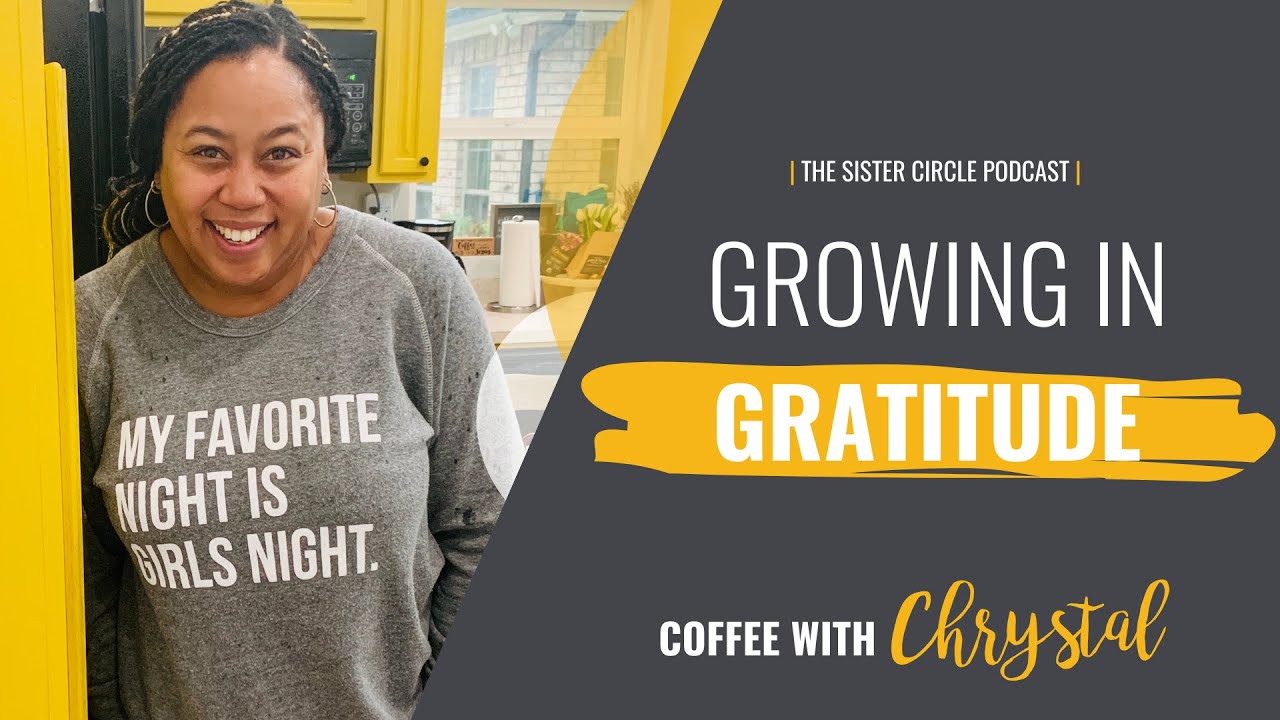
Chrystal Hurst explains why gratitude matters and how to build it as a daily habit. Chronic complaining rewires your brain negatively and raises cortisol, while gratitude improves sleep, relationships, and emotional resilience. She offers concrete practices like morning thank-you prayers and daily lists to get started.
Chapters
It's the time of year where we're supposed to be thankful. That's no secret, but I want you to know that gratitude is good for you. Let's talk about it. Hi, my name is Chrystal Hurst, and if you are watching on YouTube or Facebook, I'm glad you're here. If you're listening on the podcast, I'm glad you're here. I release a video and an audio of that video every Sunday evening each week because I really want to be what I'm supposed to be in this world, which is an encouragement to those of us who just need somebody else to say, come on, you can do it, keep going. I believe firmly that many of us give up too early on our dreams. We give up too early on our desires. We quit too soon simply because We needed encouragement and there was no one to give it. So since the internet allows me to do that and technology allows me to spread encouragement, that's what I want to do. So I'm here every week doing that. I want you to know that not only am I here every week doing that, but I've been here doing that for a long time. I've been podcasting for 8 years. I have been on video for the last 3 years. I write, I speak, speak, um, do all kinds of things. And I just wanted to give you a heads up that in a couple of weeks I'm taking a break. In December, I'm going to give my team a break. I'll be sharing videos but just recording them, no editing, no nothing, just putting it into the world so they can rest. And then in January, they're going to put out some archived content so I can rest. So for December and January, There'll be great content. Our rhythm will just be a little bit different. So if you're listening on the podcast, there will be no podcast audio episodes released for December and January. So come on over to YouTube. We'll be releasing videos only on YouTube for December and January, because everybody needs a little break sometimes, don't they? And I think it's about time that I take one. But before I take that break, I didn't want to leave you before the month of November was over. Because there's a couple of things that I think are super important for me to share right now. Y'all know what time it is. You know that it's time for us to get out that turkey and to— whether you fry them or bake them or sauté them or filet them, whatever you do— to eat some of that. Some sweet potatoes, macaroni and cheese, maybe you do mashed potatoes, green bean casserole, pecan pie, pumpkin pie, sweet potato pie, banana bread, banana pudding, ice cream, pound cake, soda, sweet tea, stuffing, you name it. Brussels sprouts, we even have that too. We got it. We get full, don't we? We have recently been in the Inner Circle membership, which is the membership for people who want to— women specifically who want to hear more from me, get content that will help them grow, find community that will keep them encouraged, get behind the scenes and extra content so that there is an encouragement to living life well. We have been doing a 21-day gratitude journey, and every day for 21 days I dropped in and shared a short audio to encourage the women towards gratitude. And then there was a course that went with that— easy peasy, no big deal— but something for women to do to engage with the principle of gratitude in their life. Downloadable PDFs, questions, extra content. Why did we do that? Because we realize, I realize, that while gratitude is something we know we should do, it's something grateful, being grateful is something we know we should be. Sometimes we forget to do the thing. And that's really what happens in life. In this information age, there are very few things we don't know or can't get access to the knowledge for. Gratitude is everywhere. We've got gratitude journals, we've got gratitude prayers, we've got gratitude artwork for our homes. We're reminded all year long to be grateful, to have a practice of gratitude. And then of course, November comes and stacked on top of the turkey and the sweet potatoes and the green bean casserole, If we haven't been grateful all year, we're grateful then. We understand gratitude is important, but I want to encourage you to think about why gratitude is good for you. We know it's something you should do, but what if it's something that's for you? What if it feeds you? What if your gratitude can actually fill you up to overflowing? It's worth it to take some time to think about this. For many of us, not all of us, but many of us, gratitude is not natural. It's not our first natural response. When we don't get what we want, our first response often is frustration. It can be envy, it can be anger, it can be disappointment because we want what we want and we've been wanting what we've wanted since we were 2 years old, the first time you threw a tantrum. We, we like to have things the way we want it. Like Burger King says, have it your way. But if you learn and grow as you go through adolescence into young adulthood and continue on, you start to realize that certain responses not only aren't acceptable because somebody probably told you to get up that floor when you were 2 and had a tantrum. But they're actually not culturally receivable. It's clear you're not supposed to be the person that's running around complaining all the time. If you are and have wondered why people don't want to engage in relationship with you, that might be why. But I'll get more into that in just a moment. The reality is this practice of gratitude is just that. It's a practice. That whether or not it's your nature to express thankfulness, to express positivity, to express appreciation, that when you decide to practice gratitude, no matter what it does for you, it is a choice to practice it. This is why gratitude and the practice of gratitude is such good news, because even if you're not a naturally grateful, positive thankful person. You can practice. You know, I played the piano. I play the piano, but I took lessons from the age of 5 to 15. And I remember there were so many pieces that my teacher would put in front of me. I had multiple books. She would give me different songs to play. She would sit down in front of me and show me how to do it. She would put her hands on mine when my fingers weren't on the right keys. But no matter what she did to teach me, no matter what she did to tell me how to do it, no matter the theory that we worked through in our lessons or the rhythm that she tapped out with her pencil on the hood of the piano, I had to go home and practice. And the only way that I was going to learn how to play that piece well without error consistently was to practice, practice, practice. I can hear my mother now, "Chrystal, did you practice your piano?" Because my mother was paying for those lessons and wanted me to make sure I was maximizing my opportunity to learn and grow musically. And sometimes I would say, "Yes, I've practiced," when in fact I had not. Sometimes, even though I needed to practice for at least 30 minutes a day, I'd practice for 17. 'cause I really didn't wanna do it in the first place. And then I would be frustrated when I would go back to my lesson with my teacher and I couldn't quite play it the way I wanted to. I hadn't been committed to practicing. So it was then no surprise that when the time came, I couldn't do what she knew I could do when she gave me the piece to play. Listen, in your life, God is giving you a piece to play, a place to play, a position to play. And often, in order for us to maximize the fullness of his plan for us, we have to walk into those places and spaces with gratitude. And in order for you to be ready, you've got to practice. Yes, you've got to practice the skill for where you're going. Yes, you have to get the learning for where you're going. Yes, you need to seek God and develop your maturity in the spirit for where you're going. Absolutely, you need to know God's word 100%. 100%. You need to show up and take advantage of opportunities and maximize your potential. Absolutely. And so why do you think that anything else that God would have planned for your life that requires your practice and preparation— if everything else requires that, why would not your gratitude as well? Because again, for most of us, it's not a natural approach. But you can practice. And if being grateful does what I believe it does, which is it opens doors that you didn't even know existed, that it creates space in the places in your mind and in your heart for you to fill up with that space that's created from gratitude, for you to fill up with enjoyment and fulfillment and commitment to those spaces and places that you care about? What if the practice of gratitude carves out a greater capacity for you to receive? This is what gratitude does for me with my children. It's the ones that show gratitude that I want to do more for. It's the ones that say thank you that I am soothed into relationship with. I love them all, all the time, but gratitude does something to me? What if your gratitude does something to you? Or better yet, what if it opens a door for the God who loves you to pour out more blessing? And by blessing, I don't necessarily mean anything material. It could be, but what if it's just your satisfaction in who you are, the satisfaction of the life that you have today? It could be a variety of things. My mother used to always tell me, she told all 4 of her children, even my dad, she would say, you've got to stop and smell the roses. That's what gratitude is. It doesn't notice the roses and keep going. It doesn't slow down and point them out and state the fact of them. It stops the car, gets out, and absorbs the fragrance. And appreciates the color and admires the beauty. Stopping to smell the roses takes it all in. And it also means it gives you the space to be thankful for what you see, smell, and maybe even touch with your hands. You gotta pay attention to whether you're practicing more grievance than you are gratitude. Let's just be honest, gratitude, you know, we're supposed to do it, but what if you just don't feel like it? I mean, what if there's nothing in it for you? Well, this is what I want to tell you about today, because there definitely is something for you. According to a television station in Buffalo, WKBW, It is— it's been said that complaining and practicing and rehearsing your grievances, because you gotta, you're gonna practice something, that practicing your grievances will not only impact your mood, but it will impact the mood of others around you negatively. It can impact negatively your brain function and your physical health in the following ways. Every time you complain, Your brain rewires itself. Uh, if you didn't know that, your brain is constantly creating neurological connections, chemical connections in your brain. The things that you do, the things that you say, the things that you think, the food that you eat, the exercise that you get, you are constantly— as long as you're living, you're growing. As you get older, there may be some things dying off to compensate for that, but as long as you're living, You have the capacity for growth. And when you speak words— words are life indeed, Maya Angelou said. Words are living things. The Bible says the power of life and death is in the tongue. Your words create an atmosphere for your life. So every time you complain, your brain is rewiring itself to make it more easy for you to be more negative. And negativity, both inward and outwardly does not build you up, nor does it send you on the way to the places you actually want to go. When you are negative, not walking in gratitude, you are subtracting from your life. Another thing is MRI scans— according to this radio station's report in Buffalo— MRI scans show that constant complaining can actually lead to shrinking in a region of the brain that is responsible cognitive function. It actually can adversely affect you when it comes to your memory. It can result in memory loss. These are negative consequences from not being grateful. One more. When you complain, you actually increase your levels of stress. We've all heard of the stress hormone cortisol, which means you're going to be more prone to high blood pressure, more prone to digestive problems, more prone to sleep issues, more prone to depression and heart disease. Now, while I don't want to scare you, I do want to keep it real. The bottom line is the opposite of gratitude, which is negativity and complaining, it's not good for you. In other words, it's to your best interest, it's for your best outcome that you choose to practice gratitude. Now, I'm telling you this from a person who is a glass half full kind of girl. Listen, I believe in seeing what's real, I'm a fairly pragmatic person. I believe in noticing where the glass is half empty so you can figure out how to fill it up. Like, at the end of the day, I want to be productive and I want to fill it up. I want to do the right thing. But you can notice where something needs filling without calling out what's not there. You can just add more water to the cup instead of rehearsing how empty it already is. If negativity is your way of seeing the world first, that's okay. We just don't want to practice it, dwell in it, sit with it, own it, accept it, let it indwell. We want to notice it and react to it with gratitude. Here's why gratitude is so important. There are physical benefits of gratitude. Gratitude can open the door to new relationships. Think about what happens When you are with someone who appreciates you, who says thank you, who is grateful for what you've done, it, it opens up your heart to them, doesn't it? What if positivity creates space for intimacy and vulnerability? What if part of your relationship with your girlfriend, or better yet, with your spouse, the person you live with every day, What if your cultivation of gratitude for yourself and for others creates space for connectivity? What if gratitude improves physical health? Because gratitude is actually one of the healthiest human emotions. And don't you know, when you're emotionally healthy, that you can be physically healthy too? That the metaphysical version of yourself, that the physiological connects with the mental and emotional and you as a whole person. You, you feed off of the cycle of who you are in your mind, in your soul, and in your body, that you're an interconnected being, that you can't separate how you're doing physically from how you're doing mentally or how you're doing spiritually or how you're doing emotionally. What if, what if when you are healthy emotionally, it sets the stage for better physical health. Not only do grateful people, according to Forbes magazine, experience fewer aches and pains, but also studies show that they are prone to actually take care of themselves because they're grateful for their bodies. And because they're grateful, they want to care for it well. I can tell you, after having many Christmases with many children, The children don't always appreciate what we get them. It's very clear to see what they enjoy more of and what they're kind of like, eh, I'm glad you got me that, thank you. And it's very clear on the Christmas mornings when I've actually had ungrateful kids. Is this all you got me? One of them dared to tell me. You know what? Gratitude, it's connected to your enjoyment of your life. And if you enjoy your life, if you have a lifestyle that you actually appreciate, it lowers your stress level. You know, they're always telling you about how you eat and they're like, you know what, if, if you're going to make changes with your diet, it's really not just about food. It's a lifestyle change. It's a comprehensive change that allows you to see life and be grateful for it. And when you change your gratitude, when you change your lens, it's all connected and you change your health. Gratitude also improves, obviously, your psychological health because thankfulness reduces the number of toxic emotions. And if you have ever been full of emotion, whether that be grief or anger or sadness, whether that be some form of toxicity or even full of good emotions like happiness and joy and excitement, The emotions that you feel every day can dictate how you experience your day. You know that if you're in a funk, you don't want to come to work, you don't want to talk to nobody, you don't want to acknowledge that you're in pain or that you're suffering. This is why one of the most important things you can do is to go to someone, a friend, a husband, be honest, to talk it out so that you can get those toxic emotions out of your system and create room. For gratitude to reside. So we've got new relationships, physical health, psychological health, physiological health. It also increases your empathy and it decreases aggression. In other words, it gives you the capacity to see other people and understand other people and be pro-social. It allows you to be less aggressive. And again, both of these things come back to good relationships. Gratitude can even cause you to sleep better. Who woulda thunk it? Gratitude can help your self-esteem. Gratitude can increase your mental strength, which then can help you to overcome trauma. Like, resilience is what we're talking about here. Gratitude, because it changes the way you see things It helps your resilience. It gives you a greater bounce back because you're not going to allow the negativity or the things that didn't quite go the way you should to dictate how you live. Resiliency is what causes you to keep going when someone says no. Resiliency is what causes you to choose to love again when one relationship was bad. Resiliency is what you choose to focus on when you decide not to let that one pink let keep you from trying for the next job. Resiliency says, I will get up and try again because I believe that there's something good here for me. And that becomes easier to believe when you're grateful. According to annegradygroup.com, gratitude affects your brain at a neurological level, and the practice of gratitude reduces the cortisol hormone by 23% and increases serotonin and dopamine. These are the neurochemicals that are often found most in antidepressants. So practicing gratitude and recognizing all that you have and saying, thank you, I'm so grateful, it sets you up for joy. Perhaps this is why God tells us in the Bible, give thanks in all circumstances. Key word is in. He doesn't say give thanks for all of your circumstances. He said give thanks in all of your circumstances. You know what that means? You can be in circumstances you don't like and still be grateful. You can say, I don't like what's happening, but I'm going to say thank you that it's happening to me right now because I'm going to believe that something good is going to come out of that. That's gratitude. That's resilience. I know that it's difficult. I know that life can be hard when you're brokenhearted, when you feel like you're struggling with provision, when you feel alone. I get that. But even in those circumstances, give thanks. I recently released a planner. If you want to check it out, you can go to chrystalevanshurst.com/planner. One of the things that I put on the weekly spread each week is a box for gratitude. I know a lot of planners have this, you've probably seen it, but it's a space where you say, I'm choosing intentionally, proactively to say thank you. Some of you I know keep gratitude journals. You write down something every day you're grateful for. That's awesome. Some of you make sure you give thanks to God in prayer every day. That's awesome. Some of you are like me and you jot down something to think about all week and that's awesome. The point is, it's not about how you do it or where you do it or what paper you do it on. It is about the fact that you choose to give thanks in all circumstances, even if you're not grateful for them. Gratitude honors God. Gratitude creates fellowship. Gratitude, especially in difficult times, can increase your faith. Gratitude serves others. Gratitude it even opens the doors for people who maybe have been skeptical about faith because they see God's goodness in you. The world is all into gratitude right now, y'all. Everybody's talking about gratitude. God talked about it first, and he knew what he was talking about when he told you to give thanks in everything. So yeah, you know, this season of Thanksgiving, it is the season where we think about gratitude, where we might even say a prayer or two. My question is, have you chosen to live this way? Every day, every week, every month, not to pressure you, but to remind you that if gratitude keeps you healthy, it adds years to your life. I want you to be grateful because it's the right thing, but I want you to be grateful because it's good for you. So I want you to take some time to think about what you've been saying about your life or your circumstances. Have you been grateful Or have you been airing your grievances? Are you seeing the glass as half full or are you seeing it as half empty? And how do you think your life would change if you chose to be more intentional in cultivating the practice of gratitude in your life? I wanted you to think about that and I want you to drop it in the comments. If you are watching on YouTube or Facebook, if you're listening, you can go to the show notes for this episode and tell me there exactly what you think. I'd love to hear from you. But I want to leave this episode, uh, my next to the last one for 2022, with some specific and practical ways for you to engage in this practice of gratitude. When you wake up every morning, tell God thank you. Try to list at least one thing a day, go up to 10 if you can, of things that you can be grateful for, no matter how small, how big or how silly. You can choose to be grateful by sending a text message or a, a voice message or even a physical card to a friend and telling them, thank you for being there for me, thank you for always being my friend, thank you for showing me how much I am loved, thank you, thank you, thank you. Let them know you appreciate them. Maybe you go with blank cards the next time you go to the grocery store, and whoever checks you out, they get the card. Showing people appreciation is important. Stop and smell the roses. Take time to notice the beauty in God's creation and know that when he painted the skies, he was thinking about you. You ought to try taking a break from complaining, like literally saying, today, for the next 24 hours, or the next 48, or 72, or whatever works for you, I'm not going to say not one negative thing, like a little mini challenge. Take the challenge and see what changes in your head and your heart or in your relationships. You can thank your garbage collector, you could thank the grocery store clerk, you can thank your mother, you can thank your aunt, you can thank your children, you can thank your neighbor. I want you to think outside of the box and think, who could I share a good word of positivity with? Because you never know what's going on in people's lives. Just like you struggle to be grateful because in your life, you're having a bad go of it. Well, what if someone else is having a bad go of it too? And this is how we become better together, y'all, because I believe that everyone, but especially the girls, who understand about being in this great sister circle that we have— we understand you can be my sister or brother and I don't really know you, but I can still lift you up. So you think about what you could be grateful for and the words that you could share with other people. You can post scriptures or encouraging words or con— comments or quotes around your home so that positive vibes are filling you every turn, giving you words that settle down, settle down into your psyche that you find yourself later regurgitating because it was in there somewhere. But put things on your wall to remind you of what you're grateful for, right on your mirror with a lipstick Give your neighbor a gift card. Let her run through Starbucks, or give her a gift card to get some DoorDash brought to her house. Let those in your household say thank you. I can't tell you how many times we want our husbands to honor us or our children to honor us, and really, when we talk to them, we're not honoring. Stop waiting on someone else to start. You be the one. It's time for us to move into Thanksgiving. The week of Thanksgiving, if you're listening to this when it comes out, and I know that you're going to give thanks this week. I, I know that. But if you know that most of the year you haven't been doing that and you understand that gratitude is important, God requires it, but whether or not you do it, when you do it, it's good for you. I hope you think about my questions and I hope you share them in the comments below because Half the battle is won when we say it out loud. Are you a grateful person? Do you understand the beauty that gratefulness, gratitude can bring to your life? I hope you do. And if you don't, I hope as you tackle the negativity that's in your brain and in your heart, that you would make room for the spirit of gratefulness that wants to reside there. And like I said, y'all, now I'm here this week and I'll be here next week before the break. I hope I get to see you again. And if you're here for the first time, go on and stay a while. Hit subscribe on YouTube, follow me on Facebook. And if you're listening on the podcast, make sure you're subscribed anywhere that podcasts go, Apple, Google, Stitcher, Spotify, Pandora. I'd love to talk to you about something else next week, and I'd love to meet you here. But in the meantime, make your list. Be grateful. Practice being thankful and know that when it comes time for you to actually play the main character in the main melody of your life, maybe the practice of gratitude will be with you and help you to experience those places and spaces in the best way that you can as you live. All right, y'all, I'll see you next week.










