How To Stop Being A Victim
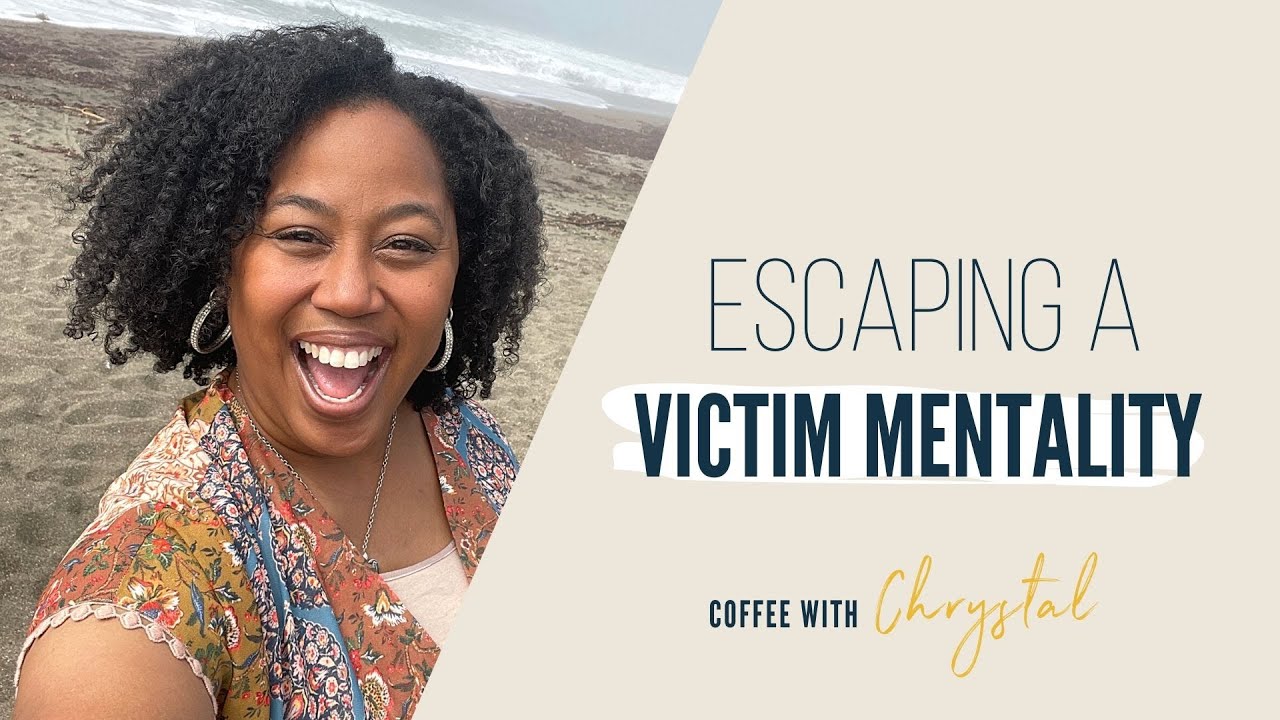
In this solo, live‑style video Chrystal Hurst explores the difference between a victim mentality and a victor mindset. She defines a victim mentality as a pattern of blaming others, using absolutes like “always” and “never,” and believing one has no control over life circumstances. She contrasts this with a victor mindset that embraces personal responsibility, recognizes patterns, and actively seeks change. Hurst emphasizes that even when external events (e.g., abuse, loss, technical failures) are beyond one’s control, individuals always retain the power to choose their response. She offers practical steps: notice blaming language, identify recurring patterns, set boundaries, seek help from counselors, therapists, mentors, or faith communities, and engage with self‑help resources (books, podcasts, nutritionists). Throughout, she weaves a faith‑based perspective, reminding listeners that as “God’s daughters” they are created with inherent authority and are called to exercise dominion, renew their minds, and fight for victory. The talk concludes with encouragement to act, learn, and model responsibility for oneself and one’s children.
Chapters
All right, good morning, or good afternoon, or good night, as Truman would say. Hey y'all, listen, I am here operating from my phone today, which means my camera angle is not going to be as beautiful as it normally is because I don't have my 35mm working this morning. It is what it is. Here's my setup, okay? And my computer, the love of my life right here, my friend, my best friend, it won't turn on. It won't turn on. The screen, it's on, but the screen won't work. The devil is a liar. But that means I had to do my, uh, it means I had to do my live and, uh, from the chair with a phone. So, oh well, I think the spirit moved anyhow, so we're just gonna go on and share that with you today. Hello, my name is Chrystal Hurst, and I'm glad you're here. If you're watching me on Facebook or YouTube, be sure that you follow me on Facebook and subscribe on YouTube so that anytime I go live, you'll be sure to catch the video. Also, if you didn't already know, this video is also a podcast. So if you prefer to listen to me in the future, be sure and subscribe to the Sister Circle Podcast on any podcast player that you like. Apple Podcasts, Google Podcasts, Stitcher, and Spotify. You can find me there as well. Listen, let's get into it. Do you have a victim mentality? And if so, how do you know? And did you know that having a victim mentality can totally sabotage your efforts to live your life well? I am so bummed out about the fact that I have to admit that sometimes I have a victim mentality. A victim mentality is often the way to take the easy way out. Because if there is no, uh, no opportunity for me to be in control of my life, if someone else is always in control of my life and I'm the victim, then there's no responsibility for me ever to do anything to make changes. And that's ultimately what a victim mentality is. It is a mindset that says somebody else has overpowered me. They have more power than me. They are able to make decisions for my life and I can do nothing about it. It says I have no control. It says there is nothing that I can do to change the situation. It says, woe is me, and all things are bad for me, and things are always bad for me, and it's always somebody else's fault and someone else's responsibility. That's what a victim mentality is. And let me tell you, it's a lot easier in this world for me to blame you for my problem, you for my situation, you for the catastrophe that has happened in my life, than for me to take ownership. Now sometimes a victim mentality is not the worst thing in the world because it is someone else's fault that you're in the situation that you're in. But even then, even then, when someone else has done something to impact your life in a way that leaves you reeling, you still have the ability to choose. I usually say that at the end of many of my podcasts. Sometimes you'll hear me say it on video. You always, as long as you're breathing, have the opportunity to choose. Now listen, I came in here this morning to record my video. I have a whole setup. I have my light, I have my 35mm Sigma Art lens on my Canon R5. If you know cameras, you know what I'm talking about. I have my Mac 16 that is all decked out, all the things. And this morning I came in to turn on my computer to record my beautiful video for you, and guess what happened? My Mac, it's turning on but the screen won't light up. It's tired. I think I've worn it out. Now, this is what I— this is what I said. I said, oh, there's always something happening that makes it not easy for me to get my, my recording up and my live up with my Inner Circle, which is where we are recording this initially, and then we share it later with you. And this is always happening, you know. This never happened— this is the other thing, always and never— this never happens to anybody else. This never— this, this This never is an interruption for anybody else. Everybody else I know in my life that's making videos and doing all the things and turning on their cameras and doing their YouTube, they never have to deal with the tech stuff I have to deal with. Okay, always and never, those are two keywords that might cue you in that you're playing the victim. Now what I could have said this morning is, you know what, since, you know, the devil's just against me, the Lord ain't for me, well, you know, I'm just gonna Do something else because obviously it's just not, it's not working out on my behalf. This is what we do when we have a victim mentality and when we believe the lie that there's nothing that we can do to alter our situation. We say, well, well, I tried. Oh well, it never goes right for me. There's always— it's always harder for me. The men always leave me, you know. I never get the promotion, you know. It always is worse for me. They never include me in their group. I can never seem to lose the weight, you know. The pastor never calls my name. A victim mentality says you are powerless. And just by the way, I'm aware that I have nails on today, but one is missing. I'm aware. That's because It was press-on and I took it off. Let me, let me press it back on. There you go. Now my hands are right. I'll pop them off after this is over. Okay, you know you're a victim when you abdicate your power. That's what you're doing. You know you're a victim when you release your responsibility. You know you're acting as if you're a victim. You are choosing a victim mindset when you think to yourself, there's nothing I can do. Listen, as long as you are breathing, there's always something you can do. Now, it may be hard. You may need to seek help. You may need to reach but there's always something you can do. Playing the victim is the equivalent of someone getting thrown overboard off of a boat and not being able to swim and choosing just to sit there and sink. If I get thrown in the water and if I can't swim— if most people get thrown in the water and if they can't swim, what do they do? They grab at air. Because when you want to live, you reach for something. Even if you don't know how you're going to get out of the water, even if you don't know if anyone will see you, even if you don't know if anybody's going to throw you a lifeboat or a life jacket, even if you don't know if that movement will keep you alive, you sure do try. You wave your hands and you say, I'm gonna do something because sinking is not what I'm trying to do today. That's what you need to do in your life. When you find yourself in waters you never plan to be in, not knowing how to swim. Stop deciding to sink. Stop telling yourself, I can do nothing. That is a victim mentality, and a victim mentality will always say it's someone else's fault, that I have no power. You're blaming someone else. In fact, even if you don't have a victim mentality, here's what I want to tell you. If you find yourself ever blaming anybody else for anything that's happening in your life, stop. Stop, because when you blame them for what happened, you are giving them your power. Now, I'm not saying they didn't influence, they didn't act. I'm not saying they didn't impact, and I'm saying you can acknowledge that without leaving the only part of the conversation on how they affected you. Now, I know that somebody is saying, okay, yeah, but when I was 6 and my stepdad came in and, and took advantage of me, sexually abused me raped me. I was the victim, 100%, 100%. I'm not talking about that, okay? I'm not talking about what you could not do. You were a victim. I'm not talking about the fact of being a victim. I'm talking about the reality of having a victim mindset. That's what I'm talking about. And even if things happen in your life that you couldn't control, that impacted you forever, even if you were factually a victim, you are not actually a victim in your mind. You don't have to choose that. You don't have to choose that. You don't have to say, because, uh, because my dad wasn't in the home, or because I was a victim of abuse, that that has to lend itself to a victim mindset that keeps me choosing men who will abuse me or men who will leave me. You can learn if you see that there's a pattern, right? That's how you know that there's a mindset issue. There's a mindset issue when there's a pattern. Okay. If you're always getting passed over for the promotion, what's going on in your mind, right? And if, even if that's not a victim mentality, you should still ask that question. You should go to your boss and say, hey, I've been here for 5 years and there are 3 people that have been in here with 10 years, a year and a half, 18 months, 3 years, and they keep getting the job. What is it about me that's not allowing me to get considered for the job? See, a victim mindset would say, Sink. There's nothing I can do. That's what a victim mindset would say. It keeps happening and there's nothing I can do about it. Okay, a victor's mindset says I can actually do something about it. If there's something I don't know, I can learn. If there's a pattern I keep repeating, I can analyze that pattern with the help of a friend or a pastor or a counselor or a therapist or a sister and say, what is it about me where I keep making these choices? A victim mindset says, well, it just keeps happening. A victor's mindset says, I keep choosing so I can learn how to choose differently. It's the difference between a growth mindset and a fixed mindset, okay? But a victim mentality goes a step deeper, and it doesn't just say I'm not growth-oriented, I, I can't figure out how to move forward. It doesn't just say I'm a fixed mindset, I just want to stay still. It actually says I can't move because someone else is doing something to keep their thumb on me. And I'm telling you, you don't have to be a victim. That's what I'm telling you. So you have a victim's mindset when the responsibility for fixing your situation lies with someone else, or the impact of your situation is only caused by someone else, and you refuse to accept your responsibility if there is any, and you expect— you refuse to expect responsibility for making choices that can change the scenario. You realize that you have a victim's mindset when you keep having the same thing happen in your life and you don't like it, but you are never the reason why anything has to change. Listen, I talk to people all the time, young and old, and I'm just listening to them thinking, oh my gosh, you're playing the victim right now. You are playing the victim. You are telling me why what happened is everybody else's fault. And when that's the way you think, and when that's the way you talk, you will never have victory. Never, ever. Because victory comes from people who make choices, who believe that they have the power to change their life. And let me tell you something, one of the, one of the things, and I've said this before, as a woman, as a person, you are powerful. God gave human beings power. He made man and woman in his image. We are creative by nature. We're supposed to exercise dominion by nature. We're supposed to name things by nature. We're supposed to cultivate things things by nature. This is who we are as humans. As a woman, you got something extra, okay? He just, he just like, you know, was like bam and made Adam. He crafted the female. There's so much intentionality that went into your design. And then as a believer, as a person who is spiritually attuned, oh my goodness, do you realize how powerful you are? Lord have mercy. And we abdicate our power Letting everybody else tell us what to do. Letting everybody else give us direction. Letting what everybody else said impact the way we think. Your mindset, your mindset, your ability to think strong thoughts based on the word of God, based on what is right and true, and based on what you can actually change by what you do every day is your right. It is your right as a human. It is your right as a woman, and it is your right as a believer. So exercise your right. Exercise your right. So victims say always and never. Victims are never at fault. Victims say I could never do and I can never accomplish. Okay, that's what victims say. And you know you're a victim when you keep ending up in situations you don't want to be in repetitively. There's a pattern. You keep ending up in this same spot, and that means you're not taking the power. You're not, you're not taking the power that you have. And using that power to change, okay? And if it keeps happening over and over again, it's because you're abdicating your power. And look around, you're probably blaming someone else. So the first step to releasing your power is to stop giving it away to someone else. Stop saying, because they, since they, if they had not, okay? Stop giving your power away. Look at what you are saying is someone else's fault and ask yourself this question instead: What can I do to change the scenario? Now I realize everything all the time, all day long, in every season isn't totally under your control. I understand that, but there's a lot that is. So you find what is and you work that. You find what is in your control and you work that. Okay, so the first step is look around who you're blaming. Stop blaming them and ask yourself, what am I doing? It's the thing that, you know, we teach people— you've heard people say this— you teach people, people will treat you how you've allowed them to treat you. You, you teach people how to treat you by how you treat yourself. When you realize that there is a difference between you acknowledging and owning your errors and then being the scapegoat, scapegoat for everything and anything else that someone else wants to put on you, okay, you don't have to take it just because they dish it out. Okay, so you got to stop blaming other people. You have to stop taking on what other people want to give you if it's not yours to carry. Okay, you have to know, and, and here's the thing that helps me the most. The thing is, I am not just your wife, your mom, your friend, your leader, your boss. I am God's daughter, which means that I have someone to answer to when it comes to how I live my life. So I can't play the victim with you and blame you for everything if I have to answer to God. God is gonna say, but what did I give you in your hand to do? The gospels tell us about the talents and how the one guy was given 5 talents and one guy was given 2 and one guy was given 1. And Jesus, the master, goes away and comes back and the 5 has made 10 and the 2 has made 4 and then the 1 buried it. And he was giving excuses. And, and Jesus, the master, called him evil because he had a victim mindset. And I know this is what he was thinking: they had more to me, more than me, so if they had lost some, they had more to lose. It was like, well, look at what they had to play with, look at what they had to work with. Nope, nope, nope, nope, nope. Victim mindset. If you are pointing the finger at other people and if you are reducing your own ability to make changes in your life, if you are reducing your own power, if you are not acknowledging your own power, if you are not, um, if you are not playing into and seeking your own power, if you're not looking for the what can I choose right now, what is in my power to do right now, what can I effectively do differently right now, if you're not going to God who is your Father Okay, you're their friend, their boss, their coworker, but you're his daughter. And ultimately, if he is your master, he's the only one that you have to answer to, right? You have to ask yourself, what does the Lord require of me? And I can tell you what he requires. I can tell you, it's really simple. He wants you to fight. It's that simple. So if you don't know how to do it, learn. If it's happening to you over and over again, analyze what is the pattern that's happening and do something different. If you keep ending up in a certain kind of relationship, maybe you need to stay out of relationship for a while and get somebody who's wise, who's older than you, who's a counselor, who's a therapist, who can say, this is what you keep choosing. Maybe you need to put the work into analyzing it. Maybe you need to examine your own heart. If you keep gaining weight after you lose weight, then maybe you need to stop saying, well, it's just not in my DNA. Girl, please. Girl, please quit saying that. It's about your choices. It's about my choices. So analyze your choices and do what it takes for you to be the victor. Listen, everybody that has victory in their life has to figure out how to win. Let me say that again. Everybody who has victory in their life has to figure out how to win. Let me say that to you another way. Everybody in your life who knows how to swim had to learn. That's what I'm telling you. Nobody comes out of the womb knowing how to swim. You have to go to swimming lessons. Somebody threw you in the deep end of the water and, and watched you while you figured it out. But there was a moment where you had the panic attack because you didn't know innately how to do it. So if you feel like you're a victim, and if you know you're a victim after listening to this talk because you realize I'm blaming everybody else for something that's happening to me, you realize that you keep ending up in the same pit over and over again, you realize that you keep choosing the same person or the same boyfriend or the same friendships over and over again, you realize that you are on a cycle of defeat, you probably are living your life as a victim. So the way that you stop that is by looking around and silencing yourself. Who are— you see how I like playing with my nails? Silencing yourself. Nails do make you feel some kind of way. You look around and you say, who am I blaming? And you stop blaming them. You silence yourself and you say, I am no longer going to give my power away to other people by blaming them for what I could have done. And then you got to figure it out. If it's a pattern, then it is something you've learned. So you have to, you have to learn another behavior. You have to learn another process. You have to learn a way to think. That's why the Bible says you have to be transformed by the renewing of your mind. It's a mindset. Now the great thing is, y'all, in this world there are so many doggone self-help books. Now I'm not— yes, read the Bible, train your thinking, ask the Lord what does he say. But there, there are actual behavioral patterns. Just like I love Jesus, but if I'm trying to learn how to eat healthy, I'm gonna go see a dietitian or a nutritionist. Okay, the Bible does talk about, you know, the nuts and the berries and the fruits, and you know, in the Old Testament it gives you some guidelines. But if I wanted an eating plan I'm gonna go see a nutritionist or a dietitian, right? I'm gonna go join Jenny Craig. I'm gonna join Weight Watchers. I'm gonna do something in the natural to help me learn another behavior. So I love Valerie Burton, Successful Women, anything in that series. Successful Women Think Differently, Successful Women Speak Differently, because her books are designed to be coaching books. You wanna learn how to train your brain? Get your head in God's word so you know what he thinks about you. You know what God's word says, you're operating in obedience. And righteousness in accordance with that, so that you can have the air clear to hear clearly from the God who empowers you ultimately. And then you need to go see somebody. You need to get the book. You need to see your therapist. You need to ask your friends to tell you the truth so that you can look at your behaviors and see where your behaviors are repetitious and you may not notice it. But what I can tell you 100% is if you will decide to stop blaming other people, to start noticing your patterns, and to stop giving away your power, and instead, and instead start taking responsibility. Start owning it. There's, there's a different way to still own something while still informing that there was an impact or an input to your decision. Okay, if I jump off the ship, you know, your mother used to say this to you, somebody jumps off a cliff, you gonna jump off too? So if I end up off of a ship in the water and I choose to say to somebody, well, I mean, they told me to jump. That's, that's blaming. But if I say, you know what, I should have looked down and thought, girl, you don't know how to swim, but I believe the hype behind me that they were telling me, just jump, you'll figure it out. And next time I will not believe the hype. Next time I will use my better judgment. Next time I will go with my first mind. That is taking responsibility. I should have known, or I thought when they told me, I should not have done this. So you, you see how there's a way for you to own it? So the next time owning it looks like I ask questions before I jump. Next time is if I have a hesitancy in my spirit, then I probably shouldn't do it. I should ask more questions before doing it just because they said so. So you need to get to the point where you can recognize the patterns, recognize when you blame, and recognize your power. Those are the 3 things. Recognize when you're blaming other people, Recognizing when you can learn something and do something differently, when you can ask questions, when you can get better, and then recognizing that you have power to change. You always have power to change. Here's what I can tell you 100%. I can tell you this from— I mean, y'all, I'm gonna be 50 this year. I'm trying to think of that one thing a month to do, at least one thing, at least one thing that I could do a month. I think this, this week I'm gonna go to the movies by myself. Just, it's a movie I want to see, I'm gonna go by myself. But I think that, you know, what if you can teach— I saw somebody in the comments say this conversation is for grown folk. No, this— I mean, it is, but this conversation is for our kids. Like, if you don't teach your children— oh my gosh, please, Lord Jesus, teach your children to take responsibility. Quit letting them go everywhere and blame everything on everybody else. Like, I will not let my children do that, especially my young men. I'm just like, dudes, like, okay, but what could you have done? Okay, but he— no, no, I'm not talking about him. I'm not talking about him. I'm talking about you. What could you have done differently? What will you do? What will you do differently? How can you respond differently? Let me just say this to you. Anything you don't know, you can learn. I want to help you. And just like if I give my children everything they want, I am not preparing them for adulthood. I just want you to know that if I correct you and if I say you have to take responsibility and if I don't allow you to blame someone else, the reason why I'm doing that is because I want you to grow up. I want you to be mature and I want you to recognize your power. And the older you are, the longer it takes for you to recognize your power, the more time you will have given your power away, which means you will never get as far in your life as you could if you owned responsibility for your life. The reason why I want you to stop blaming other people, the reason why I want you to stop saying always and never, the reason why I want you to stop saying, well, I mean, you know, shrugging my shoulders and nobody told me what to do. The reason why I want you to stop doing that is because I want you to recognize early that you have the power to make decisions that will change the narrative of your story. Otherwise, you'll spend 20 years blaming everybody else. You'll spend 20 years blaming everybody else. This is why it's so important. So if you realize after this talk that you have been, um, embracing a victim mentality, if you realize that you blame everybody else, that you say always and never, that it's never something that you can control, that it's never your fault, I want you to stop. Not just because I want you to stop doing that. It's because I want you to start walking in your power. I want you to start walking in your power. And you only have the power when you realize you every day have the right to choose. You have the right to make decisions about who you will engage with and where you're going to work. You have the right to make decisions about who you're going to be in relationship and who you're going to live with. You have the right to make decisions about how you spend your money and even what you do relationally, even based on how you came from before. And, and again, I, I know things happen before. I got it. I understand that. I got it. But when you realize that victim is not the place to live from, but instead, instead, victor is the place to live from, you will change the doggone narrative of your whole life. So if you don't know how, then you learn. And in this world with Google and, uh, and therapy and, uh, and just the internet and books and the gospel and the church is on everywhere. Like, you literally have everything you need at your fingertips, every stinking thing you need to learn new ways of thinking, everything you need. And the people around you will adjust. If you have always been the person that everybody can give all their stuff to and they don't— they're I'm not gonna carry it because you're gonna carry it and you'll do it. And it's, everybody just keeps getting, and if nobody else is gonna do it, then I have to do, guess what? As soon as you start learning to set boundaries and to clearly communicate what you're gonna do and what you're not gonna do, the people will adjust. All of a sudden you won't be holding the bag anymore. Just because your family is used to you doing all these things all these years, and you have to do it all because nobody else will do it. Guess what will happen when you start clearly communicating what you're gonna do, when you start clearly communicating, um, what they're going to do and what you need, right? And then you have to remember, I'm God's daughter too, because I'm his daughter, because I'm royalty. I'm not a victim. My daddy owns the cattle on a thousand hills. Whatever I need, he's got it. The answers that I need, he has them. I may not know what they are today, but I sure do know who my God is, and I know the answer that I need, he'll give me right on time. That's what I believe. That's what I believe. Even when you make mistakes as a leader, I've made mistakes. But you know what that has caused me to do? Sometimes it's caused me to shrink and it's caused me to feel like, well, I, you know, to be apologetic for how I lead because I made a mistake. Let me tell you what the change of mind did to me, did for me. I may have made a mistake, but I'm still the leader. Being the leader and making a mistake does not mean I'm not a leader. And that's the difference between a victim's mindset and a victor's mindset. If I'm a victim, then my mistakes define who I am. Then people seeing my mistakes and what they see about me defines what I do. But if I'm a victor, oh, I'm just a leader who made a mistake. I'm just a wife who forgot to actually communicate with you what I needed. I'm a mom who, yeah, I made a mistake, But I'm still your mother. Yes, I'm a leader, maybe in the ministry or in my church, and I made a mistake. I can apologize for that. I can own it and still walk in the authority of the position God gave me. Stand up straight, girl. Tie your shoes. Straighten out your back and say, I'm I may have been walking bent over as a victim, but that's not who I am. So since that's not who I am, I'm just gonna start acting like I'm operating from the position of victory because that's what my daddy says about me and that's what I choose to believe. So, that's my little talk on being a victim. I didn't have my notes. I was a little bit all over the place. I hope it's been a blessing to you. I know I got chills up my spine and it's been a blessing to me because I needed to hear this one morning, this, this morning. Remember who I am, and victim is not a part of the vocabulary when it comes to the definition of Chrystal Hurst, and victim is not a part of the definition of who you are either. When I look at you and I see your names on the screen in the comments, and I see you wanting to walk worthy of your calling. What I see is women who simply need to be reminded that you are a victor. And if anybody says anything else, they are lying to you. So don't listen. And instead, choose to attune your ear to the things that are truth. You don't know what's truth? That's why you gotta read the Bible. You wanna know what's real? That's why you have to learn how to listen You wanna understand what your power is? Then you act like it is so, even if you are not sure it's so. And then as you act it out, it will actually be so. That's what faith is. Faith is not just believing what God said. It is also, drum roll, cue the music, believing what God said about you. So this is me telling you to walk like a victor. All right, y'all. See you next time. But we've been doing 21 days of mostly vegan eating. Not totally. Mostly. And this is the last week. And I am planning on Sunday. Do you hear me? Sunday is coming! Woo!










