How to Take Your Thoughts Captive
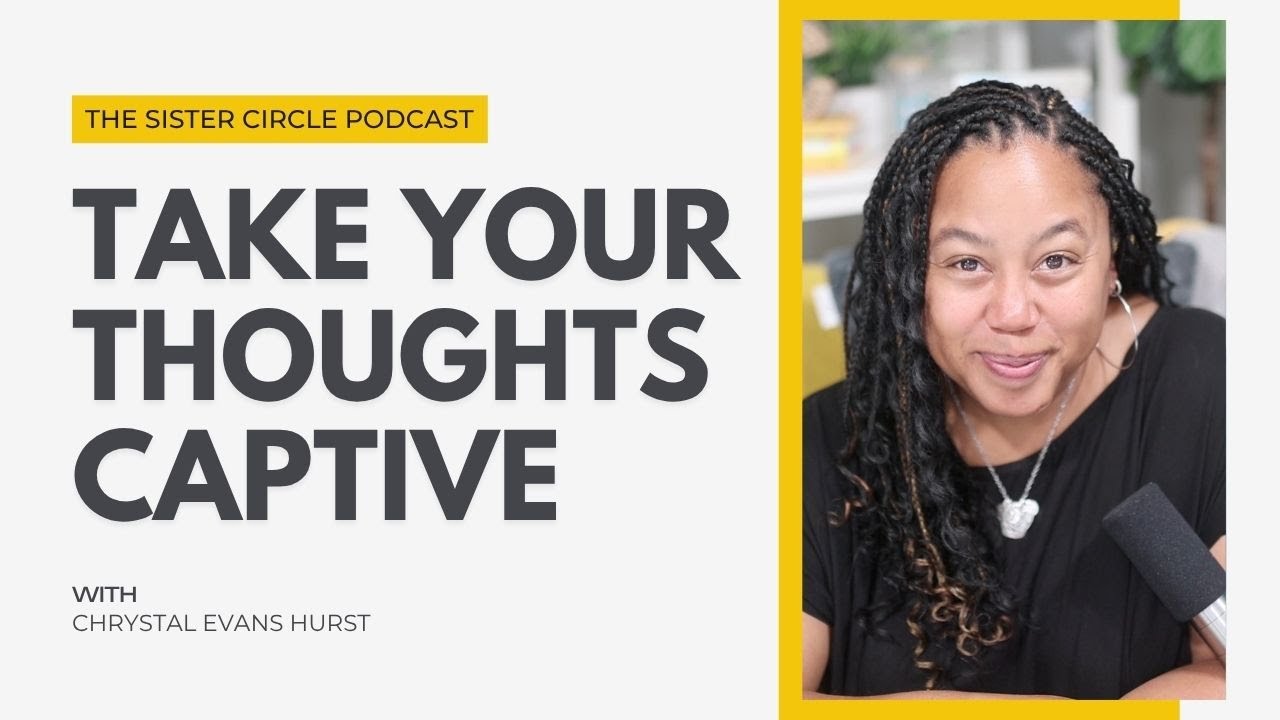
Chrystal Hurst explains how daily thoughts shape your life and how "drift"—losing alignment with your goals—happens without notice. She walks through three steps: notice the drift through quiet mornings and journaling, replace negative thoughts with Scripture, and align your actions with those renewed thoughts.
Chapters
Yes, this is Chrystal coming to you live. That's what I wanted to say. I feel like I'm a news reporter. Yes, this is how I make my life work, y'all. I'm about to share a video with you that I recorded back in March. I was live with the Inner Circle and it made sense then and it still makes sense now. But because I wanted to make sure you knew that I knew that it's not March, here's my introduction. And yes, I am doing this introduction in the lobby of a hotel because that's how we roll. Here's what I want you to know. This is the main thing I need you to understand. No matter when you are watching this video, the decisions that you make every day based on the thought patterns that you practice daily are the way that your life is going to expand, the way you're going to express your calling, your gifting, your purpose in this world. So it is super important that you take your thoughts captive and make a decision every day to pay attention to your life. And then when things are getting off course, to course correct. It is your job to pay attention to your thoughts. And then it is your job to make sure that when you get out of alignment, which by the way, don't feel bad, we all do, that you get back in alignment. Because life is short and the only way that you can assuredly make it to the destination that God has for you walking in obedience, yes, being righteous, but also exercising discipline and doing what you know you're supposed to do is to pay attention to your life and stay on track. All right, this is Chrystal Hurst signing off so you can watch this week's video. Today I want to talk to you a little bit about taking your thoughts captive because we are in that season where we recognize at this juncture what drift looks like. It's March. You had thoughts about 2025 and it's March. You had plans for 2025 and it's March. You had goals for 2025 and it's March. Now you may be watching this in June, July, you may be watching this in 2026, but whatever you thought your year would look like, time passes and drift happens. And so what I wanna do is encourage you to deal with the drift, to honor your life, and to look at your thought life and what that means you have to shift in order to get back on track with your original thoughts about your time this year, or to incorporate things that have happened that you did not know would happen, but to still be intentional about honoring your time and honoring your year. And so I want to just talk a little bit about taking your thoughts captive, because if you can think right, If you can think right, then you should be able to operate in a way where your thoughts help your actions to align with the way you want your life to go. If you are not intentional about the way you think, you will not be intentional about the way you move through your life. You just won't. Our bodies want to operate in the route of least resistance, which means I want to— I don't want to think about it, I don't want to deal with it, I don't want conflict, I don't want hard, I don't want effort. And our bodies our souls will resolve, they will resign themselves to just doing it the way it's been done. How often do you find yourself drifting through the day, uh, distracted, or feeling like your intentions have slipped right through your fingers? Have you ever looked up and said, I cannot believe it's 4 o'clock, how in the world did the day fly by? Or, I can't believe it's Sunday night, what did I do with my weekend? How often do you find that you're drifting versus being super intentional and aware. Do you ever feel— because I do— overwhelmed by your thoughts? Like your thoughts are pulling you in a direction that's different from where you want to go? Like, I, I want to be committed to my job, but oh Lord, I hate my job. I want to be committed to taking care of my body, but these fries over here are hot and seasoned well. Do you find that your thoughts lead you out of a place of control? And when was the last time you paused, took a deep breath strictly to create space to pay attention to your life? So my 3 questions are, how often are you drifting? You just like, I don't even know what happened. How did I end up here? How often do you feel overwhelmed by your thoughts and you out of control? And when was the last time you just decided to stop and take a breath and pay attention? If you find yourself, how did I get here? If you find yourself overwhelmed, if you are not consistently and regularly just choosing to push pause, I can almost guarantee you that your life is not where you want it to be. And one of the ways that you ensure that your life goes the direction that you want it to go is that you have to be regularly choosing to take your thoughts captive. You have to regularly be choosing to Take your thoughts captive. Drift is going to happen in life. It's a part of life. And so there are a lot of visual illustrations we could put with this, like a boat. If you put a boat onto the water and you turn the engine off and there's no anchor, the boat is just going to drift. If you go into the water and you go out where you can't touch the ground and you just lay there floating, if you're not intentional, you'll wake up and be a couple of miles from the shore. You will drift. If you don't have your hands on the steering wheel of a car and you are driving down the road, your car is going to drift into another lane. Unless it's a brand new car and it has no alignment issues whatsoever, it's going to drift. Things that are in motion, they drift. And that includes you, that includes your life, that includes your thoughts, that includes the decisions about your life. In my book, She's Still There, I wrote about this. It's in chapter 5. And I talked about this idea. In fact, I have a sticky here marking the spot because this is how often I find myself talking about that. I said, Drifts happen because you get distracted, y'all. Life is always lifing, and things are coming up that you didn't expect or you didn't anticipate. Or maybe things are fun. Drifts continue when you're distracted, when you're somewhere you didn't plan to be, and then you convince yourself, well, this is not that bad. Like, the money's good at this job, so it's not that bad. Or, you know, well, I really like him. He's not exactly who I need to be with, but he's not that bad. Or, you know what, I've gained some weight on the scale, but it's not that bad. We tell ourselves the things that we want to tell ourselves to rationalize our drifts. Drifts persist because we get desensitized. We don't just convince ourselves that we're okay, we start believing that we're okay and desensitized to what we actually wanted to be. Drifts and the decisions that you make with those, they play a central role in the direction of your life. If you start drifting and you're not intentional about noticing that drift, you'll wake up and think, where am I? Hence the name of this, She's Still There. Where am I? What happened in my life? Um, this has happened in my life lots. It's happened in my life with my weight. It's happened in my life with relationships, friendships. It's like, what happened? We used to talk all the time. What happened? It's happened in my life with work, like even with what I do here. It's like, wait, what, what was I trying to do? How did I end up over here? I was supposed to be doing this. How have I ended up, you know, not writing regularly like I used to do? Or how did I, how have I ended up not producing a certain amount of content or doing it the way that I intended to work? What happened? How did I end up taking a break from the podcast for what should have been 4 weeks and it ended up being more like 12? How did that happen? Because if we are not paying attention, drifts are a part of life. And the only antidote for drifts is paying attention. Proverbs 4:23 says, above all else, guard your heart, for everything you do flows from it. And that verse is simply a reminder that everything that's flowing in and out of your heart and mind is stuff you should be paying attention to, because it tells you the state of being. It tells you where you are. And if you don't guard your thoughts, if you're not paying attention to what's flowing out of your heart, you'll just keep being in motion in whatever way you're in motion. That may not be the way you actually want to live. You have to pay attention to it. So that's why, like, you know, even in my planner, there's lots of room to write and journal, simply because you gotta pay attention. And I know that if I'm not writing down where I am, I'm probably not paying attention. You have the ability, uh, 2 Corinthians 10:5 says, to demolish arguments and every pretension that sets itself up against the knowledge of God. Now, this scripture is talking about the knowledge of God, um, you know, your relationship with God. It's talking about God's truth. But if you have the power to take away things in your mind that are in diabolical opposition to God's word, then that means you have the power to do what the scripture also says, which is to take your thought captive, to make it obedient to truth, obedient to Christ. And so the core of taking your thoughts captive is actively noticing them, disciplining yourself to deal with them, refocusing on them, and doing something different when that's required. Okay? So if you want a boat to get to its destination, you have to steer it. If you want a car to get to the destination, you have to keep your hands on the wheel. And if you want your life to go in the direction that you want it to go in, then you have to put your hands on it. You have to keep a pulse on it. You have to pay attention. You think about your life, you take Sabbath, you journal, you talk about your life with friends, you look at your goals that you set and say, "How am I doing?" Without that level of attentiveness, you will drift. Now, I talked about, in a previous episode of our podcast, I talked about spiritual disciplines. And if you missed that, I want you to listen to it. We'll make sure it's easy for you to get to. Because I talk about mindfulness and the power of mindfulness. And here's the thing I want to just tell you about living this way. Here are examples of what this looks like. It looks like a quiet morning with tea or coffee and journaling and praying or sitting in silence. It looks like a walk, a peaceful walk with nothing in your ears, noticing the small details of nature, noticing the beauty of the sunrise, being still enough in your presence so that you can pay attention to actually what's happening in you. It looks like literally before you tackle a busy schedule at work, that you take a breath and just sit for a second, giving your space, your body, your mind space to breathe and notice where you are. Because life is full of noise. Life is full of constant distraction. Life is full of responsibilities that are pulling you in all of the directions. And all those responsibilities aren't bad, but it's easy to start going through the motions without ever feeling present, which is why often we don't notice that we're overcommitted. We don't notice that we're off track. We don't even notice that we've drifted because we're not present enough to notice that. But if I told you that mindfulness and intentional living could change the way you experience your life, if you took the time to just create cracks in the crevices of your life, to notice so that you can anchor yourself in the present moment, so that you can take control of your thought life when you realize that your thoughts are not correct or adequate, when you can align your actions with truth. Because if you ever felt disconnected or overwhelmed, then this is the answer. Noticing what, noticing why, and coming up with a plan. So this is me encouraging you to take your time with the morning check-in. To take your time with the sensory walks, to take your time with gratitude breathing, to slow down and not just hit the alarm 5 times before you get up in the morning, but get up, but just sit there before you rush out of the bed because you're late to ask yourself, how does my body feel? How does my mind feel? Instead of reaching for your phone first, which none of us should be doing, that you slow down enough to see and hear and feel and notice what's happening in your house. And when you leave your house for the walk, what's happening in the world around you, that you notice that stress has built up and you know how to release it. That with each inhale, you know how to exhale gratitude and you practice shifting your life from anxiety to appreciation. This is what you have to do first. Recognize the drift, practice mindfulness, and notice where you are. Now, how do you regain control of your thoughts? You stop the drift by having intentional steering, examining your thoughts. You use your planners or your notebooks or your spiral notebooks from Walmart or your blank books, your, your Moleskins, or you, you pick up blank books that I have over here. It doesn't matter where you get it from, but you get the thoughts out of your head and put them down. When my daughter was 12, my car ran out of gas because I used to run my cars really low on gas. I lived not even a quarter mile from a gas station and my car ran out of gas. I thought I'd be able to make it to the gas station. I didn't. My daughter was 12. I put her behind the wheel. I pushed the car to the gas station. I would not normally have done that, but because, uh, we were out of gas and my husband was out of town, I needed gas and I wasn't smart enough to go to the gas station. And put gas in a gas container. So I just pushed the car downhill. It's my life. It's my life. But pushing the car was easier than pulling the car. I got behind the car and just put all of my weight behind it. I got behind the effort. And stopping the drift means you have to intentionally sometimes get behind the wheel in a way you feel inadequate of doing. 12-year-old inadequate situation. Okay, but you do it anyway because you need to get to the gas station. You need to fill up on what is going to make your life go. You're going to put yourself in the best position to navigate to clarity. So when you feel like you got to push yourself to church, I understand. When you feel like you got to push yourself to spend 5 minutes journaling, I understand. When you feel like you have to push yourself to sit still and not let your mind run, I understand. And it may be uncomfortable and it may make you feel like I'm putting myself behind a wheel that doesn't feel like I belong here. That's okay. If you've decided that your vehicle of life cannot go well, if it does not have the gas that it needs, then you intentionally do whatever it takes, however uncomfortable it feels to put yourself in the position to get refueled. I have gotten good at taking time away to refuel. Now, I like to work, so I normally mix my refueling time with a little work. But I do know how to breathe deep. I do know how to go to sleep. I do know how to take a walk. I can— it's taken me some time— do that without my AirPods in my ear, but I can because I've learned how to think about what Philippians talks about: whatever is true, noble, right, pure, lovely, admirable, excellent, praiseworthy. What's right? What would be right? How do I focus my thoughts of not what I not like jealousy or lack of contentment, but what's the right thing for me to be doing in my life? What is the right thing for me to be doing to engage with what God wants me to do as a believer? What's the right thing for me to love others well, for me to be a good steward of my resources, my time, and my money? What is the right thing? What can I be grateful for? Aligning my thoughts correctly, stopping the drift by seeing it as it should be. So I do whatever I have to do to get myself in a position to see things as they should be. And many of us, we don't slow down enough to do that right. Let me give you another example, 'cause I feel like I'm not being clear here. If you planted your garden, your garden might get overgrown with weeds and you can see it and realize this is not the way it's supposed to be. But if I notice that it's not the way it's supposed to be, but then don't go pull the weeds, I'm not doing the work of refocusing. I'm not doing the work to put intentional effort or intentional thought into regaining control over a garden gone wild. I'm not doing what it takes to put gas in the car so that I'm the one who can drive it. So sometimes what we do— I guess this is the point I want to make— is unconventional because we need to get back into the right seat. We don't spend every day of our lives pulling weeds, but you may spend a Saturday pulling weeds. You may devote extra time to that because in order to reset the garden, I've gotta do something I don't do all the time. And this is why sometimes you have a weekend where for no reason you just tell people, "I'm not doing nothing," and you turn off all the stuff in your house so you can hear. You do unconventional things to put yourself back into the spot you should be in. If you don't pull the weeds, If you don't water regularly, prune regularly, weed regularly, but sometimes have a weeding session, your garden won't thrive. And if you don't put the time into doing unconventional things, if you don't have money to go sit in a hotel room to get away from your family, ask a friend who has a guest room, can I come stay in your guest room for free? I just need to lock myself in a room so I can think. Do something unconventional to jolt yourself awake. To what you're really thinking and what you're really feeling. You want to make sure you're able to put yourself in a position, even if it's awkward, to get clarity on what's really beautiful or that should be beautiful in your life. You've got to take your thoughts captive. You've got to pay attention to the mind drifts that are happening. You have to label them. Like, I can go outside in my yard and say, that is a weed. I have to be able to identify it and label it. That is a past worry, that's a future fear. And you pull it by saying, this is not true, creating distance between the thoughts that aren't right and the thoughts that are. You redirect to truth. That means you have to know what truth is. That means you have to comb God's word or do a Google search to figure out what does God say about this. Is this thought, is this weed true? Is this feeling true? Is this something I can change by what I do? You have to identify what's not true and replace it with truth, with an affirming truth that, you know, I am capable. God is going to meet all my needs. He will direct. He will answer my prayers. There's nothing that I can't do without God at the helm. God has promised, Philippians 1:6, to finish the work that he started in my life. So I feel like I'm hanging out here and I'm not getting where I want to go, but that's not true. God is with me. He will work all things together for my good, Romans 8:28. So you, when You find yourself seeing a weed, you say, "God is never gonna do anything with my life." You pull it because he has promised he's gonna complete the work that he started. "Am I gonna have enough to buy groceries?" You pull it. That God knows the number of hairs on my head. I'm gonna cooperate with God, but he has the power to do what needs to happen in my life to change that thought so that thought doesn't take root and take over my garden. So I want you to notice the importance of other people like church and reading, because these are also places where you get truth. If you don't know how to replace lies with truth, then I want to ask you, are you getting enough truth? If you're like, that's a lie, and I know that that's a lie, but I, I don't know what else to think— what are your sources of truth? The Bible, but also good friends, good books, good podcasts. What are your sources of truth? Because when you don't have truth, you will do what I did and you'll do all kinds of things to compensate for not having the right thing the right way in your head. You'll put a 12-year-old behind the wheel. If you're not filled up with truth, you start doing all kinds of compensatory things. So in order to replace, to take thoughts captives, to put an anchor down and stop the drift, you have to replace thoughts. We actually have a download that has been available many different ways. Some of y'all may already have it. That walks you through how to replace lies with truth. It's a tool to help you take thoughts captive. But first you have to pause and notice. You have to practice mindfulness, and then you have to look for the things that aren't true. Look for how you're not operating in alignment. Then you look for the things that aren't true and you pull them, and then you replace them with truth. I don't want my 12-year-old to be behind the wheel, so I fix that Put gas in the car. That's the way the car is supposed to run so I could get behind the wheel. The weeds aren't supposed to take over my garden, so I pull them and then I replace them with good soil and things that will keep the weeds at bay. It is a literal exchange. You write down what's not true and you write down what is. You say what's not true. I have been believing that God is not gonna supply all my needs, but the power that he's given me to make wealth and to increase my talents and to have eyes open to opportunities that he'll provide, He will provide and he will order my steps. That is the truth. So you start looking for the weeds, looking for how you're not operating optimally, and you replace it with what's true. But you have to give yourself the time, hence the mindfulness and the noticing the drift, so that you make the space to do that. The third thing that you need to do is you have to align your actions with the truth that you've identified. Okay, that's why, that's why I have this. Y'all, this used to look like a blank book. It was a blank book. And I would just write down the things that I needed to do, not just my to-dos, but also my goals and my dreams. You know, I mean, when I first, this is the original one, right? This is a 90-day version of that. When I first started and made this, this is like the fourth iteration in y'all, because people would say, how can I pay attention? So I said, well, this is how I do it in my blank book. And then it became a planner. And then it became a full year version, which thanks y'all, we sold out of those. We have these. But that's how I paid attention. I kept writing it down. And sometimes I would write it down again. Like I wrote it down last month. I didn't do it. I'm writing it down again. I had to practice paying attention. I have grown since then. And I now know that a part of me paying attention, not only to the life that I wanna live, means just like I could be still and look for my drifts, that I can look for the destiny. So I've learned to make space, not just to notice where I'm off course, but also to notice where I wanna go. Like, I want to put the destination in my eyes' view. It's like being on a cruise for 7 days and you're at sea and you kind of get excited when you've been gone from your family, when you can see land. You know, you keep looking like, how close are we to land? How close are we to land? Because once you can get in your mind's eye where you're going, it helps you to stay on course. If I have a vision for where I'm going— hey there, I love traveling. I love traveling by myself. I love traveling with my husband. I love traveling with my family. I love traveling with my friends. And every now and then I pick a trip that I want to go on and invite my friends, my sister circle, other women I think would be fun to come with me. So in April of 2026, specifically April 26th through May 3rd, I would love to invite you to go on the first sister circle cruise with me. We're going to hit the Dominican Republic, Puerto Rico, and a couple of other sunshiny Caribbean places in between. This is your opportunity to go on a cruise where other women of faith are going to be, other women who love God, who want to be intentional about their lives, to have a good time. Because people who love Jesus can have a good time. Also, if you want to bring your husband, bring your man, you can. I would love for you to register for that cruise today. Go to thesisterscircle.com www.jennifercruze.com/cruise to register. In order for you to align the right thoughts with the right actions, you want to make sure that you have a vision of the right place. Get specific and dream. Get specific and ideate. Get specific in your hopes. Get specific in your prayers. Get specific for what you hope God is going to do with your life. But y'all, this is what it looks like. For me to do that. Some of y'all do vision boarding. This is me writing down what's important. And every month, every week sometimes, I keep coming back to that. What did I say was important? Where did I want to end up at the end of the year? What did I want to achieve? Am I on track with that? I have to align my actions to my intentions. So, so let me tell you what this looks like. One of the things that I would love to be able to do with the Sister Circle is— there's lots of things, but one of them is that the Sister Circle is able to be like a seed investor for other women's dreams, that we're able to scholarship girls to go to school, that we're able to literally bless other women in their process of growing their ministry, their business, or their life. That doesn't happen if I quit. That doesn't happen if because of one hard year I start saying, well, maybe that was just a dream and maybe God's not going to do that. I have to align my actions with my intentions. Does that mean that sometimes I'm discouraged? Yeah. Does that mean that sometimes I, I'm like, I wonder why certain things aren't working? Yeah. Does that mean I wonder if maybe I made that dream up? Yeah. But if I still believe it, if it's still a dream, if it's still written down here, if it's still something I'm going to be specific about, define, visualize, then I start again aligning my actions with the destination. So that means for some of us, that means you close the laptop because your dream is more time with your family or your husband. Sometimes that means that you leave work on time so that you can go for your walk because the body is the dream. Sometimes that means that you do invite your friends over even though you feel like, I don't know if everybody's gonna come, because you envision for your life true connection. You picture yourself living that intention. You picture yourself in the dream that you have in your heart, and then you align despite your feelings with that dream. You notice the drift. I haven't been working towards it. I haven't been doing it. You practice mindfulness. You notice what you've been doing. You pay attention. You replace the, the incorrect thoughts with the right thoughts, and then you align your actions with the dream. You plan, y'all. This is super simple. If I want to get up on time the next morning, you plan before bed. You lay out your clothes. You go to bed on time. If you want to be productive the next day, you decide in advance what are the 3 priorities that are going to happen tomorrow during the day. You to make sure that you've set yourself up for success, because you can see it if you'll look for it. Preparing ahead, thinking about your dream, aligning your intentions with those actions— that will make you stronger. Because if I believe that my garden is going to grow beautiful flowers and I notice that there are weeds, and then I pull the weeds but I don't plant the flowers, nothing's it's gonna grow. I can scroll all day through Pinterest and Instagram and look at everybody's beautiful gardens. I can drive by my neighbor's houses and say, oh, that's so beautiful. I can even have a dream that I want my garden to look like that. But then if I don't align my actions by going to Home Depot or Walmart or Calloway's and buying some flowers and planting them, my house won't bloom. So it's a process of all the things Notice, paying attention, uprooting what's not working, having a dream for what will, and then planting it. And then planting it. Your new habits, your new decisions, your new actions can be small or big. It could be as small as going to bed on time, writing down your to-dos, taking breaks for prayer, planning your menus. It can look like deciding to go back to school, It could look like dating your husband. It can look like moving back home with your parents to save money and getting financially okay. It can be big or small. What matters is that you do it. And what you're going to have to do in order to have a different outcome and taking your thoughts captive and having a different outcome, you're going to have to do things that other people aren't doing. Romans 12:2 says, don't conform to the pattern of the world. Now, it goes on to say, transform your thoughts, renew your mind. But it starts with, don't be like everybody else. The expectation is that if you transform your thoughts, you won't— you won't be doing what everybody else is doing. And in order to have the life that other people don't have, you have to think other thoughts that other people aren't thinking. If you're on a road trip and you don't pay attention to the signs, if you don't have a vision for where you're going, you could drive all over the country. On all the freeways and never get anywhere. We don't take road trips because we just want to drive. We take road trips because we're going somewhere. Where are you going? And then make your trip the road to get you there. Here's some statistics for you. According to the National Science Foundation, humans have around 60,000 thoughts per day. Up to 80% of them— you're not ready for this— up to 80% of them are negative. Negative. So if you want to stop the drift, you do have to take your thoughts captive, because your mind will tend towards this don't work, I won't make it, this is not for me, God's not for me, other people have what I don't have, you know, maybe God's mad at me. Your mind will drift to maybe I don't have what it takes, it's too late. Your mind, without your intentional hands on the wheel, will drift. And in order for you to change that trajectory, you've got to have a direction in mind. You have to align your thoughts. You have to take those thoughts captive. You have to notice when they're off track. That's where mindfulness comes in. You got to pay attention to your life. Recognizing drift and being mindful to recognize the drift is the first step in regaining control of your thoughts. The power of intentional thought, the power of choosing which thoughts to ruminate on, is where you have the power to stop the drift in your life and align your actions with new thoughts. That those new thoughts, those new decisions, every exit on your road trip should align with where you're going. Which means that you need to identify your goals, your dreams, your destination. Practicing the art of paying attention and noticing where you're getting off track is the way that you continue to align your thoughts with where you want to be. Taking your thoughts captive, right? You got to notice when you're having wrong ones. You have to replace the wrong ones with the right ones. You have to give yourself the space, mindfulness, and paying attention to do this. And you got to make sure that all of the thoughts that you want to focus on put you on the road to where you want to go. So where do you want to go? That's the question. And where have your thoughts not been aligned? So you can start at the beginning or you can start at the end. You can start with noticing that you've drifted so that you can realign, or you can start by looking at where you want to go and get all your thoughts in order. It doesn't matter. Pick a side. But none of that will work if you're not paying attention. It won't work if you're not mindful. It won't work if you don't root out the bad truths with the good ones. It won't work if you have no idea where you're going. And if you don't know exactly where you're going, let me give you this hope. My life verse is Jeremiah 29:11. It says, for I know the plans that I have for you, declares the Lord, and they are plans for you to have a good life. It's not a plan for your destruction. It's a plan for renewal. It's a plan for restoration. It's a plan for the amazing things that he wants to to do. And so even if you don't know exactly what that is, that's what you say. I don't even know where I'm headed, but I believe it's good. And if I want to prepare myself for the best of what God has planned for me, what do I need to get in order? Because I want to be ready. Your purpose in life will come because your preparedness meets opportunity, which also meets God's revelatory open doors in your life., and you want to be ready for that. So if you say, okay, I don't know when the man is going to come, but I want to be ready, what would you change? I don't know when the, the, the light is going to go on, uh, for my career, but I want to be ready, so I'm going to get all of the knowledge I can right now. I don't know exactly when I'll be able to take a vacation, and I can't save that much money, but I believe that it's coming, so I'm going to put a little bit aside, even if it's just $10. And when God blesses me with more, I'll save more, because I believe eventually my husband and I will be able to go on a trip, or I'll be able to take a family a vacation because we've never done that. Or I'll be able to take a missions trip to bless somebody else with the good news of, of the Gospel of Jesus Christ because I had the money to go. Or I'm going to meet somebody that needs me to be a financial blessing to them. I don't know how that's going to work, but I want to be ready. I don't know when the land is going to come for me to build a house. I don't know when a business opportunity— but one day I want to be ready to like own a business. I'm going to put this aside and ask God to give me opportunity. You don't even have to know what it specifically is. But you can align your thoughts with possibility. Every one of us has a garden and something's supposed to bloom and you have to weed it because you believe that beauty can grow. Every one of us drives a car and we do that because we have places we want to go in life, but our cars run out of gas and we have to refill them. And if they run out of gas at the wrong place, we might have to push them. But you want to know why I pushed that car? You want to know why I weeded those weeds? It's because I believe that something beautiful can grow. And I believe in my car, I'm going somewhere. Your thoughts, taking them captive means you gotta examine them. And that's my challenge to you today. I would love for you to tell me today, what is a thought that you've been thinking that even if you don't know what the right one is, you know this one ain't it, 'cause it's negative. It's not in line with what God thinks about you or with what you believe about his life. What is a thought that's been wrong and you've been ruminating on it? Do you know what ruminating is? It's not just that you think it, but you sit on it. You know what I'm saying? Like you relish it, like you turn it over and over in your mind. You repeat it, you wear it. It's become a part of your identity or become a part of your belief system. And when you ruminated on it, it goes from a thought to a belief and then it's harder to pull. What thought have you been thinking or ruminating on? That you kind of know it's not true. You just, you just haven't done the work to pull it out. I want you to be mindful enough today to share that with me. And then if you have it, I want you to say what you believe is God's truth. What is the truth that you would replace that with? This is the exercise of taking your thoughts captive. And then you just keep doing it for every thought that you have that's not in line with the word of God or his plans towards you, which means you have to be paying attention. Because we have lots of thoughts a day that aren't right. And you just keep doing this every day, all day of your life. When you hear yourself say something that's not in line, you take it out. When you hear yourself speak negatively about yourself or someone else, you replace the thought. You literally say, you know what, that's not true. I'm not going to leave that out in the atmosphere. This is what I say is true. And if you don't know what's true, you borrow words You, you do a Google search and you find a scripture that can replace it. You ask a friend who's believing things for you, girl, I need something else to say, give me another track, give me another, give me something else I can say. So instead of saying this, because I always say this, I can say that. You gotta replace them. I was watching something on social media, um, Sara Blakely, who's the inventor of Spanx, she said she got denied for her idea so many times. And she got distracted, but she said the thought that she adopted instead of thinking, "Maybe this isn't a good idea," or, "No one will ever take me up on this idea," or, "I'm spending so much money trying to create something that's never going to be a thing." She said, "I'm just first. The reason why this is so hard is because I'm first. The reason why people are saying no is because they can't see what I can see." The reason why people aren't receptive is because they're not sure it's a good idea, but that's because I'm first. So instead of saying, "It'll never happen," instead of saying, "I'm doing something that's dumb," instead of saying, "I wonder if this is a good idea," she chose another thought. I'm first. My mother said this to me years ago. I was telling her about something that I was just struggling with. I said, this is so hard. I said, it's almost like nobody else has done it. And but when I go out on the trail, I'm the one that, because the trail has not been traveled before, I'm the one that gets all the scrapes and the scratches from all the branches that have never been trimmed. And then I'm the one who's bleeding. And I was saying, it's too much. I'm tired of bleeding. You know, nobody understands. People don't appreciate. This is harder than I want it to be. And she said, Chrystal Hurst, it's because you're a trailblazer. So I can whine and complain about the road being hard and it's not fair, or I can own a different thought. This is what it looks like to be a trailblazer. I literally, uh, last weekend was, um, sharing the new app with someone, or just some things that we were doing that are new and improved in the Inner Circle. And I sent a text to a friend with some screenshots and she replied back and she says, "Oh my gosh, Chrystal Hurst, I love everything that you're showing me so much." She said, "I'm learning so much from you. You are such a thought leader." Me? A thought leader? You want to know how I phrased that in my life? I have said in the past, Chrystal Hurst, you're always making stuff up. Some of the thoughts that we have, we had because we came up with them. Some of the thoughts we have are because other people planted them in us. Doesn't matter how the thought got there. I have a new thought. I'm a thought leader. I'm not just making stuff up out here in these streets, being reckless with my time. I think new thoughts. I blaze new trails. So I can either be the weird person who is wasting time coming up with things that nobody's done before, or I'm a thought leader and trailblazer. And before I was ever born, God had thoughts towards me, and he knew how I was designed, and he planned and ordered my steps before I got here. Do you see? How changing your thoughts changes your life. And I'm out here in these streets trying to do this too. And that's why we create things like the download that we have for taking your thoughts captive. Because if I have to learn how to do it, then maybe I can show you how to do it too. So here's to thinking about your life differently, noticing the drift, being mindful enough to notice it, paying attention, finding new thoughts, replacing them, and then aligning your actions with the thought at hand. And if you are not actively doing this in your life, I guarantee you're drifting. But here's the good news: she's still there, and the girl in you is just waiting on you to notice where you left her and then to get her, pick her up, and move forward. So that's my question for you today. What is a thought, one thought that is representative of your drift or your lack of attention? It is representative of your lack of mindfulness and it's simply not true, or maybe you just hope it's not true. And what thought could you use to replace it with? And if you can actively do that every day, you shift the trajectory of your life. Hey y'all, I hope you enjoyed that episode. And obviously I'm here on a treadmill, aligning my decisions with my intentions. Now, of course, I'm not working out. Who would work out in this or with all this on your face? But I am trying to lead by example and make the point. Pay attention to your life, take your thoughts captive, and do what needs to be done. Now let me tell you one thing that I need you to do. On June 21st, I will be kicking off our Summer of Sisters with a virtual walk/run. It's the Sister Circle's first community event, y'all. And the reality is it's virtual, so you can do it in your community. Simply go to thesistercircle.com/virtualwalk so you can sign up and get all the information. The goal is that, yeah, you can do it by yourself, but that we do it together. Grab your friend, grab your sister, grab your mama and them, the cousins, whoever. Get outside early in the morning. To keep it cool and walk it out. And then, we'll give you all the fun details to make sure that it's easy for you to gather, do it, and have a great time. Happy summer, y'all, and happy taking your thoughts captive. Mwah!










