Jamie Grace: Managing Anxiety and Finding Quiet
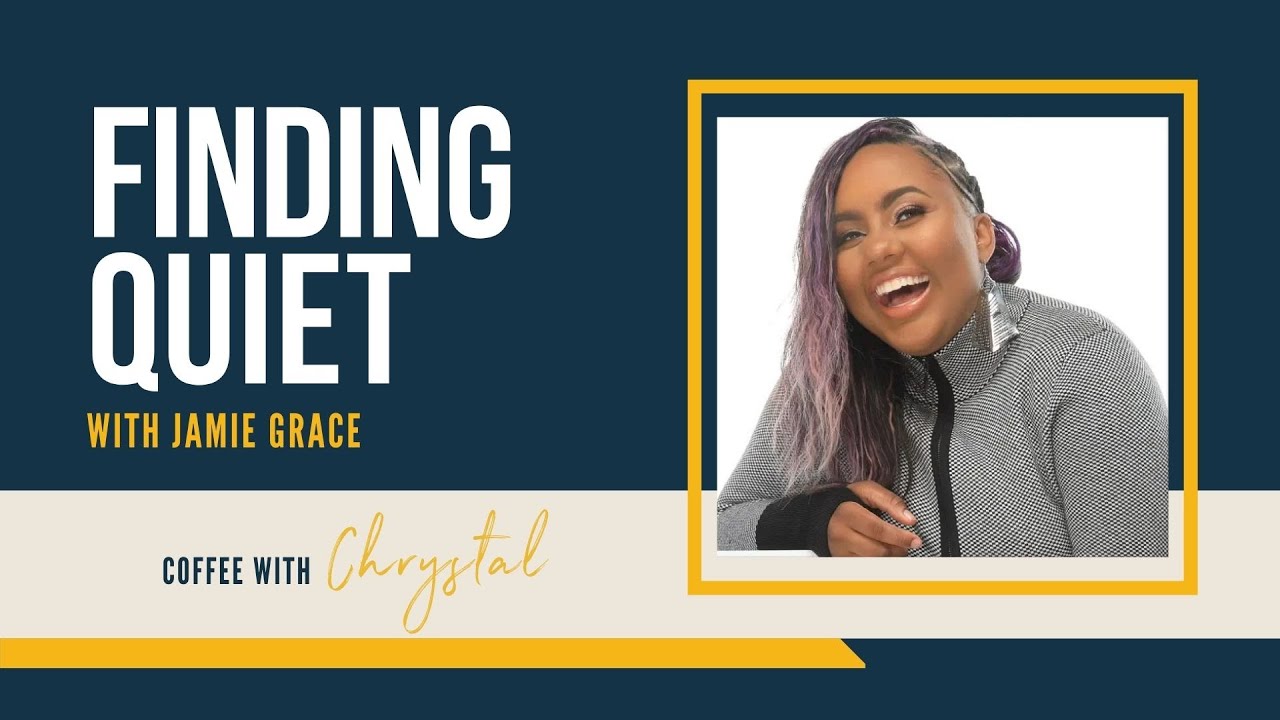
In this candid interview, host Chrystal Hurst talks with singer‑songwriter Jamie Grace about her new book Finding Quiet and the personal challenges she faces with anxiety, Tourette syndrome, OCD, ADHD, and postpartum depression. Jamie describes how the COVID‑19 pandemic amplified her anxiety, the pressure of public expectations, and the struggle to embrace silence instead of filling it with busyness. She shares practical coping tools—scheduled live streams, prayer, therapy, journaling, setting digital communication boundaries, and leaning on the Holy Spirit for discernment. The conversation also touches on grief from family loss, the tension between being a public figure and feeling vulnerable, handling criticism, and the importance of community support. Throughout, Jamie emphasizes that mental health struggles are not meant to be faced alone and encourages listeners to seek help, practice self‑compassion, and find quiet moments of peace rooted in faith.
Chapters
Hey y'all, I am here with Jamie Grace and I'm so grateful to be with her. So it's fun for me when I get to talk to people that I kind of sort of know, like acquaintances, like, you know, we've maybe met each other in passing at a speaking engagement or maybe we've been a part of a project. But Jamie, I've been to her house, I've held her baby. I feel like, you know, she is connected with my sister Priscilla, um, her and Morgan both before. And so I feel like it's kind of like a family situation, honestly. I feel like little sister. And with big sister pride, I'm really excited about the things that are happening in your life. Okay, just, you know, just as quiet as it's kept, sidebar, I'm like, what is Jamie doing on YouTube? Like, I'm like, okay, what is she doing? She's got not only— like, you're a creative who loves everything music and video and talking and acting and personality and music, but you also have been doing YouTube for quite some time. So just the whole vibe of, okay, my millennial crush who's doing all the things, and am I current? Am I doing things the way I should be doing? Like, quiet as it's kept, I'm always looking at what you're doing. So just know that that's like for real. But right now I want to just say I'm proud of you because you have written— this is your first book, right? Yeah, it's like my first actually like with a publisher book, like with a publisher book. So your new book is called Finding Quiet, but I'm more excited because I think You know, I think the fact that anybody can finish a book, I mean, I know how difficult that is, but also the topic, the content of your book. There are a lot of books that people finish that don't make me say, oh, they're going to give me a window, not only into their life, but into their discoveries about how to overcome. And so your book, you know, is about anxiety. It's about kind of being okay with who you are and being able to find moments of silence in a noisy world, being acceptance of, acceptance of who you are, but also being confident in your relationship with Jesus Christ to, based on his creation of you, be the best you that you can be. And anxiety is something a lot of people deal with, but it's also a whole thing that even people— like, I would not say that I traditionally, historically deal with anxiety. Maybe, maybe I don't know. But what I can say that is whatever I thought anxiety is, whatever I thought it would do to a person, listen, 2020, Anxiety has had its way with me. And I think a lot of people, you know what I mean? Like, even if they haven't had anxiety as an ongoing challenge, 2020 has brought that. It's brought that in the form of grief, or it's brought that in the form of questions and things we can't control. It's brought that in the form of what's going to happen tomorrow. I mean, whether we're talking about all of the cultural chaos, we're talking about all the things that make us want to, you know, not have conversations with people that we love because of politics, whether it's because of job loss, It's because of change. It's because of a move. I mean, we've all had at least one thing that has made us go, wait a minute, wait a minute. And I think that this is really a current conversation for right now. So number one, I'm proud of you for your book. Number two, I'm proud of you for your message. And number three, I'm proud of you for being willing to talk to me about that message today on the show and make it currently applicable for where everybody is. So let me start with this. How has your anxiety, because it's something that you've talked about before, you know, just online, how has it been impacted this year? Are you like, I'm an old pro, like I deal with it, but when it comes, nothing new, 2020 just threw me new things and I knew what to do. Are you like, no, even with my history, 2020 threw me a couple of curveballs, man.
You know, at the beginning of, I mean, 2020 has had its, its drama for many reasons, but especially just specifically speaking toward like the pandemic and the quarantine, at the very beginning of it, I really was ready, you know. I was like, I got this, we can do this, not a problem. A lot of times with my anxiety, it's not always I get anxious just to shut down, I just get anxious. And so in that moment, it was— I was anxious to plan, I was anxious to do I was anxious to be prepared. But as the 2-week quarantine turned into eternity, and as my 3 weeks of— or 3 canceled concerts turned into I have no idea when I will ever play a concert again, as those things happened, it got worse. Probably somewhere around like— my daughter's first birthday was in June, so that— gave me something hopeful to look forward to and to celebrate with family. As I started to process that, that we would have like the anxiety of going somewhere while wearing a mask, that was a lot for me. But I was like, well, my husband's doing all the shopping. It's not a big deal. But at some point, like a couple months went by and I was like, I might have to go somewhere. You know, I have—
what's the problem with the mask? Why was that a thing?
Just, just any change just sometimes gives me anxiety. So, you know, I was just nervous about wearing a mask. I was nervous about, I mean, I think in the beginning I just kind of took it almost as like a fun adventure, but the actual concept of going outside and seeing, you know, and seeing what was going on, wearing a mask means accepting the reality that things have changed. You know, seeing, you know, nurses and doctors in a mask means, wow, this is actually a risk. You know, I think about, um, the sweet girl that we know named Starla. She's a beautiful little girl, cancer survivor. And I had a social media relationship with her family before. She was a fan of my music. And so we were always friends on social media. And when I met her— this is years ago, um, she's like 11 now, and I met her when she was about 4 or 5. Seeing them on FaceTime and emails, it was sweet. It was fun. It was, oh my goodness, I get to be an inspiration in this little girl's life. But seeing her in person and realizing, oh, her family has to wear a mask around her because she has cancer, that— it changes things. It brings it into reality. And so after I hadn't seen my parents for about 2 to 3 months, like, I mean, I— I love them. I miss them all the time. But 2 to 3 months of me not seeing them, that was a different story. And so then it was like, if I want to see them, I got to get out. I got to go outside. You know, my husband and I just moved into— and I don't say this to be bougie, just I'm gonna throw up after this, but it is what it is. We just moved into like one of those like, you know, oh, I'm like about to puke. We had just moved into like a penthouse loft. And I had like a loft studio. And I was just like, oh my gosh, like, look at us. We're YouTubers. Look at our Cool place. Um, and then all of a sudden I was like, wait, that means that I have to now travel that many stories on an elevator to get downstairs and walk through a parking garage and go outside. Just leaving my, my bubble of, of joy and contentment and planning and buying toilet paper on Amazon, leaving that brought the anxiety for me. So before, you know, I, in the beginning rather, I did a lot of masquerading that everything was going to be okay because it was a big adventure to make music and quarantine with my best friend and our baby. But then, then reality started hitting and it got really scary for me.
Well, I know that's one of the things you talk about. You posted on Instagram saying that staying busy calms your anxiety. And so initially there was a lot of busyness. There's a lot of things to do to get ready to do nothing.
Right.
And then you're doing nothing by choice because I'm excited about it. And then after a while it's like, wait. Right. Like, things are not— Things are not normal. So now that we have been in a slowdown, which I know we've all had to find our pace, it's like, it's, we sped up getting ready to slow down. And we, you know, for a lot of us and everybody didn't get to slow down, healthcare workers didn't get to slow down. A lot of moms at home with kids didn't get to slow down. I mean, you know, just depending on where you are and what you do, but a lot of people did slow down and they were happy about it for a second.
Yeah.
And then it got old, you know, and then it got old. So how do you balance? That part of you that stays calm or can be calm because there is something to do, something to control with this ongoing season of lots you can't control? What does managing anxiety look like living here for a while?
Right. You know, um, this is, it's, it's kind of almost funny, I guess, because it sounds like a plug to the book, but it's honestly not, but it really was just learning how to embrace the quiet. Um, you know, at first, like you were saying, it felt almost like a vacation, like, like, ooh, I get to do what I want at home with my people. And then it was like, but if I stop for a second, it's not that I'm doing what I love with my people, is that I ain't got nobody else to look at but my people. Like I have nowhere to go, nothing to do. Um, and that quiet was daunting. It was intimidating. And it caused a lot of anxiety for me, you know. I tend to run away from quiet when I'm unhealthy. I definitely have healthier states where I'm like, "Ooh, let's embrace the quiet," and I'm really proud of myself. But when I am, you know, in an unhealthy state, when I'm feeling anxious, I tend to avoid quiet at all costs. And so it really caused me to press into it. And on a very practical level, I would just sometimes, like, late at night, you know, after, like, my husband was asleep, the baby was asleep, I would, like, just go and just, like, sit on our couch and just be like, bro, you gotta just embrace this. And you can't— and I'm not gonna sit here and do a 20-minute mental breakdown of what's gonna happen if I get sick and what's gonna— like, you know what I mean?
Like, yeah.
Or, and if I do that, then I'll just allow my— I'll allow that to happen and be like, well, That could happen, but what is— what's the truth? What's the truth right here, right now? Right here, right now is I'm loved by God. He is giving me this time to breathe, to just have peace. I mean, it might seem like crazy simple, but that's just one of the things that I had to do was not avoid the quiet, you know, not continue to fill it up with like, okay, I guess I gotta, you know, I guess I gotta do 18,000 more things. I guess I gotta keep myself even busier. Um, I started, you know, like, like a lot of people, I started a couple scheduled live streams, uh, once, like weekly live streams once the quarantine started. And then after like 2 weeks, I was like, just kidding. I can't do this. Like, this is a lot.
I told you I was doing it every day and I pressed through. I think I did it every day for like 8 weeks.
Yeah.
I went quiet for a couple of months and then It was like, oh, I need to— I miss it. But every day I can't, I can't.
No, same. I was like, I was like, okay, I'm going to do creative conversations on Mondays. I'm going to do this for single people on Saturdays. Girl, I did one creative conversation and I said it will be postponed until further notice. I'm not giving anybody no further notice because I was like, I got to learn how to have a Monday at 11 o'clock where I'm not And not that there's anything wrong with doing creative conversations on Monday, right? But I have to learn how to— just because I feel like that 1 hour of my week is gonna be filled with me having to sit with the fears and the anxieties that I'm having, I can't choose to then say— I don't need to choose to then say, well, I'm gonna fill it up with something so I don't have to think about that fear and anxiety. Like, no. If the quiet brings me fear, if the quiet brings me stress, if it brings those things, I gotta allow those things in that space. I gotta grieve that. I gotta take that to the foot of the cross. I gotta deal with that stuff. Because if I don't, it's just gonna build up and build up and build up, and one day, like, Lord knows how I'm gonna handle that if I don't— if I don't handle it.
So here's the thing, I mean, I hear you saying one thing, and then I know there's this other part of managing anxiety. Um, one of— one of the things I hear you saying is that the places that, that you are avoiding, um, sometimes they require you pressing in and, and owning it, working at it, being able to, able to overcome it means pressing in. So quiet was not a place that you wanted to visit because it allowed you to run smack dab into the very thing you were trying to avoid. But holding that intention with the other side, which is having good boundaries around the things that bring unnecessary anxiety not so that you can avoid the anxiety, but so that you can not be triggered unnecessarily by things that are not good for you anyway. See, quiet, I can see it's good. Like, we should be able to, uh, you know, be by ourselves. We should be able to have the room to think. We shouldn't be— I mean, I get that, but how do you hold intention? Okay, I gotta embrace the quiet, or whatever it is that I'm afraid of, because I'm afraid I will feel anxiety with there are some things I don't engage with because these things are triggers and I don't need these things in my life. How do you know the difference between in the embracing and the engaging and the healthy boundary?
Oh, that's a good question. That's so good. Um, man, I mean, this is such a—
well, let me, let me rephrase that. What do you specifically not do because it does bring unnecessary triggers for anxiety in your life. You're like, right, I'm not engaging with that, man.
Okay, yeah, I've got you. So my answer was just gonna be like so preacher's kid, and then it was also like gonna kind of sound like I was like trying to like be like a super fan of you real quick, um, but I wasn't like trying— I mean, not that I'm not, I just didn't want— okay, um, but I was, I was just gonna like genuinely say when it comes to knowing the difference, like, that's the Holy Spirit. And that is only like, I can only understand that and hear his voice. And for anybody listening, I'm not saying like it's always gonna be audible for every person. Like, we're not saying like the Holy Spirit's gonna paint you a billboard, like, not like that. Um, but what I'm saying is like, when my prayer life is where it needs to be, the Holy Spirit speaks the difference to me, if that makes sense.
Yeah.
So what I was about to say, like a super fan, because like, you know, I love your new book. And so I'm like, look, I like growing up, anytime my mom, my mom would say, if you're ever having a hard time, like making a decision, whether it's like what college you're supposed to go to, or if this is unnecessary stress in your life, whatever it is, my mom would always say, take 31 days, read a proverb a day, and it will, it'll change your life. And so now I like to tell people, do that and then get Chrystal Hurst's new book because it's 28 days and is radical. It's like, take those 28 days and then figure out, you know. So that's what— that was the thing that I wanted to say. As far as me personally, one thing that I have started to like take a chill pill on and that I'm still actively working on as well is digital communication. I talk about this a lot, but I'm just— I'm— the older I get, the more I am embracing that it's okay if I am not exceptional at digital communication. You know, I like to think of it in the context of like, we are these human breathing beings and we have like dreams and passions and goals, but we also have, you know, part-time jobs or full-time jobs. We have Parents, we have siblings, children, nieces, nephews, spouses. We have, you know, local charitable things that we like to be a part of. We have things that we like to learn, Netflix shows or Hulu shows that we're trying to catch up on. We have so many things that we're dealing with in our day-to-day lives, groceries that we're trying to go buy, meals that we're trying to plan, enough kale, do I not eat pork, like all this stuff that we're trying to figure out in our everyday lives. And then we have these little $1,000 telephone devices that say to the world, I am 100% accessible whenever you need me. And that is a very high expectation to place on yourself. And so when I am talking, when I'm personally dealing with things like, you know, the fear of COVID you know, my family has lost 3 family members this year um, because of COVID and only one of them had a pre-existing condition. And so when I'm talking about that fear and I'm processing that fear, that's a real fear for me. You know, one of them, um, uh, actually hadn't met him just because I have not lived in Georgia in a long time. He was a teenager, but I grew up with his mom because she's one of my cousins and she was closer to my age, and they both passed away, both my cousin and her son. Um, and so when I'm processing that That's a fear that I can't walk around and say, oh, I'm not going to worry about sickness. Like, no, I got to grieve that. I got to press into that. I can't avoid that for weeks and weeks at a time. My husband wasn't able to attend his grandfather's funeral in Missouri because he passed away right as everything was getting shut down and all flights were canceled. And so we can't avoid that grief and that pressure and that pain. We got to press into that. We got to ask the Holy Spirit, how do we press into that and deal with that pain? But when it comes to the things that are not necessary, like someone texting— and then this is just a pressure for me— when it's like when someone from college or high school or middle school I has not talked to since I was an infant, when they send me a DM on Instagram and they say Hey, how are you doing? I would like to catch up sometime. And I don't have the time to catch up right now, cuz I would like to go eat my cheeseburger right now. I don't have to text back or DM back and say, I'm so sorry it took me so long to get back with you. I've been so busy. Here's my phone number. Let's catch up. I can't do that right now. And maybe other people don't feel that pressure. Maybe other people don't get stressed out by digital communication. That's totally okay. Congratulations. But that is something in my life that I will— if I don't text somebody back right away, if I don't respond to an email right away, my friend— a lot of my friends listen to you, so they might hear this, but I have a lot of my friends right now that are very lovingly reaching out to me, like wanting to sell oils and wanting to sell face creams. I think it's really awesome that they're doing that. But I don't have the time to do that, nor do I have the time to respond to your message about it right now. But then I will get in this little Jamie Grace thing that's like, oh, I'm such a bad person. They're going to think that I became a celebrity and I've changed and I don't love them and I'm busy. So yeah, when I'm prayed up, the Holy Spirit gives me the grace to not beat myself up for those things and to be okay with the fact that some things are adding pressure and anxiety and stress to my life. That I don't need to add to my life right now. And so, so yeah.
So, so let me, let me ask you a question, because what you just talked about was a little anxiety, a little stress, but a little guilt.
Yeah.
So, so what do you say, like practically, what do you say in that moment where you feel it? You feel like they're going to think— what do you actually say to yourself to take that guilt backpack off?
Sometimes I say out loud, you're not a terrible person. It sounds so simple, but sometimes I forget. Um, I have a sign up right here in my office that says, you make good videos. So sometimes when I put up a video and 8 people watch it, and I know it's my mom pressing—
8 people watch your stuff?
Just in case. You don't know, Chrystal Hurst.
Sometimes I look at you, I know what your stats say. 8 people ain't watching your videos.
Thank you. But let's— okay, if we're gonna say numbers though, sometimes real time—
I know what you mean.
If I put my daughter in a video, it'll have 30,000 views over the weekend. It'll be me pouring out my heart and soul, telling my testimony, it'll be 1,000 views. That's a lot of views. Yeah, but I start getting insecure and I'm like I'm not about to pimp my baby out just to get views, but like, y'all—
oh, listen, listen, why does this kept— I had a whole conversation with Charis. I was like, you ought to give Ellie her own Instagram. And you know what she told me?
What?
She said, oh no, uh-uh, her viewers are my viewers. Yeah, her followers. Are you using your child for Instagram followers? And she's like, it is what it is.
Literally, literally the reason. And I, I respect— I love the way she posts on social, you know that.
Oh yeah, it's gorgeous.
Every mom's discernment on that, because that was— yeah, for the exact same reason.
Isabella, she has her own situation, doesn't she?
The reason why she has her own Instagram is because I was like, I need to make sure that I don't milk it on my—
I know, let me just, let me just be, you know, just, just be forthcoming. I told— I'm always telling Charis, I'm like, you know, I could still have a baby if I want to. If me and your dad decide to do the thing, I could do it. She gets all unnerved every single time. She's like, Mom, that's not funny. I'm like, why? Why? Why can't I do what I want to do? And she's like, because it's my time. It's your time to be a grandmother. But this is what I told her. I said, listen, watch me get pregnant. I said, my Instagram following, YouTube, it would go— it would just blow up. It would explode. 'Cause everybody would want to see the geriatric lady have a baby. That's what would happen.
People, people are obsessed with certain little things. Like I, in this present state of my life, I think babies are beautiful. I personally think my daughter is the most fantastic little girl in the world. I actually think your granddaughter is a solid top 3 runner-up. I love that baby so much, but here's the, I have no interest the Lord may change my heart on this. I don't presently feel called to grow another person, but I know that if I did, I know that if I did, I would—
guaranteed you would at least grow by 30 to 40%. Yes.
Content for a solid 14 more months.
Uh-huh.
What I have to do, like genuinely have to do, is have a sign up in my office that says you make good videos. And I have to walk around my house and say, you're a good friend, because I have to have that reminder for myself when that guilt does come in. And also, I'm not gonna say that I'm great. Oh, I have another one too, right across here. I'll even show it to you. Right across from me is one of Morgan's pieces that says, note to self, you can do this. Because I forget, I forget I can do this all the time. I tell my husband, oh, oh, Poor man, I'll wake him up from a nap and be like, hey, I'm a good person, right? I'm good. We good. Because I think oftentimes, like, that quiet space, that not responding to something, you know, not hearing back, not having affirmation, that guilt starts to seep in. And I like to use the example, like, I think wives do this so often. I don't know if it's a young wife thing or what. I would love to hear, like, with your beautiful wisdom, if you still do this. But like, if I'm I'm sitting in the room with my husband and he doesn't say anything, like for like half an hour, I immediately think we're fighting. I'm like, uh-oh, uh-oh. And then I'll be like, babe, babe, what's on your mind? And he's like, hey, did you know that Tom Brady is now the football person in Florida? Like, just like he, he's not mad at me.
We girls make all kinds of assumptions about what our husbands are thinking and we're usually wrong.—
and we often do it in the quiet. We often do it in the quiet. We seldom do it while we're listening to music, while we're watching a show. When we are missing that affirmation, that validation, whatever it might be, we can start to feel guilty. We can start to feel anxious, all those things. And so what I'm trying to do is, you know, stay prayed up, stay verbally affirming myself from what the Lord says to me about who I am and what I'm capable of and what I'm not capable of, of what He is capable of. Through me, or I'm capable, I can do all things through Christ. Yes. Yeah, there we go. Um, that, that is my daily prayer, is that I can just continue to press into the truth and not all of the everything that my mind tells me.
One of the interesting things about you is that you, you know, you were a young creator. Um, you were nominated for a Grammy when you were in college, and your career kind of skyrocketed. And so you had this wonderful building thing happening in your life. At the same time, um, you're colliding with the reality. I mean, cause you know, you've, you've known about, and we've, we've talked about this before. In fact, I'll make sure that in the notes for this, um, that I refer back to all the interesting conversations I've had with Jamie already. But, um, I know that you, you know, it is, there was a coming of knowing, um, a journey into knowing who you are, what your diagnosis This is, and, and this I could see could easily collide with, oh, but I'm good at this. And I'm being rewarded in like public circles for what I do, but there's this part of me that, you know, is this okay for me to be this person, for me to have this struggle and to be in everybody's face. And so the word is, you know, colliding. Did you ever feel a colliding of your struggles, your, your physical, mental challenges with the reward of your creativity and the public viewing of that and wrestling with, okay, are they going to— they're going to love my music, but are they going to accept that I've got this syndrome? Are they going to accept that I've got this anxiety problem? And how did those two operate together or inhabit the same space? Was it like, I am who I am, or this is me, this is a part of my story? Was it always that way, or was there a reckoning with that?
Yeah, I mean, because of the, you know, just the full list of diagnosis, if anyone's, you know, knew this Tourette syndrome, OCD, ADHD, and anxiety. And so with my Tourette syndrome being a tic disorder, it's very— now it's relatively mild. You know, I'm 28, I've gone through puberty, I've learned how to balance it, manage it, you know, praise the Lord for therapy and many different things. But in my old age. But, you know, growing up, it was nearly impossible to hide it. So it was very obvious, you know. And I'm sure you've caught on at this point because I feel like I've known you and your siblings forever. But even one thing that is still very physically difficult for me is eye contact. So like almost every time, like, I start answering a question, I start looking away and I have to kind of see the words before before, because if I don't, then I'll start ticking, and then my brain is like— so in many ways, it's always been hard to hide. And so it's always been a part of my story. But because of being in predominantly faith-based circles, it was always a challenge because it wasn't always welcomed to the same extent. And there were the extremes. I mean, there are like 5 points of extremes. Because you have situations where it was almost like a manipulative embracing of my complexities, where I would be in circles with other parents and young adults that have, you know, neurodiverse issues, and there was no accountability, there was no work toward growth, you know, there was just like, oh, my kid has ADHD. He misbehaves as a part of a symptom. It's like, I'm not here to tell you how your child acts. I just know that even though I have Tourette's, if I accidentally punch my mom in the face, I should probably think about saying sorry. Like, there should be some, you know what I mean? Like some kind of balance. So I was sometimes in those extremes. Uh, then sometimes I was also in the extremes where it was I'd be walking on stage and, you know, a church leader or team member would lean over and be like, hey, maybe don't mention the Tourette tonight, you know.
Seriously?
Like 5 minutes before I go up to do something.
But what, what harm does that do? I'm trying to, I'm trying to put my brain in a space where I can understand, like I'm trying to understand the motivation for that.
Right. So, you know, I like to to acknowledge the word privilege in that I was raised by pastors that know that people aren't perfect.
Alright?
And you know how our family feels about your father, so we both kind of come from that faith privilege of knowing that this world is not perfect. But there are some faith circles, as I'm sure you know, where it's like the mention of adversity is not healthy. Helpful to the body of Christ. Because if the healing doesn't come when you request it, well then your faith must be too small. And to anyone listening, like, that was me being sarcastic, but that is what some people genuinely believe. And so I was in that circle a lot, and I was also just oftentimes experiencing this weird middle ground where because my songs were so joyful and upbeat. And, you know, I was this teen star that overcame so much. You know, it was, let's not talk about the sad, let's not talk about how you got here. Yeah, I remember being in a songwriting session once and sharing a song that I wrote called Forsaken that was written about being— when Jesus said, my God, my God, why have you forsaken me? And I remember that a fellow songwriter looking at me and rewriting the end. No, granted, this was not the song for the session. I was just excited about the song.
Right.
Unsolicited rewrote the end part because they were like, yeah, let's, let's wrap it around, let's bring it around. And I was like, look, I'm not a pastor, so this is not a sermon. This is like chapter 1 of Job. Like, I'm not trying to go through the whole book in this song. This is the painful part, you know? Um, and that was, that was what I experienced more often than not, was you're the girl that writes songs about joy, so we gotta just make sure everything is tied with a bow and there is always a message of hope at the end.
And I under—
oh, sorry.
No, no, go ahead.
I was gonna say, I understand that, But I believe that there is hope in adversity and pain as well. I don't think that hope always is the result of finding the happy ending because I believe that God is, is there even before the healing.
So, well, let's talk about that because I'm sure, um, that, you know, people that struggle with death— in our case, we prayed for my mom and she died.
Yeah.
Um, and then, you know, with healing, when there's a, a health struggle or a mental struggle, and you want to believe that faith can move mountains, that it just takes a mustard seed, and you do your part. You pray, you ask people to pray for you, you ask. But then, but then there are times in life where there is adversity that doesn't go away because we pray. It doesn't go away because we are people of faith. It doesn't go away because we are good people who serve the Lord. So what do you say to yourself or to others who ask you about healing and about praying away a diagnosis and how in your mind does faith come into play?
Yeah, um, I mean, that's something that I've battled with, you know, my whole life. Um, I, I only met your mom briefly, but I, of course, not to the extent of people that were personally, you know, in relationship and friendship with her, but our family grieved as well because I was— I just know how much you and your sister specifically have prayed with me and my sister with our mom's health. And just total transparency, when your mom comes up in my mind, it hurts. Like, I sometimes deal with the guilt of my mom still being here. And so, but then also just when I'm thinking about my mom by herself and the, you know, the condition that she faces, I oftentimes, I mean, I still have moments with the Lord where I'm like, hey Jesus, does it have to be like this? Right. Like, remember that one time you walked on water?
Great.
All I'm asking is for you to, you know, snap your finger. I know you can do it. I don't want to sound as though I fantasize heaven, but I— like, in the way that I don't embrace what God has given me now. But I do smile about it often because I know that if everything was given to me right now just as I want it, I wouldn't want to go to heaven because I'd be like, oh well, I, I have everything I want. And so I think about like, I think about the fact that like, well, one day, like, I have a 1-year-old, and if my mom, who is not even— I don't know how old she is, but they're not even 60, they're young humans— and if my mom wants to pick up her granddaughter, like, I have to, I have to pick her up and, you know, pass her to her. And to some people, they might be like, well, yeah, that's a grandparent parent thing, but to me, I'm like, well, I want my daughter to know the mom that I had that could run around outside with her, um, instead of like sometimes the fact that my mom physically can't pick up her granddaughter who weighs like 5 pounds. Not— that's actually— sorry, I'm being sarcastic. Uh, but so I struggle with that and I battle with that for sure, but then I just think about the healing that she will have. The healing that I know that God— my God is capable of. And one, I celebrate that, but two, I celebrate what he has done as well. Um, and I know that though my mom's physical body may not be healed to the standard of what we deem to be healthy on this earth, I have never seen a person that has met that woman and has not had hours of stories to tell about how they— she has blessed their life. And I'm talking random people that she talks to in the grocery store for 30 minutes.
I've had a random conversation with her. I was on the phone with her for 2 hours one time. I believe it. I believe it. I felt special. I felt special.
Yes, she is, because she is remarkable. She is so remarkable. And who am I Who am I to say that because she does not have the physical healing of someone else, that her soul is not the strongest soul that God could ever like have for her? Like, who, who am I to look and say, oh, this is not the mom I want? Like, why would I do that? Because God has given her a soul and a spirit and a mind and a joy about her, that is life-changing. And so, you know, and then again, I grieve. I allow myself to grieve. I allow myself to grieve. I'll say this really quick, but our family faced a trauma as a whole. When I was in middle school, my mom's big brother and best friend passed away at Thanksgiving dinner. So all of my aunts, uncles, and cousins, we all watched him pass away together after a very sudden heart attack. And I remember my father, who is a pastor, who some would think, you know, oh, he's a pastor, he's supposed to provide words to heal and to help. I remember him holding me on the couch the next day as I cried. And I literally, I can remember the smell of the room. I can remember the feeling of the couch. And I remember my dad, all he said to me was, "This hurts." And he just let me cry. And I just, I wonder how different my perspective of Jesus and faith and family would be if my dad had been like, "It'll get better.
You'll—
God needed another flower." 'Well, give it 24 weeks and you'll be fine.' Just being given that privilege to like say, 'This hurts,' it's so— it lets you walk in a freedom that can only be found in Christ Jesus. And I love that as followers of Christ, as children of God, I love that we have the privilege to let things hurt and heal in God's perfect timing. And he is He's, he's really genuinely with us every step of the way.
So anxiety, the struggle, the Tourette's, the OCD, ADHD, um, the moments when you find yourself running to isolation and deprecation. See, now I'm never going to be able to say that word again without thinking about the other word. When, when you are fighting the hard parts of that, when you are fighting the hard parts of that, um, What, what is the, for lack of a better word, what is the joy that you take from, like, you just talked about your mom, but think about yourself for a second. That with all the things you've learned about you coping, therapy, maybe meds, I don't know, but all of the things that have been involved in you learning how to function and embrace every part of who God has created you to be. When you are still met with the struggle, or today's a bad tick day or whatever, what are the things that you say about you? So give a little bit to you that you were just giving to your mom. What does that— what does that say in this struggle? How do you view this struggle? Because I'm thinking about the person who's watching and Yes, but Jamie has this great career and, you know, it's become part of her story. And okay, but she, you know, now has a loving husband and she has a daughter and she has a great relationship with her family. So sure, she has this list of things, but she has all these other things to make it better.
Yeah.
When you are fighting through, because you do still sometimes, what are you having to tell yourself to keep all of that in right perspective?
Right. I mean, this might sound like I'm trying to be goofy, but one of the first things I remind myself is, you have budgeted therapy, so stop acting like you haven't. Because I'm really good at canceling. And if I'm like, mm-mm, mm-mm, we ain't doing this this week, mm-mm. So that's one thing that I do try to remind myself is like, look, it's in the budget, baby. You need to do this. And even if it's not that, just even surrounding myself with people, you know, close friends and that I know will speak to me the way that the Lord has put them in my life for a reason to do so. Man, I think one of the main things that I have to remind myself, I just, I say, you are loved. Because I'm really good at, like, I'm really good at sometimes allowing my mind to like tell me that I'm not. You know, it's— I love my life. I do. I really, really genuinely do. But there are times where I process the fact that I was a teen star living on a tour bus. And I started producing my own music because I couldn't afford to hire producers, you know. And I'm glad that people think that I'm like so creative. I'm like, look, I'm resourceful and I'm on a budget. You know, and that's, you know, that's a huge part of it. And so I try to just remind myself that I'm loved. I feel pressure. I feel anxiety. Like you said, I have bad tic days. I also try to remind myself like it's Another one thing that I do say a lot, which might sound very negative, but it's something that I have to say a lot is like, I hate saying it out loud. Like I'm literally struggling with like actually making myself say this right now, but it's like, it's not your job to change the world. I hate saying it because like the very analytical, like missionary pastor's kid is like, but yes, it is. All I have to do is file a 501 and get funding. Oh, I hate, I hate that reminder. But like, that's a reminder for me that it's like, little girl, lay in the bed and allow yourself to hurt without having to go fix and encourage and inspire. Like, deal with the fact that you're stressed without having to turn it into a book or a song. Like, you don't have to change the world today, Jamie. You are loved as you are. Get in the bed. Eat your Cheetos. It's going to be okay.
I have one more thing I want to ask you. Um, you said in your book, a lot of my complexities are rooted in my desire to see people happy and devastation when things go wrong. I love when people smile and I can't take it when they don't, but the result is not a complete train wreck. They need or want to solve every issue and fix every problem. The need to solve every issue and fix every problem can push me to show love to others and reach out as a friend. And so with that fixer thing that you've got, what is something, um, A, that you do to handle the negative comments, um, about you when it's not fixing outside of you, but it's you and they're getting you wrong and they don't understand? How does that management of the fixer part of you, how does, how do you then deal with the negative negative comments when you know it's not your job to fix people's perspective or perception of you, but the comments are coming in. It doesn't, you know, how do you deal with that?
I talk it out. Let's talk it out. Call my husband and be like, look, I'm gonna need, can you just take an early lunch break? He's like, hey, I can't do it today. All right. Call my mama. Somebody's gonna have to talk to somebody. Um, You know, I remember like when, and I don't, it's not a bad thing that it was becoming trendy, but like when journaling and like gratitude journaling became really trendy in like counseling and stuff like that, it was kind of intimidating for me because I'm not naturally a pen and paper person. So I'm actually becoming more of a pen and paper person since I've been saying that. But I've just started to learn that journaling your honest thoughts is so helpful. And that can look different for every person. That can mean calling a trusted friend. That can mean writing a song about it. That can mean saying, dear Lord, and just crying it all out. That can mean talking to your teddy bear. I used to talk to horses when I was little, like, actually, because I worked with horses for a while. I would actually just go sit in the barn and just be like, you won't believe what she said. And it was so therapeutic to just get it out.
Get it out.
It's when we try to just act like we're not bothered that it can eat away at us inside.
OK. What is something that you think people misunderstand about you? You are very public, and you talk about a lot of things. You invited your fans to your wedding. I mean, you know. But what do you think, with all the things that you share, people still don't get?
Well, I hope that it changes with the book, because, you know, it's my job to help people understand me. Uh, but I, I, I think people think that I'm always okay. Um, you know, I, especially with what I talk about, what I talk about. And if you're into the Enneagram, I'm a 7. And so, you know, people see like, like, oh wow, like look at her, like, like look at her YouTube, like her YouTube, look at her videos, look at all the stuff she's doing. Like, like, wow. Like I've gotten, you know, of course people being excited that the book is out. And I talked to one of my friends today. And I was like, just being real about the anxiety that comes with the pressure of releasing a book. And I was just so grateful that she reached out. And I, you know, had someone to share that with. But, but yeah, I think for the first time, it really hit me that everybody thought I was okay when I was pregnant. Like all the time, because that was just as I started to feel, I feel like I got more vulnerable, like in the last few years. And everybody was just always asking for like a pregnancy photo, like, oh my gosh, like, let me see the bump, like, where's the bump? Like, ah, which super cute if you want to show your bump. I have no problem with that at all. But like, when I tell you that I went through a very dark depression during that pregnancy, like, I don't even know if you noticed when you came and met the baby, but I was just very— I was much more like mild and just a lot calmer. Like, I was very depressed for a long time. I was diagnosed with postpartum depression and medicated when she was about 3 months old, which is right around the time that you met her. So that was really hard for me, just like, like, I didn't want to tell people my business. I'm glad that I'm telling them kind of like after I've started figuring things out. But that's, that's one thing that I wish that like, I mean, I think that that is applicable to anyone in my situation when you're the friend that's making people laugh and you're like, maybe seen as the joyful friend. It's like, I saw some tweet that was like, check on your strong friends because we're not, we're not always okay. And, and it's okay not to be okay, but we just don't want people to think that we always are.
Well, um, yes, I noticed. I've been momming a long time.
Yeah.
But I also knew you had a great husband and you had a great support system. And I knew you were doing a good job being a mom. You were just finding your way. And I also knew that you spent a lot of time investing in understanding how to find your way when you've been met with different things. And so it wasn't my place or my job, but I've been a mom a long time.
Well, if I can say, I appreciate you saying that, but also I feel like you at the same time, I think that's just such a beautiful perspective that you said of like, it's not your place. But at the same time, I genuinely know that you did fulfill your purpose there. You know, for my husband and I to have, you know, we love my family, our village, we love it so much. But to have another like wise Christian couple that, you know, we don't see every day just show up and hold our baby and just give us a moment to talk about our young marriage. And like, that was, we still talk about that. So that really, really blessed us.
Hopefully, minus COVID, we'll get a chance to do that again.
Yes, please.
Last thing. What'd you say?
We'll be holding your new baby.
Don't say that out loud. Don't say that out loud. Karris will have a cardiac arrest. 48 million adults struggle with mental illness, and many young people also face these diagnoses. What is the most important thing in closing that you would want to share with someone else who's on this journey right now, who's watching?
Yeah, it is, it is, it is, it is not a good idea to try to do this alone. I'm, I say that as someone that is really good at trying, trying to do this alone. And I know that, again, I've used this word a couple of times. I know that I do come from a privileged situation because of the family dynamic that I do have. So sometimes it does take a little bit more work. Of trying a couple of different therapists or, you know, the whole like wearing a mask to church to try to find a new church. I understand that that can be very challenging. But whether it's that one friend that reached out and said, "Hey, how are you?" or "If you need anything," or that one person that keeps showing up on your Instagram and you don't know why because you don't really talk to them that often, but they seem really kind. Maybe that's the person you reach out to. Maybe it's not. I'm not exactly sure what that path is, but please do not ever try to fight this alone. It's okay to reach out. It will take hard work, vulnerability. It might feel weird, but it will be absolutely worth it to do so.
I love it. I love it. Thanks so much for joining me. You all, you know about Jamie Grace probably already. You know about her music. You might even know about her YouTube, but now you know about her book, Finding Quiet, and you can find it everywhere books are sold. Be sure and check out all the links below this video so that you can find out more about Jamie and about the message of her, of her life. Thanks for joining me, girl.
Thank you for having me.










