Jennie Allen on Interracial Parenting (Part 3 of 7)
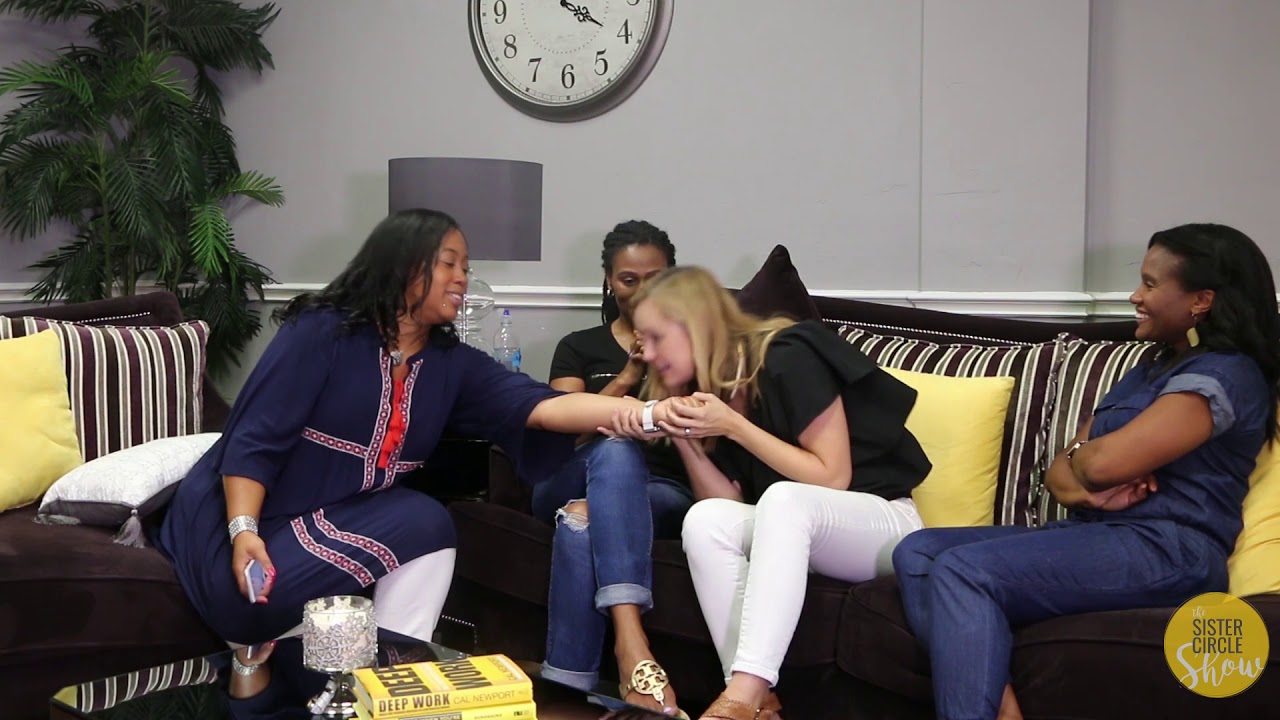
Jennie Allen, a white mother of a Black son, discusses navigating interracial parenting with humility and intentional community. She emphasizes finding Black mentors, barbershops, and culturally relevant media to support her son's identity, and stresses the importance of honest conversations with trusted Black friends to bridge cultural gaps.
Chapters
I have some hard questions for you.
Oh, okay.
Ooh, that was a good smack. You know, every now and then you can't generate a good smack, it just happens. Okay, so—
I want sound effects.
What has it been like to be a white mom of a black boy?
Oh, okay. Just jump right in. I like it.
Um, humbling, especially right now. I didn't know you were going to ask that.
I need y'all.
I moved into Dallas. It really is a gift to come into this room. Tasha and Kim Patton and Susan Say—
See?
And all these women have come around me in Austin, and it was one of the hardest things to leave, because if there's only one thing I've learned about race, it's that I don't know, and I don't know what I don't know, and I want to honor humbly that for my son. At the same time, there's— God keeps giving us what we need, and I appreciate that. I think he will hear. I hope he does hear. I mean, already we start school and I'm thinking, okay, the people we know in that part of Dallas are white. They're going to go to this school. I'm like, Lord, we need an African-American friend, or I can't do that. I can't send him to school. And sure enough, pretty quickly we get connected to the most incredible kid named T. And he is just, they have clicked. And it's his first friend in Dallas. And I'm like, "Lord, how do you do this? Like, you are magical at how you answer prayer." And they, not even knowing, the school not even knowing they were friends, put them in the same class together. And so I'm watching God just take care of my son, and I appreciate that. But I think the word, I mean, the only word I can say is just I'm humbled and and I need help, and I don't know what's ahead. I mean, we're heading into, you know, 10, 11, 12, and these are the years that we're going to need Black men in his life more than ever.
So, you know, I have to say, I don't know if this is going to come out right. I've been sitting here thinking about what I'm trying to say, but I guess what I want to say is I appreciate the fact that you, I guess, admit that you don't know. Because I think that from our perspective, mothering Black sons and Black daughters, that it actually is sad for us sometimes when we see a white mother of a Black child who is assuming they know. And it's very clear that they don't know, but they don't know that they don't even know. And there's no humility in terms of, help, can someone help me to understand that this is actually a different— it's different. There are differences. Of course, we're all the same. I don't mean in value or anything like that, but you understand what I mean. The history is different. The point of reference is different on some things and the way they have to view what's happening in the culture right now. The conversations that I have watched my husband have with my sons based on the reality of race in America right now, that conversation has to be had with your son just like it has to be had with my sons. You know what I'm saying? Regardless of who his parents are, either way. And so I just want to say, I guess I really appreciate the fact that you recognize there's a difference there on big things like that, but even small things. We laugh about this sometimes, but just as we toggle with our own hair and with our daughters' and sons' hair. I mean, hair is like a deal. And sometimes we'll see a poor little, a poor little sweet African American child who is being mothered by a white mom who won't just ask. We just want to tell her.
We want to help her. So praise God, this is where I get to give all credit to my African American friends. And if they watch this, they would be like, "She better give us some credit right here." Because one of my husband's African American friends, looked at him and said, are you cutting your son's own hair? Or are you cutting your son's hair? This is the very beginning. Yeah. And Corey Bell and, and Zach was like, yeah, we just got the clippers.
He's like, please Corey Bell, get—
no, he said, get a Black barber and never do that again.
Yes. Yes. Okay. Yes.
That's awesome.
Yeah. And he was like, yes sir.
And that was the open door to our Black barber shop in Austin that those guys, we went every 2 weeks and those guys saw it as their mission.
Cause the Black barber shop is a thing. It's an experience.
Oh, it's not just about the hair. It's about the conversation.
You need to go to my Instagram and read about SG because leaving him, we both cried. Like, he got in the car and he said, Mom, those men loved me.
Oh, you're gonna have to drive up to Austin and get his hair cut.
I know.
And so of course Zach went to his first black barbershop this past week. He was like, it was fancier.
Like, it was—
no, no, no, no, we just need to tell you.
He was like, I mean, they were great guys.
It was just fancy.
And I was like, I don't—
no, like, we—
it didn't feel right.
Because it was such a gift, those men. I mean, oh, and so, and then Tasha shows up to me the second time we see each other. This is Tasha Morrison who leads Be the Bridge. And so she brings me our second— no, we met one time briefly in a big group. Then she calls me, she goes, where are you? And I said, I'm at the gym. And she said, what gym? And I told her, and she goes, don't leave the gym. And I was like, okay.
So I mean, I barely spent time with her, and she shows up and she has a Hobby Lobby bag.
I've never seen a bag this big. Full of hair care products, lotions, black books, children's books for my kids, black magazines.
She put Essence and all the good stuff. So I'm going through it and I'm like, what is all this?
And she, but I get to it, she goes, I just felt like you needed help.
And I was like, okay. And so I get to the bottom of the bag and I pull out the Essence and I was like, do you think he needs to read this? I mean, it's like people are smoking. I'm like, wait, no, but you need to put that on your coffee table because he needs to see some more black people somewhere.
And he's like, no, it's wrong.
You know what she needs? She needs some black woman. That's what she needs.
I do!
What is it?
Yeah, it's what I'm wearing.
Smell mine.
Oh my gosh. I need to smell like a black mama.
There you go.
Girl, I'll give you some.
It's this oil. Everybody asks me about it all the time. I love it. It's not an essential oil.
It's not from your living room.
Let's clarify.
It's just like a cheap oil.
It's gonna help me. You cannot smell them, but it is like living essentials right here. Young Living, whatever it's called.
Yeah, she sandwiched it between Joy and Draggin' Time. Is that what's happening right now? Okay, so So, but on that same note with that, I want to ask, has well, have well-meaning, have well-meaning Black women, I'm laughing because I'm thinking African American, I don't even know how to explain to people all the time when to use that versus Black. And I was thinking every time she says something, she says African American and I've done that a couple of times, but then it's just a shortcut. Like it's just a shortcut. So I don't know. Sidebar, what do you tell people when they ask you which one to use?
I can't wait to hear.
I say Black.
I say Black.
There's nothing offensive about that. And there's nothing— African American is great too, but I think that, like you said, African American could sound like you're trying to make sure you're politically correct, as opposed to just the— Do you think that that's for you? I will say this.
I'll give you my perspective. I have been trained in that. Like Tasha said, call people Black. But white people feel uncomfortable doing that. Yeah. I don't know why, even though—
I understand that. I can understand why you would just want to make sure that there's not concern about what you said.
So I think y'all need to talk about that more.
Do you feel weird if we just say white?
No. So let's talk about where that comes from, because I don't think that's right. And I think we want to know—
So this is what I said. I think, and this is just my two cents. I'm not a race relations specialist, but you are today, right now.
Yeah.
Anyway, you're about to be right now.
So I think that African American is like calling somebody that you don't know Mrs. So-and-so.
Yeah.
And then when you're familiar with them, when there's a familiarity, then you can shed that. You know, it's, and even though Mrs. So-and-so may have to tell you, girl, call me so-and-so. I just think once you kind of get past that initial, I'm recognizing and respecting who you are, it's just kind of like, you know, we don't walk around saying it to each other.
When I'm speaking to a group and I'm going to address color, I will say Caucasian.
Yes, because it's a more formal environment.
It's more formal and there's not a chance of it being offensive. But if I'm talking to us, it will be, she's white or she's black.
So I like what you just said about Giving permission, because like right now I'm like, I kind of know that and I've heard that. Yeah, but I think I'd like permission, you know, I'm in a different culture. I'm like, I don't know because Tasha said now some people will be offended by the other.
So, so sure, because there are some Black people who are very— want it, they always want it.
And my son is African American, so literally, so, so that actually applies a lot. And so I do use that phrase for him a lot, um, because it is fitting. But, um, but yeah, that is really helpful. I bet a lot of people are glad. So what would you say?
What would you say you want?
To be referred to. Like when I'm saying I'm looking for Black men, I mean, what was so interesting because I do think that it matters who's saying it.
I think that the feeling that we would have coming from the mouth of one person versus another, another person might depend on that person. Yeah, it might depend honestly. So to your point, I can see why it's, yeah, because I can see how it might be depending on who you're listening to.
So that goes way deeper.
Yeah.
Because that is going, okay, what's the heart of this person and, and that's the way they—
I mean, yeah, I would say even if I watch the news, I would say if there's a formal conversation happening, I would be— I would probably be— if they were like black and white, it would feel like a very not formal conversation. If they're— if it's on the news, I would, you know, I would expect both black people and white people to use African American and Caucasian because it's the news. It's a different kind of conversation than a conversation you and I would have at coffee.
I don't know. Let me tell you this, this is so interesting. While we're having this conversation, I'm sitting here remembering a guest preacher at our church years ago, wonderful Caucasian man who—
see, she didn't just say—
why is he important?
Yeah, because he was the pastor preaching at our church. Caucasian, Caucasian pastor, but he is fantastic and loves God's people. Okay, but he's preaching and I'll never forget he said, "It didn't mean a cotton-picking thing." Ooh. I didn't think anything about it, but after that service I just— and I could feel tension sweep through the audience and I couldn't figure out what it was. And later very many people, particularly older Black people at our church, were very offended.
Because they felt that it was insensitive.
Yeah, that is a common phrase. That is a— that's not an offensive term necessarily. There are different levels of sensitivity that I think are based on where you come from, how you were raised, and what generation you were raised in.
Generationally. And yeah, and I just think your experiences, our experiences, your experience too. We— I feel like we have had a very, um, sheltered, racial—
go ahead.
I was going to say racially balanced exposure.
Okay.
Yeah.
We have gone to a primarily Black church.
That's what I meant.
We went to our high school, it was primarily white. You went to a high school that was primarily white. So I think we just had so much exposure on both sides.
I was gonna say, I feel like I oftentimes fall on the, like, I'm very rarely offended by anything.
Yeah, very rarely.
It makes me feel like, am I Black, kind of something.
Yeah, sometimes it feels like I'm not gonna really have this conversation because it didn't bother me.
But it does not bother me. It would take a whole lot to offend me about something.
Right.
However, I was treated differently very, very frequently growing up, whether I was the only little Black cheerleader and they did not invite me to stuff, or the gymnastics girls didn't invite. I mean, I have very clear memories. I did not know it was racism at the time. It was my mother who had to kind of point out to me, this is the reality, but we're not quitting, because I wanted to quit. And she's the one that had to say, this is what this is.
My mother said, oh no, they will not not invite you. Mola said, uh, now who's having the party?
Okay, well, we will.
When he decides, you're not going to go.
Oh, that's a good Mola.
Yeah. Yeah.
So it's interesting. It's just a very interesting conversation. And I think all around, the most important thing is that we have conversations.
Yeah.
I think that's going to help so many people because there's not a one-size-fits-all answer, and it really does depend on who you're talking to, what generation they're from, and what their experience and history and background is like as to how they answer that. But if I know your heart, yeah, then, you know, that just—
well, and I think that is— I mean, I'm gonna give so much credit here to the African—
Black friends I have. We've given you permission to say Black for the rest of this conversation.
So my black friends—
I'm just going—
but Tasha, I mean, I'm telling you, they were brave enough to tell me things. Like, I just, I can't imagine where I would be without them. And so I just want to give them so much credit because it wasn't easy. It wasn't a good use of their time. I mean, they didn't need to like bring me along. Like, it would have been easier to not be friends.
Or say, "Oh, she doesn't know." Yeah, she doesn't get it.
And so instead she was like, "Let me tell you why that's—" Not okay. Let me tell you why you need more black heroes in your son's life. Let me tell you why you can't say that about this situation, Jenny. I mean, we became friends before Ferguson. And then, you know, she, their idea, so several of the friends, 'cause with IF Gathering we launched and we said we wanted to be diverse and we showed up and everybody was white. And then we were like, okay, well we weren't very good at that.
But you wanted it.
You wanted it. In our heart. In our heart, you know, and that didn't go very far. What happened was loving, awesome people like Tasha and a group of others said, "Let us tell you why Black people won't come." And I mean, we've grown. They've walked us through. And I mean, Tasha last year with some music that we had that was her invitation, I mean, she sat in the back and she said, "Thank you." She was crying. She goes, "For the first time at IF Gathering, I'm worshiping." She's fought for those things, but she stayed even though the first 3 years she felt nothing when we worshiped and she felt unseen. And that's where I just, I have these hero friends that are saying the things that I need to hear. And that's where this conversation is so brave. And I know everybody out there is like, "Tell us more.
What else do we need to know?" But I think the same is true, by the way, across cultures. In other words, if there is a black family and they have an Indian child or a white child that is in their family, I think that all of us should have enough respect for each other's culture to realize that while we're all the same in Christ and all that great stuff, There are cultural differences that we need to be sensitive to.
And it's okay!
For our children, it's okay! It's the beauty of us to love each other and be different.
And the reality is, the same way you have to have help and figure out how to have this conversation with your son, I'm asking my friends, like, okay, what are y'all saying to your kids right now? You know what I mean? Like, it's the same. It's not— yeah, that it's not as far off. We're not as different. Yeah, there is difference, but in the heart of it, we're all like, what do we do?
Like, yeah, well, are we doing— like, even with what we were talking about before about Cooper You know, as a Black mom, and I see— okay, so if I see a white mom that has a Black daughter in the store on the haircare aisle, I'm thinking two things. I'm like, I can see she needs help because that's actually not the good stuff. She needs to know that the raw shea is the good stuff.
But everyone, Black children is running that town.
I also don't want to offend her or make her feel that she doesn't know what she's doing, or make her feel that I think that she doesn't know what she's doing. So then there's the The opposite side of that where, uh, you don't want to—
I'm gonna say on behalf of every white woman I know that has adopted, go for that.










