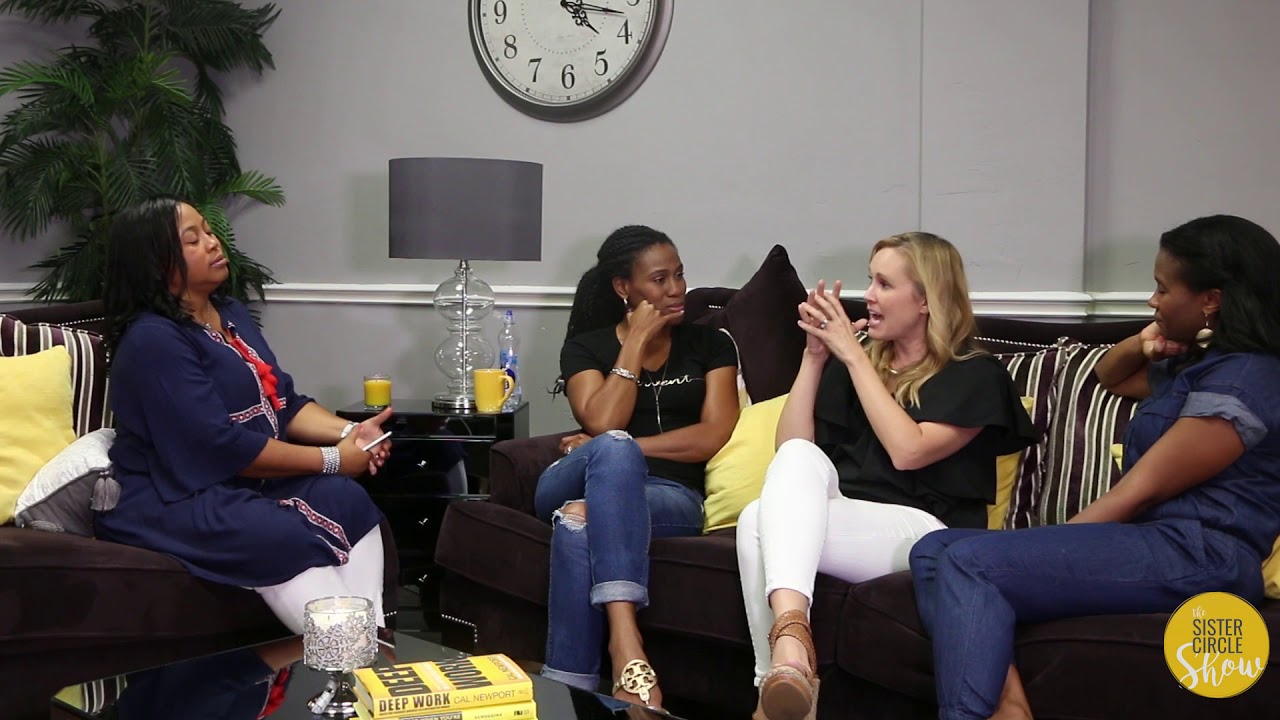
In this conversational interview, host Chrystal Hurst talks with Jennie Allen, founder of IF Gathering, about the movement’s purpose, how it equips women worldwide to disciple their neighbors, and why the initiative insists participants belong to and submit to a local church. Allen explains that IF Gathering began as a modest conference in Austin that sparked a global network of women hosting small‑group gatherings—living‑room Bible studies, coffee dates, and community‑focused discipleship—rather than a top‑down program. She emphasizes that the true power of IF lies in empowering women to start intimate, relational ministries that multiply through the local church, not in the spectacle of large conferences. The dialogue explores the tension between the allure of big events, which can feel “magical,” and the messy, relational work of everyday church life. Allen shares personal anecdotes of her own journey from public ministry back to private, small‑group discipleship, warning against idolizing the “big” and neglecting the “small.” She stresses that discipleship is life‑on‑life, requires sacrifice, and must be rooted in the local church’s context. The conversation also touches on cultural sensitivity, the global reach of IF, and the need for leaders to understand the cost and commitment behind authentic ministry rather than seeking a simple formula.
Chapters
You mentioned if and you mentioned how you try to be more culturally sensitive and how your friends have come along and really been helpful in that. If is huge because I keep running into people who are excited about some segment of the if sun. That's what I call it. It's like the if sun and then all the rays. It's, you know, the if gathering and then it's lead and there's equip and then there's You know, IFTTTABLE, I mean, there's all this stuff. And I know people probably ask you all the time, I'm sure you just had a retreat with your interns, IFTTTURNS, and it's such a great name because it can go with anything. You know, IFTTTURNS. But you, you know, just looking at the girls that you have, the women that you have that want to be a part of it, you've got people who are drawn to what you're doing. Okay, what are you doing? What is if?
You know, I'd love to say it was so clever. You know, people in the first year—
'Cause it sure seems clever.
Well, when it blew up, people, you know, I had people saying like, "Can we talk to your marketing person?" I was like, "Right here." I'm the marketing person. There's like 2 people on staff. But it just, it was beautiful. I'll tell you what it is. I'll tell you. I actually can say this now without a doubt. I think it is women. Around the world that felt like they had a vision to be a part of. They had a sisterhood that they could be a part of. But we didn't say, "Hey, come to do our thing." We said, "Hey, we're going to help you do your thing." And we believed in them. And we said, you know, "You're in the trenches of discipling your neighbors, of trying to evangelize and to lead in your churches, and some of you don't have what you need, and we want to help you." And so this conference, it was so funny, What made it successful is that all these women around the world said, "I want to host." So then what was just a gathering in Austin that wasn't that big— I mean, it was big, but it was, you know, 2,000 people in Austin— all of a sudden became 100 people in Kansas City, 500 people in Tulsa, you know, 50 people in living rooms everywhere. So just all these women were excited. Excited to be able to lead in their places. And I think all we said is, "You can, and you are, and how can we help?" And so what we did was we gave them a conference. I mean, literally everything— I always say we build tackle for people fishing. So the conference is just tackle. It's just something to gather your friends around and talk about Jesus. I mean, one of the girls that's a new intern was sharing her story today, and she said, "3 years ago, I was so nervous, but I invited some of my friends that I wanted to go deeper with. I wanted them to know about Jesus, and I brought them into my living room. And those are still my dearest friends, and we're on mission together. And that launched discipleship throughout our church. And I mean, you start to hear the story, you're like, whoa, and all of a sudden it gets really big. But you realize it just started with a few girls being brave and having a few friends over and talking about God. And the tool was somewhat irrelevant. It was just It gave them the bravery to do it. And so I would say the power of IF is that it's empowered a lot of women to make disciples who are making disciples, and that has now spread to a really beautiful place. But it's all through the local church. I mean, the thing— the only thing we require to lead for IF Gathering is that you belong and submit to a local church.
Which is— it's so funny because I was sitting here thinking, you have a lot of women who want to be a part of if, because you're helping them to live out and lead in their everyday life. But, you know, one of the things I've heard a lot about, you're a champion for the local church and I love that, is what, and I want to say this in a way to make it clear, I'm not saying that it's negative, but what women's gatherings, what they have either done or what they have implied with women going to these gatherings and questioning, I've heard questions about whether or not whether women are gathering and doing their local church, or whether the gatherings are a substitute, or can be a substitute for women's involvement in their local church. And so I love that you're a champion, but I would love for you to speak to the point of why being engaged and involved in a local church matters.
Well, first we should—
If you've got Bible studies on the show.
We should speak to why those things are in competition. And let's be really fair to the local church. Local church is messy. Local church is hard. Local church is relational. You go to a conference and you feel good, and you hear the best of people's talks and the best of everything. And the lighting's right and everything's magical. And you think, okay, that's how church is supposed to be. And so we've really had to train our leaders and go, let's be, let us be really honest. We work all year to do this day. Your pastors and everybody else is— every week, they're doing it every week. So you've got to have context for the two different things. This is a tool, a resource to come alongside of people, but this is not everyday holiness. This is not everyday fighting our sin. This is just, you know, this is just a shot in the arm to hopefully catalyze what was true. And we really focused on that this year because I saw it. I saw there being buy-in to IF Gallery and that scared me. I was like, I don't know. Like, and I mean, that's how we started. I got up there and I was like, listen, I'm sorry. We have fed the thing I'm about to call out. Let me be honest about it. But we, the way Jesus has always built his church is through discipleship, life on life, eye to eye. That is not easy. That is not fun. It is more fun instantly to be on the internet and present what you want. But the truth is we've got to get back and pull back to life-on-life discipleship through our local churches. So we're working on it, but I know why the temptation is to go, "Oh, this feels right and good and magical." But back to the local church, why I believe in it. It's for the reason that it's difficult. It's because that's where we change. It's because it's not easy to show up. I mean, I saw it in myself. I started becoming more of a public Christian than I was a private Christian, and that bothered me.
What do you mean by that?
I was spending all my time writing books, blogging, creating tools through IF Gathering. I was spending all this time, and I was— and what had gotten me into this in the first place was coffee dates with girls. My Bible study stuff was taught to 6 girls in a living room, and then it was helpful to them, so I talked to a few more, but it was all within my local church. All the ministry I'd done since I had become a Christian at 17 years old I came home from summer camp and I discipled this little group of freshman girls through the book of Revelation as a brand new Christian.
That's what I was talking about. Look, just start strong.
It was interesting. I was like, I could keep their attention.
And they were all sitting there going, "She's about to do a Bible study on Revelation?" Well, I didn't even know.
I was just a brand new Christian. I was like, "This one's good. This one looks good." Now I've been to seminary, I'm like, "I wouldn't touch it with a 10-foot pole." But I know this. I know that that that was where the fire came from for me. That is where I saw life change happen. And if I did not come back to that, I was worried I would get to heaven. And while the world was telling me your greatest work is happening right now with these masses, I was worried I would get to heaven. He said, you stopped doing your greatest work when you turned 40 and you got numbers. I was so afraid of that. And so I was like, okay, I'm gonna— so what happened was I was like, I'm gonna go back and I'm gonna teach a local Bible study. And it was It was so much fun, and I don't even know if it was very good because it wasn't polished and edited. I think they all showed up for my, like, you know, Lifeway Bible study. I was like, "Oh, I'm sorry. This is the unedited side of me. This is what it looks like before all the makeup and the work." And so, you know, I think it was right and good and messy, and then I signed up to teach you know, third grade girls at church. And I just went back to everything that had made me love God and love Jesus. And my soul like started just filling back up. And I thought, okay, so then do I quit public, right? Do I quit all the big stuff? Because if God's not in that, then I'm just gonna do this. I wanna be faithful and holy. And I think where he brought me back to was, Jenny, as long as you are using the big stuff to create the small stuff, Go for it. But as soon as the big stuff becomes about helping everybody else do the big stuff, then you've lost the point. I will work in the same way I've always worked, internet or not. I will work through people making disciples, through the local church, through confessing sin, through prayer, through reading and knowing their Bibles. All that is how I change the world. So then it gave me new fire for IF because I was like, okay, I actually see that happening. I actually feel like we're on our way there. Now we've got to correct some things, which was this year. I mean, get on stage and say, hey, we've messed up and we probably misled some of you with the lights and stuff, but those aren't evil things. It's just we want to be clear how we're going to use them. And so we're working on that, but it's, you know, it's tricky because we have a world that we all want to idolize the big, and then we forsake the small. And I'm scared we're helping feed a generation that the small doesn't matter.
Yeah, I agree.
I love watching the passion in you rise.
Right. I was about to say, I had a little passion.
Yeah, I said it.
Order my preaching right there, honey. I mean, you just started doing it and your hands started moving. Yeah, I know. I know.
Y'all, and I'm in a denomination and on a side of the church that I'm like, just say amen. I mean, my girls are like, my girls are like, "Jenny, you are forcing— this is awkward." And I was like, I just want you to say yes when you agree with something. Not when I'm preaching, but when we're praying, you know? So, you know, I appreciate—
yeah.
Well, we're all sitting here going, mm-hmm.
Yeah. You're getting it from us. Yes.
Yes.
Right. Hallelujah. Thank you, Jesus.
Come on. Do it, Father. I know.
No, that's so, so great. I mean, because you struggle with that some. Just—
let's hear from you.
No, I mean, I'm just saying. I'm just saying I've heard you talk about that. Just when you see— and you've had it happen. You've had it happen. You've probably had it happen too. Where young women come up to you and all they want to know is, how did you do it? How did you write the book? How did you start teaching? How did you develop a ministry? Tell me what, what is the formula? How do I do this? And the grief that I feel is you're so missing the point. Like, not that any of these things are bad, right? It's just that not the goal. It's not the goal. It's not the goal. And you have no awareness. Of what it even takes, the cost. And there's— it's wonderful to do the stuff, it's wonderful, you know, but I'd like for you to speak to that a little bit just because I know that you've talked a little bit about it.
Yeah, just the same as what Chrystal's just said. You just feel the sense of sadness that that is the goal, and it really is a Western Christianity issue. In other parts of the world, you see people who maybe have a very public ministry, but it has been, it is growing out of a place of small ministry where it's out of their local church and they just happen to have a lot of people that have plugged into it. But they're pastoring, they're shepherding people, they're discipling, and that's their intention and their goal, and then if the Lord chooses to do something with it, okay. But I have a friend, you interviewed Christine Caine the other day, we all know her, but Chris, when she first started, set foot in America, she was like, "What is this?" "What is this?" Yes. Because she had never seen speakers.
Yeah.
There's no concept for that. So even when I visit some other streams of the church, they're not understanding— like, we have to have full conversations about what it means to be in ministry because it looks so different from their perspective here in the States. And so sadly it has become a business, and I think you're right that I think that we have to continue to remind people that we got to do what God has called us to do, which largely does not mean standing on a platform with a microphone in your hand. It really means whether or not you're going to commit your life to the small circles of influence to which he's given you, whether that's your spouse, raising your children. God forbid we're teaching everybody else and not sitting at dinner with our kids and praying with them.
Yeah.
And prioritizing that, you know, and prioritizing our local church. So that's, that's kind of the— that's— and people are kind of upset with us because that's the answer that I'm giving.
They're looking at you like, no, really, what's the formula?
And it's like, well, actually, I didn't sign up for this.