Practical Keys to Forgiveness
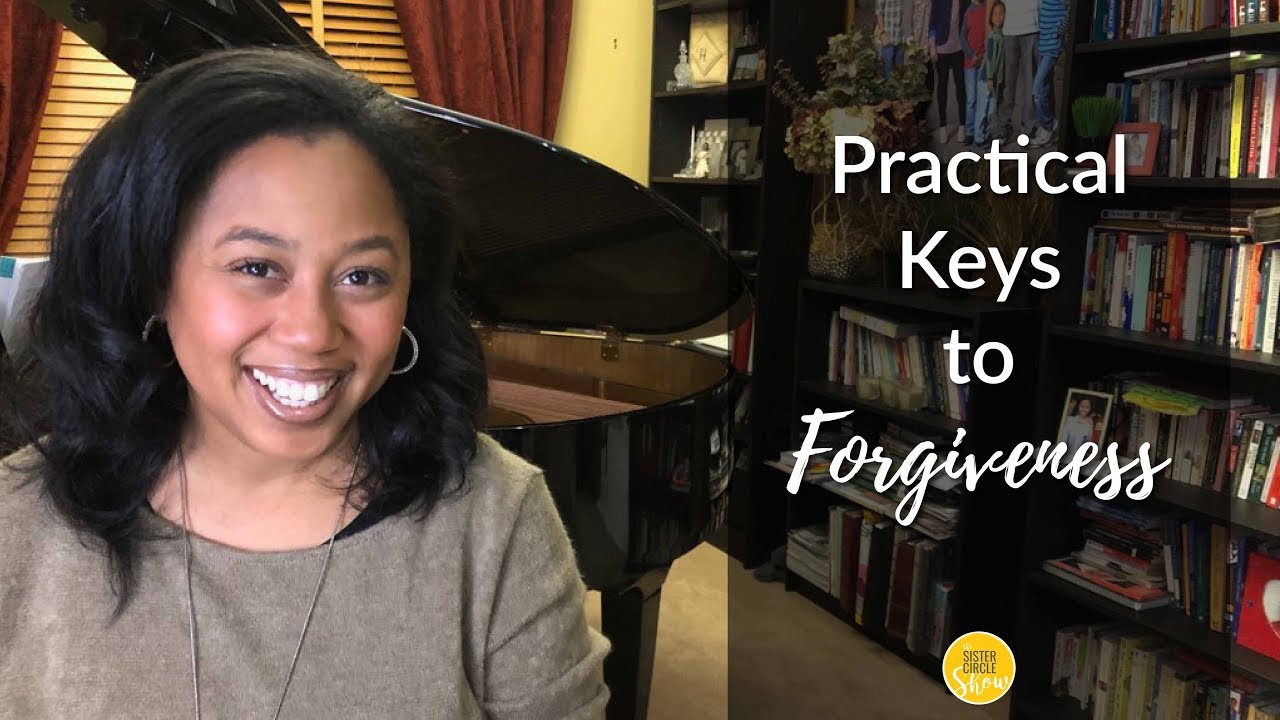
Chrystal Hurst breaks forgiveness into four steps: Process, Perspective, Pray, and Put on the new self. She uses biblical references and practical tools like writing letters and symbolic notepad exercises to show how forgiveness takes time, requires shifting how you see the situation, and means praying for the person who hurt you.
Chapters
Hi everybody, it's Chrystal Hurst and I'm here tonight. I'm scheduled to be doing a YouTube Live actually with Tina Campbell and unfortunately she wasn't able to make it tonight, but I know that I sent out a big email to all of you all telling you that I'd be here live tonight and I didn't want to not show or to have you wondering what happened. So I wanted to just share something with you. I figured I'd take a few minutes just to chat with you a little bit about something that I know Tina and I would have talked about and that hopefully we'll get to talk about soon. And That is Forgiveness. Over on Instagram, I kind of like living over there, and then I like to dip in in other places. But every now and then I go on live on Instagram stories, and, um, well, I go on a lot over there on Instagram stories, but every now and then what I'll do is take a minute to pick a question for the evening and to invite women who are watching to answer the question. I ask them to raise their hand if there's something that they want to share. And I have them jump on with me to answer the question. Um, and one night I answered the question, what is something that you've been hanging on to far too long that you need to change, that you need to get rid of, that you need to move past? And different women had different answers. I want to share with you one particular answer that one woman shared with me and a little bit of what I told her, because I think that it might be of help to you. So first of all, before I go any further, I know that a few of y'all, um, maybe had came on just a few minutes after I explained what's happening tonight. So let me do that again, um, and then I'll jump into what I want to talk to you about this evening. So first of all, uh, if you have never subscribed to my YouTube channel, please do that. Just hit the subscribe button so that way you won't miss any of the lives or uploads or anything else that I put on. So make sure you've done that. The second thing is, I know that you all— some of you are coming on here going, oh, she's going to talk to Tina Campbell. And Tina, y'all, she couldn't make it tonight. So rather than just not come, I just thought I'd still show up and share something with you. So what I want to talk to you a little bit about tonight is forgiveness. One of the ladies on the Instagram Live that I did— I call them Sister Sessions where I ask a question, and then y'all, I like to, I like to help people get to the bottom line. And so her thing that she was struggling to move on from, that she was struggling to let go of, that she had been wrestling with far too long was forgiveness. She said, there's this person in my life. I say that I've forgiven them. I prayed that I could forgive them. But when I see them, stuff still comes up. There's stuff still going on on the inside of me that it just bubbles up. So I don't feel like I've forgiven them because the feelings of unforgiveness are still there. So she was asking me for some practical help in moving past that because she really wanted to. And I don't know about you, but forgiveness is a sticky subject because even though we know we should forgive— because come on, y'all, we know we should forgive. We've been told as believers that we should forgive 70 times 7. We've been told as human beings that you got to forgive because if you hold them in chains, Really, they're not the one in chains. The one in chains is you. So we know that releasing people from what they owe us is good for us, but the act of actually doing it, it might be a little tricky. Your feelings can play tricks on you. So the first thing that I want to explain to you, if forgiveness— forgiving somebody in your present, forgiving somebody that you see at work every day, forgiving your husband for what he did last night in terms of maybe leaving his shoes on the floor or Maybe just how he made you feel, forgiving your mother for how once again she's made you feel small or made you feel belittled for living, forgiving your adult kid for taking you through the wringer and making you get gray hair, raising your blood pressure, thank y'all. Don't tell my adult children I said that, but it is true. Forgiveness is real, not to mention the forgiveness of really, really deep pain and hurt from trauma, from sexual abuse, or when you're talking about forgiveness from abandonment, when you're talking about forgiving yourself, forgiving yourself from things that you've done. You can't believe you did. And 15 years later, 20 years later, you're still paying the price. Forgiveness is a, is a thing. And while it is not easy, it is simple. Let me say that again. It's not necessarily easy, but it is simple. Easy means you may have to work at it. It may take longer than you— the fact that it's not easy, rather, it may mean you have to work at it. It may take a little longer than you thought. You may It may take more effort than you ever planned on giving it. But is it simple? It's pretty simple. So I want to break down for you what's involved in forgiveness. Now, this is not an exhaustive list. This is not, you know, I'm not Counselor Chrystal Hurst, nothing like that. I'm just telling you some things that have worked for me. And then I hope that they'll be helpful to you. First and foremost, I think you need to understand that forgiveness is a process. Okay, now y'all, I'm a preacher's kid, so alliteration is about to happen. So just get ready. Everything's about to start with a P. If you need to write this down, then do so. And don't worry, it'll be on replay. So if you need to listen to it again, you can. The first thing you need to remember is that forgiveness is a process. That means it takes time. It's not always a one and done. It's not instantaneous. It's not something that you could snap your fingers and immediately your feelings catch up. Forgiveness is a fact. It is an action. It's something that you do with your beat. It's something you choose to do, but you may have to do it, do it over and over again to see the effects of forgiveness and the release of your feelings from the struggle that you have. So don't beat yourself up if you decided to forgive somebody and you said, you know what, I forgive you, and then the next time you saw them you wanted to knock them out. You know what I mean? Because that happens. The next time you see people, your feelings rise up and you want to let them have it, give them a few choice words maybe, or, um, you know, act a certain kind of way, maybe inappropriately towards them, uh, or you're trying to move past— you don't even talk to that person anymore. They're 5 years past. You've been trying to forgive them. And anytime you look at the effects of your life based on what they did to you or what they didn't do for you that they should have, you just can't let it go because the feelings rise up and you don't feel, uh, very much in control of your feelings at all. So just give yourself some grace and know that it's a process. OK? The second thing that I want to tell you, again, because it's going to start with a P, because I'm a preacher's kid, and alliteration is how I remember things. I don't know about you, but it works for me. The second thing that I want you to understand is that you have to be purposeful about choosing a perspective. You have to be purposeful about choosing a perspective. Now, what do I mean by that? OK, there's always a way you can look at something, all ways. Okay. If that person, uh, if you're a girl and you're watching this and that person is a guy and one time he beat you within an inch of your life, okay, let me just go all the way into something really, really hard. Okay. The thing that you can choose perspective about in that is that you have your life. Now that doesn't mean that they weren't wrong. It doesn't mean that there may not even be charges that you press. It doesn't mean that people are not held accountable for their actions. What it means is you don't have to only focus on all the wrong that happened, all the bruises in your face, all of the ways that you had to pick yourself up and start over. You can say, you know what, but I still have my life. One of the things that forgiveness steals from you is perspective, because if you're not careful, you'll spend all of your time focusing on what went wrong with that person who you need to forgive and not what is right right now. And if you're dwelling on what's wrong, how they left you, what they left you with, the hurt that they inflicted, the betrayal that you felt, if that's where you live, you miss the other side. It steals from you the perspective that can also steal your joy. Joy, gratefulness, choosing to be positive about your life, choosing to see the silver lining, that is a perspective. And it's a choice about a perspective. If you only focus on how someone has done you wrong and you never choose to see what is right in your life— not because they did you wrong, just because you're still here to see some right things— then you're allowing the person who wronged you to not only steal from you what they already stole— maybe that was time, maybe that was, um, self-worth, maybe that was money, maybe that was a, a job because they lied on you and they got the promotion and you didn't, whatever the case may be— if all you focus on is the wrong that they did and what you don't have because of what they did to you, you're also allowing to rob you of your perspective, which usually robs you of your joy. It robs you of your peace. It robs you of your perspective. And perspective, what you choose to see in this life, many times is what can change what happens in your life. The Bible says in Proverbs 18, the power of life and death is in the tongue. And that goes to say that if all of you're talking about all the time, is the negative stuff that's happening, guess what you're going to start to see more of? The negative stuff. Because what you— um, words have power. Maya Angelou said, she said, words are living things, and when you say them, they go out and they can be acted upon. The Bible talks about things being spiritual all the way around us, and I just believe that whether you're a Christian or not, the world is a spiritual place. Now, what you're plugging into in terms of the spirituality is the question. But when you are speaking negativity, that's what you run into. Have you ever realized that positive people always seem to have a perspective about life, that there's always something right in their life? Have you ever noticed that? Well, you can choose that perspective. And when you choose not to forgive— because yes, it is a choice not to forgive— when you choose not to forgive, then you're going to slowly seep out The positivity and the joy and the gratitude that can shift the perspective and how you think seeps down to how you talk. It seeps down to how you feel. And everything starts with the renewal of the mind. You want to think differently about your life, see different things in your life, that means you're speaking differently about your life, which means you have different thoughts about your life. And that has everything to do with perspective. So if you are always saying, I can't do this in my life because of them, I'm hindered from doing this in my life because of them, uh, if they weren't in my way, I could do this, this, that, and the other. You are changing the way you think because you hear what you say. Be purposeful about your perspective. Find something that is good in your life despite what they did. I was talking to a friend of mine and she was talking about, uh, her family dynamics and how some of the things she wished her parents had done, she's doing for her kids. And I said, you know what? You do know, let me just tell you, just to make sure you understand this. You do know that your kids are going to find something wrong with how you raise them because we're imperfect people, which means you're going to make mistakes raising your kids. They're going to find something, no matter how hard you try to get it right, that you could have done better, that you could have done more of, that you could have done right. But what the freedom will be in your kids, in their life as adults, is looking at you, giving you a pass to say that you did the best that you did, or the— whatever you gave them what you gave them. And now, regardless of what you get, you always hold their lives hostage to what you didn't give them. And there'll be something you have not given them. They are ultimately only holding themselves back. Do the best that you can and then let it go. Cause you're going to make a mistake. The same goes for you. Do the best that you can to, uh, to do the things in your life that you need to do, but you're going to make a mistake. And if you're going to give yourself a pass, You got to give the person a pass too, in the sense that you should not allow their past mistakes to hold you hostage. So it's a process. And then you need to be purposeful about your perspective, which has everything to do with the way you think and everything to do with how those thoughts affect the way you speak. And as you speak, you will hear yourself, which will affect the way you feel eventually. And as you walk out right thoughts, right speech, and right heart, it will affect the way you walk out your life with your with your actions, with your feet. Okay. The next thing I want to tell you is that you have to pray for them. Okay. And, and, and it's really hard to be mad and hold someone in chains that you are praying for. Wish them well. Wish them well. Now y'all listen, I'm not about to get all into the juicy stuff cause this is YouTube and you know, I don't know where this will go and who will watch it, but here's what you need to understand. There have been a few people, a few, that I've had to practice forgiveness with. And here's what I can tell you for certain: when you choose to wish them well, when you say, you know what, I hope they figure it out, I hope they figure it out, and what they should have had in my life they have in another season of their life, I hope I hope that they're able to recover so that they don't do any more damage to anyone else. I hope that they can have an experience with God in their life where they have a change in perspective, where it enables them to be free of whatever hurt them that is having them hurt me. Like, people who are hurt hurt people. And so when someone has hurt you, they either have no idea or they are not aware of how to be a healed person so that they can walk around and dole out healing to other people, too. When you are praying for somebody and praying for their best, it's really hard. I'm not saying it ain't hard. I'm just saying it is hard to totally, totally stay angry with them. So wish them well. Like, grit your teeth and just lay it out before God and say, you know what? I cannot control them. I cannot control the outcome of their lives. What I can control is me. So since I cannot control them anyway, Would you find a way, God, to make it possible for them to see the error of their ways, to get right with you? It'd be nice if they get right with me, but if they never do, if they never see that, can you please bless them? That's a hard one, y'all. I know it's a hard one. I know it's a hard one. But when— don't you want somebody praying the same thing for you? Because let me tell you something, I know that I have personally hurt other people people, many times unintentionally, but I'm not going to lie. Sometimes I was like, I hope that hurt. I hope that hurt. I hope what I just said and the way I said it stung you right, right there. And I have grown up a little since some of those things that are coming to my mind right now. And I pray to God that in those moments of my stupidity, that that person was wise enough and good enough A, not to hold that against me. B, not to let that keep them in chains. And C, I hope they weren't— I, I— it would be a blessing to me. And I've known some people like that in my life who kept doing good towards me, saying good towards me, and praying for me when I wasn't necessarily doing good towards them. And you know what that does? It changes the way you see your need for grace, which then influences the way you see the other people in your life, even that have hurt you, and their need for grace too. Pray for them. It breaks the chains off of you. The last thing I want to talk to you about is putting on your new self. Okay, so I'm gonna break out a scripture here because I think we miss often in the scriptures that we read kind of like the practicality of what something actually means. So Ephesians 4, Ephesians 4, Chapter— y'all like my little church voice? Chapter— okay, um, in verse 24 it says, and put on the new self. I'm gonna back it up a little bit. Says in verse 22 that in reference to your former manner of life, you lay aside the old self which is being corrupted in accordance with the lust of deceit. Let me just break that down. If you don't do anything to stop it, it's headed in the wrong direction. So you have to lay it aside. You have to actively be involved in setting aside what the you in you wants to do, because the you in you is not going to want to do the right thing. The feelings of unforgiveness rise up because you don't want somebody to be better off after they left you not so. You want them to pay for what they did, okay? That, that is a natural reaction. The problem with that reaction is it keeps you in chains. That's the problem. Okay. And then it says, and spirit of your mind, which I just said, right? You've got to choose to be purposeful about your perspective. Then you got to put on the new self, which is in the likeness of God that has been created in righteousness and holiness of the truth. So here's the thing, put on the new self. Now listen, y'all, I'm sitting here in front of y'all with, um, y'all, y'all, y'all, cause I'm a Texan. I'm sitting here in front of y'all with a shirt on. Yeah, and I tried to pull my necklace up, didn't— it didn't— it won't stay up as high as I wanted it to stay. But I tried to do right by y'all, okay? I got my little hand thing on, all this whatever. I'm glad y'all can only see from about here up because you don't need to know what's going on from here down. It doesn't matter. The crazy looking socks I have on, it doesn't matter. The shorts where you can see my knobby knees, it doesn't matter. Uh, you know what I have going on all around me with the camera and all that foolishness, it doesn't matter. What matters is that I put on what I needed to put on to be able to be present here with you this evening or whenever you happen to be watching this. Okay. But it was effort because today it was rainy outside. It was rainy outside. I even told my kids, cause we homeschool. I told my kids, keep your pajamas on all day. You're welcome. Enjoy. Get the blanket. We pulled out the heater because it was the kind of day where if you don't have to go anywhere, You don't want to put jack squat on. Okay. You just want to walk around in comfy clothes and hope that people who matter in life don't really see you that day. So for me to put on something for you today, to put on a shirt, to put on the necklace, y'all, and then dusted my face with, uh, with the, with the MAC Studio Fix powder so that I wouldn't, you know, I'd look a little smoother, put on something on my lips, put on a little mascara. Listen, I don't like getting dressed. I would rather be in pajamas all of my life, but because of what I needed to do, because of where I needed to go, because of who I needed to see, which is you, by the way, tonight, because of what was more important than how I felt in any given moment, because I had an appointment, I got dressed. If you believe that you have an appointment, with your life, that you need to show up for your life, you get dressed. When you have an appointment at work, or when you forget to have an appointment, when you need to be at work, okay, to get paid, you don't show up in your pajamas. That's unless you work from home, but that's another story. You get dressed. Why? Because it's a part of you getting ready to show up for your life. In order to be at work, in order to be at church, in order to be with certain people, in order to, in order to not look crazy, you get dressed. You put on the clothes whether you feel it or not. And just to take this to a whole nother level, some of you all are putting on clothes, some of y'all, not me, are putting on clothes that don't fit. Okay. And you're uncomfortable. In fact, when I was, um, Pregnant, I would have jeans and I figured out how to loop a rubber band around the knob, the little button of the jeans through the hole on the other side, because they weren't comfortable to keep shut until I was ready to wear maternity clothes. I would do all kinds of nonsense to make the clothes that I own feel comfortable, but I put them on because going out required that I get dressed uncomfortable or not. There are a lot of things we do in our life that we don't feel like doing, and we do them because we're supposed to do them. And we get dressed in order to do them. We get dressed to show up to our life. Putting on the best of who you want to be, even if you don't feel like you're there, is a part of you showing up for your life. And when you choose not to put it on, when you choose not to put on the thing that doesn't feel comfortable, you're also choosing not to show up. Forgiveness does not feel comfortable. It is a process. It takes time to learn how to purposefully choose your perspective. It takes time to pray for them and wait for those feelings of revenge and anger and frustration to subside. Okay, I get, I get all that, but comfortable or not, don't let the discomfort of it or your desire to sit where it feels better, just being mad, just being angry, just being upset, to sit there and let that rob you of your appointment with your life. Forgiveness is worth the effort, and the reason why that Matthew chapter 18, I think verse 22, says that forgiveness— when Jesus was asked by the disciples, like, how many times we got to do it? Like, how many times do we have to show up dressed, you know, before we actually feel like this? How many times do we actually have to do this when people have been so incredibly difficult or harmful or rude or hurtful and they've caused us pain and suffering and trials and trauma? 'Exactly how long are we supposed to do this?' And his answer was 70 times 7. So somebody right now is going, 'Okay, let me do the math. 70 times 7.' And they're adding it up because they're trying to figure out exactly how many times. I'm gonna put tally marks on the wall every time I pray for this person. I'm gonna put tally marks on the wall every time I try to show up to my life and be positive and choose the right perspective. It was symbolic for never-ending, on and on and on and on. On and on and on, as long as it takes, even if it takes forever. Why? Because how long does it take to forgive you of yo' stuff? When are you gonna quit screwing up? When are you gonna stop making mistakes, intentionally or unintentionally hurting people? When are you gonna stop having choice words come out of your mouth? When are you going to stop forgetting to honor God in every area of your life? How, how, when are you gonna stop needing to actually give grace to yourself for messing up, screwing up, missing, missing the, missing the point? So since you need it, on and on and on and on and on. The whole point, right, is to be like God. Well, guess, guess what one of the things is that he He does all the time for you and for me. It's forgiveness. It's perpetual. And if you can swallow that— yeah, there's that one person that you're struggling to forgive, and I get that, that one person that totally decided to, to not pay attention to how they were driving their life and their life rammed into yours. Unexpectedly, um, the damage is not even totally accounted for. You're still reeling. You co-signed for that person, they didn't pay their bill. Now you're trying to get a house and can't get it. Y'all, it could be anything. But what I'm telling you is that one person that's the most difficult for you to forgive, if you can take that one person down a notch for just a second and realize that This act of forgiveness perpetually puts you in the position of giving grace and understanding how great it is for you to receive it yourself. It changes the way you live when you refuse to hold other people hostage and perpetually walk in, how can I let it go? How can I let it go? How can I let it go? It frees is you. There's a book my boss gave me, a job in my late 20s, my last corporate job. I'm a little bit of a tightwad, maybe just a tad of a control freak. Maybe, maybe. That's what other people say. I haven't decided whether or not I believe them. But the point is this: one day I was dotting some i's and crossing some t's, doing the jot and tittle thing.. And, um, she walked into my office and she made a comment about whatever it was that I had done. She just said, you know what? Have you ever read a book called Don't Sweat the Small Stuff? And I was like, I don't, I don't know if you're giving me a recommendation here that I should be grateful for, or if I need to tell you to mind your business and quit telling me what to read. I mean, you know, like, did nobody ask you to tell me something to read? So I said, no. She said, you ought to read it. So I have that book on my shelf. It's one of those little gift books you could get. I don't even know if they, it's still a thing, but a few years ago it was. And I started reading it. And the premise of that book is this, let it go. Let it go. Now, in that case, I had to let go of some habits that I had at work that were keeping me from getting the main thing done because I was getting so wrapped up in tying all the things in neat little bows and missing the point of the big thing. The art of learning to live, letting go, letting yourself off the hook, letting other people off the hook, letting small stuff off the hook and keeping the main thing the main thing. Is the art of learning to live free. That is what is at stake when we talk about forgiveness. Listen, girl, I, you know, I wrote a book called She's Still There. If you haven't read it, you should pick it up. I hope it'll bless you. It's what I would do if you and I were friends and I could sit down and talk to you over coffee, right? Because I'm really kind of a one-on-one girl. It's my jam. But here's the thing, there's one chapter in the book book towards the end, and it says to choose freedom. Choose freedom. And most of us will choose to be in chains because it's easier to stay in the chains than it is to take the key and unlock it to be free. But the goal is freedom because there's stuff in your life you simply cannot do when you're holding other people hostage? Because really, they're moving on. Can I just say that to you? Just in case you just needed somebody to say something hard to you. If they're not in your life asking for forgiveness and trying to make it right— because if they were, you probably wouldn't be struggling. The fact that you're struggling to forgive tells me the person that you're mad at they're probably moving on. So the person in chains is you. This point of forgiveness, this act of forgiveness, this lifestyle— because it's perpetual— of forgiveness is the way you ongoingly choose to live free. It's free. And the truth, even though you don't like it, even though it may hurt, even though it may taste bad going down, the truth is what sets you free. And your freedom, the truth of the matter is, lies in your hands. It's up to you to free you, not them. If they ask you for forgiveness, that's a bonus. That's great. That's resolve. That's a nice, neat Bo, but if they never do, yes, acknowledge the pain. Absolutely. Yes, uh, get a counselor. Yes, call your pastor. Yes, seek reconciliation if that's possible. Yes, all the things to work on healing, because healed people heal people. But if you're hurt, you don't want to pass that hurt along to someone else else or keep it in a perpetual cycle of hurting you. Forgiveness is the key, and no matter how uncomfortable it is, you have to wear it. So listen, yes, forgiveness is perpetual. Yes, you need to put on the self of you that actually could care less or is not interested in forgiving them. Yes, you should pray for them. Absolutely. As my doorbell rings. Who is this at my door? Is it a kid? It's an Amazon package. Great. Whatever I ordered is here. But, uh, yes, you need to purpose to have the right perspective, y'all. This whole idea of forgiveness is for you. It is for you. So one of the practical things that I want to mention though, something I read in a book called Calm My Anxious Heart by Linda Dillow. Um, and, um, she said in the book, it was about worry. It's about worry, but the principle is true here. She said, when I wake up in the middle of the night and I'm worried, I have a notepad beside my bed and I write down the thing that I want to not worry about. I get out of my bed, I take the notebook, and I put it across the room on the dresser because symbolically I am telling God, take this worry. This is my worry. I'm moving it away from me. I thought, oh, how novel. And then she said, and when I wake up again that same night or the next night, I go get that same notepad. I'll write it down again if I have to. Take it and put it on the dresser across the room. And if it happens again, take out that same notepad. I write it down. And she says, and I keep doing it until it stays put. I keep putting it away from me until it stays put. Forgiveness is the same way. You can't have a conversation with that person to settle your differences. Write them a letter. Tell them all the things about how you feel. If the person is no longer living, get it out. Talk to that counselor about it. Like I said, write a letter. Do something in print. And keep doing that until you've done the work of healing. Because healing, y'all, is work. It is work. And realizing what that person did that either planted seeds that are grown and that are tangling you, or that uprooted parts of the root of you that you need to replant. Doing the work of healing, finding what's incorrect and uprooting it, or finding what's missing and putting it back. That work is a process and it is a perpetual process that involves you and your diligence in being a part. So I want you to be free. I want you to be you. I want you to realize that the girl in you, she really is still there. But even if you point her out and coax her out of the shadows, if she doesn't come out just because you're telling her to, it might be because she's not free. What chain is holding her back from stepping out into freedom, even if you've opened the door and are glad to see her? Forgiveness may be the key. So I know this isn't a panacea. This one video is not a panacea for all the things that you've been through and all the ways that you are very much so still hurting. And I actually have a sense now that when I check the comments, that somebody's going to tell me, Chrystal, as you were talking, I was crying my whole way through because you just don't get how deep the pain is. And you know what? This video is not going to solve it for you at all. What I hope it does though, is give you some practical tools for beginning your journey. Of forgiveness. And you do not have to do it alone. For those of you who've been trying to do it alone and have not been successful, and the wrong thing said on the wrong day by the wrong person will just set you off, you need to deal with that. You need to deal with that. And I'll start with me. So do the work, engage in the process, understand that it's perpetual, be purposeful about your perspective, pray for the person, and just realize that this is something you have to put on. It's not gonna feel right. It's a lot easier to be mad at people than to work at disengaging from that stuff that wants to keep you bound. So hope that's helpful. I promise I will let you know if and when I can get Miss Tina Campbell back here to join me, but until then, forgiveness is something I know that she knows something about. And since I know a little bit about it too, I thought I'd share. Hope this has been helpful. Uh, leave me comments if you haven't already. Be sure and subscribe so you don't miss anything, and I'll join you in the comments in just a minute to see how this has been helpful. Y'all have a good night. Bye.










