Sam Collier on Being Rescued By God
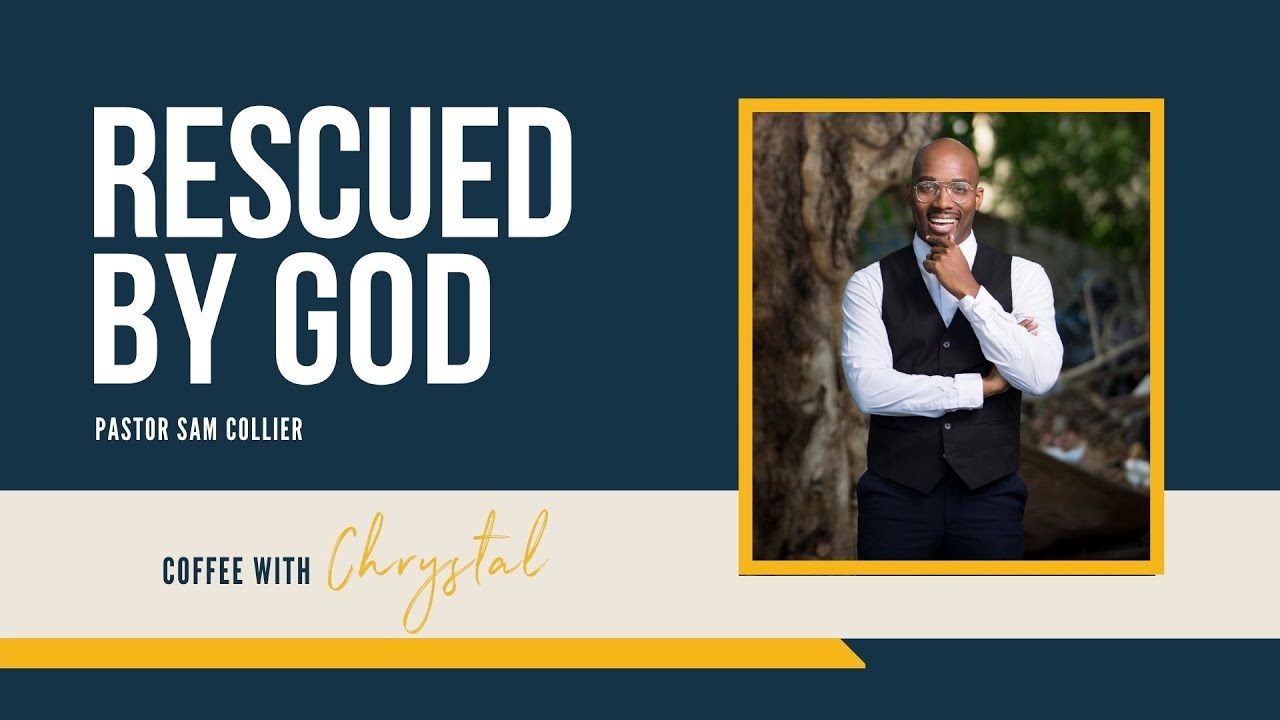
Pastor Sam Collier, adopted as a child and raised in Atlanta, reunited with his biological mother on The Steve Harvey Show. He now leads Hillsong Atlanta and says discovering his roots made God appear "a little bigger" and clarified why his life unfolded as it did.
Chapters
Thanks so much for joining me here on YouTube. I'm actually on a little bit of a YouTube break, but I am still sharing information and conversations with you that are awesome and that will change your life for the better. Join me for this conversation with Pastor Sam Collier. It's riveting. I love talking to him. He was a great interview, and I know you will enjoy our conversation too. All right, y'all. Here we go. You are here with me today because you wrote a book, A Greater Story. And I'm— you know, again, I was telling you before we started recording and sharing our conversation live that I heard of Toni, and I'm just, you know, connecting the dots, right? And going, OK, Sam Collier, Toni Collier, they're a unit. But I— you know, my introduction even to you is minister, pastor. And then there's this story. You know, there's this whole other side of— how God has brought you and led you. And because I, I feel like I'm connected. I mean, I'm connected. I love Andy Stanley. I listen to his leadership stuff and his church stuff. I love Hillsong, listen to their music all day. Love Pastor Brian and Pastor Bobby. OK, but I didn't know about your story. So if I didn't know and I'm connected in all these ways, I know that there are people who are going to listen to this podcast or Inner Circle members who are watching us right now who are like, so who is Sam Collier? And some of them are going to go, Pastor Collier, Minister Collier, and Sam. So I just wanted to take a minute to just let you— because I know that's what your whole book is about, but in nugget form, just give us an introduction to who you are and just your history. And then I'll take it from there, if you don't mind.
Of course. Well, I will say it is an honor to be on this show. I've known of you for a while. I did check your name before the episode started just to make sure, you know, you always—
it was the right Chrystal Hurst, right?
But I have heard of you and such a fan, um, of you and your family and everything that y'all— everything that y'all have done and contributed to Christianity worldwide and nationally. It's kind of like it's not really one of y'all, it's like all of y'all kind of in one thing that does— and each one of you do like a different thing and you fit in a different space. And so it's just been, you know, again, it's an honor to talk to you and, and really grateful for what you guys have contributed. So thanks for having me on the show.
Yeah, no, you're welcome. I'm excited to have you. I really am.
Well, I, you know, I'll say this, you know, long story short, I'll jump to the climax and then double back. About maybe 7 years ago, I met my biological family for the first time on national television on The Steve Harvey Show. Mm-hmm. Um, and kind of the story that led us up to that, which makes it even crazier, is I've got a twin sister, and, uh, we were born into extreme poverty. Our mother at the time, she had us when she was about 21. She had 3 kids already, so that makes 5 kids, age 21, and she's in the hospital faced with a decision of whether or not, you know, she keeps us and raises us in poverty like the rest, or kind of gives us up for adoption. Our dad at the time had left the picture. He was addicted to all types of substances. We actually lost him from COVID-19 about 6 months ago.
Oh wow.
I'm so sorry to hear that. And, um, I've talked to him— it's fine, it's okay. I've talked to him maybe twice in my life. Um, so when he passed, I think, you know, at the time my biological mother now, who I've only known for maybe 7 years, and again I'm gonna backfill it, um, she called and it was kind of like when you stand up in church when they say let's celebrate all the veterans, you know, and everyone who has fought. It's kind of like this distant figure that you really didn't know, but his life mattered. You know, like, I wouldn't be here without him, but we really didn't know each other. So it's like you're celebrating this life. So me and my wife actually paused— Toni, we paused in the kitchen. I mean, as if we were standing up for the veterans and for the ones that we lost in the war. I mean, it was just—
Like a moment of silence.
Right. Just a moment of silence. And it was emotional. It was kind of— it was like, oh, wow. Like, you know. And so he was again addicted to a lot of substances at the time. And so he wasn't in the hospital with my biological mother. He had left, and here she is raising these kids. And she kind of makes the decision to give us, to give us up for adoption or to, you know, put us up for adoption. And she kind of rolls out and we get adopted. Before you get too sad, you know what I mean? We get adopted by a couple who had met in Washington, D.C. about a year before that in the laundromat on a random Sunday at 3:00 PM. And my mother, who— the one that raised me, the one that adopted me at the time, she was married to a Black Panther and had— and the night before that she had been hit in the head with a hammer. And so she got up the next day and went to the laundromat Um, because she was getting ready to go kill him, so she needed an alibi.
I mean, it's funny, not funny, but I mean, you know, she was gonna kill him.
Not funny. She was gonna kill him, and she's like, well, I need an alibi, I'm gonna go to the laundromat. So if anybody wants to know where I was at 3 PM, I was at the laundry. So she's walking around the laundromat with this gun in her purse.. And my dad, who adopted and raised us, he was just in there washing clothes. And so he sees her across the room, walks over, tries to talk to her. She's looking crazy because she's like got this murder that she's getting ready to do, like, ah, you know, she's getting crazy. And, um, long story short, they walk out of the laundromat together. They never look back and give their life to Christ for the first time. They start dating. My dad at the time was 50, 51, 52. So he had been through 2 marriages before that. So this— he's getting ready to go into like his 3rd, and he's like, listen, we've done it our way long enough. My mom's like, you know, I've been— I'm coming out of this abusive situation, we need to try Jesus. And so they give their life to Christ, they end up getting married, realize my mother can't have kids, and she's like, look, I've always wanted to have kids, so can we adopt? He's like, yeah, we can adopt, but if we adopt, I want to make sure we get them from birth. So they leave Washington, D.C., fly down to Augusta, Georgia, where me and my sister, twin, had just been given up for adoption 2 months prior, walk over to the crib and they tell the lady, "Hey, we want to adopt them." And the lady who's running the adoption agency says, "No, you don't want to adopt them where they come from. They're probably not going to be much." Addiction, poverty, all types of things. And they pray and they say, "No, the Lord is telling us these are our kids." they're gonna be okay. They adopt us, take us home, um, and raise us on Auburn Avenue, um, the, uh, historic Auburn, right across the street from the King Center. My sister gets all A's from kindergarten up to 12th grade. I go on to do everything that I'm doing. And then my dad says one day, you need to go find your parents. God told me Steve Harvey was gonna help you do it. I thought he had lost his mind. He convinces my sister to write into the show They invite us a year later. We go up to Chicago to film. They say, "We didn't find anybody. Just kidding. Your mother's here." And then our biological mother walks out and our 3 siblings. That's the story. I tried to speed it up as much as I could.
But that's good. It's good. Because here's what I thought you were gonna say. I thought you were gonna say, you know, and even, you know, leafing through your work, you think you're gonna say, you think somebody who's on Steve Harvey that's meeting their mother, their 3 siblings, it's because there's this great hole in their life, and they don't feel like they're complete, that it's going to come from the person. So I know that, you know, your sister wrote the letter, but the fact that it was your dad who said, this is what you need to do, and not— and not that there weren't holes or questions or whatever, but that's very interesting that it happened that way. So let me ask you this. Um, when he said that to you, was he making a suggestion that was in line with the holes that you already felt and the need that you have? Or were you like, I mean, I guess it'd be cool, but you weren't really necessarily feeling the need to do that, right?
Um, I always tell people this, had he not said it was time, we probably would not have looked for our biological family until we were about 40 or maybe 50. And I'm 32 now. And so, and that was 7 years ago. We just, I tell everybody this, you know, and again, you talk to the counselor and obviously there's trauma related to being given up and all these other things when you're smaller. And things you have to look at and all these things. But, you know, for us, there was never a hole for me. It wasn't like, oh man, I gotta go find— like, because I'm missing a part of myself. For me, it was always, man, this would be good to learn. Um, it would be educational. For me, it was no different than, you know, figuring out how reptiles, you know, mate. I mean, it was just like one of those—
cognitive. It was just in your head.
Right, it was in my head. It was like, man, this would be really good to know, like, where I came from, you know, kind of. But again, our parents were Black. I'm Black. And so there was this, you know, had the Black story. We were middle class. We weren't poor, but we weren't rich. So it was just kind of this— we still had to deal with the very same things that your normal African-American kid would have to deal with in America, growing up in Atlanta, in the South. I mean, so we felt as if there was a sense of normalcy to our lives already, and we had parents that cared about us, that loved us. No parent is perfect, but, you know, again, follow God, introduced us, and it was just like, okay, cool, you know. So I would say that. But when he said it, I was— I wasn't against it. I wasn't like, no, you know. I would say my sister was probably a little bit more reluctant, which is why It's ironic that she wrote the letter, you know, because I kind of gave it to her. I was like, hey, I'm not in it. I don't care either way. It's on you. And I think my dad probably knew that, so he convinced her to do it because I would have never done it.
She knew who to talk to.
Right, exactly.
So what has that experience— so 7 years. Um, what do you feel like has shifted in your trajectory as an individual? Not to say that that instance, Steve Harvey, you meet your family, that it, it impacted necessarily what you do or where you do it. It may have, but really internally, do— what do you think that changed in terms of who you are to have that experience in that season of your life? Um, even if it's just your eyes being open to something or being aware. You mentioned trauma, and sometimes people don't realize that there's been trauma until trauma comes a-calling and you can't ignore it. Um, is there anything in you cognitively, spiritually, emotionally that you feel like you're now privy to because that happened in that season of your life?
Yeah, I think that's a great question. Um, I think for me, it made God a little bit bigger to me. Um, he was always big, but it made him a little bigger and gave me a little bit more clarity into how he's kind of working everything for our good and how he's always kind of there. It may not happen the way we want it to happen or how we think it should happen, but he is working if we're submitted to him and I think for me, you know, learning about where we actually came from, because a lot of the things that I told you before, I never knew. I never knew we were born into poverty. I didn't know my dad was addicted to drugs. I didn't know, you know, my grandfather died in prison for a double life sentence for killing 3 people. I didn't know that all the men in my family were either drug dealers on the streets or dead. Like, these are the types of things that you go, wait a minute, God was, was doing more than just rescuing me and my sister. He was kind of interrupting a bloodline and, and moving us in a different direction. And you just start to think about how different my life would be had I actually been raised in the hood and raised in extreme poverty. You know, I would venture to say that I don't think where I am today would be possible because of everything that I learned from the parents that raised me. I always say, I think our parents are supposed to birth us biologically, and the ones that raised us were supposed to raise us. I think God did that on purpose because there were things that we needed. I asked you earlier about your family in terms of how— how are y'all all articulate and all, you know, it's like, my parents, my parents, you know. And for us, it's been the same thing. People ask me and my sister that all the time. She's an industrial engineer, and they're just like, wait, how did, like, y'all can communicate? You around people? Like, all of that came from those that raised us, my parents that raised us and so, and adopted us. And so you just start to go, man, there is a difference between nurture versus nature, um, and God really is the ultimate chess player, and he's moving things around, and we may not love how he moves all the things around but he is moving things around, and ultimately it will be, you know, for our good if we, if we're submitted to him. So I think it really helped me see the whole story of, oh wait, this God, this is why you did it.
So has there been anything that clicked for you with nature?
Wow, now you see, you go in there, you turn the corner on me. Sorry. Nature.
Um, because sometimes people say that, you know, I mean, my oldest daughter is biologically mine and not my husband's. We make that distinction that it's biological only. Um, but there are things that, um, whether it's my family or whether it is, um, because she's definitely met him, seen pictures, seen videos, but he was not involved in the raising of her. But there'll be things that she'll do or say, or just, you know, just the way she seems to be designed. And it may be my sister, my brother, as I dated this guy in high school. So my family knew him very well and they'll be like, oof, you know what I mean? It's just, and you were never around him. How is this possible? So I'm just curious if there was any of that clicking for you. I don't know how, what the extent is for you in continuing to engage with your family after that. So you'll have to educate me on that, but I'm just curious if there's been any nature clicking?
Yes, something interesting happened. This is a funny story. After The Steve Harvey Show, that night we all went out to eat, and it was me, my twin sister, my other siblings that I just met, biological mother, adoptive mother, adoptive dad, all of us just around the table. And somebody made a joke and we all laughed, and I've kind of got like, ah, like I kind of have like that kind of like And everybody laughed the same.
Yeah.
I mean, it was like, I mean, we all were looking at each other. Everybody was like, "Ah ha ha ha." It was like, where did you learn how to laugh like that? You know what I mean? Like, and so that's just a very funny story of, I mean, there were a lot of similarities. Another one, my brother's bald like me. I mean, we almost look, identical, like same skin complexion. My sister is dark skin, and all of my other sisters are dark, same complexion. And me and my brother are the same complexion. And I said, so when did you go bald? I said, I went bald around 23. He said, yeah, it happens right around— and, and I was like, whoa. Like, because I remember when I, when I started going bald, I didn't know that I was going bald because I didn't know anybody that was bald in my family. So I thought I was just stressed out. So I was getting all this hair cream and all, and I was like, I was trying to save it. I gotta try to save— like, I'm just stressed out, I'm working too much. And my brother was like, no. And then I saw a picture of my biological father and he's bald.
So, you know, you're like, why am I going to even fight it? It's built in.
Exactly. I'm like, it's who we are. So those are some funny things, um, about it. But one more thing that I think is, uh, from a nurture— I'm sorry, from a nature perspective— that's interesting. I had a nonprofit, um, at the time when we went on the show. It was called No Losing, and we would go into the inner city and help kids, um, change their life by changing their mind. That was our kind of big— we do assemblies, but specifically in the inner city. When I met my brother He had a nonprofit at the time called No Limits and working with at-risk youth, teaching them how to play basketball. I mean, it was just like this weird— and I was like, wait, no, let me— so that's just, you know, it's in us. And, uh, that give-back spirit, that, that, that hope, you know, lack of better phrase, leadership, because he's, he's got his master's now and he's a basketball coach. He went to Ball State, kind of the typical Black story in the hood where you kind of get out by playing basketball and you've got some talent, and now he's giving back. So it's interesting, you know, the threads.
So here's what I want to ask you, because I am hearing your story. It's a great story and all of the things that you're telling us about your life and about what God has done in your life and the doors that he's opened and the rescue that he provided for you and your sister. But I know somebody's listening thinking. Mm-hmm. Yep. He was adopted and he had great adoptive parents and a sister to walk through this with him. I actually don't have anybody to walk through this with me. That was not my story. I went from foster home to foster home, or I did grow up in extreme poverty with a dad or grandfather that was in jail, an uncle, no men around. Uh, my mother was, you know, abusive, or she struggled with some kind of substance addiction because her life was so heavy. She needed help. So good for you Sam, Minister Dr. Reverend Sam, good for you. I'm glad that you got a chance to experience God's greater story in your life. Where was he for me? So when you're telling this story, it's good, and people are watching and listening, but it's resonating, um, in a contradictory way with somebody who shares some similarities to parts of your story, the origin of your story, what is your encouragement for them?
Such a huge question, a massive theological question.
How does a good God allow bad things? Exactly.
That is the question. That's the question that we all have. You know, I— where I start usually with this is none of us are without trouble in life, right? I mean, it's— all of us have our own form of pressure, of adversity. We all have it. And we could sit and compare, right, all day and say, well, that didn't really hit you like this, and well, this— you know, and the truth about my story is I'm telling you all the beautiful parts, right? But the reason we wrote the book was to tell you the ugly parts. And was to tell you the different decisions that I had to make even in that. And I think just, I always bring this up because, you know, I do a lot of interviews and I've done a lot of interviews with this particular, on this particular topic.
Yeah.
And a lot of times, you know, I'm on shows that in which my counterpart is white and I have a lot of white friends, a lot of white friends. So I love white people. I want to say that publicly. And I love Black people. I love all people. But within that, one of the things I have to remind my white friends of is, because they asked me the same question, is I said, you know, I was still Black in America. You know, it was— I was just— I was— I was— the difference between me and your average Black person in America was that for not all, but for many, they grew up with their parents, with their real parents, and they still had to navigate, navigate being Black. I said, but I didn't know my real parents. I had to navigate that. But then I also had to navigate the normal Black struggle in America that we all have to face, whether you've got a lot of money, whether you have a little bit of money. Um, I still had to navigate the internal— like, one of the things that for me as a pastor and as a minister that I have to deal with all the time is, um, individuals that have a ton of money that want to commit suicide. Because they've not done any identity work or they don't feel like they're worth anything. And I have to deal with those that came from really tumultuous backgrounds that mentally want to commit suicide. At the end of the day, suicide is the same, right?
I mean, it's—
you, you both still want to kill yourself for different reasons. His money didn't make his mental better, and your lack of money, right, uh, didn't all of a sudden just get you there, right? No matter what it is, we all have our own demons. Mm-hmm. For me, my encouragement to people, no matter what it is, is the same encouragement that my dad always told me. Um, because again, we didn't grow up rich, um, and we didn't grow up poor. We didn't have everything we wanted, but we had everything we needed. And he would always say to me, Sam, even, even when we would talk about adoption, It's not about the cards you've been dealt, it's about how you play the hand.
Mm-hmm.
We all have our— we all get dealt a certain hand, and that's what we can't control. We can't control being born into a single-parent home. We can't control having to deal with abuse when we were little that we didn't cause. We can't control, right, having a family member that may be mentally challenged or us having a medical, right, issue. We can't control those things. Now, I can't control being Black, nor can you control being white. I mean, this is a time— none of us can control what the cards we've been dealt. But what we can do is control how we play the hand, and it is in how we play the hand that makes the difference. I know individuals that have come from nothing. I mean, Tyler Perry was homeless, right? I mean, multi-billionaire. Jay-Z, right, in the poorest parts of the Marcy Projects. And I'm not glorifying the lifestyle that he lived, right? This is a Christian organization. But the point is that we all have our own stories and we all have— it's not about the cards you've been dealt, it's about how you play the hand. And when we can start to see our life through that lens, that God gives us the ability to play our hand well, no matter what it is, or to play it in the way that he wants us to play it, and that he'll meet us at our effort, um, things, things begin to shift for us. And so I've mentored individuals that have come from nothing that have turned into everything. I've mentored individuals that have come from everything and have ended up with nothing. It's all about, um, how you steward what God has given you.
I'm going to challenge you again on that, and I'm going to challenge you because I get challenged. Like, I literally have had, um, really good, like, really good, like ride-or-die friends say things to me like— Black friends say things to me like, girl, I'm taking your Black card. Or they will say— I've interviewed some people who— I'm aware of my audience. So in my interview, I'm trying to make sure that what we're saying can be heard. I know that truth is truth and you should just say it, but if you say it in a way where it can't be heard, you haven't accomplished anything. Of course, I had another friend say to me, girl, if you don't stop working to protect white fragility. So this is why I'm challenging you, because I'm thinking about— yeah, I'm thinking about what you're saying. And I have one particular friend, please, who I can hear her saying, but in your analogy, you have to play the cards you've been dealt. And again, I'm fighting for the listener who's like, your story doesn't work for me. It can't encourage me. When you're playing the cards that you've been dealt, she would say, that assumes you had cards. You know, it gets into this, can people really play the hand that they're dealt when they don't even have a hand, when they don't even know where the cards are? So, right, again, fighting for that person who's thinking, yeah, Yeah, but that's easy for you to say.
Yeah.
What— where does someone start? That, that's the question. Where does someone start? They, they, they, they have no picture of family. They have no understanding of Christianity. They did not have access. If we're talking about education, you know, actually that's a big word, access, buzzword, access to what they needed. And so you're saying you got to play the cards that you're dealt, but they don't eat they don't even know where the cards are. Where does a person who feels like they're so below the water level— yeah, they're so below just even the ability to know that there's a top to the pit that they're in— in— what do you say to the person who really wants to believe that there's hope in what you're talking about, but they're so far outside of the realm of what you're saying? What is their first step? What do you tell somebody who is going to challenge you because they really don't see the end? They don't see a light. They don't even know that they're in a tunnel. It's just where they've always been. What do you say to that person?
Huge question. Love this question. Love this interview. I would say a couple of things. One, the first thing I would say is I would reframe the card discussion. And I would say, it's not that you haven't been dealt cards, it's that you have been dealt a bad hand. So let's— we all have been dealt cards.
All have cards, right?
Right. We all have cards. You just don't like your hand. And I would venture to say that you probably didn't get a good one. Let's go ahead and say that now. You didn't get a good— like, you had all twos, and right, the twos weren't jokers, right? I mean, it's just like they were— you're not winning. I did a spades analogy, right? You're not winning. They— it's the low. Y'all had threes. 3s would be better. 3s, and somebody else had a joker, a king, a queen, and the ace of spades, right? You had all 3s, um, which is a lot of people's story. You had all 3. So, so let's just say that now you got dealt a bad hand, but you do have cards. Okay, so let's, let's pause right there. So that's the first thing I would say. The second thing I would say is this— now we're starting to enter into the part of the conversation that people, I think, have a hard time believing, and I'm gonna backfill it with a story, but it is the idea of the supernatural. And this is the part of the conversation where, depending on where you land theologically, you're like, "I'm in," or, "I'm out." Right. It's like— I just wanna say that now, right? And what I wanna tell you is God— God can do anything and wants to do anything. But now, and I won't get too deep, but the anything has to be in line with what he has ordained for your life, right? In other words, you can't out-strategize what God hasn't ordained for you. And that's what— we can go down that road for a long time because we can— I've been down that road like, oh, come on, come on, come on. It's not working because it's not what he had for me. So But that's a whole— that's in the book too. That's a whole—
that requires seminary, right? Take, take your book, take your Sam Collier book with you to seminary, right?
That's a whole other conversation which I'll come back to. But the scripture, lean not to your own understanding, um, trust in the Lord with all your heart, all your mind, he will direct your path. Assuming there's— right, there's— means there's a path anyway.
So yep.
Foundationally. On top of that, here's my story for those that are below sea level. You got all threes. Friend of mine, and I love bringing this, telling this story, because usually when people talk about God being able to do something through their life, or, you know, God moving, or them having the impossible, or you— oh well, you You know, Chrystal, you were in Evans, so that's why you— I've heard it, right? Sam, you were this, now you would like— nah, nah, nah. Usually when people try to make that, because, because, and at the end of the day, we all can make that argument. We can always— we can see anyone that is ahead of us in life, they were born with a billionaire. Well, see, it's because you're a billionaire that, that— we all can look up because there's always somebody above us and somebody below always. Whenever somebody tries to take that argument, I usually use this story as an example because people, when they think about poverty, they think about this. I have a friend, um, who was born in extreme poverty. I mean, not American poverty. I mean backwoods Kenya, living in a hut. Like, he's 50 now. So, born into a hut, no electricity, no water. I mean, that's the lowest version of poverty.
Where I was last week in Texas.
What'd you say?
Where I was last week in Texas. Except I still had a roof over my head and all that. I tried to say it. I was like, this is like a third world situation. And Anthony, my brother, said, you can't even let that come out of your mouth. You right, you right, you right. I can't say it.
But anyway, I won't say it, I won't say it, I won't say it.
Go ahead.
And so, so, I mean, but usually that's the— that's the best person we think about. Well, what about them, right? Like, in, in our minds, when we start hearing the preacher, what about the third world? Like, they don't have nothing. They don't— I'm like, okay, I'm gonna give you that example. Third world country, no food, no water. He had to walk 2 miles to get water, carry it back. Every per— his mom, um, ended up HIV. 9 brothers and sisters in a hut, and now operates one of the largest nonprofits in Nairobi, Kenya. I'm not talking about success, I'm talking about the will of God for your life.
Yeah, yeah.
I asked him the question because I was in Nairobi, because this was a conundrum for me. I was like Whoa, like, you are the— you are the statistic, right? People would say God's principles doesn't work and he can't do it because of people like you that grew up here. I said, how in the world did you make it out of a hut in the middle of the field on the backside of Nairobi? Like, what? And he said, you know, Sam, I just— who is so powerful? I'm getting chills. He said, I just decided that there was more, period, the end. He said, Sam, I just decided that there was more, and I had— and I became relentless about pursuing more, but not just pursuing more, pursuing the more that God had for me. He said, Sam, I'm not gonna say it was easy, 'cause it wasn't. He said, but I just fought my way. He said, and the difference between me and my brothers and sisters was that they decided that there wasn't more. He said, so they stayed in poverty. Many of them still live in the hut, and they will never come out because they don't believe. Woo! They don't believe. That there is more. I always say this when I was working with kids in the inner city, the best, the greatest thing, the greatest mechanism to help a kid that is in the inner city that is extremely poor is a vision. It's the only thing. A vision is the only thing that can pull them out of the grips of poverty. A vision. They— vision, it starts with vision. So to your point, where do they start? A vision. If you can just believe that there's more and start to go after it and seek the Lord for that specific more, here's what I know, and I've seen it time and time again: God will meet you at your effort. And if you have a prayer life, he'll begin to show you something. But again, this is what people check out. It's like supernatural, but God— there's an aspect of this that is just outside of your control, and it is grace, it is Jesus, it is God, that you cannot out-strategize them. You can't go get, um, um, the— what is it— the, uh, the self-help books and just hope that that helps. That helps, and, and I'm not saying that won't help, but, but there's an element to this. I know because I've tried to do it with people for years, and I tried it with just self-help. And you can't, again, out-strategize. Grace has to come down and help you, but you have a part to play. And the first thing is believing that there's more.
So good. You know, you went into preacher zone.
Did you feel it? I did. I did. It's your fault. It's your fault.
It's your fault. I love it. I know you gotta go. I wanna bring this one last thing up before I release you, if that's okay. So here's a reflection from chapter 7 of your book. For one reason or another, God decides to take us low before going high. We find our way in the pastor, the alleyway, the back of the room. While many of us know this is true, we still tend to fight it. Our ambition or desire to be great often blinds us from the beauty of staying low. Humility is God's weapon of choice for sculpting his greatest vessels. So a part of your story, this A Greater Story title of the book and this concept, uh, this, this construct for the way you live your life and the way you present the gospel of Jesus Christ live large in your story is that God is at work. He's doing something. So I'm curious right now, you are newly appointed lead pastor at Hillsong Atlanta. You said earlier in our conversation about your journey in ministry, you Got a great wife. Y'all are in ministry together. You're podcasting, all things media. Even though back in the day you wanted to be a Christian version of Usher, God led you to get your biblical leadership master's degree from Denver Seminary. All these things in the past. Right now, in what way would you say that God is currently sculpting you?
Wow. You just took my mind in so many directions, and I love it. I gotta— I gotta— we gotta spend more time together. I mean, we gotta figure this out. I know what we're doing, the podcast. Um, how is God sculpting me now? Um, if I were to just be really honest, you know, we're planning a church in a pandemic. After a massive breakdown in our New York campus. Mm-hmm. Um, a week after we were announced, the New York campus, uh, situation was a week afterwards. So navigating that, navigating planning a church in a pandemic, navigating planning a church in a pandemic that has a massive brand Mm-hmm. Which means a couple things. Venues are very difficult to find because you can't go small. But then also the bigger venues are small. Um, and then the venues are very limited, and you have to be very careful with what you say and how you say it in this season. As your church is under the microscope. Just being honest with you.
Yeah, absolutely.
Um, I think for me, on top of all of that, or underneath all of that, first put that over here, you know, it's just church planning, which for me, that's enough by itself, right? I, I keep calling all my pastor friends. I'm like, I came and preached at your church for years and you never told me that this is what it was like.
Listen, women been having babies for years and they never tell you what it's really— I mean, you just—
I'm just like, the end justifies the means.
That's why there is—
and this is what, you know, one of the things I think people don't, don't understand that don't do ministry professionally or on a church level, it's, you know It's very much so Jesus, it's very much so people, but the organizational side, the business, the managing finances, the making sure you're up to code tax-wise, to managing staff, to taking care of lives, I mean, on top of the ministry stuff is what weighs so heavily on you. And so for me, I think the Lord is enlarging my capacity. He's enlarging my capacity. Um, I mean, it is, you know, I don't know if you— I'm sure you have— when he enlarges your capacity, it's not like super comfortable.
No, it's the stretching that is beyond. And we say prayer of Jabez, enlarge my territory. And then we say, well, we didn't mean like that, we didn't mean Not that much, not that fast, not that hard, not that, you know, right? That's real talk.
But it's great, you know, it's a good, it's a good pain. Um, and, um, I am grateful for these seasons because on the other side you're bigger, and not necessarily notoriety, but just in terms of as a leader, as a follower, you know, your, your capacity enlarges. So That's where I'm at.
Well, thanks for being honest about that. I think that the honesty that you've already decided to give in relationship to your story, because you put a lot of the stuff in the book, and, um, and then the, the translucence with which you share just your story ongoingly is a blessing to people who need to hear that. And then your willingness to answer the hard questions, not just because you're a pastor or minister, but because You've wrestled with them, I'm sure, just in your own life, and as you have wrestled with them with people that you know, just your in-real-life folks. So thank you for being honest about all of that that you already decided to share, and thank you for being honest about what's going on right now. Because people, yes, want to make sure that all the business is taken care of, but you better have a word on Sunday. I mean, there's all of that. So we really appreciate your honesty. Thanks for giving me the honor of interviewing you. It has been a pleasure. I look forward to connecting you at some— connecting with you at some point in real life, in person, and also your wife Toni. And I'm excited about the work that you are doing and, uh, so grateful to have had you on the show.










