She Paid Off 6-Figure Debt on a $40k Salary — Here’s How
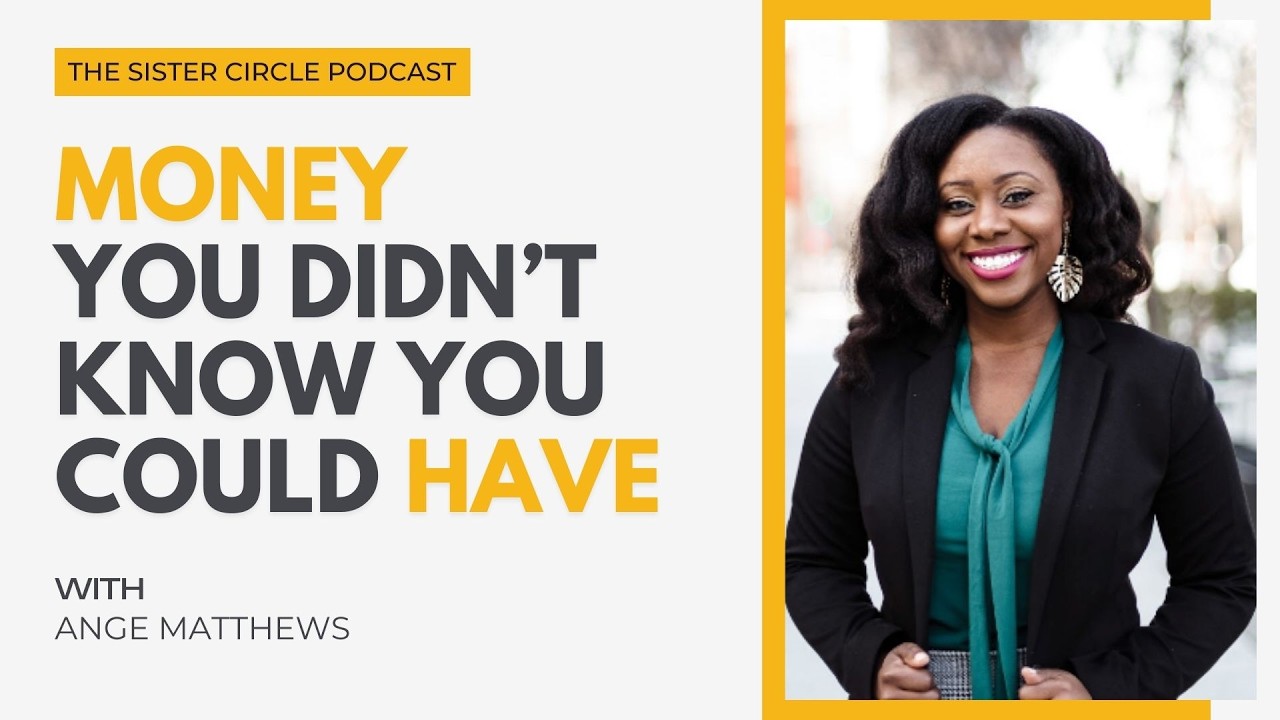
In this interview-style YouTube episode, host Chrystal Hurst welcomes personal‑finance strategist Ange Matthews, the founder of The Happy Investor Method. The conversation explores how Ange, earning a $40,000 salary in her twenties, eliminated six‑figure debt in under ten years and built a seven‑figure passive‑wealth portfolio before age 40. Ange attributes her success to a faith‑driven sense of purpose, a belief that "if it can happen for them, it can happen for me," and a relentless pursuit of financial knowledge. She describes practical tactics—cutting unnecessary expenses, using fractional‑share investing, redirecting credit‑card interest into higher‑return assets, and treating money as a tool for generational restoration. The dialogue also covers the distinction between being "rich" (having discretionary cash) and being "wealthy" (sustainable, generational assets), the importance of active stewardship versus over‑delegation to advisors, and how she transformed her personal journey into an educational business (bootcamps, VIP programs, Super Stock Syndicate, and free resources like "150 Things You Can Invest In"). Throughout, Ange emphasizes the role of faith and stewardship, urging listeners to view money as a means to serve others from a place of overflow rather than scarcity. The episode ends with calls to action to follow Ange’s social channels, access her free resources, and consider her coaching programs.
Chapters
Okay, y'all, you know how I do it. I like to show up with people that I think you need to know about or that I'm getting to know about, or information that would be useful for your life so that we can all learn and grow. And I was in the neck of the woods looking for money people. And I know that you probably have heard of some of the money people that we've all heard of. Many of us have heard of Suze Orman or we've heard of Tiffany the Budgetnista. Some of y'all may know my friend Terri Ijeoma, and they've been on the podcast before. But because in 2026 we're thinking about and talking about money, abundance, overflow, expanding your mindset, my brain has been looking for, and our team has been looking for other people who can speak into this space. And I, by referral of my friend Terri, because meeting new friends by referral is the way you should live your whole life, got a chance to be introduced to Miss Ange Matthews. And I'm so glad to have her on the podcast today. And she told me I could call her Ange. It's Angela, but she said Ange is okay. So I want you to welcome Ms. Ange Matthews to the podcast. Welcome, friend. I'm glad to meet you.
Thank you so much for having me. I'm super excited to be here.
Listen, do you ever feel like you run into someone on social media and they're like doing their whole thing? It's clear, like your website is pristine. Your social media is popping. You've obviously got your business, your brand, and just your purpose in alignment with what you want to do and how you want to serve other people. And when I, when, when I ran, when I ran into your social and then started checking out your website, it's like, there are whole people doing whole things in this world I know nothing about. And then you realize that you're only really separated by a few degrees of separation. And it's like, why have I not ever heard of her? I don't know if that ever happens to you. It happens to me all the time.
It happens all the time. And I will say that I've only started becoming more social and it's crazy because a lot of rooms that I step in, I am the wealthiest person in the room, but but you would never know. And I remember growing up thinking, why do they always say rich people don't— don't— like, you wouldn't know who they are. And now that I've got quite a bit of wealth, it really takes a lot of intentionality to step forward and actually say, like, hey, I'm here and you can ask me questions, and I want to kind of show you the way. But before, I was just so busy accumulating and supporting people in my community to get to their goals that Showing up on social was not the actual priority because I was so in the game playing the game. I thought, well, if I have to stop the game and get out the game to show people and to talk about the game, well, I'm missing opportunities. And so it's kind of now I've been working on it for coming out, but in the investor space I'm pretty well known. But for like regular folks, I can still go to the supermarket and not get spotted. I'm very actually happy about that.
I was about to say, that sounds like the way to live to me. I mean, I I feel very unknown because I'm in a family of people who are very well known. And sometimes I'll go out with my sister Priscilla and literally Priscilla, partially because not only of her speaking ministry and all that, but also because of the movies and stuff, she really can't go anywhere. And she stops for people, everybody who comes up to take a picture, she'll say, well, if we take a picture, can I trade you for a prayer? And I'm like, you praying with all these people? I'm like, I'm so glad I can just walk through the airport because truth be told, I don't like wearing makeup and I like being comfortable and I really don't want anybody to stop me anywhere and ask for a picture. So it sounds to me like, yeah, being able to have what you want to have in life and do what you're called to do and not have to be stopped everywhere is kind of the ticket actually. So why social then if you've been able to do it? And you've been able to do it without that. Why are you getting social now?
God's calling me to be more seen. And so before, it, it was okay, you know. God was like, I'll work with you. You get— you're an introvert, you sometimes get a little bit anxious. And I'm the type where when I do get recognized, because sometimes it happens in the airport, I see people looking at me and they want to say something, and I give them this look back like, it's not, it's not who you think it is. There's a look you can give a person, and I also—
it's not that you're giving them a bad look, it's just that you're not giving them a welcoming, like, hi. You're not giving them that.
Yeah, it's like, no. And so, and then there's someone who sometimes they come, but what I found is that God is like, no, you still get to be seen, and I want you to be seen. And before I got it, you know, he worked with me on being an introvert, he worked with me on my anxiety with it, and now whether I want to be seen or not. Like, it's— the assignment is here, and a part of it is being seen.
Yeah.
And so even as I say that and I feel my, my temperature rising, I feel my nervous system, you know, really settling into this, like, no, we here.
It's—
we're here. Like, I can't do it. The ball is in— the ball is in play. It's in motion. It's happening whether I like it or not. Um, the message is greater than me.
And why do you think that God would be leading you to be seen? What's, what's the end goal, um, for, for others?
I think it's to show what's possible. And so for me, I grew up, um, I can't even blame my parents for a lot of my money mistakes. You know, I didn't grow up with a ton of wealth, but it's not like I necessarily did better when I was in my 20s. And so I was making $40,000 a year and I had six figures in debt, and I Most people would, you know, work their entire lives and never pay that off, right? A lot of people have gotten very comfortable with dying with student loans and they say all this stuff. But for me, I knew that I wasn't, you know, I didn't try to become debt-free, but I just knew like, there's no way. Like, how, if I see myself as a multimillionaire living the best life ever, it's not congruent with having 6 figures of debt and making $40K a year. And so, long story short, what I did was I paid it off in in under 10 years. And I went from having 5 figures of wealth to making 6 figures, and I turned that 6-figure income into 7 figures of passive wealth. And I did it in one lifetime, and I did it before the age of 40, and I started in my 20s. And so it's not like I was born into this. It's not as if I worked an entire lifetime to get it, but because I was able to still have a balance of family. I still did it on my terms, and I'm still here, and I'm happy, and I'm healthy. I'm literally a happy investor, which is the whole name of the company, The Happy Investor Method. And I think God is just like, you know, there's a lot of people who— they're not understanding this right. And you here living your best life in your really nice Atlanta suburb with your husband and two kids, no dog, but fish in a pond. And he's like, you really gonna sit here and not tell people about the goodness of the way? And so I think that is actually why. I think that's why.
If you're like me, your to-do list is a million miles long. There's just always more to do than there is day. So I love checking things off, but let me tell you something, that's a problem. If you check off things on your to-do list without checking on you, you are not living your life well. Listen, you've got to pay attention to your life. So I have created a tool that's a planner and a personal coach in one place to help you do just that. Let me introduce you to the Full Circle Planner. I meet you in these pages every week, the beginning and the end of every month and every quarter, at the beginning and the end of the year to help you make sure that you're checking on you while you're checking things off your list. Because what good is your life if you do all the things, but you're not good. I want you to live a life you love. I want you to own your life, and I want you to pay attention to the life you've been given to live. How can you do that? Check it in on you, and these pages will help. Get your Full Circle Planner today. Well, you mentioned something. You said passively as you were talking, you said, how are you gonna see yourself as a multimillionaire and have the $40,000 income and the 6-figure debt as an incongruency. I think that's an important point because a lot of people wouldn't say that. They would be in that situation and instead say, I don't have any knowledge or any belief that something different is possible. So that's why they say, I'm comfortable living with this debt. I'll be paying on this debt my whole life because they've accepted a future reality where you didn't. So where do you think that belief of possibility where you came from?
Well, I think God made us all with the same things, and God loves us all the same way. And sometimes when you see someone else with more, you— there might be this thought that, does God love them more than me? Because if God loved me just as much as he loved, you know, someone with a lot of money, well, why am I here in this position? And I think for me, the core premise that I hold on to and held on to was, if it can happen to them, It can happen to me. And also, why not me? The only difference that we have is maybe knowledge. Like, God loves all of us. God is setting us all up for a win. The difference is the knowledge and how we're actually applying that knowledge and walking. And so for me, even though everyone around me— I grew up in a household conversation of debt. My sister, she's this like really, really smart one, like My parents said, "Go to school. My sister's going to be the doctor and I'm going to be the lawyer." I don't know where this money was coming from, but this is what they said. And my sister did really great. And she, you know, got her PhD in neurobiology. She's a neuroscientist. And by the time it was for me to go to school, there wasn't really any more money left because she decided to go to the best of the best. She went to Columbia and went and had a great— a grand old time. So there really wasn't much left for Ange. And I remember thinking, I still have this desire to be wealthy. And God doesn't give you a desire unless there was an actual way to meet it. And so that's when I would just start going to the banks, and I would go in the garbage can of the bank, and I would look at people's receipts. Because all I ever had experience of in an account was maybe $1,000, $2,000 max. Maybe if it was post-tax time and someone got a refund. I needed to see what was possible. And so that's when I started seeing, okay, people really have like $30,000 in a bank account. Okay, I'm gonna, I'm gonna put that in my head for later. Uh, I talked to a friend and she'd say, yeah, someone asked me for a loan for $75,000. And I'm like, what? You could just have $75,000 to give to someone, which means that you actually have more money because you will not give everything you have. And so I would simply just look at things and say, if it can happen for them, it can happen for me too. And that's how I kept on operating. I just— the only difference was knowledge. And so I went and I sought the knowledge.
That's so great. Um, I love this. I love the visual of you in the trash cans at the bank. I love that because there's a guy, and I can't think of his name right now, but he shows up on my Instagram feed all the time, and he, and he asks people, um, you know, like, how did you earn your wealth? And he says, like, I'm running an educational channel on YouTube, and he puts I don't know if you know who I'm talking about, but he just walks up to people with a mic and he's like, and he's asking the question we all want to know, like, how did you make your money? How did you get here? And sometimes it's very clear, like they had a leg up or they had family money and somebody could give them the money. But a lot of times it's a story of like the guy that runs Cane's and he was just like, he had a project in school and it was about making chicken, chicken fries and a couple of drinks. And his professor said, that'll never work because of course McDonald's and Burger They have all of these different offerings. He said, but I really just thought, I think this is going to work. And he literally, from the bootstraps up, had to save the money to make the investment to start the thing, like from the bottom. And so anyway, he interviews all these people and you get to see that what he's doing is saying, let me tell you what's possible. Because if you don't see that somebody was able to create something out of not a great start or didn't come from family money or had to figure it out the hard way, then you know it's possible. And sometimes it's just that simple asking for receipts. Sometimes you dig in the trash can of a bank. Sometimes you just ask people, which I'm sure that you do. You seem to have that kind of personality where you're like, how did you get here? So I'm curious, how did you get there? You are working, making $40,000. You have all this debt. How did you make your way out of that debt in 10 years? Did you live at home? How were you able to rake away all the extra money to put yourself in the position to then make other decisions that would yield passive income?
Well, for one, I made a decision that I am not going to be paying back all that money with my hard-earned work, because with the debt, a lot of it was also interest. And so there is— I'll take my fair share. Ang thought that a credit card was created for her to go backpacking in Europe. I get it, you know, probably not the best interpretation of a credit card. However, That's on me. But also so much of it was interest. And so I started thinking, how can I be smarter about this? Am I going to save my way into paying this back or am I going to also leverage interest in another way? And that's when I started thinking about investing. And when I started investing, I simply went to the internet and searched, how do you become rich? And that's what it said. It said entrepreneurship and investing. This is the quickest way to become self-made and actually keep your money because I was clear that I wanted this money to last for generations. You know, I'm also really clear that it stops with me. You know, a lot of people talk about generational curses and wealth, but my family actually came from wealth in the West Indies, but it was taken away from them for multiple reasons. And I'm also clear I'm here to restore God's promise to them.
So hold on, pause, pause, pause. Hold on. How did it become clear to you that you were a key to the restoration process for your family? How did that become revealed to you?
I was about 6 years old, and, um, I thought a little bit differently, but I remember specifically asking my mom to go get money for, for something, a toy or something, Cabbage Patch, something that was there. And she said No. Do you think money grows on trees? And I said, yeah, it's made out of paper. Of course it does. And I just knew from then, like, I just always thought a little bit differently. I had this strong sense of entitlement of, like, why not? Why not more? Why can't I— why can't we have a butler like on The Fresh Prince of Bel-Air? Like, Black folk with butlers. I don't understand why this is an anomaly. Like, you get a butler, I should get a butler. And so in my head, I just, I just didn't see anything wrong with the desire to want more. And everyone around me, or I don't want to say everyone, but a lot of people around me just didn't feel that, that way.
And so that was kind of a clue to me that you were made different, you had a little something extra.
And in the beginning, that looked a lot different. In the beginning, I was totally the kid that my mom would have to call her prayer sisters and they would have to pray for me. I was totally that kid that I did not go to school because I didn't understand what the purpose of it was because I didn't understand why I shouldn't know about, like, the trails in Oklahoma. I just didn't understand. It just did not make sense to me. And so it was a little rough growing up for me because it's hard to be the person that thinks differently, the one that's going counterculture, especially when you don't have the agency to speak for yourself and you grew up in a culture where kids are meant to be seen and not heard. And so for a lot of it, it was kind of a lot of people didn't see me as the one. Like now my family is like, yo, that's Ann. She's getting awards, she's speaking, she's doing all these things. She has like a multimillion dollar company, all this stuff. But that's like Ann Janelle. The day ones, they were like, who'da thunk? Like, prayer words.
It sounds like you were a rule breaker. You were a unique thinker. It had to make sense to you or else why waste your time? And that means when you double into something, you really believe in it and make sense to it and you get all in about it.
Mm-hmm. Yes. And so, and it's funny because there's so many people, you know, in the Bible where this, this messaging tracks, right? You've got Joseph, you've got, you've got all these parables. And then you just realize that one day this is also your storyline. And so for me, I started investing. While paying off debt. And the money started making money faster than I could spend it. And the money started making money faster than what was owed. And so an example would be I'd have this interest rate of about— it's funny, I really wasn't that great at math growing up, but I'm actually really great at money. And so I would be making about 15% on my investment account in the beginning, and the interest on the credit card was like 24%. And I thought, okay, I still got to go a little bit more. And then the interest on the investment account became 30%, and then it became 50%, and then it became like 110%. And all of this— I'm a long-term investor, y'all, and that doesn't necessarily mean I'm going to make the money in like 10 or 20 years. But what that means is that I am— I want to build something that lasts, and I'm okay with taking time for the money to grow, for it to compound. It has to cook, you know. I talk about it like a cake. Let it bake. The same thing with your money, you have to let it bake. And so as I was out there, you know, running around, um, I was letting my money bake, I was letting it cook. I was invested in investments. At the time it was stock because there was no credit check involved, there were no minimums involved, and I would— I went straight to stock. I have friends that did real estate, but I didn't even have enough for a down payment. Like, I was still living in the basement in like our family home in Queens. And so that's what I did, and I actually forgot about it. I did so much wrong in the beginning in my 20s. I invested, it worked, I took the money out and spent it on like a vacation because we won, we won, and we should reward ourselves. Yes. And you know, if past— if future Ange could go back to past Ange, I would say, hold up now, you, you celebrating a little too much. Like, go, go get a nice meal or something, but why are you going to do the most, right? And so I was really just trying to live that soft life a little too early. And that's when I learned, okay, well, the memories are here of this wonderful trip, but my friends were all nurses and professionals, and I was the broke one of my friends. And they out here, you know, they still have that money coming back. And I went and I spent this money on something that's not here right now. And I have the investments in the account, and this money is still here right now growing. And that was a huge mindset shift for me. And once I realized that, okay, experiences are great, but I have had a really great time, I have thousands of photos in my phone, but why don't I have thousands of dollars in my accounts? And once I made that shift, everything extra I had went straight to investments, and that's what really catapulted me.
That's great. That's great. I think, you know, there's that, and you see it over and over again. It doesn't matter if when I talk to Tiffany, the Budgetnista, or when you listen to Dave Ramsey, you know, whoever you listen to with money, it's very clear that the stories that we don't think we can work our way out of are the chapters that we think will never end, whether we're in debt or we just don't, you know, we don't have the disposable income that we'd like, or maybe, you know, the idea of paying off a mortgage early is just outside of your purview. That there's always something that can be done because there's always somebody that can do it. They figure out how to save or spend more, spend less money, or like you said, to invest and make more money. But those are the two ways out. And people, once you get committed to what you're going to do to make a difference, it's possible. And I love hearing more about that. Now, you currently do a whole lot. I mean, the Happy Investor Method you mentioned, and I mean, your website is beautiful. HappyInvestorCourses.com is where I see, and you've got all kinds of things. Boot camps and, um, strategies, signature strategies and VIPs and all these things. Um, at what point did this journey start to turn from, I've been doing this and it's helped me and now I want to help you?
So I will say I am not an overnight success in the sense that I had one trade go right and now I created a whole company.
Um, because are you implying there that that's sometimes what happens?
Oh, it's so what happens, y'all. It's so what happens. And I do have to throw shade on it because sometimes what works for someone might not work for you. And you have to really— when you have a teacher or mentor, it's really valuable to follow and be around someone who's been through some stuff. And I get it when you're starting out, hearing someone say like, I've made so much money doing this and I made it in like one month, it's gonna sound amazing for you. But you want to build it so it can last and build it so it can stay. And a lot of people, they've really only built wealth in a market where it's been going great the whole time, right? But when, when I've started investing, like, I got slobbered, like, clobbered by the recession, the first OG recession, like the one where people were out of their homes, like literally financial ruin. 2008? Yep, 2008. And I almost lost all my money, all my hard-earned money was gone. So when people say, oh, but what if this happens and I invest and I lose all my money? I'm like, yeah, I've been there, friend. It sucks. And you know, God loves a good comeback story. And so because I stayed in the game, that was the first time I was able to make like $10,000 and $20,000 of investments because I stayed. And so I say that to say For me, when I started investing, I started a long time ago, and it wasn't until maybe about 8 years of investing that I realized I did it a little differently than a lot of people. So I studied the Warren Buffetts, I studied, you know, all the people who were multi-millionaires and billionaires. And what I realized was, because I was able to look at things differently, the same way that I had my whole life, I was able to get results a lot faster. And when I would tell people, you know, oh, they're on social media— and this was, you know, 15 years ago— they're on social media, and I'd say, you should really connect with those you love. Stop scrolling and watching everybody else's life. Go live your life. A whole word. And then they would talk back and say, oh, but this and this, and that person's doing this and this and this. And I say, you know what, I actually own Facebook. I'm good. You know, you're making me money, you're happy, why should I be so stressed? Don't you ever have that— that moment when you're talking to someone and you want it so bad for them, and then there's a point in their life where they're just not there to like really receive the message, and then you fall back and you're like, You know what though, I'm actually good whether you do this or not. I'm okay. Of course I want you to, but you're going to learn. And that's when you respect God's process. And so same thing started happening there, and people would see my step back. I'm like, well, that's a real big step back though. And I'm like, well, I don't really need this. I'm, I'm, I'm gonna get paid regardless. So it wasn't until I actually, um, I used to be a tech influencer. And I would go on these shows. And then one day I said, you know, we got to stop consuming in our community. We need to start owning. And people would say, well, what does ownership mean? And it means literally being an investor, being part owner in all these companies that we spend so much money on. You know, I was just having a VIP call with one of my clients right before this interview. And I said, you want to invest in things that are so aligned to who you are that you can't see yourself not existing the same way. And she said, I get that, but I'm still having a hard time. And I said, all right, pull up the credit card statement. Let's see who all we've been giving money to. And then I want you to see who's publicly traded. And then I need you to start owning some of that and bringing some balance to this relationship. So, when I started talking like that, you know, in the media, when I started talking like that, even in the classes I was teaching, people started listening. And that's when they said, "Well, can you show me how to do this?" And I thought, "But don't you have an advisor to show you this?" And that's when I didn't know that advisors don't show you how to make money.
They just scam you. No, they do it for— give me your money. I will do it for you, which I think is just such a— I mean, we all have to decide what we're not going to do. Like, you know, I'm an accountant, passed the CPA exam. I've done my taxes all these years. It's not that I can't do it. At a certain point, I decide that may not be the best use of my time. So let me let someone help me, right? So there is that. But there's a difference between delegating something to someone so your time is preserved and you giving something to someone because you're like, I don't want to think about it. You figure it out for me. Money. And there can be over-delegation, which I think a lot of people do with their money when it comes to investing. I don't want to think about it. What— I'm at my company, we have a 401 or a 503, and I'm just going to put it in whatever they tell me to put it in because I don't really want to think about it. And there's so much that can be said about being involved and engaged, which I'm sure is a part of the education that you promote, is be involved and engaged, know what you have to do in order to make wealth.
Absolutely. No one is going to care more about your money than Period. And as such, you need to be an active player in that. It doesn't necessarily mean— like, I talk about in terms of having a team, right? A lot of my clients, some of them have advisors, some of them never have had an advisor, some of them have a tax person. You need a team set up so that you could win. If you're working so hard to make this money, if you're going through all the drama at work, if you're lending out to your family, if you're doing all these things you got to start taking it more serious. It wants to be taken more serious, right? And so it's a part of that. Have a team and get the clarity, because a lot of us, you know, I love having conversations with people where they say, you know, I don't want to work for 10 more years. And then I get into the numbers and I say, well, actually, you've been working hard and you've been saving. If we just invest this in like this kind of way, you could actually be done in like 4 or 5 years. And I'm so thankful to have that conversation because what if I didn't meet them 5 years— until 5 years from now? They could have stopped working 5 whole early years.
Yep.
That's, that's real. Their family could have had more time with them. They could have probably written a book that they wanted to write. All these things could have happened. So it's really important to understand because it's not just you on the line, it's so much more is on the line than you realize.
So you're doing your thing your own way. What was the inflection point that made you see yourself as an educator? I know that you mentioned before started our interview that you had a stint at Goldman Sachs. You mentioned being a tech influencer. Like, what was the thing that made you go, oh, flip the switch? Uh, I'm going to start doing something different.
Well, if enough people ask you for something, you got to start charging for it.
Right.
And I actually love that we're in this space where we can invest and pay our way to become better. Because if I— if honestly, I have so many coaches and mentors, and I've had it, but honestly, I get— I actually want to pay the person who I'm learning from because it buys me time on their calendar, right? It's simply like a casual conversation, and I have questions. And, um, now, now you're taking away from the person's family time, you're taking away from their business time, all this stuff. So I actually started hosting classes and programs because I said, all right, not everybody— I don't have time for everyone to take me out to lunch and to pick my brain and all this stuff. So what y'all gonna do is you're gonna get in this, you know, we— for 2 weeks we're gonna get together and we're gonna bang this out. And you're gonna pay like $500 and they're gonna pay $500, and I'm gonna dedicate 2 whole weeks. I'm not gonna work my other company, I'm not gonna do any other side hustles. Y'all have me for 2 whole weeks. And they did it and it worked out. And I was so shocked. I was like, wait, people will pay $500 for this? But the thing is, people had old 401s thousands of dollars. People were paying fees well over $500. People were paying so much money for inaction, and the cost of not knowing was so much that honestly, it was— they were like, Ange, I would have paid thousands for this. And I'm like, I didn't know you were gonna pay. So this is how it started happening. And people would then come and say, can you do this for me? And I said, well, no, that's an advisor, but I can do this with you. And that's what it was like, okay, no, I'm an, I'm an educator and I also have a degree in philosophy. So I'm, I'm actually trained in breaking down complex topics.
Okay. So let's talk about this. I know that there are varying people and one, the first person's going to say, okay, I hear you. I understand you. I am step one, step one. Like I'm completely overwhelmed by how much eggs are costing me. And I am sitting down every month and trying to figure out just how not to be in the red. You're talking about investing. My brain can't even get there. So, if that person is talking to you, intrigued by what you're saying, grateful to hear your voice because you do a great job, even in this conversation, just making things simple to understand, what would you say to that generic person? And I know it can be more specific and complicated than that, but what would you say to that person? Where do I start?
I love that person because I was that person. And, um, and I don't want someone to hear this and think that that person can— is making X amount of money. I will say that having worked with people who make like 5 figures all the way to 7 and 8 figures, that is a very common, um, demographic regardless of what you make. Paycheck to paycheck is still paycheck to paycheck whether you're making $150,000 paycheck to paycheck or you making $50,000 paycheck to paycheck. It so real. And so what I want to say first is like, take a breath. It's going to be okay, right? And sometimes when your back is up against a hard place, it feels like there aren't many options. But what I will say is you got here because of the decisions you made in the past, right? The past— your reality right now is a direct correlation to your past. If we want to change your future we're going to have to start doing things a little different to get a different outcome for the future. Now, I know that right now it might seem as if it's really hard to even afford the basic necessities, and if that's the case, you need to go figure out how to make more money, stop spending as much money. But sometimes for some of us, we're, we're like really nickel and diming it, and even then there is still more money to be saved. Right? Even then, oh, eggs are so much money. Okay, well, maybe instead of getting the brown eggs— because, you know, we be bougie and broke— get some, get some, some white eggs. It's true though, you know, it's true, it's true. Um, even though we, we think we're getting gifts for the kids, start connecting with them emotionally and saving that money. Go through the statement Cut off the subscriptions. You are numbing yourself with all the entertainment subscriptions. Focus on making money instead of watching other people make money, right? And so that's kind of what you have to do. And then I need you to just invest. You could buy a partial share. This is what was different when I started. I would have to save every single month to get a whole share, a whole share of Amazon. Yeah, and that joint then was like thousands of dollars. I'll be saving for months to get one share. Now you can get a quarter of a share, a little baby share, a little slice of the cake if you don't want to pay for the whole cake. And what I want you to do is get a slice of the cake. I want you to feel what it's like for your money to grow without you having to work for it. So get a slice of the cake, run through the credit card statement. Maybe it's Netflix. Cut the Netflix subscription, buy Netflix stock. Yeah, you might not be able to get a whole share buy a portion of it, and then start your money making money, right? This is a habit that you're going to start building on. If you don't have a lot, everyone can still do it. I'm one of those people that says everyone can do it. Don't get your nails done, push it out a week, invest the money. Don't get your hair done, push it out a week. Yeah, you might not look the way you want to, you're still going to be beautiful and your money's going to be making money.
So good.
I hope that answers the question.
It totally answers the question and super, super practical. Okay, let's go to the other end of the spectrum. You started out on our call talking about being wealthy. Define wealth for me in, in numbers, not in health and wealth and life and my kids. We know there's health in your wealth and all of that, and you can talk about that if you want to. But when you think I'm dealing with a wealthy person, where in your mind does wealth start?
So I think there's a difference between rich and wealthy. I'll start there. Um, some of my clients aren't necessarily wealthy because I'm created to help them build wealth, so they may never ascribe to that, oh, I'm wealthy. They may say I'm rich, and rich to me, I wouldn't say numbers-wise is a specific anything because depending on where you live, like, who you're supporting, who you support in— I mean, really, it's like the equivalent of like $30,000 to $50,000. But what I will say what I consider rich to be is like, you can afford most of what you desire. And I'm not saying you're gonna, you know, be all ballerific and go down Rodeo Drive every single day. For the most part, your needs are fine. For the most part, you know, like $2,000 isn't going to make or break the quality of your life. Like, if you lose it, it's like, ah, that sucks, because we all hate losing money., but you know, like, yeah, that sucked. And you gonna keep on going. Yeah. And so to me, that actually means that you're at a place where it's time for you to start having conversations around wealth. Um, also this kind of looks like where someone drops you a message and like, hey, we're gonna go on XYZ trip in like 6 months, you down? And they're like, yeah, it's like $7,000 or $5,000. And you're like, yeah, I'm good for it. If you could say that and not even bat an eye Okay, friend, you're making more than most people in this country, right?
Right.
So that's my definition. But that's also probably when you should start, start doing it. When your purchases start— when your purchases start creeping into the high hundreds and you, you just swipe.
The purse, the shoes, the bundles.
The bundles. The bundles.
Let me tell you something about these bundles. I am amazed. I mean, amazed. And we pay for what we value, right? I don't like to shop. I do— I get dressed because I have to, and I don't like doing my hair. So I have been having conversations about, am I going to do something so that I don't have to worry about doing my hair? When I realized how much these bundles cost, and then I look around and realize how many people have multiple bundles on their head, I'm like We do not have a money— we, we do not have a money problem. We have a value problem.
Exactly. And we get to see and appreciate that we have the most beautiful, highest value regardless of what we look like.
Correct.
Like, I want you to be the wealthiest version of yourself. I want you to feel it, right? I want you to step into a room and know, like, ain't nothing going to stop me from being the wealthiest person in the room, right? And so there is a way to embrace that and still, you know, have the same clothes that you've had for years on. Yeah, it's just priorities. And so you are the priority. I think we just have to shift the way you see yourself as a priority.
I love how you define wealth and how the impact that numbers have on you. It's like, did you not even think about it? Do you have it but you have to think about it? Or am I really, really penny-pinching and thinking about every little thing, because it's really about how we feel about what we have and how we can invest in what we have as well. What is the first step for somebody? You should have so many things on your website. If somebody comes to your website and you've got the courses, you've got the VIP, and let's say we're talking to the moderate middle, meaning I have a job, I make decent money, I'm investing in my 401, I'm not really actively participating in growing wealth. I'm just doing the flip of the switch thing. Like if I'm going to be a decent person, I should be retiring, you know, investing in my 401, so I'm doing that. I have an emergency fund. I'm moderately comfortable, but I'm not actively growing my money. So if I come to thehappyinvestormethod.com, where would I start with all the options that you have from the free offerings to the work with us?
So from the free offerings, I always tell folks, go get your free offering because we rotate them. And I think right now our best free offering is 150 Things You Can Invest In. So I do think you match investments to personalities, and what you don't know, you don't know. So we've— we have assets in hotels. I just recently invested in a Puerto Rico villa. Um, I'm also about to invest in one of the first male birth controls. Like, crazy. And so there's so many things that you can invest in that you don't even realize you can invest in it. Like, I'm a producer in The Wiz.. And so in addition to stocks, and so I love saying that, just giving people the idea like, hey, this is what's possible, because it's about getting excited about it, right? When people hear that I invested in The Wiz because I wanted my daughter to see a Black Dorothy, they love that. And it's also been the best performing investment that I had from 2024, from last year. So this is amazing, like, why not do it? It's a win-win. So go get the freebie. The freebies rotate, but that's a really good freebie, I will say, and it keeps us in contact. And then in terms of work with us, you— there's a lot of forms and stuff on our site, but you can simply just see which one works best for you, and you can message us if you don't know. We have a Super Stock Syndicate, and that's where I just send you companies every month that I think are like poised for growth. This is what I wish I had when I started. When I'd ask people— I once met Mark Cuban, and I said, what's a really good investment right now? He said, I'm not going to tell you, and even if I did, I wouldn't tell you. And I thought that was so mean. And I'm the person where it's like, yo, if I have a hookup, why would I not hook you up? Okay, even if you wanted me to pay for you, I will pay you for the hookup. And he just was so as a matter of fact, this was pre-woke Mark Cuban. I will say that he has changed a lot, but this was when Mark was Mark in his younger days. And so all that to say, I created this resource where if someone isn't a VIP client or they're not in our mastermind, they should still have the same access. And so, we created the Super Stock Syndicate. So, I think those are really beautiful ways to put a pinky toe in the water and see what's going on.
I love it. I love it. Well, I know y'all have enjoyed getting to know Ange. I have too. And I hope that you're hearing the importance of starting where you are, doing what you can, and believing in what's possible. And if you don't know what's possible, connect with people who do. So, you should follow her on social. We'll have all the links in the show notes for today, including a link to the freebie that she mentioned. It was 150 Things to Invest In. So if you need ideas besides your 401, there are ideas for sure. Before we wrap up, just one more quick question. And you've talked a lot about faith and the importance of it. And you and I both know, both probably from just upbringing and going to church, that sometimes church people, faith people are kind of like, well, you know, I just don't want to be too focused on the money. What would you say, uh, to the person who needs to understand the value of focus on money, even from a faith-based stewardship perspective?
I will say one is I love the way that God shows his love for me through money. There are times when not even the people who love me the most could show up for me because money was the answer. And so whether that was me taking care of my dad when he was terminally ill, all the way through the time that he passed a lot of people prayed for us, and I know God's will was God's will. But because I invested a few years before that, there was actual money there for me to advocate for his best healthcare, get him into the best hospitals and see the best doctors. And that was God. That was— that, that was like— I, I cannot tell you enough how, um, especially in this day and age I want us to give from a place of overflow, and God will definitely bless us and has blessed us. But he wants to bless you financially too. And if that is a desire in your heart, he will make it so as well. And there's a reason why he gives to us, because the blessings financially come from people, right? We are stewards of his wealth. I am able to give away like tens and tens of thousands of dollars every single year to nonprofits, to churches. And I do it because I know there are so many people who have money who don't. And I know that is one of the reasons why I'm wealthy is because God knows I am an excellent vessel to give money to. So if you're a Christian and you are an excellent vessel, get closer. Like, he wants to use so many of us because there are so many systems out there right now that aren't necessarily doing his work the way that it was envisioned, that our money can help. There's so many people who need to get poured into financially right now, and I do not want you to do it from a place of deficit. I want you to do it from a place of overflow. So there's that. I mean, there's a lot of biblical references, but what I will say is that if you're hearing this, it's not by chance. Um, the fact— the way that Chrystal and I even met is crazy. And so if you're hearing this and it's striking a chord with you Do more. It's probably your time. You're probably up. It's time for you to be seen. It's time for you to be seen with your— to have a closer relationship with your money.
Listen, so good. So good. Well, I'm so glad that we've met. I'm so glad that we've had our first explorative conversation. This is the first. It won't be the last. Um, it has been a pleasure having you here, and I'm so glad to introduce you to the people that connect with me and, um, uh, Again, y'all, happyinvestormethod.com is the website for all the information. You can connect further with Ange there. And thank you so much for being here, being transparent, honest, clear, direct, and full of love for everyone to, to walk in what God has for them without the lack, the lack of knowledge, the lack of understanding, and the lack of hope for what's possible.
Thank you for having me, and thank you for being as excellent leader in bringing this message to your tribe.










