Surviving Summer with Kids
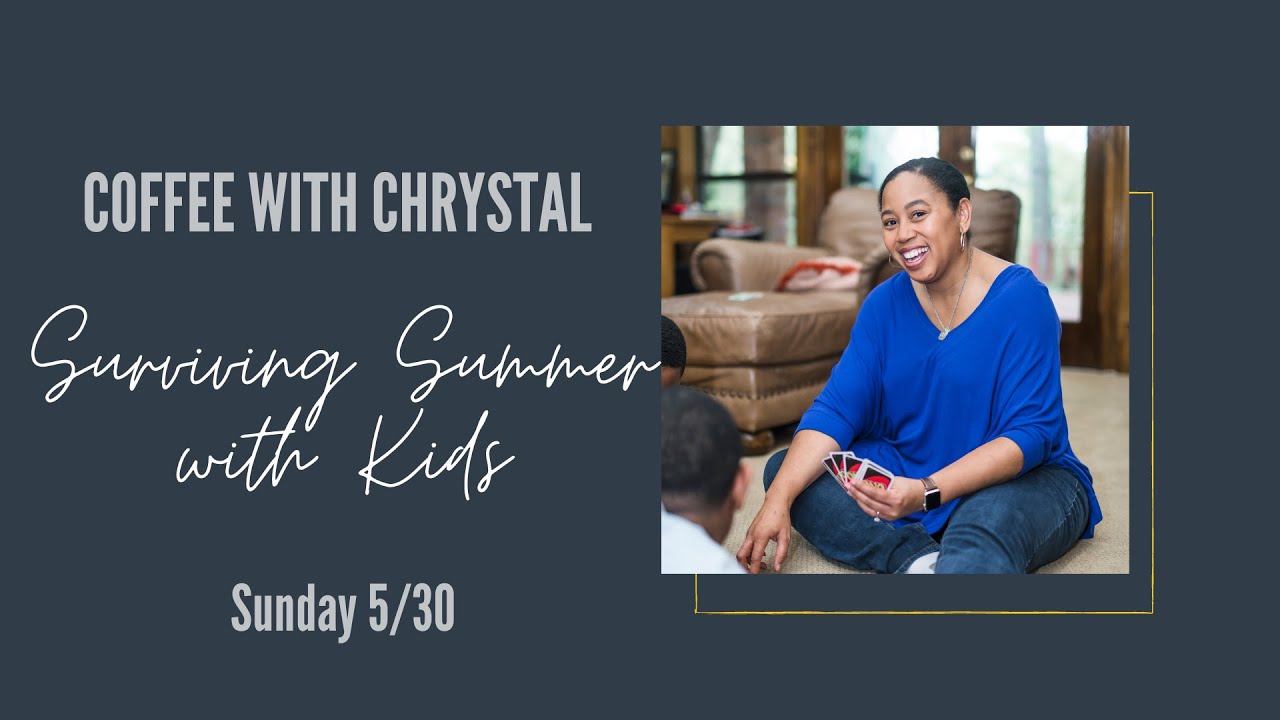
In this video Chrystal Hurst shares practical guidance for parents to navigate the two‑month summer season with children of varying ages. She introduces an age‑based framework—exposure for toddlers, experiences for elementary‑age kids, and engagement for teens—illustrating each stage with concrete examples (bubbles, swimming, volunteering). Hurst emphasizes the need for structured planning: daily rhythms, quiet time for parental sanity, weekly whiteboard lists, a three‑month wall calendar, and a printable "summer ideas" list available at chrystalevanshurst.com/summerideas. She offers low‑cost activity ideas (puzzles, reading, library visits, bike rides, flea markets) and mindset tips such as embracing boredom, using a "bored jar" to turn idle moments into choices, and keeping expectations simple. Throughout, she stresses balancing parental involvement with letting kids become independent, using summer as an opportunity for memory‑making without overspending. The video concludes with calls to action for viewers to download the idea list, join her live inner‑circle sessions, and share their own summer successes.
Chapters
Hi, my name is Chrystal Hurst, and if you're just running into me, well, welcome. I am all about helping you to live your life well. So before I go any further, let me just ask you in advance, if you enjoy the content that I'm sharing with you today, make sure that you're subscribed to my YouTube channel or that you've liked my Facebook because I'm sending the videos in both places. Also, if you are enjoying what you see here, be sure and share it because sometimes your share is the way that so somebody else that you know will find out about this video that I hope will help. Today I'm going to be talking about surviving summers with your kids. Now I have 5 children and my oldest is 30 years old almost at the time of this video, which means I've been through a lot of summers with kids and I know a thing or two about getting through them. Now I'm not going to give you all the things that I think you should do with all the kids at all the ages and all the seasons of your life. I actually have a tool for you and you can grab that. Just go to chrystalevanshurst.com/summerideas to pick that up. I've put it there for you. I've refreshed it. It's so great. And it'll just take the guesswork out of how to find activities that will keep your kids busy and to keep you from losing your mind this summer. That's chrystalevanshurst.com/summerideas. But what I do want to talk to you about today is how to survive the summer, how to think about the summer, how to plan for your summer, and how to relax and enjoy your summer. It really is short. It's a couple of months, 2 and a half months of your whole year. And so whether you are home with your kids or whether you are working and trying to make sure your kids have a great summer during the time that you've got available, I want to make sure that you know how to think about it, plan for it, and then relax so that you can enjoy it. Now, I want you to understand that I really believe that summers can be great if you spend a bunch of money and send your kids to camp. That is an option, okay? I'm not mad about kids at camp. But what I will also say is that it's a great time to not spend all of your money that you need for their college education and to spend some time with them and invest in things that don't cost a huge amount of money but that will build great memories for your family. Let me talk to you first about how you should think about your summers with your kids. You probably have kids that are littles middles, or bigs. And by that, I mean the younger kids, the toddlers, you know, kindergarten or first grade, your middles who are going to be early elementary, maybe all the way up to beginning middle school, and your big kids, middle school age on into high school. And what you do with your kids during each of those seasons is totally different. When they're younger, you want to give them exposure. When they're in the middle ages, you want to give them experiences. And when they're older, you want them to be engaged. And the whole way you raise your kids, which is a much bigger conversation than what we can talk about today, the whole time you're raising your kids, really, this is how it works. You're really involved at holding their hand and showing them all the things when they're younger. You're involved in giving them experiences where you may be connected, but not all the way involved in pushing them or forcing them or leading them to every little thing. And then when they're older, you stand back and you say, how can they engage with their own life. Well, the summers are no different. Let me give you an example so that you know how to think about surviving the summers with your kids. When your kids are younger, you are the leader. Your children's activities are parent-led. So if you want them to have a good time with bubbles, you're going to get a canister or jar full of bubbles, or maybe you'll make some, and then you'll take them outside and you'll blow bubbles in the yard. And they're going to have so much fun running around and popping those bubbles and dancing around and enjoying that. When your children are in their middle years, we want to give them experiences, and they don't want to have you blow the bubbles for them, but they may want to make them. So the experience of your middle kids making bubbles is the way that we're going to take this bubble example and make it work for your middle kids. When your children are older, okay, you don't need to blow the bubbles anymore. Your older children need to blow them for your younger children, or your older children need to volunteer somewhere during the summer where there are children who would love for young people who have energy to serve, volunteer, and give the opportunity to younger children to have a good time. So Bubbles is a good example of what it looks like to expose your children to great activities, to give your children experiences, to let them get hands-on practice with certain things that in past seasons you've led, but now you want to let them lead. And then when they're older, it's, what can you do without me? Okay, let me give you another example. When my children were small, I would take them outside because during the summer you're just trying to survive. It's like, can I take them to the park and how long can they last here? In their middle years, I don't want to take them to the park necessarily and push them on the swing, but I want them to be outside. So what does that look like? That might look like them going outside and playing basketball with their friends in the neighborhood. I remember when I was a little girl, my parents and my grandparents, it was like, stay outside. Y'all, it was not child abuse and I was fine, but we drank from the water hose. We weren't coming in and out wasting that good air, okay? Okay, but the bottom line is they were still getting outside. When my children are older, I may not take them to the park, I may not make them stay outside, but I will encourage them to do something outside that's good for them. I literally have to tell one of my children, you have to go outside because there's vitamin D outside. Your body needs vitamin D. And outside for him may look like doing something that he enjoys, like training for a 5K, going for a run early in the mornings, meeting up with friends to play basketball, not in front of my house, but maybe at the gym where they all meet up. So it's the same thing. Live large. Let me give you another example. When the children were small, I wanted them to get wet. So I would give them a bucket full of soapy water with measuring cups that I would get from the dollar store, because I didn't really care if they lost the ones from the dollar store. I just wanted to, you know, have them not use the ones that I really loved. And so I would set them outside and they would be happy for hours. Playing with water in a bucket with a few bubbles, a dishwashing liquid that I, that I stirred up and created bubbles, and with measuring cups and just pouring it everywhere. They'd get soaking wet. Okay, my middle-aged kids don't want to play with bubbles in a bucket. They don't want to play with water and measuring cups, but they do want to go swimming. So maybe learning to swim is what that looks like in the experience season of life. And then when the kids are older, they may not even want to get wet unless there's a party with friends. So you want to know what we do for older kids? Do you want to throw a party? Do you want to have friends over? We need to be the fun house so that your friends come over here and have a good time. And so if I don't have a pool, okay, so then maybe I have a sprinkler outside, or maybe they're throwing water balloons. You figure out a way to take the same concept and engage the kids. So when they're older, I don't throw the party. I'm like, invite your friends, tell me what you need, I'm gonna buy y'all pizza, and then I'm gonna go and watch some Netflix while y'all have a good time. It's engagement. So it's the way that you think about the things that you maybe know how to do when they're younger, or maybe you feel like you know what to do with them when they're in the middle years, and you just say, how does this look different as my children grow? The summer is a great time for your littles to be exposed to new things, for your middles to have experiences with things as they gain independence, and then for your older children, for you to stand back and say, how can I support you in what you do? When they're little, it's parent-led and parent-driven. When they're in their middle years, it's parent-suggested. And when they're older, it's supported. You are weaning them off of you. So I want you to keep that in mind as we think about the summer. When your children are little, they've got to be with you. When your children are in the middle, that you want them to be near you. And when they're older, they simply need to be in reach so that as they need your support, you can lend it. The pressure, y'all— I'm trying to relieve the pressure. Sure, you can sign them up for all the things, but the best thing that you can do for your child during the summer is to look at the season that they're in and plan accordingly. Listen, if you look at your children, they will tell you what they love and what they want more exposure to. They will tell you what they want to experience, and they will tell you what they want to do without you. Trust me, it's just how it goes. Now, that said, there are some things that you as a parent are going to do that your children don't care about, but you know that it's good for them. Let me use puzzles as an example. When my children are little and I want to give them exposure, I would pull out my pots and pans and I would give them the lids. That is their first puzzle. Figure out which one of my lids goes on which one of my pots. I didn't spend any money, and that kept my 1.5-year-olds busy forever. When they're middle years, okay, they may hate me. I don't care. I'm gonna get them, uh, 100-piece, 300-piece, 500-piece puzzle. When they're older, family puzzle. I don't care if you want to disown me and our family. I don't care. You will love me for this later. And so we spend time with working on puzzles, but these are 1,000-piece puzzles. Reading is another example. Exposure— we go to the library, the librarian reads to them, I read them books before they take a nap. Middle years, you need to put in 30 minutes of reading a day. Older years, we're going to read some heavy-duty books together and discuss them. And I don't care if you don't want to do that with your mom. The summer is a great opportunity for us to read some great books together and then watch the movie. Bring your friends, pizza, popcorn, With teenagers, it's all about food, exposure, experience, and engagement. Keep that in mind. That is how you think about the summer. Now, how do you plan for the summer? Now, I wanna tell you when my children were small, when they were babies, I would have babies nap in the morning and then they would nap again in the afternoon. And when I lost that nap in the morning, I thought I was gonna lose my mind. So I had to start planning my morning and then my children would nap again in the afternoon. I was determined not to lose that afternoon nap. So afternoon nap when they were little became quiet time, and then quiet time never left my house. To this day, my teenagers know, even when my adult children come home, between 2 and 4, 1 to 3, 3 to 5, somewhere in there, we are all quiet. I had a friend who had 11 children. She had 3 bio children, and then she adopted a group of 8. And I went over to her home during the summer. And I said, why is your house so quiet? Is no one here? And she said, oh, everybody's here. But I learned a long time ago that quiet time, no matter what age, has to happen for mom to have her sanity. I have built, I have planned, I have structured my summer with my kids to make sure I keep my quiet time. If I give up my quiet time, that is because I have decided that there is something awesome that we should do together. But most of the time, my children know the house is quiet in the afternoon. So what does that mean? This is how I always structured, how I always planned for my summers with my children when I was home with them. In the mornings, we get up, they get to sleep a little bit later when they do that, because, you know, at 1 years old, they don't do that, but they get to sleep a little bit later. And so we eat breakfast together, we would have Bible together, we would, uh, start our day with chores together. They're going to do some light schoolwork together. You know those big thick books that you can get from Walmart? Uh, those work really well during the summer. Or if you're a homeschool mom like me who never finishes what you're supposed to finish by Memorial Day, then the summer is the time. Then we finish all the things that we didn't finish during the school year. Whatever. I've graduated two homeschool students. They will be all right. That said, we spend some time in the morning on the days we're home working on schoolwork, like an hour 90 minutes. I'm not that much of a mean mom. And then they've got some free time to do some activities that they would like to do. Uh, maybe we get out and go to the grocery store. Maybe we take a trip to Target. Maybe we go to the park. Maybe we go swimming, but the children are motivated to do something really simple because they've done what they have to do first. Then we come back for lunchtime or we eat lunch out. And then in the afternoon, you have time to do all the independent things if you're old enough. If you're in the middle, you have time to do some things on your own if you're old enough. And if you're younger, get in your bed and be quiet. Play with your toys, play with a sibling, listen to a book on tape, do a puzzle, whatever. Play with Legos, play with your dolls, talk to yourself. I don't care, just leave me alone. Now that was a home day, but we planned outings to do really, really simple things. Walking to the neighborhood gas station to get a drink or or, or going to the park that we could walk to, or meeting up with friends. These were all things that were usually a part of our morning. Or maybe we would take a field trip and we wouldn't do schoolwork that morning. We'd get up early because they were motivated to get up early. We'd eat breakfast and we go to the science museum. But mornings was our exhale time, and afternoons, as much as possible, inhale time. With my children, because the age of my children almost spans 20 years, I had to be home even with my older kids for my younger kids to have a nap. But what helped me to survive the summer was to have a structure. Let me give you another idea for a structure. Whatever your structure is for your family. And this does not have to be like, you don't have to be like uptight about it. It's just a guideline so that everybody knows what we're doing. I got, when my children got older, we would sit down and I had a whiteboard and I would say, what do you wanna do this summer? And we make this long list of all the things that they wanna do this summer. And I say some of these things we'll do and some of these things we won't do. And then Mom adds her list of things that she thinks would be a good idea for the kids to do this summer. And I don't care if they think it's good or not. My child— my children thought roller skating was dumb because they didn't do it a lot growing up. They were like, who does that anymore? You do. And so it's cheap, and so we're going to go roller skating on the Dollar Day. And Mom would put that on her list, but I would come up with a list, input from them, Input from me, and then I would put our structure for our home days. And then every week we'd go through and say, what do we wanna do this week? 2 or 3 days, let's go out, keep it simple. A picnic in the park, going roller skating, going to the library, going to the science museum, taking the train downtown and walking around and examining our own city, meeting with friends. We planned these things out as we go from the list that we came up from the beginning of the year. So they knew what our home schedule was. Schedule. I use that term loosely. And they had— we had a 3-month calendar on a wall in a hallway so they could see and look forward to what was coming. I cannot tell you how often my children would go and say, ooh, only 3 more days until we go to Six Flags, only 2 more days until we go to the water park, ooh, next week we're gonna go on family vacation. So putting the summer in front of them, putting the daily schedule in front of them, and discussing your week as a family so everybody knows what's coming Now, of course, with little children, this is not something you do, but can I just tell you, I still would plan it. I would know that on Monday, this is the day our activity is to go to the park. On Tuesday, this is the day our activity is for mom to sit on the floor and play some board games or puzzles with the little children. On another day, this is the day we're going to get out of the house and go see some friends because mom is about to lose her mind. I would still plan these things so that we could function. When your children are little, you got to plan when you're going to go to the grocery store, When your children are older, you've got to tell them what are the days they can have friends over unless you just want your house overrun with people all week. Planning your rhythm for your day, your rhythm for your week, and the exciting things that you have for the summer will help you get through it. Again, you don't have to be Type A about this, and you can wake up every day if you want and decide what you're going to do that day. But what I can tell you is if you do that too long, especially with kids who are constantly asking you questions, You will burn out really fast. So think about what they need to do to be exposed when they're younger, have experiences as they grow older, and be engaged as they get older, and then plan it out. With my older children, I really didn't care what they did. Just leave me alone. Like, you know, and, and are video games okay? Maybe if you've done everything you're supposed to do. But in the afternoon, quiet activities were some suggested by mom and some suggested by them. What can you do that's productive, older children? What can you do to learn, middle children? And younger children, you need a nap. We did all of the Reading Rainbow things on the computer and all the teach yourself to read and learn coding, teach yourself Adobe. My older children now can edit my videos and I pay them every now and again. But you want to know how they learned it? Quiet time. So you have to think in terms of what can my children do without me? When they're younger, they nap. In the middle years, they can learn typing, Spanish, whatever. And in their older years, let them have fun creating things. This leads me to how you can relax. So think about your children's ages, plan for the rhythm of your day, your week, and your— and the 3 months, the 2 months that you have over the summer. And then I want you to relax. Here's the third thing I want to tell you about. While you want to be prepared, while you do want to think about some things, that's why I've given you the 50 ideas list. Don't forget about that. Because I definitely wanna make sure you grab it. chrystalevanshurst.com/summerideas. Grab that because the list of ideas is there and you can pick and choose for whatever there works for you. But relax. Can I tell you how stressed out I have been during summers trying to make sure I've mapped it all out, that they had a million camps and that they learned how to code in C+ and that they had this experience and this field trip and this membership. And y'all, I wore myself out. Do you wanna know what we did during the summer growing up? And I think I've turned out okay. Nothing. Like nothing. Like, yes, occasionally we went to a camp. I volunteered in the library as I got older. Yeah, sure. We went on vacation here and there, but most days nothing. There was hardly anything on TV. Shirley Temple and Westerns. We watched a few of those things. If I wanted to go get something from the store, I had to walk because, because my parents were like, chill out. Just relax. I would go to my grandparents' house. We would have hot tea and grilled cheese for breakfast, lunch, and dinner, 'cause we liked it, and my grandmother fed us whatever we wanted. And then we would go outside and pick peaches and then swim in the backyard in those plastic swimming pools that sliced you wide open if you weren't careful when it got cut. We were wet so that we wouldn't be burning up outside. And we drank from the water hose. Did I already tell you that we drank from the water hose? Y'all. And we're all right. Now, of course, we did things that expanded our minds, that created family memories. But if I could take some of the stress off of my life as a parent with younger kids, as I watched them get older, and I was thinking, as I listened to all the other parents, all the things that they were doing and all the money, I didn't have to do that. Uh, and there were seasons, let me just say this, of my life where as a single parent, I did, I had to put them in camps and I had to get creative with how I built their summer. There's nothing wrong with that. But I also know no matter how busy I was, even as a single parent with my oldest child, I was a single parent for 10 years. Um, no matter how busy I got, I, um, made time for some of the same things I'm about to tell you about in the evenings and on the weekends. Okay. So let me tell you, keep it simple. Read a lot. You want your kids to learn to love reading? Give them time to read a lot during the summer. During the school year, my kids read for 30 minutes in addition to whatever they have to do for schoolwork. During the summer, it's at least an hour. 30 in the morning, 30 at night, or do it all at once if you care, but at least an hour. You have time. And then having fun with mom, even though they don't think they're going to have fun with mom. Playing Uno, doing the puzzles, going for walks outside, going to the mall. I mean, it's just Whatever. We just, just keeping it simple, but spending time with me. What does mom want to do? And if I want them to remember and laugh at all the things their mother made them do with them, I have to make them do them with me. I wanted to go to flea markets when my children were little, and so I got a double stroller. We drive an hour out to the flea market. I'd give them a churro and I'd give them some lemonade, and they'd be happy for an hour so I could walk around and shop. And then we'd get back in the car. I I'd put on a movie in my car. We'd get back home and put them down for a nap. They went to the flea market because that's what mom wanted to do. So don't discount mom fun. I enjoy riding my bike. My kids always roll their eyes when I'm like, let's go for a bike ride. But you know what? One day they're going to say, do you remember how mom made us go on the bike rides that time when we couldn't even hardly get back because our behinds were so sore and we'd ridden much further than we were supposed to? It was horrible. But it's a great memory. That happened in the evenings and the weekends when I had to work during the day. So keep it simple. Read, have fun with mom, ask them what they wanna do that's fun. If your kids love to play video games, don't just use that as an excuse to check out. Sit there, watch their video games, be interested in what they're interested in. You'd be surprised how much that goes a long way to investing in their love banks from you to them. Boredom, I'm gonna say this again, Boredom can be good. Don't feel bad about your kids saying, "I'm bored." In fact, make it worth their while not to say that they're bored. I put together a bored jar, took sheets, slips of paper, and I wrote on them things that they would love to do. Go swimming, spend time with my friends, go to get some ice cream. And then I also wrote down on those slips of paper things that they will hate to do. Clean the toilet, vacuum the living room, and mow the lawn. I put them all in a jar. And then I could say, "You can take your chances." And they say, "Mom." And I'd say, "You gonna take your chances?" Because if they say, "I'm bored," they have to put their hand in the jar. And whatever they pull out, it's a win for them or it's not. Tell you what, they really didn't want to take the chance most times. Boredom is okay. And if they say, "I'm bored," I'm gonna tell them like my mother told me, "Well, do you want me to give you something to do?" Of course they don't. Boredom is okay. It is actually the mother, you've heard the quote, it's the mother of invention. How many things do we not come up with, do we not invent because we never have the brain space just to dream, think, and come up with stuff? It's all right for your kids to be bored. And then y'all, the simple things in your community, the weekly visits to the library, the bike rides, the trips to the free day at the aquarium or exploring your city. You can look at my idea list again, chrystalhurtz.com/summerideas. Look at it for sure. Look at the idea list. But I promise you, if you look at the ages of your kids, 'cause this is what I did. And I would say summer activities for 2-year-olds. 2-year-old was my hardest age 'cause you just have to watch them nonstop. Then when my kids were elementary, I Googled summer activities for elementary kids, like generally and in my city, because there are so many free programs. I promise you, if you look in your city to take advantage of. And then for older children, it was like, all right, what can we do to get you engaged? How can you serve? How can you help? How can you help me at home? What is your job? What is your responsibility? What do I need to teach you for life? Summer is a great time to do that. And all the things that you don't have time to do during the school year, Put them in the summer, daydream a bit, think forward 10 years, 15 years, 20 years. When my kids look back at their summers, what do I actually want them to remember? This is your chance to dream it up for your kids. So yes, I want you to think about the exploration stage, the experience stage, and the engagement stage. Yes, I want you to think about the rhythm of your day and your week and the, and the months and figure out how, especially with older kids, you can keep the plan in front of them. And then I want you to, as much as possible, dream, plan, Google, and look things up, and then keep it simple. The things I remember most about my summer are the things that I felt the most bored about and that I thought were the dumbest about, but they were the most consistent and they bring me joy today. Mulling over that broken pool, the peaches that would fall on the ground, the walks to the library, and yes, the Westerns. Now I remember them with fondness and love. So you can survive the summer with your kids. You can make memories with your kids. You can do the work of investigating what your children need and what would be meaningful experiences for them in each season of their life. But here's what I want you to remember: summer is an opportunity. Don't let that stress you out. Let it encourage you to think, what can I do to enjoy these seasons with my kids? While they last. You may have heard the saying already, "The days are long, but the years are short." Let me tell you, my youngest right now is 12, my oldest is 30, I have 3 grandkids, and it goes fast. And some of the best memories with my kids were the simplest things that I did to celebrate the summers with them. Not just survive, but to celebrate the summers with them and then to enjoy the simple things while we had a plan. So you can do it. Have fun. Do the work. Look at my list. Google a little bit. Sit with your family and decide how will you not just survive this summer, but thrive in this summer with your kids. I look forward to hearing in the comments your ideas for what you've done with your children of your ages. I know that the comments that you leave are going to be life-giving to somebody else who's going to go into the comments now looking for your wisdom. So if you've survived summers, tell me, what have you done that you remember that was a win for your kids? What were their ages? What do you do? What did you do? And what did you learn? This is awesome. Listen, every week I go live in my inner circle to record these videos. And if you would like to see me live and maybe follow me before or after the official recording for some Q&A, for some connection, check it out at chrystalevanshurst.com/live. Www.christalhurst.com/innercircle. I would love to have you join me there for the live audience. And if you join me there, awesome. But if not, I look forward to seeing you right here next week, same time, same place, where I'll be chatting with you and giving you another tip for how to live your life well. Oh yes. And these children this summer are definitely going to learn how to edit these videos. They are definitely gonna learn how, because listen, I'm almost at 50,000. We're almost at 50,000 subscribers, and I'm gonna work my kids to make sure that we get there. Is that terrible? They'll be proud. It'll be a memory that they'll remember with, with fondness. We helped our mother get to 50,000 subscribers. They're not gonna say that, at least not anytime soon.










