Tiffany "The Budgetnista" Aliche Reveals the Truth About Debt, Bankruptcy and Starting Over
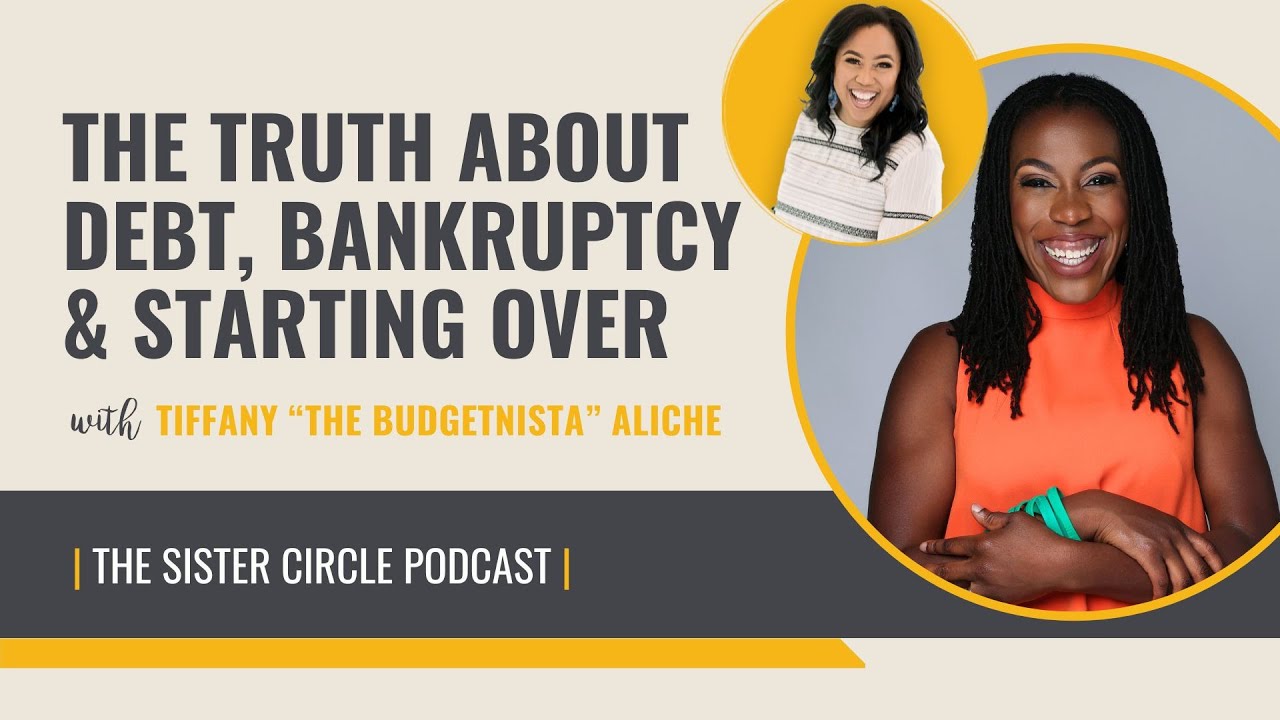
In this interview, host Chrystal Hurst talks with personal finance educator Tiffany "The Budgetnista" Aliche about her journey from a financially stable upbringing to a crushing $300,000+ debt crisis, the emotional toll of shame, and the practical steps she used to climb out of the abyss. Aliche shares how a trusted friend (her "Linda") helped break the shame cycle, how she negotiated with a mortgage company, used cease‑and‑desist letters to curb harassing collectors, and leveraged rental income to stay afloat. She critiques bankruptcy as a last‑resort option, explains its long‑term credit consequences, and recommends free nonprofit counseling through the National Foundation of Credit Counseling (NFCC). Aliche also discusses her PBS special, "Get Good with Money," which distills her 10‑component framework for financial wholeness (budgeting, savings, debt, credit, earning, investing, insurance, net worth, financial team, estate planning). She emphasizes the value of a fee‑only Certified Financial Planner (CFP) and introduces her free tool yourmoneymatch.com for matching advisors. The conversation moves into personal loss— the sudden death of her husband—and how a solid financial plan (life insurance, trust, estate documents) protected her family. Aliche reflects on growing her multimillion‑dollar business, learning to pay herself through a "pot" system, evolving leadership style, avoiding over‑generosity, and the importance of spiritual listening and obedience in career pivots. Throughout, she stresses that teaching and empowering others is her core purpose.
Chapters
Hey y'all, welcome to the show. Y'all, sometimes I'm out here in these streets, uh, interviewing people I know because y'all need to know who they are, interviewing people I follow because I want to make sure you're following them. And then there are people that I spend a lot of time and energy, and I'm happy to do that, to make sure they can make it on the show. And my guest today is one of those. I am really excited to welcome Miss Tiffany the Budgenista, uh, Aliche. Did I say that right?
You did.
You just told me, and I was trying to hold on to it, to the podcast. You probably already know who she is. You probably have already seen her email. She's fun to follow. She's fun to watch on social media, and you learn and you grow about money when you follow this woman. And so I'm so glad to welcome Miss Tiffany to the show. Thanks for joining me.
Thank you for having me. I'm super excited to be here.
Uh, I want you to know that I think what makes you so unique is that you are not— there are different people that we learn from, and particularly in this world, many of the people that we learn from are, um, they have arrived, they've been done arrived, and they have had a whole career in managing money, making money, planning money, and they kind of sit on the mountaintop. And that's good because we want educated people that have, um, you know, done their due diligence, worked with people over the years. That's, that's fine. But what I love about your platform, your passion, and the podium from which you speak is that you've been out here in these streets learning it too. So it's—
I mean, I mean, that's what I'm saying.
And so, like, you know, there, there's school expert, and then there's, like, job experience expert, and then there is, I did the education and I've done some work, but it's because I needed it. So I'm— there's great empathy, great understanding, and great life experience, Todd, which makes, um, you believable, right? So I would love for us to start with just in your words, when you're explaining to people what it is that you do, how do you define it? Let's start with that.
Well, hey, hey, hey everybody. Um, yes, I am Tiffany Aliche, better known as The Budgetnista, and I consider myself America's favorite financial educator, self-appointed. Um, and so one of the things that I have Well, I guess I started because I was making financial mistakes, although I grew up learning about money in a positive way. My dad was a CFO, a chief financial officer, and an accountant. So he taught my sisters and I about the kind of the, the academic side, like this is how you budget, this is how you save, this is how you open a bank account. And my mother, a nurse, um, really was the application because she's like, I got 5 girls, all this hair, all these clothes, all these. So my mother was like, when we go food shopping, this what I'm looking for. Yeah. And here's how I get discounts on your clothes. And so I got to see, like, okay, the behind the scenes. Okay, this is the, like I said, the academic part, but then also how do you put it into real use. Um, and so just growing up with that, I, I had a really good relationship with money until my mid-20s. I was a victim of a credit card scam from a friend of mine. Well, I guess you could air quotes friend. His real name is not Jake, but I call him Jake the Thief. He's in jail now. Hey Jake, I always I always shout him out. So, you know, we ain't forgot about you, Jake. So he, um, but yeah, he tricked me out of so much money. He left me $35,000 in credit card debt. But it turns out he was not just tricking me, he was tricking many people, including the federal government. And they caught up with him. And so he is, you know, locked down under the jail. Um, but so that experience though, it was the worst possible timing because I had just bought a condo. I was 25, and I was like, I felt so grown. I was teaching preschool, so I, I got a condo, had a mortgage, $220,000. That was a condo. Then I just graduated my master's a year later, $50,000 master's, you know. And then I got this credit card debt scam, $35,000. And then the recession hit and I lost my job as a teacher. So I had like $300,000 plus worth of debt and no job. And that is what, you know, all the lessons that I learned, you know, was just kind of like lip service. I'm not gonna lie, I was like, oh, cute, cute, a little lesson here and there. And then I was like, help! And so I had to put those lessons to good use and learn some new ones. And because I was a school teacher, I was like, well, when I learn, y'all gonna learn too. And so I started to help my friends and friends of friends, and The Budgetnista was born. So 2 million people later, I have helped in the last 16 years save hundreds of millions of dollars, pay off hundreds of millions of dollars worth of debt, buy homes, go to school, And so the work continues. And so I'm just really pleased to be here.
Well, you know, that is a place that a lot of people find themselves in. It's one thing is not great, another thing is not great, and then it's like, oh my gosh, how did I get here and how do I get out? And I just want to pause for a second to talk about the stress involved in that. Um, because, you know, if you could speak to the person who, whether it's their own vulnerability, stupidity, bad decision-making, whatever. But they are there, right? Um, they didn't know they were going to lose their job at the same time they had just bought something, at the same time they had racked up school for debt, or had a medical issue, or, you know, whatever. And, um, because I— that's a very hard place to be before you can even get to the decision-making. You just feel the load of that. And I've seen and experienced in real life people who had a series of bad things happen, and it just took them out because they couldn't get past the 'what do I do next.' They couldn't even see that, right? And so it's just like a story, a never-ending story. I won't graduate from— how did that make you feel when you were in that scenario? And what do you think you had, or that people can learn from you as an example, about solving the problem and not letting the problem conquer you?
Well, it did at first, because, child, I was hopeless and homeless. Okay, not really homeless, because homeless—
because I moved back home.
Yes, and I had to sleep on my sister's couch, everybody's couch but one that I owned. Um, but I felt really hopeless, if I'm being honest. I feel overwhelmed, and I was calling myself everything but a child of God, you know. I remember it distinctly. I was, it was, I was 29 going on 30, and it was my, my 30th birthday, and I was in my middle school bed back at home, and just tears strolling down the side of my face. And I remember thinking, the last time I slept in this bed, when I was probably like high school, maybe 14, I had more money at 14 than I do at 30. Because at 14 I was babysitting. Yeah, you know, housework, no bills. Yeah, so I had my little, you know, $1,500 saved. I ain't have $1,500 at 30. I had negative $300,000.
Yeah.
And I just remember like feeling overwhelmed with a sense of, um, shame. That's really what it was. It was shame. Um, as I was beating myself up, and my best friend Linda— and this is what I suggest for everyone, is to get you a Linda. My best friend Linda had been calling me and I was avoiding her calls because shame. And finally, you know, she got me on the phone. I was like, what is going on, girl? You know, I tried to pretend like everything was fine and that burst out into tears and I told her, which she diagnosed as like, okay, so you're broke, you moved back home, you lost your condo, you lost your job. And I was like, yeah, you know, I feel like such a loser. She's like, girl, I'm calling you from my mama's couch right now. Do you know we're in a recession? Take a look around at all of our friends. And because I was so consumed with my own shame, I had not looked around. And it was the first financial lesson that I'd learned as an adult adult, which is shame shield solutions. Yeah, that because I was so embedded in the shame, I could not really look around and see I was not the only one. Yeah, but when I released the shame because I gave voice to it Like, because shame loves some darkness. Shame is like, ooh, child, don't tell nobody. It's just me and you. We'll never part, na-ki-da-da. Like, shame loves that. And the moment you tell one person, shame is like, dang. Because they know— shame knows as soon as you tell more and more people that you trust and care about you, it has to banish. And once shame is gone, all of a sudden you're like, well, I don't have that, but I could do this. And I can't do this, but I could do that. And that's what I started to do. I said, okay, well, Tiffany, you know, okay, like, where, where do we currently stand? I'm like, how much money, you know, like, I can't pay all my bills, but I, I couldn't afford my mortgage, but I could rent out my condo. And I rented out the condo, and what happened was the, the mortgage company said they wouldn't take— I think my mortgage was $1,660, and I could rent out the condo for $1,200. And I said, look, I don't have $1,660, but I can send you $1,200 every month. They said, no, if you can't send the full $1,660, we don't want it. I said, bet, you know who wants it? Tiffany. So I, I kept that, that $1,200 for myself. And then I had unemployment and then I was babysitting and tutoring so I could start to, I started to gather little money here and there. And the people who I couldn't pay, you know, I made phone calls and said, I don't have it. And some people put me on a plan or a pause and some people decided they were gonna harass me. But one thing I've learned is that you can't talk to me crazy just cause I owe you money. So a friend of mine was a debt, uh, a debt lawyer. He said, girl, give him a cease and desist letter. I'm like, what's that? He was like, Google cease and desist letter, print it out, and just send it to companies and say, hey, it's best if you actually— if you can fax it because you have a return receipt, because there's laws in place that says you can dictate how a collection company communicates with you. I didn't know that. You could say, you cannot call me here, you cannot call me there, you cannot call me in the house, you cannot call me with the mouse. I was Dr. Seussing them like, hey, but I said, what you can do is you can send me an email and a letter. And so no more phone calls to like make my heart race faster on my phone, you know. Yeah, solutions were always there, but when you're in shame and in fear, you know. So that's where I started, and that's why I suggest anyone who might be in that position start is find you a Linda, a trusted person. They don't have to be financially savvy, just someone you can kind of pour out your financial heart to. Yeah, who's not going to judge you.
Yeah, that's so, that's so good. And I think you— we spend So much time on both ends thinking about people and not necessarily looking for the Lindas, because a lot of times the reason why we're in the situation we're in is because we were trying to impress people that weren't our Lindas, you know what I'm saying? And so then when you're in a bad situation, uh, then you're not running to your Lindas, you know, you're just, you're always trying to stay above board and present well in how well you're doing in your life. Okay, I want to pause, just get off the train here and ask you a practical question. Um, it is my experience, this may not be true. I'm curious what your experience is. Um, bankruptcy, I feel like, has become a quick fix. And I feel like, for mentally, maybe it's not quick to do, but I'm saying, when I talk to my daughter, and I was having a conversation with her and some of her also late 20s, early 30-year-old friends, the mentality was Well, yeah, if I just can't do this, I'm just going to file bankruptcy. And I was like, wait, wait, whoa, whoa, whoa, whoa, whoa. I don't— so I'm really curious about— I mean, it's a valid option if people need to use it, but in the situation that you described, and maybe it's generational, but the way I was raised was you find a solution. Like bankruptcy is, you don't do that. It messes up your credit and all that kind of stuff. Now I see that for many people, it's just a quick, I just want to be done with that. I want it to be over. What do you see that? That, first of all, that just it's easier for people mentally to find that as a solution, just to start over and start clean? And B, what is your counsel, high-level, general, for people who are like, I'll just fix this, I'll just file bankruptcy and move on with my life?
So yes, I do see that. Not as much, because quite honestly, so many years ago the bankruptcy law changed. You used to just be able to wipe it clean. Uh, now they come for everything. They said if you bankrupt, show me Oh, you got that little bit of money in your bank account? Give it to me. Oh, you got some fur coats? Give it to me. They, they will leave you with just enough to basically paddle your head above water. So it's not like you file for bankruptcy and you could keep all your funds. They're going to strip you of some of those funds and give it to the people that you owe. So let's just say you owe $100,000 and they're like, you know, okay, you don't have $100,000, but collectively you have, um, you know, like, I don't know, $10,000 worth of assets here and there. They're going to take those assets and leave you with just a little. So it's not just like you don't just get to wipe clean. They're going to go into your life and wipe you clean, you know, because they're not going to just say you can keep all your money while you owe people. That's not how that works. And then bankruptcy, it doesn't just like strip you of where you are now. The issue is, is that that's 10 years on your like credit report, right? And so it— the first 2 years are really gonna like just tank your credit score. So you want to look for an apartment, you want to buy a car, you want to buy a home, you want to get a cell phone, Okay, like, I mean, everything affects— because your credit score basically is a number that says how quickly or how close you are to bankruptcy. People don't know that's what a credit score measures— how close are you to bankruptcy. And because anyone who wants to lend you money for whatever reason, whether it's to buy a home, buy a car, buy a cell phone, does not want to lend money to someone who might likely go bankrupt because they won't get their money. And so you have set yourself up to not be able to do those things for many, many, many years. So it's not that. It's like, you know, it's like saying like, um, oh, you know, you're in 9th grade and you're just like, well, if I don't pass my classes, I'll just take 9th grade over. Uh, who want to do that? So you're delaying everything, you know what I mean? There's a— it reverberates through your whole high school career because are you going to get into a good college? Likely not. Who— you know, like, you're not even gonna be able to graduate with your friends. So it's not just the thing like, oh, I'll just take it over. It's like, no, no, no, there are consequences for that. Now there's some Bankruptcy, you know, might be a solution if like the, the hole is so deep, you know. And I much rather that you see what you could do to fix it. Like, there's a great organization called the National Foundation of Credit Counseling, NFCC, um, and they help. They are nonprofit, they are free, and they will help you with a debt lawyer and a debt, um, coach and a credit coach to work through like, you know, what can I do. So I like for people to try as best as possible. This is why I did my— I forgot to mention the beginning— I've got this new special on PBS called Get Good with Money. It's based upon my New York Times bestselling book, Get Good with Money. But one of the reasons why I do this work is to get you good with money, is so even if you make a mistake, you know that there are options other than something as drastic as bankruptcy, because it doesn't wipe you clean as you think, and it can destroy the rest of your financial life for a very long time.
That's so good. It's so good and very, very practical. So what I hear you saying is Use the options that you have, but use all your options. One of those options is that you can do something, get out of the shame wheel so that you can see what you can do. The second thing is that you are able to get other support. So your friend Linda, but also this nonprofit organization that you mentioned, because there's a lot of debt counselors, uh, or debt consolidation people, but there's a nonprofit organization that can help you come up with a plan.
Um, yeah.
And, you know, and just making sure that you're doing something, which is what you did. But I just wanted to say that because I think people can look at your story and go, well, that's probably the way she's wired. Like, I just don't— we see other people's stories and we admire them, but we don't always feel like we can be them. And so I love how you kind of set it up and broke it down for us. You mentioned your PBS. I'm so glad you said that. So how is that, girl? We grew up watching PBS, you know what I'm saying? I know. Sesame Street, Mr. Rogers, and now you got a whole special on PBS.
I'm not gonna lie, it just— when they reach out— so I have a— so I wrote this book called Get Good with Money, and my agent Heather one day casually was like, do you want a PBS special? I was like, I mean, okay. I mean, I didn't really know what she— I didn't know what she meant. I was like, you saw something somewhere?
Are they—
are they hiring? Like, what's up? She's like, no, no, I know one of the producers, you know, and they're always looking for like really good specials, and especially, you know, money is such a hot topic. And I said She said, I can't promise anything. I'll just mention it to him. And so I met with him and he was like, you know, I think you're really great. I can't promise anything. I'll mention it to PBS. And PBS was like, yes, everybody was really excited. Um, and so, yeah, so I based it upon my book. Um, and it's these 10 components to what I call financial wholeness. And each of these 10 components equals 10%. And when you master that, you get 100% financial wholeness, whether you are a preschool teacher making $30,000 or a doctor making $300,000. Any one of us can achieve financial wholeness. And so those, those components are budgeting, mastering budgeting, savings, debt, credit, earning. That's the foundational 5. Then it's investing for both wealth and retirement. There is insurance. There is your net worth, your financial team, and estate planning. When you master these 10 things, you don't have to worry about running out of money. You know, it doesn't mean that you'll be a millionaire, but it means that you will have the comfort of knowing you could afford the life that you're living. And potentially, like, even increase that life and to say, like, do I want to live even more, at least financially so? And so when I wrote the book, it came out in 2021. It became an instant New York Times bestseller. It stayed on the list for 8 weeks. And so, you know, when they came to me, I was like, I knew exactly what I wanted my special. I wanted to bring the book to life, to talk and teach about those 10 things that anyone can do. And so I'm just really proud of it. It's available, you know, wherever just check your local listings. Um, you watch online, I think you do have to make a donation just because PBS is nonprofit.
And but it's PBS, y'all, we all benefited from Sesame Street, make your donation.
Yes. But also too, if you have PBS, like, you know, like it's free, like if you're watching this PBS on TV, just, you just look at your local listings. And for me, like in New Jersey, sometimes it's, uh, 21 or, or, or Channel 13, but you can watch. And, um, it's on for the month of March. Um, but if it does well, they'll continue to air it. So, you know, we're trying to make it do well. Um, but also too, I want you to, when you watch, bring your notebook and pen because I teach, teach up in there.
Now, is this one episode or how many episodes?
So it's one special. So, but if it does well, it's about an hour.
Okay, so you packed all 10 into one hour?
I know, it wasn't easy.
Which means you got to get— you need to get the book if you have not yet bought the book if you want to go deeper. So this gives you access, understanding, it gives you a survey, and then if you want to really go deep, then you want to— okay, you, you have— how, how many years ago was this that you were in debt? 330?
So, um, let's see, um, it was about 15 years ago. It took me 5 years. So I used to teach preschool, I was making like $39,000 a year. Um, and so after losing everything, it took me 5 years just to get back to that $39,000. Like, it was a— it was a— so, you know, this is 5 years in business. You know, people think, you have a business, girl, you making money. It took me 5 years to get back to preschool Tiffany, like, salary. Um, and it was really hard. I was renting a room by then. I, you know, I graduated from my sister's couch to renting a room, like I just came home. Some of y'all don't know what that means. That's okay. And so the room was $500 a month, and I was 31 up until 34. I was doing that. Um, I had a '99 Toyota Camry that like decided to work when it didn't want to work. And not— I remember speaking at speaking engagements, you know, and being so happy clutching my little check that they paid me to speak, coming out, my car wouldn't start. Can you imagine? I can't. I can't. I can't. I mean, it was humbly. Okay, um, so I tell people that, that because I know social media will have you think things can turn around in 3 months, 6 months, a year, you know. And, and some— for some people, yes, if you're not— the hole wasn't as deep as mine. But I want you to know that even if it is as deep as mine, if not deeper, that there is light on the other side, you know. And that, you know, it doesn't even mean you don't have to be perfect. I certainly have slid back, slid a little bit, came back a little, back slid a little more. Um, but the key is that once you collect that knowledge, know that it's yours to keep and you can put it to work when you're ready. And so that is my job as a financial educator, to give you all the knowledge so when you are ready, you know what to do and you know that you don't have to be afraid because you have the tools to do so. It might take some work, but at least you have the tools to do so.
Personal question, you mentioned slipping back. What's your kryptonite?
Oh, um, I would say I wouldn't—
I love to travel, or, or situational.
Yeah, you know, I do love to travel, but I really am good at using my points for travel, so I'll say that. I would say my kryptonite is food because I'm greedy and I don't like to cook. Um, and so me and Uber Eats, I mean, I tussle with her every day. I'm like, Tiffany, please go to the supermarket. Um, and I'm trying right now, like, I'm like on a— I'm an Uber Eats fast right now and being like, no, girl, because I know how to cook. I'm just like, uh, later, later. And so If I were to look, I would say Uber Eats, um, probably my nieces and nephew because, you know, they can get whatever they want at Auntie. Um, and, um, right, I had just bought the condo that I'm living in now, and for the last maybe 6, 7 months, it definitely was stuff for the condo. I was like, but Janisa, who's she? I want it, get it! My financial advisor, and she was running back my charges. I was like 'Who, who, who is that again?' She was like, 'What are we doing? You're the budgetista.' I'm like, 'Yes, but I'm not perfect.' And so, but the thing is that I have set myself up in such a way that when money comes in, I put— like, I pull out my taxes, I pull out my savings, I pull out my investments, I pull out— so what's left. So even if I go haywire with what's left, it's what's left after. So I have— okay, and I automatically do those things. So I'm like, yes, I spent more than I anticipated, but it wasn't my tax money. It wasn't my investment money. And it wasn't my savings because that comes out automatically in the beginning. And so that's one of the ways that I offset the fact that I'm not perfect financially. I put those parameters in place.
Y'all, the girls in the Inner Circle are always ready to grow. And how we've decided to grow in the second quarter of this year is to join a book club. And I want you to get in. We start April the 21st, 100 Days to Discovering the Gift of You. This is the book we're going through, and this is what we're going to do together. You don't want to miss it. Join today. Go to thesistercircle.com/innercircle. So, and you mentioned, um, you know, taking 5 years to get back to 39. I am curious, okay, your dad was a CFO though. Your mom taught you how to use it, so you started with a base of financial understanding. Okay, um, and he, he wasn't the financial manager, he was the CFO. I don't know the CFO of what, but he was a CFO. I'm asking— I'm saying that because I'm wondering what adjustments have you had to make personally in your mindset about money? Because in my experience, for myself and then for other people that I know, if I make You know, I came out of college making $27. I think that was my first job. Listen, okay, when I worked 5 years in, and this was 20-something years ago, I found myself working at a job where I was making $52. I thought I was rich. I thought I was rich. And then I had, um, got a great bonus. I was like, oh my gosh. But my mindset hadn't changed, if that makes any sense. And so what adjustments, even with your financial knowledge, do you feel like you've had to make about money? Just, you knew it, but you weren't embodying it, if that makes any sense. Like, were you always saving and investing even on 39? Were you, you know what I'm saying? Like, what had to change to meet your understanding in your own personal mindset about money?
Well, in the beginning, I was financially perfect because I just did what my dad told me to do. You know, you're 20, you're like, I don't know, Daddy, what do I do about this? Put this here. So I just literally What they told me to do, I did. And then about 25, you know, you start smelling yourself. You're like, I'm grown, I'm grown. So I stopped asking for advice, and that's when I met my friend who I thought was wealthy because he had a nice car and a nice apartment, and he, you know, he was talking that big talk. Um, and, you know, so one of the shifts I made, you know, in my 20s, you know, after I got scammed, was you could look like you have money, it doesn't mean you have money. I did not know that at 22, 23. I thought, well, if you have those nice things, where could you have possibly got them from? You must have money. No, you're just good at scamming, you know. I didn't know that, that, you know, that. So that was a lesson to Jake, right? And so then another lesson that I had to learn was I, because I had my first money lessons, I had done well because I just did what my parents told me. And then when I did it on my own, you know, with Jake's help, unfortunately everything fell apart. I did not trust myself after that. I said, because the first half, somebody told you what to do. The second half, when you did it yourself, look what you did. And so that followed me like up until like my, my late 30s, where I was too scared to make any sort of like bigger financial move because I was really good at making money, but I wasn't investing, you know, I was just saving. Meanwhile, I'm the— no, but I was terrified to trust myself because the last time I trusted myself, look what happened. Yeah, I didn't realize I was still judging myself. So the shift I had to make was, Tiffany, you have a confidence issue, not a capability issue.
That's good.
And I said, so one of the ways to increase your confidence is to do so beside, um, a guide, somebody that you could trust. Like, before it was like, okay, my father's here. So I've got my own personal financial advisor. Her name is Anjali. I just met with her prior to this. We were just going over our numbers and things. And at you know, to have someone who I could trust and say, well, I was thinking about this, what do you think? And she was like, okay, yes, yes. And so now we have more conversations as peers versus like, what should I do? What should I do? You know? Um, but because I had to build my confidence working alongside someone and I encourage everyone here to ask for help, you know, even if you did go to school for money, which most of us did not, like money is a team sport. And I realized there's no shame in asking for help, whether it's an accountant, whether whether it's a, it's a, you know, financial advisor, whether it's your friend who's really good at saving and budgeting, that you need to be asking for help. So that was another mental shift, that like there's no shame in asking for help. And matter of fact, that's where strength lies.
Yeah. So you mentioned, you mentioned your financial advisor 3 times so far, and originally when you mentioned it, I'm thinking investment advisor because a lot of people say financial advisor, I mean investment advisor. You're though, and maybe that's what she is, but you're also talking about her in a, we were just kind of going over things. So is this— is your financial advisor your investment advisor, or in your case, does financial advisor mean something more?
It's more. So a— she's a certified financial planner. So when people ask the difference, so a financial advisor is like saying I'm a teacher. It's the general umbrella. A certified financial planner is like saying I am a Harvard-educated college professor, right? So it's a type of teacher, but the top-tier type of teacher.
You see?
And so, like, so if anyone's looking for a financial advisor, a type of teacher, a financial, um, a CFP, a certified financial planner, is the, is the, the gold standard. You know, they have to, they have to get certifications, they have to keep up their knowledge base, they have to be fiduciaries, which means they have to put your financial needs before someone else, before anyone else's. And, and I'm looking fee-only, meaning they only get their fee from me. Right, you know, meaning that, um, uh, for example, Angelique, when I first started working with her, she said you don't have enough life insurance or just insurance in general. Many financial advisors, the teacher, will sell you life insurance, right? But now they— life insurance companies give a little kickback. So now you have to wonder, is this good life insurance or is that because they gave you a little money, right? You know, my dad would say, he who pays the piper determines the tune, right? So some of y'all young ones, whoever pays the DJ gets to tell the DJ what to play. Play, right? And so if, if, if the fight— if the, um, insurance company is paying my advisor, they not think about me, they think about what the insurance company wants. So what I like about Anjali is that she's fee-only, and she'll say, you don't have enough insurance. And I was like, okay. She's like, well, you have an insurance company, go ahead and call them and say I need this level of insurance. I'm like, okay. So she didn't get paid, she's just there to give information, and then I act on it, you know. Or, um, um, also too, she'll say like, um, right now she was like, Tiffany, we don't have your um, I have like an estate plan, and so some things are missing. You don't have your— what is she— the power of attorney, you know, we don't have that. Tiff, your advanced directive, we need that. Um, the assignment of interest for your company, so something happens to you, right, what's going to happen to your company, you know. So she will actually like say, do you want me to talk to Tony, who's my attorney? And I was like, oh yes, can you talk to her to see like that paperwork so it could be sent to you? She's my primary care physician, Anjali. She will talk to Tony my attorney. She will talk to my accountant Diane. She will talk to my CFO George on— for the budget, Nisa, you know what I mean? So Anjali is his primary care physician who like will send me to specialists. Yeah, you know, but there's no kickback for her. She's just there to say, here's what you need to be asking for. Like even now on— she said, okay, your company just moved to a different, um, platform for your retirement accounts. I need you to go in. I was like, okay, not loud, later Tiffany, now. And I had to share my screen and I updated my, my beneficiaries in front of her because she's like, let's make sure beneficiaries are updated because I have a trust. She's like, as it is right now, there's nobody here at your trust, you know what I mean? So that's what I like about a certified financial planner. Yes, we went over my investments and how they've grown, you know, we talked about putting money aside for my nieces and nephew, um, and how that's grown. But also we're talking about insurance, we're talking about estate planning, we're talking about my business.
And so why would she be in your business with the amount of money you spending on your house?
What do you mean, like how much I spent on my house?
Yeah, you were like, for your condo, is she looking at your balance going down and talking about what's happening?
No, what she's looking like— so, so something else they go over too is your budget.
I might be the budgetista, but she's like, because a lot of financial planners don't do that. I think that's why I was asking you, because a lot of financial planners, maybe it's the setup because there's fee-only and some, some of them actually do the investing, but they are talking about future only. They're talking about how are you on track for college savings, how are you on track for retirement, how are you on track for that house you want to buy. But they're not necessarily going over your budget. Some, some, a lot don't. So that's why I think it's so important.
So like, I, my bank account, so it's view only, but all my accounts including my credit card accounts are linked to like our, like the dashboard. Yeah. So it, it doesn't, it just populates information. She doesn't have access to my credit cards, right? So she's like, according to this this is what you're spending monthly. I was like, is it? I mean, I hate that part, but I'm not gonna lie, because I'll be like, dang, let me try to get my spending down for Anjali. And so the thing is, she's not here to judge. She said, according to the way that we are laying out your retirement, we said this is how much money that you want to have accessible annually in retirement. And so if you overspend now, you're not going to underspend in retirement. Not likely.
Yeah.
So like, if you just say like, okay, for retirement I want to have $5,000 a month. Okay, let me just make up a number. And so that means retirement— I want my retirement income to be $60,000 a month. Okay, but if I'm currently spending $7,000, then the way we— the way she's laying out my investments, it's not going to cover. So that's really why we go over it, because we're trying to see, does what you're spending now match to what you say you're going to spend later? You know, we don't have to guess. So that's really what it is. And so yeah, having a really good— I had to, I had to— and for anybody who's listening who's like, oh, I don't know where to find one, I've got a, um, a, a free tool that I created called yourmoneymatch.com where you can go in, um, you'll be able to take a quiz and get matched to a financial advisor. It's not free to work for an advisor, but the matching is free. And I give you the tools that I created for myself to help vet an advisor. So I created something called like my so-called financial life, which is like this, this like spreadsheet where I filled in all of my financial information. So when I interviewed an advisor, I wouldn't forget what to say. I would send it to them ahead of time and say, hey, my friend Sarah told me that you're great. Here is a little bit about me financially. Do you think that we might be a fit? And some people would write back and say, oh, actually I do financial advising specifically for teachers or doctors or divorced women. And so it was great. So I didn't have to jump on a call with them.— or like, yes, I think based upon your goals and dreams and where you are financially, we can— I can— let's start a conversation. And so I give you all of that for free. So when you go in and you interview up to, I think, 3 matches that you get, you can pick an advisor that's right for you.
That's so good. Yeah, that's, that's so— because I think we, we go in and we don't know what we don't know, but we don't know what the right questions are to ask. And I love that you have, um, made it practically accessible for people to figure that out. Um, we talked about, you know, I asked you about your kryptonite, and, uh, yay for you for doing what you need to do in your house because we live in our homes and yes, you are the budgetnista, there is that. But also, I know that people will assume, okay, if I have the knowledge, however I got that knowledge, then, or if, you know, if in our 20s or our 30s we made poor decisions and we had to recover from that, that there aren't other things to recover from. And I know as a part of your story, loss is a big part of your story. And so for those who don't know, can you talk a little bit about that, what you went through? In terms of loss, and then if there was, or how that impacted you financially as well.
No, absolutely. So about, it's about a little over 3 years ago, I lost my husband suddenly. He was 41. Um, he had an aneurysm. So literally, he called me on Monday and said, ah babe, I got a terrible headache, and by Friday he was gone. Like, this is a man who's 6'6", handsome, tall, slim, good shape, you know what I mean? Like, it wasn't like he was dying from cancer or something. Just literally a headache and then gone. So it was really just so jarring. It still blows my mind sometimes that he's not here. Um, and so we had done just about everything right when it came to our, like our, like our, because we had started working with Anjali for, maybe we had worked with her for like 3 years. And so I'm so grateful because you, I was not in a position, you can't think straight cuz you, you're like, I don't care about nothing. But Anjali, because she knew where all of our financial things were. So she, she had created— unbeknownst to me, she met with my accountant, my CFO, my— you know, she knew all of them because I'd introduced them. And they created a plan for me behind the scenes, and they would teaspoon me the things I needed to do in a timely manner but not to overwhelm me. Because there's some things like— so I have a bonus daughter, and so I wanted to make sure that she was still provided for. So me and her mom, cool, are cool. And, um, but Um, so my husband, because he worked, he had Social Security, and kids get Social Security, um, if their parent passed away. She was 15, up until you're 18 or graduate high school, whatever comes first, at least in New Jersey. I don't know if that's federal, but that's, that's the law. And so, um, I learned like, uh, from Anjali, she was like, unfortunately with Social Security there's no backseats, meaning if you wait for 3 months, 6 months, a year, what— when you kind of get yourself together to apply for it for her they're not gonna give you that back pay, so you need to have her mother apply now. And so those are little things, like, you know, I wouldn't have known that. She's like, here's the number, right, to say, you know. And so like, I, I didn't know this, but I— because it— well, Jarell was my husband, um, they made— I had to sign paperwork for her mother, which I thought was— it didn't seem fair because I'm like, so what if we didn't get along, you know? Like, you know, because he provided for her financially, she was going to need like that financial assistance is not here, you know. So thankfully that was never the issue. We've always gotten along, you know. So I quickly signed, I, you know, I called her, I said, Shante, you know, this is what they— Anjali told me, you know, um, you need to go down, I'm going to give you his death certificate, this and this and that. And you know, when she got there, they're like, no, no, no, we need to speak to his wife. And so anyway, I did all of that. And so, but there were other things, like he had a pension, but I didn't know any of the— you know, I'm not reading through, but she had already read through all that paperwork and said, this is what it looks like. Um, he had life insurance. Um, and so for myself and, um, Alyssa, like, her money was set aside until she turned 18, because when you're, um, under 18, like, at least in the state of New Jersey, they'll put your money in a trust. So there were all these things I couldn't have possibly navigated on my own. This is why a really good financial planner is so critical. And because of— we did almost everything right. There were some things that we were, like, supposed to have done. Like, he didn't have a will. 'Cause, you know, we were 40s. So I was like, "Eh, later, later, later." And I remember we had just met with Anjali 2 weeks prior. And she said, "Y'all need to get this will together 'cause y'all are just playing." And we're like, "Okay, okay, okay." And then he passed away. So there were still some things up in the air that we were like, kind of like, "Well, what would his wishes have been?" You know? And that was hard. But for the most part, I'll say, you know, we made about 80% of the financial choices necessary where I got to just miss him because I know friends who lost their husband and their home, and then you got to get to work because you don't know.
You don't know. You don't know. Yeah, but they lost their home because they didn't have things set up in order to make sure they could keep it. Yeah.
Yes, they did. Maybe they didn't have life insurance. Maybe they didn't know where things were. I knew where all his paperwork was, where all his— but it made me tighten up. Within like 2 weeks, I had a will. Yeah, you know, within like 6 months to a year, because it takes a long time sometimes to do a trust, I had a trust. Because I'm like, if something happens to me, I don't want my sisters and my bonus daughter and my parents scrambling to like, oh, what is Tiffany? That's why she was asking me. She's like, where is your healthcare? You know, Anjali, today in our meeting today, where is your, like, you know, your advanced directive? What do you want to happen to you? How do you— and so, yeah, it just— and my therapist, Dr. Green, would call these the gifts of grief because it forced me to be semi-prepared to fully prepared. Yeah, because I want that when something, you know, when it's my time, that the loved ones who I leave behind can just miss me. There's not this tussle or this like, what are we supposed to do? It's like, no, no, no, everything is laid out, you know. Um, and yeah, so these are things like, you know, like I, you know, I miss Jarrell every single day. Um, but I'm so proud of him because my husband, I mean, although I've grown a multi-million dollar company, I met him when I was teaching preschool. He was a maintenance man of a building, of this building. We were like 22, 23. And I always thought he was cute. And, you know, he always had this crush on me. But I was like, we never really started dating until like our— until about 30. And then we got married like later on in our 30s. But what I really loved is that even before me, because like I said, we lost touch in our 20s and then he had Alyssa. And even before then, this man who never made over $60,000, all the insurance, all that— that was before we had got together, you know. He left where she— college is paid for, she already has a home. We had, we had another property. So I have one property and the other property is for Alyssa, and I sold it to his twin. He had identical twin. I sold it to his twin and then put that money in an account for her. So I said, you could buy a house later, you can, you can— she, she's going to school for exercise science, you could open a clinic later. You can whatever, but she don't gotta worry about college. She's got money set aside for a house to start a business. And so, but that's because of all the stuff he set up before we got together. So I think sometimes people think like, I gotta make a whole lot. He never made over 60 and still set me— the reason why I have this condo, I don't have a mortgage on this condo because of what he left me behind. So not only was I able to keep my, my house where my sister and her kids live, I was able also able to buy a condo down the street because it was too hard to live in that house where I bought.
Yeah.
You know. But that was like, what a blessing, you know. I think people think that you have to have a whole lot in order to do a whole lot, and he was a testament to that's not true. Yeah, you know. And so, you know, we get to— we, we miss him, but he, he made sure financially that he looked after us in life and in death.
Wow.
Yeah.
I'm curious, you mentioned, um, you keep— you've said multiple times in our conversation, because I'm the budgetista, I mean, I'm the budgetista. Um, there was the building, there is the, and I'm superimposing some thought here, but there is the building of the Budgetnista. Yes. As a brand, the building of Budgetnista, because, you know, uh, and I, we can talk more about that, like how you even got started. Like, how did this become the thing that you realized, oh, I can do that. Um, but, but one of the things I have learned is me stumbling into growing what I grow. There's a point at which stumbling stops and intentionality starts, because growing business— you know, you mentioned multi-million dollars— a whole different thing. Like, a business is another entity. It's like another child. You have to learn how to parent it. And so, yeah, there are the personal lessons that we learn, and then there are the business lessons that we learn. Sometimes those are monetary, sometimes they're managing people, what have you. Where do you feel like you have grown, but because you were stretched in that role financially or just organizationally?
Well, I have grown. In the beginning, if when you first start a business, if you've never had one before, you manage your business the way you manage your personal financial life, you know, and it's almost the opposite. So I would get paid to say like a speaking engagement or one-on-one, and that money would come directly to me. Um, but then I had to learn, like, no, no, no, it has to pass through the business. So I had to learn to what I call pay the pot. It's like, no, no, you pay the pot and the pot pays you a consistent amount, ideally. So let's just say one month you have an amazing month and I made $10,000. Oh my gosh. But let's just say I know that my pot payment to myself is $2,000 a month. Before, if I made 10, I'm spending 10.
Listen, you saw that check went straight to the bank.
I mean, okay, I said Tiffany on here. I was like, one, stop getting paid at Tiffany. Get paid as your business.
Yes.
And so I was like, no, if the pot gets paid 10, you still get paid 2, because next month when the pot makes negative 2, you still get paid 2 because some of that 10 is still left over, right? You see, so I had to learn. So those were some of the lessons. But also too, I mean, I had to learn to lead. I was a terrible leader at first. Not terrible like terrible in the— from the fact of like, you could get over on me, child. Get over on Tiffany. You know, because I just wanted everyone to like me. I'm such a middle child. I want everyone to be happy. I don't want to stress anyone out. And even though it was your job, I would make your job my job so you could be free. I'm like, why have you hired people and don't expect them to work, Tiffany? And so that I had to learn and grow where— and because I was so afraid of what happens when people are unhappy with you. And I struggle with that. I had a business coach. My therapist was so great. But what really kind of broke me free from that, because I've been doing a lot of shifting and moving, is once Jarell passed away. All of that went out. When I tell you, they said they called the gifts of grief, because I'm like, what possibly could this person do to me that in any way compares to losing the love of my life?
That's correct. That's correct.
It was a different Tiffany. And I got to see how some people showed up, because there are people on my team who— Jarrell died in November, mid-November, and they were talking about, so we're not going to get a bonus in December. I said, man, you don't got to worry about bonuses. 'Cause you don't got a job. Are you crazy? I mean, I used to give people— when I say bonuses, sometimes a bonus might look like $20,000, $30,000. That's how generous I was. You can't wait a moment while I try to peel myself off the floor? You know? And I was just like— and what I learned, what I learned, and this is so hard, especially for women, what I learned is that overgenerosity is just as bad as undergenerosity. That doing too much for people, you set them up for entitlement. It's like, well, you know, we know this with children. You do too much, you do too much. The baby doesn't become more grateful. They become like, where's my extra toys? And where's my— demanding. And that's what I saw as mad because I created that environment. And so now I'm generous, but not overly so and not underly so. I'm just down the middle. And I'm more kind than I am nice. Nice is whatever you need, whatever you want, just don't be mad at me. No, kind is clear. Yeah, here are my expectations. I need you to meet them. If you can't meet them, we send you off with love. Bye, sis, you can't stay here. And everybody on my team knows that, like, Tiffany is not the one or the two, you know. But, you know, but at the same time, it is a, it's a great environment, and I'm kind, you know, and I'm fair. But you're not getting over anymore. But that, it wasn't until Jerome passed away that that last piece of people pleasing broke. You know, um, and so though that was some huge, huge, um, lessons that I've learned. And one of my favorite, like, um, he's a— I call him like my digital mentor. He passed away in the '80s, I believe. I think in the '80s. His name is Jim Rohn.
Oh yeah, yes.
And one of the things that Jim said which is so powerful is that— well, two things. One, he said his mentor told him when he was his 20s, Jim, I think you ought to be a millionaire. To try to be a millionaire, not for the money, but for the man it will make you. Yeah, because there is a fundamental internal shift that has to be made to reach a certain level of income.
Correct. All right.
And one of those shifts is it is not an extra— I could teach you how to market, I could teach you like how to like, you know, hire people, really. I could teach you how to scale. No, the real fundamental shift, and that's the second thing, is You have to become an expert in you.
Yeah.
The better you become as your person, as yourself, as a woman, as a man, as a— what— then, then everything else follows. So when I started to work on Tiffany more, I'm not a people pleaser. Wow, business does better. You know, I'm more straightforward. Wow, business does better. You know, I take more breaks because I, I need to rest. Wow, business does better. And so I focus on how do I enhance myself as a person, and then everything else follows as a result. Including business and income.
So great, so great. You ought to teach a business class. Do you?
I do. So I do this mentorship program right now, it's on Patreon, it's called mymentortiffany.com. And so there's like 4,000 mentees there. Once a month I do a live lesson. It's like $20 a month for now because the prices are raising. But, um, but yeah, I'll get in now and enjoy what you can before they go up, you know. But it's just like Because I've learned so much in business, but nothing has grown me up more as a woman, as a human being, than business. Because it has forced my hand to be like, you cannot navigate from that place. This whole— you look down when people enter into a room, deferring because you think they're more powerful than you. Put— pull your head up. You know, we're all children of God. No one is more important than anybody else. I call it situationally important. If I'm on an airplane and I am having a heart attack, do you think I care if former President Obama's on the plane? Cute. Bring me the doctor. Right, you know, situational importance. Beyoncé's in the room, you have a baby that's 2 years old, Beyoncé comes to the room, or they mama come in the room, who do you think the baby's reaching for? Not Beyoncé. Situational importance, that people are important based upon the situation they find themselves in. So I try not to give anybody any extra smoke, any extra— because you're just— you're just important in this room, in the next room don't nobody know you. And so like everybody gets treated with the same level of respect, you know.
What goals do you have for yourself now? And let me preface this with this statement. You, you, you dug in deep and you created a whole brand, business, books. You got your PBS special. You have your— we have a free download we're going to put in the comments. 10, 10, uh, 5 ways to get your budget together. You've got the 10 steps on PBS. So you've got all this stuff. Do you ever get tired of this being your thing? Um, That's part A. Part B is, whatever that answer is, what are you setting your sights on to keep yourself growing and for you to stay interested in what you talk about?
So do I ever get tired? I never get tired of the teaching. Um, sometimes I get tired of the method of teaching, and then I switch it up. So I worked on Get Go With Money, the book, for 2 years. By the end, I was like, take this to the king. I'm over it, you know. I'm tired. But then I'm like, oh, now I do live videos. One thing I never ever tire of is teaching. And so like, I just will switch the platform. So as long as I have the availability to switch the platform, then no. And also too, the response that I get from people and how they're just like, Tiffany, you help me do this. Or I mean, there's— I mean, I have been to Egypt, literally at the pyramids, and someone says, And I'm like, hey girl! And they're like, oh my God, Tiffany, thank you so much. You know, you helped me with my budget or credit or whatever. I took your class or whatever it is. Or I was in London once and this woman was there with her 3 beautiful boys and she said, because of you, we were able to afford this vacation. Thank you. You know, like literally around the world, at the supermarket. Once I'm at the gynecologist, I said, ma'am, we're both here for the same thing. Let's keep it cute. Okay, that was crazy. So, so I'm just really, like, so I don't get— like I said, I don't get bored of the soul work, which is to help other people through teaching. It's always been from when I was a little girl to from when I started teaching preschool to now. So I don't tire of that. Um, you know, I might tire of emails. You know, there are times when I'm like, I don't want to do social media, I'm over that. You know, so things like that, but not the actual core work. And what's next for me? I have learned— I remember I used to hear Oprah say this, I'm like, girl, whatever. She would say, I don't make plans. I just like, you know, whatever is kind of like, you know, I like— I basically, I don't make plans. Life unfolds. And I was like, that sounds foolish, but I understand her. Yes, yes. Because I understand what she means. So I believe like that whatever God honestly has aligned for me, that's what I want. Like, if that wasn't always the case, I was like, go, go, go, I need to acquire, acquire, acquire.. But now I have seen too often that when I push one way and it wasn't really aligned, how it doesn't work out, versus when I'm open to say, I am here to be obedient and to listen and align. What do you want me to do? Over here? Great. Because then it explodes. It explodes. And so I don't have, you know, plans, if you will, other than just obedience. Like, whatever is next. Like, when I did PBS, the divine whispered to me, I need— because I wasn't taking it as seriously. Because I don't know why, just sometimes, um, you do enough big things, you're like, okay, okay. And like, God whispered to me, sis, get your life together. This is bigger than PBS.
It sure is.
I mean, and it was so—
I could have told you that.
I didn't know. So I— when I talk about I got my life together, I mean, I wrote the script, I practiced, I, I mean, I did all the things. And sure enough, it hasn't even been— I just, I had a phone call today that's life-changing. You know, and so based upon— because what happened at, uh, PBS. And so I just say that, so I don't, I don't have plans. I just know that there's a bigness happening, like coming after as a result, and I'm just receiving it. And I know that it's aligned with making sure that I continue serving others by giving you the tools necessary to live a better life. That has always been the through line. Like, I am here to give you the tools necessary to live a better life. And right now it's through the Budgetnista. It might be through something else later, but I know it involves teaching because I was created to teach. I can feel it in bones, and that's what I've always done. And so yeah, that's it. It's just to do good work. I love that so much.
And I was gonna ask you, because you kept saying help people live a better life, it's to teach, and you, you didn't say money. And then you just answered my question at the end. You said right now, yes, this is a budgetista.
Yes. And I don't know, because right now this is where, this is where God has me. And I'm like, okay, you know. And you never know, in a year, 6 months, I don't know, it might be like, actually because I'm telling you, when I, I went to school for business and, um, and I just like, I had the first little offer I got was $50,000. I was like, about to be rich up in here, you know, 21 years old. $50,000 is a lot of money now. It was a lot of money then. Yes. Um, and God said, yeah, go ahead on, and I want you to be a teacher. Excuse me, I don't, I don't, I didn't, I didn't go to school for teaching. I loved kids and, you know, and I'd always babysat, and I just was like, it was maybe like It was like right at the end of school, and I remember thinking like, the, the offer I got for $50,000, it was for a company I had an internship with and hated. And I know why I hated it. I could see that really the divine was trying to pull me away from that place. Like, cute, you made a little money in the summertime. If you work here, that misery you had in the summer is yours for life if you like it. And I remember I was still gonna take it because money.
Yeah.
And there was an older Black lady who's my work mom. I think her name was like, um, Francis, Florence, something with an F. And she was the executive admin of the CEO of the company. It's a big company. She pulled me and she said, oh hey baby, you know, come, come to my office. I said, oh hey Miss Florence, you know. She was like, oh, I heard they done offered you a job, baby. I said, mm-hmm. And she said, close that door. I was like, okay. Meanwhile, this is 21, you know, 20, 21-year-old Tiffany. And she said, baby, if you take that job, you a fool. Excuse me? Because it's not a woman who asked. I was like, oh. Excuse me, I wasn't ready. I wasn't ready. I said, wait, what? She said, you heard what I said. And I said— she said, take a look around. Where are there any people that look like you in any sort of position of power? And I was like, no. She was like, any sort of management? The one person they had in management, they demoted him back down to where he was before. Do you think— what— how you think you gonna fare here as a woman? And I remember I was like So it's like I was already getting the whisperings, but that was the nail in the coffin. And I was like, maybe I'm supposed to do this teaching thing. And I found a job, and it was significantly less, from $50,000 to $39,000, you know. And I took that job instead. But I am so grateful because it was from that job that I learned to teach. That's what I was there for.
Yeah.
And I didn't understand that person. It was time to leave because I was like, no, God, love it here, it's cute, the kids are cute, I play all day, I eat snacks. I make it $39,000, but like, I don't really, you know, I'm 20-something, I don't really need much money. He said, it's time to leave. I didn't want to leave. That's when I had all that trouble with the $300,000 in debt, lost my job, lost— and I learned this is what happens when you don't listen. And so I made the transition, but I didn't realize on the other side of $39,000 as preschool teacher Tiffany was literally $50 million as the budgetnista, because that's what we made in about the last 16 years. That's what I was struggling to like not, not to like, I didn't want to leave behind $39,000. I didn't know that that was ahead of me, right? Just $50 million that I was going to make. And so because of that, I have learned that obedience over everything, that like, what would you have me do right now? You have me in budgeting, but if you tell me to leave, okay, because I know whatever it is that you have me do is way, you know, it's way better than whatever I'm currently doing now. I'm here right now, you know, as a tool and a vessel, and as long as I listen, I know things work out. And so I just try my best to do so.
Go.
Like, whatever you believe in, you know, I just think that there's an inner something in you that's probably leading the way.
Well, that's what I was going to ask you, because you said, I can feel it in my bones, I'm supposed to be a teacher. And then you just kind of told me this story about Miss— what is it, Miss Florence, who closed the door? Is that okay? She could see something. You also went in it, and then when it was time to leave, you didn't want to leave because you enjoyed it so much. Yes, learning how to listen, learning how to feel it in your bones. Yes. Um, you know, one of the things that's really important to me this year, um, I released a book, um, in January called Discovering the Gift of You. And this concept is that we're supposed to be good stewards of what God put in us because he's cooperating with what he already gave us to create the versions of us we don't even know exist. How do you— how did you know? If you look back and you're like, I knew it was time to leave but I didn't, how did you know? When you say, now I'm teaching and I know I'm supposed to be teaching and I know right now it's a budgetista, how do you know? What is— what does the shift feel like when the shift starts happening for you, where something— there's something for you to pay attention to? And I know that it might not be the same thing for everybody, but I think you might be able to give some of us a little clue. What does that look like? How do you know when you're where you're supposed to be or when it's time to move?
Honestly, it comes in different ways. Sometimes when it's literally a voice that I know he ain't playing with me, and he probably told me multiple times. Is that different when your mother calls your first, middle, and last name and you're like, uh-oh? Like, so every once in a while it'll be like, I, I told you to leave, you know? Like, literally it's almost like I hear a voice where And so I was working with the producers at PBS, we're talking about script or whatever, and I was like, I hung up like the Zoom and it said, you need to take this seriously. I could hear it almost like, this is bigger than PBS. And I was like, so it's like when I say hear it, not like a voice out here, but like a voice in here. You know how sometimes you talk to yourself, but you're like, that's not me talking. So that's what it was, very distinct and clear. That's not typical. You know, sometimes it's friction and I miss it at first. So I didn't realize I was supposed to leave teaching preschool because I, the first 7 years were perfect. The kids were wonderful until year 7. The kids weren't so wonderful. I said, ooh, a little friction. And then year 8, I had a kid that tried to stab me to death. I said, hold up, not this 3-year-old trying to kill me, you know? And then, and then, you know, so it was like this pushing out of, and kind of like, so it, but I was resisting it, you know? So it took me a while. And then finally, I kind of got a sense, like, I think I'm supposed to leave. And I remember thinking, I just kept feeling like, it's time to leave, Tiffany. So it wasn't a clear voice. It was just a sense of, it's time to leave. And I honestly said, no, I'm not leaving. Because child, like, I like it here. It's easy. Child, my lesson plans, the ones I wrote 10 years ago, I could use the same lesson plans. I ain't got to write new lesson plans. Because ABCs are ABCs. You know, I love it here. I get off at 3:00. I get my life. I have the summers off. Somebody else, you know. And so, but then, because sometimes, like, you know, there, um, oftentimes you'll get away with some disobedience, you'll have to pay the price. God was like, not today. He closed the center down. He said, how about now? And that was when I realized, like, oh, okay. So that's when— and then when it took me 5 years to get on my feet, I realized this is the price paid for disobedience, Tiffany. And I just said, okay, okay. That really shook me up and said, Tiffany. And so now, like I said, sometimes it's a very clear voice where it says, do this. Um, I ask a lot of questions now. I'll say, God, what will you have me do? When I'm feeling in a weird— like, God, what will you have me do? What will you have me do? And sometimes the doing is nothing. That's the hardest part. That's the hardest part, girl, because sometimes it's so quiet because God's like, let me see if you can listen and just sit. You ever see a dog when it— when a good— a good owner be telling the dog sit, they got a little treat for the dog. And they'd be like, watch my dog, sit. The dog be looking at the treat, he's like, I'll tell you when you get this treat. Dog is like, yo, that's a well-behaved—
obedience.
So it's like sometimes God will dangle that thing and you have to sit a year, 6 months, whatever that looks like, you know, and just go about life because it's like, I'll let you know, but in the meantime, just sit. And so like, you know, and then when it gets to moving, I mean, the truth is I believe God talks to us all the time.. And we are so far removed. Like, I mean, if you have little children, especially— I remember one time my friend was telling me that— she was telling me this yesterday, my friend Jessica. She said that she had just been so busy ripping and running, and she was talking on the phone with her friend, and her daughter said, "Mommy, mommy, mommy." And she was like, "What?" 2 years old. She said, "Mommy, the sky is talking." She said, "What?" She said, "The sky is talking, and it's really loud." and she got scared. Her friend said, girl, pull over because that baby is here from somebody. And she said, this guy is talking, it's really loud, and he said he needs to talk to you. She said she dropped her daughter off at school and got on her knees and prayed, and he had a message for her. She couldn't hear, but her daughter could hear because she doesn't have all the noise that we carry, the stress, the anxiety, this, that, you know. You ever talk to baby babies? There are kids who still remember, I feel like, being connected before they got here. You know, like their spirit and soul before, like when they were still so connected. I mean, I remember my niece telling me my husband passed away. She was 3 and they were really close. And she kept saying, why did everybody keep saying we're not gonna see Uncle Jerrell again? And I said, remember, Amelia, I told you that he's not here. He passed away, remember? And she said, we are going to see him again. I'm like, no, Amelia. She said, no, we're going to see him in heaven, like before, like almost like, oh, that place I was before I came down to y'all. Mm, it's real cute there. We're just so friends. And I was like— and I asked my sister, did you tell her that? She said no. And I just was like, it's like she could still remember, you know? And so I say that to me, God is always talking to us. But oftentimes, we let the world get so loud. It's like light pollution. If you've ever been to a place, you know, the country or whatever, where there's not all these city lights, you're like, is this what the stars look like? You know? If you live in a city, you don't have any idea about what the sky looks like. And literally, although the sky is always there, the stars are always shining, the pollution of the lights in the city, it shields you from seeing what's there. And I believe that we have noise pollution when it comes to divinely hearing what God is trying to tell us. And so, you know, like certainly prayer, but it's not just praying in the morning and night. You should be talking to God all day long. One of my favorite things that my friend Yvonne Orji tells me is that God wants you to come to him in the big and the small. Especially the small. It could be mundane, like, God, please let my hair turn out cute.
Yeah, can you please open up that parking spot in front of that place I like to go get my food?
That one, he did that for me the other day at Costco.
I literally said out loud, Lord, right, I'm, I'm trying, I don't want to do this, can you just give me a spot?
Yes, right there. He— I mean, God loves that because you can come to him in the small, he knows you'll come to him in the big.
Yeah.
And so that That's the thing, keeping your eyes and ears open. Or like, uh, like, and sometimes like, you know, he'll be telling you but you're not listening. So listening to see, like, because sometimes he'll use someone else. My friend told me the other day that she has been really like depressed because she can't find a job. She said, well, to be fair, I do have a job, but it's not the one I want. I really wanted this other job. So she said the other day after church, I asked my nephew, he's 5, hey, um, baby, you could pray for Auntie to get a job. And, um, he said no. And she was like, no? He said no, you already have a job. He said you already have a job and you have to get good at that one first before God gives you another one. You think that that 5-year-old baby, where'd he get that from? I said, girl, because she was asking me, she's asking me the same question, how do you know what I'm hearing God? I'm like, you're asking me how do you know? Your 5-year-old nephew just told you, if you don't appreciate the job I gave you Like, then you're not getting nothing else. And she was like, you know, sometimes it's like God is speaking always and you're just not listening. Where would he get that from? You know, where would he get that from? And so that's really what it is, is that like, so I've gotten good. I mean, certainly I'm like, I mean, I know there are people who hear even clearer, um, than I do, um, but there's sometimes I don't hear anything and I'm just like struggling and I have to ask myself, I have to, um, like, uh, maybe my anxiety is high. I have to get off social media. So I'll do things to quiet the noise, you know. I'm like, you know, no social media. I wake up in the morning and I play— um, my therapist recommended this— uh, first 5-10 minutes of the day you wake up, and I play classical music. Oh yeah, because it's very— yeah. And like, it's— now I play for almost an hour because it is so calming and clearing, and I can hear clearly. So there are things you can set yourself up to be receptive of. And so yeah, those are some ways Yes, so good, so very good, y'all.
Um, if you don't already know, and I know many of you do, but if you— because here's the thing, there's, there's the knowing, like if you come across someone's timeline, they know who you are, but then there's knowing, like go to the website because it— she's making it really easy for you to get information. She's making it really easy for you to figure out how to learn from her, the book to buy, but also just the list. What do you need to learn? And then you go in and pick the things. I need to learn how to get out of debt. I need to learn about saving. Like, if you have not taken the deep dive to learn and to grow, and from this great teacher who for right now is focused on all the budgeting stuff, um, what are you doing with your life? And you don't have to wait to end up $30,000, $300,000 $3 million in the hole to realize that you need to get good with money. So yeah, this has been amazing. And don't forget about the PBS special. Find where it is, watch it. If nothing else, even if you're good with money, to support and tell the station, to tell that organization, hey, we want more content like this. Go watch it, go learn, check out the Netflix special. Um, and even if she's not on social media, you can find all her stuff there. So get on there, follow, listen, and learn.
I'm The Budgetnista on all the platforms, thebudgetnista.com for all my resources. But yes, I am on— I don't TikTok, but they put both videos up there from like my interviews. I'm like, you know, I could TikTok over there, but I do like Instagram, a little Facebook. Um, so yeah, I'm on all social media platforms as The Budgetnista.
This is so great. Thanks again for joining me.
This was amazing.










