Wait It Out and More with Jamie Grace
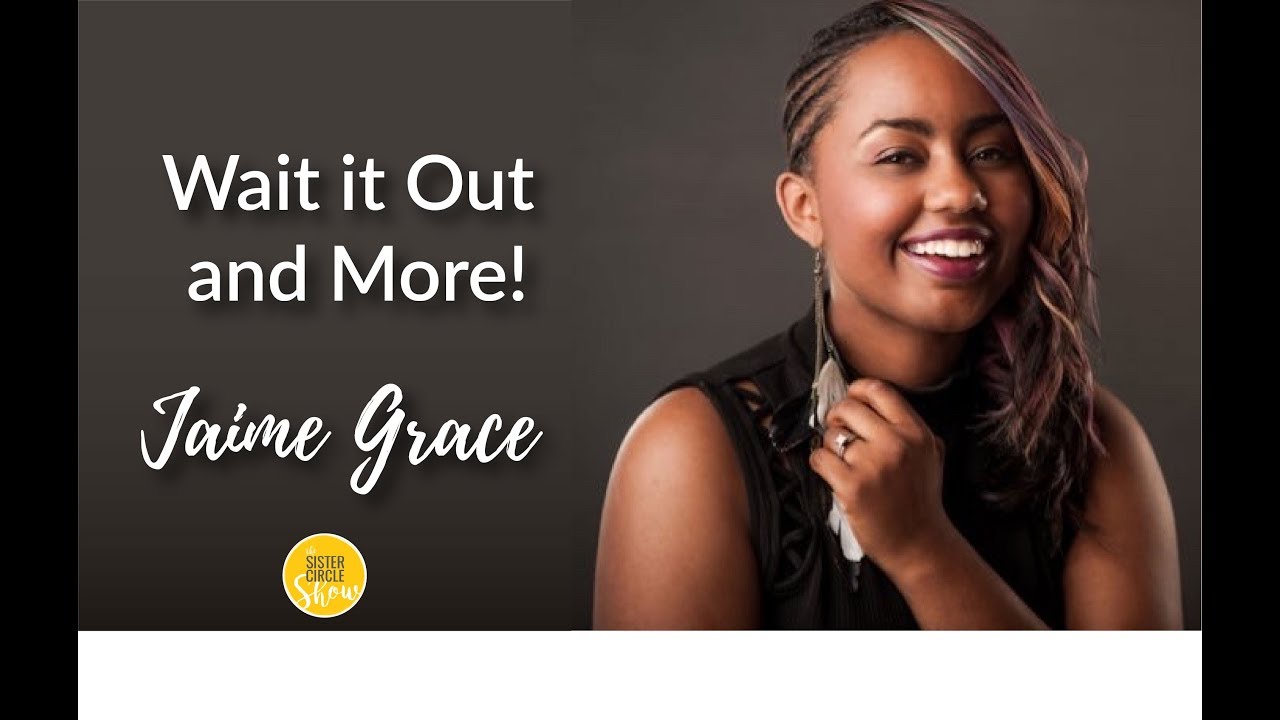
Singer Jamie Grace talks about balancing music, podcasting, and touring while managing ADHD and Tourette syndrome. She explains her decision to wait until marriage, how her pastor's kid upbringing shaped her faith, and the coping strategies like planning tools and therapy that help her stay productive.
Chapters
Here we go. Hey everybody, I have a love-hate relationship with YouTube at this point. If you have watched any of my lives, you know that there have been a few where there have just been some technical difficulties, and this is one of them as well. But the difficulty is worth it because I'm here with Jamie Grace. Thanks for joining me.
Yeah, thanks for having me, and same here, totally worth it. I'm like super pumped to be talking So thank you.
Well, I said to you before we went live, you had the I'm super together, my makeup is done, my hair is different color, my jewelry is bling, pink is a good color on me. And I have the you better be glad I'm dressed and I just got out of the door for football look on mine.
And I also have the I may or may not be wearing pants and I'm wearing these.
So. I love it. I love it.
This is it. That's all you can get. Love is all that matters.
Okay, so, so many things I want to know, and I'm going to try to grab some questions from people who may be logging in every now and then too. But I'm going to start with the stuff I want to know. So I'm going to make a huge assumption that everybody knows who you are and what you do. They don't. I'm just going to tell them to Google, to like search, because you are there and they can figure this out on their own. I'm going to assume that this is for people who actually know who you are, jumped on because they wanted to see you and to know more about you. So here's my question for you. This is like top of the line. I gotta know. Okay, so you are, you are of course a wife, a waited-out wife. You are a singer, a musician. You are a videographer, creative person. Um, you know, you do a lot of things. And one of the things that I hear over and over again from really smart people is like, focus on one thing. That's what they say. They say, focus on one thing, but that's not necessarily what you're doing right now. But for you, I want to know if you agree or disagree with that statement, because maybe you worked on one thing before you spread your wings into others, but you've been doing YouTube for a while too. What is it? 12 years, I think.
Yeah.
Okay. So do you agree or disagree? And why does doing multiple things work for you?
Yeah, I would, I would almost like say for sure that it depends on the person because I'd hate to say, I'd hate to like say print out my daily schedule and give it to someone and say this works for me and then it doesn't work for them and they're like, ah, um, doing multiple things works for me because they all start at the same source and they all have the same intention behind them. And so like creating videos and podcasts and I tour full-time, like singing, being a singer-songwriter is my full-time job. And singing a lot and whatever it might be in the creative aspect, my intention behind all of that is to be able to like share joy with people and to be able to encourage people. So I think the reason why I feel as though I can thrive in an element where I'm doing 80 million things a day is because they all share the same goal. And I also have ADHD. And so I just like sitting still for too long, it kind of drives me crazy. So I like that a part of my job is like, okay, I feel like I can't write songs right now for whatever reason, my brain's just not there. So I'm like, okay, I'm gonna go and record. So my podcast is a daily podcast. So I'm like, okay, good, I'll go record like 7 episodes, get myself a week ahead, and then I'll feel in the right headspace to go write another song. So I like that I have a lot of different things that I can do because I just, I like to stay busy.
So only, only a week ahead, huh? That's all you got?
Well, you know, there, my podcast is very like, it's, uh, it's, it's, it's advice-driven and it's about dating and relationships. And so a lot of it is unedited, unscripted, 15-minute nuggets that you can listen to, you know, at your cool-down doing your cool down at the gym or something like that. So I definitely don't want to diminish the hard work that a lot of people put into fully produced podcasts. I know that that is a different world that takes a different type of work ethic.
No, that's okay. 7 weeks ahead, that gives me hope. That's all. Okay. So when you say it comes from the same source and the heart to encourage people, like, literally, Does that mean that your creativity— like, if you sit down and let's say— I don't know if you're a journaler, but if you sit down and you're writing, whatever that looks like, writing in a journal, writing music, literally, does the stuff that you want to say to people on your YouTube channel, on your podcast, or in a song flow out of the same moment where you're giving your soul room to breathe and to come up with stuff?
Yeah. I think I see what you're saying. And like, you know, sometimes I am kind of taking that downtime on purpose and I'm like, okay, I'm not gonna work today. I'm just gonna relax and kind of refuel and just figure out, you know, what it is, what my real purpose is and like what I'm supposed to be doing with life and like really focus on me, focus on myself and like really grow as a person. And then out of that, I'm like, but what if I wrote a book about finding yourself?
You know?
So it's like, I, yeah, it kind of, it consumes my brain, but I think in a good way. You know, I'm a pastor's kid, and so I remember like one of my— I have very few childhood memories, but one of my like most vivid ones, it was— it's a weekly memory. That's probably why I remember it so well. And I would see my dad on Saturdays sitting in his study. Like, I literally— I knew exactly how he would sit and everything. And like sitting in his— like sitting in the library in the house, and I would hear him praying out loud, and I would hear him like saying the names of church members and like praying over them as he was working on his sermon. Um, and that really like stuck with me because I was like, man, like in my dad's quiet time, he's being intentional about how he can make an impact on the people in his life, um, and the people that trust him. And so I think I've just really implemented that, um, in my everyday life. Um, and then my mom is— my mom's a pastor as well, but my mom is quite the creative and quite the, you know, just actress, singer, goofball like myself. And so I think being partnered with those two brains just kind of, kind of just like, oh, I guess I was just paying attention to them a lot. So I'm really not that, you know, cool or anything. I'm just kind of them, I guess.
Oh no, you're very cool. You have a pink thing coming out of your earring over here, a feathery thing coming out from over here. And you know, this cowgirl thing happening up here, which I'm sure that's not what it's called, but I'm from Texas, right?
So hey, that it's, it's a bolo tie, but it's a cowgirl thing. I've been wearing them since I was little.
So they, even though the bolo, but listen, okay. But most of the women who say to me, you know, just to take this conversation one step further, there are things that they want to do that they haven't, okay. Their biggest struggle or what they think is the biggest, biggest struggle is they haven't made room for it. They haven't focused on it. They haven't, Set aside the time. So there, you know, I know that you're official ADD, but you know, when people throw around that term and they, you know, they say, I'm doing this, I'm doing that, I'm doing this, I'm doing that, they're thinking that I've got to shut everything else down to focus on this one thing. And I think what's unique about you is while it may be all coming out of the same source, your heart to help people, you still are very much so being creative in different veins. And I just think that that's unique. Um, my daughter is a lot like that. She's, um, she just put on in her Instagram page today, uh, some interior decorating stuff that she's doing in her house. Now she's a photographer. Yeah, creativity flows, it kind of overflows into other, into other areas.
Yeah, wait, I had to— sorry, I had to like look, I had to look on my Instagram just as you were saying that because I just processed that she was your daughter and I love her so much. I love both of you guys, don't get me wrong. I think I like, I just process you as your daughter though, so I'm just like—
It's okay, it's okay for you to love her more. Sorry.
No, I love you equally. I just don't like— oh my gosh, your grandbaby. Like, I just— sorry. Okay, he's ignoring me.
He's a whole— listen, I asked, I asked Charis one time, I said, can you please get that girl her own Instagram? Like, why are you trying to like make it yours? She said, no, no, no, because I need her to bring me the followers.
Right. Oh my gosh.
So I also want to know, um, what has learning to live with your ADD looked like? Like, you know, I mean, it's ADD, Tourette syndrome. I mean, you've got a few things going on.
Yeah, yeah, yeah.
Obviously learned some coping mechanisms, uh, whether they are internal.
Yeah.
What has the process of learning to live with those things look like? And maybe you have days where you're like, "This is me, and this is— I figured out how to live here." So what does that look like, and maybe what encouragement would you give to people who have challenges that maybe—
Yeah, you know, I think in the context of being creative and, you know, trying to figure out How do I focus on— how do I put the practicality into the dreams that I have? In that context, it's— I'm a very analytical person and I'm very much a planner. And so in that particular context, I am very pro-PDF. I'm very pro-dry erase board. I'm very pro-calendar on the wall because it helps me to be able to write out all of these things. And like you were saying, sometimes that's my actual diagnosed ADHD and sometimes that's just the fact that I'm human and We have a lot of dreams and goals and how do we place them into what we, you know, the actual practicality of pursuing these things. And so, yeah, as far as my job and everything goes, I just, I love to plan things out and write things out and I have a vision board of like where I see myself in 6 months and what I want to have happen in 6 months and what I want to have happen in 9 months and what I want to have happen in 12 months. And I keep that stuff, I keep myself in check with that. My husband, my sister, they keep me in check with that stuff. And then just as far as As far as my day-to-day goes, I think when I was about 14 or 15 years old, I was diagnosed with everything when I was 11, Tourette syndrome, OCD, ADHD, and anxiety. And when I was about 14 or 15 years old, I really just had to kind of have this realization like, I'm going to be different. And that's just the end of the discussion. I'm going to be different. And I tried so hard to be like everyone else and to fit in, but I've always been different, honestly. I've been, you know, the little Black girl in bolo ties and cowboy boots since I was 4 years old. It's just who I am. I don't know any different. I was homeschooled. I'm a preacher's kid. It's like everything that I could do to be quirky and to be different, you know, singing Bill Gaither songs at 7 years old is my big solo. Everything that I could do to be different, like I was—
I was like, who's Bill Gaither?
I know.
Who's Bill Gaither? Y'all look it up.
Yeah, look it up and you will be blessed. So like, I've always been different. And I think acknowledging that I was different was the first step. And, you know, of course, I truly, truly, truly believe that God is a healer. And I also believe that that healing sometimes comes in heaven, sometimes comes on earth. And so I just continue to just pursue a relationship with him and not always ask for healing in the way that I want it. But ask for healing in the way that God would see fit for it in my life. And so some people, you know, I've had people say, well, you haven't been healed, like you still have Tourette's, you're still sick, you know. And my thing is like, yeah, I have, because even though my physical body is not what I prefer, my mental state is a lot stronger than I was when I was 13 or 14 years old, because I understand like, look, I'm different. There are things in life that I can't change. But I'm here for a purpose. I'm here for a reason, and I'm not going to let it hold me back. And Um, you know, there are definitely harder days than others, you know. I, with my stuff, I have, you know, injuries sometimes. I have— I know what panic attacks are pretty well. But, um, I just try to surround myself with good people. I try to be intentional about food I do and don't eat, the sleep I get. Um, you know, so many different like little things that kind of help. But it's, it's really just about— for me, it's just like the practical the practicality of planning. It's like, okay, what's your goal for 6 months? You know, you want to be able to sleep through the night. Okay, what do you need to do to do that? Like, what kind of stress is in your life that's causing you to not be able to sleep? Or what kind of stress that's causing your anxiety to flare up and that's causing you to be more ADHD than normal? Like, you know you shouldn't have had that Mountain Dew, right? And so it's just like, it's just kind of the everyday life of like, what are, what are the goals of I have? What's the purpose that God has for me? And, and what can I do to like work on that?
So I'm curious, um, just because I'm curious. Yeah, you kind of got diagnosed with everything, would you say 11? Is that the age?
Yeah.
What was the impetus for the diagnosis? Like, what made your mom say, I gotta take her somewhere and figure this out?
Yeah, it started with blinking. I would, um, I would like hold my eyes shut like this for about that long, about 4 to 7 seconds. Um, and then I would do this with my arms. Um, and then the same thing with my legs, which I won't show you because again, I may or may not have on pants.
Um, all that matters.
Yeah, not that kind of show. Um, but yeah, so it was like my legs, my arms, and the blinking. And, um, my parents are they're very gracious people, but they're also disciplinarians. And so the fact that they would say, like, don't do that, and I kept doing it, my mom was like, little girl, like, either you have an illness or you about to have an illness. Yeah, it was just kind of like eventually I remember going to my mom one day with tears in my eyes. I was like, Mom, I've tried, I can't. And they weren't mean about it, but they were just like, there has to be something wrong. And so they took me to a pediatrician who sent them to a neurologist who sent them to another neurologist. And it was a little bit over a 2-year journey to figure out what it was. It was actually when, I mean, I tried every medication in the book, but the thing that was difficult actually, the first neurologist that we went to told my parents that there was no way. My mom went home and Googled everything, right? And my mom was like, I think it's called something called Tourette's. And so she printed out all this paperwork and took it to the neurologist. And the neurologist told my mom, there's no way it could be Tourette's because she's a Black girl and most of my patients are white boys that have Tourette syndrome. And my mom was like, well, maybe she's different. You know? And so this, like, that neurologist was, I mean, she told my mom that my diagnosis was psychotic eyes, which Thank the Lord my mom didn't buy that. It was just, it was so much. And so we got bounced around all these different neurologists and finally we met one that agreed with my mom and he was like, this is textbook Tourette syndrome. And it had gotten to the point where like I could barely walk. I couldn't hold anything without dropping it. I had started a lot of physically harming tics, which are obviously not great. So it had gotten so severe that we had to keep moving doctors until we finally got one that was willing to try.
Well, I want to say this to you, you know, just as a mom, I've got a kiddo who, uh, honestly, one day maybe I will take him for the battery of tests, but I— there's so many things that, um, you know, I've either been able to figure out or I've had confirmed. As a mom, you do— you kind of know. I've had that experience where I took one of my sons to the hospital and told the nurses what it was. I said, wrong, but I've done I've been with him for all night long. I think I know what the symptoms are. So y'all do your thing. And I heard the nurses outside whisper and say, how did she know that?
She's a mom.
She's a mom. And I always tell moms, like, check your mama meter because God gave you something for real. But my middle son didn't talk until he was 5. He's probably somewhere on this spectrum. He's very, very, very, very quirky, has a lot of things that are very unique about him. And as I'm listening to you talk, this is what I want to say to you on behalf of other moms who may see this. There is a hope that seeing a child who is an adult who is managing their life, whatever that looks like, and they have, you know, they've made their own way with the challenges that, you know, are a part of their, they're a part of who they are. And so, you know, just know that on the side, you know, of course, I'm sure you're making your parents proud, but you give parents hope to say, okay, like, I'm in the middle of the doctor's visits. I'm in the middle of the Googling, and then I'm in the middle of the doctor just told me I'm crazy and I'm making stuff up, and I'm in the middle of the 6th visit to this, you know, and that's a very, as I'm sure your mom maybe has shared with you, maybe not, it's a very difficult place to be when you know you need an answer and you're going to the experts and you're not getting it. And so just to kind of see the process and the product of that is very encouraging. So thanks for talking open. Honestly about that. Another thing that you talk— well, somebody's asking, is there somewhere you actually share your story of diagnosis? Is that in a book somewhere or in a YouTube specifically? Have you actually—
yeah, yeah, I actually, um, I do have a playlist on my YouTube channel. So if you just type in Jamie Grace Tourette Syndrome on YouTube, there's a playlist. Um, it actually starts 12 years ago with one of my first videos just after I've been diagnosed. Um, and then one of the more recent videos is about a mouthpiece that has truly changed changed my life. And so, yeah, it's actually— the playlist is about 12 years worth of videos of me talking about Tourette syndrome. I don't always go into the specifics of my medical experience online only because everyone's story is so different. And I know that can offer like complexities for people. But, but yeah, there's those videos. And then if you go to my Instagram, there's an email if anybody has any more specific questions, because I just always— I like to try to help any way that I can.
Another girl named Chrystal Hurst. I'm going through this with my 5-year-old son, so thanks for sharing that. I wanted to ask you another thing that you talk a lot about is weight, because that's the thing you did.
I did, I did.
Okay, so a lot of people want to know Uh, you know, you're a pastor's kid, so when you say that, people make actually assumptions about what pastor's kids do or don't do. I'm sure you know all the PK jokes and all that. Um, but, but obviously your faith is your own. Uh, so I guess it's a two-part question because I think a part of waiting it out, um, there's probably another set of things, but a part of waiting it out is your relationship with the Lord, um, your personal relationship with the Lord. And a part of it is your intellectual decision that this actually makes sense to you, because there's a lot of people that have a relationship with the Lord that don't necessarily make the choice, or, um, it, you know, intentionally or not. So why do you— what would you say are the most impactful reasons that kind of kept you focused on your relationship with the Lord and not doing that typical PK thing, whatever the typical thing is, which there's no typical thing. Um, and, and how did that foray into you choosing to wait it out?
Right, so you mean my relationship with God in general or specifically with waiting?
I know I asked like 5 questions.
You're okay, I love it. I, I'm just, I'm just clarifying.
Oh, okay. So the first question is, separate from waiting it out, right, why do you think you were able to make your relationship with God your own?
Okay.
Then we can go into— because I'm sure your relationship with God was a part of your choice to wait it out.
Of course.
Yeah. Right. Why do you think you were able to stick with that? Because so many people struggle to do it even though they value relationship with the Lord. Yeah.
I don't know. Yeah. Okay, cool. Okay. So sorry, I get so excited about that second question. I'm just like, Jamie, calm yourself and answer the first one. Yeah. I grew up in church, pastor's kid and all this stuff. I think one of the most crucial things for me as far as, you know, really committing to my faith as my own was seeing how much my parents enjoyed their faith and seeing how much my parents enjoyed church and just really seeing it, like seeing it in action, you know, it just looked like fun. Like, don't get me wrong, like the Christian faith is is it's a lot of sacrifice and it's not like, oh, this is going to be easy to do all this. Like, no, I know that there's obviously difficulty and obviously being pastors there comes a lot of challenges with that. But seeing my parents get excited in church and hearing them tell the testimonies of where people were and where they now are and just seeing lives changed and being a part of something that was so much greater than me, it was so beautiful. And I remember when I was little, my dad was sitting with me and he was just telling me how God, you know, sent his son and he's the king of the world and he's in his son because he loves us so much. And I was just like, this is fantastic. And, um, I don't say this with any disdain toward princessy movies because at 26 years old I'm borderline obsessed with a few of them. Um, but you know, growing up I think a lot of children become obsessed with fairy tales and become so fascinated with the prince that's going to come and save them and the magic might be real, and look at the castle, it's so sparkly. And I really didn't know anything about that stuff. I didn't know about most of that stuff till middle or high school. Um, you know, I didn't know anything about the magical Santa Claus that's gonna come down the chimney. My, my mom told me that my friends believed in it, but she told me that, you know, our— we have a security system, so no one's gonna come in our chimney. And so I, I didn't grow up like— the, the most beautiful story that I heard was the story of Jesus, and That was where the significance was in our home. And so that was, I think, the kickstart for me as a little girl to just be so fascinated by this King that's the King of all kings, but he loves me even when I take toys from my sister, even when I talk back to my mom, he forgives me. And he's, you know—
You didn't talk back to your mom.
I know. Once, one time, just one time. It was in the spring of '97. And then I never did it again. Um, yeah, she was far enough across the room, I figured I'd try. Um, yeah, it was just, it was, it was an amazing story. But then at the same time, I, I just, I just felt, I just fell in love. And I, I think as humans, we're so naturally built to crave love and to want love and You know, one thing that— one of my biggest pet peeves, and my husband and I, like, I probably mentioned this to him already 5 times. We've only been married 5 months, but I keep telling him, I'm like, when we have kids, I don't ever want to be that mom. And I don't want to offend anyone, but I don't ever want to be that mom when our daughter is in a, you know, sandbox with a little boy and we say, oh, she's flirting now, or she's got a little boyfriend. Because I don't want our 5-year-old to even have the concept that that is her first love. Her first love will be Jesus Christ, and I want that to be the love that we speak over our children. And that was the love that was spoken over me. And, um, my father, you know, talked about— always told us when we were little, like, he loves us only because the greatest love he knows is Jesus. And I don't want to make it sound as though my parents gave me a fairy tale concept of Jesus and a fairy tale concept of the Bible, but I think when we look at the word of It's the greatest love story ever told. And when we approach it that way, it's almost impossible to not get absolutely, like, just pumped about it and just so just desiring to, to, to, to just lean into that love and invest in that love and figure out how we can make it a part of our lives. So that's kind of how I think it was.
Yeah.
And then also a lot of, you know, well, yeah, I could go on that for hours, but yeah, that's probably that answer.
What I'm hearing you say is it's something that you made that was your own. Yeah, because that was the thing that you had. You weren't necessarily story-wise and beauty-wise, weren't distracted by all these other things that were supposed to make life, oh, like, right, Jesus did that.
And yeah, and the thing is, is that I made aware of a lot of different things, you know. Culturally, I knew a good amount about other religions very early on. I mean, I was homeschooled, so our, our literature was just like— we were total nerds, you know.
I'm like, go on the Survey of World Religions, right?
Exactly. So I'm like, you know, from an early age, like, I knew about other religions. I knew what other people were obsessed with, you know. So it's not like I was only exposed that, I just, I just knew, I just understood. I was like, yeah, this Jesus guy, like, he's— I don't know, it was just really— well, I do know it's the truth. And so that's why I got pumped about it, because it just hit me in a certain way. And, um, and, and then being involved in church too and getting to see, like, you know, people's lives changed and getting to see transformations happen. And yeah, it was pretty cool.
And then, well, sorry, so what's your opinion And I know everybody has their own situation.
Yeah.
Opinion, because you're how old right now? 26. Okay, so you're 26. So what's your opinion about people your age who maybe were raised in church but don't have— they don't have like the exposures there? Maybe even the fan— because I'm sure you've got to know, you've got to know some people who have godly families, who are raised in church, but are just not— they're not in love. Right. They may still be going through the motions, or they may have been so glad to be able to escape going through the motions that they're just— you know, they're not bad people. They're just not in love. Yeah. What is your thought about that?
You know, I mean, it definitely breaks my heart in that context, because most of my peers, people that I grew up with, that have that disconnection from faith that we all had when we were 6 or 7 years old, you know, we were all like, I know my Bible verses and all this stuff, you know, that now have that experience, that disconnect in their 20s and 30s. Most of them, and I don't want to say all because I can't think of everyone right now, but most of them are also still seeking love, are are either very single and feel discontent, or they married someone that they hoped would fulfill that hole and it didn't work out, or they're still married to them and they're waiting it out till the kids graduate. You know, I just, it, I oftentimes just feel like they're looking for love and they're looking for purpose and looking for validation. That can only be found in Christ, you know. And then, and I do have to say, you know, a lot of my connection with joy and peace that only comes from Christ is the severity of my medical condition, you know. Ages 9 to 15, I was in and out of the hospital once a month and, um, highly medicated. And so I think when you go through a traumatic experience, especially at a young age, you have to find something to hold on to, or, or you're holding on to nothing and you simply fall apart. And so I do I know that that likely attributes to the way that I have found such deep conviction with Christ. But yeah, I have yet to meet a human that doesn't want to know the absolute joy of love. And I oftentimes find that for my friends that once felt it, um, or once yearned for, once, you know, tried to find it in Christ, and now they don't have that with Christ. I, um, I'd say most of them are, are at a place where they're looking for love and, and don't know where to find it.
And so what, what would you say to the person who's watching you now? Because if they're not watching you now, they will be at some point. Who is looking for love, apart from the top-level statement of you can only find it in Jesus Christ, which is the same statement, but it's the top-level statement they're saying to you, which I'm sure they have. Okay, but yeah, but tell me, I don't— break that down for me. Like, help me to know if I'm looking for love and Jesus is the place where I'm gonna find it. Like, I've been to church and I've done a Bible study. I was raised in church. I had a it's not connecting for me. What would you say to them?
Right, um, you know, as someone who worked in church ministry for like ever and who, you know, would send out invitation over invitation like, guys, come hang out with us at church, um, you know, and someone who who writes Bible studies and speaks at churches and all that stuff, I would say to know that your relationship with God, that's where it starts. It starts with your relationship with God. And so as much as I would encourage people to try to find a church home and to find like-minded believers and to find a community, I would say invest in it like a relationship, you know. We— there's this, there's this thing. I, I don't know where it came from. I don't think it's 100% bulletproof, but there's this thing where it's like if you like somebody, you have to date them through all four of the seasons, like summer, spring, fall, and winter. Like, date them through all four seasons first, and then you can decide if you want to move forward.
Um, I missed— or is that a current thing? Because I've never heard of it.
My peers are talking about it. I clearly wasn't interested. Um, I, I like bye real quick. Um, but yeah, so I've heard that, and, and the reason why I mentioned it is because we are, um, we, we as a, we as a young people, and I'll say 20s and 30s, we will like give people chance after chance, just like, well, I gotta date him for this long to see what happens, or let me take a vacation with him and see how that works out, well, let me meet his friends and see what he's like. Then when you're investing in a physical relationship, a person that you can see, um, you know, in person, we'll take all this time to invest in them, to get to know them, to go out to dinner, to go out to lunch, to stalk their Instagram. Oh my goodness, we stalk people's Instagrams for hours and hours and hours before we decide if we want to go and sit at Starbucks with them for 90 minutes. Yet when it comes to the creator of our hearts, if we believe that God is the creator of our hearts, we say, well, I don't feel it, so I'm not going to give it a chance. But when it came to this person that you were like looking at for another kind of relationship, you're gonna stalk them on Instagram for forever. But just because, just because reading this verse or listening to this Jamie Grace or Anthony Evans or Hillsong song didn't give you the feelings, then you're gonna turn your back on the person that created the beat of your heart? And so I think it's just, and I don't, I don't say that in any, any way of arrogance because I will be the first to tell you it is so difficult trying to find a church home. It's so difficult trying to find a community of believers where you belong. That stuff is really hard. It can be very, very much a shot to the ego. And so I totally understand that. But I just want to— I would just encourage someone to just really, really, really invest in your relationship with God as that. You and God in your quiet place. In your living room with a Bible, just quiet, silence, no TV, no music, no nothing. Start there, um, and, and, and, and, and ask for God to speak to you. And I, I even hesitate to say that because I believe God is always speaking and he's always moving. It's just a matter of how much we're gonna listen. And so it's, you know, just sit there in the silent silence— yep, I was homeschooled— and, and just listen and just give God that attention and give God that time and invest in that relationship more than any other relationship out there. I mean, if you want to be a— if you want to, you know, for most professions in America, you have to go to college. You have to give it 4 years in a university just to get a piece of paper for somebody to tell you that you can go and work in a business. So it's like, we invest in our— in everything else in our lives, we invest so much time and so much money. And, um, but with our relationships with God, we don't always invest as much. And so I would just say to start it off as a— start off as a relationship, and as he gives you that peace and that joy, to then venture off into a community and a church and stuff. But, you know, yeah, it can be hard when you only trust your feelings because that can be hilarious, to say the least, right?
You know, first of all, I don't think that was arrogant, your delivery. I thought it was passionate.
Okay, thank you.
Very intentional to say, like, it's worth it. Like, what I, what I hear you saying is that we're giving so much to other things, and the things we say we want really badly, we don't give the same intensity to. Yeah, it kind of comes back to us and what we're willing to do. Okay, so because you love Jesus, and maybe for a few other reasons, you made the intentional decision to wait it out, to wait until you were married. Um, so I'm thinking, you know, when, when— okay, so when my husband and I got married, we, we had kids already, so we each had a girl on our wedding day as a gift. And it was Easter weekend, and my husband's daughter, which we don't say mine and ours, but just to explain, she does not live in, um, at the time she did not live in the area, so she was still in town. So we were like, the next morning, we were like, we're going to go to church. Like, all our family's at church. Because, you know, that's what church people do. You go to church. Right. And so it was Easter Sunday. And so we're like, plus, you know, our kids, we're going to go out of town. We want to spend time with them. So we went to church. And the plan was to get them and then go hang out with them. We did. We took them to the arcade and just had fun.
Yeah.
But that morning at church, this is what I was thinking. They know we did it.
Yeah, exactly. It's the worst.
Well, they know we did it. So with you, with your whole wait it out thing, you talked about that pre-marriage and of course way post-marriage. But everybody knows you did it. Like, you did it. And it's a continual situation. You're doing it. But waiting it out was an intentional decision apart from I love Jesus and I know that that's what he wants for me. It's clear in his word. What were your other reasons? And I know you've talked about this extensively everywhere, but for those who haven't, what were your reasons?
Right. I will say, uh, just fun story before I jump into that. We did not go to church the day after our wedding, um, because I had— because I had a concert. So we had to do one better.
We had euphemism for something else. You had a real concert?
No, I had to go to work. We, um, yeah, it was like, it was this really sweet school in Louisiana, and my husband loves kids and I love kids. And the way we did, we found out, but like, the time we found out, it was either change our wedding date or turn our back on 300 children whose like faith-based curriculum is based off of my music. And so, um, I told Aaron, I said, look, babe, like, we don't have to do this. I love these kids, but I will make it up to them in the fall. I'll figure it out. And he told me, he said, I'm literally one of the reasons I'm marrying you is because of your heart for kids. And it would like, I want to go, like, let's do it. And so, yeah, the only thing that was awkward was when we had to spend the next day with my drummer who was one of our groomsmen. And he's like my little brother. And that was just like, uh, Other than that, I didn't see my parents for like a month, so I was fine.
Okay. Yeah. You had to see the drama. You're like—
Right. Which, you know, he's like my little brother, so it was almost funny. It was almost funnier for us and like more awkward for him. Yeah. So I decided to wait, you know, ultimately because of my faith and because of my convictions there. And then honestly, I grew up like, I first, you know, I don't know how old I was when my parents gave me the talk, but I know that I was like 14 or 15 when I started to hear my mom, who's our youth pastor, talk about it in like youth group. And so the way she talked about it was, I was, it didn't seem scary. It didn't seem like something that, you know, if you kiss a guy, you're gonna die. Um, but the way she talked about it was because it was something that God created, and because it was designed for a husband and his wife, because it was so beautiful that it was worth waiting for. So that was the approach that I had, um, as early as 14 years old, was that sex was supposedly so great that I should wait for it. Um, as opposed to what I heard a lot of my friends learn was sex is so scary that you should stay away from it or your privates might fall out. Um, and so I just had— I, I— what I think was like a pretty healthy understanding of it growing up. And it definitely wasn't easy. And I realized once I got to college that it wasn't popular and that I would definitely be laughed at and, you know, kind of picked on. And say it again.
Did you care? You said once you went to college, um, you laughed at and picked on, but did you care?
I didn't care until my 20s. I think it was, you know, because I'm still kind of— I mean, I went to college at 16. My older sister went at 16, so she was at the same college. And so she was like, you know, we were just so different and so like, uh, so I just kind of, I was kind of doing my own thing. And then, um, it, I mean, it was, it was difficult, don't get me wrong, but it wasn't until, it wasn't until I started dating that I realized like, oh, this is— oh, this is gonna be more awkward than I thought. Like, just to be honest, not— this is not to like, yep, to my own horn or anything. It wasn't difficult until I met my husband, um, because I, I set up very clear boundaries when it came to dating. Um, I wasn't about to go on a second date just because if I felt like it— oh, that was my chair, sorry. I just like, I felt like if it If a guy wasn't worth the second date, then okay, fine, he wasn't worth the second date. And it doesn't mean that he's a bad guy, just means he wasn't my guy. And so it was just a little bit awkward because sometimes guys would try things or they would say they wanted to do things and I would just be like, I'm not interested in that and you're going to take me home now. I've always had a bit of a smart mouth and a bit of a boldness to me. You know, I had nothing— like, I really— most of the dates I went on, I actually never— because I was like, what if he turned out to be a creep? Like, I don't want to be stuck with his car. Like, I want to be able to run out to my car and go home. Um, so yeah, so I had like nothing against just being like, hey, like, I'm not interested in that. This isn't going— it's not going to go down that way. Um, or whatever. But it wasn't until like I met my husband that I was just kind of like, okay, uh, don't— uh, I'll see you at the wedding.
And for those who don't know, y'all dated for how long before you got married?
Yeah, um, it was a 5-month courtship. So it was November of 2017, and then we got engaged in January of 2018, and then we got married April 14th.
So to those people who've said that— I'm making assumptions here— who have said, you're so young, you know, you don't really know what you want. And people make mistakes when they marry young, which, you know, I— when Charis, she and Josh have been married now, is it 4 years coming up? Wait, 3 years? Something like that. I got to count. But anyway, yeah, you know, I told her, I said, listen, I know it was a different time, but my grandparents— your grandparents got married young. My grandparents got married young. My parents got married. I said, young can be good. It can be good. Grow up together. So there's good and challenges in that, but it can be good. I said, you can't let everybody else put their stories, because that's a lot of times people are doing. Their parents got married young and didn't work, or they got married young and it was problematic. And so then they push that on you. But what do you say to people who say, ooh, but you're so young?
Right. It can be very damaging to any situation when you allow your successes or your failures to dictate the way that you encourage other people. And so even though I'm glad that I got married at 26 and my husband's 23, I'm glad we got married young. I don't wanna at all make it seem like, you know, our lives are the blueprint for everyone else's lives. And it's just, it's simply what worked for us. I started working full-time in the entertainment business at, 17 years old, started a production company by the time I was 19, graduated from college at 20, bought a house at 20. And I was just, I was just living life, just doing my thing, working full-time and taking care of my parents. And I loved my life. It was, it was great. And I wanted a husband, but I was—
What does that mean, taking care of your parents at 20?
Yeah. So, so my parent, my mom has a rare medical condition. And so, um, she can't— she, she works mentally, she's incredible. Uh, physically she, uh, isn't able to— she's not always mobile. And so, um, so a couple years ago I, I, I kind of made sure that they were in their dream house in Georgia. Um, just made sure that they were kind of—
just sorry, I had to just put it— 20, you could do that. But anyway, go ahead, keep going.
Well, I say all that to say, you know, I I felt like I was, I felt like every dream in my life that I wanted had happened, you know, and, um, with the exception of being a wife and being a mom, those are the two dreams in my life that the only things that I could think of that I'm like, I wish that could happen. Um, and so I would, but I was on my way to, I was so independent and I was so confident in my independence that that if my husband had shown up in like 10 years, I feel like it would have been way more difficult for us if we waited another 10 years. Because even at 26, I'm so set in the way that I do things. I'm so set in the way that I live. I'm so set in my finances and my budget. And I'm not saying like I'm living fat or anything, but I have a structure and an order in the way my life goes. And so a lot of people would say, you know, "Well, you guys got married way too young," or "You guys did things too fast." But for me, I'm like, this is the perfect time because I, I, I just, I feel like it would have almost been harder if we had waited too long because it would have just been like, okay, here are all these years of life that I've planned out and now I have to break it down and learn how to do life over with someone else. Um, but then also, like you said, you know, back in the day that was totally a thing. And I don't know, it's just very interesting to me. I, I really don't want to make it sound like I was raised in a bubble. But, um, I just— it's always really fascinating to me when people are like, oh, you got married too young. I'm like, that— like, but what if it works? Like, what if it's a great idea? Like, some people— I feel like I'm not giving you a concrete answer. It just blows my mind that— because we hear it all the time. Yeah, all the time. Like, you got married too young, or just, you know, give it 6 months, y'all won't be all over each other like that, or give it 5 years, or all this stuff that people are just saying. And I'm just like, but not to sound cliché, but you don't know my God, and you don't know the story that he has put here. And it's not some cheesy happy-go-lucky me and my husband dancing into the sunshine kind of situation. It's— this thing has been prayed over, and I have waited for him, and he has waited for me, and we have prayed over this and cried over this and And we have like so many similar goals and visions and dreams for like the future and our family and just the kingdom of God and just like how we want to just encourage people and love on people. And it's just, it's like love is just a beautiful thing. But then at the same time, those same people that told me that I got married too young, they were the same people that when I was single, they were like, when are you gonna settle down? Like, it's not good.
You can never make the people happy, whoever. Right. Yeah, the people in your neighborhood, people in the world, you just, you can't do it.
Yeah, there's nothing I can do because they're like, you know, when are you gonna settle down? And then I'm like, I want to get married. You are too young to be thinking about marriage, honey. And I'm like, yeah, yeah, I'm not thinking about marriage. And then they're like, you tour too much. I'm just like, okay, Sheila. I don't know a Sheila, I just thought of Sheila E. Doesn't matter, we got it.
There is a Sheila somewhere in the world. Yeah, could have said that. Okay, so because you are very well put together and I know that, you know, you, you can say what you need to say. I mean, I hear the, the smart part in there. I mean, I can, I can feel that it's the undercurrent of it. But when the people walk up to you and they said, when are you going to get married? And you were like, and when they say you're so young, or you were too young to get married, or now, oh my goodness, y'all got married yet? When they have something to say, right? What are some gracious responses? Because you've got women of a lot of variety of ages that are just sick of people having something to say. Give, give me something to say when somebody says, are you still single? Right? Or when someone says, girl, you're too young to get married, right? Like, what are some graceful responses?
Yeah, you know, when I, um, well, I hope this is graceful, but I think if you're in like a faith-based context, you know, like, because I'm presuming that this happens at church, just a guess, um, if you're in like a faith-based concert, right? Not the woman of God. Um, excuse me, I would just like, typically I, I would just tell people, you know what, I was just talking to Jesus and he said I'm good. And that's like, that's a, that's something that I started saying to people and then I ended up putting it in a song because it was stressing me out so much. But yeah, I was, I was having a conversation like that with, um, with someone a few weeks ago and, um, you know, we were talking, Aaron and I were just being very open about, you know, our kids one day and all this stuff. And, um, they, you know, one thing that people always say to us is take your time, get to know each other. And like, my thing that I always think when people say that kind of stuff, first I'm just like, oh my gosh, like, what if I'm pregnant? Like, that is like, and you're offending me. Like, that's not nice. Like, like, are you trying to be nice? Anyways, um, we were talking to someone just about like children and having children and stuff. And, um, I just— I casually mentioned that I wasn't going to, like, force our kids to go to college.
Um, oh Lord, not that! You can't say that.
I know, I know. And I, I really— I don't mean this in any disrespect toward her because I really don't mean that. But I think for me, like, don't get me wrong, I am proud to have a college degree. Um, but I look at men like my father who My father has led so many people to Christ and has had a— he was— he has been a founding pastor for 24 years and doesn't have a college degree. Um, and so when I think of that, I, I just simply— I just simply said, if my 16-year-old is creating insane music, I would like to financially invest in his production company, um, and get him with a good business mentor instead telling him to go to college because like, like, what if my kid gonna be helping pay the bills? Like, I'm not trying to like stall that for another year.
I mean, it could work out like that, right?
Um, and so, and they, they were just very upset. And so literally my response, I just said, I said, you know what, I talked to Jesus and, and he said, he said it's okay.
So, because that, that can be said very sweetly very gracefully.
Yeah, it depends on how you say it.
Yeah, or with a little sauce if necessary.
Yeah, yeah. And the only thing that— the only thing that I recommend is make sure you actually have talked to Jesus about it. Like, don't just be using Jesus to get out of sassy conversations. Like, talk to the Lord about all the stuff that's controversial in your life. Yeah, you know, if you need to be convicted, he will take care of that for you. Or maybe he sent Sheila to do it.
Maybe he said Sheila to do it.
Yeah, so I just feel a little saucy in your response.
It might be that Sheila hit a nerve. It could be, right?
Right, exactly. So I just, I try to like, I try to honestly think like, there are people, there are so many people out there that say so many ridiculous things that honestly don't mean any harm. Their intention is pure and they're speaking from their experiences and they're speaking from their story. And so I just try to have, I try to have grace and I just try to be loving and just try to, you know, I don't know, just try to, just try to be honest about my own story and my own experiences. And if it stresses me out too much, I go write a song about it. But other than that, for the most part, I don't think people are trying to be aggressive.
Okay, so I want to ask you this kind of this last thought about kind of going back a little bit to how much you've been able to accomplish. And you just took some time in the context of another part of our conversation to list out the variety of things that you've done and the, and the timeframe in which you've been able to do it. So, you know, you might have some people sitting there going, oh wow, so I'm twice her age and I don't have I don't have, you know, as much to show for my life. And I guess I want to ask you, I want to kind of hit two things. One is discipline. Like, I know that you're gifted, you know that you have a talent, you were able to invest in that talent during, you know, certain seasons of your life and that bore fruit. But do you consider yourself to be a disciplined person? Person? That's, that's the first part thing I want to ask you.
I do, most definitely. I, I think I'm very, uh, disciplined when it comes to doing what needs to be done. Um, but then also I think I'm pretty good at being disciplined enough to know like when to actually take time off and recharge so that I don't drive myself crazy. Yeah.
Are you a naturally disciplined person or is this learned discipline? I mean, I know it's not mutually exclusive, but—
Right, right. I think I am a naturally goal-oriented person. I like to accomplish goals. And so I like—
I was thinking—
Wait, sorry, you broke up a little bit. What'd you say?
Issues.
Oh, boo.
I'm saying, does checking things off make you happy?
Yes, it's my favorite thing. So it's that— if that's more of my thing, I like to— like, I like to follow recipes of things I already know how to cook, because when I get to like the 7th out of 8 steps, I'm like, ooh.
Okay, so when there are people who— has every— has anyone ever asked you how they can be accomplishing things? Is your ability to like just get them done? Like you, like you're saying, you've got vision boards and you've got things that you want to accomplish. So if someone says to you, oh, there are some things I really want to do, but I'm just not a disciplined person, What have you said or what would you say to them?
Yeah, I think that we're all disciplined to an extent. Um, I have dear friends, and I've done this myself, but I have dear friends that'll say like, oh, I'm actually, you know, let me use this example. He'll be okay with me saying this. People so often talk so poorly about men, um, and they say that men don't know how to listen and that men don't retain information and that men don't remember anything you tell them. Um, but if we turn on ESPN on any given—
come on now—
any given channel, my husband can tell you every person and what college they went to and everything they're good at and everything they're bad at and how many kids they have and their kids' names. Every detail. Um, and I think we're doing ourselves a disservice when we speak about ourselves in a way that, that doesn't speak to the incredible gifts that we all have. You know, we can't compare ourselves to any other person because even though like I've done a lot of stuff, like for me, like sometimes I'll look at like these 16-year-olds on YouTube with 5 times as many subscribers as I have and I'm sitting there like, "Little girl, shouldn't you be doing your geometry right now?" Like how in the world? So it's so easy to like look at someone younger or older or taller or shorter or whatever and compare. But it's understanding like, okay, what kind of time do you want to take? Because there was a season in my life where I told my mom, I'm like, Mom, I just, I don't have any time in the world. Like, I'm just stressed out. Like, I just— and then she would be like, okay, what did you watch on TV this week? And I could tell her everything about the show Parenthood and everything about the Bravermans. I've watched every episode 3 times. And so it's just It's honestly a matter of figuring out, okay, how are you going to be disciplined? We all have an element of discipline in us. How are you going to be disciplined and what makes most sense for you? And not allowing yourself to be— not comparing yourself to anybody else. My mom is one of the most creative individuals that I know and she can write a book in a week and she's so creative. Um, but literally like has never typed a sentence on a computer besides like an email. Like, she has notebooks, like she has stacks of notebooks, and I'm just like, how does that work for you? But it does. And when she goes to preach a sermon, she takes 3 notebooks, lays them all out, and I'm just like, okay, that's what you gonna do. So I think it's just, it's, it's what works for you. Like, find I had to ask myself this question. I asked myself, when were you the most productive in your entire life? And I asked myself this about 2 years ago. And I think one of the most productive times for me was when I was in college because it was, it was felt like a little bit of like people pleasing because I liked the smile on my professor's face when I got a good grade. Don't, let's not dig into that. But I just, so I realized I was really productive in college. And so what I did is I duplicated my college schedule, and I put my new life into it. And so on Tuesdays and Thursdays I have the same schedule, and on Monday, Wednesday, Friday I have the same schedule, and they're all in 50-minute blocks, um, because I was the most productive in college, and so I just duplicated my college schedule for my everyday life. So I think it's just asking yourself, how am I going to be the most disciplined, and what does that take for me?
That's actually really good. I, I have a different answer to that question. I think I would— what is it? The most— I was the most productive in college too, but because I was being very goal-oriented. I had a baby in college and I was like, get out of here when my money runs out. Like, I got scholarship money and I can't be here when the money runs out. So, yeah, you know, when I look back at that and people will say to me all the time, like, so how did you do that? I don't know. I work 20 hours a week. I took a full load of classes. I mean, like, but I think there's a good balance between the pressure, because sometimes, like, I told my sister when I wrote the last book, I said I would never write a book without a deadline, because the deadline, the pressure of the date forces me to get in order, you know what I mean? It draws that out of me. I don't know. Anyway, so that's a great question. That's a great question. When have you been the most productive or the most disciplined? And looking at what was happening and try to replicate that.
Yeah.
Very, very good. I like that a lot. So what else do you want to do? Is there something that's on your vision board that you can share? I know you can't share all your saucy secrets. You're doing so much. You've got your podcast. You got your podcast is kind of new, right?
So it used to be called Team Single.
Um, flipped it to— okay, right.
Because it was super awkward when I got married and I was like, hey guys, I'm on Team Single.
So how long have you done it before you flipped it?
I've had the podcast for like 4, 3 years, I think. Um, yeah. One thing that's been really important to me is, is, is allowing myself to try new things and not always always succeed at them. And so I've had a podcast for a solid 3 or 4 years, and it's just been— it's changed the name, it's changed the logo, it's changed the schedule. And it— I used to be so embarrassed by that because I was like, oh, people are gonna see that I'm failing. And I'm like, no, I think they'll see that I'm trying. Hopefully that's what they see. Um, so yeah, so the—
it's called—
it's called Wait It Out, and it's a daily podcast about dating, relationships, and other things worth Waiting for. And I'm really excited because Aaron, my husband, and I were taking Wait It Out on the road. And so we're doing a few at the end of this year, but we're announcing at the top of the new year, like, more for the spring of just kind of mini conferences for young adults, for men and women, just really encouraging people to know that waiting is not exclusive to sex, but waiting is knowing your worth and your value as a whole. And so—
Are you coming to Dallas?
Say it again?
Are you coming to Dallas or Texas? We better.
We better come to Dallas. Every tour I do, I play Dallas. If I don't go to Dallas, I feel disappointed as a person. Mostly because of like Fuzzy's Tacos, but also because of the people.
OK, but do you know about Torchy's Tacos?
Oh, yes. I love Torchy's too. Fuzzy's has feta cheese.
So, you know what, I've never been to Fuzzy's. I just got hip to Torchy's.
Yeah, you guys have— your taco game is magic.
Okay, well, I'll have to raise the bar on that. Listen, you are a delight for a stack, a big stack of reasons. I might have even earned points with Alina for interviewing you. I have to text you when I'm done and be like, hey, just in case you really weren't going to get it, I interviewed Jamie Grayson. In my heart, I'm only 27, so you and I are only a year apart. So there's that. We are. There's that. I think that for whatever the reasons, and we've talked about what some of those reasons are, your upbringing, The view that you have of the Lord and the love, um, that you've believed that he had for you and the worth that that gave you, uh, your recognition of your own gifts and abilities, the difficult season in your life where you were discovering some of your physical challenges and figuring out what that meant to live with them and how that may have forced you, um, faster to really search out the Lord as your rescue and your strong tower and all those things that we say that really are true. But I think that all in all it still boils down to you have decided through different seasons in your life for different reasons to honor who you are. You've decided that, and maybe it's by virtue of your personality, by virtue of your natural discipline or your, your orientation to be focused on your goals. But I still think it just adds up to examples of ways that other people can, can, can do the same. Like, I don't have I don't have to have been raised in a preacher's house to say, I can know God's love. I don't have to have a physical challenge when I was a teenager. There are plenty of challenges to go around throughout your whole life for you to bring to God. I mean, I don't have to have had college as my productive period. Maybe I've been productive in another season in my life, and I can figure out that's why. And if I didn't wait, it's not too late to wait. And it's not too late to understand my worth as a reason to hold out for what I feel like is God's best for me. So I just want to applaud you for being a great example. And I don't mean an example because all the little girls are looking at you, looking up and trying to be Jamie Grace. I mean an example because you are able to tangibly and palpably explain and show with your words and with your life what it looks like to get on board with honoring who you are. And I just say thanks for doing that and for being a great example. Because for real, it's an awesome example. I'm grateful to have the chance to chat with you.
Thank you so much. And I do want to say really quick too, because I thought about this and then you just said it, so I'll just wrap up, add to it.
Um, you're a preacher in your heart, right?
It's— I mean, it's true. It was my favorite class in college. Um, but no, like, I, I honestly just want to make sure that I do stress that it's not too late to wait. I think sometimes especially the super virgin preacher's daughters, you know, we can seem super like, oh my goodness, y'all, it's like, it was so easy. Like, you know, I had other struggles in my life that weren't exactly this one. But I just like, I just hope that my story is an encouragement to anyone that just like the minute that you decide to start waiting, whether it's right here, right now, or it's in 5 minutes, or it was 5 minutes ago, like God, God is not looking at your past. He's not looking at your yesterday. All of those things have been just washed away, and it's never too late to acknowledge your worth and to really live it out. And so, yeah.
Is there anything else you have not said that you're like, I got to say this before we shut it down?
I think I've said all the things.
And finished a mason jar full of water.
Yes. I just love water.
Well, it's the mason jar for me that's doing it for real.
Right? Really.
I'm gonna change my game.
Yeah, sometimes I don't even drink out of it. I just hold it because it makes me feel real Southern and sweet.
Well, this has been a delight. Thanks for joining me. And I'm mad right now because I have like this side lamp over here that keeps casting weird shadows, then I have an LED lamp over here that's doing weird things. Oh, you're like, I'm gonna have to go back to your other videos because you have videos where you talk about like your gear. And I'm a little bit of a geek. So I'm gonna take a shortcut and just get what you're telling me to get. Do you have a, what you call it, light? What do you call it?
A ring light, yeah.
So really those matter? The ring lights matter?
They're fantastic. I have an online course on like YouTube stuff. I'll send it to you. You can have it for free.
Of course, I will take it.
Yeah, I'll send it to you.
And right now I've been sitting here the whole time going, are you in front of a window or do you have a light behind your—
Yeah, a window. It's that California sunshine.
Girl, I have slats and the last time I opened my slats for the first 30 minutes of the conversation, I had slat marks across my face. I'm gonna figure this out eventually, eventually figure it out, but in the meantime, I'll take your course and learn some tips.
You look good, don't worry. You still look good.
Well, this was fun. Thanks for joining me, and y'all, thanks for watching and bearing with us through all of our technical difficulties. I really am 27 in my heart, but apparently I'm a little bit longer to figure a few things out, but I'm going to take Jamie Grace's class and then we're going to be fine.
Okay, we're going to be fine.
Thanks, girl. This was fun. I appreciate it.
Of course. I'll talk to you later.










