Why People Are Leaving the Church (and How We Can Bring Them Back)
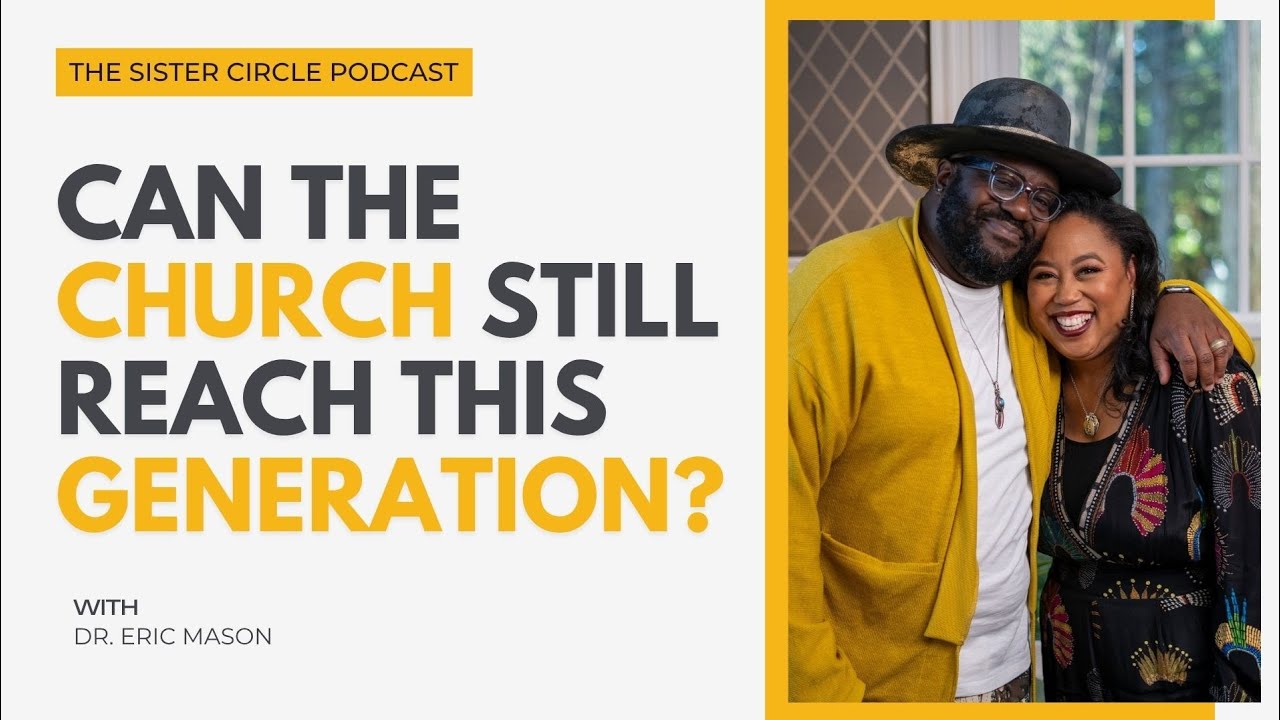
In this conversational interview, host Chrystal Hurst talks with longtime pastor, author, and doctoral scholar Dr. Eric Mason about the growing phenomenon of people leaving the church and how the body of Christ can respond. The dialogue weaves personal anecdotes, generational analysis, and practical ministry insights. Key points include: the impact of social‑media visibility on pastoral identity; the pervasive "church hurt" that drives deconstruction and the need for grace‑filled reconciliation; how each generation (Boomers, Gen X, Millennials, Gen Z, Gen Alpha) experiences church differently and what that means for giving, attendance, and cultural relevance; Mason’s concept of “rebranding the church” – redefining purpose, community, outreach, leadership, and membership to reflect a healthy, missional witness; the tension between therapy, spiritual formation, and communal healing; financial and operational strains after the pandemic (e.g., 75% attendance loss, budget deficits) and how churches can steward resources; the importance of community over individual spirituality, emphasizing relational discipleship (“be known”) rather than consumer‑style attendance; the need for cultural engagement through missiology, digital footprints, and media literacy; pastoral burnout and grief, including personal health crises and the emotional toll of leadership; and gender dynamics within church culture, calling for balance between masculinity and femininity. Throughout, Mason stresses humility, self‑awareness, and a shift from consumerism to contribution, urging churches to become credible, compassionate ambassadors of the gospel.
Chapters
Y'all, I'm good and made up today. So that must mean that my guest is super special. And he is. Actually, my guest is not really a guest. He's a good friend of mine. And now we get to crisscross paths on the podcast. If you don't know who Dr. Eric Mason is, where have you been? What rock have you been living under? I cannot wait for you to get to know him today and to get to know a little bit more about— y'all go back to church. Okay, let's go back to church. Welcome, Dr. Eric Mason, to the podcast.
Thank you for having me on, young lady.
Brother that's joining the Sister Circle podcast.
Yeah, the Sister Circle cup is here.
Listen, you even wore your yellow. What is that?
Hey man, it's showing love, showing love, you feel me? Matchy match.
Okay, I'm 53. Mhm. So 28 years, so that was a good 25 or 26.
30. 30. 1995. That's when I came here and that's when we met. And that was 30 years ago. So I got here in '95, '97, got hitched.
So, yeah. So you left us twice, twice. And he ended up in Philly. I remember Daddy went to, years ago, went to visit the church and he came back and he was telling Mommy, he said, he said, yeah. He said, Eric, he, he really, he's really doing it in the, in the inner city. Like, he's in the, he's in the for real. He just was like, he in the real city.
He wanted to say, he didn't know how to put it. He said he in the trenches.
He's in the trenches.
Yeah, yeah.
But, um, been pastor how long is it? How old is the church?
It's about to be 20 years old next year. Just turned 19. So, wow, that makes you old. Oh man, you pastor for 20 years, you know what I'm saying? You know what I'm saying?
A church planner. That's extra special.
Extra. You got to be extra crazy.
Okay, how many books have you written?
Uh, 9. 9.
So you're an author 9 times over, an earned doctorate, been pastoring for 20 years, been married for—
it's about to be 28 in 2 months. 28 years. December 20th. You have a million children.
Do you feel like, I'm Dr. Mason, like people— there's a version of Eric Mason that people don't know, but they know Dr. Mason, author Mason, educated Mason. I've got to look up what you talked about when you did your Instagram Live. I mean, you know what I'm saying? Like, does that hit you the way it's hitting me?
I remember years ago, a guy, you know, and it's kind of weird now. This is years ago when we were planting the church, and we were a few years in. And he's in JB, who planted Fellowship Memphis with Brian Lawrence. He said, Eric, I don't know if you know it, but what you're doing, a lot of guys around the country are watching what you're doing. And so you need to figure out how God wants you to steward your influence. That's the first time somebody told me that. I was like, what are you talking about? So I'm raising money, my wife, my wife is in— got cancer. Like, what are you talking about? I didn't even think about that. And so, um, and then like, um, like, like this last year has been very weird because, well, first of all, a lot of my spiritual children call me Pop, which is— I call Dr. Evans that.
Correct. That's what I'm saying. Yeah.
So the passing of the mantle. Yeah. And so, but then the other thing is, you know, brother was like, um, people's like, you don't— you don't— they say I don't see myself. And they said that's good and it's bad, you know, on both ends. And so I'm trying to figure it out. I don't— I don't— you know, I, I would like to be absent— I would like to be Dr. Evans absent-minded about it, you know, because Doc knows but don't know, and so he don't care about— he sure don't, you know, all of that, you know. And so I want to make sure that if I begin to see it, that I have that kind of disposition where I don't believe the likes or the dislikes, because you can't live by either. Just don't read your own, you know. But encouragement is important, but I want encouragement— I don't want to be— I want to have enough encouragement to run the race. But I don't want to have encouragement that turns into my identity, because once I live and die by what people say, you're in trouble, you know. And your identity is no longer in Christ, it's what people say about you. And so, uh, because listen, one day, you know, I lost— it was a few— I did something in May, I lost like 3,000 followers. 3,000 followers, like, in one day, just because of something you said. Something I said. And then, um, next thing I know, now I went up 700. I mean, It follows, follows. But I'm just saying, you don't know—
you—
I mean, if you live and die by the comment section, if you live and die by how many— fuck, this isn't— this is not for you. Because ministry, um, the enemy— enemy knows— he's a master psychologist, but you know, he, he knows the ebbs and flows of the buttons to push in your life. And you don't even have to be in ministry. It's not even just—
I was about to say, it's just about you being in alignment with being obedient and walking a surrendered life.
Yeah, every Christian is going to deal with they are just as they are, uh, got, you know, God assigns, uh, you know, if we want to say angelic forces to you, there's also an assignment of the enemy on that same path trying to study you, to, to kind— that's why he prowls. He's, he's, he's, he goes across the Earth. They looking around like, and they got it, they got a folder on you, like they got a folder on you with your— and you gotta— and, and man, you got to be— that's why self-awareness is one of the most important things to have. Because if, because if you're not self-aware, uh, in a good and a bad way, you won't know what type of battle strategy to develop. And a lot— and the average person, like, one of the things— that's why, uh, this culture is interesting, because Millennials— what I love about Millennials, they was the first, particularly in the African-American community, introduced us to— y'all need to go to counseling, everybody needs counseling, right? I know you must say something. And so, and so this is like counseling, but now Now we've got to the point where we have molested counseling language because they was asking me about that last night at the young adult event. And I was like, there's true trauma, and I want to affirm people who have gone through rape, you know, you know, all different things. Yes. I said, but some of y'all, it's not trauma, you just don't want to repent. I said, a rebuke. I said, you guys gotta stop being baby pamper soft, you know what I'm saying? You, you need to be able to receive Retort.
But this is what happens when you've lived long enough. You've lived long enough to see the pendulum swing.
Absolutely.
Because you can see it swing from an unwillingness to recognize any kind of trauma. Forget the language, just the unwillingness to say a person is hurting, and beyond them not checking all the boxes, like we need to handle somebody gently with white gloves. What do they need? Absolutely. You know, like all that.
Absolutely.
But then it went to the whole other thing where I think we're overly sensitive.
That's because, that's because overcorrection is the enemy of balance and health. You know, when you overcorrect, you don't even realize you're still creating another problem, right? Yeah.
Okay, so let's stick a pin right there. Yeah, because, because I think a part of church is, you know, church hurt, for example.
Absolutely.
And it's that same thing where it's like we need to recognize where someone's been hurt.
Yes.
But we can overcorrect where there's no room for anybody to ever make a mistake. And church is full of, you know, valuable people.
Absolutely.
So how do you think What do you think our expectations should be of church when it comes to our personal well-being?
Church is the only place that gets written off for failing someone permanently. Like, not family, not friends. I'll give you an example, right? One of my— one of my spiritual daughters, um, because she's old enough to have spiritual— I know, right? She had to go and get like spinal surgery. And so she went, got the spinal surgery. They had to remove one of the discs. Um, they removed the disc, she is in recovery. She wakes up, they said, how you feel? She says, not different. And she's like— and they're like, what do you mean? We did the surgery. So they checked, the doctor took out the wrong disc, right? Wrong disc. So I said, you need to sue them, right?
No, I'm like, first of all, get paid.
Yeah, yeah, yeah. So they did. But then, but, but what, what was interesting about that situation is she didn't say, well, you know what, I'm never going to the hospital again, right? Because they— I'm, I'm still hurting and I'm just going to not let anybody operate on me ever again because— okay, you know, no, you just find another doctor. Find a better hospital. Ensure that it has its ducks up in a row. That's why I tell people now, I say I'm fine with people dating the church for 6 months to 9 months to a year, because you need to see— particularly if you've been around church, if you've been hurt church— you need to see it through a season. And once you see how leadership deals with finances, with how they deal with mission, how they deal with discipleship, how they deal with cultural catastrophes, how do they respond to things in public, you know. Is the church more political than it is biblical? You know, do they— how do they deal with, uh, you know, people with same-sex attraction? How do you deal with a person— like, all of the things. How you deal with single moms? How do you deal with all these things? And you're not going to see everything, but you'll be able to see at least the fruit of the seeds of how they would deal with other stuff in particular situations where you say, I can stick my feet here. Now, the important thing is community is messy.
It sure is.
If you're going to do life with human beings, a sanctification— it's called sanctification. It's called a process.
It's called look more like Jesus because you currently don't.
You don't. And, and so if there are— if I'm only 20— if all of— if it's people at the church, let's say 100% like Jesus are here, If you got people that's 5% like Jesus, 10%, 20%, 25%, there's a lot of not like Jesus in this right here. This means this is the— you're going to get hurt because we're all on this path. You know, that's what the Bible said, this is the will of God, your sanctification, right? And so, um, this is, this is a big thing that I think that we've done damage with in the church is we've taught personal relationship with Jesus Christ. And I understand what people say when they say that, but it cuts off— it's only giving you part of the gospel. The gospel isn't just—
I love Jesus in my prayer closet.
Absolutely. He buys you— he buys back your relationship with Christ, but he also places you into a community of people. And so the church was— you were never— you weren't even— one of the first things that God said wasn't good was that we'd not be alone. And it wasn't just marriage, that was about global community. Um, that's why he said be fruitful, multiply, fill the earth, subdue to do it. Create human flourishing. Build communities where people are able to mutually, uh, uh, endeavor together for my glory while you reflect me. And so coming to church, you got to say, I, I'm not going to wear my heart on my sleeve, but I am going to understand— like, what— like, there's certain things that are non-negotiables, like that I'm leaving over this. But now people are hair-trigger, hair-trigger if you say something they don't like.
Yeah.
Yeah, they just leave. And it's like, like, I have people that come to church and I'll be like, um, they'll be like, you know, I've been in this long enough to know you bigging me up now. Let me do one thing you don't like. If you talking about the other pastor, give me— give you— give me one strike, right? And one of the things I've told people, I said, you need to go back. Some of y'all not healed. And I said, I'm not saying you got to go back and stay at your old church, But if they're open to it, you need to reconcile because having a pattern of a lack of reconciliation is an extreme growth issue because that means you'll never grow in relationships if you write every person off that hurts you, you know. And let's get this straight, you gonna hurt people too, you know, but you—
whether you're doing it intentionally or unintentionally, it's just the way it works.
That's so important, but that's so important to understand And so, uh, and so as you grow in those seasons and you know what you can live with and you know what you can live without. And so I think, I think though, people in this season have more— everything's a, a non-negotiable, right? And so I just believe that we need a healthier outlook on church, particularly post-pandemic, where people are, um, reconfiguring— the church is reconfiguring what is church. What is it?
What is church?
What is church? Like, can I just have my home church. Yep. Can I just have my Bible? You know, uh, they— all my members— I think Jackie said William Augusto. I just found out what that is. What is that? It's music. It's worship music or something, right? You know, the younger generation, they be teaching you stuff. So they said, wait, I got my William Augusto, I got my prayer life, and I, you know, I can do, do life on my own. It's impossible. Yeah, because as crazy as I am, I need somebody to pull up, you know.
Do you want to live a life you love? Do you need help doing that? Well, my name is Chrystal Hurst, and I've created a tool that will help you to do just that. It takes the best of a planner and combines it with the best of your own personal coach, and it puts it in one place. This is the Full Circle Planner, and it will give you the right questions at the right time to help you get the right answers so you can own your life. Get your Full Circle Planner today. You know, what we were talking about with the therapy and what you're talking about with the church, the balance with both of them is that acknowledging my needs and acknowledging my pain does not absolve me of the process with other people.
Absolutely.
And it— and taking the door where it feels easier.
Yeah. Yeah.
Is not necessary. Not that therapy is easy, but taking the door that feels easier, which is leaving the things that caused pain, isn't necessarily the answer. So But when someone is trying to figure out church and deconstruction, I even made mention of that word, like that can mean so many different things to different people. Somebody who is chasing after God, they have been hurt, got questions about church, not even sure if organized religion is necessary. Definitely Western religion and Eastern Christianity is two completely different things in terms of experience. But there is a tenderness about them. Um, what is your invitation to that person who is really afraid?
Yeah, I would say, number one, your feelings are real. Feelings are real. Therapy, you know, your feelings, you know, your feelings are real.
That's good therapy talk.
You know, your feelings are real, but I think that, um, you have to, um, allow yourself in the spaces within a local community where you're able to ease yourself in. Like, if it's a small group, if you're taking a class and you're just gonna sit in on the class, um, if you're gonna join a ministry. And, and because a lot of times community happens in the context of serving. I mean, Expressions of Praise, like, we were like—
that was the small group.
That was, that was it. We did devotions. Yeah, we did prayer. We hung out when people were sick.
We spent holidays together.
Listen, we, we watched videos.
We sure did.
I mean, not video shows.
Yeah, yeah.
I mean So, but it was natural. And some of the— when you're around that organic, not just the organized stuff, but the organic relationships that you build, um, is, is just so important. And I think that most of the ways— because people always say, how do I get discipled? What do I do? And I said, be known.
What? You don't mean you have a standing 7 AM coffee meeting with every person you're discipling?
Be known. Like, I didn't ask Pop to this. I never asked him to disciple me. I never expected him to, but I was in the vicinity of him. I've showed—
placed yourself.
Absolutely. Yeah, I'm— I show Wayne Mitchell, Dr. Evans, like Hawk, Pastor Hawkins. Like, I, I've made my— I put myself in, and I'm not even— that's just the ministers. That's not even the layers of godly people that was at the church in general. But then our relationships with our peer group, um, we had a lot of accountability. Um, I'll never forget this, I'll never forget this. You probably don't even remember this. I just married Yvette, and, um, and I was, I was very affectionate. And, um, I remember you came up to me.
Oh God.
And you said, you said, Eric, you're married now. I'll never forget that. And I said, it was so convicting, and I knew exactly what you meant. And it—
oh, you're saying like just your expression?
Yeah, the way I was, the way I was. Yeah, with women.
Yes, I did.
Yes.
Because I was like, Lord, I was Mother Chrystal Hurst.
Yeah, yeah. You was like, you was like, you was like, you just tapped me on the hand. You was like, Eric, you're married. And I was like, I was like, you know what, That was hilarious. Yeah, but that was peer group community, right? And I wasn't like, see, you— why y'all always thinking men trying to get at women? Like, you know what I'm saying?
Like, I was just like, oh, but, but both, both going and coming, like, it could be received because there was relationship.
Absolutely.
And it could be received because with relationship there's, there's love, there's care. So the resistance to feeling judged is little to none because you're not react— it's not a reactionary.
Do we Gen X? It's—
and we're— yeah, that is that too. We drank from the water hose. Like, like, we—
I was telling some— I was telling some people, I was like, oh yeah, you were drinking that water hose. 5 hours was our pool. Listen, you feel— so I'm just kind of like, the best life ever. I'm saying, like, you couldn't be in a choir when I was growing up and have thin skin. 'Cause the choir director—
'Cause you can sing or you can't sing.
Third row, you don't need to be in front of the mic. You gonna say, come up?
Get out from under the mic. You need to be in between the two mics.
Yeah, yeah, yeah, yeah, yeah. And so it was like, you know, and so, and I'm not, but I think that—
That's so funny, I don't remember that. I don't remember that, but it sounds like something I would do.
Yeah, yeah, yeah. And I mean, and so I always cherished, you know, some of the best people that I know are Christians. The most loving people I know are Christians. Some of them are in a nuclear family, some of my single moms, single dads, single people. Some of the best people that I know are Christians. And, um, and I've, I've only— I've been around healthy and unhealthy church. I've been around, uh, I've been in church that's healthy to have unhealthy things within it. And so I, I just, I just, I just feel like, particularly in our community, that we hold the church to a high standard.
Like, somebody would, somebody would hear what you just said and say, that's actually the opposite of my experience.
Really?
By the Christians that I know. Yeah, they're, they're off, you know, they're off the chain. They're not kind, they're not loving, they're super judgmental.
Yeah.
You know, that they like say all they believe, all this stuff, but they're the ones that it's the It's the people that are not Christians that are actually out there doing kind deeds, doing, you know. And so I think it's so important because we can make a big judgment about what God wants us to do, which is being community, based on experience. And that's not the telltale of whether or not you're involved where he has asked us to be.
The issue is we don't give other people a grace to be in a process with God. We just don't. Like, you want— you want all this grace, you want grace, but you're hurt because you're not getting grace, but you're mad at the people who are self-righteous and they need your— the self-righteous need your grace, you know what I'm saying? And maybe they need to tell you— you there long enough to earn the right to tell them that they're self-righteous because they may have never heard it. And so a lot of times churches, you know, there's, you know, in the Bible there's individual sanctification, but we don't realize Ephesians 4 is all about communal sanctification that we would attain to the full measure of Christ as a community. If, if you're not in a church long enough, in a community long enough to endure with the ebbs and flows of boards and ministry leaders, and you know what I'm saying, if you— and you'll call, and you'll call yourself, I'm called here and I'm going to not be a nag. Have you spent a season of your life praying about your complaints? What, what gets the louder volume you before the throne of God, your prayer life or your complaining life, you know? And trying to convict people because people tend to, um, give up on stuff they never prayed about on a personal level and on a communal level. You never— you just mad and you just went off. Have you ever got before God and sought him and true, like old school language, travailed? You know, travailed and on your knees and said, I'm, I'mma pray for— I am going to pray for, um, a community, this community, not to hurt any more people. I'm going to pray that we as believers become more welcoming. I'm going to— matter of fact, and this is another thing that I'm before— this is, this is my current soapbox, is this: I'm getting older, so I'm starting to get Tourette's, you understand? So I'm just telling y'all right now, like, I just be saying stuff and I didn't understand what happens when you get old. You just care less about what people feel about it, right?
The amount of energy it takes to self-edit, you're like, anybody got time? Yeah, yeah, the energy to do it.
Because I told my church a few weeks ago, I said, you know what, y'all, I'm sick of consumerism. I said, some of y'all have been consuming for years, y'all need to become contributors. And I said, everybody thinks about What's the worship like? What's the word like? What's the community like? What's the children's ministry like?
What are y'all gonna get out of it?
The question is, what are you bringing to the table? What do you have any type of inclination or passion to be a contributor to God's kingdom? And I said, we need to— but a part of it is leadership fault because we've done— and that's why I got a chapter on rebranding purpose and dreaming, because we built discipleship around helping people to find their purpose. And so everything is about purpose, purpose, purpose, purpose, purpose, your entrepreneurialism, and this is that the third. And purpose is really already written in scripture. It's just our assignments are what plug into God's purpose. So disciple-making is our purpose, all the things, right? But, um, the question is, how does your assignment as an individual play a role in God's larger purposes in the world that he's already given all Christians? And so I think that a lot of times we've disciple people to believe the church is here to show you what you're supposed to be doing. And it's like, I think the church was here to help you look more like Jesus and for you to help what needs to be done in the earth on every single level. And so we're not making disciples like that though. And so, and so it's a, it's a big curve. And like, now this is the big thing that generations are going to have to think about. So if you think about the Boomers, Gen X, um, Millennials— well, really it's two groups of Millennials, older and younger Millennials, right?
There's a difference.
Gen Z and Gen Alpha. When you look at all of those people, Boomers funded everything.
They sure did.
They were the tithers, they were the servers, they locked the doors, they opened up the doors. Gen X, we were sick of going to church. So we, we were the doubting generation and we wanted to get up, you know, in our communities, get your Blackness back or whatever, you know, in whatever community, right? Then you had the millennials that just questioned everything, you understand? But that was the first generation that had the most education, like, and access to wealth, but the most debt. So when you're asking them to give, they're like, we can't. Yeah, but then they come in with the baggage of the microcosm of the bad experiences with giving. So when you ask for giving, they don't hear stewardship and worship of God, they hear Cadillac, Benz, Bentley, right? Then, you know what I'm saying, now you got Gen Z who went through the pandemic and they're like, it was too unstable, I need stability. Because the millennials, there's no definition of anything, there's 95 genders, there's, you know, they're just like, it's not working. Listen, us trying to decent, it's not working. So they're like, so that's why now Gen Z is coming to faith because they're like astronomical rate, because they're like, none of that stuff was working with my millennial big brothers and big sisters and aunties. And so now I need something more solid. And Christianity, like they say, Islam is growing, the largest growing religion in the world. It's growing through births.
It sure is.
But they're, they're not growing through conversion. But Christianity is a lot— it's a fast-growing religion because people are like, the world— like, people are like, what in the insanity is going on? When you open up TikTok, you got everything that nothing has meaning anymore. And, you know, and so now they're looking for how do we solidify, get clarity on things. And so I think as the church is being, you know, and the boomers, they tired now. They're like, I'm done, y'all. I've been You ain't pick it up. But then part of the boomers didn't hand over things.
This whole sounds like a whole nother book.
I'm sorry. I know, I know.
But the effects— no, no, in a positive way. I'm saying like, like, yeah, this church and the generations and how it has formed and shaped the way each generation experiences the church, because it's had a unique—
that's deep.
It has a unique impact and effect on each generation and the, and the impact of Christianity on that generation because of how people have chosen to or not chosen to engage with a community.
Because Gen Z aren't looking to finance institutions through the church. They're looking for a sense of belonging and real stability and real impact and real impact, real frontline impact.
Correct.
And so now it's, it's, this is going to be an interesting transitional season over the next 10 to 15 years of the boomers. And not just the church leadership, I'm just talking about the mantle of those who are in the church is going— like, the landscape, we're in an interesting landscape. Like, denominations are going to change because they don't view denominations as networks. They don't view these networks, or they don't, they don't view conference events the same way as institutions. It's so much, it's so different. So we're in a— I think we're in a great, we're in a great season right now Let me ask you this.
As a pastor, I read something and I wish I would have saved it, but it was on Twitter or X or whatever. And it was a pastor who said, we need to talk more about the grief of pastors with people coming and going. He said he actually was choosing to leave the ministry. He said, my heart just can't take it anymore. Yeah. People for different reasons, different generations, different experiences saying, "I'm hurt, I'm not going to be here," or, "I've served with you, but it's time to move on." And as a pastor, people having their own experiences, but that impacts the relationships. Does that make any sense?
Oh, you in the house.
So I'm curious, how has that— I mean, like, You're here, you're pastoring, you're committed, been with the church, planted the church, having to deal with people in different seasons, not just talking about what the impact is but living with the impact of that in your church, but with you.
Yeah, as a person, everybody that leaves, good or bad, you take personally. I don't know, it's— and I hit up Pastor Jenkins, I hope he's okay with me sharing this. I was like, Pastor, look, I said, do you ever mature into people leaving the church. And you just— I'm talking about not sending people because that's a little different, um, but just leaving. And he said, you never get over it. I said, God dang it. I said, he just said, you never— he said, you just got to learn how to manage your rel— he didn't say it this way, but he said basically you got to know how to manage how you process and relate to it. So for me personally, Um, after the pandemic, we lost 75% of our church. Like, we called everybody in our church up. I got a membership list and attendance list and our leaders. I said, spread it out, let's call everybody, see how they doing. This was during the pandemic, and this wasn't because— this was just because nobody was there. Just care, make sure. Yeah, how was— what is their needs, what's going on? And our giving was up during the pandemic. That's what was crazy. And so we was like, oh, we got a good fund, so if somebody, you know, somebody lost their job or, you know, whatever, we can help with whatever we can. And so that went well after the pandemic. Um, we came back and then people weren't coming back. And then we would— we had a quarter of a million dollar deficit in our budget 2 years in a row. And, um, the Lord provided, but we was— I almost had a heart attack, you know, um, because it came out of nowhere. And then, um, people stepped in and I was like, Lord, I don't know if I can— I said, because, you know, Dr. Lewis, he's always telling us, he said, your 20s is your development years, your 30s, you know, is your mastery years, and your 40s and your 60s are your dividend years. So I'm like, from my 40s, I'm, you know, I'm in 48 or whatever, a quarter of a million dollars. Yeah. And so I'm looking at dividend years, and I've— and I— now I gotta go back to building and development, and I'm 52. So now— and the Lord was showing me, he's, you know, because I was— I almost thought about leaving ministry, you know. I had to get counseling, like, really, really bad, because I was like, I don't— what am I doing? And so, um And Lord took me to, uh, John 15:2. He said, every branch in me that bears fruit, I prune it that it may bear more fruit. He said, if you stick through this season, I promise you I will show you fruit like you have never seen. And so now, um, I'm kind of thrown off because I'm, I'm thinking I'm going to only be ministering to, you know, older millennials, you know, boomers and Gen Xers. And the largest group of people that I minister to now, Gen Z and younger millennials. And our church averages 50 to 100 people in every one of our new members classes. We're about to baptize like 50 people, you know. I'm just looking around like, I mean, I'm looking around looking at the fruit um, of what God is doing in people's lives. Disciple making, like, it's like all I get asked about. I've never— this has never happened. All I get asked about by all of these new people is, where do I plug in? How do I get discipled? And so it's like been a season of fruit because, I mean, but it took some time to go through. The Lord was showing me there were people that were here that, um, weren't supposed to be here anymore. And that doesn't mean I don't love them You know, um, don't take it personal. This was my process. These people going, they took new jobs or whatever. I'm sending them off. You've invested in them. Let them go. I want you to see that as more sending than leaving, you know. And so God had to change my language around taking, because a lot of times people don't know that leaders, pastors, leaders, whatever— if you lead an organization, if you lead a church, if you lead, you, you take the results personally. Because it's like the result is like, is this how you feel about me, God, when stuff is not going well? Is it because I'm— so you have this legalistic relationship with results, which can kill you. Like, and over the last 10 years, I've had several pastor friends commit suicide.
It's just too much.
It's— I mean, and I was just like, I was just like, Lord, keep me from, um, allowing my identity to be, um, my identity to be measured by how well you use me. That's— and that's hard when—
because you're in a constant feedback.
Absolutely.
Is what I'm doing helpful?
Yeah.
People growing?
Yes.
Are people connecting? Are, you know— and if the feedback loop based on whether that's attendance or somebody choosing to go to another church says something is broken here, but you're pouring heart, sweat, blood, tears, money, life, minutes into the development of the individuals in your church and the church as a whole. Those things hurt.
Yeah, somebody say, I'm not being fed.
Yeah, that means I'm not a good preacher. Okay, so, but yeah, Rebranding the Church. Yes, restoring the image of God's people in the world. You wrote this because—
yeah, so, um, it's a, it's a multiplicity of reasons. So I, because I have a lot of younger generation people in my church and they want to know my opinion on everything, so they want to know what's your, what's your opinion on the red pill community, what's your opinion on What they said on The Breakfast Club. What's your opinion on what they said on the Joe Budden podcast? What's your opinion on what Joe Rogan said? And so I— which, which, which your opinion on Pop the Balloon Challenge? Pastor, can I go on Pop the Balloon Challenge? Literally, literally, right? So that's what I— so I'm sitting up like, so I have to— I end up going and I watch the shorts. And so I'm like, Jesus, what is going on in culture? You know, I'm like, I'm like, I'm a boss. Chick, but you use another word. I'm a, you know, high value man. And I'm, I'm like, what in the world? So I'm getting into all of that. And so as I'm going into culture as a— because I'm looking at it as a missiologist, you know, so I'm going in like, this is what y'all are dealing with? Oh, the dating culture is boo-boo. So I mean, so, so I'm just— so I'm finding out what people are dealing with. I'm just finding out about everything. So I'm just, I'm just swimming in But in the midst of that, this is what I'm seeing, how people perceive the church. And I see how they perceive Christian women. Um, I'm hearing— I'm looking— men and women, high body counts. I'm like, what's a high body count? I'm like, what's that? So I have to look—
that's not new.
No, I didn't use that language.
Oh, okay.
What I'm seeing is how, um, white Christians who became atheists view the church, who grew up in North Dallas evangelical culture.
Yes.
And how they now view the church.
Yes.
I see Asians who grew up in very legalistic culture and how they view Christianity. Like Koreans who grew up— because Korean, Korean, they tight. Christian, Christian. Yeah, they 65, you know. So then you got African Americans who grew up in the Black church, or then you got, then you got those who are, are mixed ethnicity who grew up in the church and how they view, how they're viewed by this side. And then of course we got to go into the race stuff and how we view, you know, right-wing politics. And then you got progressive ideologies. And then I'm listening to non-Christians process their view of the church, and I was like, man, we need to be made aware of how— like, we can't share the gospel and be a witness for Christ unless they respect our witness. And I was— I'm like, if they don't respect our witness, we can't preach the gospel, we can't transform the world, we can't grow the kingdom. And so I picked several systemic areas that I saw over the last 10 years that I believe were things that I think the church needs an overhaul. And so when I say rebranding, I'm not saying recreate the church. I'm just talking about represent the vintage faith in a contemporary way. So when we talk about preaching and teaching, like all you hear on clips is, you know, $1,000 offering or this and that and the third. So that's their perception of preaching and teaching. You know, how rebranding leadership, rebranding purpose and dreaming, rebranding community, rebranding outreach. How do you become a brand ambassador and rebranding Jesus? 'Cause you got all of these Jesus mysticism, Jesus was this and Jesus was that. The white man's religion. This is all of this. And so how do we, how do we get these fundamental things and equip the church to be aware of what— because what I'm talking about is not a perfect witness, I'm talking about a healthy witness, right? You know, and so that's what the book is about. How do leaders, and then how believers, take responsibility, um, for making sure that there are no encumbrances in front of the product of the gospel?
Like, I can see how somebody would say, well, the church and the way the church is perceived is not my problem. Like, I can't control what the elder board does. And nobody's asking me how the services should be laid out. And I can't— and so I'm attending and I don't really have— yeah, I'm involved in my small group, but I don't really have the capacity to make changes to the way people perceive the church. And so if somebody says that, because rebranding the church sounds like a big job.
It is, it is.
Um, so for the person who's going, yeah, that sounds great, but I mean, how would I have any—
so Dr. Evans wrote a book called— it was first called What a Way to Live, but then it became The Kingdom Agenda. And he has— he just— the way he broke down spheres of government is some of the most important ways that Christians need to think about responsibility. So he talked about personal government, family government, community government, church government, and then so forth and so on. And so every sector of government you have to be responsible for. So the first rebranding you need to work on is you, you know what I'm saying? Like, you, like, you. Then what's in your sphere? Your, your family, you know, um, but then your community. And so you do— if every Christian— it's not about the individual feeling the weight of the responsibility to do it on their own. It's about all of us feeling the responsibility to just follow through on our assignment.
Well, I love what you said earlier about, you know, people have to respect our witness. And I think that's a great question for each individual.
Absolutely.
In my sphere, when I go to work, when I'm walking down the street in my neighborhood, do the people who see me If I were to say I'm a Christian and I go to such and such a church, would they respect my witness?
How do you deal with the waiter when they don't do well? Listen, how do you deal with that? Like, I'm talking about practical.
Did you know Dave Ramsey said when he is interviewing people, um, he will take the person and their spouse out to eat because he wants to see two things, uh, three, but mainly two. The third one is just We're interviewing, we're always interviewing. So that's expected. But the other two is how do you interact with your spouse? And the other one is how do you interact with the waitstaff?
Absolutely.
Because absolutely, that will tell me more about how, what I will get from you dealing with the team member than anything else.
Absolutely.
I can't, I can't separate the packaging of how you talk to the person who's serving your plate.
Absolutely.
How you're going to engage with the team.
And that's so important. And so I think the book is really about every layer of the church taking responsibility for their role in being Christ's brand ambassador. If you're his ambassador and you, you have— when you get saved, you get an endorsement deal, and you are to wear him in culture.
You didn't have a chapter on rebranding the church's relationship with women. You do have one about men, because I hear the complaint—
I don't hear the complaint about women, I hear the complaint about men. And I think we historically men have had— I mean, it's, it's, it's not how— is there's not any videos out there on how to get women in the church. It's just none.
You don't have to.
But it's 100,000 videos out there, you know, why men don't go to church. And so I figured, I said, should I do that? And everybody was like, yes. They said that's a needed chapter. And so I talk a lot about, um, you know, uh, how the church needs to invite skepticism.
Like, oh, you know, you're getting scary now.
You know, you got to stop being scared of questions. You got to stop with the Lord. Don't— you don't question the Lord. That's nowhere in the Bible. You know, um, God— Habakkuk, the first chapter is him asking all kinds of questions and doubting. And God— we act like God can't handle doubt.
Um, he just can't handle disobedience.
Absolutely, absolutely. And so, and so that that, you know, having men, you know, you know, we need to elevate the intellect of the pulpit. You know, men want teaching, they want definition, they want clarity, emotional experience.
And his arms around you, I know all the language that goes into the world.
Yeah, somebody's saying, Jesus, hold me in your arms. I'm like, what? It was like, I don't want Jesus to hold me in his arms.
Listen, we were, we were right.
Lead me in the battle. Yeah, I'll do that.
Our service study guide every week. And somebody came up to me and they said, I'm just curious, are the study guides written by women? And I said, yeah, right now the team is women. And he said, I can tell. And I said, what do you mean? And he pointed out, you know, and you don't think about how femininity in a very positive way—
there's nothing wrong with having that, right?
But it has to be in balance with the masculinity that other people that are entering the church—
absolutely—
of that persuasion absolutely need to experience.
Yeah. And so we're not talking about how to make the church, you know, husky mad, you know. It's just about how to have balance. That's really all it is.
No toxic manhood.
We're not doing that.
Is that not what you want?
Hey, look. Hey, look. Hey, look. No, no, no. So, and so that— so, so in writing the book and, and laying out, you know, those different things, the hope is, is that people will begin to get a basic beginner's picture. Because even One of my chapters are rebranding membership because people don't understand. People's like, where's membership in the Bible? I said, everywhere. They said, what you mean? I said, God always kept count of people, always. Like, it's whole chapters of recounting, of census. Yes, so that we can know who's a part of the community. Like I said, now in the New Testament, they just knew you were a Christian because you stayed around. That was a membership process. Because when you got persecuted, you got your butt whooped, you still came Oh yeah, remember, you know, so, you know, but they had widows lists. They knew who was— because I'm like, how can I, how can I give an account for somebody I don't know is a part of the church? How can we do church discipline? How can we serve you? How can we know who to call to be on, on the docket? Who's a rider? Who's going to be a warrior with us on God's kingdom mission? And so, and so, but, but then also in rebranding, um um, the church. I just, I just want believers to begin— everybody expecting everybody to be mature, everybody to be a disciple maker, and everybody to be a contributor. Like, that's— we should normalize maturity, disciple making, and contribution. That's just basic. That's just basic. And so that means that there should be no categories of Christians— carnal and all of that. Like, we shouldn't have to add any type of adjective. We shouldn't have to have a radical Christian. Christianity by its own definition should be infused with radical, holy, committed, all the things. And so my desire with rebranding the church is we want to re-inject in what it means to be a Christian all the positive things to just come with it by reputation. So, um, if you— it's like if you bring up like, I'm from the north, I'm in the Northeast, so it's 95% of church, right? So I remember I was standing in the corner store one time And so this was way back, because you know how I used to dress. So I had no Timberlands, baggy pants, a jersey or something.
This is the elevated version.
Yeah, yeah. So I'm in, I'm in the store, and, um, some block boys was in there, you know, chopping it up. One of the dudes like, yo, Pastor, what's up? Everybody looked at me like, the pastor, he got on, you know. And so in their mind, they were, they were like, they couldn't wrap their mind around a pastor looking like that. Not that we have to, right, put on a costume, but I'm saying Um, like, they have an— like, when you bring up church in certain contexts, it's like, like, people are like, I ain't— that's all kinds of things come to their mind. And, um, and so one of the things I'm trying to help us to do is re-educate and put out better. And I think social media is going to be a big part of it. Um, that's why I did a challenge last week. I said, I said, can y'all just— can we just for one week put out positive things about the church for one week. For just one week, I want you to not put anything negative. If a pastor did this or somebody wig fell off, do not post it. Church or laugh, none of it, right? You know, let's just put positive stuff out. And we only got a few, you know what I'm saying? And so, um, and so I want us to— I want, I want, you know, because this a content creating generation, I'm like, let's content create around different subject matters that apply to your particular audience. So if you're just a regular member, you're online, you don't— you're always talking online about different things that happen. Why not just say, hey y'all, I was talking to some friends of mine the other day, like you on TikTok, and I'm saying you're now becoming a station of waving the aroma of what the church should be like. You know, I want to say an apology to all the people that have been hurt by the church. I wanna— and we began, we just began to saturate because I believe that, um, if Paul were here today, he would be on social media because letters was the social media back then, you understand? So I'm not saying the social media would be scripture, but I am saying that whatever mechanism that he could use to get our information that maximizes contact and impact, he would do it. So in my community, in my neighborhood, oh, it's a lot of churches around that are dying. One of the things that I do is I, I, I'll just be prayer driving the neighborhood, so I'll stop and I'll say, okay, so-and-so church. I'll take out my phone and I'll look them up because, because there's something I'm looking for. I'm looking for their digital footprint because that tells me a lot about their missiology, what they're thinking about.
If I use that word twice, define it.
Missiology is the art and science of taking the gospel into the culture, in order to transform the culture, uh, by speaking in the culture's language. So one of the things— social media, digital footprint, yeah, yeah, it's a part of the culture. Yeah. And so when you— so if I go on and your website is your Facebook page, listen, I'm telling you, you're dying.
Okay.
Yes. And so like, like, you— I mean, and I'm not saying you got to be all savvy, like, because I'm the 52-year-old guy, all my media team is Gen Z and millennials, and they— like you just said, I just walk into the pocket. What generation the young ladies in here are?
Nobody in here is Gen X.
Yes, that's what I'm saying.
Even what you were describing earlier about the generations, it's so important because if you're Boomer, Gen Xer, you don't need to— you don't need to do it. You need to— that's an opportunity for another generation to engage.
You give—
same for money.
Yes, I give you wisdom. You help me with savvy.
Same for money.
Absolutely.
Because there are some people that are like, the best thing I could do is find good soil to invest my finances from a stewardship perspective, which I'm sure if you do fundraising that you find that there are people who are like, I'm actually just looking for ministries to sow seed into.
Yeah. And so I think that that's important. And I'm not trying to beat up, you know, the dying church kind of thing.
You're just saying, but that is a— you can't ignore that as a sign.
You can't say I don't like social. You can't say that I don't like tech. Now you can't say I don't like AI. It's coming. The church is here. It's here. It's like, bro, the church is like 40 years behind culture. We got to stop doing that, you know. And I think that we— and I know I'm not saying we're trusting in technology, but I think we use it as a tool. Um, we don't realize, you know, our first, you know, you know, papyri that they wrote on, that's technology. Codices, when they turned codices, those were the first books.
That's technology, you know.
Romans wrote That's a technology. Riding a boat to Cyprus was technology. I mean, they use the technology, um, to get stuff done. And I think that it is, it is— I mean, you don't even have to have a megachurch nowadays to be able to just have a powerful digital imprint. And this is, this last thing I'll say on that is churches have to stop thinking their immediate community anymore because people don't —people don't function like that anymore. They function regionally. And so now you gotta— when you're doing evangelism, when you're doing outreach, you got to think regional. We got to be aware of just how expansive and quick— you can't— you can't— one of the things the church has to stop doing is complaining about expansion and growth and start looking at it as an opportunity for the gospel, for reaching people, for loving people, and for building resources and wealth, like, you know, teaching people about wealth. So you can— I mean, nowadays, because with a regular job, a lot of people need a side gig, the whole side hustle. When I first came to Dallas, you could buy a 4-bedroom, 2.5-bath house for $80 grand. Now you're showing your age again. $80,000. I'm just— no, I'm just kicking myself that I ain't buy one. Same, same, you know what I'm saying? And now that same house is half a million. You know, correct. And so, and so, but now, so we, so if you, we bought our house about years ago, so we had a good rate, you know. Now somebody get married and they gotta buy a house and the median is $450,000, $350,000, and then you, now you can't have a stay-at-home mama no more because everybody, you know. So I'm just saying all of that to say, how are we training people for that type of world? And it, you know, how are you making disciples in a, in that type of world? How are you? And so I think that We can't try to contain the expanse and growth of culture. We gotta— I'm not saying we gotta keep up with it materialistically, but I do believe we have to be insightfully, insightfully aware. Like, that's what the Bible says. The sons of Issachar knew the times and knew what Israel ought to do. We should have our news feed in one hand and our Bible in the other hand because you need to know what's going on, but you need to know what God says about what's going on. And that's, that's the balance. That's the balance we got to play. Yeah, yeah, yeah.
You love the church.
I, I absolutely adore her because every church that I've been in has been a cradle for us. It's been a cradle.
Even when the hand that rocked the cradle made that cradle feel a little shaky for you, you still love it.
Absolutely. Even, even like, I got my friend wrote a book on church hurt. One of my sons in the ministry. It's nasty. Um, it's a good book. But then he has one section on leadership hurt, and it's the hurt you never hear about. If you think you, you were hurt once— over and over— we have to, we have to endure it. And so, and so I think that if you have a leader— and this is what— this is a shout out to all the leaders— if you, you, you have no idea how much pain your leader has carried to lead you. And so I just want to encourage any leader out there that's watching this, male, female, whatever level of leadership— pastoral leadership, ministry leadership, deacon, elder, whatever, all the things, um, that, you know, I just want to encourage you. And I want to encourage you all people out there to encourage them, because I guarantee most of their hurt you've never seen. Most— you don't know what they got got hit with before they were just about to minister to you, you know what I'm saying? You don't know what they're carrying to that pulpit, that podium, to that retreat, to that event, to that breakfast. And so pray for your leaders, encourage them. I'm gonna tell you this: assume they've been vehemently wounded. Just assume it. And not just spiritual warfare, but, but, but, but just people. And, um, and I want to discourage the leader to carry on because God sees it and you have the grace to carry it. So yeah, we love the church.
We are not perfect people. Absolutely. But we had a lot of fun in church, have had friendships for 30 years now because of our commitment to the church. Absolutely. We sure not perfect. But, uh, and the church is not perfect either, but it's where you're supposed to be. And if you're in the church, be committed to how you make that church look good in the world.
There will be no Sister Circle without the church. Without the church. Ain't that something? Love you. Love you.
Love Betty over there doing her thing. Y'all, Dr. Eric Mason.










