Calm Under Fire Series- E2 Control,Silence,Speed,Compliance,Collapse.Which One Is Running You
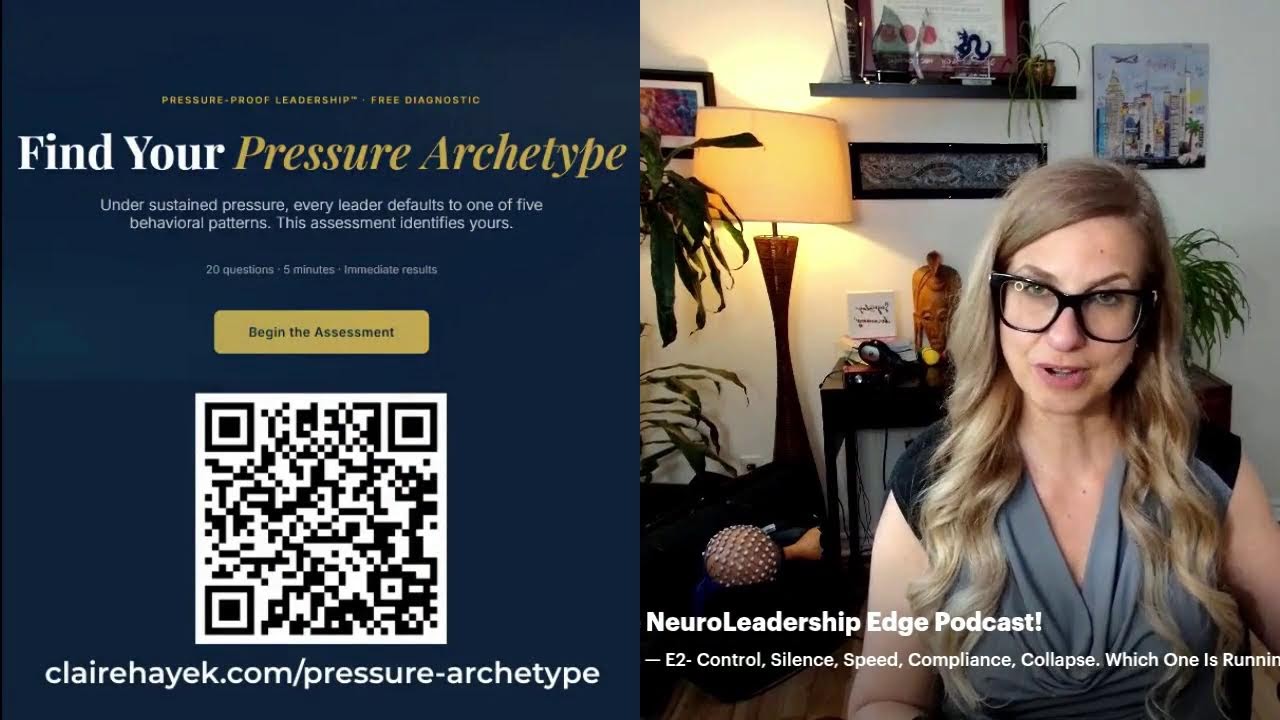
Claire Hayek identifies five pressure archetypes leaders fall into under stress: Control, Silence, Speed, Compliance, and Collapse. She shares how a VP's comment once triggered her compliance response, then explains how recognizing which pattern runs you automatically lets you pause and choose differently instead.
Chapters
I was in a meeting many, many, many, many years ago, earlier in my career as a junior engineer. I had my agenda printed. Back at the time, we actually printed agendas. I had my laptop open. And, you know, we're gathering around the meeting room. And the VP at this time started talking about the competition. It was the sales meeting, just to put it into context. He said their salespeople had that bigger-than-life personality, that natural charm that makes clients want to buy, that makes clients basically interested in what they need to offer because they just like to be around these people. And in that moment, in that same moment in that meeting, he made it clear We did not have that. Now, he didn't say those words, but it was pretty much meant. My body reacted before my mind could catch up. I remember I was boiling on the inside. I took a sharp breath, a deep breath, and my hand was like clenching. I was very annoyed by that comment because I didn't agree. And I thought we were a wonderful sales team. We were very likable people. And then I had a choice to speak up and say something or say nothing. And I would say I had about half a second to decide what I was going to do with what I was feeling. And what I actually did is that kind of thing. Most of us never go back and look at it closely. And that is what this episode is about. Welcome to the NeuroLeadership Edge. I'm Claire Hayek, NeuroLeadership expert, TEDx speaker, and founder of Mind Soul Purpose Team Building. Now, I spent more than 20 years leading high-stakes projects and teams under pressure. This podcast exists for leaders who want to understand what pressure does inside a leadership system and what to do about it. This is the 2nd episode in the Calm Under Fire series. Last time, we talked about how pressure becomes so constant that it stops registering as pressure at all. It becomes normal. Well, today I want to go one layer deeper into what that constant pressure actually builds inside you over time. Now, the 3 things in this episode we're gonna go over and you're gonna take away: the 5 patterns leaders default to under pressure and why every one of them made complete sense when it actually started. And what it costs when the pattern keeps running way longer after the conditions that caused it have changed. There are 5 of these patterns I see over and over in executive teams, in founders, in myself, in leadership teams, in people. Let's put it this way. They are trainable pressure responses learned over years, over time of repetition. Here's what they look like. I call them the pressure archetypes. The first one is control. Okay? When pressure hits, some of us default to control. I don't know if this sounds familiar. But you tighten your grip, you stop delegating, you start reviewing work that was already approved, you ask for updates that basically nobody's requesting and are probably not that relevant. It looks like you're being really responsible and you're taking control of the situation. The second one is silence. A pressure archetype of silence: somebody that withdraws. You stop communicating and you start reading as you're just not available. Your responses, and maybe in meetings or group conversations, are short. It's more like one word here and there. The person really going silent stops initiating and waits to be asked, and it can look really composed. It usually means someone is tracking every single or signal pretty much around them and saying as little as possible. So remember, these are pressure responses and pressure signals and pressure defaults. The third one is speed. I don't know if some of you recognize yourself in that one, but I recognize myself in that one. Speed— you're just rushing your decisions. Basically, you start trimming agenda items to move faster. You make calls without Circling back to your people or looping in the people who needed to know. It could look very decisive. But it's often just discomfort and you just want it to be over. So, you just move, move, keep going. The 4th one is compliance. Compliance pretty much defers upward. What does that mean, right? You pretty much agreeing and want to make sure that there's no confrontation. And but when you're doing that, you're just kind of getting rid of the pressure. By just agreeing publicly in front of people. You say yes and then you go quiet and you just disappear. And this is the one actually that refers to the story I shared earlier in the episode intro. Back in that meeting, I was in my, I would say I was in my late 20s, early 30s, around that time. That was about— 20 years ago, more than 20 years ago. And back in that meeting, I challenged the VP. Okay, so he said this about the competition there. They have the bigger-than-life personality, which we pretty much didn't have. That's what he insinuated. So, I held back and I challenged the VP. But gently, I framed the whole thing as a polite question. I did keep my tone as calm. I stayed within the lines. And then, I just let it go. The real conversation, the one about how we were all being lumped into one story that was not true, never happened. You see, the thing is, he lumped us all into this definition of not being bigger than life, whereas he was projecting his own personality. Now, I really liked this VP. He was my boss at the time. And I don't think he was aware of what he was doing. So he meant well. He didn't mean to insult us. He was just saying it the way it is. But he didn't realize that not all of us lack that personality, that many of us on that sales team were great with people, connect at a really deep human level, and had that bigger than life attitude. And the point I'm trying to make, it wasn't because who was right, who was wrong. The point I'm trying to make that I held back. I said yes. I went with compliance. I said yes to keep the peace, and I gently explained to him what it was. And and I didn't confront. I didn't ask the right questions. I didn't ask, "Well, what can we do to be better?" I just went over the whole thing just to kind of keep the peace, and so we can all agree. And then, of course, I went quiet after that. And this is compliance. is exactly as it shows up for a lot of leaders. We just hold back. It feels respectful, right, in the moment. But it costs you the real conversation every time. And had I been at the time aware of this archetype, I would have been able to manage it better. But I'll get to that in a second. Now, the 5th one is the last one. It's Collapse when you stop making decisions, completely avoiding making a decision, avoidance taking over decisions that are clearly yours. You start deferring to somebody else. You start forwarding to other people. So that's collapse. Your complete avoidance. So here is what matters about all five. Now every one of them. worked for you at the time, at some point under pressure, right? Control helped you succeed. Silence helped you belong. Speed helped you survive. Compliance kept you safe in meetings or situations where pushing back felt costly and taking a risk. My situation at the time. Collapse protected you from owning a decision you were just not ready To own. Now, none of these are bad things. They are actually intelligence applied to conditions that no longer exist the way they used to. I'll explain what that means. The problem is, or the trouble starts, when the pattern keeps running on its own. So you can default to this pattern to, to help you survive, but if this pattern is running in the background So if control is running in the background where it's not really needed, if it's not really necessary, then it's standing in your own way. And when these patterns keep running on their own, they're not serving you anymore. So you might leave a meeting feeling stressed, feeling tight, feeling tense, or you might— and I'm sure a lot of you can probably relate to this— you can maybe replay something And wish you had said it differently, and you cannot quite name why you didn't say it to start with. Once you recognize this pattern, these archetypes, or your archetype under pressure, it stops needing to run the show without your permission because you see it happening. You see it coming. You're like, oh, control is going to take over. Oh. I hear I'm gonna go silent. The idea is not to self-judge or self-criticize. It's just to be aware of the pattern so you can interrupt it in that moment. Take it, take a break, take a pause, and assess the situation and say, okay, I really want to control the situation now. Is this really necessary? Do I really need to control every single thing right now? Or would it serve myself and serve everyone around me better if I actually Act differently. So this is the idea. Once you know your pressure archetype, you could steer away from it, or you can make a decision to go with it, but in an aligned, focused, clear way, as opposed to an automatic, blindfolded, routinely way. Does that make sense? Now, I would love to take more time and tell you all about the pressure archetypes, but this is a solo episode, and I just wanted to introduce it. And I do want to let you know, in case you are not aware, that this is the Calm Under Fire series in anticipation to the release of my upcoming book on September 9th, The Leadership Skill Nobody Taught You: Calm Under Fire in the Age of Disruption. And again, it's coming out September 9th. And I really dive deeper into these patterns. I really dive deeper into these archetypes, and I weave in a little bit of my personal stories throughout my career, and as well as research that I've conducted with more than 60 senior leaders across 6 continents in different industries, where they also share their experience with pressure and what calm under fire means. And how do we define it? And how do we get there? Now, if you're interested to finding out which pattern is running you right now, I built a short pressure archetype assessment, a few questions and about 4 to 5 minutes in doing the assessment, and you will know exactly which one shows up for you and what it is costing you. Now, I don't dive deeper into the cost, but it will give you an idea. This is what this pattern is doing. This is how you're behaving. And this is where the gap is. You can do this. By going to clairehayek.com/pressurearchetype. About the book, getting released September 9th. If you're interested in joining the early readers group, I would love to have you. Why join? Because you're going to get exclusive access to the book before it launches, and there's going to be also some surprises and some events that will be only exclusive to the early readers group. Go to clairehayek.com/book to sign up. And finally, if you like this episode, if you find this podcast adding value to you week after week, please do subscribe, follow, share. If you're going to do one thing, please hit that subscribe button. And it can also show as a follow button. Every subscriber helps the show grow and reach further and bring you the caliber of guests that will really help you along your leadership journey. And we'll also provide more resources for you as well. All right, time to wrap up. Lead boldly, stay human, and make sure to turn every challenge into a gift. And I'll see you next time.
More from Claire


25 years in cybersecurity taught her this about staying calm under fire with Jonna Garber

Pause and Assess: The 10-Second Technique to Stop Over-Controlling Under Pressure #shorts


UN Mission Director On What Real Calm Under Fire Looks Like With Fredrik Sandvall





Book Signing at AIFEC Bogotá | What Pressure Does to Leaders and Why I Wrote This Book #shorts