IMPOSTER SYNDROME IS KILLING YOUR SUCCESS—HERE’S HOW TO STOP IT
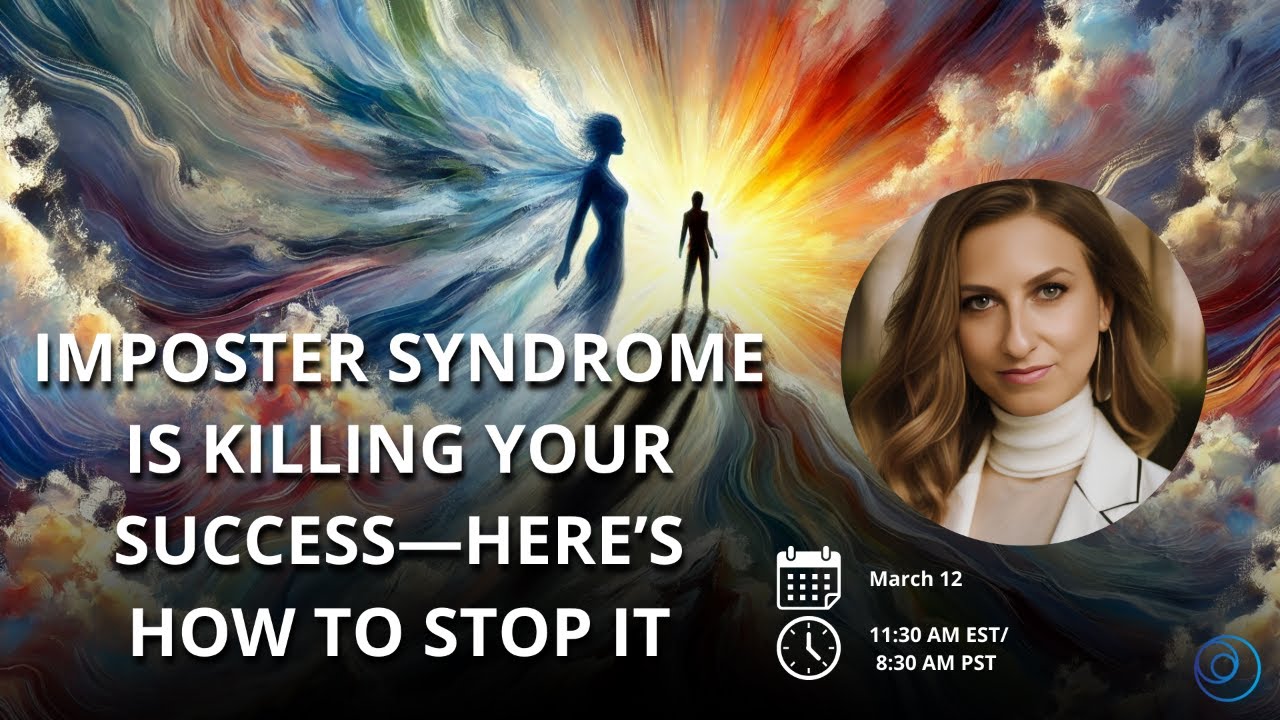
In this live session, Claire Hayek, founder and CEO of MSP Team Building and Innovation and a neuroscience‑and‑leadership strategist, guides participants through the nature of imposter syndrome, its neurological roots, and practical ways to neutralize its impact. She explains that imposter feelings arise from the brain’s survival wiring and a negativity bias, which creates a self‑critical "judge" that questions our qualifications. Using data (e.g., 84% of professionals experience imposter syndrome) and neuroscience concepts, she frames the problem as a mental‑fitness issue rather than a lack of ability. Claire introduces three actionable strategies: (1) Catch the lie – identify and question the self‑doubt narrative; (2) Flip the script – reframe thoughts to a learning‑as‑you‑go mindset; (3) Take action – act first, let confidence follow. She ties these steps to Positive Intelligence (PQ) “reps,” short, focused actions that shift the brain from analytical, threat‑driven states to a calm, creative “sage” state, building mental fitness. Throughout, she engages the audience with polls, chat prompts, and a challenge to commit to one concrete action within 24 hours. The session ends with a call to continue the conversation, an invitation to a future Gen‑Z leadership event, and encouragement to practice mental‑fitness techniques to overcome imposter syndrome.
Chapters
Hello, hello everyone. Welcome to today's live. We are talking about the imposter syndrome, and we all know that we all have it and we all suffer from it. Some of us have overcome the imposter syndrome, and some of us are still, still struggling with it. And basically, if you've ever thought I'm not good enough. Well, a lot of us have as well had that question go through our heads. So the only difference between people that have asked the question is that maybe some of them actually did something about it and they didn't let that stop them. And some of us, well, you know what, we just literally stopped and were completely blocked. Okay, so today we're going to talk about how we can overcome imposter syndrome. And we're going to go through very interactive tricks, tips and tricks, and try to understand why it's there to start with. To introduce myself, I'm Claire Hayek. I'm the founder and CEO of MSP Team Building and Innovation. I'm a neuroscience and leadership strategist, speaker, coach, and I specialize in resilience, high performance, and mental So I'm really, really happy that we're, you know, tackling on this subject. But before I start and dive right in, I would love to know where you're joining us from. As you see, there is a chat and there's comments. So do put it in the chat where you're joining us from and what is the one takeaway you want to be able to walk away with today from this live that really, really help Get the conversation going. All right. So again, imposter syndrome is a huge, huge mindset blocker and it's costing us opportunities, money, confidence, and it's not necessary. All right. So, well, before I actually start, I know I asked you to tell me in the chat where you're joining me from. Why don't you also tell me in the chat, on a scale of 1 to 10, how often do you feel like you don't belong or that you're not good enough? Okay, so you can say, you know, 9, 8, 5. So from a scale from 1 to 10, how often do you feel like you don't belong or that you're not good enough? I'm just gonna hop, hop on here onto the chat. And basically see what's going on. Here we go. All right. So I just put it in the chat. I'm not sure that you guys see my comments. I feel like it's not going to be posted. So I do want to introduce Connor from our team that is also here with me today. Hey Connor. And maybe just pose these questions, Connor, if you don't mind, as we go, because I can just I got a little message saying that I can't post messages to some channels. So I'm wondering if you even saw mine. So if you don't mind reposting it just in case. All right, Nikki. Nikki's here with us. Hey, Nikki. And she says 5. That's good. I guess, you know, again, the question is on a scale of 1 to 10, how often do you feel like you don't belong or that you're not good enough? 5 is good, right? If it's 10, it's like you always feel that you don't belong or you're not good enough. So thanks for sharing, Nikki. And I'm very curious also to know what you, what you, you know, I'm gonna have a whole bunch of questions send your way. So please do participate. Okay. So here's what's going on. So you think feeling self-doubt means you're not ready. Okay? That you need one more certification, one more year of experience, more validation before you finally, you know, you're ready. I mean, I've had this all my life. And it took me a while to overcome imposter syndrome. And every now and again, it sneaks up on me. But the only thing that's changed is that I see it coming and I stop it before it takes over and stops me from doing amazing things and helping people and add value to others. So, here's the trick. It's not about getting rid of it. I'm not sure if we can. I think having imposter syndrome is a little teeny bit healthy. But that's it. Don't let it stop you, right? So, if you're thinking you need more certification, more validation, another year of this, an MBA, a PhD, a doctorate, well, you don't. If you want to do it because you want to learn more things and just grow and be more knowledgeable, great. But don't do it because you're not good enough. Okay? So, I feel that that's a lie. That's a lie that we tell ourselves. And self-doubt isn't a sign about you're failing. It's a sign that you are growing. Okay, so it's a good thing. Okay, it's a good thing to have this little bit of self-doubt that you know gets you going like okay, I need to do better. I need to grow. But when it becomes a liability and it stops you from getting to where you need to be, this is where you know it it's it becomes like a basically a saboteur. It's saboteur. It's sabotaging you. And I call imposter syndrome in a way that really loud judge. And, you know, PQ, I don't know if you're aware of PQ Intelligence. It's a great, great platform. And basically what it's saying is that we all have our judge telling us, you're not good enough. You're going to fail. Who the heck are you to teach people this? You don't even know the half of it. What makes you so qualified? This is the judge. So, if you can catch the judge and go, well, hold on a second. I am qualified. I can do this and I'm here and I'm gonna do it and you're not gonna stop me. Well, now we're talking. Okay, so being aware that there's a judge stopping you from doing this thing is already a huge, huge step towards getting rid of the imposter syndrome. Here's a shocking stat: 84% of people experience imposter syndrome at some point in their career, including top CEOs, elite athletes, and best-selling authors. Imagine, right? This is a source from International Journal of Behavioral Science. If you don't mind sharing that. Well, neuroscience says that this happens because your brain is wired for survival, not success. It sees stepping into the unknown, doing something that you probably, you know, you've never done before as a threat, not an opportunity. So the brain job is to protect us. So it injects fear, the survival instincts come in and he's like, okay, stop, you shouldn't be doing this. This is a threat because we don't know what we're going to be doing in a second here. So I'm scared. So this might be very dangerous. So I'm going to send all the signals to kind of stop you. So this is in a way our brain's own, I guess, way to protect us, right? And all of these saboteurs, all of the judge, imposter syndrome and all that, it's all part of the brain doing its thing. But the thing is, when these are developed, usually it's when we're young. These patterns are instilled in our brain in order to protect us and help us cope with reality when you're like 5 years old. But when this stays with you, At an older age, but it will because it's inevitable because we've been just practicing that pattern all our life. Then we get to a point in time where it's stopping us from being who we are. It's putting lies in our mind and where it's not true, where we're not really stepping into our full potential. Well, this is where you need to step in and control these thoughts and understand and anticipate these saboteurs and anticipates that judge to anticipate that this is— I recognize this is imposter syndrome right here. And what is it doing? And what am I going to do about it? Okay. So it's a normal thing to have imposter syndrome, but there's— it doesn't have to stop you. It doesn't have to be a liability. That's the point here. Okay. So I'm going to put— actually, Connor, if you can put this in the chat as well. Moving forward, I'm going to let you share the comments, Connor, please. So I want to ask you something here. First poll question. Who here has ever hesitated to take an opportunity or raise their prices, for instance? Okay, if you're a service provider, etc., because they felt like they weren't ready yet. Okay, if you've ever had that, please do put it— put yes or no in the chat. I'm gonna pop this here. Give me a second. Okay. I mean, I have. I have. I'll put the first yes because I'm like, why? Why would I raise my prices? Or why would I apply for that opportunity? Or why would I apply for this conference to speak? Am I really qualified? Am I being reasonable? Who the hell am I to think that? But that wasn't me. That was my judge telling me. It's my brain's reaction to protecting because I'm like, okay, you're going to speak at this event and are you really an expert in this? Are you really ready to talk about this live? Are you going to screw up? Are you going to stumble? So it's all these fears and all these thoughts that just come rushing in and you feel like your energy just keeps going down and down and down and you curl in and you go, what the hell was I thinking? As opposed to, you have these come in and you go, I am ready. I know what I'm talking about. And I've got a job to do here, and so thank you, but I got this. Okay, so recognizing what's happening and just taking it in and say, okay, thank you for protecting me. You know all that. You don't have to thank your judge, but it just being aware of it, and then just move on. Don't let it stop you. Okay, so it takes a lot of mental fitness. It takes it takes really. some, some kind of sense of self-awareness to be able to first see it coming and be able to push it aside. This doesn't happen naturally, and there's a lot of ways, you know, to develop that mental fitness. And I'll, I'll tackle this on later if I have time. Otherwise, please do put in the comments mental fitness, and I will get back to you and send you some tricks on that. Okay, so Again, imposter syndrome isn't about your abilities. Am I able to do this? Am I qualified? It's not about that. It's about your brain's outdated programming, literally. Okay, so there's ways to fix it. Okay, here's one fact here that I want to talk about. Your brain has a negativity bias. Okay, write this down. Your brain has a negativity bias, meaning that it's wired to focus on what could go wrong instead of what is possible. So this is the starting point. So your brain is wired to focus on what could go wrong instead of what is possible. It's our own defense mechanism. Okay. And again, this could be overridden with when we are training our brain and we focus on our mental fitness. All right. Did you know that the average human brain processes 60,000 thoughts per day, but 80% of them are negative unless they're actively trained? So you see how important mental fitness is? 60,000 thoughts per day and 80% of them are negative unless they are actively trained. Again, this is from the National Science Foundation. Let me hop on the chat here a second and see what we got. We got Nikki here. We do see them absolutely here. Let me just share your comments. Thank you, Nikki, by the way, for sharing your thoughts here with us. Let me just continue on. About give me a second here. Sorry, guys. I'm trying to. I don't know why I'm having trouble today with with my chat. There we go. All right. You see what I just did there? Instead of panicking, instead of camouflaging, you just put yourself out there and be vulnerable. That's one way of overcoming the judge saying, "Oh my God, you're totally screwing up right now." Just put it out there. Just no time for that. Let's stay focused. Okay, so let's see. Let's see. What do I have here? About I have about fifteen minutes left. So I want to focus on how to shut down self doubt. Okay, and and really shutting it down before it actually stops you from taking. Action. Okay, if you are excited about this sharing these tips, please put it in the chat. Say yes, yes, yes. I'd love to hear from you. So there are three some proven strategies to to rewind your brain. One of them is catch the lie. Okay, so again, just see it, recognize it. So catch the lie. So when your brain says I'm not qualified, ask well. Where's the actual proof? Give me the proof. Where? How do you see me not being qualified? Okay. Now, one thing I want to share with you on this is that you might say, oh my God, I have so much proof. I haven't done a PhD. I haven't done a doctorate. I'm not an MBA. That person next to me is so much more knowledgeable. They know their material very well. You can come up with all kinds of reasons. why you're not qualified. But truly, you need to ask the question and say, do I have something to say here? Am I going to be adding value? Is my experience, life experience, good enough? Is my life experience valuable enough for me to share it even if I'm not an expert and I didn't study and have a PhD on it or a doctorate? Again, nothing against doing a PhD or a doctorate or an MBA. I mean, I did one. But If you're doing it for the simple reason that it's just you're not good enough, you're just self-validating yourself and pushing yourself in a way like, I need to gain knowledge because I'm never going to be ready. I'm never going to be good enough. Then, you're falling into that trap of the imposter syndrome. You're not really evolving. But if you truly ask yourself, from my life experience, from my work experience, from what I've gone through, from what I've The people I've helped, the thing or two I know about the subject. Am I really qualified? What is defined qualified? What makes you qualified? Is it somebody that has studied it that is more qualified than somebody that have lived it? I'm not quite sure. I think that you can have all the diplomas and all the master's degree and doctorate and PhDs and you can keep going all your life. But if you haven't, if you don't have the experience, then really, are you the expert or is that person that maybe even never went to school, doesn't even have a high school degree, but that applied, that took action, made mistakes, learned from their mistakes and lived the knowledge? Applied it, took action, and learned a thing or two about it that is more qualified than the other, than the latter. I'm really curious to see what you think about that. So you can put it in the chat. Do you really feel like— define qualified, right? So again, you can catch the lie when your brain is telling you, or we can call also the judge is telling you, oh, you're not good enough. Who do you think you are? What do you mean you're going to talk about this? Um, What makes you so special? What makes you such an expert? They're never going to listen to you, etc., etc. Just catch the judge. Acknowledge that it's there and just basically focus on the task at hand. Train your brain and anchor yourself and just go, I don't, you know, okay, thank you. But thank you. No, thank you. But thank you, right? So, One of the things that the PQ method teaches, which is PQ is for positive intelligence instead of IQ or EQ, is they call it PQ reps. And I don't want to go in details with this because that probably will be another discussion. But a PQ rep is 10 seconds to a minute, maybe, action that you take where you're fully aware, you're fully conscious, and you're focused on one task. And what that does, it basically puts you in the moment. I mean, you can call it, you know, when you meditate on something, right? It just calms your brain, brings it beta-3 down to beta-1 or even alpha depending on what you're doing. And it anchors you and it feeds your right brain, your creative intuitive sage brain as opposed to— and kind of literally gives you ammunition to get rid of the You know, the analytical, negative saboteur, judge side of your brain that's trying to protect you. So what it does, it gives you that extra focus and it gives you that extra mental fitness and that extra gray matter that you're going to need in order to be self-aware and be able to catch all these saboteurs and your judge or your, you know, imposter syndrome and say, okay, no, I'm going to keep going. It gives you that laser focus in order to just concentrate on what's important and by being the best you could be, who you're supposed to be, and not stand in your own way. Okay, so let's just, uh, keep going here. Um, let me see, do I have another poll question here? I'll wait for the third one. All right. So, uh, so these are what I'm sharing here are proven strategies to rewire your brain. Okay. So again, catch the lie, um, confront your judges like, really, where's the proof that I'm not good enough? Show me the proof. Where is it? Okay. Question, question these thoughts. So, um, second one, why don't we flip the script? It's something you could do. Instead of saying, I'm not ready, try, I'm learning as I go, just like everyone else. Okay, so write this down. When you hear, I'm not ready, I'm not good enough, I don't know if I'm gonna fail, I think I'm gonna screw this up, okay, instead of, you know, doing that, again, we talk a lot about reframing. Stop and reframe and say, I'm learning as I go. I might not be perfect. I'm learning as I go, just like everyone else. We all, no matter what level we're at, we're still learning. Okay, so again, I'm learning as I go, just like everyone else. Okay, so if you keep telling yourself, okay, you keep telling yourself you're not ready and you keep feeding the imposter syndrome, your brain will look for evidence to confirm it. Okay, and it just They call it the reticular activating system, the RAS, the filters, that the filters what your brain focuses on. So that reticular activating systems will do the job of filtering what your brain is focusing on. So if you, if again, if you keep telling yourself, I'm not ready, I'm not good enough, etc., your brain will look for evidence to confirm it. So your inner thoughts, your inner dialogue, Has a lot of power over what's happening in your actual world and how successful you are, how performant you are, how productive you are. If you're standing in your own way, or if you're if you're really killing it and you're doing you're you're being you know you're you're really stepping into into into your full potential. Okay, it's your brain, and if you're not conscious of that and you're not able to stop and reframe it, then you're literally feeding. Your saboteurs, you're feeding the judge and saying, yeah, keep convincing me that, just give me more evidence on why I'm not good enough. Okay, so again, stop and reframe it and tell yourself, I'm learning as I go, just like everyone else. I'm not perfect, but I'm learning as I go, just like everyone else. Okay, so why don't we drop in the chat, you know, really would love to know, like, If you agree here and drop a yes in the chat if you've ever downplayed your success by saying, oh, it was nothing. That is so imposter syndrome. I've done it. I've done it so many times. You know, when somebody gives you a compliment or says, wow, that was amazing and you really changed my life, or you really impacted, you made me feel good today. I needed to hear that. And then you go, You downplay it and go, oh, that was nothing. Yeah, whatever. No, that was just nothing. Downplaying our own success. Drop a yes. I'm actually very, very curious to know if you've ever done that. And I'm gonna just put this out there here. Just again, go over to the chat. All right, Nikki. Nikki, let's see what Nikki wrote here. Nikki, yes, I was hired for a position in 2008. That I had severe imposter syndrome. I was amazed that they had the faith in me that I didn't really have at the time, but I killed it. That job was a huge success. I proved to myself that I could do anything if just given the opportunity. Fear is not something I entertain anymore when looking at what I am capable of. I know I am capable of great things. Always congratulations, Nikki, on that. So basically, Nikki, what Nikki achieved is being able to anticipate the judge and getting it under control and anticipating that fear and getting it under control. And not only that, is to feed that, you know, her mental fitness by doing that and keep doing that. She is getting stronger. Her brain and mental fitness is getting higher and higher and higher, more resilient. And more self-aware, and so she's able to step into her sage instead of let her saboteurs control the situation. So congratulations, Nikki. I have also here a comment. I did see a comment from Rochelle. Let me see here. Yes, yes. Okay, so the question was if you've ever done played your success by saying, oh, it was nothing. Okay, I asked you to put it in the chat and put a yes in the chat. So absolutely, I think we've all gone through that. So, and this is a good one here too, Nikki. Thanks for sharing. Qualified and capable are 2 different things. Okay, that is such a good point. Thank you for sharing that. So let's keep going here. So we talked about You know, I'm sharing how we can stop self-doubt, how we can stop imposter syndrome. So first one, catch the lie. Question that lie where your brain is telling you, I'm not qualified. I'm not good enough. It's like, where's the actual proof? Give me proof. Come on, bring it on. Second one is flip the script. Stop. And instead of, you know, reframe what your thoughts are saying. If it says I'm not ready, I'm not qualified, I'm not good enough, etc. Just like, I'm learning as I go, just like everyone else. Okay. So catch the lie. And the third one is take action. So once you do that, you catch the lie, you reframe. The third thing you need to do is take action. Confidence doesn't come first. You act first, then confidence follows. So this is where we're talking about qualified versus being capable, right? You might not be as qualified as somebody else. But if you're taking action, the confidence will follow. If you're missing that confidence, just take action. Just do it. And you learn as you go. And so this is where you reinforce those different patterns and you weaken the imposter syndrome patterns, the fear. Okay? And the thing is, the more you activate, you know, that wise, that sage brain, your calm, clear-thinking prefrontal cortex basically. So where you're not operating in fight or flight, you're not in beta-3, You're in the lower beta level or even alpha. So the more you activate that sage brain, the weaker your saboteur voices— fear, doubt, perfectionism, so on and so forth. So this is so important that you actually do something in order to boost that mental fitness because that's going to help you along the way and weaken this imposter syndrome and weaken all these negative voices in your head. that are actually stopping you from stepping into the perfect version of who you are, who you can become. Again, not perfect but the best version of who you are, who you can become. Okay, so again, the third one is take action anyway, even if you think you're not good enough, even if you weren't able to reframe. Just do it. Just do it and it'll come. So when you act, the confidence will follow. Okay. So, um, the actual— the thing is, if you weren't capable, then you wouldn't even have the opportunity in the first place, right? I mean, sometimes people see, um, see it in us, see like what we're capable of, what our strengths are, and they give us the opportunities. I think Nikki just, uh, just shared that. But think about it, if you weren't capable, you wouldn't even have this opportunity in the first place. And sometimes, you know what, you may not have the opportunity. You can actually create your own opportunity if you just act and with confidence. Okay, so you don't have to wait for it. You can also create it. All right, let me just— there's so much to talk about with imposter syndrome. This, I think, is going to be a whole day discussion. I'm going to ask you here, whether you're listening to this later or you're listening to this live, I'm going to ask you, I'm going to share a very quick challenge with you. Okay? Something that you can do today to break the cycle, the imposter syndrome cycle. So I want you to write down one opportunity you've hesitated on due to imposter syndrome, fear, self-doubt. Okay? So think of one opportunity you've hesitated on. Due to self-doubt, fear, or imposter syndrome. Then I want you to pick one action step. Basically, action. Okay, so sending that email, making that ask, calling that person that you're hesitating on calling, raising your price, etc. So pick one action step and commit to doing it within the next 24 hours. So In order to break the cycle of imposter syndrome, self-doubt, fear, it's little steps. It doesn't have to be a big thing. Just take one, think of one thing you've been hesitating on and take one action step and commit to doing it from now until tomorrow, within the next 24 hours. Okay? It's all about taking action in order to rewire our brain differently and instill new patterns. that would lead us more into stepping into our full potential. It's the little steps. It doesn't happen overnight. The thing is, the interesting thing about this is the fastest way you could overcome or beat imposter syndrome is by doing the things you're afraid of before your brain talks you out of it. That would be the best thing. It's like, just do it. But if your brain is quick, and most of the time it is, And it's telling us all this. Now, we know that we could question. Question is like, where's the proof? Second, reframe it. It's like, okay, I might not be the expert but you know what? I'm gonna learn as I go. And third, just take action. All right. So, I hope this was helpful for you today and you have a lot of takeaways from today's live. Our time is up unfortunately. And the thing is that you need to— I just want to leave you with a couple of things here. Your imposter syndrome isn't going away. Okay, the question is though: Are you going to let it run your life, or or are you going to act anyway? Okay, I know people say, "Look, I don't have the imposter syndrome." Great, bravo! But every now and again, if we know we are low on energy, we're completing in our analytical mind, we're feeling down. Maybe because we're not feeling good, we're sick, or we're not, you know, something is going on that's really causing us, our brain to, you know, to be in the negative, you know, the fear, the doubt, the anxiety and stuff like that. And we're presented with a situation where we can step up and take action. We might not feel like, oh yeah, I'm good. I don't have imposter syndrome. You might fall into the, oh my God, here I am. I'm doubting myself. It's normal. It's not about not having imposter syndrome. It's about recognizing the self-doubt and the imposter syndrome and making sure that, you know, it might pop in every now and again. Okay? But acting on it anyway and recognizing it and not let it control the outcome and how you run your life. Okay? So I want you to type fearless in the chat if you're ready to stop Waiting and start doing. Okay. So, type fearless in the chat if you're ready for that. And I just really, I'm very excited about hearing of the challenge that I threw at you here. And do please share it in the chat if you have thought of one opportunity you've hesitated on and you did pick one action step. And I want you to say, I commit in the chat. Onto taking action in the next 24 hours. And I'm going to hop onto the chat here and see if there's any comments on that. And if you, again, if you're listening to this later, please do share it with us because that helps other people as well. So again, confidence is built by action. It's not by waiting. It's never going to be the perfect time to do something. So just act. And the people you admire and the big successful people, just a reminder, Reminder felt like imposters too. A lot of them actually share that, and but the only difference is they moved forward anyway, and so can you. So can you. Okay, now again, please do reach out if you want to know more about mental fitness and how I can help you get there. There's a lot of great ways to do it, and it's. And it's a daily practice basically. And it really is amazing how powerful you can become and how you can be so successful and high-performing and at peace and healthy and just get exactly what you want out of life if you train your brain, if you work on your mental fitness. So you can put that in the chat if you want more information about mental fitness, just put mental fitness in there. And I'll get back to you. You can reach out to me on social media. And reminder, well, next week, it's a very interesting conference. I'm actually extremely excited about this one. I'm bringing to the spotlight my Gen Z team. So, it's going to be Gen Z Straight Talk: Leadership Through Their Eyes. It's next Wednesday on March 19th, same time, 11:30 EST. And They basically, you're gonna hear it straight from Gen Zs, what they're looking for, what is important to them. And, you know, kind of also unraveling and demystifying everything that has to do with this generation. I mean, I'm far from being Gen Z and I've learned a lot. I think they have a lot to teach us. And it's great, a great opportunity I find that we can highlight them here on this live. where you could ask directly questions to them. And we're gonna have 4 members of our team join us. And I put up the QR code here. If you are watching us live, please do scan it and RSVP and share it. And I'll see you, I guess, next week, hopefully. And be good. Practice, practice, you know, stopping your judge, recognizing imposter syndrome. and acting. All right, and I'm looking forward to hearing your success stories and hearing how this method helped you move forward. Have a great rest of the day, everyone, and I will see you very, very, very soon. Okay.
More from Claire


25 years in cybersecurity taught her this about staying calm under fire with Jonna Garber

Pause and Assess: The 10-Second Technique to Stop Over-Controlling Under Pressure #shorts


UN Mission Director On What Real Calm Under Fire Looks Like With Fredrik Sandvall





Book Signing at AIFEC Bogotá | What Pressure Does to Leaders and Why I Wrote This Book #shorts