Lead Without the Title with Lance Robbins
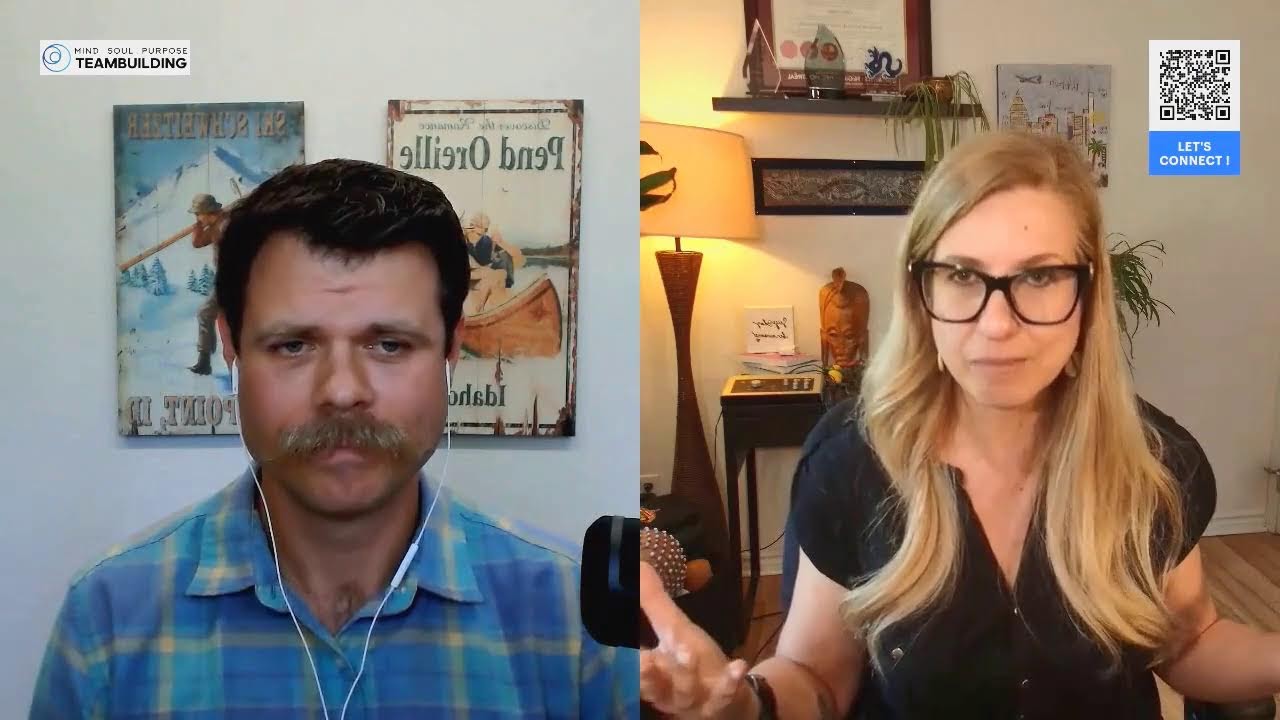
Lance Robbins, CEO of Keel HR, shares a three-step de-escalation script that works by moving angry people from their amygdala to their prefrontal cortex: label the emotion, acknowledge it, then ask "What can we do together?" Leadership without a title is just influence, whether it's stopping bullying with a word or getting teammates to post daily updates by doing it first.
Chapters
Today, how to keep your cool, lead without the title, and get people out of freakout and into solutions. Welcome to the NeuroLeadership Edge, real talk for bold leaders who want to master their mind and own their voice. I'm your host, Claire Hayek. NeuroLeadership Coach, ex-engineer, and lifelong musician, founder of Mind Soul Purpose Team Building. We're trying to keep it really practical and human here. So, welcome to the show. By the end of this episode, actually, you'll have a quick script to de-escalate any hot moments. We're going to also share a simple way to lead even if you do not have the title. And as always, I'll share some practical tools. NeuroLeadership tools that you can apply this week. And today's guest, Lance Robbins. Let me tell you a little bit about Lance. He's a speaker, workshop facilitator, and the co-founder and CEO of Keel HR, a human resource outsourcing company. He focuses on helping remote and distributed teams thrive and teaches about leading effectively in the modern remote workplace. Lance is quite busy too. He lives in northern Idaho with his wife and 3 children who keeps him really busy from what I heard. So, Lance, how are you?
Oh, thank you. Yes, very good. And yes, they keep me very busy, Claire. Thank you for having me on the show.
Yeah, well, you know, really happy to have you. Lance, you have quite a story and I'm really curious to dive right in. So, tell us about that very high, hot moment, pressure-filled moment that really shaped how you lead today and how you're able to bring that de-escalation methodology that you apply with a lot of teams that you coach as well.
Yeah, okay. It's not a unique story in that this happens all the time at work, right? Something goes wrong. Something goes sideways. It's your fault. It's not your fault. It doesn't matter whose fault it was, right? Something's gone wrong. Somebody's upset. And if it's your boss or, or your, your executive peer, and you're the target of the emotion, it can be a really uncomfortable scenario.
I think the keyword is here, and you're the target, right? Because that's when it's addressed to you. It's a whole different ballgame. Keep going.
Yeah, no, good point about target because really, spoiler, this whole conversation is about moving the target off of yourself, right, to where it rightfully belongs. So in my scenario, and not the only time that this has happened, but somebody is frustrated with me. This is a C-level peer who's come to me about, you know, a contract that wasn't done right, doesn't look right, feels like Maybe it's not serving this person the way he felt they should be served. And so he is upset and feels like he needs to express, you know, this emotion. And so he comes to me and right out of the gate, I can tell, right? He's angry. He's angry. The voice is raised, you know, leaning in, colorful language, accusations. Um, and so there's 2 things. The first is to acknowledge that he feels that way. Wow, look, I understand that's got to be really frustrating for you. I hear you. And sometimes that's just listening for a while, right? Letting them get it off their chest, all the while choosing to not internalize any of the language. Now, I think it's important to call out here There's a difference between someone upset and getting some things off their chest and abuse, right? In an abusive situation, right, I would say, stop, you cannot speak to me that way. I'm going to hang up and you can call me when you're ready to speak to me professionally.
Of course. Yeah.
So I don't want this, uh, message to be taken as just accept abuse, right?
Right.
But I understand that I can be in the room with someone who's, who's wading through this frustration, disappointment, and expressing frustration without taking this personally. And then I can say, wow, I hear you. It sounds like you're really frustrated, really upset about this. What can we do about it? And that's the question that you teased at the beginning was, what can we do about this? Is there any solution that would make this better for you? And so from there, we start talking about ideas because I moved the conversation away from, I'm so angry about this, to, well, hey, maybe we can do something about it.
Right.
I think people feel trapped. They feel like they don't have an option. And that's a scary place to be. And so you get a lot of emotion. In this executive's case, it came across as anger. In other, other cases, it can come across as, as sadness, right? Someone may come to you with tears. And so acknowledging, I see that you feel a certain way about this, but then saying, let's look for a solution together. There's always options. There's always options. You're not trapped.
And that's the thing, Lance. The fascinating thing about this is that if we just do the parallel with neuroscience and what research shows and what's happening in somebody's brain when they're heated and they're upset, frustrated, sad, whatever, that person is Basically, they're not in their prefrontal cortex, the CEO of your brain. You're not thinking anymore. You're 100% in the amygdala, which is all the where the emotions run and and all that, right? Like there's no reasoning at this point. The thinking is no longer there. It narrows, and what you're saying, which is thank you, thank you for saying that, is that what you're doing by going through these steps is. Lowering the heat by pointing to action. And when you point to action, you bring them back into their prefrontal cortex. Now they're able to reason, and automatically the body calms down because they're no longer in the amygdala where everything is just firing like crazy and all the hormones and, you know, are just fired up. Labeling, labeling what you see. I can see that you're frustrated. I can see that you're upset. Right away is just already kind of brings them back into the, oh, self-awareness, right? And what can we do is the label and action, right? And then it puts them in that problem-solving kind of situation without shaming. And that is key, right? And because otherwise, shaming puts them back in the amygdala. You just escalated everything.
Right. Yeah, the defense comes back. And sometimes in these conversations, this is a rinse and repeat process too, right? Because I'll ask the question, all right, let's look for a solution together. And those feelings, they come back around. And before I know it, the person I'm talking to is back into the amygdala part of the brain, you know, feeling those emotions again. And so it's just a rinse and repeat. Yeah. Okay. I can, I can see that you're getting frustrated about this again, but let's focus on finding a way out of this problem. Yeah, you know, whatever language you choose to use, you can say that in so many different ways, right? But that just brings them back to finding a solution together. I'm not your enemy. We're going to collaborate so I can help solve this problem, even if I might have been part of the problem to start with, right? Because we all make mistakes and that's okay.
Yeah, yeah. Basically, just, uh, it, it's honestly just rationalizing a little bit certain things in a very Obviously, low voice and empathy. The thing is empathy is such a powerful tool because it's kind of like the best move you can do. And just by asking, what can we do? Like, I hear you. I'm actively listening to you and I hear you. I feel you. I feel your pain. Whether it's your fault or not, it doesn't matter, right? You can apologize. But then, Just moving ahead. Okay, I see it. I recognize. So we can just all calm down without saying calm down. Of course, that's the wrong thing to say. And then just the, what can we do, puts them right away into the calm down. It just automatically puts them into the calm without even saying the words. Because now we're moving to like, okay, I really want to get rid of this problem. I want to help you. I want us to work together. This is very, you know, some people may be listening to this and going, well, yeah, but you'll be surprised. A lot of people who are in this, where they're being the target, where somebody's coming at them, it's not our instinct to go straight to, I am mindful, I'm self-aware, I know what's happening right now, I'm not going to let my prefrontal, my brain go to the amygdala, calm down, breathe. All of that is not happening. The automatic thing that happens is that it's the mirror neurons that start firing and wiring. And then, so when the mirror neurons, you're basically going to mirror somebody unless you're mindful. You're not able to be calm when somebody's heated because we mirror each other. We're just very connected human beings. So being mindful and mentally fit means that you are able to contain yourself. Be mindful, have empathy towards that person even if they're coming at you, and help them move into action. It's such a powerful tool. And thank you for sharing that real-life story because honestly, I think this is the best way to really understand how we can relate to it. Maybe somebody listening right now going, oh my God, this just happened yesterday, right? So yeah.
And it's not easy. Like you said, it's not the natural reaction. Because it's scary to be confronted with a lot of aggression or emotion. Yeah.
And we're not always ready. You know, it also depends on your level of mindfulness and energy that day. You know, you can have all the good intentions to be empathetic, understanding, etc. But if you're not well, if you're not feeling well that day, and they came at you at a very low energy moment and lack of awareness moment, I mean, of course, they're just going to trigger you 100%. But if you have developed those habits before, you have applied it, you said rinse and repeat. That means your brain knows there's a different way. And you've developed those neural pathways, that pattern that can calm somebody down just by asking, moving away from the confrontation and into the solution. Then, your brain is more likely to move that direction even if you're low on energy because it's done it before and it practices. Every time this happens, so it's not like an unknown. I'm not sure what to do, so I'm just going to go straight to my amygdala. Your brain is not managing; you're managing your brain. You're the one in control here because you've developed those nerve pathways. This is important. This is why the rinse and repeat, what you said, is important because it's not about doing this in theory; it's applying it even at home, even with with family, with. your kids or at the workplace. It doesn't just— it's not workplace-only related. So these are neural pathways that you just— it's like build that muscle, build that bicep.
Yeah.
Eventually you just, you can just make— do the curl. You're not even thinking about it. This is easy. But it doesn't come just like that. You can't lift like, I don't know, for me, like a 40-pound bicep, like bicep curl is what, let's say. I'm not gonna be able to do that if it's the first time I'm doing it. I hope that helps our listeners basically to kind of make sense out of this and how this works. But let me ask you something else. I'm really curious to know a bit more about your leadership story in a way. And I guess the lesson or the mindset shift that you made that kind of you want to bring and share with people here listening. On your leadership skills, on your leadership mindset, etc.? Like, anything happened or anything that you want to share that really helped you make that shift and understand how things work?
Yeah, I mean, there's so many people and resources that have been influential in how I think about leadership. And time and practice shapes it in a huge way as well. But I, if I really kind of think back to something that stands out to me, and this is related to the title of the show today, when I was, I think my junior year of high school, 11th grade, the school I was at put a, um, a youth leadership course together. And I was like, oh, I'm interested in this. And so I signed up and I took the class. And day one, the lesson, the takeaway from that day one class in 2002, 2001 was the simple phrase. It was from a John Maxwell book, but it said, leadership is influence. And for me, that has been my— I latched onto that and have embraced that concept.
Yeah.
that definition of leadership, that it's influence. And so anywhere I am, whether I'm an appointed leader, an elected leader, a hired leader, I can lead because I have the opportunity to influence someone or something. I'm never without, I'm never without power in a situation because I can influence something. So I can, I can lead. And so, from there, I've been able to apply that all throughout my career.
That's such a great, great share. Thank you, Lance. I'm actually just, I just want to make a point out of this. I really want people listening or watching us right now is to write this down. You know, I mean, and I'm hoping maybe the, maybe a person listening who's a junior or not even in management. I'm curious, Lance, like what's one place, in your opinion, they can practice Leadership as influence. This week, this month, this year, how can these the young generation and you know maybe they are listening next to mom and dad? I don't know. But how can they practice that?
Oh, the opportunities are endless. Yeah. So so let's let's make um let's make a scenario here.
Yeah.
All right. Let's let's start for the younger crowd, right? You're at school.
Mm-hmm.
Been a while since I've been at school. I already, I already tipped my, my hand on how long ago that was.
But we're still cool. We're still cool. Yeah, go ahead.
The kids think I'm cool. At least I like to think they think I'm cool. Okay, um, getting back on track here. In a, in a peer setting, right, you can have— you can be a, a leader in that you can influence behavior of a group. So I'm thinking about— okay, here's a, here's a real life example. There was a kid in my class who was, I don't know, kind of the odd kid and was often the target of bullying. And I remember one time some of my friends were just being hard on the kid and I was like, hey, give him a break. And they just kind of shrugged and, and left him alone. And like, I wasn't anybody special. I was just a peer, right? But I just said, give him a break. Like, I didn't make a big deal about it. I didn't confront anybody, but I just influenced the situation just enough.
You basically, by just saying that, you Made them stop and think for themselves and make that decision.
Yeah, and I don't know that it created any significant lifelong change or anything. But for that scenario, for that person—
It's simple things. I hope that serves you, anybody listening here. And maybe something you can share with your kids as well. You probably already shared that with your kid. But you know what? It's not easy for— I think anyway, personally, I always talk about the younger generation on this. Podcast because they're our future leaders. And basically, they really don't have it easy as far as I'm concerned. But with all the pressure with social media and everything going on and AI right now, all the disruption, I don't want to talk about this as a negative thing. I think there's great things about AI. Social media is a whole different thing. It could be used for good, but unfortunately, it's not what's happening with kids and bullying and all that. But all this to say, it's a whole different world out there. This is not the same world we grew up in. And again, I'm not comparing my age to yours and meaning that I'm older than you. I'm pretty sure, Lance. But anyway, that doesn't matter. I grew up in the '70s. It was a whole different world, for God's sakes. You know, we didn't get to touch the computer until like university. It's just crazy. But I can't even imagine what kids are going through right now. And if these small little tools can help them in a way become more human, and connect better and be able to transcend all these challenges that they'll be facing, then so be it. Then we've done our job as far as leaders are concerned. Right now—
Can I give one more example here before we shift gears?
Yes, please do.
Go ahead. Yeah, I'm thinking about, okay, we talked about kind of this in-person piercings. But what about this digital world that we live in? You talked about social media. So like in the digital workplace, You know, whether you're on Teams or you're on Slack or however you're working, you've got an opportunity there too. I can think of, of one teammate of mine that started a practice of at the end of each day, he would post a quick, like, 5-point update on a few things he did that day and what he was going to work on the next day. Nobody asked him to. Nobody made a policy that you have to do this.
OK.
But pretty soon, 3 or 4 others started, that's a good idea, like a nice way to get your own thoughts out there. And so your team sees what you're working on. And pretty soon we had a practice at the end of the, at the end of the day, we were just dropping in, you know, quick little updates, whether you do it daily or you did it weekly. But this person who was not the CEO, was not an executive, just had the opportunity to say, here's what I'm up to. And it created visibility and other people could say, oh, that's what he's up to. Cool. Well, here's what I'm up to. Or you can do it on your calendar. A lot of places, you know, where you see the events on your teammates' calendar, right? Somebody might say, I'm out because I'm taking my kids to the baseball game. Where other people would say, busy.
Right.
So we can start to normalize being human at work. I'm eating lunch. You can't have a meeting with me at this time. I'm dropping my kids off at school. Where we want to separate so much of our humanity from our work. You've got an opportunity there. So, these are just like micro opportunities to influence the people around you, whether you hold a position of leadership or not.
This is the perfect segue to my next question to you. I mean, you specialize in remote and distributed teams. And I think this is a great tip. What's a tip you would find that most companies miss? Like, so we're talking about maybe leadership-level culture-wise. So, these are things on the operations level, on the teammate level, etc. But what is one thing you think that companies and organizations miss that maybe they could, if they apply, it could really make remote and distributed teams work much more pleasant and much more productive, engaged, and present, right? Yeah.
Okay, I'll take this a couple different directions. So, on the operational side, documentation. Accessible, clear, organized documentation.
Okay.
If I am on the Pacific time zone and I have a colleague Asia Pacific, our overlap is so small, we need to be able to asynchronously share information and not be dependent on getting real-time answers from each other. So having— whether that is, is handbook or knowledge base.
It's right, yeah.
And it's a lot of work. It's a lot of work to organize things and set them up so it's clear where it is and then build the habit, you know, the muscle, the practice of anytime I've done something, I'm going to put it into this database so that way the rest of my team, when I'm asleep or I'm taking my kids to the baseball game, like they can access what's been done.
The information I need. I'm not stalling. I'm not stalling anybody. Everybody can still work because we have the procedures out there. You know, we've shared it.
Yeah. So operationally, that's, I think, a really core feature of organizations that do remote work really well. On the more, more personal side for leaders, right? If you're a leader listening to this, be present and be visible and be accessible to your team.
Right.
Because we are never going to walk through the door of an office and everyone's going to see us. We're not going to walk past somebody's desk We're not going to have the privilege of physical proximity. You have to make yourself present in the digital workspace.
Mm-hmm.
Because I've worked with CEOs who only reach out to somebody if they have a specific need, and that's the only time you'll hear from them. That's the only time the company sees them. They don't show up in the general channels, the, the water coolers. They're not showing up with their camera on at all company meetings. They're not showing up. And making themselves accessible. If you want to be perceived as someone that is interested in your team, then you have to make it appear that way to the team. Of course. Not just think it in your own mind, because no one else can feel you thinking that.
Makes total sense. And, and again, that works with mirror neurons. Even if you're remote in 2 different regions across the globe, being present on screen and expressive, genuine, authentic. People will read that. They will feel that energy. We are energetic beings. We transcend just the body. We talk about mind, soul, body. It's a feeling when somebody's angry on screen. Watch everybody's faces. They actually have an AI now that measures the facial expressions to summarize what kind of feeling is going on or energy and culture during meetings, the positivity and A whole different levels. I don't have the details of the study, but just from facial expressions. So imagine you're not even there. You're in a meeting and you have a paper over your head. Who does that? Nobody does that in person. So why would you do it remotely, right? I mean, who shows up to a meeting in person? Hi everyone, how's it going? And you're— you have a literally, I don't know, brown bag over your head. So when you think about it that way, you're like, of course I'm going to turn my camera on. You know, that makes total sense unless your camera is broken.
That's fine. Yeah, it's a debate, right? Some people say camera is always on. I think there are scenarios where it makes total sense to not have your camera on. But share with your team why.
Exactly, exactly.
Don't pretend.
And then don't expect people to turn their camera on if you're not. So, it's all about modeling. It's all about inspiring and walking the talk. The leader brings the weather, whether you like it or not. You know, you took that responsibility. You gotta live up to it. All right, time is running out. It's crazy how this is Flying. Let's jump into the rapid fire. I have 2 questions for you. Okay, 30 seconds, short answers. First sign a remote team is drifting.
Go! Oh, it's quiet in Slack.
All right. A book, podcast, or talk that rewired how you lead?
Patrick Lencioni's The Ideal Team Player and Adam Grant's Think Again.
Okay, write this down, people. This is gold. All right, Lance, thank you. Let me just move on quickly here to the listener challenge. So, you should be able to see it here on screen. If you're listening to us, obviously, take some notes. And I always leave links in the comments. So, do check back. So, do this. This is what I recommend. Run a human check-in this week. All right. So just, just here's a, here's an example. Message 3 teammates. Quick check-in. Hey, how are you? Really? How are you? Okay. Not just, hey, how's it going? How you doing really? Next thing, maybe just ask anything making work really hard right now. And what can I do? What can I remove? What kind of problem I can get rid of for you today? If you can anyway, right? Then all you could do is just remove that problem. Remove that one blocker just within 24 hours. You know, it might come back the next day. But this is small wins that really build trust fast, whether you're in person, remote, wherever you are. So, this is your challenge for the week. Do let us know how it goes. Comment in this podcast. You can tag me and tag Lance and find us on LinkedIn. And we'd love to hear from you and see how that went. I just want to quickly wrap up and invite you to subscribe and follow this podcast. If you want deeper dives, do follow the newsletter on LinkedIn. You'll find a QR code here where you can scan it and you'll have access to a whole bunch of resources, news, webinars coming up, masterclasses happening, as well as free resources you can download. So, take advantage of it. And if you're listening, via audio, check the comments. I always leave my link here. Please do reach out. I'd love to hear from you. And Lance, any last words to our audience before we wrap up here?
Thank you so much for having me on the show, Claire. It's always fun to chat leadership. And don't think that you're not a leader just because you don't have that title. You can totally influence the world you're in.
I love it. Ripple effect. Let's go. Everybody, thanks for joining us. Remember, lead boldly. Stay human. Stay true. Stay authentic. And find that gift in every challenge. There's always a gift. I usually try to find 3 gifts. Maybe I have another challenge for you this week. Try to find 3 gifts in a crazy challenge that is driving you nuts. And again, please do reach out. Let us know how it goes.
More from Claire


25 years in cybersecurity taught her this about staying calm under fire with Jonna Garber

Pause and Assess: The 10-Second Technique to Stop Over-Controlling Under Pressure #shorts


UN Mission Director On What Real Calm Under Fire Looks Like With Fredrik Sandvall





Book Signing at AIFEC Bogotá | What Pressure Does to Leaders and Why I Wrote This Book #shorts