3 Goals You NEED To Have As A Coach/Trainer (Get Your Players Results) - Podcast Episode 97
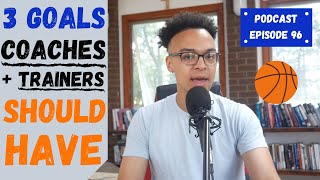
Ethan Khoza outlines three goals for coaches: teach players to read the game and make decisions in realistic contexts, build their ability to train themselves through ownership and self-analysis, and develop life skills like communication and resilience that transfer beyond basketball.
Chapters
Foreign welcome to the Visionary Master Training Podcast. Appreciate you guys, podcast, Spotify, Pandora, whoever else you may be listening and of course everybody right now who is watching on YouTube. Do me a favor here on YouTube right now, drop a like, subscribe. If you're new, leave a comment for me. If you're new, let me know how you found my channel. Let me know what you think about the podcast. You guys have suggestions for episodes, you guys have questions, you guys have comments about anything I talk about, let me know in the comments. I always really appreciate interacting with you guys and seeing what you guys have to say about everything. So I appreciate you guys who are watching and then everybody who's on Apple podcasts right now, do me a favor, leave a review, let me know what you think about the show as well. We'll hop into it. Today's episode is going to be geared towards trainers, coaches, but I think there's a lot of takeaways for players as well. So if you're a player, I think you're going to get some value from this too. Just when it comes to things you can approach your sessions, your training with so that you can get the most out of what you're doing, the most out of the time that you have, I think that's really the overall premise of what I want to talk about today is just how do, as coaches, how do we make the most of the time we have with our players? Right? How do we benefit them the most? How do we help them get better long term? Okay. And this goes from. This is. This is much more than just from a workout perspective. Okay. What drills are best? What, you know, how long is the perfect workout? How many shots do we need to get? What should the balance be between this and that when it comes to shooting or ball handling or decision making or whatever. That's, that's, that's like, that's not even what I'm really focused on right now. This is more so kind of an overall, like meta view of everything. When it comes to just three things that I think should be your goals when it comes to the players that you work with. And I think that if you look at what you do, you look at your training through this lens, through these three things, and you can say to yourself, like, yeah, this is three things that I accomplish through my training and with the players that I'm around, then I think, first of all, I think you're going to be able to develop really good relationships, which, if you've heard me talk about it, like, that's that's the number one most important thing when it comes to training. Before we even get to the basketball stuff, if you can't build good relationships with your players, then it, none of it even matters. It doesn't matter one single bit how good of a trainer you are. First of all, you probably aren't a very good trainer if you can't build relationships. But because I think that's kind of just like a, it's just like a. Having people skills, right? I think it's difficult to be in a people based industry and, and be good if you don't have people skills. Right. There's a disconnect right there. So I, I would have a tough time believing it. But if, if, if that's where you struggle, then you're going to struggle to be good and get results in anything that you do as a trainer. Because it all starts with a relationship. And I think that these three things really are, I think when your players understand that that's the lens you view things through, I think it's so much easier to build that relationship. Build, buy in, ultimately get results. And that's why everybody's here, right? That's why we do it for those results. But our process needs to be set up the right way to get those results consistently. So that's what, that's what I want to talk about today. And the first thing, the first goal that I think trainers and coaches should have for their players is to help them learn and understand the game. And this, this covers the different reads, maybe terms that you may have, terms that are important to understand the game of basketball. Just having a broad understanding of the game, being able to talk basketball with your players. I think that's a goal that every trainer should have. Like I should be able to met to talk about this situation. We can have a conversation about it because you understand it, right? I should be able to talk about a ball screen. And we can, we can go back and forth and I can ask you questions and you can ask me questions. We can go back and forth. Like that's the type of understanding that you want to help cultivate with your players. And there's a major disconnect between how basketball training is traditionally. And it's funny because I get on Instagram every day, right? And social media is a horrible way to view everything because it's, it's such a, it makes everything seem way bigger than it is, right? There are people who are huge on Instagram who aren't doing anything. But you can, you can cultivate Anything that you want, you can cultivate whatever image you want on Instagram, right? So nobody knows the difference, but that's, of course something to think about. But I got an Instagram every single day. And I follow a lot of really, really good trainers who I really respect. And I learn a lot from guys who are way better at this than I am and guys that I learned from literally every single day. And I'm that those are the guys that I try and, and I keep my, my attention on. It's just, okay, how can I learn from the people who are doing it at a high level? But you know, with Instagram, you have reels, you have stuff that pops up. So I see stuff every single day and, and more, more stuff that I see than, you know, I would say, I would say more stuff that I see leans towards this. What I'm about to talk about, which is the disconnect between training and what players actually need to be prepared to perform in games, right? When it comes to the traditional way that basketball training is viewed, it's approached by a lot of trainers and coaches too. Especially when you talk about like AAU programs, talk about high school teams, even, even colleges, right? Like, even. You'd be surprised, like the low level approach that a lot of college, a lot of colleges take when you have some really talented players, but you don't necessarily approach it from the, an ideal standpoint. We talk about skill acquisition, we talk about learning in general. And you'd be surprised, right? There's a lot of good out there, but also a lot of not good, not optimal. And that disconnect is that you can't practice in a kind world and expect to compete in a wicked world. Which just means I cannot practice in an environment that is kind if I have to go out and compete in an environment that is not kind, right? So what that really looks like is that a lot of times training is set up so that everything is perfect and there's not anything that can go wrong, right? There's no decisions to be made, you know, there's no defense out there that can force you to mess up and everything is good. And then we see a disconnect. Why is this not working when we get to an actual game? Well, it's because there's a disconnect between what you're doing in practice. You're practicing in a kind world and you're competing, and in a wicked one, right? You can't train devoid of decisions. And, and, and the understanding that goes along with all of that. And Expect to have those things at a high level come game time. Right. It's just not how it works. So my goal is that my players don't just have the skills, but they have the understanding behind the things that we do, the situations that we talk about. Right. And from a game perspective, do they understand why they do what they do? When I catch the ball, what am I looking to do? Right? We can go through and I can say, okay, today guys, we're going to work on rip through for a layup. We're going to work on rip through to a pull up, we're going to work on jab to a pull up and jab to a layup and we can run those things through all day. If they don't have the context for when to do that and why to do that, then what exactly are we doing? Because what we're doing is I'm helping them to learn those things in a kind world and not preparing them for the wicked world they're going to see when they actually get to the games. And then everyone's going to be frustrated because things aren't working. But how often are you spending time practicing in that wicked environment? Right. And I think that is a disconnect that there is a lot of time. So do your players understand when's the best time to do this? When's the time not to do that? Right. Why would I do this over that? Do they have an understanding of going from basketball being black and white to understand that there's nuance in everything? When I attack a closeout, yes, you want to do that quickly, but sometimes you want to pause a little bit because sometimes you want to let that defender get a little bit closer to you. Right. And then you can take advantage of the momentum more. So it's not always going to be you go right away. Sometimes you have to pause, right? Same thing with the ball screen. Sometimes you're going to be able. They might play in a certain way. You can just run right off the ball screen as fast as you can and you'll get a shot or you get a layup or whatever. Other times you're gonna have to play with a little bit more pace and make that drop defender make a decision. There's nuance in everything. Do they understand that fact? Have I put them in a position to learn that? Right. If not, then we're just going through things that aren't going to matter to them come game time because they have no idea. They don't understand. Right. And so if I'm not putting them in a position to get better. When it comes to the understanding, when it comes to all of that, then I'm not doing much my job to prepare them for that. Right? If you don't help them to learn and understand the game, you're not building great basketball players. You might build players who in practice are going to make a lot of shots and they might be able to follow directions really well, but at the end of the day, you're not building great basketball players. You're building robots who need to be told what to do, which in a kind world is perfect. That's all you need to be in a wicked world where there's decisions to be made, there's nuance, and at the end of the day, somebody's trying to beat them. You can't. You, you can't be someone who needs to be told how to do everything. You have to have that ability to figure it out. And that really is like the thing that I think coaches need to instill is I can't give you all the answers, and I'm not going to give you all the answers. I'm going to put you in a position to figure it out because come game time, somebody's going to throw a look at you that you haven't seen yet or that you haven't seen in a while they're not prepared for. And you're going to need to be able to figure that out. Because I'm not playing for you, right? I'm not going to your game with you, I'm not going to your tournament with you. You're there, you're on the court, you're the one who's playing. So you have to be the one who's able to figure it out, not me. And so when we take it from that approach, it does not matter what I know, right? That doesn't. How good my players are has nothing to do with how much I know. What matters is how much am I able to teach them, how much am I able to help them learn? And if I don't do that at a high level, then what I know doesn't matter, right? So again, I think it needs to go from. A lot of times, what I see can go back to Instagram is like everything needs to be spelled out, right? It's like a lecture. I'm watching. I'm watching these trainers lecture their players on everything, going through these monologues about all this sort of stuff. At the end of the day that makes it look like, you know what you're talking about, which maybe you do, but do they, can they, in a split instant when a decision needs to be made in a game, when there's pressure, when there's time on the clock and there's coaches in the stands recruiting them, can they make those right decisions in those split moments? Consistently? That's what matters. That's the only thing that matters. And if they don't have the understanding, they don't know the game, if they don't know the terms, they don't understand the reads because you don't help them learn that, you don't put them in a position to learn that, then ultimately none of it matters. None of it does. Because they're not going to be ready to perform in those moments. So can I ask my players, like, hey, what are some potential reads that you might have on a ball screen here? If they play it this way, how are you going to play it? Okay, hey, when you use this pin down, if they chase you over it, how are you playing this pin down? If I say, hey, we're going to work on some different stops here, what stop options do we have off the dribble? Can they give me an answer with that? Do they understand it enough that they can, they can verbalize that stuff to me? That's what I. That's what I care about. And that leads to again, our ability to have conversations. Can they ask me genuine questions? I think that's really when you're going to know if your players are in that learning process. Can they ask you genuine questions about what you're talking about? Right. Or is everything super surface level? I think that's the first thing that coaches really got to focus on is am I helping my players understand the game and learn it on a deep level as well, so that when they go out there, they don't need me, they don't need me to go out there and hold their hand and walk them. Okay, now we do this. Now we're going to go to a rip through pull up here. No, we don't need that. They're going to go out there and make those decisions when they need to. Because again, we're competing in a wicked world, not a kind one. Right. So that's the first thing to understand. Number two, the second point that I want to talk about here is I want. One of my goals is to teach my players how to train themselves and understanding the fact that you're not always going to be there with them. This can be for whatever reason, whether it's the winter season Obviously, you're not going to see them as often. Busy AAU schedules for. If you're talking about high school kids, obviously for college players, you're not going to see them for the school year usually. So when they're not with you, are they equipped to still be able to get themselves better? Right. When they're not around you all the time, even if. If it's the offseason, you're probably not going to see the players that you train every single day. So when they go to the gym by themselves, what, like, what are they doing? You know what I mean? Like, are you putting them in a position to be able to get better when they're not with you as well? And I think that's something that a lot of trainers don't think about. But I think it's important that you. You know, I think one of my. One of my favorite quotes is by Inky Johnson where he talks about, you know, how his goal was was always just to leave a place better than he found it. Right. So my goal is not just to help this player from a basketball perspective. Okay. Yeah. I want you to be a better shooter, better ball handler, better finisher, better passer, better decision maker. But can I also help you to a point where you are less dependent on me or any other trainer or any other coach to make you better? Like, you're capable of doing that yourself as well? I think that's an important thing to think about. Right. Right. Brett Bartholomew wrote the book Conscious Coaching, which is one of my favorite books. Every trainer coach should read it. Conscious Coaching by Brett Bartholomew, phenomenal book. Talking about building buy in, building relationships, which, like I said earlier, if, like, that's the foundation of it, if you aren't great at doing that, you are going to struggle when it comes to getting results. Because it all starts with the buy in the relationship that you have. But one of the things that he said was conscious coaches don't coach to athletes. They coach with athletes. And that's. I think the approach that trainers have got to have is understanding that this is a collaborative thing. This is not me coaching to you. This is not me telling you, do this, do this, do this, do this, do this. And you just mindlessly going through it, because then you're not, again, going back to point one, you're not understanding anything behind what we're doing. And now it becomes my process. It becomes my. My journey. It's not yours. Right. It needs to be a collaborative thing where I'll say this, for probably 70% of the workouts that I have right now with players who I've worked with for more than a year, I'd say at least 70% of them start off by them coming in and me just straight up asking them, hey, what are we working on today? And the first couple times that we did that, it was like it kind of caught him off guard because no one, no one asked that, right? Coaches come in there with these grand plans like, oh, we're gonna do this, do that, do this, do that. And, and they have all these things they want to do and they don't know at the end of the day, is this, does this matter? Right? Did they come in here, do they need this? Right? You might know. And I'm not saying that I always am going to 100% of the time, always ask them because there's times where I'll watch them play. That's okay, we're going to do this today, you know, or something will happen in the workout before and I'll be like, okay, we're going to do this. And so you obviously have your things you're going to do, but it's important to have that, to have that again. That's part of that relationship is understanding the fact that you're there for them. It's not the other way around. It's not, they're not here so that you can show how much you know about everything. You're here to help them improve, get better. The best way to do it is by asking them, right? You talk about, in sales and marketing, the best way to understand like how to write sales copy or how to write any sort of market. It's like asking the people that you're marketing to your target market, hey, what do you guys need help with? Right? Like what do you guys need? And then having them tell you, and now you actually know, okay, hey, they need this, this, this and this, and now I can focus on that. It's the same thing when it comes to this is I'm not here to, you know, just do the stuff I want to do. I need to understand what they're looking for as well. So that's the first thing. The other thing is that what that does is it forces them to constantly be self analyzing. So when they play a game and they know, hey, I'm going to work out, you know, tomorrow. Well, now I've got to know because I know he's going to ask me what we want, what I want to work on, or like what a weakness of mine is right now. I'm going to have to have an answer. So they're going to start self analyzing those things much more often. They're going to start thinking, man, I didn't do this very well in my last game. So when he asked me, that's what I'll say. And now they're constantly in that process of thinking about, hey, what can I be better at? What didn't I do well, what needs to improve? And that's where you want them to be at because that becomes a habit then where it's not just when they go see you, it's now, hey, when they go to the gym themselves, they're going to work on this because they've been thinking about it, they've been thinking about what they can be better at, what they need to work on. And that all starts by just the habits that you can help them build in your own workouts, right? And so that translates far beyond what they're going to do with me, which again is, that's what matters right now is teach them to be able to have a focus when they're not with you, right? And, and, and I think going a step further, again, taking ownership, giving them as much ownership as, as you can give them in these workouts too. I'll, I'll have them like we might come in and say, hey, listen, here's what we're gonna do. We're gonna do this, but at the end we're gonna focus on, you know, a three shot series. I need you to be thinking about three shots that you're gonna get that we can work into that series, right? Or I might say, hey, we're gonna go on the, on the, you know, know, shooting gun and I'm going to give you five minutes before we get into some other stuff. That five minutes needs to be shots that you want to do like you want to work on. So what kind of shot are you trying to work on here? Is there a certain, you know, a certain type of shot off a ball screen? Is there a certain sort of pull up, certain spot on the court you want to work from? And again, now they're taking ownership and they're thinking about, hey, what do I need to work on? And now the next time they come in, they're prepared because they're, they're thinking about it, right? And then our work becomes so much more purposeful because they understand that, hey, I'm doing this for a reason, right? The reason is I chose it because it's something that I need to work on. And that's Something that I think is super, super valuable. And even, I think, getting to a point where you let players lead segments where you're like, hey, we're going to work on this, but I want you to lead this year. And this can be super small. Like, sometimes we'll just be working on different sorts of stops, different sorts of footwork. And so I'll say, like, hey, I need you to lead us through our next type of stop right here. Okay, what's. What's the. Like, let's go ahead and stack some of these starts and these stops on each other. You give me our sequence we're going to go through right here. And I'll just have them again, going back to our first. The first point, be able to verbalize those different things to me and to the group, which we're going to get into later. But then also, they're taking ownership of that as well. Right? And again, now they're thinking about, okay, next time he calls on me, am I going to have an answer? Right? Do I understand the terms? Can I verbalize that? If not, I better make sure I'm prepared for that next time. Right? So again, taking ownership and putting them in a position to have skin in the game, I think is kind of the best way to put it. And that can be as small as that, or it can literally be when you get to a point where you've been working with players for a while, specifically, you can have them lead different segments. Hey, I want to work on this right here. You take us through it, or you explain how we're going to set up this drill. I want to work on this sort of situation. Tell me how it's going to look right here. And I think that's a great way to just put them in a position, again, to have some ownership in what you're doing. And it's definitely a process. I think that as you work with certain players for, like, multiple years, I think that's where you really can start to dive in the principles behind what you do. Like, hey, why do we do so much shooting that's randomized instead of blocked? And you can start to explain to them, well, this is why we do this, and this is the principle behind how we do things. Right? So again, when they're not with you and they understand, like, hey, I can alter my shooting today so that I can have this principle involved, right? I understand what, you know, I understand now that the block versus random idea, so I can randomize my shooting a little bit because I know that it's it's a good thing to do. So you can start to even delve into some of the principles that they don't really care about, right? They don't. But if they know it's going to help them get better, then I think that that's something that a lot of them will, will, will take into account as well. And then this doesn't have to be all at once, but I think you can gradually build it up again, giving them more and more ownership over their own training as much as you can. And again, that's where the results are going to, you know, become exponentially greater as well, when that's the way that you approach things. And then the last point that I want to make when it comes to goals you should have is just developing life skills, right? And I'll list out a few of them. But communication, critical thinking, goal setting, working through adversity, understanding, the fact that if you commit to something and that you really work at it, you can achieve that thing. If I think that's one of the best parts about basketball is there's so many lessons you can take from that. When we first start something, we're trying to work on a certain sort of footwork and this player just can't get it. But you stick with it and you remind them, hey, like, listen, it's gonna come, right? It's. You have to be patient, you have to keep working at it. It's not something that's gonna come right away. And then they finally get it and it clicks. That's a big thing because that translates to literally everything. They're gonna realize, like, hey, I just achieved this thing that I couldn't do before because I stuck with it and I kept working at it. So what else is that gonna apply to, right? That's what they're going to think now. So now no matter what they do, whether it's basketball related or not, they have that understanding that, hey, I can commit to something and get better at it. And it's, it's entirely possible for me to do that, right? That's what you need to put your players in a position to, to understand as much as possible. Because again, outside of basketball, that applies to literally anything that you can do. You want to go out and, you know, you want to get all A's in school this year. Well, maybe you didn't last year, but you've already learned that when you apply yourself, you're capable of, of achieving things, right? You're capable of reaching goals when you apply yourself. And that's something that you can learn through basketball and that's confidence you can build in yourself, self esteem that you can build because you have to be able to do that. You want to get better at something, you got to commit to it. But walking them through that process and then pointing it out to them and saying, hey, I remember when you couldn't do that two months ago. I remember when you couldn't do that a week ago. And just letting them know and just kind of, you know, dropping those truths to them is like, hey, remember you couldn't do that. And remember when I said like, hey, you just got to keep on going after you're going to get it. And they see that and it builds confidence in their ability to set after something and achieve it. Which is probably the most important thing you can learn from basketball is that regardless of adversity, of whether things are difficult or not, if I commit to something, I can do it, I can get it done. And I think that's why we see a lot of like, former pro athletes who go on to do incredible things in other areas because that work ethic and that commitment translates well beyond basketball. You know, it does. And so, you know, having a goal and being pushed and learning that you're capable of achieving that I think is something that a lot of kids, you know, who outside of sport don't ever learn, right? If you're not, if you're not taking part in an activity that forces you to understand that and, and you know, ultimately the understanding that, like, listen, at the end of the day the ball is going to stop bouncing at some point, right? So one thing I mentioned earlier was just communication, right? So can I, can we build some of those communication skills in, in our workouts, right? Can I have you lead a drill? Can I have you walk through something? If I have somebody who's new and we're going through something that, you know, can I call on you and have you walk and talk them through that right there, right? So can we build that, that communication skill, that critical thinking skill where you're walking in constantly being able to self analyze, hey, this is something I can be better at. This is something I need to work on. This is something I did well. Can you constantly be, be thinking about that sort of stuff, being able to piece things together. So again, that understanding of the game and understanding like, okay, in this situation, I can do this or I can do that. This is going to tell me to do this, this is going to tell me to do that, that translates so far beyond Just basketball, just being able to come to compartmentalize things and understand that things aren't black and white. Understanding nuance of different things. There's so much, so many different skills that you learn from the game of basketball that as a trainer you can put your players in a position to have to experience that. Right? And then, you know, at the end of the day, right, the balls will stop bouncing. Maybe it's after high school for some of your players, maybe it's after a 20 year pro career. But regardless, basketball isn't forever, okay? And so when I look at it, it's like, did I teach them anything that actually matters? If, if all that they got was, hey, you know, I can shoot a little bit better now, I can, I can drill a little bit better now. If that's all, then at the end of the day my value is incredibly limited and eventually it's not even going to matter anymore. But if they learn all those other skills through what we did, then that's something that's going to be beneficial for their life forever, right? And it's going to, that's going to translate to every area, anything they ever choose to do. And so building those life skills, I think is probably the most important thing of all of these. It's point three, but I think that perfect one to end on because I think that it matters more than anything else that you can do in your workout. So that's what I try and approach everything with. So again, those are just three goals I think every trainer, every coach should have. And I think again, when you approach things that way, not only are you going to get better results, but you're going to enjoy it more. You're going to build better relationships and, and at the end of the day, it's like you're going to make the players around you better as basketball players, but as people too. And that's, that's ultimate. Like that's what I want, right? That's, that's what I'm not just there for, to be the workout guy, right? There's plenty of workout guys out there. But are you actually making the people that you come in contact with better again? Going back to the Inky Johnson quote, are you making the place like the place that you're in? Are you making it better than you were, than it was before? And the people that you're around, are you hoping they're going to be better than they were before? And I think that is just kind of the lens that I try and view everything with. And I think if that's how we look at things, then, you know, we have a chance to make a lot of impact. And that's got to be the goal ultimately. So, again, I appreciate you guys listening. If you guys got value from that, make sure you drop a comment. Let me know. Let me know what resonated with you. If you guys do not follow me on Instagram right now, go ahead and do that Vision Driven Basketball. Drop a review as well. And of course, any, you know, questions you may have for me. Any suggestions you can drop a comment, you can send me a DM on Instagram, whatever. I really do appreciate all of you guys who are tuned in. I will talk to you guys soon. Peace.
More from Ethan

Stop Using One Dribble When You Drive To The Rim! (How To Become A Better Finisher)









