5 Years of Basketball Training Knowledge in 30 Minutes
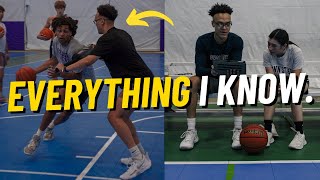
Ethan Khoza (trainer) summarizes five years of basketball training experience and shares actionable lessons to accelerate player development. He emphasizes becoming a specialist (develop one or two elite skills) rather than a generalist, then focuses on three offensive priorities: shooting (form, game-like reps, and intentional challenge), decision-making/playing (play more, compete, face good competition), and ball handling (ball control at top speed). The video combines practical drills, behavior advice, and mindset guidance to make practice translate to games.
Chapters
These are the most important things that I've learned over the past half decade. This summer for me marks five years of training players, and I started because I knew that I could help players get better. Funny enough, the biggest thing that I've learned over the past five years is that I really didn't know that much. Many of the things that I did as a player that I thought were helping me get better were actually working against me, and I recognized so many mistakes that I made and going with that. There were so many things that I overlooked as a player that would have helped me get so much better that I didn't learn until I started training players. And in this time, I've been able to work with thousands of players, many of them in person and many of them online, and I've been able to help these players make progress towards their goals. I've also gotten a chance to be around and learn from some of the best minds in player development as well. Right now, I'm going to go through a few things that will completely change the game for you if your goal is to become the best player possible. My goal with this video is to accelerate your progress forward by years by sharing the most important things that I've learned over the past half decade. Let's get into it now. This first thing is one of the most important lessons that I've learned as a trainer that I completely overlooked as a player. And it's a big reason that I wasn't as good as I probably could have been. And it comes back to the general practitioner versus the specialist analogy. So think of it this way. When we talk about doctors, you have general practitioners who are more of like your general doctor. They can kind of do a bunch of different things. They don't have a specialty. And then you have specialists who these doctors are focused on a specific area. So this could be like an orthopedic surgeon or a cardiologist or something where they're. They have a specific focus on something. And so when we take these two things, yes, they're both doctors, they both get paid well, but generally specialists make about $100,000 more than a general practitioner would make. And there's actually certain specialists that are going to make up to three times more than a general practitioner is going to make. So the point of me saying that is this. We want to be a specialist. We want to have a role that's going to demand and going to bring more value because ultimately that means we're going to get more in return. So specifically, we want to develop a skill to a very high level so that we can hang our hat on that. So this could be shooting, this could be ball handling, passing, like facilitating in general. This could be driving to the basket. This could be defense, it could be rebounded. But it needs to be something that we're very, very good at and that a coach can look at us and say, this is how this player can help the team. Right. What we don't want to be is we don't want to be a generalist. We don't want to be okay in a few different things, because then we're not going to have the confidence of, hey, I can contribute here. I know that if I'm in a game, I can do this, I can contribute this way. And it's also harder for a coach to look at you and say, yes, this is how this player can help the team when you're kind of just okay at everything. We want to be a specialist. We want to have at least one area that we're really, really good at. Now, this doesn't mean that you need to only be good at one thing or they only need to focus on one thing. Ideally, you can be elite at multiple things, right? But if you're not elite at anything right now, my suggestion is that you want to take the area that you're best at or that you're most confident doing, and you want to focus on becoming great at that, becoming elite at that. Focus on building one or two areas to that elite level, and you're going to become incredibly confident in yourself on the court, and you're going to be able to make a better impact. And your value to whatever team you're on is going to skyrocket. If you're a great shooter, that's something that you're going to be to contribute to a team, regardless of what team you might play on. If you're just okay at shooting, okay at ball handling, okay at defense, well, chances are we're in a game where there's five players on the floor. Coaches can find players that can do those things better than you, and then you're kind of the odd man out. So you got to have something you can really hang your hat on. And this doesn't just need to be offense either. Notice that I mentioned defense rebounding. If you're a pretty good defender, focus on becoming elite as a defender, and that's going to make you super valuable to a team. Same thing as a rebounder. If you're a pretty good rebounder, focus on becoming elite at that, and it's going to allow you to have a huge impact wherever you're at. But a huge mistake that I made as a player was not giving myself a focus when it came to my improvement. And what I really mean by this is making sure that there is at least one thing that you're a specialist in that you know you can contribute. Okay, we don't want to be a general practitioner here. We want to be a specialist. So get really clear on the one, one or two areas that you really want to be elite in and then focus on becoming the best at it. So, going with this, let's talk about the three most important areas for you to focus on. Now, this is not including, like I mentioned, defensive rebounding right there. Those are also very important areas. But really I'm talking more so offensively here. And these three things are absolutely crucial. And I think the way that you go about developing them is going to make or break you, right? Is it going to allow you to become a great offensive player? Or if you go about developing it wrong, then you're probably not going to see the results that you want to see. These may seem obvious to you, but I want to kind of go in depth into how you should develop it. So number one is shooting, right? Shooting is the most important skill in basketball, and I don't see that changing anytime soon. And so we want to become great at that, right? If you can be a great shooter, that's ultimately the game is all about, is putting the ball in the basket. So there's a lot of times going to be a role for you. Even if you're not a great ball handler, you're not a great finisher, you don't create super well for anybody else. If you can space the floor and knock down shots. As long as you can defend at a decent level, you're probably going to be of value to whatever team you might play on, right? Whatever level you might want to play at, you're probably going to have a spot there. Okay, so we talked about developing shooting. There's three areas specifically that we want to. We want to focus on. So number one is form, right? And really, to keep it simple, I think there's three major areas with this. Obviously, when it comes to form, there's probably a thousand different little things that you can nitpick and look at and try and critique and change. But I think in general that these three things the most important and are probably going to cover you in 85 to 90% of situations. When it comes to Your shooting form. So number one is your hand placement. Okay. And I'll put a little video up here just to kind of show you, like, what I mean by this. Generally, I say, hey, split the air holes with your first two fingers and your shooting hand, and then get that guide hand thumb in that middle seam right there. And that's generally going to ensure you have pretty good hand placement. Now, everybody's a little bit different. Some people have bigger hands, smaller hands, whatever. So you may adjust that a little bit, but generally that's what I say to players, and that usually works pretty well, allowing us to keep our hand in the middle of the ball and our guide hand right on the side of that ball right there. So then going with that, we also have our energy transfer. So being able to successfully take energy from the ground, put it into our body, and then into the ball so that we can get the ball to the basket consistently is a really, really important thing. So I love using drills like this where we're going to start off nice and tall, we're going to drop down, and then we're going to transfer this energy up through our body into the ball, and we're just going to work on that ability right there. So super important thing as well. The third thing is forward, so obviously we want to be able to be comfortable with our feet. And the most important thing when it comes to footwork is we're able to use different types of footwork depending on the situation. Sometimes you might use a hop, sometimes it might be a 1, 2. But being comfortable and confident in both of those and being able to switch that up depending on the situation is very, very important. I go way more in depth into this stuff when it comes to shooting, specifically in this video above. So make sure you check that out if you're interested in going deeper into all this. The second area that's really important for us to develop is decision making. The best way to train this is by doing it right. I get this question all the time, which is, coach, how do I become a better decision maker? How do I start to play with more confidence? And the best thing to do is to actually go do those things. So play more and be in situations where you actually have to make decisions. Do I shoot or do I pass? When do I pass? When do I drive? Which way do I drive? What kind of layup do I shoot here? What kind of pass do I throw here? All those things are questions you're going to have to be able to answer within a certain split second at any Given time. If you want to be a great basketball player. And we, we, we don't get that through doing drills. We get that through playing and being in those situations where you have to make those decisions right there. Right. It's, it actually is very, very simple when it comes down to it. If you want to be a better decision maker, play more. And I'll, I'll go as far as to say this, we're going to talk about basketball IQ in a little bit here too. But when it comes to basketball iq, decision making, those sorts of things, it is, it's the most important thing because almost none of the physical skills matter if you aren't a good decision maker. If you don't make good choices, if you can't make the right choice consistently, then it's going to be very difficult for you to ever play well or play well consistently right there. So playing as much as you can and playing against the best competition that you can is going to help you develop this. And it's also going to help you develop one of the most important things that you need to have if you want to be a great player, which is your ability to compete. Competing, sustaining a high level of competitiveness, consistently bring in that level of, of competitiveness and being able to always play hard and always be locked in are really, really difficult things to have. But if you have them, you're going to be a step ahead of everybody else. So by playing and really developing this ability to compete and to play hard and to always be locked in and always be able to bring it, that's going to set you apart in general. And then you have that. Being a good decision maker and having a good understanding of the game, it's going to skyrocket every single other skill you might have. And it's really the key to you being a great player. Okay. So playing is so important comes to developing that decision making. And that's something that I really think players should spend a lot of time on and a lot of focus on. Number two is reps. And obviously we all know this. Obviously that's the most important thing when it comes to shooting is getting your reps. But I think we need to make sure we do it in a way that's smart and in a way that's actually going to push us towards improvement. Improving. Right. This is an area we're going to talk about later on in the video as well. But we want to make sure that things that we're doing are actually going to be transferable over to games because A lot of times, the way that we work on shooting and the way that we get our reps, maybe we'll maybe works on 5%, 10% of the actual shots you're going to shoot in a game. When we think about reps with shooting, we think about something like this where we're standing in the same spot shooting the same shot over and over and over and over and over and over again. Again, right? And let's think about this from a couple different perspectives. First of all, yeah, you're going to shoot some shots like this during games, but how many shots are you actually going to shoot that are wide open like this where you haven't, you haven't had to move, you're just kind of standing still, stand still, wide open, catch and shoot threes. That might happen on what, 10% of your shots, 20% of your shots. If you're on a really good team, maybe 30% of your shots, 40, maybe on a really, really good team. Generally you're going to be moving into your shot, you're going to be coming off of some sort of action, maybe you're going to be obviously dribbling into your shot, something like that. But a lot of times we think of shooting, we think of reps as oh, I got to make sure that I get these types of shots up. When in reality there is way more that we should be focusing on if we want to actually become a great in game shooter. So the shots that I think are really important to rep out would be like driving kick relocation shots. So you're relocating up or relocating down depending on where that drive is coming to. A lot of times you're going to be moving side to side before you get into a catch and shoot shots. That's one right there. Pin downs and off ball screens are another important type of shot to be able to make. And that happens quite a lot as well. Getting into shots coming off of like transition. So another thing that's important and obviously we talk about off the dribble, working on one and two dribble pull ups. Depending on who you are, that's probably in the mid range, but maybe even for three, like if you're coming off of a ball screen or something like that. So those are all important game shots to focus, focus on. And we need to make sure that we're not just working on our standstill catching you because this is probably what I see with most players that I, that I, that I'm around is like this is what they consider their shooting work. It's Just repping the same shot over and over and over again. Even though there's probably another, you know, 80% of the game that they're not really training because they're not working on the shot, they're actually going to be asked to shoot and make in games right there. Okay? So we want to make sure that our reps are game reps, game shots, because that's ultimately what's going to translate to us being successful. And the third thing when it comes to shooting, that's really important is challenge. Okay. And we're going to go really in depth in this in a second, because I think this is the most important thing that I've learned in the last five years as a trainer is the importance of challenge. And when it comes to shooting, we need to prepare for the inevitable difficulty, the inevitable variability of shots we're going to get in games. Meaning we have to prepare for imperfect passes, because that happens quite a lot. If every pass that you get in practice or in your workouts is a good one, well, you're not going to be prepared in games when probably 50% of the passes you're going to get on a catch and shoot shot are not going to be perfectly where you want it. They're going to be a little high, a little low, a little left, little right. So being able to work on those things is really important. Being able to work on catching the ball, like not 100% clean. So sometimes, you know, your hands aren't exactly where you want them to be. And we've got to be able to make those shots, rush shots. This could be like a shot where you have a closeout coming. You have to get your shot off a little quicker than you might normally. Right. Are you able to do that? Shots where we aren't perfectly on balance, right, where you having to run into a shot or backpedal into a shot or move side to side into a shot, and maybe you're a little rushed, maybe you're not perfectly on balance and portable to make those. Because these types of things happen all the time in games. So finding ways to add in these, these challenges to your shooting is important. So we'll use drills like bad pass shooting, where we'll purposely throw bad passes and have to make shots off that bad footwork. Shooting, where we're purposely going to, you know, have our footwork be not normal, not perfect, and that'll help us to train for that. Sometimes we'll work on shooting really, really fast. And that way we're training to be able to make shots when we have to rush a little bit. Okay. So it's important that we focus on challenges. An area that when I first started, I didn't even think about. I never even considered. It was all about form and game reps. And there was no sort of thought about, well, how about the imperfection that comes with games? Because all of you watching right now, you understand that like practice and games are two different things. They feel different. What you're asked to do is a lot of times different. So how do we make sure that we're prepared for that difference? And it's by making sure that we add in this challenge that we're ready to be successful when it comes to handling the different things that get thrown at you. So the third area we're going to talk about that's important to develop when we talk about the offensive side of things, is ball handling. Ball handling is freedom on the court. If you can handle the ball, it means that you can go where you want to go. You don't have to be afraid of going anywhere because you can handle yourself. You're going to be able to make more plays. You're going to be able to just do so much more on the court because you have the freedom of going wherever you want to go, whenever you want to go there. So it's important that we develop this right? There's a few aspects of ball handling that are really important to develop. Number one is ball control. This is probably the most obvious thing is your ability to actually control the basketball. But I think sometimes it's not always focused on the right way. We want to be able to obviously control the basketball. This is where we talk about being with like manipulate the ball and, and put it where we want to put it. But also like when we're at our top speed, when we're moving fast, can we keep the ball up with our body? This is a skill that I think is under trained and it's something that I focus on a ton with my players. We work out of like crawl starts where we're just trying to go really, really fast and we're almost trying to sprint and keep the ball up with us. All we do different sorts of moves and the goal is to be able to go as fast as we can go and not have the ball slow us down. Be able to keep the ball, control the ball as we're going super fast. This is how we really develop true ball control. That again, kind of like what we talked about with shooting will actually translate to game success and being able to handle the ball in game because a lot of times where what holds players back is they can't go where they want to go in a game because it's going to require them to go fast and they can't.
More from Ethan

Stop Using One Dribble When You Drive To The Rim! (How To Become A Better Finisher)









