Basketball IQ Just Cost Jonathan Kuminga $100 Million (Don't Make The Same Mistake)
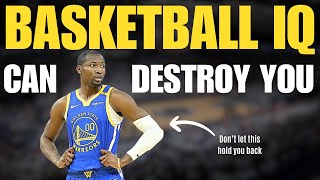
Jonathan Kuminga was drafted 7th overall but squandered a starting role after six games due to poor shot selection, going 5-for-23 in one stretch. Ethan Khoza argues this decision-making gap could cost him $90-100 million in future contracts compared to peers signing $200 million deals.
Questions this video answers
Drafted 7th overall in 2021.
He shot 5-for-23 over a two-game stretch while starting.
In December (early this season).
Approximately $90–$100 million compared with higher-earning peers.
Peers (e.g., Cade Cunningham, Scottie Barnes) are said to be signing contracts worth $200 million plus.
Chapters
Don't let basketball IQ be the reason that you lose out on $100 million. Let me explain. If you've watched any of my videos before, then you've heard me talk about basketball iq, how important it is, how to develop it, and why it's the foundation for all the successes you're going to have on the basketball court. And right now I want to talk about why basketball IQ and a lack of it is the reason why a certain NBA player is probably going to get traded and is likely going to miss out on $100 million. But before I dive into that, if you're interested in improving your basketball iq, adding points per game to your average, becoming a better scorer, going, creating for your teammates much more easily and is playing with way more confidence, I have a free Basketball IQ masterclasses linked down below in the description. Go ahead and check that out once this video is done. Basketball is an incredibly difficult sport to be great at because obviously you have to be super skilled. You have to be able to shoot, you have to be able to dribble, pass, finish, all that sort of stuff. But you also need to have a certain level of athleticism and strength in order to be able to handle contact. You can be able to run fast enough, jump high enough. So you need those two things. But on top of that, when you what makes basketball so difficult is the fact that you also need to have a really high understanding of the game. You need to be a great decision maker as well, because without that, none of the other stuff, none of the skills, none of the athleticism really matters, you're not going to be able to apply any of it. The perfect example of this is Jonathan Kaminga. If you don't know who that is, he's a player for the Golden State Warriors. He was drafted seventh overall back in 2021, and when he was drafted, he was looked at as the future face of the warriors franchise because while Steph Curry, Klay Thompson, Draymond Green, those guys were all still in their pr, obviously they're looking down the line and saying, Steph Curry's aging. Someone's gonna have to take over and become our new guy. And Jonathan Kuminga was viewed as a potential person to do that. Now, Kaminga's had some great moments over his first four NBA seasons and he's put up pretty decent numbers, but he has yet to become the star player that Golden State was hoping for and that the world was expecting when he got drafted. So fast forward to early this season back in December, and Steve Kerr decided that he was going to start Jonathan Kaminga at power forward. And Draymond Green even agreed to come off the bench because he understood that the war need to see what they truly had with Jonathan Kaminga. So he got his opportunity to be a starter for one of the best franchises in the NBA. But after just six games in the starting lineup, he went back to coming off the bench. And the reason for this was very simple and it was shot selection. He struggled to make the right decisions. He four shots, he took bad shots early in the shot clock and he just didn't play to his strengths well enough. He shot 5 for 23 over a two game stretch in which he was starting and, and then he was moved right back to the bench. And Steve Kerr even talked about it. He talked about how Kamingo is an elite finisher around the rim, but there's a time and place for everything and he just wasn't doing a good enough job at making the right decision consistently. So we have to really consider this because we have a guy who's an elite NBA athlete. He has an elite skill which is finishing, he's got great size, athleticism, he has all the pieces that you need physically in order to be a dominant NBA player. And he couldn't stay in the starting lineup because he his basketball IQ and his understanding of the game just wasn't good enough. And no one's ever questioned his talent. But when you look at that, there's a big reason why he's now not re signed with the Golden State Warriors. They're still figuring that out. But what likely is going to happen is he's going to get traded and then he's going to sign a contract that's going to be probably worth about 90 or $100 million. Meanwhile, some of the players in his class, guys like Cade Cunningham, Scotty Barnes, are signing contracts worth 200 million plus. So when you really break it down, basketball IQ is costing Jonathan Kaminga probably $100 million. And it's likely a reason why he's going to get traded from the team that drafted him. And this is a guy who literally has everything that you could want as a player, but this one piece is what's holding him back. And a lot of players struggle with this. They train their shooting, they train their skills, and they work on being able to make difficult shots and be able to create for themselves, but they don't know how exactly to apply it. They don't know when is the right decision to do this, when is it not the right decision to do that. And that's what holds them back from actually being effective, that that's what holds them back from being trusted by their coaches, from getting a bigger role, from getting opportunities to move to the next level, is because their understanding of how to apply things, their understanding of the game just isn't good enough. For a lot of players, this ends their career before they even get started. Now, the reason for this is very simple. Every time you open YouTube, you open Instagram, you open TikTok, you see workouts, drills that are designed to help your shooting, help your finishing, help your ball handling, you see breakdowns on how to pass the ball better and how to get to your spots on the floor. But when it comes to stuff being bombarded at you about how to improve your decision making, how to improve your basketball iq, your understanding of the game, that stuff is so much harder to find and so many players get frustrated. I get messages, I get emails all the time from players who are putting in a ton of work and they're doing all the right things, but they're not seeing results in games, they're not getting more opportunities from their coaches, they're not getting more opportunities at the level that they want to get to. And a lot of times it's because they haven't actually trained this. They spend the time training those physical skills, but when they think about training the mental side of things, their basketball iq, their decision making, they just don't know where to even start. So a couple of things for you to keep in mind going forward, if you want to make sure that basketball IQ is not what holds you back. Number one is you need to have a good grasp on what a good shot is and what a bad shot is. Now, this is one of the most difficult parts of basketball because there's no black and white answer. It's always situation dependent. It is dependent to a certain extent on how capable you are at making a certain shot. What's a great shot for one person might not be a great shot for somebody else. For example, what a great shot is for Steph Curry might not be a great shot for Jonathan Kaminga. But inside of my program, basketball IQ Academy, we actually talk about shot grading and I have a full shot grading system. We talk about one of the things though that goes into that is understanding points per possession, which sounds really difficult, but it just means when you think about 100 possessions, if we take that shot, let's say it's a three pointer, when we shoot it at 40%, 35%, what does it mean when you break it down per possession, how many points are we going to score? Now, when you look at it from that perspective, so the very clear hierarchy is that you're going to have layups, free throws and open threes being the highest value shots and everything else, which is usually mid range shots, stuff that's more contested is going to be worth less. So if you find yourself taking a lot of mid range shots, that can be a huge red flag when it comes to your shot selection. And it's probably a reason why you're struggling to be consistent in games, because you're taking more difficult shots, shots that just don't get made at as high of a rate. And it's also going to be something that's going to keep you from gaining the trust of your coaches. Your teammates are probably going to be more frustrated with you and it's going to lead to some of these issues that we've talked about. The second thing is understanding what your strengths are and then making sure that that becomes your biggest focus every time you're on the court. If your best skill is shooting, you're a great shooter, but you're not as great at handling the ball or get into the basket, that's okay. But you have to understand that you might not play like somebody else who's biggest strength is their ability to drive to the basket. So for you as a shooter, you might think to yourself, okay, if I have an open shot, I'm going to take it. If I don't have the open shot, I've got to move the ball, cut setting away screen, knowing that, hey, maybe the next time that I touch the ball, I'm going to have that open shot. As opposed to trying to be something that you're not and saying, well, I don't have an open shot, so I'm just going to start to dribble the ball a ton and try and make something happen. And now not only are you going, are you going away from your strength, but you're probably taking away from the flow of the game for your teammates. You're making things more difficult for everybody, including yourself. So you have to be honest with what you can contribute, what you do really well, and then focus on putting yourself in a position to do those things as often as you can. A great place to start if you want to improve your basketball IQ and get rid of again, something that can hold you back from $100 million, or maybe in your case, just think about it, holding you back from 50% of your possible success. If you could play 50% better in your next game, next season, if you could achieve 50% more, obviously the that would be something that you need to make sure that you prioritize. So make sure you check out the Basketball IQ masterclass link down below completely free. It's going to help you to understand how to play better. We talk about some of the shot selection aspects of it. We talk about how to actually play in the half court, how to score more, how to create more, all those things that are super important. I also go really in depth into how to become a high IQ basketball player in this video right here. So make sure you check that out as well. Appreciate you for watching. Talk soon. Peace.
More from Ethan

Stop Using One Dribble When You Drive To The Rim! (How To Become A Better Finisher)









