Becoming a “True Hooper” and Developing a Winner's Mindset with Quicksand Mindset (Podcast 55)
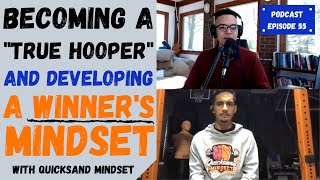
A YouTube podcast episode (Podcast 55) where host Ethan Khoza interviews Gabe Sandoval (Quicksand/Quicksand Mindset). They discuss Gabe’s transition from Quicksand Hoops (basketball training) into personal training and a broader ‘Quicksand Mindset’ brand, his daily Quick Talks series (183 days), discipline, fundamentals (footwork, shooting), film study, mixtape culture, social-media amplification, and coaching/teaching philosophies for developing young players.
Chapters
Foreign. Welcome to the Visenger and Basel training podcast. Appreciate everybody who's here, who's tuned in, everybody listening. Apple podcasts, Spotify. Shout out to you guys, you guys are on Apple podcast. Make sure you guys go down, leave a review, let me know what you think of the show. Shout out to you guys. You guys have been doing a great job of doing that recently and the show's growing. I mean, every week the numbers are up and it's because of the support you guys give. So I'm very appreciative for that. YouTube, you guys as well. Thank you guys for, for, for watching, for subscribing, for supporting all of my stuff. And today special episode. I believe this is our first recurring guest that we've ever had on the show. Actually, I think Gabe, you might have been the first guest on. So, like, you're just milestones every time you're on, apparently. Like my guy Gabe, go ahead and introduce yourself for the people. I mean, this is one of like the, for anybody who's been around for a while, like, they know you. But I think the last time you were on, honestly, my channel might, my channel might have doubled in size since the last time that you were on. So I'm sure there's some people who probably. And you've got such an interesting mix of what you do. And I'll let you get into it, both your. The Quicksand mindset brand is fantastic and it's a really unique spin on stuff that people are doing. I think the way that you approach is awesome. So go ahead and let the people know a little bit about you.
Yeah, so my name is Gabe, Gabe Sandoval. The name Quicksand is a nickname. So Quick because I'm quick on my feet on the court and I'm also a quick thinker. And then last, my last name is Sandoval. So Quicksand is when you put it together like that, you know, so that's been a nickname for a long time. It started off with my dad and then it got passed down and then in college, well, you know, I played all played basketball throughout my whole life, you know, elementary to middle school to AAU and you know, college. I played just at the rec center, just, just casually and I just fell in love with the art of training and, you know, looking at people, you know, like D.J. sackman and, you know, just Michael Lancaster and those guys and seeing what they're doing and I was like, you know, I love the game and I feel like I can, I can teach and so, you know, I got into basketball training. That's where I started quicksand hoops. So we can get into that. You know, you can start that now. So quicksand hoops is how I started. And that was just solely just like basketball training. And, you know, I did that for only basketball training for like a year and a half, two years. And then I started, you know, falling in love with the weight room, so, you know, lifting weights on my own. And then eventually I became a certified personal trainer. And with that, I started to realize that when the kids were in season with basketball, they needed more than just basketball skills because now they're in season and they're away from me. So now I'm just like, okay, what can I do to be able to still bring value to people in a different way other than basketball? And so I was like, well, let's become a certified person personal trainer and just work with people, you know, adults or just anyone, teens who are just trying to, you know, lose weight, gain strength, just. Just start moving and feeling better about themselves. So, you know, that's kind of, you know, why I ventured into that. And, you know, now the quicksand mindset, this happened in the last. The last few months, actually. You know, I wanted to. To branch away from quicksand hoops because I felt like I was stuck in a bubble of just basketball. And I feel like I have a lot more to offer than this basketball because, you know, I love fitness, I love basketball, but also fell in love with, like, reading and listening to people, like, for example, Russ and Jay Shetty and people who are more successful. And they just. They share their mind, they share their mentality and the, you know, mamba mentality. And, you know, they. They pretty much. They've found the perfect marriage between, like, being successful in, like, your business and what you're trying to do and then just like, regular life, you know. And I think that that's where I wanted to bring the quicksand mindset, to bring it all together, you know, and to. To have. Now the logo is, you know, my mind, the brain right here. And then the basketball, like, spin, hack. These are two that go together. Then you have the, you know, the barbell on the back that also looks like headphones because I also love music. So music is just something that, you know, that all of us use to be able to tap into, you know, just. Just like a. If you're looking to lift weights, you know, music just kind of like get you going. If you're trying to relax, go to Sleep or if you're trying to study, you put certain music on. And so it's things like that. But the quicksand mindset is something I just wanted to branch out and show that I can do a lot more.
Yeah, yeah, yeah. No, and I was saying the other day when I saw your. One of your video intros, dude, the logo is heat, man. It goes so hard. And. Yeah. And I think one of the things that I've got. And actually, I think last time you were on, we talked about that transition a little bit from. Because at that point you were still quicksand hoops, so it was still predominantly basketball. I think at that point you were probably like maybe a month into the Quick Talks. Um, and so I think you had mentioned then that you were thinking about making some sort of, like, merger between. Of like, you know, all the things that you were doing into one. And. But it's awesome to see that now, but kind of to go back to what I alluded to right there. Where are you now with the Quick Talks? I honestly, like, I've lost count the days. I see it every day. But it's like, at this point, man, you know, it's a. It's a. It's impressive that. Just to be able to put something out every day and something unique and something that's like, of quality as well. Um, I think that's probably, you know, another. Another reason that you've been able to kind of make that transition. And. And I think your br. That's why your brain works so well is I think you really live what you. What you talk about.
Right? Yeah. So I appreciate the. Appreciate the compliment. And I'm on day 183, so I think 1183 is today, and it's 183 of me. So the Quick Talks is a segment that I have on my. On my Instagram and I posted on TikTok as well. And basically with. With this segment, it's just like I just wanted to give game and just give. Give some kind of, like, valuable content. Whether it's like me talking into the camera and, you know, telling the people what I've learned through books, what I've learned through mentors, what I've learned through friends around me. And this is. It could be like a quote. It can be just like a concept or an idea where, like, you know, I ask a question to the comment, you know, to the people reading it and stuff like that. And so I've been doing that pretty much every day for 183 days. And there also comes a point where there's people who tell their story better than what I can say. So then that's where I started. Like, I'm like, okay, well I can't say everything or I don't, I don't know everything. So let me just, you know, find something that has motivated me in the past for like example, like E.T. the hip hop preacher. He's, he's a guy who just motivates people and you know, I found a lot of his content is valuable to me. So, you know, just screen record it and I'll make that into a quick talk and then to shout him out in the, in the description and stuff like that. So, you know, I just, I've been trying to just, just give free game and just try to help people grow their minds.
Yeah, yeah. You know, I kind of, we talked about earlier with this whole like, with this episode, you know, Will again, we're both big time hoops guys. We love it and. But there's also so much else that I think that we can, we can go into. And I think that's kind of the, the I know that we had talked a little bit about like some stuff that you had, like, why did I start a podcast? Well, part of it is like I can, like, I can, we can talk about what we want. I can bring people on who I like talking to and we could just kind of, we just kind of talk and have a conversation. So that, that was one thing, I think kind of to keep it in that realm kind of, but I guess it shifts it a little bit more towards basketball. What is. Like, my question is, so especially over the past year, you know, six months now with that, with the quick talks and you growing your brand, all that sort of stuff, what is that taught you? Like what lessons have you taken from that? And any that you can relate back to, you know, Hoopers who are watching, guys who are, who are coming up trying to make, trying to make a way for themselves, not necessarily the way that you and I are doing it, but even if it's just like, you know, trying to make their varsity, try to play college basketball, trying to play pro basketball.
Yeah. So I think that's a great question and I think where to really shows and demonstrates 183 days straight is discipline. You know, you gotta, you gotta do the things you know you need to do when sometimes you don't feel like doing them. In my case, I love to do it because I love to, to give back and I love to you Know, to serve and to. To bring content to people. So if, you know, you're Hooper, trying to get to the next level, you need to be disciplined. And if you don't feel like working out today or tomorrow, you just have to. You have to get it done because you got to know that there's people out there who, you know, who want that, and they're actually going to go out there and work out in the rain, work out in the snow, work out, work out when the conditions aren't right, when the timing isn't perfect, when, you know, maybe they're out with an injury, an ankle injury, but they're still out there shooting, right? They're doing the things that need to be done. So, you know, discipline is extremely important and, you know, just making sure you're, you know, around people, you know, like yourself or know people, you know, like you, who are doing the things you know you need to do. You're being really consistent with the podcast. Every week you've been posting it, you haven't missed one. So, you know, it's. It goes hand in hand with that. And I think, you know, you just. You got to start at an early age. If you're, if you're a younger Hooper, just really just be disciplined every day. Work on something maybe, you know, five to ten minutes of just, like, ball handling or just form shooting. Just. Just get the work in and, you know, just stick to it. For sure.
Yeah, that's. That's definitely what I would say. Actually, I, I keep on forgetting to bring it up, but this would be. I think it's podcast. I think it's episode 56 of the podcast. So it was just. We just hit a year, like, almost a month ago now at this point. So, like, I mean, that's. Yeah, I mean, it's, It's. It doesn't even seem like that. But honestly, like, again, I'm. I'm just so appreciative for everybody who's watching right now. I haven't even got a chance to even, like, look back at it yet and be like, oh, man, it's been a whole year since the podcast started because I remember when I, like when I first started, I just, like, I didn't know what I was doing. I didn't really know how to even go about talking on a camera for that long. And it's still something that I'm figuring out. There wasn't really anybody, like, who, like, I saw really doing that in the, what, the kind of realm that we're doing it, like, Everybody, you know, business wise, everybody's got a podcast. Every celebrity has a podcast. When it came to like basketball training, there wasn't. I didn't see anything from like, what, what I was trying to do. Like, I didn't see anything from that, that kind of regard as well. So I think part of it is like trying to see. Because I get questions all the time. I think this can relate back to this too. I get questions all the time from players that will be like, hey, should I do this sort of training? Like, should I do, you know, high intensity training? If I want to do this or if I want to get quicker, should I do this or should I go to the gym at 5am and then also go back at 7pm because I don't know if I'm going to be too tired or not. And part of it is just like, at some point you just got it. You got to do it and see what works and then see what doesn't. Like, I think a lot of, I think having the Internet, having people to learn from is a great thing, but I think some people, like, can use it as a crutch at times where it's like, I don't have to actually go out and do. I can just, you know, I can just see what somebody else did and I can try and like, you know, kind of tiptoe around ever having to make a mistake or fail at something. And like, for me, I, you know, there are podcasts I'll put out that don't get any views. Like, there are videos I'll put out that I'm like, oh, this is a banger of a video. And then like, boom, doesn't get any views. And it's like, sometimes that's just like, sometimes this is how it is. I'll put out a video and I think it's great. And then like, you know, someone might comment on your video and say it's terrible. Like, that's just, that's life though. Like, you have to be able to step out. So I think one thing I would say too is like, you have to, you have to be willing to just go out and do and see what works. And so, so much of like my responses to now, like now to people, like when I get DMS or even just like the players that I'm, I work with in person, it's just like the amount of times I just say, figure it out. Like, I'm just like, I'll get a question. And it's like, you just got to figure it out. And more often than not that that's more important than you getting it right the first time. Like, even if you, like, mess that up, like you, you know, I tell you to figure it out and you lose the ball during the, during the drill, but that you losing the ball lets you know, okay, I can't do that anymore, so maybe I gotta do that now. Like, you're starting to figure stuff out yourself. And I think, you know, for me, it's like, you know, you can give a man a fish, right, Eats for a day, or you can teach a man how to fish, and then you can fish for a lifetime. I think that's kind of where I'm trending towards a lot of with when it comes to, like, my interaction with players is like, I'm like, I don't, I don't want to just give you, like, the answer every single time sometimes that sometimes you might need it, but a lot of times it's like, you got to be able to, to step out and, and risk potentially failing if you want to, like, grow at all.
No, I agree 100 with that. And I think it really just takes that player, that person to be vulnerable and to, you know, like you said, be willing to, to take a loss, you know, because the ups and downs are going to be able to teach you those lessons, you know, and you can't. It gets tough because you see, like, for a high school hooper, even like college and stuff like that, but mostly high school. There's a lot of high school kids that are like, famous off of basketball now. You know, you, you get to look on Instagram and you see these kids dunking and they have all the followers and they have everything going for them, but you're just like, like an average Joe, if you can think about it like that. And you're just like, wow, like, I don't even want to try to. I don't know what it takes. But also, I don't, I don't want to fail and like, not be like him or her, you know, And I think that that can be a crutch, like you said. And it, you know, really, it can, it can be a thing of just disconnecting, you know, from social media and just really focusing on, you know, disconnecting from the stuff that, that is bothering you, you know, and then connect with people like you and I like content like ours, where you can actually learn from and you can, you can grow your mind and you can like, challenge yourself to step out of your comfort zone. And I think that you Know, that's really what it takes for just people in general, but just hoopers and you know, anyone just stepping out, stepping out and trying stuff. For sure.
When you bring up those like high school kids, you've got middle school kids, high school kids who are famous playing basketball as seventh, eighth graders, you've got these massive channels and balls life and the, the well not who mixtape so much anymore but like overtime and all those, those channels. And I, I think that the question that I got a DM I got was from a kid probably like early high school. And with him it was like, you know, he was like man, I really like, I can't stand these channels because it seems like they're, they're trying to paint a picture of like what you're, like what you're supposed to be as a player when you're 14, 15, it's like if you're not dunking the basketball as a 14 year old, then like you're not, you're not good. When in reality 98% of 14 year olds aren't dunking the basketball, but you just have kind of those top guys right there. And it's like a, it's almost, it's a facade really. And, and I think that you know, to, to an extent it, I think a lot of times it, it props players up to be a little bit higher than they probably should be, especially at an early age. I mean I, I don't know how like at an age like 13 or 14 you'd be able to handle like having a, you know, having a mixtape blow up and you get millions of people are following you right now. Like I don't know how at that age you'd be able to handle that. But I don't know if you have any thoughts on like the like mixtape culture or um, you know, whether you think it's, it's a positive thing because I guess in one regard it for the popularity of basketball, it's definitely a good thing because all these, you know, everybody watches those videos, especially the younger kids then they want to play basketball. So you just as well, basketball is, is growing the way it is because of social media honestly. But at the same time I think that there's a pretty sizable downside to it as well.
Yeah, no, I think when, I mean when I was in high school, I'm 26 now, so you know, I'm kind of removed from high school, but when I was in high school I love the mixtapes, you know, so it's for me it motivated me, you Know, to be able to see like a, like a Ryan Harrell mixtape was one of my favorites. John Wall, Akio Carr was towards the latter part of my high school year. And, you know, you get to see those, those like, highlights that stick out. And I would just like, I would study that exact move that worked for them and why it worked. And then from there, you know, just try to like, mimic it in the best way. You know, there's, there's obviously some moves. They were just like, all right, that was instinctual. You know, I can't really learn too much from that. But if there was like a, for example, like a float, like there was one that Ryan Harrell did in his, in his mixtape, he went, he did a behind the back, behind the back, left hand, behind the back flow and then went to crossover. And I was like, what set that up? You know, and I kept studying and it was, it was the float dribble, the flow dribble kind of, or the glider, I don't know how people call it different things. But he floated and he shifted his, his entire body and got that defender to also shift out of his positioning and then he hit him with the crossover and it was just like, that works, right? And then I put that into my game, you know, so if you, if, if you kind of, if you, if you pick and choose the clips that, you know, that you can actually learn from and put into your game, do that on every level. There could be a middle schooler who, who pulls off a move and you're like, okay, like, that was a nice move. Let's study it. Let's figure out why that worked for him, you know, but, you know, if we're going back to, like, how it really, you know, how it really feels, I mean, you know, I think I would just honestly have to ask the kids that I work with, right? And see, you know, how does it really make you guys feel to. To know that, you know, if you're not dunking or if you're not 6, 5 as a 14 year old, that you're not going to be, you know, a great player? Like, you know, I think it's important for us to tap in, you know, with, with that kind of age group and see exactly, you know, how they feel? Because I mean, for me, you know, it is what it is, right? There's always going to be levels to everything. So, you know, there's always gonna be someone better than you, more athletic, taller, you know, so there's not much you can do. It's just now it's just like, amplified.
Yeah, yeah, that. I think that's. That's the thing with the. The amplification of. Even from when I was in high school, like, it was kind of. It's not what it is now because that was like pre TikTok, so things didn't get viral the way they get viral now. But I was like, you know, back when I was like, especially, like middle school, early high school, and it was like you had like, guys like Keel Carr and Marcus Levette. Like, those, like, those two were. I remember watching those, and those were like seventh woods, his. His mixtape too. But I think, yeah, I think, like, to your point there, I think one of the things you can take away from that and one thing that I say when I get messages like that is, is you have to stay out of that comparison trap. It doesn't matter where you are. It doesn't matter if you're a basketball player. It doesn't matter if you're, you know, a YouTuber or, like, if you're just. It doesn't matter if you, you know, work at Starbucks. It doesn't matter what you do. Like, trying to compare yourself because, you know, one of the, you know, you sent me a message earlier today talking about what. What were the two. It was Dharma and what was the other word?
Sonder.
Yeah, sonder. So I was like, I didn't. I didn't know what sonder meant. So I looked that up and so it was like basically understanding that everybody else has an equally complex life to you, even though you don't feel like it at all, it feels like, oh, like everything is me. It's me, me, me, me, me. I don't recognize that that person also is this. They. They think the same way. Like, they also. It's me, me, me, me for them as well. So I think understanding that, like every person, it has so much complexity and so much like there's so much stuff that you. So trying to compare yourself and trying to. And then letting that determine how you feel about yourself is just. It's a. It's a really bad place to put yourself in, I think, especially basketball wise. And an early age too. Like, at the end of the day, it really doesn't matter, like, how good you are when you're 14 years old. It doesn't matter how good you are when you're like. It doesn't really matter for guys who are just like, everything kind of balances out, right? You have the guys who are going to be. I was at a AU tournament this Weekend and I was coaching one of our teams, the 14U team. And that age group is so funny because you'll have kids who are like, like, literally full beards, like six, two, dunking, like, and then you'll have also a kid on the same team who's like, he looks like he just learned how to tie his shoes like a couple of weeks ago. Like, it's literally like that's the age you have. So, like, you have kids who are like, at that age are so far ahead just because, you know, they hit puberty a little bit earlier and then. But you check back in three years and that kid might have completely stopped growing and didn't develop at all as an athlete. And then, you know, that kid who, who wasn't, you know, had to overcome that stuff at an earlier age. All of a sudden you have that advantage later on because now you do start to, you know, grow up a little bit and get a little bit stronger, a little more athletic. And all of a sudden you had to take those skills, like, you know, the Anthony Davis thing, right, where he's like, he's a guard his whole career and then all of a sudden he's 7ft tall. So now, because he had to develop those skills and now you're a seven footer, you're, you know, going to be an NBA hall of Famer. So it's, it's, I think just focusing on what you do is such a big thing. And for me, like, when it comes to YouTube or training or whatever, like, there are a lot of guys I can look at. And it's funny. Like, you can look at a guy and be like, oh man, like, how did I not think of that? Like, they'll put out, they'll put a video idea like, or like a, even just like an Instagram clip. You're like, man, that's a great idea. What you would have thought of that. And then the, the choice you have to make there is like, okay, am I gonna let this be like a thing where I'm like, oh man. Like, I've got to start comparing myself and I and this guy and say, oh, is he gonna do that first or is he gonna do that first? It's like, no, you just gotta like, there's so much. There's plenty for everybody. Like, there's, there's plenty out there. And no matter what you do, right, you, with basketball, it doesn't matter how good somebody else is, there's a spot somewhere for you too. So just focusing 100% on like me like, for me, it's like I got to focus on making the best content I can, learning as much as I can, because, you know, the players that I do get to work with and the players who, you know, watch my videos, I'm going to have a chance to make an impact there. Even though, you know, again, it might not be for everybody. It won't be for everybody. That's just something to kind of accept.
No, and I think, I think going, going a little bit back to Saunder and to realize that, you know, when you get to talk to other, like, creators, content creators, or people who are, you know, like yourself, who are putting out programs, you're putting out YouTube videos, and you're really engaging with the podcast and stuff like that, like, to know that you still, you had the confidence to do it and you have the, you know, the discipline, but also you still have those. Like, maybe every now and then you're just like, damn, like, I should have thought of that. Or like, you know, you know, this is stressful. There's a lot of stuff going on. And, you know, to also know that you feel the same that, like, how I feel a lot of times, you know what I mean? It's empowering and it makes me feel we're just, we're human, right? And so, you know, there's going to be mistakes that are made, but as long as you're putting, you're putting forth the best effort possible and you're creating your own unique spin on what you do, whether you're a basketball player or a content creator or just this, just like a person, just, you know, have your unique spin and unique perspective on what you do, you know, and because you, you have something to offer that somebody is in need of, you know, it's just a matter of, like, you know, everything connecting for you.
Right?
And so, you know, just, just being persistent on, you know, that type of stuff is, is extremely valuable, for sure.
I think another point that you made earlier, talking about when you're watching, like, mixtapes and stuff and you see a guy do something and then it's like, okay, well, hold up. How did he do that? Like, how did he make that defender do that? Or how did he get that look? I think that's, that's, that's the biggest thing with me now compared to when I was in high school, because I just, I watch so much basketball now, and there's so many times where, like, I'll just, like, I'll be watching something and then I'll be like, oh, hold on, like, I got to see how that worked or why that. Why that works, or what were his feet doing that time? Or what were his eyes doing that time? And that, like I was saying this week, I think actually I was saying on last. Yeah, last week's podcast, it was. I was talking about shooting, and I was saying, like, I'm. I'm a. I'm a significantly better shooter now than I was in high. High school. I was working on every day and going like, game speed every day. Now I'm not working out every day. I'm. I'm on the. I'm in the gym a lot, just training, but I'm not, like, going through my own sort of game stuff. But because I'm just literally, like around the basket, just like, working my form all the time, it's translated to me being a better shooter in general and being a more consistent shooter in general. And I think it's the same thing. The other aspect to that is, like, the amount of film that I watch now compared to when I was in high school, I just understand the game so much better. And that's like. So I always say, like, if I was. If I went back to high school now, even though I'm training less than I was back then, like, it's kind of a. It's kind of a weird sort of. It's kind of a weird paradox right there. It's like all I do now is watch basketball and basically, like, play pickup. And I'm. I'm better now than I was back then. But I think one of the biggest things is watching film. And so what, like, what's your. Like? Because I know obviously you're posting drills and stuff. So what's your. Like, where's your. Your influence when it comes to, like, the stuff you work on your sessions, like, is. Are there. Does it depend on, like, the certain player? Are there, like, qualities that you're trying to build in. In every player, or is it just like a. Oh, you know, this is something that I've been watching recently. And so let's try and work on this. And where do you, like, kind of get your. Your stuff from?
So I think you just hit both of those points right there. I think it also depends on the player and what kind of team and structure they're going to be in. So that's one basis of it. And then the other part of it is just like, if I see something, for example, that like, Kyrie does that's not too out of the ordinary or not too, like, what. What did he just do? And I feel like that player can benefit from it. Then I'll bring that to them. So, you know, but also there's like, intangibles, you know, like the things that I love to teach is just a flow dribble, just different types of, like, hesis. I think just having those two, you know, in your bag, you know, will get you a long way no matter what kind of player you are, right? So the hang dribble, just being able to get people out of position and reading the floor, being able to see, okay, when do I have a shot? Okay, there's opportunity, you know, when can I pass off of this? When can I push off of that back foot and take off, right? And get to the middle. Then once you get to the middle, the teeth of the defense, then you can break down, you know, everything. So I think just teaching players to. To be able to operate and feel like the ball is on a string, I think that's just one thing that's for me. I just love to teach that. And, you know, just catch and shoot. You know, I have. We have the doctor dish here, so just be being able to just knock down shots. You know, if you can knock down shots, you can be on any team, you know, you. I mean, you. This is really what it is, right? You can knock down shots drifting to the right, drifting to the left, shots off of the dribble. I love teaching one dribble pull ups. You know, just seeing Kobe do it his whole career in Jordan, you know, they've obviously made a living out of it, and they're legends because of it, you know, so this. The basics, the fundamentals, the foundation, and is really building a good base. The example that I like to use is like a house, right? If you're building a house, you don't start from the roof. You got to start with the foundation. You got to lay the foundation out and you got to go brick by brick. Or however you build the house, it has to start from the bottom. So for us, it has to start with the footwork. You have to make sure you're on balance, that you can stay upright. As you're jabbing right, as you're jabbing left, use both feet, right? Be able to put the ball down before you take off to you don't travel right, just like those things are extremely important. They're not really. They're taught. But I feel like kids just like we're looking at mixtapes and they're just like, well, that guy didn't do a Jump, stop, jab, step shot. He did all this, you know, he started dribbling right away. And so I think it's important to really teach just the fundamentals and the foundation. You know, I think of like all the European players, you know, like Luca, he, his foundation, his foundation is just like, it's immense and he knows exactly what he needs to do and he uses his footwork to be able to get to this spots on the floor that he, that he operates out of. So you know, you know that's important. So that's kind of like that part of it. And then the second part is just like the studying, studying film to like an extent. I'm more like nowadays I'm just like, if I go on Instagram and I see Swiss cultures, I don't know if you follow Swiss cultures, but they post like highlights of the day. So like they'll post like a Drew Holiday highlight where he doesn't move and I'm like, I like that. So then I'll go on YouTube and then you know, like a better like higher quality because Instagram kind of compresses it. Go on YouTube and find that clip and then just like study it and be like, okay, I can. This player can benefit from it. Like you know, my guy Josh, he can benefit from you know, a wonderful pull up like the way that Jrue Holiday did it or like a one foot shot, like just like the small things like that. I think just trying to just be active and be up to date on what's happening now.
Yeah, yeah. I think going to your footwork point or really not even forward, but just like the basics. I think that's an area like coaching so many players now between like the stuff that I do with my individual, like my, my in person training and then the, the high school team that I coach, the AU team that I work with and then obviously like players that I, I know through YouTube and Instagram, like the. It's crazy how, how much the basics, like they're not, they're not basic anymore. Like it seems like those are stuff that you have to explicitly drill and, and again that's, that's my other thing is like I spend so much time like demonstrating basic stuff. Like, especially when it comes to like shooting footwork. Like in any of my session we're probably going to do it almost every time. So that's the other reason why I feel like I'm just a way better shooter now because I'm just. My balance is. Oh, it's, it's infinitely better than it was because just the, like the basic footwork part of it, okay, I can come off of a one, two, I can flow into that shot. I can also, if I need to go off of a hop, if I have to get that shot off quicker. And I understand like innately when to use both of those different types of footwork. You know, maybe if I'm coming off of a curl, I know which angle to take off of that. I know, like, where am I supposed to step to come off of this effectively? Do I need to take a long step on my one drill, pull up or do it? Does it need to be short? Because that defender is, is playing back and I gotta. Do I have to, you know, turn, dribble out and get to space? And I think just players being able to do that sort of stuff, it's, it's, it's, it will transform the way that you can play because then you can start to layer on that more difficult stuff. Like in my, in my shooting program, so much of like every workout, there's just basic full work stuff, and there's a whole workout that's literally called shooting foundations. And it literally, it's just like working form, working footwork, working form again, working more footwork and then just getting comfortable doing that. I think that's an area of shooting that's so underutilized, is like everybody thinks they have to get in the gym, they have to go shoot game shots. You have to shoot, you know, shots sprint out of the corner or lifting up to the wing or coming off a pin down. And those are all, of course, have their place like that. You have to practice those too. But I think there's also a time and place for just getting up shots, like in the mid range, catching shoe, just like seeing the ball go in the basket. Like you got a great feel for it. Say, like, you know that shot felt good, right? Because I think that's where a lot of players, like, they aren't quite there yet where they can, like, they don't just judge the shot based on the make or miss. They can you judge it based on whether or not it felt good. Like that. Did that shot feel good? Did you like, do you execute well? Was your footwork on point right there? And I think a lot of players are just kind of like, again, they don't have that solid grasp of the foundation enough to where they can rely on that and say, hey, that didn't feel good. They just like, they don't make or miss. So I think that's a point. Where, like, I constantly have to drive that home is like, guys, you see the. You see Steph Curry do all these crazy things. Now. Steph Curry, is he. I mean, I don't. I don't think anybody will ever be him. He's. He's just, I mean, ridiculous out of this world. But, like, the stuff that you can take from Steph is. I. I saw that he was asked about, like, so what's the, like, what's the number one key to you to, like, your shooting ability? He was like, balance, for sure. So that comes back to, again, like, your footwork consistently. And so Steph's a guy who's preaching the importance of balance. Like you said earlier, I think, like, that basic part of it is something that players need to make sure that they master. You don't skip over that part. Just say, hey, you know, I just got to go work on my game shots. No, like, when you're in a game, every shot's going to be a little bit different. So a shot you shoot at the elbow might be a little bit different than the next shot from the elbow at the same spot, because you might have been coming from a different angle. There might be a defender coming from a different angle. There might be less time on the clock. You know, you might just be. Your heart rate might just be up a little bit or down a little bit. Like, there's all these different factors, and so the more mastery that you have over your shot in any sort of situation, which is. That's really what I'm trying to build with a lot of my players recently and with my program, too, is like, guys who can just be put on the floor and they're bucket getters, because no matter what the situation is, they're like, they. They can adapt to it. They have that adaptability. I think that's a big. A, big key. And I know, like, you post a ton of stuff with creativity, especially ball handling wise and, like, adaptability. So talk a little bit about that. Like your, you know, you. Especially when it comes to ball handling, the importance of your kind of creativity and how that has sort of developed for you and your players.
Yeah, I think that's a perfect question because it goes back to what you said about feel. You know, it's. It's hard to teach the feel. The feel of, like, why that went in or how it felt for it to go in all net or how it feels to be able to, like, flow a certain way when you're handling the ball. And really what that comes down to is reps. You know, it just comes down to repetition. Are you getting in your reps every day? You know, for someone like me, myself has been playing ball since I was three. You know, I just feel like I've. I didn't put. I didn't really do too many drills. You know, we did. We did some cone drills growing up, but it was more of just like, having the ball in your hand and just like, dribbling around the house, dribbling down the street, dribbling at school, dribbling at the gym. When the adults are playing on the sideline. It's dribbling, dribble, dribble, dribble. And for me, that's where this creativity came. And then you get to, you know, hear music. You know, if you have music in your ears. What I like to do is, like, dribble to the beat, you know, it's just like you're. You're dancing. It's like a. It's just like a music. You're making your own music or you're going along with the beat. It's kind of like a Guitar Hero kind of vibe, you know? So I think it's. For me, that's where the creativity just really comes. And just thinking about players like Jamal Crawford, who have been noted in interviews saying that he didn't do any drills growing up. He just dribbled the ball, you know, and one hot sauce. I'm pretty sure he said he just dribbled the ball, you know, and this is. They didn't do cone drills like we're doing now, or, like, just drills. And those. These drills work because they're more intricate, and they have, like, detail as to why. But have the ball in your hands. If you don't have a rim to shoot, just shoot, like, form shots, you know, to shoot, like, as if the rim is there. You have to, like, tap into, like, your imagination and really put yourself in front of. In front of the rim. Or when I'm. When I. When I'm dribbling at the gym, when I was by myself or even, like, out here in the yard, I'm dribbling as if, like, I'm in a situation, like someone's guarding me, and, you know, I'm trying to get by that person. And, you know, sometimes I literally, I'll do a move and I'll go to the basket, and then I act like I get stopped. Now I retreat, dribble. Then I get into a float, drop, pull up, you know, and I just really feel. I play, I practice as if I'm in a real game. And then, you know, we make up games. You can play 21 against yourself. So right here we have lines. So like if you make it behind a certain line, it's a two pointer. If you make it in the paint, one, you know, just play 21 against yourself and just play just like play real life games. I think that, you know, that's been, that's been really helpful for me and, you know, the rest.
More from Ethan

Stop Using One Dribble When You Drive To The Rim! (How To Become A Better Finisher)









