Fear of Failure and Basketball (Why You NEED To Take Risks and Fail More) - Podcast Episode 98
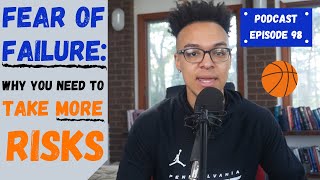
Ethan Khoza (Visionary Basketball Street Podcast) argues that fear of failure and avoiding risk prevent basketball players from improving. He emphasizes that players must intentionally put themselves into uncomfortable game-like situations to test limits and translate practice into performance, and explains the Goldilocks Principle (optimal training zone where success rate is roughly 40–70%). Practical tips include using constraints in pickup/open gyms, purposefully working on weak skills in low-stakes games, and treating failure as necessary neuroplasticity-driven learning.
Chapters
Foreign welcome to the Visionary Basketball Street Podcast. Appreciate you guys for tuning in today. Apple Podcast, Spotify, Pandora, wherever you'll be listening from. And of course, Everybody's watching on YouTube right now. I appreciate all of you guys who are tuned in. If you're on YouTube, make sure you subscribe. If you're new, drop a. Like, leave a comment for me. Let me know your thoughts. If you have suggestions, you have topics that you want me to cover on the podcast, or other video ideas, go ahead and do that. Leave that in the comments for me. I always love getting those ideas, so go ahead and do that for sure. If you're an Apple podcast, leave a review for me. I really do appreciate that. I believe they do reviews on Spotify. I know I always say that, but I'm pretty sure they do, too. I don't know if you can leave like actual reviews or just ratings, but whatever you can do, I appreciate it. Today's topic, I think, really relates to time of year right now. So we're in mid September and a couple months out from the season where a lot of you guys are playing pickup or open gyms right now, preparing yourself for the school season. And even outside of that, right, it's all about kind of this preseason, getting yourself prepared for, you know, November, December through, hopefully March. And I want to talk about a conversation that I've had with a lot of the kids that I train, just about what the mindset, what the approach needs to be in this time of year. And really, when it comes to the topic of risk and failure and understanding the importance of those things when it comes to getting better and maximizing yourself when it comes to this winter season and really anything going forward, really the overall statement I want to make is that avoiding risk and the fear of failure is holding you back. And again, this is a conversation that I've had a lot. And so I figured good to talk about this if it's something that I'm talking about all the time. And so there's a couple points I want to make when it comes to this, specifically talking about taking risk. Because right now when you're in your open gyms, you're in your pickup, whatever you're doing right now, it's very easy to fall into the trap of playing it safe and not messing up and trying to look good as much as you can. And obviously I'm not coming here to tell you to go out there and and try and be bad, right? That's not the point of any of this. But the point is that sometimes looking bad is actually a necessity to not only getting better, but knowing where you're at and really maximizing what you're capable of doing as a player right now. So the first point I want to make when it comes to this is that the only way to know where you're truly at is to put yourself out there in uncomfortable situations and risk the possibility of failure. So there was a really great interview this past week with the Michigan Wolverines running back Blake Corum, and he said that he was asked kind of about, you know, where he sees this Michigan team at. For those of you guys who don't follow, they're 30 right now, and the three teams they've beaten, they've beaten by, like, 40 points, 45 points, 50 points. They're. They're killing everybody. Number 14 in the country right now. And he was asked by a reporter, like, okay, where do you. Where do you see you guys at right now? How much. How good can you guys be this year? And his. His response was, we don't know. We don't know how good we can be. We think we can be a lot better. But that was essentially what he was saying is like, we don't know. And the reason they don't know is because they've played three inferior opponents and destroyed all of them. They haven't faced any adversity. That was the word he used, adversity. They haven't faced any adversity yet, so they don't really know, can we overcome adversity? What's our limit? Where do we need to be better? Because they're so much more talented, they're so much better than the teams that they've played so far, right? So the only way to actually know what you are is to potentially be in situations where you could fail, where there's going to be adversity. So we need those situations to actually tell us, like, hey, this is what we are. This is. This is where we're at right now, and this is where we want to get to. And this is what's limiting me right now. You only will know that if you're in those situations where you might fail, right? Where you risk the potential of losing or looking bad. And if you avoid taking those risks and you avoid those situations where you could fail, then you actually will never know what you are. So you can do all the training that you want, right? You can improve your skills. You can go in the weight room, you can get stronger, you can get faster. But if you're not actually testing Your limits, then you don't even know if any of that stuff is working. You don't know if any of that stuff even matters, right? It probably doesn't matter if you're not willing to try it. Right? The whole point of the offseason is, you know, adding to your game, right? Or getting better in certain areas. But in order to actually make that translate, you have to try it. You know, it's not just like, oh, I've worked on that, so now I'm just going to do it. Well, you. You may have to consciously try and do that. Whether it's a certain area of your game that you've improved or overall, you may have to actually go out there and try. But if you don't do that, then you. That. That. That area of your game might never actually show itself. You might have this ability, but you might never be able to realize it because you don't actually put yourself in a position where you're probably going to fail. When you try something new, it's uncomfortable, right? And you don't have the habit built yet. But step one of building those habits and to making that part of what you do is actually getting out there and trying it. So that requires a little bit of risk. When something's new, when you're not comfortable doing it yet in a game setting, you're risking failing, you're risking looking bad, you're risking turn the ball over, missing shots, whatever. But if you don't, if you can't look at that risk and still say, you know what, I'm going to do it anyway, then you're never going to know what you are as a player. You're never going to realize the actual ability that you have, right? So it's so important that you don't avoid those uncomfortable situations. In fact, I say press into those situations. Seek out those opportunities to take risk, especially right now. Seek that out, and you're going to see it really pay off for you. Stepping outside of your comfort zone is 100% necessary for multiple reasons. We'll get into another one in a second. But it's 100% necessary to, first of all, just know where you're at and be able to start applying the things that you work on. So the second thing that I want to talk. The second point I want to make about this is that in order to get better, you have to understand the Goldilocks principle. So what is that? Right? The story of Goldilocks. There was a girl in the forest, and she finds this house, and she it was a house of three bears. She goes in and there's porridge on the table. She tastes the first bowl, it was way too hot. She tastes the second bowl, it was way too cold. She tastes the third bowl. It was just right. She goes to sit on a chair. The first one was way too big. Second one was way too small. The third one was just right. She gets tired, wants to go lay down. The first bed she lays in is way too hard. The second bed she lays in is way too soft. The third bed is just right. So this principle, the Goldilocks Principle, is basically the optimal zone of improvement, right? We don't want things to be too hard. If things are too hard, then it's gonna be hard for you to actually improve. But if things are too easy, then you won't improve either, right? So we don't wanna be in a position where we're failing 100% of the time, but we also don't wanna be in a position where we're succeeding 100% of the time because both of those are just not good when it comes to improvement, right? But where we want to be is in that mode where, okay, we're failing sometimes and we're succeeding sometimes. It's right in the middle of that. And. And that's really what the Goldilocks Principle is all about when it comes to your training, right? So if you're in that zone where you're failing 100% of the time, 90% of the time, you don't actually make those. Those neural connections, right, where your brain can say, okay, hey, that worked. So that's the one I'm going to remember. I'm going to repeat that. You sleep tonight. Those are the patterns I'm going to repeat so that when you come back the next time, it's. It's something that you're. That. That you're used to. That won't happen if you're failing every single time. On the other end, there's very little, if any, neuroplasticity that has to take place. If you succeed every single time, your brain doesn't have to change. Therefore, there's no adaptation happening. Therefore, you're not getting better, you're not improving. That's all improvement is, is that neuroplasticity, that adaptation to your brain. And. And that doesn't happen if your brain is like, oh, we're successful every time. So what do I have to learn here? There's no learning that's going to take place there. So we want to be in that Goldilocks zone, that optimal zone of improvement where we're right in the middle of that, where we're succeeding 40 to 70% of the time, right. In our training. And I'm going to refer to training as your workouts, but also in those games that don't mean anything. So those pickup games, open gyms, stuff like that, I'm including that when it comes to training. So can you put yourself in that Goldilocks zone, that optimal zone of improvement where you're succeeding 60% of the time, 70% of the time, right? And that's. That's constantly, like, that's constantly what I tell my players. Like, that's my goal with. With workouts, right? I don't. I don't come into a workout or I don't leave a workout thinking to myself, oh, man, they only made 40% of their shots today. They didn't make 70%. So that was a terrible workout, right? I don't think, oh, man, they. They shot, you know, 30 for 85 in this drill. So that was really, really bad. Because a lot of times my goal when I get into a workout is like, how can I make them struggle today? Like, how can I make them miss? And if I. If we leave a workout and, you know, they. They're successful 90% of the time, I look at myself and I'm like, wow, that was. That was not good on my part. Like, I didn't do a good job because they didn't get better because they weren't in that optimal zone of improvement, right? And that's uncomfortable. It's way more fun to just succeed every single time, right? But you have to be willing to put yourself in that zone and be uncomfortable and experience those. Those negative reps, those. Those reps that. That include failure and risk that failure in order to actually get better. So that is, for me, like, I might come into a workout thing about how I can make a certain player miss a shot. Like, how can I make you miss more today? That's. That. That might be my goal with some drills that we do, right? If I think something's too easy, how do I make it harder? So that, again, your brain has to adapt. We have that neuro. That neuroplasticity is taking place. Like, how do we make that? Like, how do we create an environment that. That really emphasizes that? And for you as a player, it's the same thing. How can you put yourself in those situ situations and can. Do you understand that? Like, hey, I need to be in this situation. It's not going to be always comfortable. It's not going to be fun. It's very easy to think to yourself, hey, I might just go and, you know, make it super easy on myself, not take any risk. And I'm only going to, I'm going to succeed 80% of the time when I do this right now. Right? But if, you know, like, hey, I need to be, I need failure, like, failure is actually necessary, then you're not going to avoid it. Right? That's really like the mindset shift I think that players need to make is like, failure is not only a part of the game, it's a necessary part of the game. And if you're never failing, then you're not getting better. For a straight up neuroscience point of view, you're not getting better. So it's something that, again, is not only a part of basketball. It's not only, you know, part of the game that, you know, we don't like, but it's a part of the game that you 100% need. It needs to be a part of everything that you do. Those, those failure reps. So let's talk about ways you can do this. So like I said, in open gyms, in pickup, anything where you're competing against other people, be willing to work on things that you're not great at yet. It's so easy to go into those, especially when it's with your team, and just do things that you're good at. Right? Especially if you're, if you're more established too, and there's things that you do really, really well that people know you would do really, really well. Right? But if your goal is to add a part to your game, then maybe you tell yourself, hey, I know I'm really good at shooting here, but I'm going to work on my drives during open gyms because I need to be better at that so that when the season gets here, you can think of your capacity as being like, here, and how can I get it so that I'm. I'm here when the season gets here. Only way I do that is by working on things that I'm not great at yet. So find ways to challenge yourself. Right? If you, if you can be successful 90% of the time doing what you're comfortable with, how can you potentially fail a little bit more but be able to expand that capacity? Right. What, what situations can you put yourself in? What constraints can you put in yourself? Constraints is a word that a lot of trainers use. And I mean, it's, it's A word that can be used in a whole bunch of different, you know, scenarios. But when it comes to. To basketball, finding constraints might be, hey, you're only allowed to shoot jump shots here. You can't drive. If so, if you're really great at driving, I might say, hey, you can't drive at all. You can only shoot jump shots. You can shoot threes, pull ups, can't go to the rim. Or maybe the constraint is the opposite. Maybe you're really good at, you know, shooting. So you're saying, hey, you can only drive to the rim, you can only score in the paint today. That's a way to put a constraint on yourself, right? So think about ways you can constrain yourself in order to expand that capacity when you're in those situations where you're competing with other people. And really what it comes down to is that in games that don't matter, right, where the score doesn't matter, you know, it's not going to be no one's. No one's noting down who won, who lost stats. You know, be purposeful with why you're playing, right? Don't just go out there and play mindlessly. Have a focus, right? So today, okay, I'm trying to work on. I've been working on floaters, so I'm going to try and find opportunities to get to that floater, right? I've been working on ball screens a lot. How can I work on these different ball screen reads? I've been working on this specific shot. How can I try and put myself in a situation to where I have to be able to apply that, right? And that's where you're going to see the stuff that you're working on. Actually start to translate is when you're doing that. And again, that's going to include failure. Failure is going to be a part of that. If you're really pushing yourself, okay? And going with that is you want to find ways to put yourself in that Goldilocks zone as much as you can. So again, you don't want to be failing every single time. But if you can find ways to maybe constrain yourself or just try doing different things and be in that zone where you're succeeding 40 to 70% of the time. That's what we want. Obviously, when we get to a game, a performance where it matters, then we want to succeed 100% of the time. But right now, where our goal is to get better and to prepare ourselves for those games that actually matter, how can you find ways to be in that optimal zone of improvement. And be okay with that. Be okay with understanding the fact that just because I made zero mistakes today doesn't mean it's better than a day when I made six mistakes. In fact, it's probably the opposite, right when we talk about long term learning. And so again, it's what I tell my players. I don't miss, I don't, I don't, I don't judge our workouts based on, you know, made shots, missed shots, right? It's all about how often were we in that optimal zone of improvement. Because at the end of the day, a shot you make in a workout means nothing to me. The shots you make in games are what matters, right? And we want to be as prepared as possible, so we need to be in that Goldilocks zone as often as possible. And right now, when we're training, when we're getting better, again, anything, right now I'd really consider training because none of it really matters. That's all that we care about. It's all that we should care about right now. So again, we need risk, we need failure. It's not just a part of the game. It's a necessary part of the game and something that you should not only, not only be okay with, but press into, press it into those situations where you can potentially fail. And that's how you're going to become a better player. And that's how you're going to be able to apply what you do. And ultimately it's a mindset shift that I want you to make. And that again, I've been told talking to a lot of my players about that and I think it's such a freeing thing to do when you understand that you. The goal is never to be perfect, right? Players get so caught up with the fear of failure or with overthinking. The goal is not to be perfect, right? If you're, if you, if you're perfect, nobody is. First of all, if you're perfect, then that, what that means that you're not challenging yourself enough, that's literally the only thing that it means, right? So when you take the pressure off yourself of trying to be perfect and understand like, hey, I need to fail sometimes and, and it's okay. In fact, in fact, it's not just okay. It's the best thing possible for me because it forces my brain to adapt, which, that's all learning, that's all improvement is, is your brain adapting. And if there's no failure, there's no adaptation happening. So we need it, okay? So again, I wanted to bring this, you guys are gonna have this conversation a lot so I know it's gonna help you guys out there as well. Let me know where you guys are at if you guys have any other things specifically relating with like getting ready for the season you guys want me to talk about. Definitely drop that below. If you guys want to DM me on Instagram. You guys have like specific questions. Trying to I'm getting better at responding, I'm getting better at responding to on to my to my DMs on Instagram but my Instagram is at Vision Driven Basketball. So again give me a follow on there. Send me a DM if you have any questions or leave a comment for me as well. I appreciate you guys who are listening. Apple podcast, Spotify, Pandora, YouTube. If you're on YouTube, drop a like subscribe. I'll talk to you guys soon. Peace. Sa.
More from Ethan

Stop Using One Dribble When You Drive To The Rim! (How To Become A Better Finisher)









