Feel Panicked Against the Press? This Will Fix It
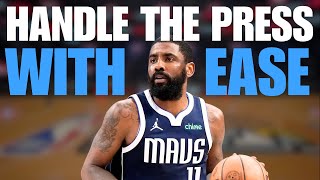
YouTube coaching video (Ethan Khoza) explaining how to handle full-court pressure: differences between man and zone presses, practical on-ball techniques (changing speeds, using the off-arm, pass fakes), a simple zone passing progression (SMB — side, middle, back), and how to avoid or escape traps. Ends with a call-to-action for a free Basketball IQ masterclass.
Chapters
So there's two different types of presses that you may see. There's a man press and a zone press. And we'll dive into the zone press in a second here. But man press is a little bit simpler of a concept. This is where you're getting pressured full court, but it's just man pressure so the defender is matched up on you. We want to think about getting the ball inbound and then clearing out to allow that offensive player to have as much space as possible. In the backcourt, you have space to go either direction. You don't have to worry about a defender being, you know, know, in the gap or being able to go and trap you. A couple tips to handle one on one ball pressure. Number one is you want to change speeds and be unpredictable. The one way that that one on one ball pressure is really going to hurt you is if you are predictable. If you get the ball and just immediately go head down and dribble as you can every single time, well, eventually they're going to figure out here's a good opportunity for me to go for a reach or for me to be able to funnel you into a help defender. So if you're really predictable, going to be easy for defenses to guard you. One on one full court. With ball pressure, you want to make sure that you're changing speeds and being unpredictable. So going from fast to slow, from slow to fast, 50% speed to 100% speed, down to 20% speed. This is one of my favorite drills to work on this skill of being able to change speeds and being able to mix not just between going fast and stopped, but also being able to go from 100% speed to 50% to 20%. And all we're going to do is a percentage freestyle. So I'm going to pick an area, usually like a ten foot area, maybe the paint, maybe you go with like the half court circle. And I'm just going to mix up the intensity that I'm freestyling at. So I might start off at 100 and drop down to 20, go for a couple seconds, then go up to 80 and my drop to 50 and so I'm working on that ability to change my speed. You can also do this dribbling from baseline to baseline. So you can start off freestyling down the court going at 50% and then you hit 100 and then you drop down to 20 and then maybe back up to 50. But getting good at changing those speeds is a really important part of handling ball pressure effectively. The next thing when we talk about Handling one on one ball pressure is using your offarm and also initiating contact. So it's kind of a twofold thing. You want to make sure that you're using your offarm to keep that defender from number one, stealing the basketball, but number two, being able to hand check you and slow you down and stop you from going where you want to go. So you want to think about constantly swimming and like fighting with that off arm to keep that defender from being able to again steal that ball or to be able to slow you down. The handshake. And then the last thing that goes into handling one on one pressure effectively is recognizing when you have the opportunity to make a simple pass. So sometimes you'll start going, handling your pressure. You're doing a great job of changing speeds and using your off arm. And then you see that you have a teammate who's now open for whatever reason make that pass. When you have an opportunity to just move the ball, move the ball, and, and that way you guys can get into the half court, into your offense, and it becomes much easier right there. The next part of presses that we'll talk about is zone presses. Bunch of different types of zone presses. So it could be a 1, 2, 2, could be a 2, 2, 1, could be a 2, 1, 2, whatever. Each defender has a specific zone that they're covering right here. I know as a high school coach, we see zone presses almost every single game. The most important thing with a zone press is making sure that there are spots filled. We have to make sure somebody fills the middle of that zone. When nobody fills the middle, it allows those defenders who are up top and on the sides to really pressure the baske. We want to make sure that somebody fills the middle to occupy those defenders right there. And that's going to be where we can look to pass the basketball. So the difference with a man's press versus zone press is that now that we're in a zone, it's much more likely that we're going to want to pass through this zone as opposed to handling the ball ourselves through it. The acronym that you want to remember when it comes to handling the ball against the zone press is SMB. All that stands for side, middle, back. That means when you catch the ball against a zone press, you're going to look to your side. Can I go side with my pass? If not, can I go middle with my pass? If not, you're going to look to go back to where the ball came from. So I catch the ball, I look up the sideline. If I can make that pass, will make that pass. If I can't now I'm going to look middle. If I can make that pass and make that pass. If I can't do either of those things, I can look to where the ball came from. So maybe the inbounder, and I'm going to push the ball that way. And so now we actually have a purpose for what we're doing in this press. I'm not just sitting there frantically hoping somebody's open. I'm going through my checklist of, okay, is that guy open? No. Then that guy might be open. No. If neither of those are there, then the third option has got to be there. And if none of those are open, it means that you're probably not being guarded. So you've got to be the one who's going to go going with that. Pass fakes are such a massive underrated aspect to beating any sort of defense. But specifically a zone press, when you throw a pass fake, usually in a zone, defenses are being more aggressive. Okay? They're pressuring the ball, they're trying to get a steal. If you throw a pass fake up the sideline, you may get the defender in front of you to jump at it. And now you just opened up the guy in the middle to be open for a pass. Now it becomes an easy pass for you. And also sometimes you throw that pass fake and two defenders go for it. And now you can just take the ball at the floor. Pass fakes are probably one of the most important tips that I can give any player when it comes to handling any sort of pressure. But specifically against the zone press is such a big thing right there. Like I mentioned before, if you have none of those other options open to make a pass right there, then it probably means that you need to put the ball on the floor and be able to handle some sort of pressure until either you get across the half court line or until one of those options opens up for you right there. Last thing I want to talk about when it comes to handling pressure and handling presses is how to deal with traps. Whether it's a man press or a zone press, a lot of time defenses are looking to trap. The first thing that we want to think about is we want to try and avoid the trap spots as much as possible. Putting yourself in the deep corner and also right across half court is another place that defensive look to trap as well, because you can't go back court and you have less space. Got to remember that space is always your friend. So you want to Ideally, catch the ball and put yourself in a position where you have space. The next thing is that if you do get trapped, the one thing you can't do is make a panic pass. And I see this all the time, players will get trapped and, and immediately they throw the ball. Traps are super aggressive, right? When they're trapping you, they're being aggressive, meaning just like we talked about earlier, they're going to be really susceptible to pass fake. So when you get trapped, be willing to, okay, you see that person coming to trap, you throw a pass fake. When you throw a pass, they're going to jump for it. And now maybe you've opened up a passing lane or you've opened up a lane for you to be able to put the ball on the floor and drive. But pass fix are your best friend when you play against aggressive defense. So specifically presses and traps, you got to get used to just throwing a pass fake and that's going to open passing lanes up for you, driving lanes up for you. And still wanted to keep in mind when we do that side middle, back traps coming to me, can I throw the ball back to where it came, like where that, that pressure is coming from or did somebody rotate there? Okay, well, somebody rotated there. Then I probably have the middle guy open and if someone took that away and I probably have the sideline open, the worst thing you could do is panic and throw the ball away. Be patient, throw a pass fake, go through your progressions and you're going to be able to get out of that and potentially made the defense pay for it because you're going to have a numbers advantage if you're able to effectively get the ball out of that trap there. Wanted to go through really everything that's going to help you to be able to handle ball pressure, handle presses, handle traps and all that sort of stuff. It's such a crucial part of being an effective player. If you want to take another step forward and increase your basketball iq, which is going to help you to score more points, create more for your team overall, play with way more confidence and consistency and success. I have a free basketball IQ masterclass link down below top link in the description there. It's an hour long. We go through a bunch of different points that is going to help you to see the game differently. And I always tell people you can immediately add six to eight points per game to your scoring average. Right now, just with the stuff that we talk about inside that masterclass, like I said, completely free. Highly recommend that you check that out. I appreciate you for watching. Talk soon. Peace.
More from Ethan

Stop Using One Dribble When You Drive To The Rim! (How To Become A Better Finisher)









