How Do We Continue Kobe's Legacy? (Mamba Mentality - The Truth)
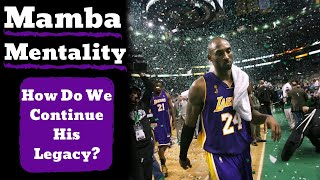
Ethan Khoza breaks down Kobe's Mamba Mentality: failure isn't permanent, it's a mindset choice. Kobe went scoreless in summer league and airballed in rookie playoffs, but saw each setback as a weakness to fix. He believed failure doesn't exist if you're willing to learn.
Chapters
If you're anything like me, then this week you spent a lot of time watching Kobe highlights, Kobe interviews, stuff like that. And today I wanted to talk about what the mamba mentality really is and how you can take it and apply it to your own life. I was watching one of Kobe's interviews and he had a quote that talked about inspiring people. And he basically said that the main goal in life is to be a person who inspires others. To inspire others. I think it's important for us to be able to listen to what he's saying and be able to apply it to our own lives to so that we can begin to inspire others as well. One of the first keys of the mama mentality is about failure. Taking the concept of failure and realizing that it doesn't actually exist. Failure is something that's made up completely in our minds. We decide if we're a failure or not. We decide if we just failed at something. Nobody can actually tell us that we failed because it's completely a made up concept. If you look around, it's not a tangible thing. Nobody can really compare your failures to anybody else's failures because everybody is different. And the only person who determines whether or not you failed is you. Now, what this means in a more literal sense is that as long as you don't quit, it is impossible to actually fail. You might go on Monday and mess up something, but if you get back and do it right on Tuesday, does that make you a failure? Absolutely not. One day can never get you too low, just like one day can never get you too high up. A failure can never make you question yourself. It can never give you any sort of self doubt. Anytime that you experience a setback, that's how you have to look at it. As a setback, not as a failure. Failure means permanent and there's no such thing as that in life. Every day that you get back at it, you lace your shoes back up after getting hit with a setback and you go back at it. You immediately are proving to yourself that failure does not exist. And as long as you get back at it and give your best effort every single time, you cannot fail in life and failure does not exist. When we think about Kobe Bryant, we always talk about the winning mentality that he had, but we never consider what he thought about losing. Now when he was asked about this, Kobe Bryant said that he finds losing to be exciting. And that's because losing exposes your weaknesses and it shows you what you need to do to improve. Kobe was completely obsessed with Getting better. Every single little detail in his game, he wanted to improve. And if you always win, it means you probably aren't putting yourself in tough situations that are going to help you grow. But if you lose from time to time, then it's going to expose what you need to do to improve. If there's no losing, there's no growth. So instead of trying to avoid situations where you might lose, press into them. Be a person who's not afraid of losing, because you understand that losing is going to make you a better basketball player, and it's going to make you a better person in the long run. Kobe shared a story about how when he was 11 years old, he played in the summer league in Philadelphia that his dad had played in, and it was a legend in and. And Kobe Bryant didn't score a single point the entire summer. Not one point from a free throw or a layup or a lucky shot or anything. And this is something that drives him and that allowed him to understand that, man, it's going to take a lot of work to get where I want to be. If Kobe hadn't gone through that experience of not scoring a single point the whole summer, it more than likely would have affected him, actually negatively, if he would have thought, oh, well, you know, I did fine. Now all of a sudden, he's not as motivated to work as hard as he did. You need to be able to take losing and use it as fuel to make you a better player. My challenge to you is to put yourself in situations where you might lose, put yourself in situations against players who are better than you, people who are better than you, people with more skill and more talent than you, and that are going to really push you and allow yourself to be in an environment where you might lose. And then if you do lose, understand why it was. Kobe told a story about when he was a rookie and he shot all those air balls in the playoffs, and he had to look at himself and say, well, why is it that I did that? Going back to the point on failure, a lot of people are scared to fail because they're scared of the embarrassment that might come. If you're in a game and you shoot an airball, you're afraid of what the people in the stands are going to think, what the media is going to think, all that type of stuff. And Kobe understands that it's not that big a deal. You're not that important. People are really focused on themselves and their own problems. So your failure is not something that's on the mind of other people. So the first thing is you have to get over yourself. But the biggest part is that when you do have those failures, when you have those losses, you have to understand why they happened and then learn from them. So with those five air balls, Kobe understood, well, I just played in high school last year we played 35 games. Now I'm in the NBA and we have 82 games in the regular season and we're going back to, back to back some nights. So I have to understand that my legs aren't quite there because I had more rest in high school last year. So now I need to change up my training so that I have my legs come the end of the season in the playoffs. And again, this failure, this loss that Kobe took transformed him into a much better player. You need to take a lesson from this and understand that when, when you put yourself in situations where you might fail, don't look at it as a bad thing. Look at it as something that's going to drive you to become a better player and something that you're going to be able to learn from and is going to make you much better. So we can see that One of the biggest keys to Kobe Bryant's mentality was the complete unwillingness to accept failure as a real thing. And this goes even further than that. Kobe Bryant, in a post retirement interview was asked about what his day to day schedule looks like now. And he was talking about the films that he was doing and all the projects that he was involved with. And he talked about how he wasn't necessarily the one doing all the filming, he wasn't necessarily the one doing all the writing, but he was the guy who was kind of overseeing all those things and making sure that he put those guys in the best position to win. Now he talked about this with his teammates before too. Somebody asked him if he would have felt like his career was a failure if he didn't win any championships. And he would have said, well, no, because I would have had to look at what I did to see what I could do to make sure that the next career that I step into doesn't end up like my past, one where I didn't win. He would have to look at, well, did I put my teammates in the best position to win? Did I do everything possible to be prepared for these chances Aims at his post NBA career the same way he said that when he was looking to hire people onto his team for his films and for his books, he didn't want anybody who would say to themselves, oh, I can definitely do this project, or I can definitely do this scene, or I can definitely write this or do this. He wanted people who would say, well, I'm not sure I'll be able to do this. He wanted people who set very lofty goals. Goals that put them in a position to where they could fail, going back to an earlier point, but if they succeeded, would push them to a level that they would not have been able to reach if they were comfortable with the goals that they set. So this is the final point I'll make. Make sure that the goals you set are. Are lofty. Don't set goals that you know you're going to achieve. Set goals that are going to push you and goals that even if you fail are going to push you past your limits that you thought that you had. Don't ever settle for less than what you can do. Always be looking to do more and never be satisfied. This is the key to having the mob of mentality.
So a lot of people in general are afraid of failure. How did you become one of those people who doesn't seem to be afraid of failing?
It doesn't exist. It's not existent. What the hell does that mean? Seriously, what does failure mean? It's not. It doesn't. It doesn't exist. It's a figment of your imagination. What does it mean?
Pulling the Jedi mind trick on me right now.
I'm serious. I'm trying to think, like, how can I explain it?
So.
Let'S use happy endings, right? And then we can relate this to failure. Why it's not existent. Like, you know, everybody talks about, like, everybody wants a happy ending, right? Now let's go to the reality of it, right? Let's look at a fairy tale story. It's like a Snow White, she gets a happy ending, she finds Prince or whatever, she goes on. She lives happily ever after. Well, I call bullshit on that because two months later, the fact is they had an argument and he's sleeping on the couch, right? So the point is. The point is the story continues. The story continues. So if you fail on Monday, the only way it's a failure on Monday is if you decide to not progress from that, right? So to me, that's why failure is non existent. Because, you know, if I fail today, okay, I'm gonna learn something from that failure, and I'm gonna try again on Tuesday and I fail, I'm gonna try again on Wednesday.
So.
It doesn't exist.
So are you telling me then let's just say all the career statistics that you've compiled. They all still exist, still play for the Lakers still, and all of that still happens. If you finished your career without a championship, you would not have looked at that as a failure.
No, I would have looked at it as being extremely disappointed because I had a dream and I had goals that I wanted to accomplish, right? And if I don't accomplish those goals, I have to ask myself, why, right? So from my position, the reason why I would not have accomplished those things is poor leadership, failure to communicate properly with my teammates, to put them in positions to be successful, lack of preparation. All those things would be reasons why I don't win, right? So now if that was the case and in my career, I have to sit and I have to analyze that. And then as I moved and I evolved, you know, post basketball into business or whatever, those same weaknesses are going to reveal themselves there, right? So if I don't learn from that, I'm going. I'm going to struggle here too, right? So I can take those situations and learn from those and have them, you know, make me a better person later in life. But if I don't take that stuff and apply that someplace else, then that is. That's failing, which to me, it's the worst possible thing you could ever have is to stop and to not learn.
More from Ethan

Stop Using One Dribble When You Drive To The Rim! (How To Become A Better Finisher)









