How To Change Your Position in Basketball
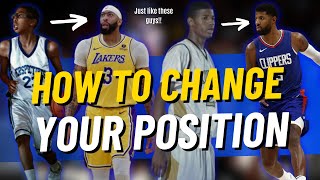
Ethan Khoza breaks down how basketball players expand their positions by building versatility. Guards need inside skills, post players need range. Anthony Davis and DeAndre Ayton show how early skill development pays off. Excel in your current role first, then develop new skills outside practice.
Chapters
Anthony Davis is a great example. As a sophomore in high school, he played point guard. He was 6 foot 2 and then between his sophomore and junior years, he jumped up to 6, 11 and obviously was able to transfer a lot of those guard skills that he had grown up developing with him. And now we see the versatility that he carries as more of a big man in the role that he plays today. And we see how that ball handling and that shooting now impacts his ability to be effective at his position. And it's a big reason why he's a future hall of Famer. Another example of this kind of situation, except kind of on the flip side, was DeAndre Ayton. Growing up, he was always one of the taller players. And so when he was young, when he was in middle school, his coaches would make him do all the post drills with the other post players. And he was always frustrated because he wanted to go and he wanted to work on the guard stuff with all the guards on his team, and he wanted to develop those perimeter abilities. And eventually he found coaches that allowed him to do that, that allowed him to work on those abilities. And even though he stayed a center, he never made a position change. He was able to develop those shooting, ball handling skills that propelled him to being a fight star player and eventually the number one overall draft pick. So if you found yourself in a situation where you want to change positions, or you're stuck in a spot where you don't want to be, or maybe things have just changed for you, you recognize you need to be able to develop different abilities to be successful. We're going to talk about exactly how you can do that right now. Here's the first thing that you need to understand. And if you really want to be a successful basketball player, you need to honestly live your life with this understanding in mind. And it's the fact that every guard is a post player and every post player is a guard. And this is what I say to my players all the time, the teams that I coach on, I tell every single player like, hey, if you're a guard, you need to be able to be successful in the post. And if you're a post player, that you need to develop some abilities that perimeter players have so that you can be successful in those situations. The reason for this is that the more versatile you are, the more you can play, the more you can affect the game. If you can only play one position, two positions, well, then it, if one player joins your team and they're better than you at that position, you're not going to play, or you're going to play less, or you're going to be less effective in the same. In the same realm. If you can only play one position and all of a sudden if you're out of position or if you could actually do something else that you're not comfortable with, you're not going to be as effective anymore. You don't want to be put in that spot. You want to be able to be anywhere on the floor and still be affected. That's why I believe every single guard should be able to post up and win a post matchup, make plays out of the post, and every single post player should be able to turn and hit a catch and shoot, should be able to put the ball on the floor when they need to. Everybody should have those abilities if you truly want to be successful. So understand that you want to develop the ability to be versatile, and that's going to tie into what we're going to talk about here in a second. If you're a player watching and you've played on any of my teams, then you know that I've, I've said stuff like this. I've probably put you in a position where, hey, you might be a point guard, but you're going to learn how to post up, how to. How to hunt those opportunities. You're going to learn how to make plays out of situations. If you're a big. You're going to work on being able to turn and face and hit a catch and shoot. You're going to work on being able to be the recipient of those things and still go and make plays. Is because basketball is positionless, and that's from every single aspect of it. We think positionless just is. Oh, you know, everyone's got to have guard skills, but I think that everybody should have those inside skills as well, because you might be a guard and have a good matchup and you can go and you can dominate them. The best guards that I've been around, especially at the high school level, are guards who can play inside as well when they realize that they have a good matchup. The mindset that I think players really need to have is excelling in the role that they have. A lot of players spend so much time frustrated with their role, and they don't spend nearly enough time focused on actually excelling in that role. The reality is, if you want your role to expand or to change, you need to be so good in your current role that there is no other option than to give you more, because that's going to help a team win. And that's the key word right there is winning. Coaches are trying to win. And yes, I. I hear from players all the time that they have coaches who are bad and coaches who don't know what they're doing or don't really care or, you know, only care about certain players and this and that. And I've had bad coaches. I've been around bad coaches as a coach. Now I know other bad coaches. So I understand that not every coach is great, but at the end of the day, 99% of coaches are. Are trying to win. They want to win right there. And so they do things with the intention of having a better chance of winning. The players who best serve that goal are the players who get the playing time, the players who give that coach the best chance of winning. They play. They get the opportunities. That means the players who. The player who plays point guard is gonna give the team the best chance of winning as the point guard, and the player who plays center is going to give the team the best chance of winning as the center right there. And that is again, how 99% of coaches view the game they ultimately want to win. So you have to ask yourself, how much do I contribute to helping my team win? How important are my contributions to winning? If you look at our game so far, how much of an impact do I have right now? And if the answer is not that much, then your biggest priority needs to be to change that and to stop worrying about not being exactly where you want to be until you can look at yourself and say, hey, I am impacting winning. I'm making plays here. I'm contributing here. That's got to be what your focus is. Are you contributing to winning? And the more valuable that you make yourself, the more likely it is that you're going to get what you want. That's kind of what I mentioned earlier. When you're so good in your role and you excel so well where you are, it's going to come with more opportunities. This is a lot of times what, you know, I'll say to players who are really great defenders, maybe they're not great on offense, or maybe they don't get a lot of offensive opportunities, but you let them know, like, hey, if you're great on defense, if you're so great on defense, you have to be on the floor because of what you can contribute. You're going to get more opportunities in offense, you're going to be able to score more points because you're going to be on the floor more, just naturally, that's how it's going to work. You're going to get more minutes, therefore more opportunities are going to come your way. If you want to get more opportunities to do what you want to do, then be great where you are. Focus on excelling and being so good that you have to be given more. Now, the next part of this is being willing to communicate with your coach and also understanding the fact that that might mean you don't get an answer that you like or you don't. You might not want to hear the answer that you're given. This can be as simple as saying, hey, coach, can you help me figure out how to be better in the position that I'm playing? Or it could be, hey, coach, I'm struggling with blank. What do you think I need to do to be better at blank? Whatever that might be that you're struggling with or that you're trying to be better at. This doesn't need to be a confrontational or hostile sort of approach here, right? You can genuinely ask a question, hey, coach, how can I be better at this? What is it that I need to do to be better here? What advice can you give me? I'm struggling with this. Be honest. Hey, I'm struggling with playing this position. This is new for me. This is something I'm not comfortable with. So what can I do to be better at it? And that shows some initiative on your behalf that you're trying your best in that position, which is going to. Just going to give you the benefit of the doubt, right? That's what you want to have as a coach who knows that you're bought into what you're doing at the very least right there. And like I said, that needs to be like a genuine conversation. And that might mean you don't like the answer that you get. Okay? You might not like it, and that's okay. You just need to, again, be focused on being the best as you can be in your role. Because what is the other option? Right? If you go and you communicate with your coach about it, you ask questions and you're still in that role, well, then your only option becomes, okay, well, I've got. I've got to make the most out of what I'm doing. I've got to find a way to contribute to my team winning so much, much so that I'm forced to be given a bigger role or, or another role or more opportunity and more responsibility. And then in your free time outside of practices or maybe even in practices, you have opportunities to work on developing those important skills that you want to have, right? If you're trying to become more of a perimeter player, then develop your shooting, develop your ball handling, develop your finishing. That stuff's really, really important to do. You just may have to do it outside of the opportunities you're going to get with your team. My belief is that every player, especially players who are not at the colle level yet, so you're in high school or younger, you should be working on developing those important perimeter skills. So shooting, ball handling, finishing, that stuff's really, really important. Just to give yourself a foundation because you might be in middle school and a lot like the guys we talked about, you might be Anthony Davis and you might be, you know, early on in high school and you're a guard and the next thing you know you hit a giant growth spurt and now you're a seven footer and now everything's changed for you. So you never know what's going to happen with that. You never know. So you want to develop those baseline attributes and it can go the opposite way too. You might be the tallest person for your entire life and then all of a sudden you stop growing and everybody else keeps growing and next thing you know you're not tall anymore. So what you could rely on earlier, maybe you can't rely on anymore. So have you been developing that ability to handle the basketball? Which, by the way, I'll link a video up above. I talked about. If I could go back in time and as a, as a young player, train my ball handling, what would I do? Right? Because I made a lot of mistakes, there's a lot of time that I wasted and if I could go back and redo it, this is exactly what I would do. So I just dropped a video that went in depth into that. I'll link that right above here. So you should go check that out. There's drills, there's, there's a lot of stuff that you can see there that again, I wish I would have had as a younger player. So make sure you check that out. If ball handling, something that you want to be developing, which it absolutely should be, that your ability to shoot the ball, ability to finish those things, you should just be constantly working on. But again, the important thing to understand here is that the most important thing you can be as a player is versatile. So are you a guard that can also play in the post? Maybe that means for a specific team you might have to play in the post and you might not like that, but because you really buy into it and you learn how to play in the post, you learn how to be a post player. Maybe that comes along with learning how to rebound well, how to play better inside defense, how to score more around the basketball. Now all of a sudden you keep developing your skills outside of that and now next thing you know, a year later, maybe you're on a different team or maybe you're on the same team, right? Things change and now you're more of a perimeter player. But you recognize like, oh hey, there are opportunities for me to use some of those post skills now and I can score an extra 4, 6, 8 points per game because I've learned those skills when I was playing in that position that I wasn't, wasn't huge on. Right. Maybe it makes you a better rebounder, maybe it makes you a better inside defender. And now you're more valuable to any team that you're ever going to play on because you took the role that you're in and you excelled in it and it came back to pay dividends for you later. Okay, so don't think so one track minded. Don't think in such a short term view. You want to think long term. How can me really buying in and excelling in the role that I'm in now benefit me potentially forward? Right. I would recommend, if you're struggling with that, maybe even write it down and think about some of the best players and the versatility that they have. Right. You think about a Jalen Brunson. Jalen Brunson is a 6, 2 point guard, but he's able to play in the post. He's a, he has great footwork, he plays with a lot of physicality and the best way to develop that is by being in those situations. So maybe you can learn to buy in and develop your abilities that if that happens to be you and if you're on the flip side of that, you're trying to transition from being a post player to more of a perimeter player. Well, make sure you dive into, hey, developing my ball handling, developing shooting, I've got stuff on both of that. Like I said, check out the video that I mentioned earlier with ball handling because I think that'll completely transform how you even look at your training. Very, very important. So go ahead and check that out. But really having a focus on first of all becoming as versatile as you can, buying into the role that you have and then learning how to excel in it and then communicating with your coach if you're struggling or if you want to learn, hey, how do I become better in this role than I'm not being asked to play in? And again, just gaining that benefit of the doubt with your coaches right there is exactly how you want to maneuver this situation or ultimately become the best player that you can Another really valuable aspect of transitioning as a player to a new position and really just being effective in general is your overall IQ and understanding a big part of the difference between players who can play certain positions who can't are whether or not they understand the game well enough at that position to be effective right there. Sometimes it may not even come down to the physical skills of the athleticism, but mentally, what are you. So if you click down below top link in the description, you can get my first free basketball IQ masterclass where we're going to go through a ton of different stuff that's important when it comes to developing your basketball iq, learning how to play the game. Ultimately, if you want to make more plays, score more, create more for yourself and your teammates and just be a more successful player, especially if you're looking to change positions or to adapt to a new role, to excel in your role, this stuff's going to help you a ton. Completely free. An hour long where we dive into a ton of stuff, the mindsets you need, all that completely free top link in the description down below. Go check that out. I appreciate you for watching. Talk soon. Peace.
More from Ethan

Stop Using One Dribble When You Drive To The Rim! (How To Become A Better Finisher)









