How To Deal With Nerves In Basketball (The 3 Steps) - Podcast Episode 27
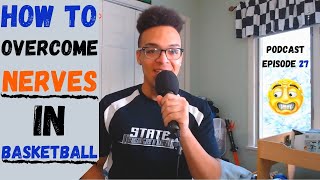
Ethan Khoza explains three practical steps to manage nerves in basketball: (1) Preparation — physical and mental over-preparation (offseason work, write out plays/drills) to build confidence; (2) In-the-moment breathing techniques — a 4-7-8 pattern to relax and a 6-2-8 pattern to increase focus, plus progressive muscle clench/release; (3) Mindset — shift from outcome-focused thinking to a process-focused approach, concentrating on controllables (effort and attitude) rather than results. The episode includes examples, personal anecdotes, and calls-to-action to contact the host or check linked resources.
Chapters
Foreign podcast. Appreciate all of you guys tuning in today. Apple Podcast, Spotify, YouTube, wherever you might be. For those of you guys who are watching on YouTube right now, obviously you can see a little bit of a change of scenery for us today. Not what you guys are used to. The one thing I'll say is 2020, Covid, all this stuff is crazy. So, you know, situation going on in my house right now with COVID so kind of had to shift things around. So here's where we are today. Made the most of it. I kind of like the little bit of a change of. Change of background. Y' all see the. The Nerf hoop up behind me. So it's kind of a nice little thing how I've been kind of spending my time in here. But hopefully you guys enjoy that today. I think there's a lightsaber back there, too, so you guys will see that as well. So, again, very entertaining background for you guys today. Hope you guys enjoy it. To get on with. Today's question comes from my guy Elias, and it really had to do with nervousness during practice, during games, which is something that is very common that I get a lot and wanted to go in depth on that to give you guys not only some remedies for how you can kind of in the moment, be able to cure that, but going forward, how can you build your training, how can you build your preparation so that you can kind of eliminate nervousness as much as possible? That being said, the one thing I will say about nervousness is that literally, I believe there's a quote, I think it was Michael Jordan who said that, like, he was nervous for every single game. And that's Michael Jordan, right? So you think if anybody could overcome nervousness, it would be Michael Jordan. But because. But obviously he didn't do that. So the one thing to understand is that there's always going to be nerves associated with playing basketball. That's just how it is. If you care about it, if you want to win, there's going to be pressure involved. There's going to be nerves involved. So part of this becomes, how can you learn how to accept that? Okay? Because again, there's never going to get to a point where you're just going to be free of it completely, okay? But you can do certain things that can lessen those nerves and can make sure that those nerves aren't affecting your performance. And that's ultimately what I want to get to. So I'll read this question. So he says, hey, man, I had a quick question for you. My Basketball season is coming up and, and I get really nervous when running plays and drills. I become tight when I don't understand them and I become afraid to fail. Do you have any pointers? And so I wrote back to him, I'll give you guys a little bit more of an elaborate answer on what I'm talking about in terms of my answer to this question. So again, this is a situation that I'm sure a lot of you guys listening probably have felt the same exact way. I know for sure I have all the time. And I'm sure you guys are probably in the same boat as him. So what can we do to get past his nervousness? And I want to kind of break it down from, from the beginning where, you know, he said, so I get really nervous running plays and drills. I become tight when I don't understand them and I become afraid to fail. So that's where it really starts. I think point number one to overcoming those nerves, overcoming that kind of fear of failure, is preparation. It all comes back to preparation. And preparation is what leads to confidence. If you're not prepared, you will not feel confident. But if you're over the top prepared, you're going to feel a lot more confident than you would if you weren't. Okay, preparation, though, there's a bunch of different categories we can talk about when we talk about preparation. Right? Like, it's not just a one sided thing. Okay, Preparation, obviously physically. So it kind of starts off with, okay, the whole off season, March through October, are you in the gym? Are you in training every day? Are you consistent? Are you working on the things that you need to work on? Things that are going to translate to gains for you. And if you are doing that, then there's your baseline preparation. You know you're coming into the season from a skill perspective. You're prepared. Okay. You've been working on what you need to work on. So there's point number one. So that's obviously right there. If you're not doing that, then that's gonna be a problem. But we're gonna assume everyone who's listening to this is working on their game. Okay? Then preparation becomes mentally okay. Then it becomes not just about okay. I go out there and I can compete physically, but not. It's like, okay. When we talk about preparation from that perspective, I like to refer to it as over the top, over the top, over the top prepare. Because essentially what this goes back to is like if you're nervous with the plays, for example, okay, so you're nervous plays or Drills, if you are. If we can get it so that you know all the plays and you know every drill well, then the nerves surrounding it can just go away, okay? And that's very, very simple because all that it is is you dedicating yourself to learning that stuff as well as you can. So what I recommend is write things out, become super, super confident in knowing them to the point where you cannot mess it up. Become over the top prepared when it comes to that stuff. So if you. Let's say, you know, your first day of practice, you guys put in four plays and you're a little bit shaky on the plays, okay? You're nervous, like, oh, I don't know if I'm gonna remember these plays when I come back to practice tomorrow. And take it upon yourself to go home, write those plays out, get a notebook and say, you know what? I'm going to write down each play 10 times. I'm going to write out each play 10 times so that I know every position, I know how to be able to do all that sort of stuff. And then after that, you're going to feel like, okay, I can go to practice now and I know every spot I can know. I know each play because I went home and I took it upon myself to know everything. That's literally something that I did. When I was in high school, anytime I learned a new offense, which basically was almost every year, freshman year had to learn new offense, Sophomore year had to learn a new one, junior had to learn a new one as well. So I learned a new offense every single place I went. And obviously, you don't have a ton of time to be able to get stuff sorted out, right? If you want to be able to go in and play. Coaches want to put guys in who know what they're doing. Okay? And there really is an excuse, is not an excuse for you to not know what you're doing. If you go into a game and you don't know what the plays are, that's a direct reflection on your preparation, on how much you care or don't care. Okay? So that comes back to again, I'm going to go home today after practice, write out every single thing that I might need to know. If there's a drill that I'm unfamiliar with, that I'm nervous about running, I'm going to go home, I'm going to write out how to do that drill, I'm going to draw a diagram of that drill, and I'm going to learn how to do it. I'm going to make sure that it's ingrained in my mind and it's not going to go away. So that side of preparation I think is really, really overlooked. And if you're nervous about something, do what you can to fix it. Something that's controllable like that you can't control. And we're going to get into this later. You know how you play in a game, you can't control how well you play or how well you don't play. Ultimately, it's not really about your level of control, the situation, because there's so many outside factors. But when it comes to you just knowing things, that's 100% on you. You 100% have the power to know everything about your offense, know everything about those drills. So if that's the issue for you, you're nervous. Something has to do with practice, write stuff down, get rid of that. Okay? We can, we can. A big part of this with basketball, right, is like you want to take care of what you control so that the things you don't control are your only areas that are up for grabs. Okay? The controllables. Knowing the plays, being in shape, doing what you can to be at a high level skill wise, right. Working hard in the offseason, those are things that you can control. And if we have this under control now, all we have to worry about is going out and performing. We just have to go out and do what we've worked on, okay? Don't let those unknowns be affected by the stuff we control. Take care of the things we control. I have a whole episode on that, on taking care of what you can control. I'll link to that, but check that out to get more in depth on that. But that's such a big part of this. Okay, so to answer the first part of this, if you don't know the plays, you don't know drills, take it upon yourself to know them. There's really no excuse to not. You just got to go do it. Okay, so then kind of my second point with that is let's say you've taken care of the controllables, right? So you know the plays well, you know the drills well. There's no question marks when it comes to that. Then we can talk about what can you do actually in the midst of games, right? So. Or practices just to kind of get that nervous system under control. Because there is actually a reaction, a physical reaction your body has to being nervous. So you probably have heard of it referred to as fight or flight, right? Where you're either going to kind of tense up or, you know, you're going to kind of run away. But we always feel in basketball where you really, you get tensed up because you're nervous, you feel like you go into a game, maybe you airball a shot because you just, you're just so nervous, right? That's happened to a lot of people. You might dribble the ball off your foot because you're just nervous. Your muscles are real tight. So what we can do is a couple things. And I talk about this in the mental masterclass, which comes with the permanent score system. But just to go into a little bit, we talk about, in that we talk about breathing and how breathing is so important to controlling your nervous system and your response to you being nervous about something. So we talk about two different types of breathing. And I kind of want to go in depth into it right now, just kind of. You guys can even try it out right now just to see how it feels for you. So I outlined two different types of breathing patterns. So it's really, really powerful what your breathing can do to nervous system, to your body. Physiologically, it's really, really powerful. And a lot of players don't take advantage of it because they just don't know about it. So specifically, there's two patterns that I talk about, and the first one is a four, seven, eight breathing pattern where you're going to inhale for four seconds, you're going to hold it for seven, and you're going to exhale for eight. So I'm going to inhale for four, hold for seven, and then I'm going to exhale for eight. So this specific pattern, that four, seven, eight pattern, is going to help you to kind of alleviate some of that tension. You're just going to feel more relaxed when you do that. So I encourage you, try it out right now and just see how relaxed you feel after doing it two or three times. Okay? So in different situations where you might feel that nervousness, you might feel yourself being real tense, being around the edge, that fight or flight reaction to the situation you're in a practice or a game, go ahead and try that and just see how it feels for you, okay? And notice that sort of tension start to alleviate as you just start to get oxygen back into your muscles, into your, into your brain, and you're just going to feel a lot better. Okay? So there's one right there. And then there's another pattern that we talk about which kind of helps to increase focus, right? So if you feel real frantic, kind of the thing you can do is like, okay, let's go for that sort of that, that stress reduction, right? And then we're gonna get focused, okay? So then we can go with our, with our six to eight pattern. Okay? So the only difference now is we're inhaling for six seconds, holding for two, exhaling for eight. Okay. And what that's going to do and you're going to notice a little bit of a different feeling with that one, where now you're going to feel a little bit more alert, a little bit more focused as opposed to the other one, which is going to kind of relax you. So I kind of like to go one and then the other. So, you know, before a game or maybe during a timeout or whenever you kind of feel like you need it, you go with that first pattern where you're going four, seven, eight, maybe go through that two, three, four times. Then we're going to go with that focus one. So now we're going six, two, eight, one, where we'll probably go two, three, four times with that as well. So then now we're locked in. You can really change the way that you think, the way that your body is reacting just by altering the way that you breathe. It really, really is very, very powerful. So I highly encourage you guys to check that out and just see how it feels for you. Okay? The other thing that can be powerful when it comes to kind of reducing that tension in your body is if you feel like you're really, really tense, right? You can clench up your whole body, right? So you feel like you're really tense. So you clench up, squeeze all your muscles, hold it for a coup, then just exhale, let it out, relax your muscles. And a lot of time, that too is going to help you to relax a little bit as well. Okay? You get in the habit of doing that. You're going to remain more relaxed in games because here's the thing. Even if you are prepared, right, which ideally, again, we talked about, you are prepared, you're going to get to points where you're playing big games, you're playing a big game, and there's a lot of people in the stands. Hopefully we'll get back to that when Covid's over. Hopefully. But you're. You have a big game, big crowd, it's super loud, super, you know, it, it. Maybe it's a playoff game. That atmosphere is. Is very, very. It can be very, very nerve wracking, right? Can be. It could be a lot of pressure involved with that. Okay? So adding these different reactions to it, these different breathing patterns to it is going to help to kind of combat that reaction because everyone's going to feel something. When you feel the energy from the crowd like that, you're going to feel a little bit more tense. So if you can relax yourself, you take some deep breaths, especially the first one where we're able to relax ourselves, it's really going to help you out down the line. So highly encourage you guys to check that out and try it out and really just see how it feels for you. And then I think maybe the biggest thing when it comes to nervousness, a lot of times when you feel nervous during a game or this can also happen if you mess something up during a game. You miss a shot, you turn the ball over, you get beat on defense. It's so easy to become super, super inward focused, right? And all of a sudden you're thinking about, oh, man, I missed that shot. Oh, man, this, that. Oh, man, my coach is gonna be mad. He's gonna bench me. This guy's gonna get my starting spot from me. This is gonna happen. That's gonna happen. I'm not gonna get this. This coach isn't gonna recruit me. Now, like, all these things can start to kind of creep up on you. So it's important that we're able to keep our mentality in check the whole time. Okay? We don't want to be at a whim based on how we perform because that's going to lead to very, very inconsistent performances. We don't want to be inconsistent. We want to be able to go out and have our coaches and our teammates rely on us to be there every time. Okay? We can't just be. When things are going well, we're good. But when we miss a couple shots, then we're out of the game. That can't be how we have to react. So a lot of what this comes back to is the mindset you approach things. I've talked about this before, but you want to have a process focused mind as opposed to an outcome focused. The difference here is that a player who has an outcome focused mind is going to. The only thing they're worried about is, did I make or miss the shot? Did I turn the ball over? What is my coach thinking right now? What are my teammates thinking? What is the crowd thinking? Oh, man. Like, is the newspaper going to interview me after the game? I can't miss this three because I already missed two. Like, you're so focused on the outcome, right? You're going to go into a Game saying, I have to score 20 this game, I've got to score 30 this game, I've got to do this, got to do that. That's the outcome focused player. And that can be fine if you are able to, you know, if you have a good game, right, you can be out, you can say, you know, I scored, I want to score 20 this game. And you get in the game, you hit your first six shots well, you're going to feel really good about that. You're going to feel really confident and everything's going to be good. But if that's your mindset and then you go into a game, you miss your first six shots, shots. A lot of players with that mindset, it's going to be over for them. Like, they're done. They're like, you know what? I can't even get to my goal anymore. So they're going to be. Their head is going to be just completely out of it at that point, okay? Because they had a goal they were going into the game with, they were focused on the outcome they wanted. When that outcome is not looking like it's going to happen, very, very easy to get discouraged. And this is where, you know, for those of you who may struggle with your confidence level in games where, you know, you might miss a couple of shots and you still feel confident, you might turn the ball over one time, you feel like you can't dribble anymore. This is where it stems from. You likely have a more outcome focused mind. And that's very normal, right? A lot of when you want to do well. But it's funny, it's backwards. Focusing on trying to do well is actually not going to get you the result that you're going to want. Okay? We want to have a process focused mind, which all that that means is instead of focusing on what we want to happen, the only thing we're focused on is actually doing it. We're completely focused on the present mile. We're not focused on the past. We're not focused on the future. We're not focused on, okay, you know What? It's the fourth quarter, I only have six points. I got to get to 14 or my average is going to go down. Like, we're not thinking about what happened in the first, second or third quarter. We're not thinking about what we need to do the rest of the game. We're thinking about this exact moment. Okay? So the only thing that I'm focused on is my effort at the time. Because, you know, I tell players, like, listen, there Are. There are very few things you control in a basketball game. You do not control the ball goes in. You do not control if. When you shoot the basketball, you do not control whether or not it goes in. Because you might shoot the ball perfectly, right? And you've all felt this. You might shoot a ball and you thought, oh, man, that's definitely going in. And it misses, right? It rolls around the rim and goes out. That you do not have control. Once the ball leaves your hand, there is no control you have over it. You might miss every single shot. You don't have control over it, okay? You do not control whether or not your teammate does what he's supposed to do, okay? If your teammate misses the layup, you don't control that, okay? He blows your assist. You don't control that. You do not control what your coach says to you, what he thinks of you. You don't control that he's going to say what he says and does what he does. You don't control what the fans think. You don't control what the referees do. You do. You literally control nothing that happens with the actual game. Nothing that happens when someone's watching a game. Like, if you go on TV or, you know, you're watching tv, watching the NBA Finals, right? The. Like what. What we watch as fans, those players don't have control over what happens, right? Here's what you do have control over. You have control over two things, your effort and your attitude. Those are literally the only two things, okay? So those are what your focuses should be during a game, okay? Your. Your focus during game should be, okay, I'm gonna give my best effort every single play. And you just forget about how many points you have. You forget about what you're doing with assists. You forget about, you know, you forget about who is in the crowd thinking what. You forget about what your coach, you know, said. Or. I'm not saying don't listen to your coach. I'm saying if your coach, you know, yells at you, you're like, okay, you know what? On to the next. I'm just focused on give my best ever this play. So if you go from thinking to yourself, hey, I've got to do this, you know, am I playing good? Like, I got to play good today? If your effort. If your focus becomes, you know what? The only thing I have to think about is I got to get my best effort in this game. You're going to play it much more relaxed because, you know, I don't control if the ball goes in, but I'm Going to make sure I get my best effort towards it. I don't control if I get beat on defense, but I'm going to get my best effort at it. And guess what? If I. If I lose and I do poorly, well, you know, it is what it is. I just got to go back and get and work more, right? I got to go put in more work. Then next time I'm going to go back again, I'm going to give my best effort and maybe I'll win that time, okay? But what this is going to do is, first of all, it's going to make the game a lot more fun because now you're not going to be overthinking how you're playing what your coaches like. You're just focused on going on having fun, really, because you've already done the work, right, we talked about earlier. You've done the preparation, okay? You're prepared. You've done all those little things that you need to do. You know the plays, you know the defenses, you know everything about what your team is wanting to do. You know the game plan going in. You've put in your work all off season and you've done all those things to prepare. Now it's time to just go out and do what you've prepared for, right? It's time to go out and just have fun playing. So if your focus becomes, hey, I'm just going to give my best effort today, this game, this practice, I'm going to get my best effort because I know that I've already put in the work to earn that, okay? I've earned the right to just go out and get my best effort. You're going to find that basketball becomes so much more fun for you. It's so much more fun when you're just like, you know, I'm just going to go out and play, right? And you're also going to find that your performance has become much more consistent because now you're not going to be derailed by missing a couple shots. You're not going to be derailed by turning the ball over once or twice, okay? So while it might seem backwards that, like, if I don't focus on scoring 20 every game now, all of a sudden my performance is going to get better. But it actually is how it is because now if you're in that outcome focused mindset, it's very easy for that effort to drop off when things are not going well for you, okay? But when you're only focused, when the only, the only factor, if you can look at yourself in the mirror after the game and say, you know what? I gave my best effort the entire game. And that's all you need, right? That's all you need to say, I had a good game. If you come home, your parents ask you, hey, how'd you do with the game today? Think about your answer to that being, I gave my best effort today and that's all that matters, right? That's how you want to be able to look at this yourself. If you're only. If the only part. If the only critique that you can have of yourself is whether or not you gave your best effort, well, that is just going to allow you to be at your best more often. Because now if we're thinking, okay, how many points did I have, how many rebounds, how many assists did I have? Like, oh, man, I didn't do very well with this. Now all of a sudden it's like, okay, you know what? My effort might drop off a little bit because I'm not playing well. First three quarters didn't play well. It's the fourth quarter and maybe my effort drops off a little bit. But if you only. If the only focus you have is your effort, it's never going to drop off, okay? And that's going to allow you to be better, to play at your best the whole time, okay? You're going to notice that as you make that shift, you're going to start to play better because you're focused on doing things as well as you can, which means you're going to be performing your skills at your highest, at your highest state, you're going to be form as an athlete, as a defender. All those things are going to be at your highest possible level because that's all you're focused on, okay? And so again, this is just a mindset shift you need to have where you're in a game and your only focus is, okay, I'm going to get my best out of it, right? You miss a shot, you know, I'm going to get my best effort, okay? That. That's really a great reminder for you. When you're in games and you feel nervous, you start to feel like, oh, man, I feel like I'm not playing that well this game. You have to be able to kind of snap out of it and say, you know what? I'm going to get my best effort this next play, okay? All I control is the effort that I give on this next play. That's all that I control. And you're going to start to see your performance Become more consistent and at a higher level. And ultimately that nervousness is going to start to dwindle a little bit and you're just going to have a lot more fun playing basketball. Okay? So I highly encourage you guys to take that into account as well when you're playing. And again, you guys are going to see visible shifts in your game. Again, starting off with your preparation, because again, we can't, you cannot be process focused if you haven't put in the work, if you have not prepared yourself, you're not going to earn the right to be able to do that. Okay? So it starts with that preparation. So say to yourself, okay, you know what? I'm going to make sure I'm prepared for this. I put in the work all season. I put in the work to know the plays, to know the drills, to know the system, know the defense. I know everything that I need to know. I put in that work. I'm over prepared for things. Okay? And now I'm getting my breathing right. I'm noticing when I'm tense, when I need to calm down and taking those deep breaths, holding it, letting it out. Okay. Becoming more relaxed, that play. And then when I'm playing basketball, I'm literally just having fun. Like, I'm literally just focused on getting my best effort and having fun. And that alone is such a freeing way to play. You're going to play a lot better when that's able to be like that. If you think about it, you think about a time when you've been at the park or you've been in an open gym, maybe you had a game or practice where you just were feeling it, right? You're just, you're just going, you're just playing. You're. Maybe you, you know, you hit a bunch of shots, all those things, you probably were just playing basketball. You're probably just going out there and having fun, right? We want to be able to recreate that, that, that mentality as much as we can. And if we're just out there focusing on doing our best every play, that's how we get into that sort of flow state right there. Okay, so super powerful. Great question. Hopefully this answered it for you guys. You guys, any more questions? Of course, leave a comment. But even better than that, send me a DM on Instagram visiondriven Basketball. Because again, this question came from a dm. So this is where I got a lot of my ideas from. So I appreciate you guys for sending me questions. Make sure you guys also check out my TikTok at Vision Driven basketball as well. Trying to post on that. Just a little extra things, some move breakdowns, different things like that, some drills and stuff as well. So go ahead and check that out. Really do appreciate all of you guys, any of you guys interested in any of my training. That's gonna be linked down in the description below as well. So go ahead and check that out. And man, I felt like there was something else I was gonna tell you guys today, but I can't think of it. So that might save that for next week's podcast. But again, questions for me. Send me a DM or just give me a follow because I'm posting all the time. Really appreciate all you guys, you guys on Apple podcasts. Really, you guys would appreciate if you guys love to review for me, YouTube like and subscribe. I'll see you guys soon. Peace.
More from Ethan

Stop Using One Dribble When You Drive To The Rim! (How To Become A Better Finisher)









